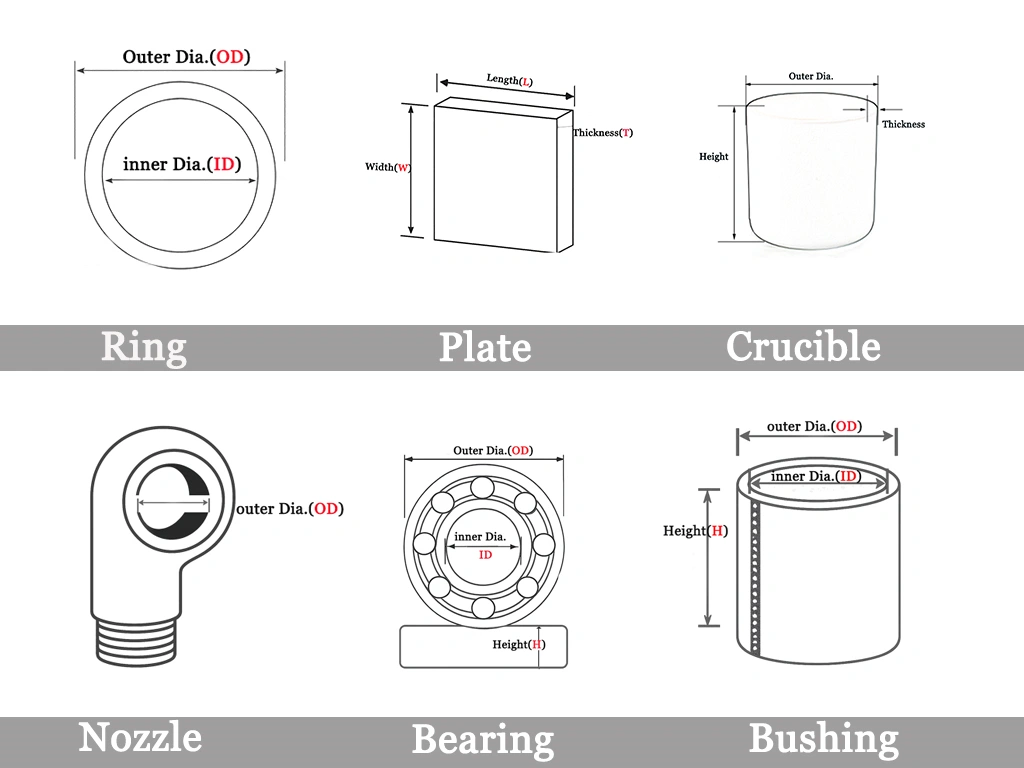
Industrial Silicon Carbide Crucibles for Corrosive and High-Temp Atmospheres by ADCERAX®
Silicon carbide crucibles are engineered to maintain structural stability under aggressive atmospheres and sustained exposure above 1500°C. Their corrosion tolerance and mechanical rigidity support continuous thermal processing across demanding industrial lines.
Contact ADCERAX® for project-ready technical support today.
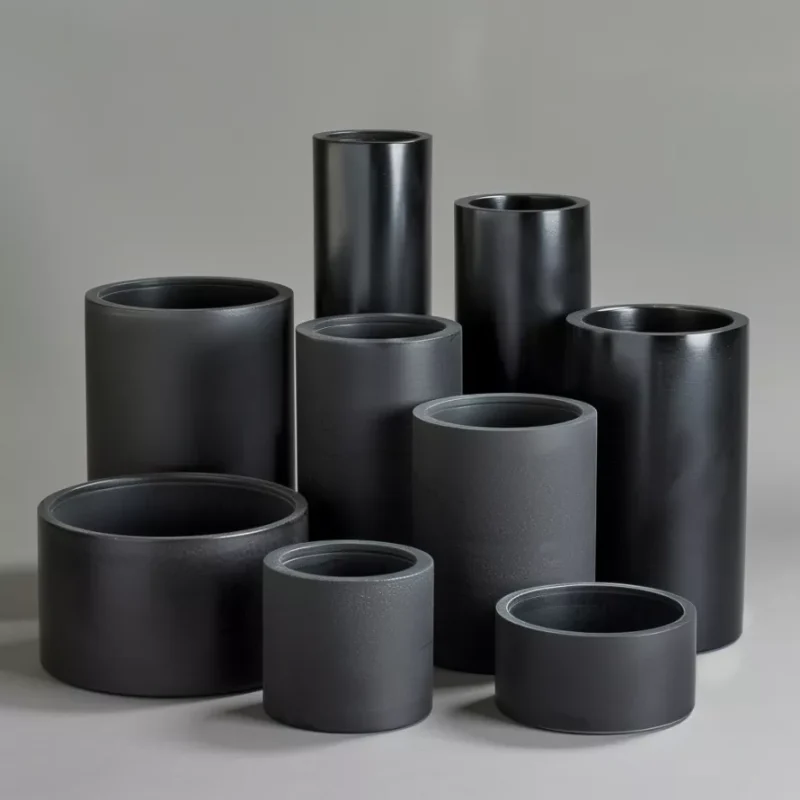
200 MPa
Flexural Strength
What Is a Silicon Carbide Crucible?
A silicon carbide crucible is a high-temperature ceramic container used for melting, calcination, and powder heat-treatment across industrial processing lines. A silicon carbide crucibles body withstands extreme thermal cycling and corrosive atmospheres without deformation.
The dense SiC matrix delivers uniform heat distribution for stable material reactions. A silicon carbide ceramic crucible supports both continuous production and batch-loading operations in metallurgy, battery materials, ceramics, and glass formulations.
Technical Specification of ADCERAX® Silicon Carbide Crucibles
Silicon carbide crucibles are engineered to maintain stable performance during repeated thermal cycling and corrosive atmosphere exposure. The specifications below summarize the typical properties required for high-temperature industrial processing and powder sintering operations.
| Parameter | Value |
| Material Type | Reaction-Bonded SiC (RBSiC) / Sintered SiC (SSiC) |
| Density | 2.75–3.10 g/cm³ |
| Maximum Working Temperature | 1500–1700°C |
| Thermal Expansion Coefficient (CTE) | 4.0–4.5×10⁻⁶/K |
| Thermal Conductivity | 25–90 W/m·K |
| Flexural Strength (Room Temperature) | 180–320 MPa |
| Flexural Strength (1200°C) | >150 MPa |
| Compressive Strength | 1000–2200 MPa |
| Hardness | HV 2200–2600 |
| Porosity | <15% (RBSiC), <3% (SSiC) |
| Oxidation Resistance | Stable above 1200°C |
| Chemical Compatibility | Acids / Alkalis / Metal Oxides / Molten Alloys |
| Thermal Shock Tolerance | ΔT 250–350°C |
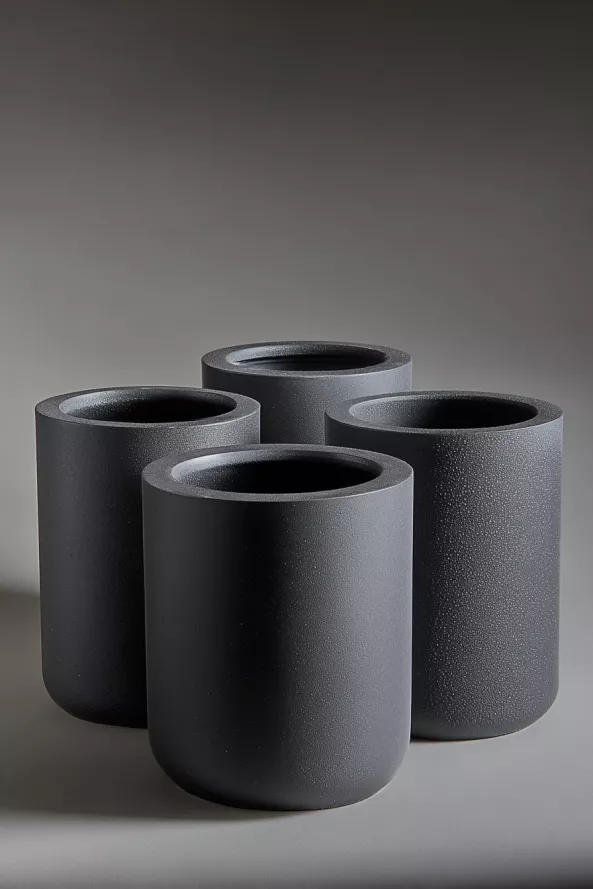
Key Material Properties of ADCERAX® Silicon Carbide Crucibles
Silicon carbide crucibles operate reliably in complex production environments where thermal gradients, corrosive vapors, and repetitive cycling are common. Their material composition and engineered geometry support stable furnace performance in both automated and manual workflows.
Thermal & Heat-Transfer Behavior
Thermal behavior governs the stability and efficiency of every silicon carbide crucible during extended furnace operation.
-
High thermal conductivity:
Enables fast heat transfer for consistent inner-wall temperature. -
Low thermal expansion:
Reduces stress accumulation during cycles from 300°C to above 1500°C. -
Strong thermal shock tolerance:
Maintains integrity under sudden ΔT changes of 250–350°C.
Mechanical Strength & Structural Stability
Mechanical rigidity ensures that silicon carbide crucibles remain dimensionally stable under load and high-temperature exposure.
-
High flexural strength:
Prevents warping and cracking during multi-hour sintering cycles. -
Strong compressive resistance:
Supports heavy powder layers, alloy masses, and stacked furnace setups. -
Wear-resistant SiC surface:
Minimizes abrasion from hard powders such as LFP, NCM, and zirconia.
Dimensional Consistency & Furnace Matching
Dimensional accuracy ensures stable furnace loading and predictable heat distribution for every silicon carbide crucible.
-
Uniform wall thickness:
Controls heat flow for improved 2D or 3D temperature fields. -
Consistent internal geometry:
Maintains powder distribution and prevents dead-zone accumulation. -
Customizable form factors:
Supports cylindrical, square, and conical shapes for varied furnace types.
Surface Behavior & Powder Flow
Surface finish characteristics influence powder flow, discharge efficiency, and internal adherence patterns of a SiC crucible.
-
Smooth internal surface:
Reduces powder adhesion and lowers second-grinding requirements. -
Matte external texture:
Improves grip and reduces slippage during robotic handling. -
Controlled roughness options:
Supports specific flow behaviors for metal melts or ceramic powders.
ADCERAX® Silicon Carbide Crucible Product Range
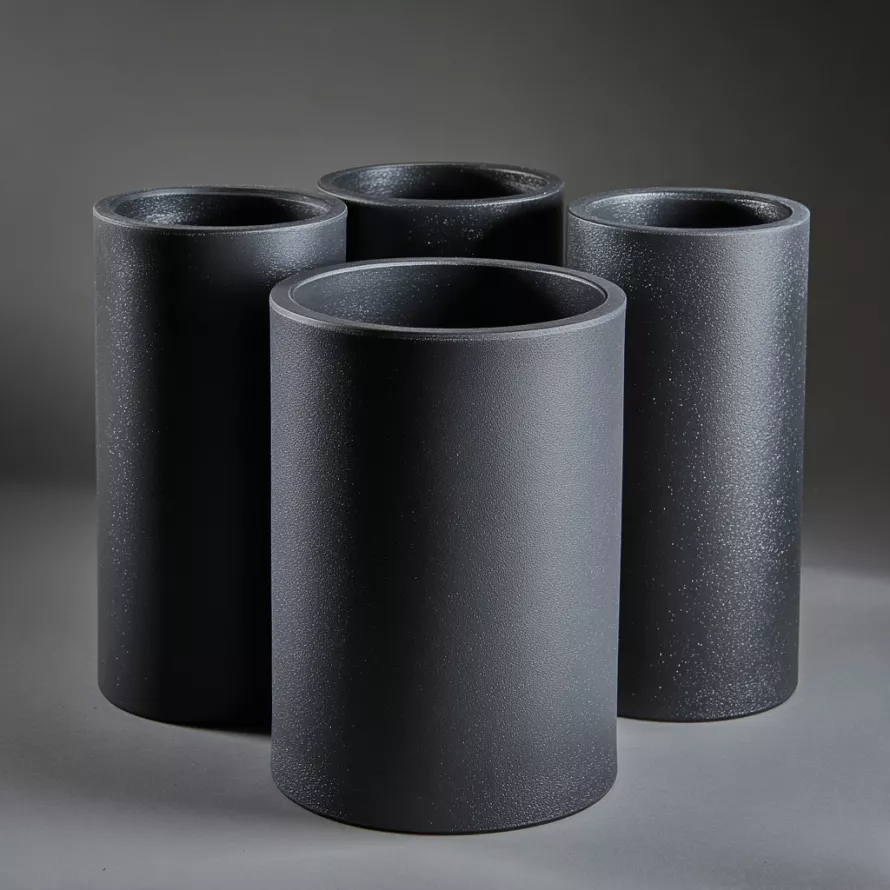
This form supports uniform radial heat distribution for melting and calcination tasks.
- Stable heating across 360°
- Cycle tolerance up to 1500°C
- Wall deviation under 1 mm
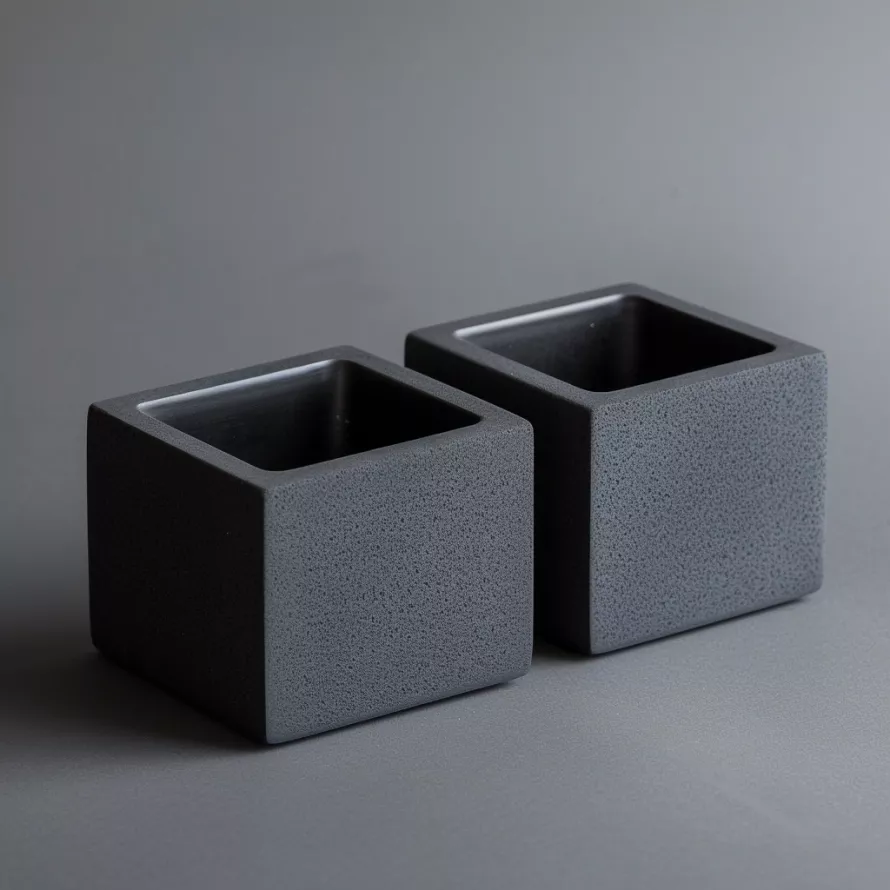
This design provides a full 2D flat-bed surface for powder layer control.
- Surface variation under 10°C
- Loading efficiency increased 25%
- Right-angle cavity heat uniformity
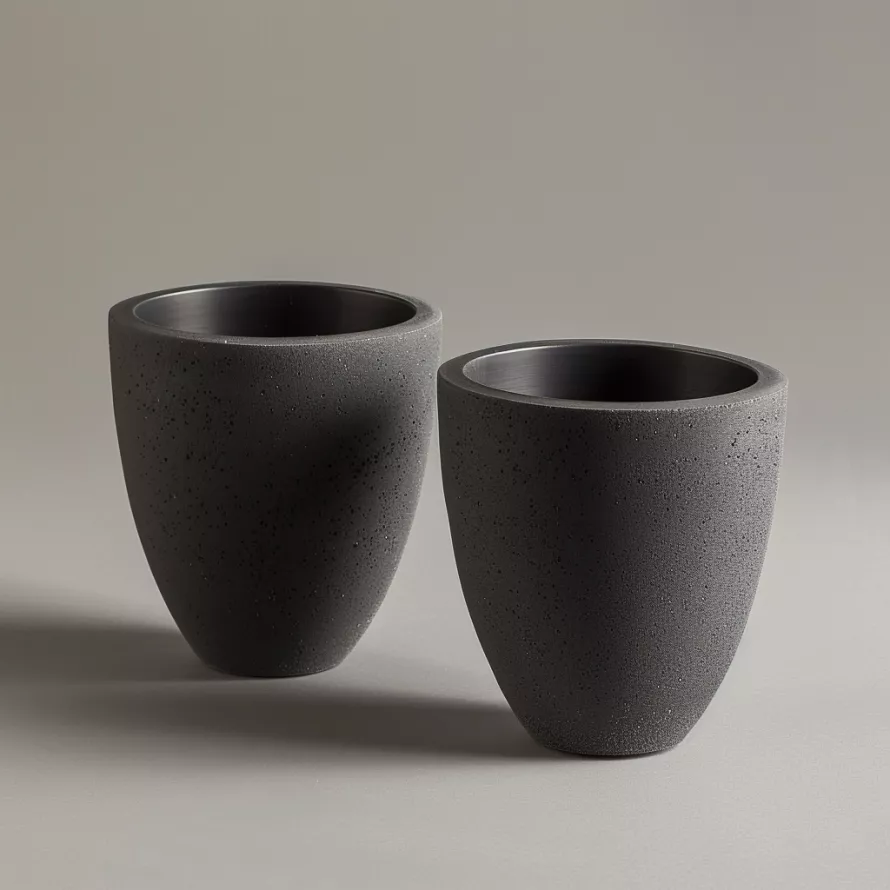
This profile enhances downward flow and promotes concentrated thermal distribution.
- Residue reduction by 40%
- Thermal gradient drop 15°C
- Controlled taper improves flow
Need Guidance Choosing the Right Silicon Carbide Crucible?
A suitable Silicon Carbide Crucible supports consistent heat profiles, long cycling stability, and reliable material handling in demanding industrial environments.
Key factors such as geometry, surface characteristics, and thermal behaviors can be aligned with specific furnace requirements for improved processing outcomes.
ADCERAX® provides project-ready assistance for dimension matching and application-specific selection.
ADCERAX® SiC Crucible Applications Across High-Temp Industries
A silicon carbide crucible is used in industrial environments where intense thermal cycling, corrosive vapors, and uniform heat delivery directly influence product quality. These applications rely on predictable heating behavior and dimensional stability to maintain batch consistency and production efficiency.
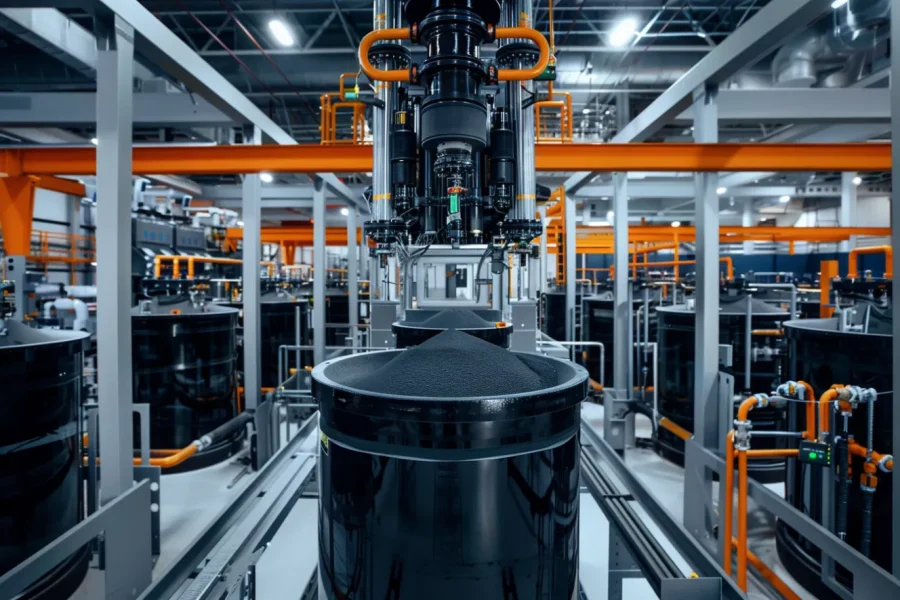
Lithium Battery Cathode and Precursor Sintering
This application requires silicon carbide crucibles capable of delivering consistent heat fields for NCM, NCA, and LFP materials.
-
Improved BET uniformity:
Heat variation reduced by 10–15% across powder layers. -
Longer furnace uptime:
Crucible lifespan increased by 30–50% compared with alumina. -
Lower crack rates:
Thermal shock failures kept under 5% during rapid cycling.
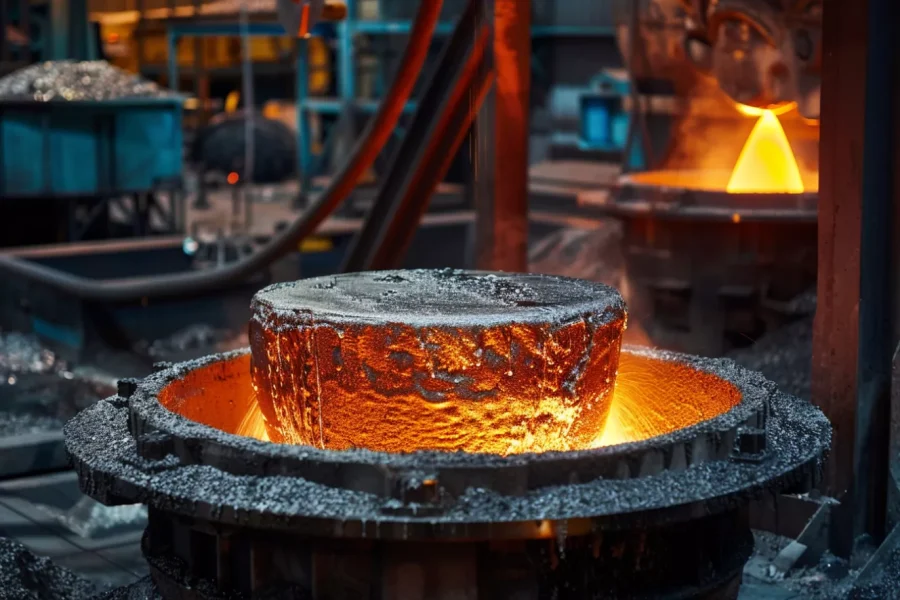
Powder Metallurgy and Alloy Melting
Metallurgical processes depend on silicon carbide ceramic crucible structures capable of handling molten metals and heavy thermal loads.
-
Stable melt handling:
Residue formation reduced by 20–40% during alloy discharge. -
High load bearing:
Vertical compressive strength above 1000 MPa supports dense melts. -
Reduced deformation:
Wall deflection under 1 mm during 1600°C cycles.
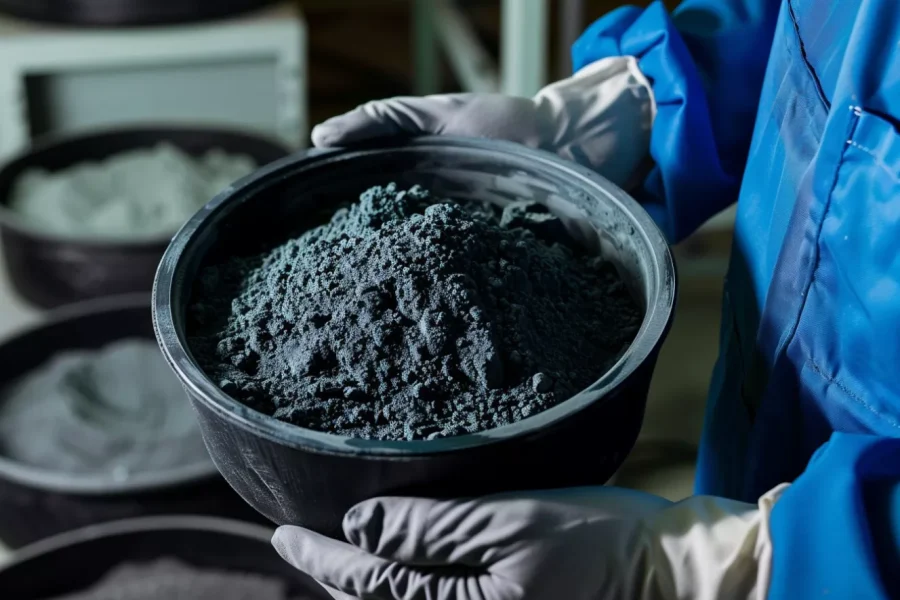
Advanced Ceramic Powder Calcination
Ceramic powder processing uses silicon carbide crucible designs that maintain uniform 2D and 3D heating fields.
-
Enhanced powder homogeneity:
Temperature gradients lowered by 12–18°C across flat layers. -
Less material adhesion:
Smooth inner surfaces reduce regrinding volume by 15–20%. -
Higher operational cycles:
Thermal cycling endurance increased by over 40% versus alumina.
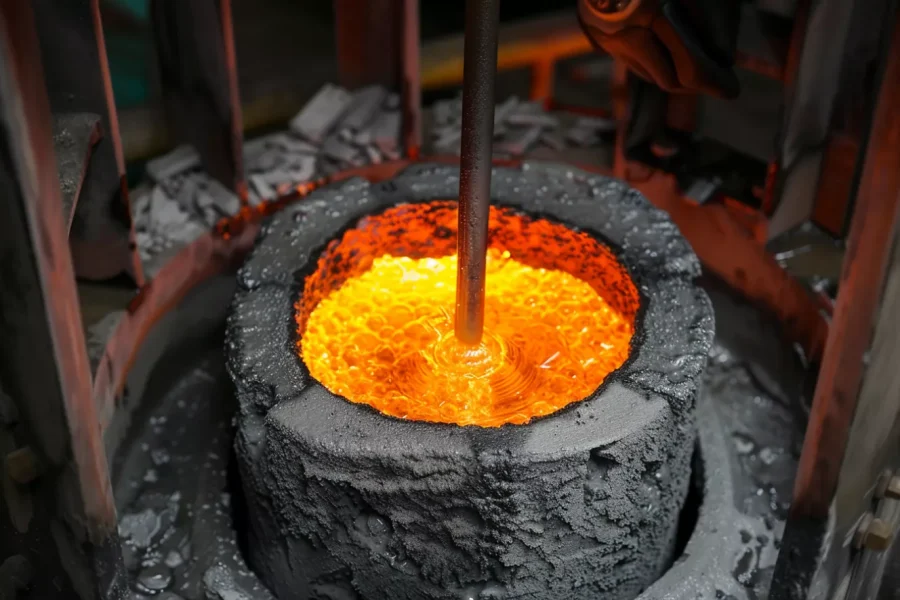
Glass Frit and Specialty Glass Melting
Glass formulations require silicon carbide crucibles with strong resistance to corrosive oxides and rapid heating profiles.
-
Shorter melting duration:
Ramp-up time decreased by 10–25% compared with traditional materials. -
Improved melt uniformity:
Temperature variation kept within 8–12°C across the melt zone. -
Improved melt uniformity:
Temperature variation kept within 8–12°C across the melt zone.
One-Stop Engineering & Supply Capability by ADCERAX®
One-Stop Custom Silicon Carbide Crucible Supplier for Industrial Projects
A reliable silicon carbide crucible supplier must match furnace geometry, thermal requirements, and operational constraints across multiple industries.
ADCERAX® supports engineering-grade selection processes used by global silicon carbide crucible manufacturers and high-volume procurement teams.
-
Geometry Compatibility Assessment:
Crucible geometry is aligned with furnace fixtures. -
Thermal Distribution Review:
Heat field behavior is evaluated for stable cycles. -
Powder Flow Verification:
Material settling patterns are checked for uniformity. -
Structural Load Analysis:
Cycling stress effects are predicted for safe operation. -
Dimensional Accuracy Control:
Critical tolerances are maintained within stable limits.


Manufacturing Strength Behind Silicon Carbide Crucible Production
Each Silicon Carbide Crucible batch is supported by measurable manufacturing indicators that ensure dimensional accuracy, thermal reliability, and large-volume scalability.
| Manufacturing Capabilities Overview | |||
|---|---|---|---|
| Category | Specification / Capability | ||
| SiC Material System | Supported RBSiC and SSiC grades | ||
| Isostatic Pressing Capacity | Max forming diameter 600 mm | ||
| Green Body Density Control | ±3% density deviation per batch | ||
| High-Temperature Kilns | 2100°C SSiC sintering capability | ||
| Kiln Chambers | 8 independent chambers for parallel production | ||
| Thermal Uniformity | ±5°C uniformity across effective zone | ||
| CNC Machining Centers | Five-axis SiC-compatible machining lines | ||
customized silicon carbide crucibles supplier
We specialize in customizing silicon carbide crucibles with special sizes, tight tolerances, and complex features. OEM and small-batch support available.
Customization Options
Extra-large / Extra-small diameters, non-standard thicknesses, and ultra-long / ultra-short lengths.
Provide higher - level dimensional accuracy and concentricity control than the standard.
Flanges, steps, threads, drilling holes, grooves, etc.
Adjust the material according to the application requirements.
Polish and grind the surface to achieve a specific surface roughness.
Customization Process
Send us your drawing, CAD file, or physical sample with material grade, dimensions, tolerances, and quantity. Our engineers will evaluate the design and provide a detailed quotation with lead time and pricing.
Once the quote is approved, we proceed with sample prototyping (1–50 pcs) if needed, for testing and validation.
After sample approval or direct confirmation, we begin batch manufacturing using CNC machining, sintering, and polishing. All parts undergo dimensional checks, material purity testing, and surface finish inspection.
Finished products are securely packed and shipped via DHL/FedEx/UPS or your preferred method. We support global delivery with full documentation.
FAQs About ADCERAX® Silicon Carbide Crucibles
A Silicon Carbide Crucible is formed through isostatic pressing or extrusion followed by high-temperature sintering. The consolidation phase defines final density and determines thermal-shock tolerance. Controlled sintering atmospheres stabilize grain bonding and reduce internal porosity. This manufacturing route produces a crucible that withstands repeated cycling above 1200°C.
The Silicon Carbide Crucible manufacturing process includes raw-material grading, green-body forming, sintering at up to 2100°C, and precision CNC finishing. Each stage influences wall uniformity and heat-transfer behavior during furnace loading. Post-sinter inspection ensures defect removal and dimensional repeatability. This process yields a crucible suitable for metallurgical and powder-sintering applications.
A Silicon Carbide Crucible provides higher oxidation resistance than graphite, particularly in air at >1000°C. Graphite performs well in inert atmospheres but loses integrity quickly under oxygen exposure. SiC maintains shape, thermal conductivity, and corrosion resistance during long production runs. Therefore, SiC is preferred for multi-cycle powder calcination and alloy processing.
A Silicon Carbide Crucible generally outperforms graphite in oxidizing furnaces due to its protective SiO₂ layer. Graphite offers higher purity for some melts but degrades rapidly in air, causing contamination and dimensional loss. SiC maintains strength at 1400–1700°C and handles thermal shock more consistently. These characteristics make SiC the more reliable choice for continuous industrial cycles.
A Silicon Carbide Crucible uses a ceramic-bonded microstructure that tolerates higher temperatures and faster heating rates. Clay-graphite variants exhibit lower thermal fatigue resistance and require stricter atmosphere control. SiC also supports higher compressive loads for dense powder beds. These differences make SiC preferred for rapid ramping and corrosive industrial environments.
A Silicon Carbide Crucible requires gradual pre-heating to stabilize its microstructure before full-temperature operation. Slow ramping minimizes thermal gradients that can initiate micro-cracks. The ideal curing schedule depends on furnace load density and atmosphere. Proper conditioning extends cycle life and reduces failure rates in continuous production lines.
A Silicon Carbide Crucible forms a thin SiO₂ layer when exposed to oxygen at elevated temperatures. This layer protects the underlying SiC from rapid oxidation, slowing material loss. Excessive thermal cycling may disrupt the oxide layer, requiring optimized ramp profiles. Controlled atmosphere transitions help maintain long-term stability.
A Silicon Carbide Crucible performs well in inert gas environments because SiC retains structural integrity without oxidation. Mechanical strength remains high even at 1500–1700°C. Thermal conductivity ensures uniform melt heating, reducing hot-spot formation. This behavior supports steel, alloy, and glass processing under stable inert conditions.
Get in touch with us
We believe that Adcerax will become your best partner!
Please fill in your contact information in the form or call us.
*Our team will answer your inquiries within 24 hours.
*Your information will be kept strictly confidential.
Partner with ADCERAX for Silicon Carbide Crucibles
Looking for a reliable silicon carbide crucible supplier? Let us help you with your next project.
info@adcerax.com
Tel.:
+(86) 0731-74427743
WhatsApp:
+(86)19311583352
Within 24 hours