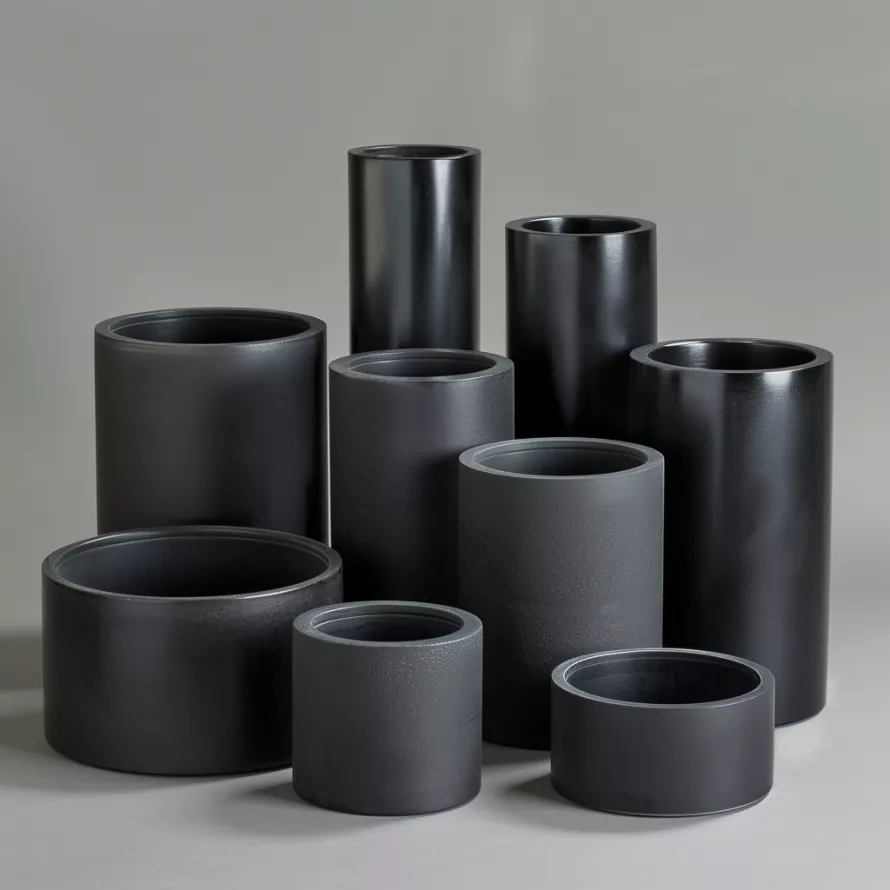
What Is a Cylindrical Silicon Carbide Crucible?
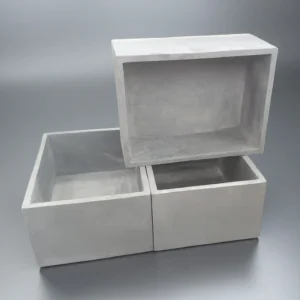
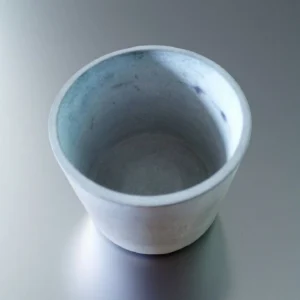
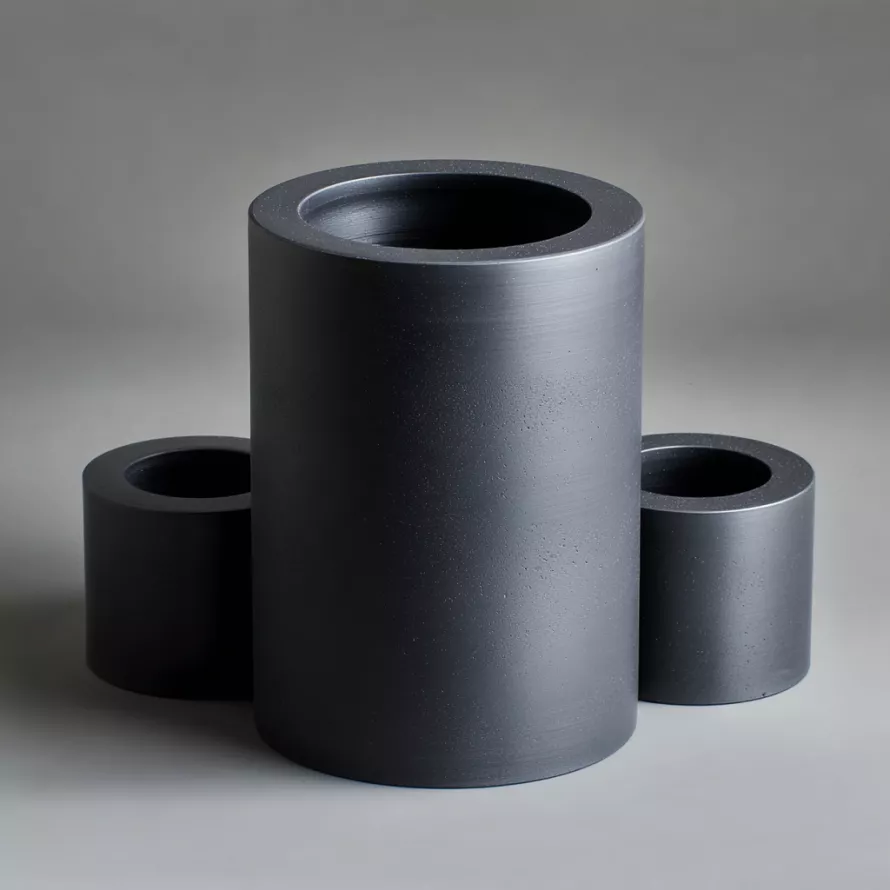
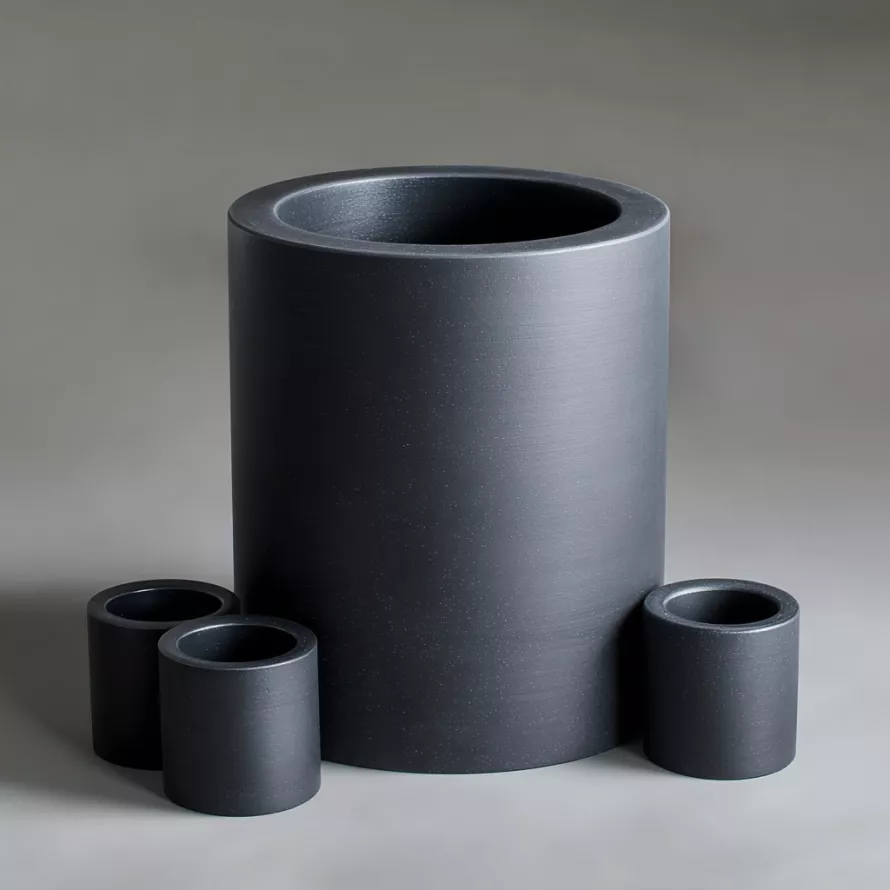
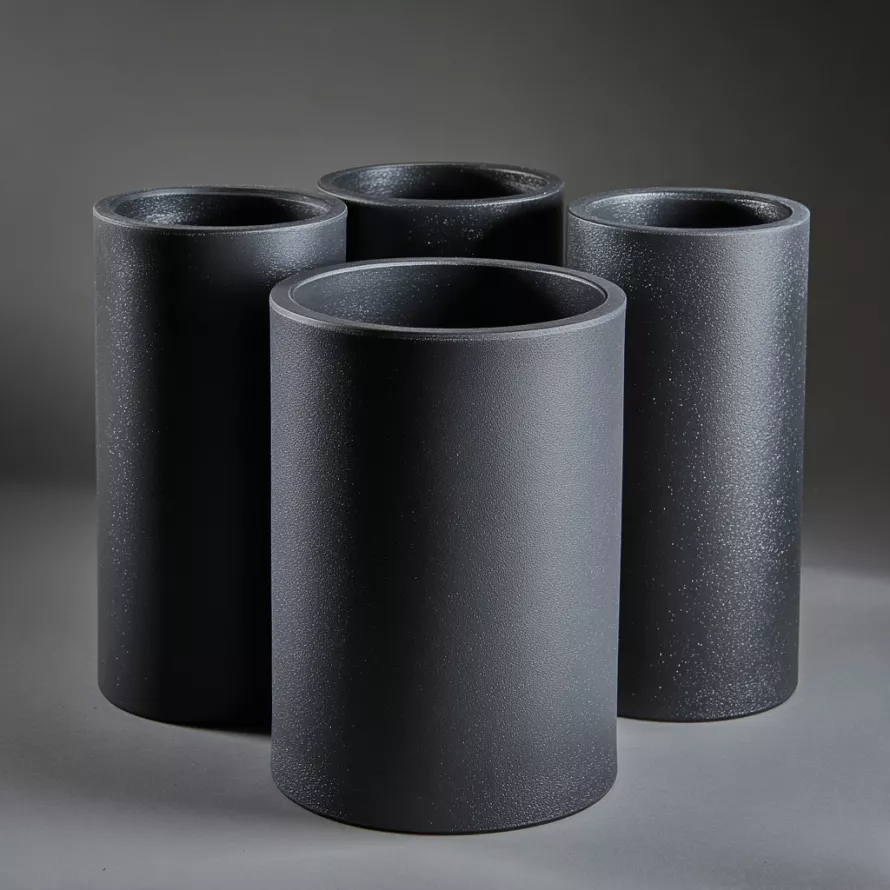
A cylindrical silicon carbide crucible is a high-temperature ceramic vessel used to hold metals, powders, ceramics or glass-related materials during melting, calcination and sintering. Compared with many oxide ceramic or graphite crucibles, SiC crucibles provide high thermal conductivity, strong thermal shock resistance, good mechanical rigidity and chemical stability in demanding furnace environments.
ADCERAX supplies cylindrical SiC crucibles in standard and drawing-based custom sizes. Material selection, wall thickness and geometry can be reviewed according to the operating temperature, furnace atmosphere, charge weight, heating rate and processed material.
Performance Factors That Matter in SiC Crucible Selection
- Stable Strength at High Temperature
RBSiC and SSiC crucibles provide flexural strength of about 250–400 MPa, helping support charge weight, furnace handling and repeated heating cycles. - Efficient Thermal Transfer
Typical thermal conductivity ranges from 45 W/m·K for RBSiC to 74 W/m·K for SSiC, helping reduce local temperature gradients inside the crucible wall. - Low Thermal Expansion
A thermal expansion coefficient of 4.1–4.5 × 10⁻⁶/K helps reduce thermal stress during controlled heating and cooling. - Low Porosity for Cleaner Processing
Open porosity below 0.1% helps reduce melt infiltration, powder contamination and wall degradation in high-temperature applications. - Material Selection by Application
RBSiC is suitable for many general thermal-processing uses, while SSiC is preferred when higher SiC purity, stronger corrosion resistance or cleaner processing conditions are required.
Technical Specifications of Cylindrical Silicon Carbide Crucible
ADCERAX® The Cylindrical Silicon Carbide Crucible demonstrates stable mechanical and thermal behavior across high-temperature industrial environments, enabling reliable performance during melting, calcination, and powder synthesis operations. Its SiC microstructure maintains strength during rapid thermal cycling while preserving low porosity and chemical inertness against molten metals and reactive atmospheres.
| Parameter | RBSiC Reference Data | SSiC Reference Data | Why It Matters for Buyers |
|---|---|---|---|
| Material System | 80% SiC + 20% free Si | ≥99% SiC | Helps buyers choose between cost-sensitive thermal processing and higher-purity, stronger corrosion-resistant applications. |
| Maximum Operating Temperature | ≤1380°C | ≤1600°C | Defines whether the crucible is suitable for the furnace temperature, atmosphere and heating cycle. Final use should be confirmed by application conditions. |
| Bulk Density | 3.02 g/cm³ | 3.10 g/cm³ | Higher density supports better structural stability, lower material penetration risk and more consistent performance during repeated heating. |
| Open Porosity | <0.1% | <0.1% | Low porosity helps reduce melt infiltration, powder contamination and wall degradation in high-temperature processing. |
| Flexural Strength at 20°C | 250 MPa | 380 MPa | Indicates room-temperature handling strength, which matters during loading, installation, transport and daily operation. |
| Flexural Strength at 1200°C | 280 MPa | 400 MPa | Shows strength retention at elevated temperature, which is important for heavy charge loading and repeated furnace cycles. |
| Compressive Strength | 1000–2200 MPa | 1000–2200 MPa | Helps evaluate load-bearing capability when the crucible holds dense powders, metal charges or high-volume batches. |
| Elastic Modulus | 330 GPa | 420 GPa | Higher rigidity helps maintain geometry and reduces deformation risk under thermal and mechanical stress. |
| Thermal Conductivity | 45 W/m·K | 74 W/m·K | Better heat transfer helps improve temperature uniformity and reduce local hot spots inside the crucible wall. |
| Thermal Expansion Coefficient | 4.1–4.5 × 10⁻⁶/K | 4.1–4.5 × 10⁻⁶/K | Low thermal expansion helps reduce cracking risk during heating, cooling and repeated thermal cycling. |
| Hardness | 2600–2800 kg/mm² | 2600–2800 kg/mm² | High hardness improves wear resistance when handling powders, granular materials or abrasive charge materials. |
| Chemical Stability Range | pH 2–12 | pH 2–12 | Helps buyers evaluate compatibility with acidic, alkaline or chemically active processing environments. |
Dimensions of Cylindrical Silicon Carbide Crucible

| Item | Outer Diameter(mm) | Inner Diameter(mm) | Height(mm) | Thickness(mm) |
| AT-SIC-G1001 | 10.0 | 7.8 | 19.0 | 1.1 |
| AT-SIC-G1002 | 12 | 8 | 26 | 2 |
| AT-SIC-G1003 | 14.5 | 10.5 | 33.5 | 2 |
| AT-SIC-G1004 | 20 | 16 | 31 | 2 |
| AT-SIC-G1005 | 22 | 16 | 80 | 3 |
| AT-SIC-G1006 | 23 | 19 | 81 | 2 |
| AT-SIC-G1007 | 28 | 21 | 110 | 3.5 |
| AT-SIC-G1008 | 29 | 22 | 17.5 | 3.5 |
| AT-SIC-G1009 | 29 | 24 | 19.7 | 2.5 |
| AT-SIC-G1010 | 32.5 | 26.5 | 29 | 3 |
| AT-SIC-G1011 | 38 | 29 | 32.5 | 4.5 |
| AT-SIC-G1012 | 38 | 29.8 | 45 | 4.1 |
| AT-SIC-G1013 | 41 | 33 | 71.5 | 4 |
| AT-SIC-G1014 | 42 | 33 | 73 | 4.5 |
| AT-SIC-G1015 | 45 | 38 | 18 | 3.5 |
| AT-SIC-G1016 | 47.5 | 38 | 74 | 4.75 |
| AT-SIC-G1017 | 51 | 41 | 122 | 5 |
| AT-SIC-G1018 | 51 | 44 | 73 | 3.5 |
| AT-SIC-G1019 | 52 | 39 | 144 | 6.5 |
| AT-SIC-G1020 | 53 | 42 | 124 | 5.5 |
| AT-SIC-G1021 | 60 | 51 | 100 | 4.5 |
| AT-SIC-G1022 | 61 | 51 | 102 | 5 |
| AT-SIC-G1023 | 61 | 52 | 102 | 4.5 |
| AT-SIC-G1024 | 61.5 | 53 | 122 | 4.25 |
| AT-SIC-G1025 | 63 | 52 | 103.5 | 5.5 |
| AT-SIC-G1026 | 65 | 55 | 64.5 | 5 |
| AT-SIC-G1027 | 71 | 61 | 111 | 5 |
| AT-SIC-G1028 | 72.5 | 62.5 | 113 | 5 |
| AT-SIC-G1029 | 73 | 62.5 | 125.5 | 5.25 |
| AT-SIC-G1030 | 80 | 58 | 91 | 11 |
| AT-SIC-G1031 | 93 | 83 | 103 | 5 |
| AT-SIC-G1032 | 94 | 83.5 | 104.5 | 5.25 |
| AT-SIC-G1033 | 100 | 92 | 132 | 4 |
| AT-SIC-G1034 | 104 | 90 | 182 | 7 |
| AT-SIC-G1035 | 105 | 95 | 135.5 | 5 |
| AT-SIC-G1036 | 380 | 344 | 255 | 18 |
RBSiC vs SSiC Material Selection for SiC Crucibles
| Material Option | Suitable Use | Selection Notes |
|---|---|---|
| RBSiC Crucible | General high-temperature processing, larger structural parts and cost-sensitive custom sizes | RBSiC provides good thermal shock resistance and dimensional stability, but the free silicon content should be considered when chemical compatibility is critical. |
| SSiC Crucible | Higher-purity processing, stronger corrosion resistance and more demanding thermal environments | SSiC is usually selected when buyers need higher SiC purity, better chemical stability and stronger high-temperature performance. |
| Material Review Needed | Reactive melts, fluxes, alkali vapors, vacuum or special atmospheres | ADCERAX should review the application before confirming whether RBSiC, SSiC or another ceramic material is more suitable. |
Export Packaging for Cylindrical SiC Crucibles
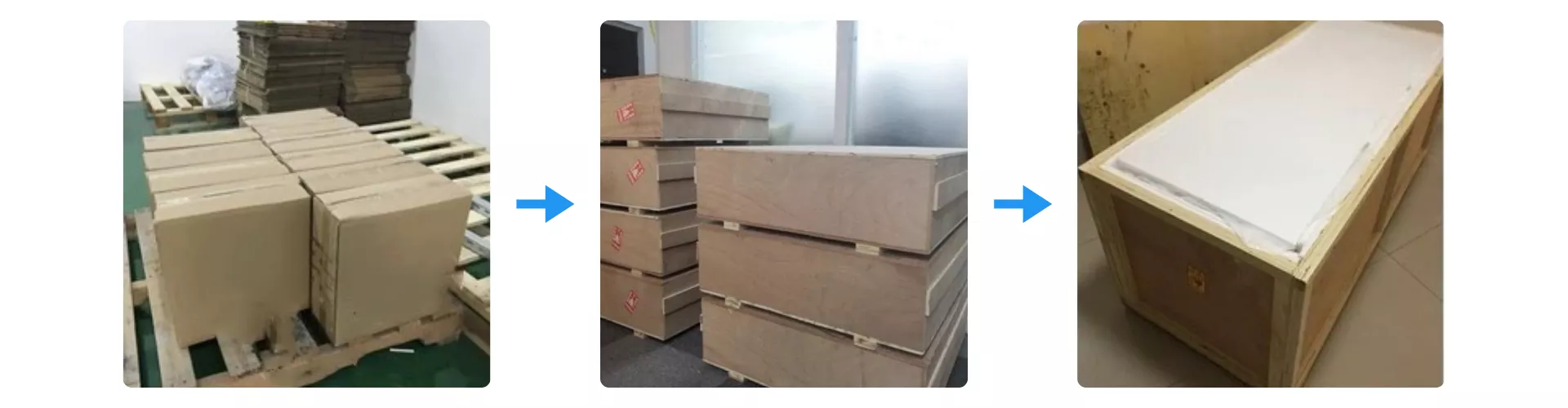
Each cylindrical silicon carbide crucible is packed with protective cushioning to reduce edge damage, surface impact and vibration during international transportation. For fragile, large-size or custom-machined crucibles, reinforced cartons or plywood cases can be used according to shipment quantity and product size.
Packaging can be reviewed based on crucible diameter, wall thickness, quantity, destination and handling requirements.