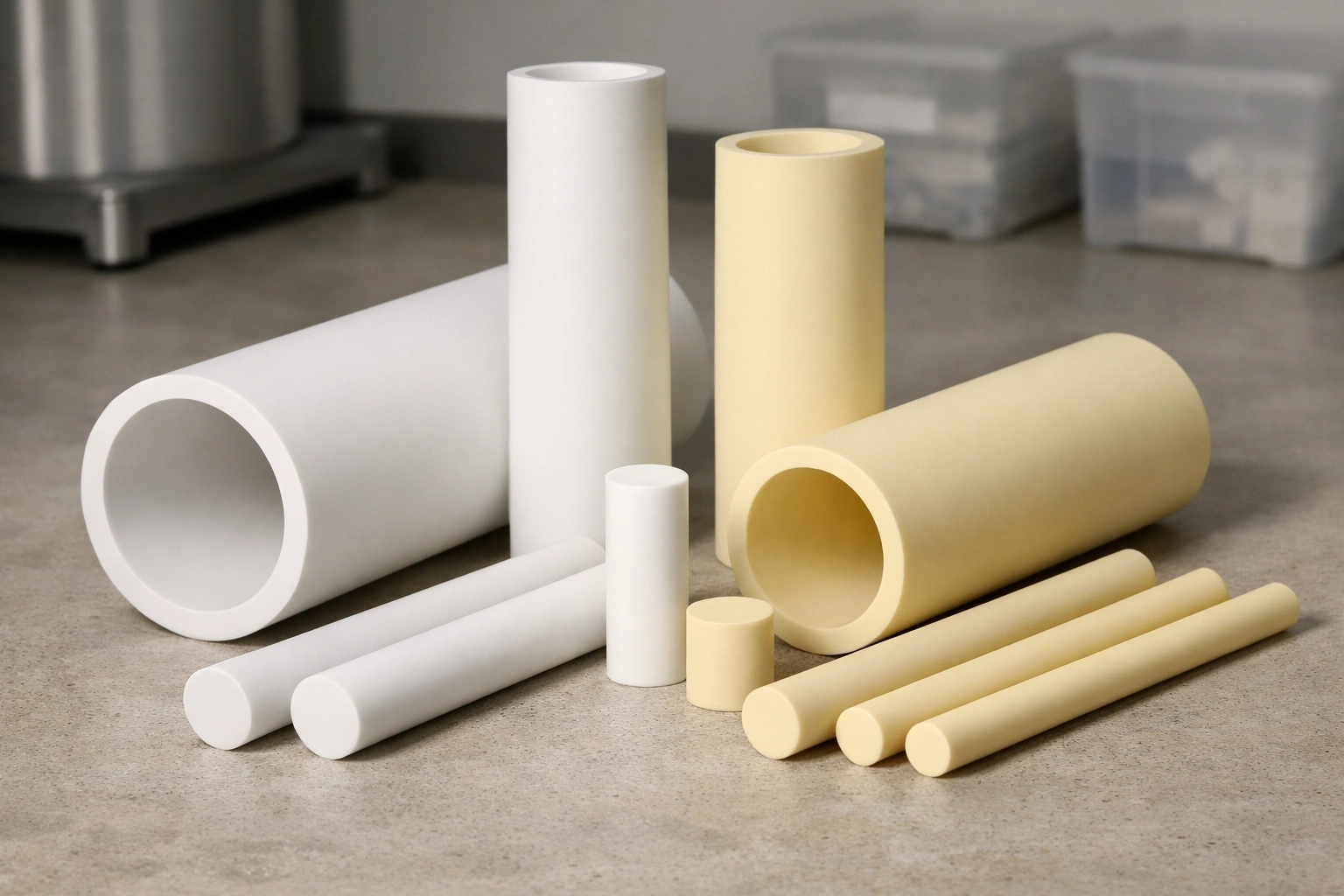
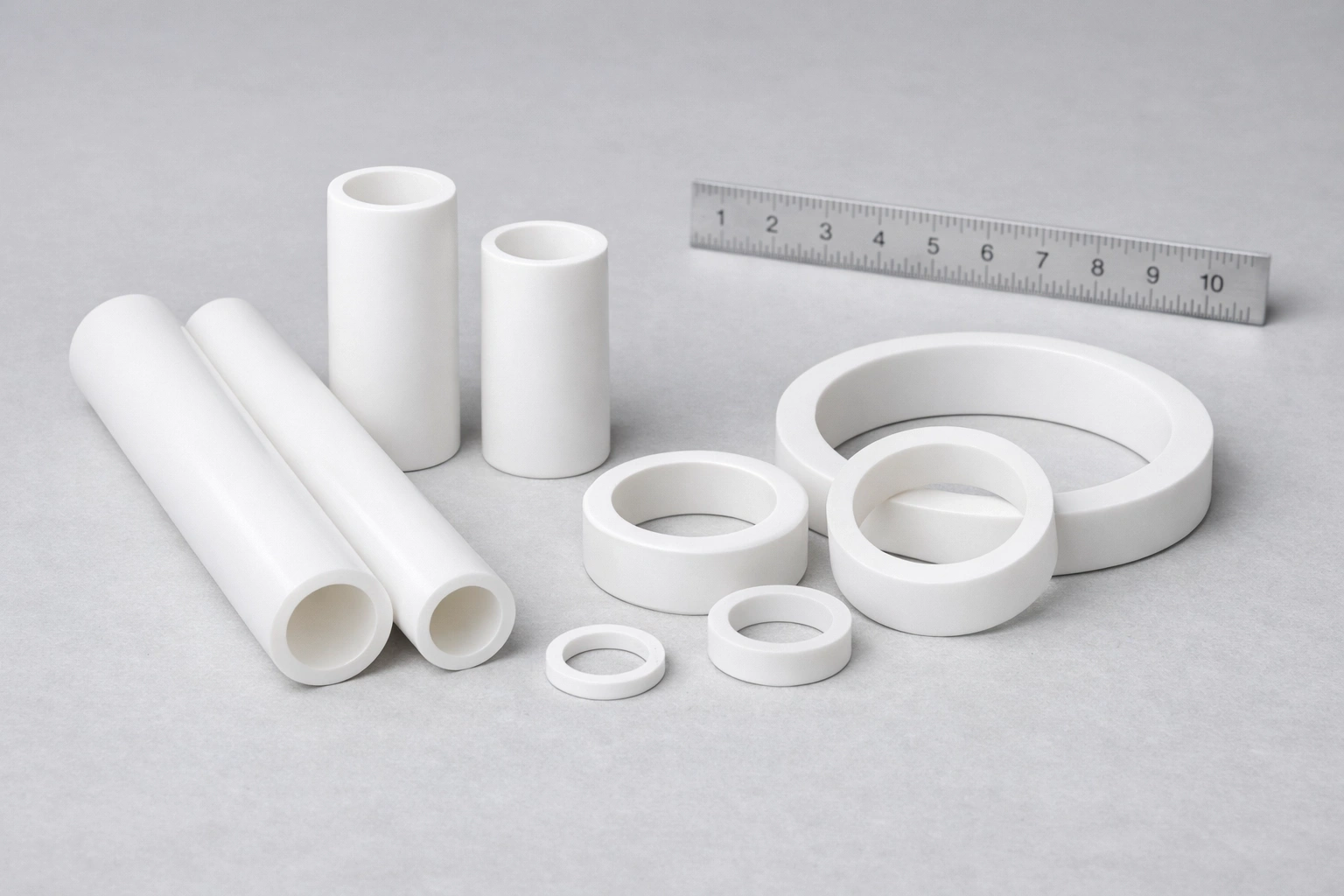
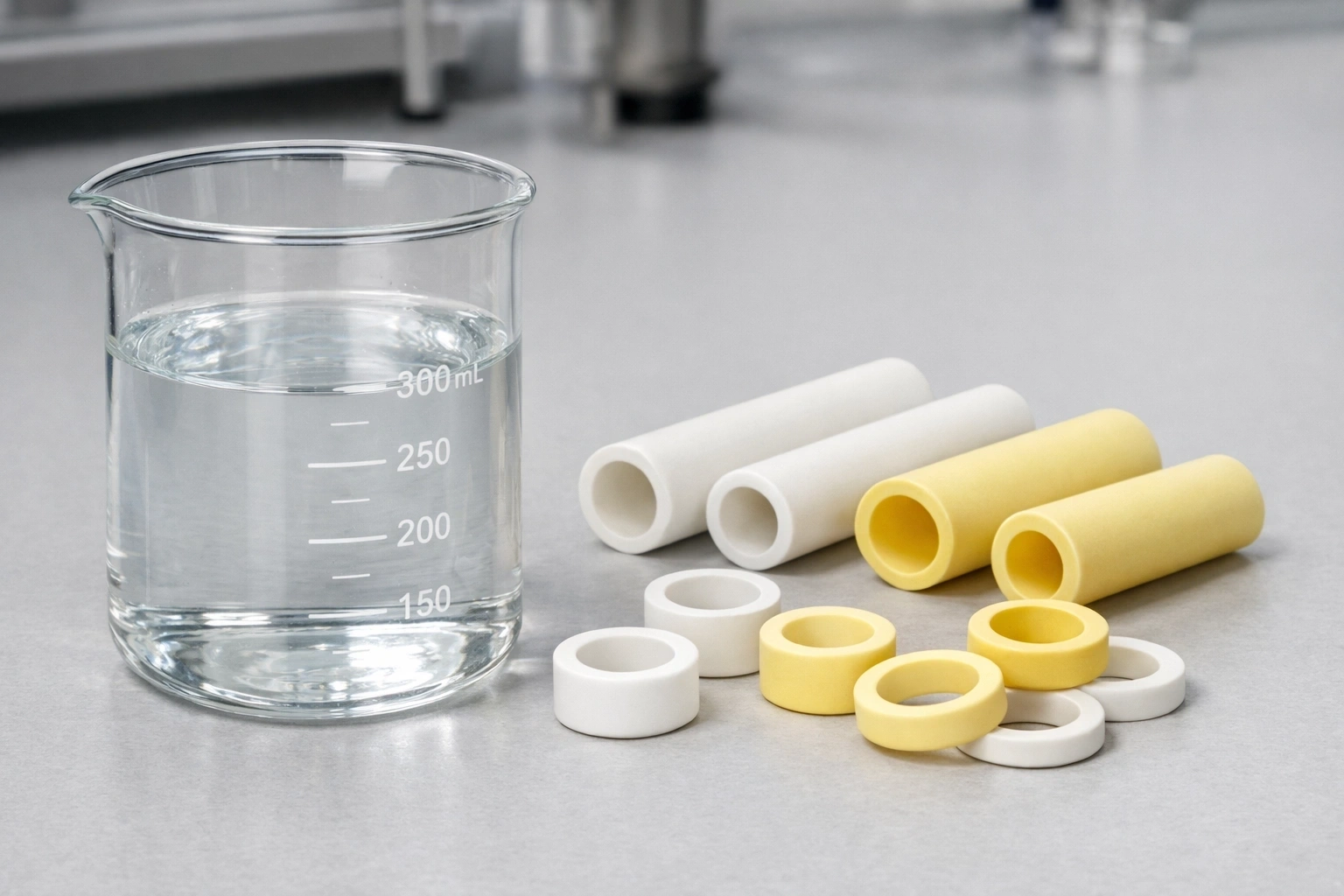
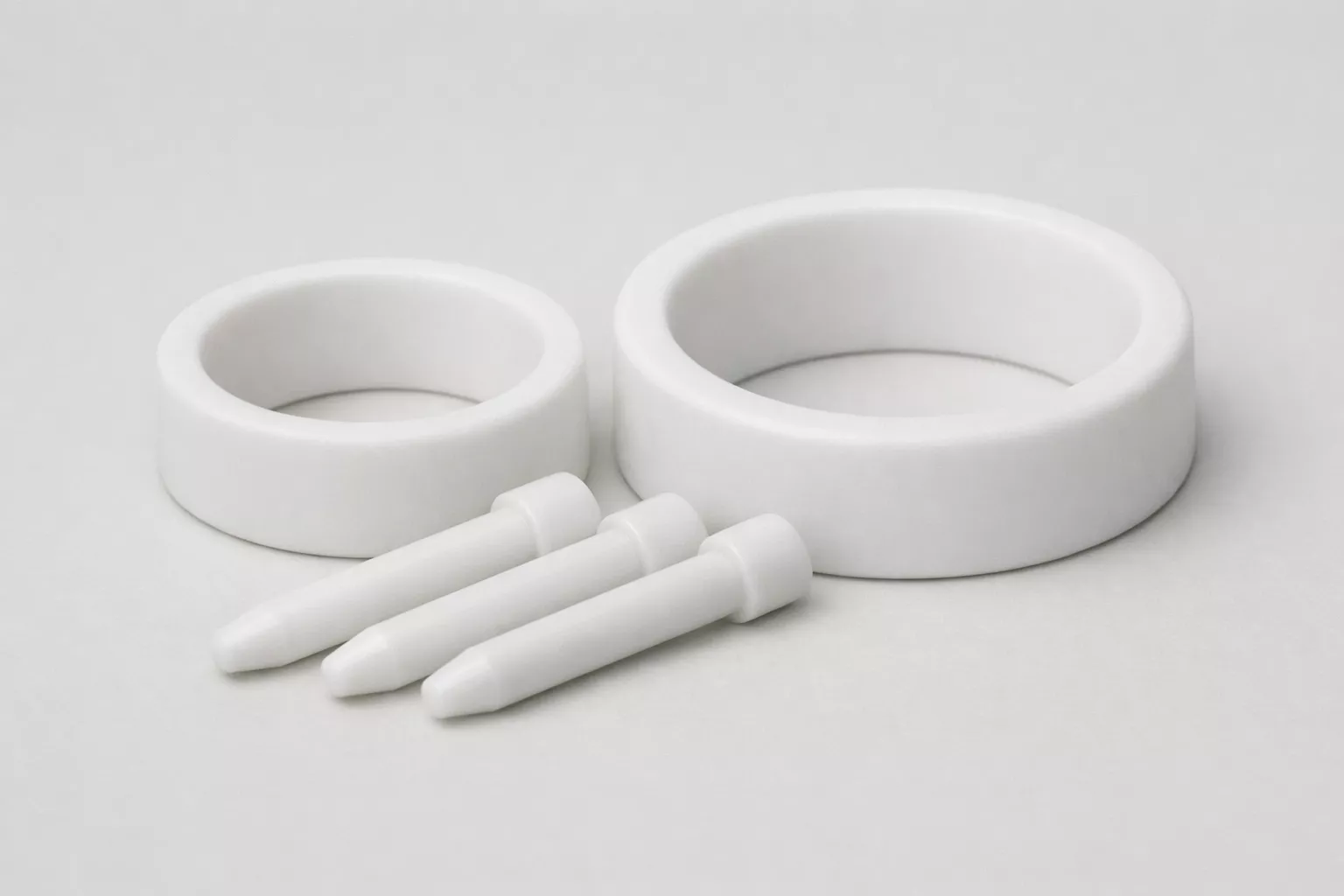
TGA Alumina Crucibles are often treated as passive holders; however, small material and geometry deviations can quietly shift baselines, skew mass-loss steps, and force avoidable reruns.
TGA Alumina Crucibles for thermal analysis define the container boundary that controls heat exchange, gas transport, and contamination risk. Consequently, crucible choice directly affects baseline stability, repeatability, and interpretation across methods, operators, and instruments.
Before selection rules, cleaning protocols, or compatibility checks are applied, the core premise must be established. Specifically, the engineering reasons alumina becomes the default TGA crucible must be clarified, and the conditions where that default fails must be recognized.
Why Alumina Crucibles Are the Default Choice in TGA — and When That Assumption Breaks
TGA Alumina Crucibles for thermal analysis are selected first because their material behavior aligns with high-temperature mass-loss measurements. However, that suitability depends on clearly defined physical and chemical limits. Therefore, understanding why alumina works, and when it no longer does, is the foundation of reliable TGA method design.
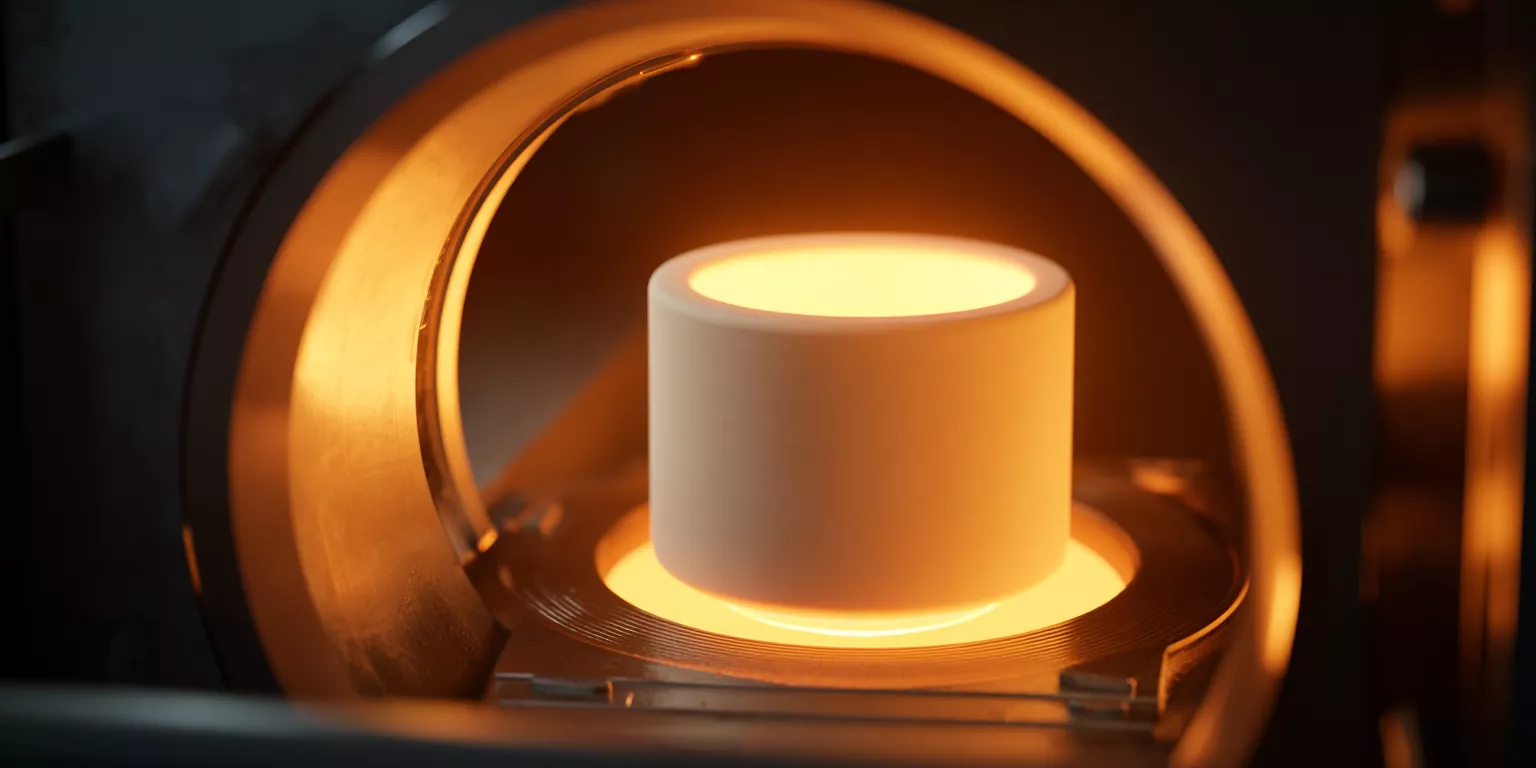
Thermal Stability of Alumina Under TGA Heating Profiles
In daily laboratory operation, alumina crucibles are trusted to survive repeated heating cycles without visible deformation. Consequently, thermal stability is often assumed rather than verified, especially when ramp rates and holding steps are modified during method development.
Under controlled linear heating to 1500 °C, high-purity alumina crucibles typically exhibit linear dimensional change below 0.3%. Moreover, flexural strength retention above 80% is commonly observed after more than 50 heating cycles below 1400 °C, provided grain growth remains limited. As a result, alumina maintains geometric predictability across repeated TGA runs, which directly supports baseline reproducibility.
Experienced analysts often notice that when crucibles begin to warp, baseline noise increases before failure becomes visually apparent. Therefore, dimensional stability must be treated as a quantitative performance parameter rather than a visual inspection criterion.
Thermal Stability Metrics Relevant to TGA Alumina Crucibles
| Parameter | Typical Range |
|---|---|
| Maximum continuous temperature (°C) | 1400–1600 |
| Linear dimensional change (%) | ≤0.3 |
| Strength retention after cycling (%) | ≥80 |
| Typical heating rate tolerance (°C/min) | 5–20 |
Chemical Inertness and Its Role in Mass-Loss Interpretation
Beyond temperature resistance, alumina is chosen because it minimizes unintended chemical participation during thermal analysis. Accordingly, chemical inertness becomes critical when interpreting small mass-loss steps below 5%.
Alumina remains thermodynamically stable against most organic compounds, polymers, and inorganic oxides up to approximately 1400 °C. Furthermore, surface reactivity is low enough that adsorption-driven mass changes are usually below 0.05% of crucible mass after proper preconditioning. Consequently, alumina contributes negligible background signals compared with metallic crucibles, which may oxidize or alloy under similar conditions.
In practice, analysts frequently report that switching from metal pans to alumina reduces unexplained baseline drift during long isothermal holds. Thus, inertness directly translates into improved confidence when distinguishing true sample decomposition from container artifacts.
Typical Inertness-Related Performance Indicators
| Indicator | Typical Value |
|---|---|
| Background mass change after pre-firing (%) | ≤0.05 |
| Reaction tendency with common oxides | Minimal |
| Oxidation contribution in air atmosphere | Negligible |
| Adsorption sensitivity at ambient conditions | Low |
Recognizing Scenarios Where Alumina Is Not the Optimal Baseline
Although alumina performs well in most TGA applications, its suitability is not universal. Therefore, engineers must identify early warning conditions where alumina no longer behaves as an inert reference.
Problems typically arise when samples melt, flux, or chemically wet alumina surfaces above 1000 °C. In such cases, adhesion can alter effective surface area, restrict gas diffusion, and trap residues that introduce false mass plateaus. Moreover, highly alkaline or fluoride-containing systems may react with alumina, producing irreversible surface modification.
Seasoned materials engineers often recall experiments where repeated cleaning failed to restore baseline stability, despite careful thermal pre-treatment. In hindsight, these cases usually involved incompatible sample chemistries rather than cleaning deficiencies. Consequently, recognizing incompatibility early prevents prolonged troubleshooting and data misinterpretation.
Conditions That Challenge Alumina as a Neutral TGA Crucible
| Condition | Risk Level |
|---|---|
| Low-melting flux-forming samples | High |
| Strong alkaline compounds | Moderate–High |
| Fluoride-containing systems | High |
| Pure organic polymers below 600 °C | Low |
Temperature Limits, Atmosphere Compatibility, and Self-Interference Risks
TGA Alumina Crucibles for thermal analysis operate reliably only within specific thermal and atmospheric boundaries. Consequently, exceeding these boundaries introduces crucible-originated signals that can be mistakenly attributed to the sample. Therefore, engineers must distinguish nominal ratings from method-level operating limits.
Practical Maximum Temperature Versus Nominal Material Ratings
Alumina crucibles are commonly labeled with maximum temperatures reaching 1600 °C. However, nominal ratings reflect short-term material survivability rather than long-term dimensional or signal stability.
During extended TGA programs involving slow ramps or isothermal holds above 1300 °C, microstructural changes may occur well before visible deformation. Specifically, grain coarsening beyond 5 µm has been observed after repeated exposures above 1450 °C, leading to subtle shape distortion. Consequently, crucibles may remain intact while still degrading baseline repeatability.
Experienced analysts often notice that baseline noise increases gradually across successive high-temperature runs. Therefore, practical temperature limits should be defined by reproducibility thresholds rather than catastrophic failure points.
Temperature-Related Performance Thresholds
| Parameter | Typical Threshold |
|---|---|
| Nominal maximum temperature (°C) | 1600 |
| Recommended continuous limit (°C) | 1400–1450 |
| Grain growth onset (°C) | ≥1450 |
| Baseline drift risk above threshold | Elevated |
Atmosphere Effects on Alumina Behavior in TGA
Atmosphere composition significantly influences alumina surface behavior during thermal analysis. Accordingly, crucible performance must be evaluated in the same gas environment used for measurement.
In oxidizing atmospheres, alumina remains chemically stable; however, surface hydroxylation at lower temperatures can contribute to minor mass changes during initial heating. By contrast, inert atmospheres such as nitrogen or argon reduce surface reactions but may prolong desorption effects below 200 °C. Consequently, pre-conditioning cycles become essential for consistent baselines.
Analysts working with reactive gas mixtures often observe that atmosphere changes alone can shift baseline slopes, even with identical samples. Thus, crucible behavior must be characterized under the exact atmospheric conditions of the method.
Atmosphere-Dependent Crucible Responses
| Atmosphere | Dominant Effect |
|---|---|
| Air | Surface hydroxyl desorption |
| Nitrogen | Reduced oxidation, delayed stabilization |
| Argon | Minimal reaction, extended equilibration |
| Reactive gas mixtures | Surface interaction dependent |
Crucible Self-Mass Change and Baseline Distortion Mechanisms
Even when empty, alumina crucibles can exhibit measurable mass variation during TGA. Therefore, understanding self-interference mechanisms is critical for high-sensitivity measurements.
Moisture adsorption at ambient conditions commonly contributes mass changes below 0.02% during initial heating to 150 °C. Moreover, incomplete pre-firing may leave residual binders or surface contaminants that volatilize gradually. As a result, empty-pan baselines may show sloped or stepped behavior that overlaps with early sample decomposition events.
Veteran engineers often perform multiple empty-pan runs before trusting a new crucible batch. Consequently, crucible self-mass stability should be validated as rigorously as the sample itself.
Typical Self-Interference Indicators
| Indicator | Typical Magnitude |
|---|---|
| Moisture-related mass loss (%) | ≤0.02 |
| Residual volatilization temperature range (°C) | 100–300 |
| Baseline stabilization time (min) | 30–60 |
| Impact on low-mass samples | Significant |
Geometry, Volume, and Lid Configuration — How Crucible Design Shapes TGA Results
TGA Alumina Crucibles for thermal analysis must satisfy not only material requirements but also geometric constraints. Consequently, crucible shape, volume, and lid configuration directly influence heat transfer, gas exchange, and apparent mass-loss kinetics1. Therefore, geometry selection becomes a method-level decision rather than a mechanical convenience.
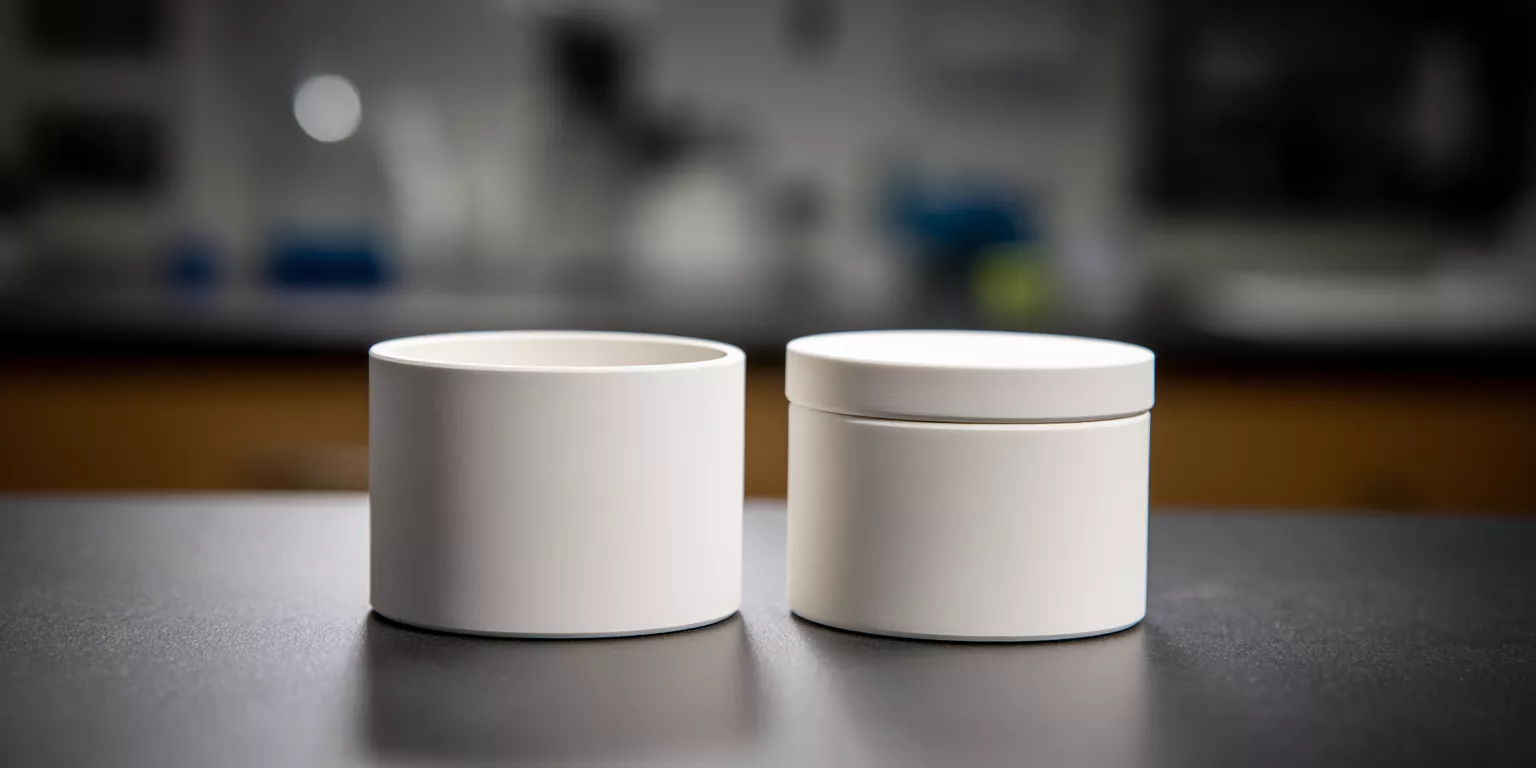
Crucible Volume, Sample Mass, and Heat Transfer Uniformity
In TGA experiments, crucible volume determines how effectively heat penetrates the sample bed. Accordingly, volume selection must be matched to sample mass and packing behavior.
When sample fill exceeds 70% of crucible volume, internal temperature gradients commonly develop. Moreover, restricted heat transfer delays decomposition onset by 5–20 °C in comparison with optimally filled crucibles. As a result, apparent kinetic parameters may shift even though the chemical process remains unchanged.
Experienced analysts often recall comparative runs where identical samples produced different curves solely due to volume mismatch. Therefore, controlling fill ratio is essential for maintaining cross-run comparability.
Recommended Fill Ratios for TGA Alumina Crucibles
| Parameter | Typical Range |
|---|---|
| Optimal fill ratio (%) | 30–60 |
| Maximum recommended fill (%) | ≤70 |
| Onset shift beyond limit (°C) | 5–20 |
| Heat uniformity risk above limit | High |
External Dimensions and Instrument Mechanical Compatibility
Beyond internal volume, external dimensions determine how the crucible interacts with the balance and furnace assembly. Consequently, small dimensional deviations can introduce mechanical instability.
Crucibles with uneven wall thickness or off-center mass distribution may tilt slightly on the balance carrier. Moreover, such imbalance increases signal noise and sensitivity to gas flow fluctuations. As a result, mass resolution can degrade by more than 10% in microgram-level measurements.
Analysts troubleshooting noisy baselines often discover that replacing an otherwise intact crucible restores stability immediately. Thus, dimensional consistency is as critical as material purity.
Dimensional Factors Affecting Measurement Stability
| Parameter | Typical Tolerance |
|---|---|
| Outer diameter deviation (mm) | ≤0.05 |
| Height deviation (mm) | ≤0.05 |
| Wall thickness variation (%) | ≤10 |
| Resulting noise increase beyond limit | >10% |
Lid Design and Gas Transport Control During Decomposition
Lid configuration plays a decisive role in controlling gas transport during thermal decomposition. Therefore, lid selection must align with reaction mechanisms rather than routine practice.
Open crucibles allow unrestricted gas escape, which suits rapid volatilization processes. However, covered crucibles slow diffusion, stabilizing mass-loss rates and improving reproducibility for multi-step reactions. Vent-hole lids offer a compromise, permitting controlled release while reducing sample spattering.
Seasoned engineers often adjust lid types after observing erratic mass-loss slopes rather than changing heating programs. Consequently, lid selection should be considered an adjustable experimental variable.
Lid Configuration Effects on TGA Behavior
| Lid Type | Primary Effect |
|---|---|
| Open | Maximum gas release |
| Covered | Diffusion-limited stabilization |
| Vent-hole | Controlled gas transport |
| Mismatched lid | Distorted kinetics |
Contamination, Residues, and Reusability — The Hidden Source of Baseline Drift
TGA Alumina Crucibles for thermal analysis are frequently reused; however, reusability introduces contamination risks that quietly accumulate across experiments. Consequently, residues become one of the most common yet underestimated sources of baseline drift and false mass signals. Therefore, contamination control must be treated as an integral part of method validation.
How Residual Contaminants Distort TGA Curves
After repeated exposure to decomposing samples, alumina crucibles often retain microscopic residues that are not visually detectable. Accordingly, these residues can volatilize or react during subsequent runs, producing mass changes unrelated to the new sample.
In controlled evaluations, residual contamination has been shown to contribute background mass losses of 0.05–0.2% during reheating cycles. Moreover, these effects typically occur below 400 °C, precisely where many polymers and binders begin to decompose. As a result, early-stage mass-loss steps may be misattributed to sample behavior rather than crucible history.
Experienced analysts often encounter unexplained shoulders or shallow slopes in repeated measurements. In practice, these features frequently disappear when a new or fully requalified crucible is introduced. Thus, residue-induced artifacts must be considered before revising reaction models.
Typical Residue-Related Distortion Indicators
| Indicator | Typical Range |
|---|---|
| Residual mass loss contribution (%) | 0.05–0.2 |
| Temperature range of interference (°C) | 100–400 |
| Visual detectability | Rare |
| Impact on low-mass samples | High |
Limits of Reusability in High-Sensitivity Thermal Analysis
Although alumina crucibles are mechanically durable, their analytical lifespan is finite. Therefore, reusability must be defined by data stability rather than physical integrity.
In high-sensitivity TGA applications, crucibles reused more than 20–30 cycles often exhibit increasing baseline variability. Moreover, cumulative surface modification can alter wetting behavior, even when total residue mass remains low. Consequently, reproducibility deteriorates gradually rather than abruptly.
Analysts managing long-term studies often track crucible usage counts alongside sample records. As a result, problematic crucibles can be identified before they compromise critical datasets. Thus, reuse limits should be method-specific and documented.
Reusability Thresholds in TGA Applications
| Parameter | Typical Value |
|---|---|
| Recommended reuse cycles | 20–30 |
| Baseline variability increase beyond limit (%) | ≥15 |
| Cleaning effectiveness after threshold | Reduced |
| Risk to comparative studies | Elevated |
Cleaning, Pre-Firing, and Requalification as Engineering Controls
Cleaning protocols serve as corrective measures but cannot fully reverse all forms of contamination. Therefore, cleaning must be combined with verification steps to confirm crucible readiness.
Thermal cleaning at 800–1000 °C effectively removes organic residues, whereas chemical cleaning addresses inorganic or metallic deposits. However, aggressive chemical treatments may roughen surfaces and increase adsorption. Consequently, post-cleaning pre-firing and empty-pan verification become essential.
Experienced engineers often perform at least one full empty-pan TGA cycle after cleaning. Accordingly, crucibles failing to return to stable baselines are removed from service. Thus, requalification transforms cleaning from a routine task into a controlled engineering process.
Cleaning and Requalification Parameters
| Parameter | Typical Range |
|---|---|
| Thermal cleaning temperature (°C) | 800–1000 |
| Chemical cleaning duration (h) | 12–24 |
| Pre-firing temperature (°C) | 900–1100 |
| Empty-pan baseline acceptance | Stable |
Sample–Crucible Compatibility: Preventing Reaction, Adhesion, and Misinterpretation
TGA Alumina Crucibles for thermal analysis are often assumed to be universally compatible with tested materials. However, specific sample chemistries can interact with alumina surfaces, leading to reaction, adhesion, or irreversible modification. Therefore, compatibility assessment is essential before attributing mass-loss behavior2 solely to the sample.

Reactive Sample Systems and Alumina Interaction Mechanisms
Certain material systems exhibit chemical affinity toward alumina at elevated temperatures. Consequently, solid-state reactions, flux formation, or ion diffusion may occur during heating.
Alkaline compounds, low-melting oxides, and flux-forming salts commonly react with alumina above 900–1000 °C. Moreover, these reactions can generate secondary phases that consume oxygen or release gases, producing artificial mass changes. As a result, TGA curves may display additional steps unrelated to intrinsic sample decomposition.
Experienced materials engineers often recognize such interactions only after repeated anomalies appear across multiple runs. Therefore, early compatibility screening prevents misinterpretation and extended troubleshooting cycles.
Sample Categories with Elevated Alumina Interaction Risk
| Sample Type | Interaction Risk |
|---|---|
| Alkali-rich salts | High |
| Low-melting oxides | High |
| Fluoride-containing compounds | High |
| Pure polymers below 600 °C | Low |
Adhesion, Melting, and Irreversible Surface Modification
Beyond chemical reaction, physical adhesion represents another compatibility challenge. Accordingly, molten or semi-molten samples may wet alumina surfaces, leading to strong bonding upon cooling.
When adhesion occurs, residual material often remains embedded in surface pores, even after cleaning. Moreover, repeated adhesion cycles can glaze the crucible surface, reducing thermal conductivity and altering surface energy. Consequently, subsequent samples experience modified heating conditions.
Analysts frequently report that once adhesion becomes persistent, baseline stability degrades rapidly. Thus, early detection of adhesion behavior is critical for maintaining method reliability.
Adhesion-Related Effects on Crucible Performance
| Effect | Consequence |
|---|---|
| Surface glazing | Reduced heat transfer |
| Embedded residues | Persistent background signals |
| Altered wettability | Variable decomposition kinetics |
| Cleaning effectiveness | Severely limited |
Diagnostic Signs of Compatibility Failure in TGA Data
Compatibility issues often manifest as characteristic anomalies in TGA curves. Therefore, recognizing these signatures allows engineers to intervene before invalid conclusions are drawn.
Unexpected mass plateaus, delayed gas release, or irregular slope changes commonly indicate crucible–sample interaction. Moreover, such features typically persist despite changes in heating rate or atmosphere. As a result, adjusting method parameters alone fails to resolve the issue.
Seasoned analysts often confirm compatibility failure by repeating the test in a fresh crucible. Accordingly, immediate curve normalization following replacement strongly suggests crucible-induced artifacts rather than sample variability.
Data Indicators Suggesting Crucible–Sample Incompatibility
| Indicator | Diagnostic Value |
|---|---|
| Persistent curve anomalies | High |
| Insensitivity to heating rate | High |
| Residual mass after cleaning | Moderate–High |
| Immediate recovery with new crucible | Very High |
Reproducibility and Alternative Options — Validating Alumina Crucibles at the Method Level
TGA Alumina Crucibles for thermal analysis are often questioned when results deviate from expectations. Consequently, engineers may suspect crucible quality or consider alternatives. However, reproducibility must be evaluated at the method level, where engineering evidence outweighs brand designation or nominal classification.
Engineering Criteria for Crucible Equivalence Assessment
Crucible equivalence is determined by performance consistency rather than origin. Therefore, engineers must rely on measurable parameters that directly affect TGA outcomes.
Dimensional consistency within ±0.05 mm ensures stable positioning and balanced loading. Moreover, bulk density variation below 1.0% across batches limits thermal mass fluctuation, which otherwise shifts heat flow equilibrium. As a result, crucibles meeting these criteria demonstrate repeatable baseline behavior independent of supplier identity.
Experienced analysts often validate new crucible batches by comparing empty-pan curves against established references. Thus, equivalence is confirmed through performance alignment rather than visual similarity.
Core Parameters for Equivalence Evaluation
| Parameter | Acceptance Range |
|---|---|
| Outer diameter deviation (mm) | ≤0.05 |
| Height deviation (mm) | ≤0.05 |
| Density variation (%) | ≤1.0 |
| Empty-pan baseline drift | Minimal |
Method-Level Verification Through Comparative Testing
Verification requires controlled comparison under identical conditions. Consequently, crucibles must be tested within the same thermal program, atmosphere, and balance configuration.
Repeated empty-pan runs commonly reveal stabilization behavior within 2–3 cycles. Furthermore, comparative sample tests typically show mass-loss deviation below 0.1% when crucible performance is equivalent. Therefore, quantitative thresholds should define acceptance rather than subjective judgment.
Analysts managing multi-instrument laboratories often maintain reference crucibles to benchmark new batches. Accordingly, method-level verification becomes a routine quality safeguard rather than an exception.
Comparative Testing Indicators
| Indicator | Typical Value |
|---|---|
| Stabilization cycles required | 2–3 |
| Acceptable mass-loss deviation (%) | ≤0.1 |
| Baseline repeatability | High |
| Operator dependence | Low |
Building Internal Standards for Long-Term Experimental Stability
Long-term stability requires documentation and control. Therefore, crucible performance should be integrated into method documentation alongside sample preparation and heating protocols.
Tracking crucible usage counts, cleaning history, and baseline verification results enables proactive replacement. Moreover, such records reduce operator-dependent variability and support audit-ready workflows. Consequently, crucibles become managed assets rather than consumables.
Seasoned quality engineers often attribute improved inter-laboratory consistency to disciplined crucible standardization. Thus, internal standards transform reproducibility from a reactive fix into a preventive strategy.
Elements of an Internal Crucible Control Standard
| Element | Purpose |
|---|---|
| Usage log | Track performance degradation |
| Cleaning record | Control contamination history |
| Baseline verification | Confirm readiness |
| Replacement criteria | Prevent data drift |
Conclusion
Ultimately, TGA Alumina Crucibles function as control variables that shape data reliability. Treating them as engineered components reduces uncertainty, minimizes rework, and strengthens thermal analysis conclusions.
Evaluate TGA alumina crucibles as part of your method design, not after data deviations occur. Engineering control at this level consistently improves reliability.
FAQ
How do TGA alumina crucibles influence accuracy in thermal analysis?
TGA alumina crucibles directly affect accuracy in thermal analysis by defining the thermal and chemical boundary around the sample. Because alumina exhibits low reactivity and stable mass behavior, it minimizes crucible-induced mass changes during heating. Consequently, well-qualified TGA alumina crucibles help ensure that measured mass loss originates from the sample rather than from the container itself.
When should TGA alumina crucibles be replaced in thermal analysis workflows?
In thermal analysis, TGA alumina crucibles should be replaced when baseline repeatability degrades, even if the crucible remains mechanically intact. Typically, after 20–30 reuse cycles, cumulative residues and surface modification can introduce measurable baseline drift. Therefore, replacement decisions should be driven by thermal analysis performance verification rather than by visual inspection alone.
Can reused TGA alumina crucibles compromise thermal analysis results?
Yes, reused TGA alumina crucibles can compromise thermal analysis results if contamination or surface changes are not fully controlled. Residual materials may volatilize during subsequent runs, producing false mass-loss steps. As a result, reuse without systematic cleaning and empty-pan verification increases the risk of misinterpreting thermal analysis data.
How can engineers verify that TGA alumina crucibles are suitable for high-sensitivity thermal analysis?
Engineers can verify TGA alumina crucibles for thermal analysis by performing repeated empty-pan runs under the same temperature program and atmosphere. Stable baselines across multiple cycles indicate acceptable crucible behavior. Additionally, comparative testing with reference crucibles confirms whether new or alternative alumina crucibles meet method-level reproducibility requirements.
References: