Alumina Trays & Saggers: Sintering, Calcination and Debinding Trays for Furnaces
ADCERAX is a China-based alumina ceramic tray manufacturer for high-temperature sintering, calcination and material processing. We build alumina setter trays, sintering trays and saggers — standard formats or fully build-to-drawing — matched to your loading method, temperature profile, atmosphere and part material.
As a factory-direct partner, we support engineering review, flexible small-batch and repeat production, and clear lead-time communication for both urgent and recurring projects.
Send your drawing or process conditions and our team will review manufacturability before quoting.
1700°C
Max Operating Temp(99.7% Purity)
Stable for Sintering, Calcination & Thermal Cycling
Dimensional Accuracy
Low Warpage for Consistent Furnace Loading
Factory Direct Supply & Fast Global Shipping
What is Alumina Tray?
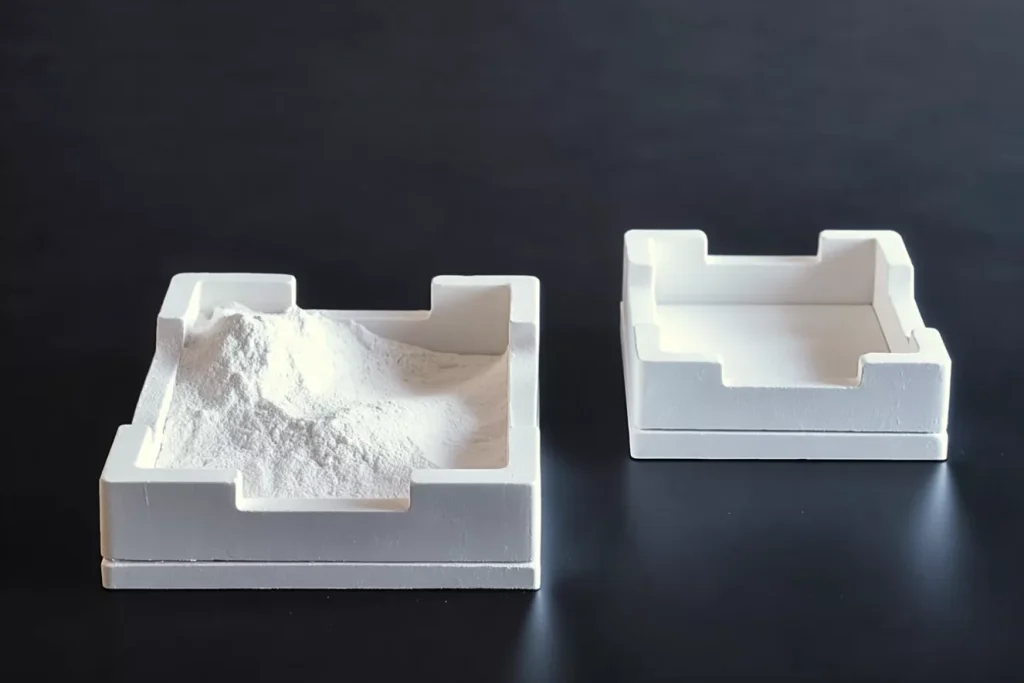
Alumina ceramic tray is a high-temperature ceramic fixture made from sintered Al₂O₃, designed to hold components or powder batches during thermal processes such as sintering, calcination, and heat treatment. Its role is to provide a stable, chemically inert platform that withstands repeated furnace cycles without interacting with the materials being processed.
By maintaining structural integrity and resisting chemical reactions across a wide range of industrial and laboratory thermal environments, an alumina tray enables consistent processing conditions and controlled material behavior throughout the heating cycle.
Alumina Tray Types & Formats
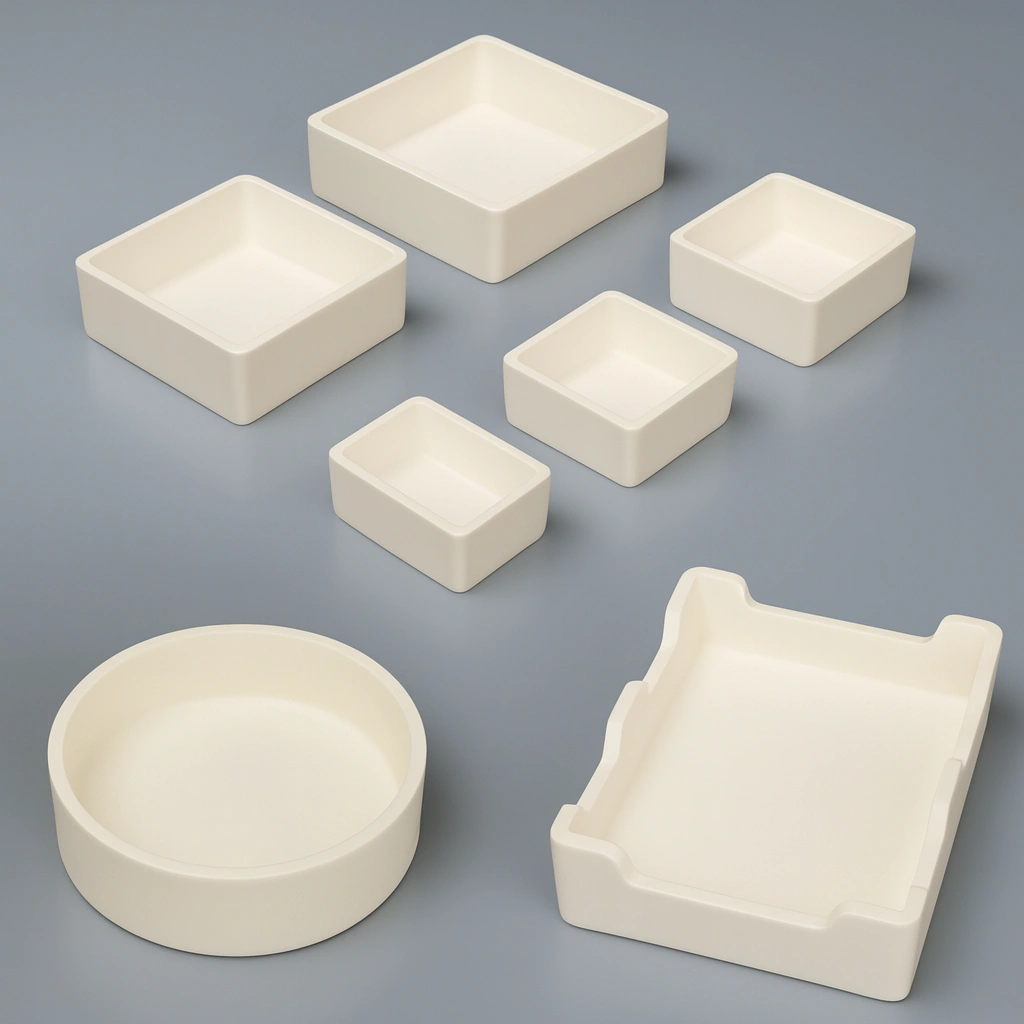
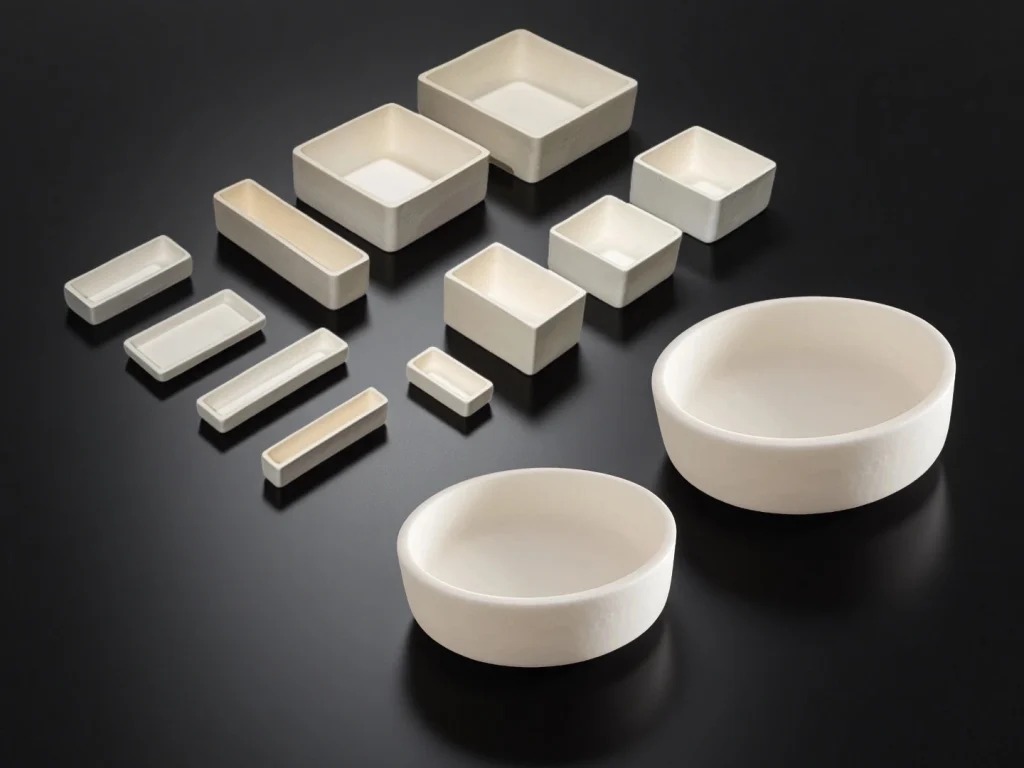
ADCERAX produces round, square, rectangular and sagger-style alumina trays, plus custom-shaped carriers matched to your furnace loading and batch requirements. Standard formats are available, with custom configurations made to your drawings or process needs.
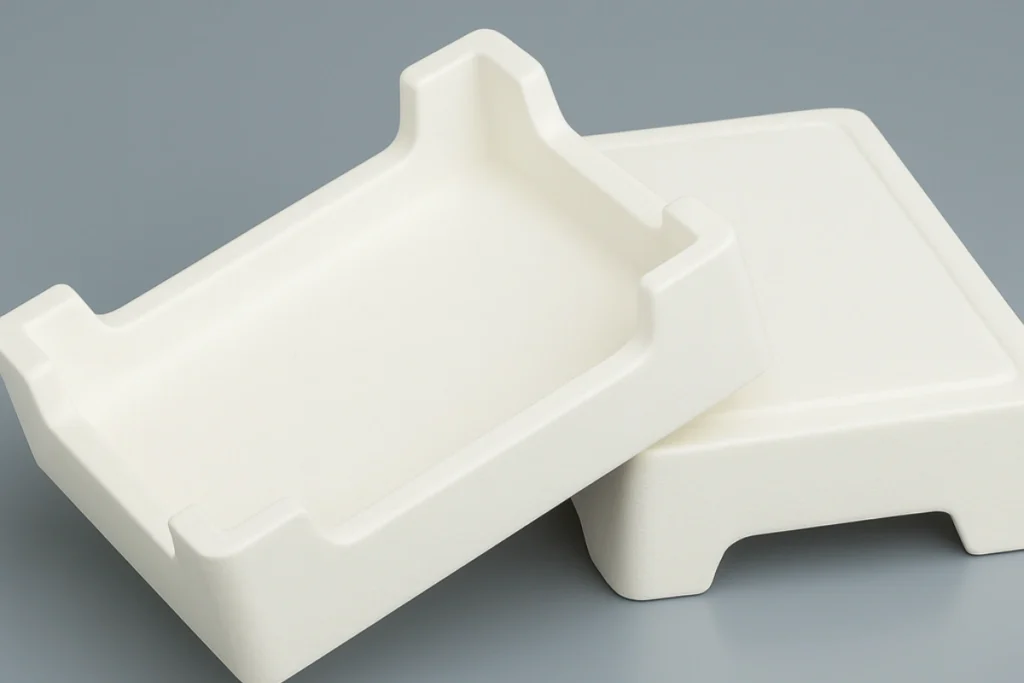
Customized alumina trays fit furnace layouts, loading patterns, and part geometries for stable operation and predictable results.
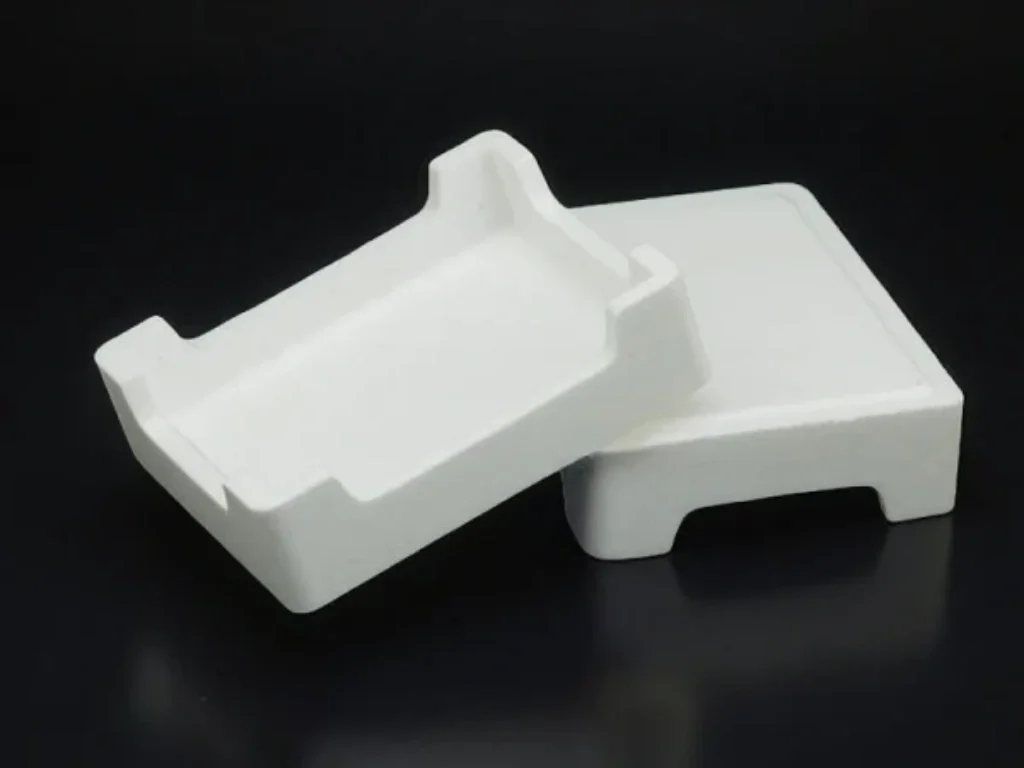
Alumina saggers protect powders and shaped parts during high-temperature processing while supporting even heat distribution.
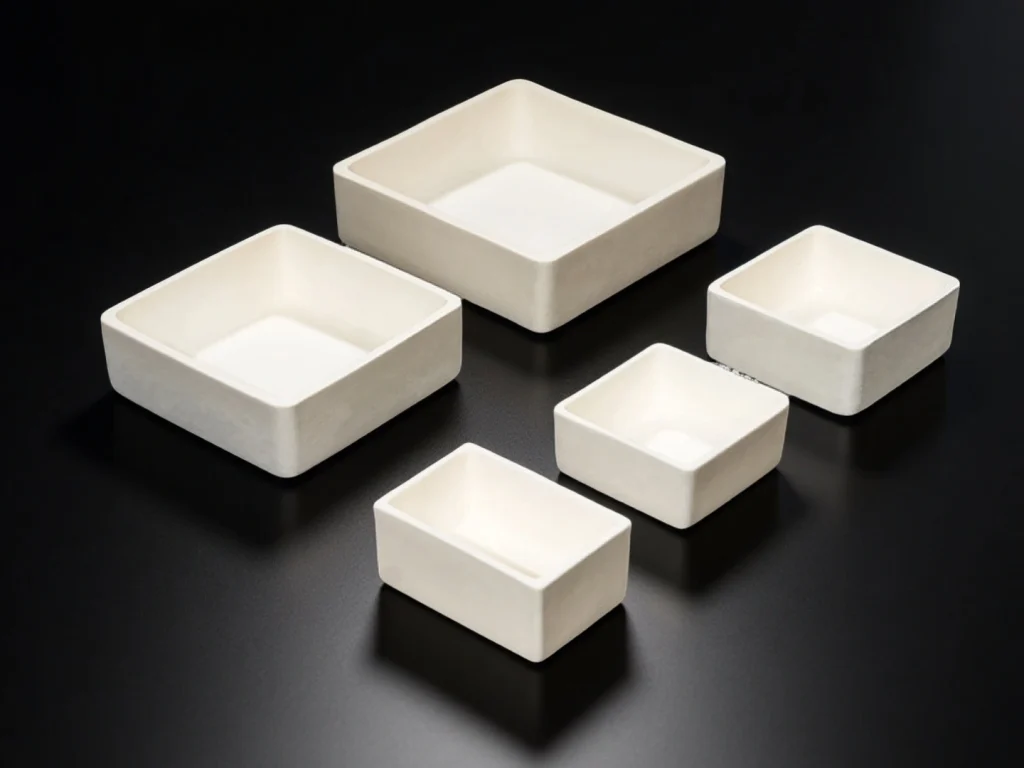
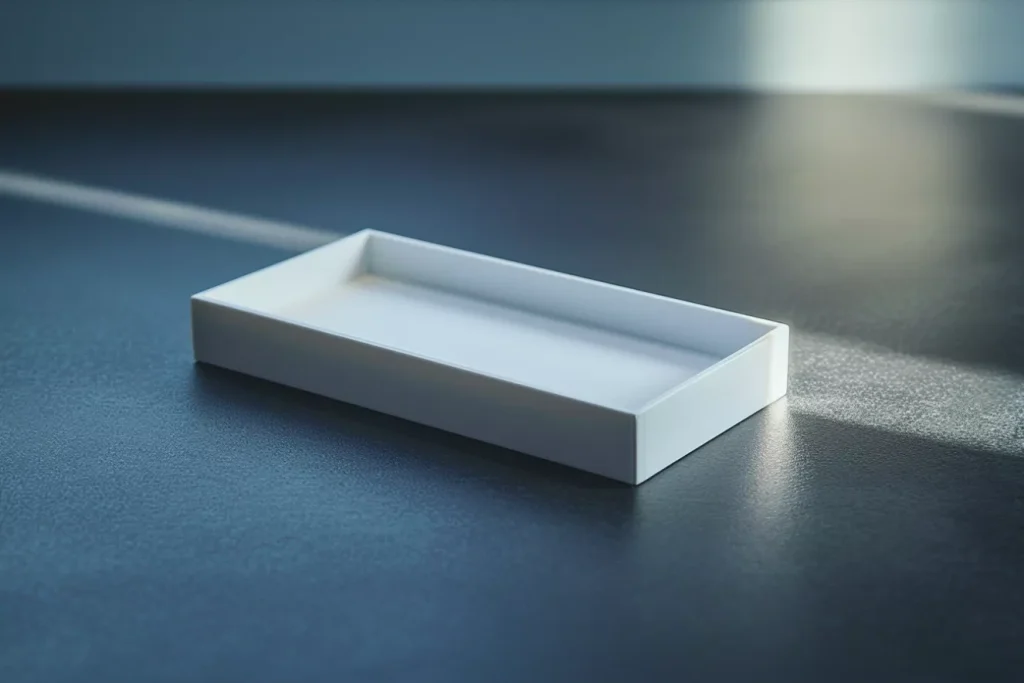
Alumina rectangular trays support sintering, calcination, and powder processing with even heating and reliable high-temperature stability.
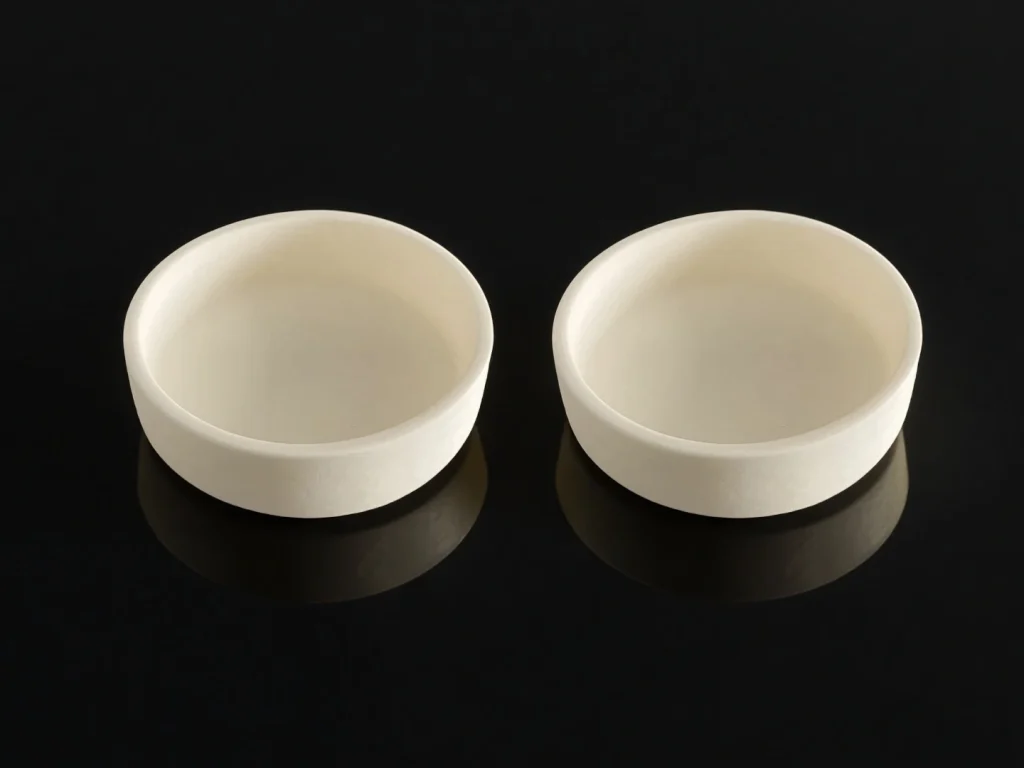
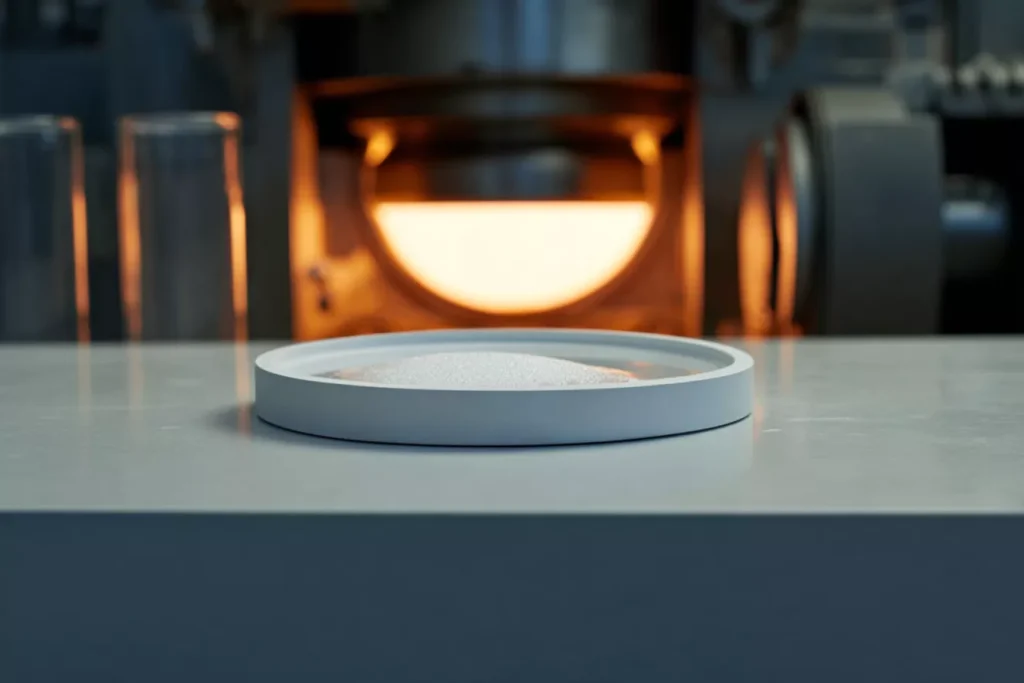
Alumina round trays support sintering, calcination, powder conditioning, and small-part firing with even heat and stable handling.
Common Alumina Tray Formats — Standard & Build-to-Drawing
These formats are commonly produced. Share your size, grade and quantity and we will confirm current stock and lead time. Custom sizes are quoted within one business day.
| Type | Size (L×W×H mm) | Grade | Availability |
|---|---|---|---|
| Rectangular Tray | 100×50×20 | 99% | Standard format — confirm stock & lead time |
| Rectangular Tray | 150×100×25 | 99%, 99.7% | Standard format — confirm stock & lead time |
| Rectangular Tray | 200×150×30 | 99% | Standard format — confirm stock & lead time |
| Round Tray | Ø100×20 | 99% | Standard format — confirm stock & lead time |
| Round Tray | Ø150×25 | 99% | Standard format — confirm stock & lead time |
| Sagger | 100×100×50 | 99% | Standard format — confirm stock & lead time |
| Sagger | 150×150×80 | 99% | Standard format — confirm stock & lead time |
Alumina Ceramic Tray Properties & Benefits
Alumina trays hold their shape and remain chemically inert through repeated furnace cycles for clean, predictable firing. The table below summarizes key properties for sintering, calcination and debinding: purity, temperature range, flatness, tolerance and cycle behavior.
| Property | AD-ALU-999 | AD-ALU-997 | AD-ALU-995 | AD-ALU-990 | AD-ALU-950 |
|---|---|---|---|---|---|
| Al₂O₃ (wt%) | 99.90 | 99.70 | 99.50 | 99.00 | 95 |
| IEC class | C799 | C799 | C799 | C795 | C795 |
| Density (g/cm³) | 3.94 | 3.94 | 3.90–3.92 | 3.80–3.91 | 3.75 |
| Flexural strength (MPa, 20°C) | 315–340 | 330 | 320–350 | 300–320 | 280 |
| Thermal conductivity (W/(m·K), 25°C) | 35–42 | 35–40 | 30–38 | 24 | 18–25 |
| CTE (10⁻⁶/K, 25–800°C) | 7.6 | 7.6 | 7.6 | 7.2 | 7.6 |
| Long-term use temperature (°C, typical review) | 1750 | 1700 | 1650 | 1600 | 1400 |
| Dielectric strength (kV/mm, 5 mm) | 10 | 10 | 10 | 10 | 10 |
| Mohs hardness | 9 | 9 | 9 | 9 | 9 |
Source: ADCERAX alumina ceramic C795–C799 grade comparison technical data sheet. RFQ grades: AD-ALU-950 / 990 / 995 / 997 / 999.
When to Choose Alumina Trays for Your Application?
Alumina trays are the standard choice for holding powders, green bodies, and small components during high-temperature sintering, calcination, and debinding processes. Their chemical inertness and dimensional stability make them ideal for clean, repeatable furnace workflows.
Alumina Trays Are the Best Choice When
| Your requirement | Why trays fit | Suggested grade |
|---|---|---|
| Powder calcination & conditioning | Inert surface, even heat, no reaction with powders | 99% flat / rectangular tray |
| MIM / PM debinding & sintering | Handles binder burnout, no contamination | 99% / 99.7%; sagger |
| Battery / CAM calcination | High-purity grade where low contamination matters | 99.7% high-purity |
| Technical ceramics firing | No reaction with green bodies, keeps flatness | 99%; sagger |
| Laboratory R&D firing | Clean, repeatable, easy handling, reusable | Round / small rectangular |
| Multi-layer kiln loading | Stackable, low warpage keeps alignment | Reinforced walls |
| Protected atmosphere firing | Enclosed sagger shields from furnace gas | Sagger with lid |
Alumina Tray
Flat batch loading, box furnaces, stackable multi-layer firing
Alumina Boat
Tube-furnace loading and continuous processing, easy slide-in / out
View Boat →
Alumina Crucible
Contained samples and melts, melting, TGA / DSC, lid options
Alumina Sagger
Protected atmosphere, enclosed body with lid, stackable
💡 Selection Tip: Tube furnaces → boats · box furnaces with flat loads → trays · contained melts → crucibles · atmosphere protection → saggers.
Tray vs Boat vs Crucible: Which Alumina Container Do You Need?
When Alumina Trays May Not Be Optimal
If any of the cases below match your process, our engineers can recommend a better-fit ceramic option.
H₂ / CO consider graphite or molybdenum fixtures
>300°C/min — consider silicon carbide trays
Contact us for a reinforced design
Need Alumina Trays Matched to Your Furnace?
Build-to-drawing trays for sintering and calcination. Send your size, grade and drawing — we'll quote the right fit.
Alumina Ceramic Tray Applications
Alumina trays are used across industrial and laboratory workflows for powder calcination, debinding, drying, sintering, and thermal processing of metals, ceramics, battery materials, and research samples.
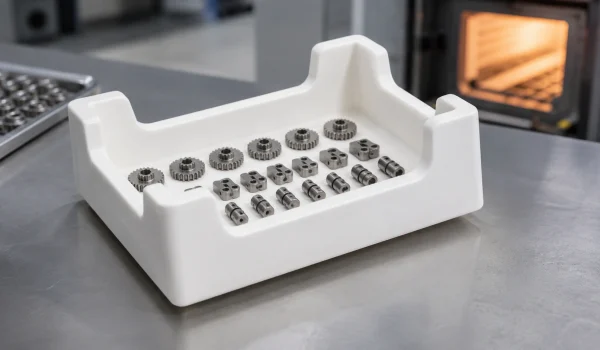
Powder Metallurgy & MIM
- Used for: Debinding, calcination, drying and sintering of metal powders and small formed parts.
- Why ADCERAX: Reinforced, high-purity trays hold shape and stay clean across firings — airflow-stable geometry, protective packaging.
- Result: Fewer cracked trays and steadier part dimensions — gains depend on furnace, load and cycle.
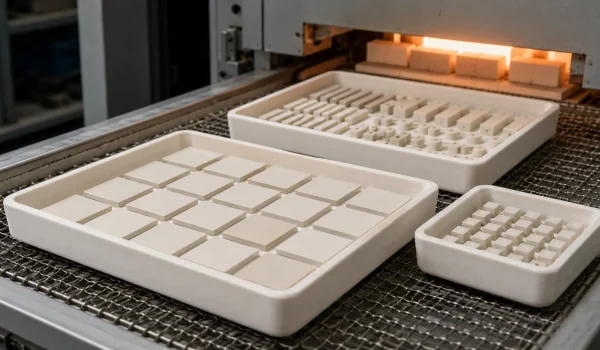
Technical / Electronic Ceramics
- Used for: Drying, calcination, debinding and sintering of green bodies, substrates and small parts.
- Why ADCERAX: Rigid, high-purity trays stay flat and keep surfaces clean for advanced ceramic bodies — steadier shrinkage control.
- Result: More consistent flatness and cleaner fired surfaces across batches.
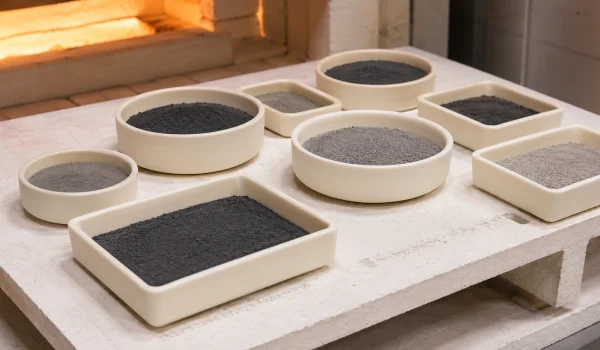
Battery Materials
- Used for: Drying, calcination and phase conditioning of cathode and precursor powders.
- Why ADCERAX: Dense, high-purity trays and saggers with stable thermal response and clean surfaces for sensitive powders.
- Result: Lower contamination risk and better calcination uniformity across cycles.
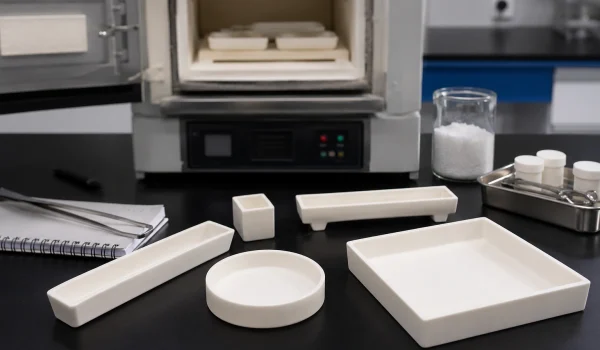
Laboratory & R&D
- Used for: Small-batch sintering, sample calcination, drying and thermal conditioning.
- Why ADCERAX: Clean, dimensionally stable trays plus stocked standard formats and custom sizes, so schedules aren't held up.
- Result: More repeatable firings and less downtime waiting for replacements.
Need a Custom Alumina Tray?
One-Stop Custom Alumina Tray Manufacturer
We build custom alumina trays from your drawing, sample or loading requirement — custom shapes, wall profiles, corner designs and bottom structures matched to your furnace layout and batch style. Lead time depends on design complexity and machining, confirmed per project.
Customization Options
Extra-large or extra-small diameters, non-standard thicknesses, long or short lengths.
Tighter dimensional accuracy than standard, confirmed per drawing.
Flanges, steps, threads, drilling holes, grooves, etc.
Adjust the material according to the application requirements.
Polish and grind the surface to achieve a specific surface roughness.
Customization Process
Send us your drawing, CAD file, or physical sample with material grade, dimensions, tolerances, and quantity. Our engineers will evaluate the design and provide a detailed quotation with lead time and pricing.
Once the quote is approved, we proceed with sample prototyping (1–50 pcs) if needed, for testing and validation.
After sample approval or direct confirmation, we begin batch manufacturing using CNC machining, sintering, and polishing. All parts undergo dimensional checks, material purity testing, and surface finish inspection.
Finished products are securely packed and shipped via DHL/FedEx/UPS or your preferred method. We support global delivery with full documentation.
Why Choose ADCERAX as Your Alumina Tray Manufacturer?
ADCERAX manufactures standard and custom alumina ceramic trays, with reliable production, engineering coordination and stable lead times you can source with confidence.
Strict control from raw high-purity powder to finished part — factory-direct pricing with no middleman markup.
Our engineers help you pick the right purity grade (95–99.7%) and confirm manufacturability before quoting.
From samples and small batches to volume — complex geometries, tight tolerances and drawing-based custom alumina parts.
Fast engineering response; standard formats ship quickly and custom parts are scheduled per project.
China Alumina Tray Factory — ADCERAX
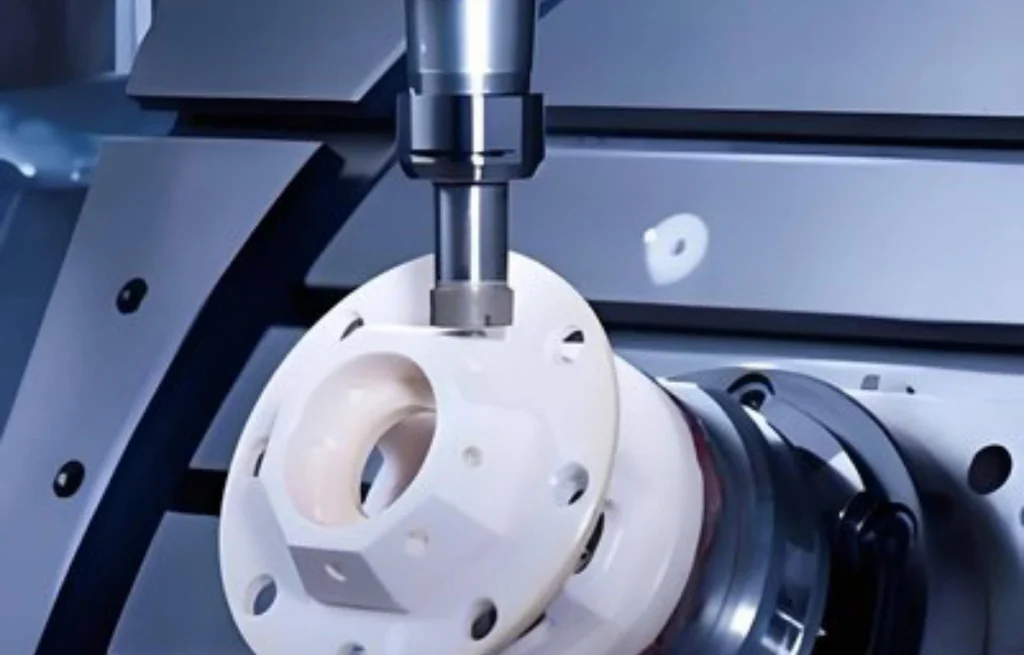
Alumina Tray Processing Capacity
ADCERAX manufactures alumina trays in-house — from raw Al₂O₃ powder forming to high-temperature sintering and precision CNC machining. Full control of forming, density and dimensional consistency supports stable performance in sintering, calcination and powder processing.
- In-House Forming & Sintering: Alumina powder is dry-pressed, isostatically pressed or slip-cast, then sintered at controlled temperatures for consistent density, strength and firing stability across trays, saggers and rectangular carriers.
- CNC Precision Machining: 5-axis CNC finishes grooves, slots, corner structures and bottom profiles at a typical machining tolerance of ±0.1 mm, confirmed per part, for precise fit with furnace shelves, fixtures and loading patterns.
- Flexible Production Scale: Prototypes, small batches and volume orders. Standard trays in round, square, rectangular and sagger types, with no strict MOQ on custom designs.
FAQs About Alumina Ceramic Tray
Alumina trays are commonly produced in 95-99.7% purity. Higher purity improves thermal stability and lowers contamination risk in sintering and calcination, which generally supports longer usable life; the right grade is chosen by firing temperature, material sensitivity and budget.
It depends on your maximum firing temperature, the sensitivity of the materials being fired and the consistency you need across repeated thermal cycles. As a typical reference: 95% suits general heating and pre-firing; 99% suits standard sintering, calcination and R&D furnaces; 99.7% suits battery materials, high-purity powders and precision firing. Temperature limits are typical, no-load values - the right grade for your furnace profile is confirmed at engineering review.
An alumina ceramic tray holds dimensional accuracy well under repeated firing thanks to low thermal expansion and good creep resistance. Actual behaviour depends on load, heating and cooling rates and furnace atmosphere, so heavily loaded or fast-ramp processes should be reviewed.
Yes. Rectangular, round, sagger, stackable, ribbed, perforated and grooved designs can be produced to your drawing, with size, wall thickness, edges and loading features reviewed for manufacturability before quotation.
ADCERAX supplies industrial-grade alumina trays directly from China with controlled forming, high-temperature sintering and dimensional inspection. For volume programs, send your sizes, purity grade, loading pattern and annual quantity for an engineering-reviewed quotation.
Alumina trays are used in box furnaces, pusher kilns, tube furnaces, vacuum furnaces and laboratory sintering systems. Suitability for your furnace depends on temperature profile, atmosphere and loading, which are confirmed at review.
Send your tray size, purity grade, quantity and (if available) a drawing or old-part photo. Quotations are engineering-reviewed so the price reflects the correct grade, tolerance and loading design rather than a generic catalog figure.
ADCERAX produces alumina trays through controlled forming, high-temperature sintering and per-drawing dimensional inspection, with engineering support for non-standard sizes, loading structures and replacement of existing trays.
Service life varies widely with purity, firing temperature, loading weight, heating and cooling rates and handling. Higher-purity trays used with controlled ramps generally last longer, but rather than relying on a fixed cycle count, trays should be inspected periodically and retired when warping, cracking or contamination appears.
In oxidizing atmospheres and contamination-sensitive processes, alumina is often preferred over graphite; versus silicon carbide the choice depends on thermal shock, load and temperature. Share your process conditions and current tray material so the right substitution can be reviewed - it is not an automatic drop-in swap.
Wall and base thickness depend on tray span, load weight and distribution, temperature and support layout in the furnace. Heavier or wider-span loads generally need thicker bases or ribbed designs; the right thickness for your case is set at drawing review rather than a single fixed rule.
What to Send for an Alumina Tray Quote
To quote a custom alumina tray, send what you have:
- Tray type / shape: rectangular / round / square / sagger / with walls or grooves
- Dimensions: length, width, height, wall thickness
- Alumina purity: 95% / 99% / 99.7%
- Working temperature, atmosphere and furnace type
- Part or powder to be loaded, and load weight
- Quantity and target lead time
- Drawing, photo or old-part sample
Alumina trays serve sintering, calcination and debinding workflows. Send your details and our engineers will review the fit before quoting.
*Our team will answer your inquiries within 24 hours.
*Your information will be kept strictly confidential.
info@adcerax.com
Tel:+86-0731-84428843
WhatsApp:+86 19311583352
Within 24 hours