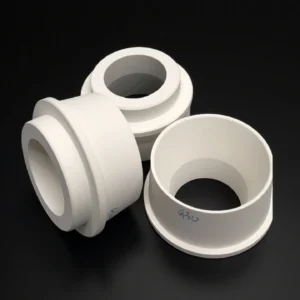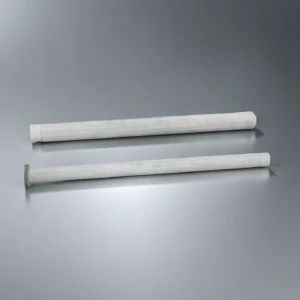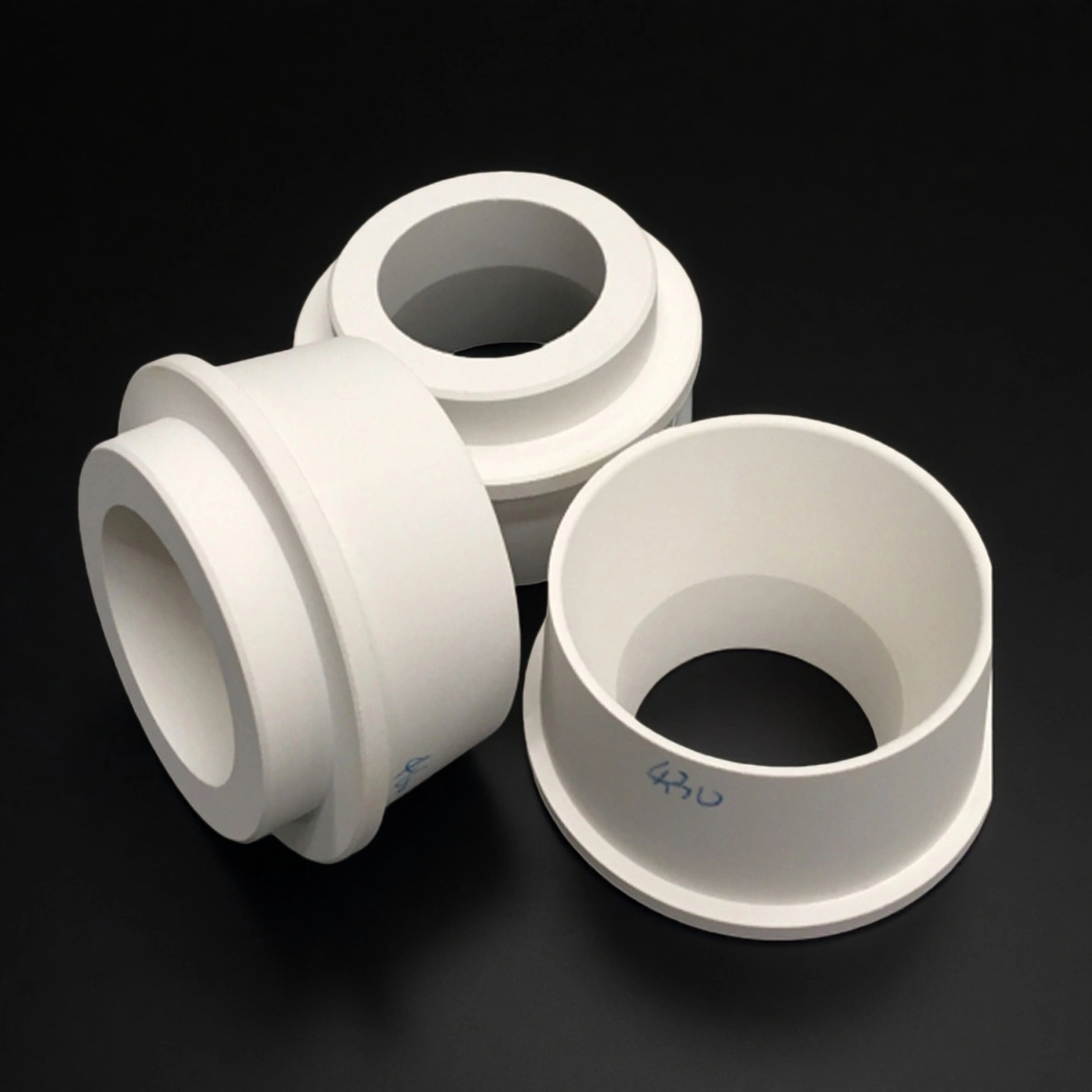
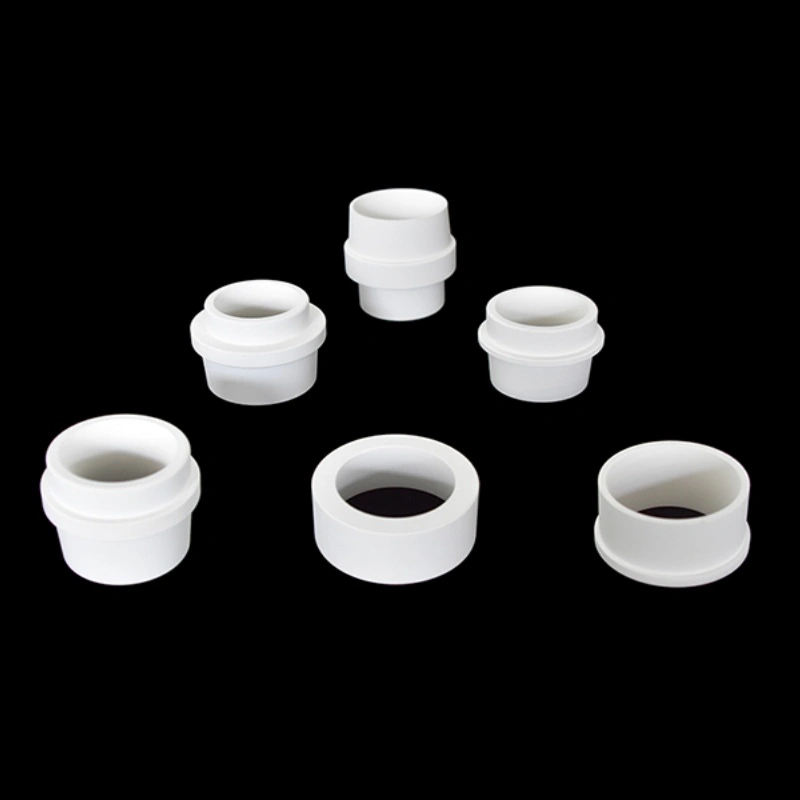
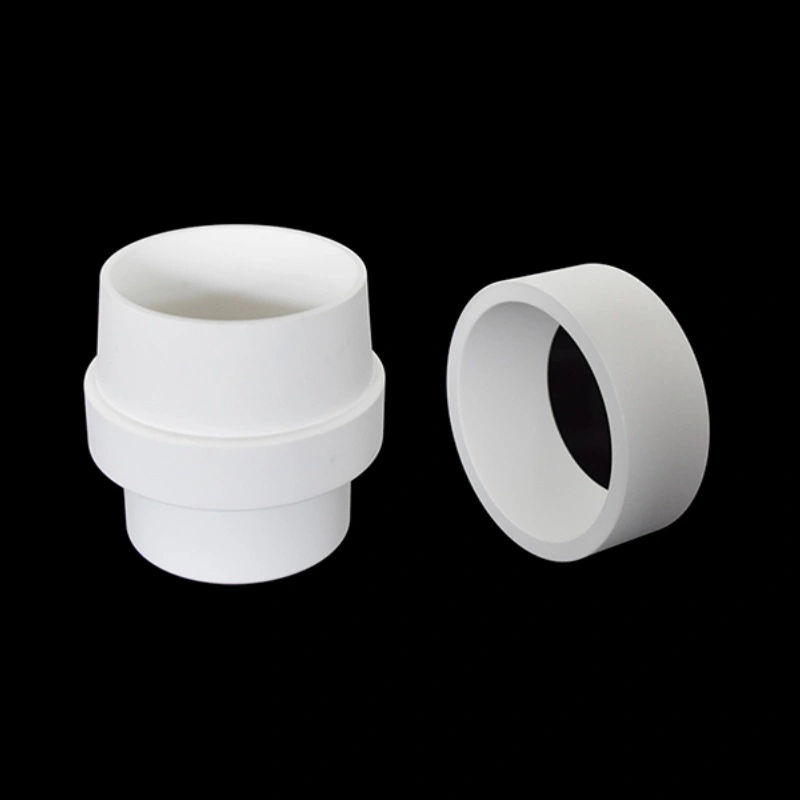
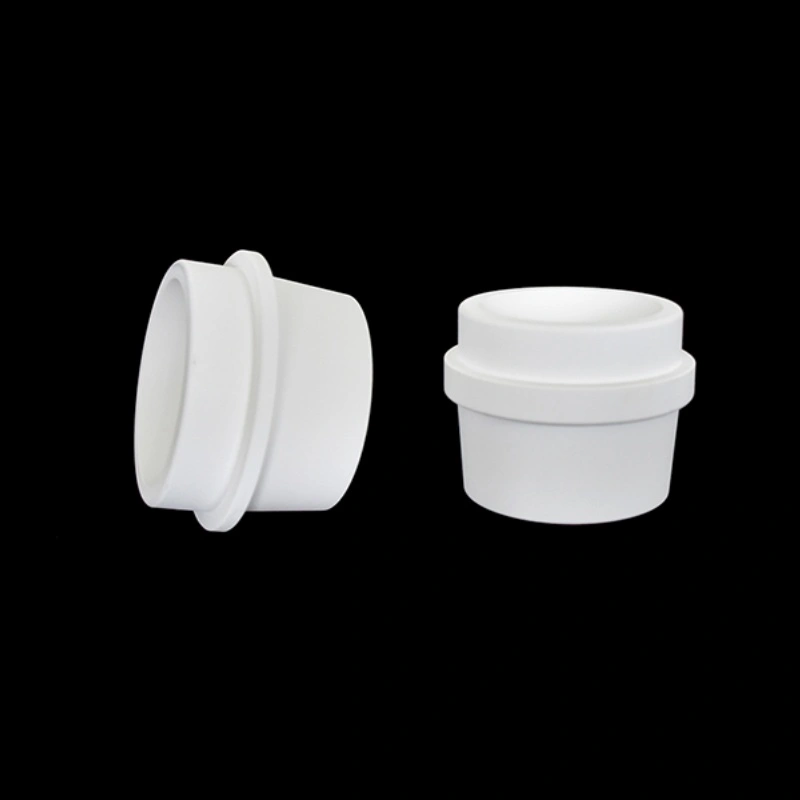
ADCERAX Aluminum Titanate Sprue Bushing is an Al₂TiO₅ ceramic component used in low-pressure aluminum casting machines to connect the riser tube with the mold interface. It guides molten aluminum into the mold cavity while supporting stable flow, thermal insulation, and dimensional stability. Its low thermal expansion and reduced aluminum wetting help minimize cracking, metal adhesion, bore wear, and unstable filling in repeated casting cycles.
Problems Solved by Aluminum Titanate Sprue Bushings
An aluminum titanate sprue bushing is mainly used to reduce failure risks in the high-temperature transition area between the riser tube and mold. In this position, conventional refractory or metal components may crack, stick to molten aluminum, deform, or create unstable flow after repeated casting cycles.
- Thermal cracking during repeated casting cycles: Low thermal expansion helps reduce stress when the bushing is repeatedly heated and cooled.
- Molten aluminum sticking and oxide buildup: Non-wetting behavior helps reduce metal adhesion on the bore and contact surface.
- Unstable filling through the sprue area: Controlled bore geometry helps maintain consistent molten aluminum flow into the mold.
- Frequent downtime caused by sleeve replacement: Better thermal shock resistance can help extend change-out intervals when the design is properly matched.
- Mismatch with existing casting equipment: Drawing-based machining supports bore, flange, shoulder, step, and end structures for specific LPDC systems.
Key Advantages of Aluminum Titanate Sprue Bushing
Low Thermal Expansion for Cyclic Casting Service
Aluminum titanate ceramic has a very low coefficient of thermal expansion compared with many conventional ceramic and refractory materials. In the sprue area, this helps reduce stress caused by repeated heating and cooling, especially where the bushing contacts metal fixtures, refractory seats, or riser tube assemblies.
Non-Wetting Behavior with Molten Aluminum
The material is commonly selected for molten aluminum contact because it helps reduce aluminum adhesion on the bore and working surface. This supports cleaner metal flow, less oxide buildup, and easier maintenance in low-pressure aluminum casting lines.
Stable Bore Geometry for Controlled Metal Flow
The inner bore of the sprue bushing can be produced according to the drawing or sample. A stable bore helps control the transition of molten aluminum from the riser tube into the mold, reducing flow disturbance caused by worn, cracked, or poorly aligned sleeves.
Custom Flange and End Structures for Machine Fit
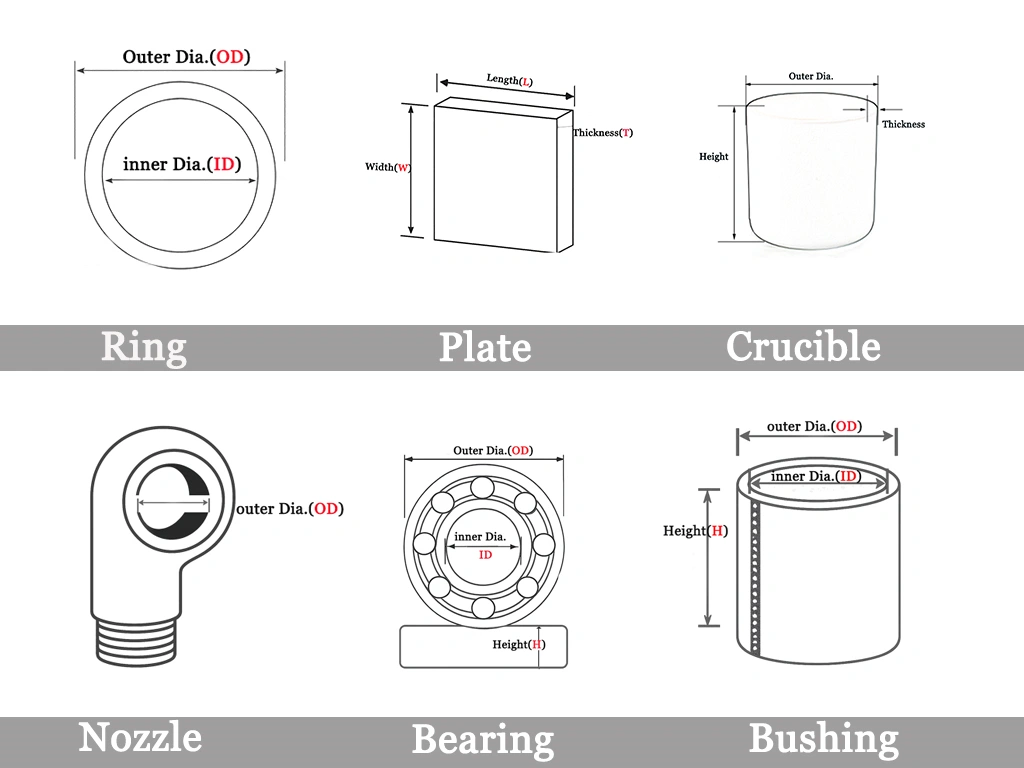
ADCERAX can review flange diameter, flange thickness, shoulder structure, stepped ends, tapered ends, and seating faces according to the equipment layout. This helps the ceramic bushing fit existing LPDC machines, mold plates, and riser tube interfaces more safely.
Suitable for Replacement and Repeat Orders
For replacement projects, customers can provide original drawings, used samples, or key dimensions. ADCERAX can review functional surfaces, tolerance requirements, edge protection, and packaging needs to support consistent supply for repeated foundry maintenance.
Aluminum Titanate Ceramic Sprue Bushing Properties
| Parameter | Typical Value | Description |
| Coefficient of Thermal Expansion (CTE) | 0.5–1.5 ×10⁻⁶ /K | Extremely low expansion that maintains dimensional stability under molten aluminum temperatures. |
| Thermal Shock Resistance | Very high | Withstands rapid temperature fluctuations without cracking during casting cycles. |
| Density | 2.8–3.0 g/cm³ | Medium-density ceramic structure suitable for molten aluminum system components. |
| Thermal Conductivity | 1–2 W/m·K | Helps reduce heat loss along riser tubes, spouts and transfer components. |
| Maximum Service Temperature | Molten-aluminum service typ. 700–900 °C | Suitable for typical molten-aluminum environments and transfer systems. |
| Flexural Strength (MOR) | 10–25 MPa | Provides sufficient strength for handling, installation and operational load. |
| Elastic Modulus | 20–40 GPa | Lower stiffness contributes to excellent thermal shock tolerance. |
| Porosity | 12–25% | Supports insulation and limits internal thermal stress accumulation. |
| Chemical Compatibility | Non-wetting to molten aluminum | Prevents adhesion, oxide buildup and contamination in casting processes. |
| Dimensional Stability | Stable through long cycles | Maintains geometry during prolonged molten-aluminum exposure and thermal cycling. |
Aluminum Titanate Ceramic Sprue Bushing Specifications
| Item No. | Diameter (mm) | Thickness (mm) | Purity |
| AT-TSL-JK1001 | Customize | ||
How to Choose an Aluminum Titanate Sprue Bushing
Confirm the Casting Process First
For low-pressure die casting, the bushing design should match the riser tube, mold plate, and filling path. For gravity casting or special non-ferrous equipment, the seating method, metal head, and thermal cycle may require different wall thickness or end geometry.
Match the Bore to the Metal Flow Requirement
The inner bore should be selected according to molten aluminum flow rate, riser tube size, mold design, and required filling stability. A bore that is too small may restrict flow, while a bore that is too large may reduce control in the sprue area.
Review Flange and Seating Design
The flange, shoulder, and contact face should distribute clamping load evenly. Sharp corners, uneven seating, or over-tightening may increase the risk of ceramic edge damage during installation.
Define the Functional Surfaces
The customer should identify which areas are used for sealing, alignment, molten metal contact, or mechanical support. These surfaces may require closer tolerance, smoother finish, chamfering, or special inspection.
Provide Operating Conditions with the Drawing
To select a safer design, provide the aluminum alloy type, working temperature, thermal cycling frequency, fixture material, mounting method, and expected replacement interval where available.
Aluminum Titanate Compared with Alternative Materials
| Material Option | When It May Be Used | Why Aluminum Titanate May Be Preferred |
|---|---|---|
| Metal Inserts | Used where ductility, easy machining, and strong mechanical fixing are required. | Aluminum titanate may be preferred when metal deformation, heat loss, or reaction with molten aluminum is a concern. |
| Conventional Refractory Sleeves | Used for cost-sensitive or less demanding casting conditions. | Aluminum titanate may provide better thermal shock resistance and lower aluminum wetting in cyclic LPDC service. |
| Alumina Ceramic | Used where hardness, insulation, and general wear resistance are needed. | Aluminum titanate is often selected when very low thermal expansion and molten aluminum compatibility are more important. |
| Silicon Carbide | Used where high thermal conductivity, strength, and harsh thermal service are required. | Aluminum titanate may be preferred in sprue areas where low thermal expansion and non-wetting behavior are the main concerns. |
Aluminum Titanate Sprue Bushing Packaging
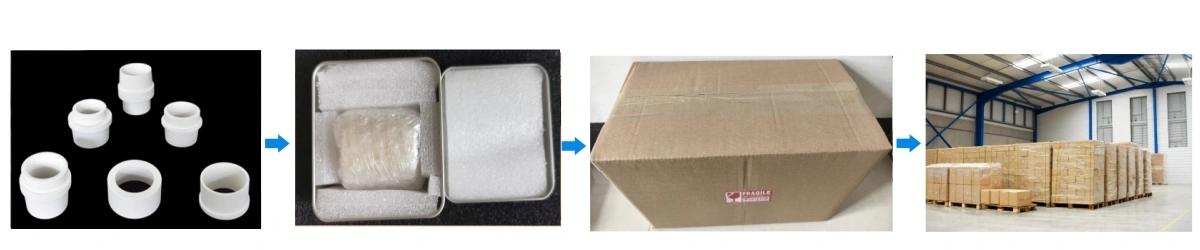
- Aluminum titanate sprue bushings are packed to reduce edge chipping, surface abrasion, contamination, and mixed-part risk during international shipment. Precision bores, flanges, chamfers, and seating faces should be protected with separated wrapping, foam cushioning, inner boxes, and reinforced outer cartons.
- For repeat orders or multiple sizes, labels can be used to separate drawings, part numbers, quantities, and batches. This helps foundry maintenance teams identify the correct bushing before installation and reduces the risk of mixing similar-looking ceramic parts.