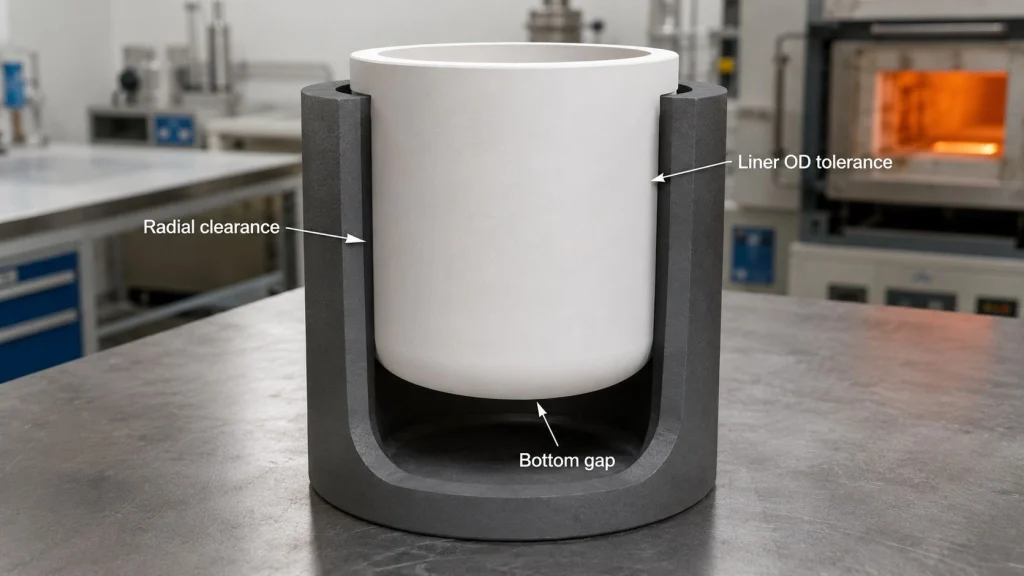
Boron Nitride (BN) Ceramic Machinable BN & PBN Parts for High-Temperature & Vacuum Use
ADCERAX is a professional boron nitride ceramic manufacturer in China, dedicated to producing machinable BN ceramics and custom-engineered components for high-temperature and vacuum applications. Our products offer stable performance where metal and oxide ceramics fail.
We supply both standard BN ceramic parts—such as tubes, plates, rings and nozzles —and custom BN components made to drawing for use in casting, furnace insulation, semiconductor processing, and precision equipment.
✈️ Boost your process reliability and extend equipment life with ADCERAX BN ceramic solutions.
- Factory-direct
- Engineering support
- Small-batch friendly
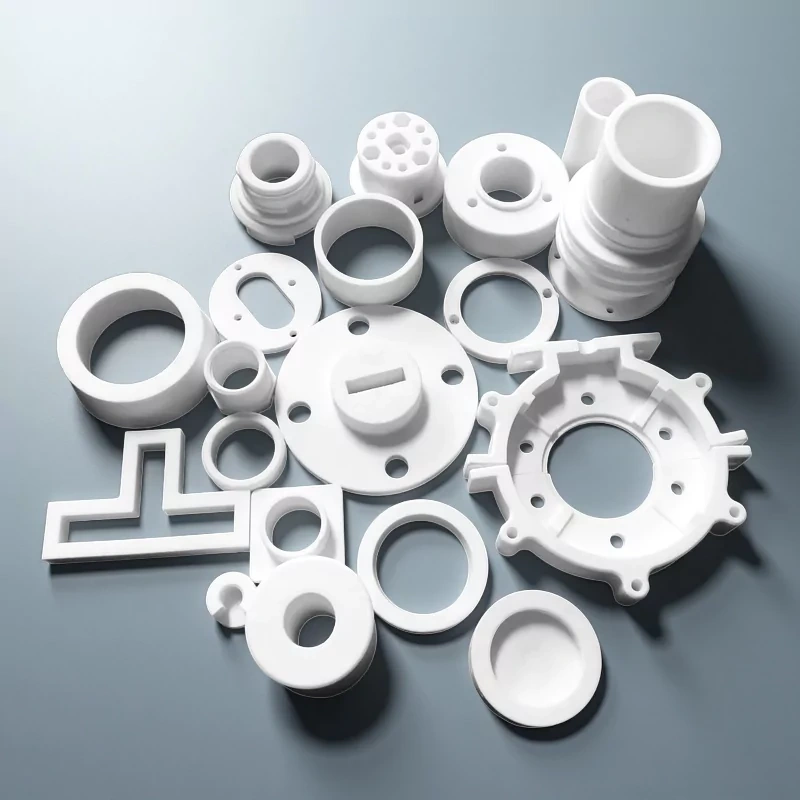
What Is Boron Nitride Ceramic?
Boron nitride ceramic is a machinable, high-temperature technical ceramic. Its layered hexagonal (h-BN) structure is what makes it easy to machine to a drawing while staying an excellent electrical insulator and non-wetting to many molten materials — the reasons engineers choose BN for hot zones, molten-material contact and high-temperature insulation.
ADCERAX supplies boron nitride in three main routes:
Hot-pressed BN (HPBN)
dense, machinable BN for furnace fixtures, insulators, supports and non-wetting parts. Best all-round route for custom structural BN.
Machinable BN
drawing-based parts cut to OD/ID, holes, slots and ends from sintered blanks. Ideal for prototypes and low-to-mid volume.
PBN (Pyrolytic Boron Nitride)
high-purity CVD BN for crystal growth and semiconductor thermal processes; grade-specific, feasibility reviewed before quoting.
China Boron Nitride Ceramics Products
ADCERAX supplies a full range of boron nitride (BN) ceramic parts — tubes, rods, rings, plates, washers, fibers, heaters, insulating columns and nozzles — all customizable in length, ID/OD, holes and stepped geometry to your drawings.
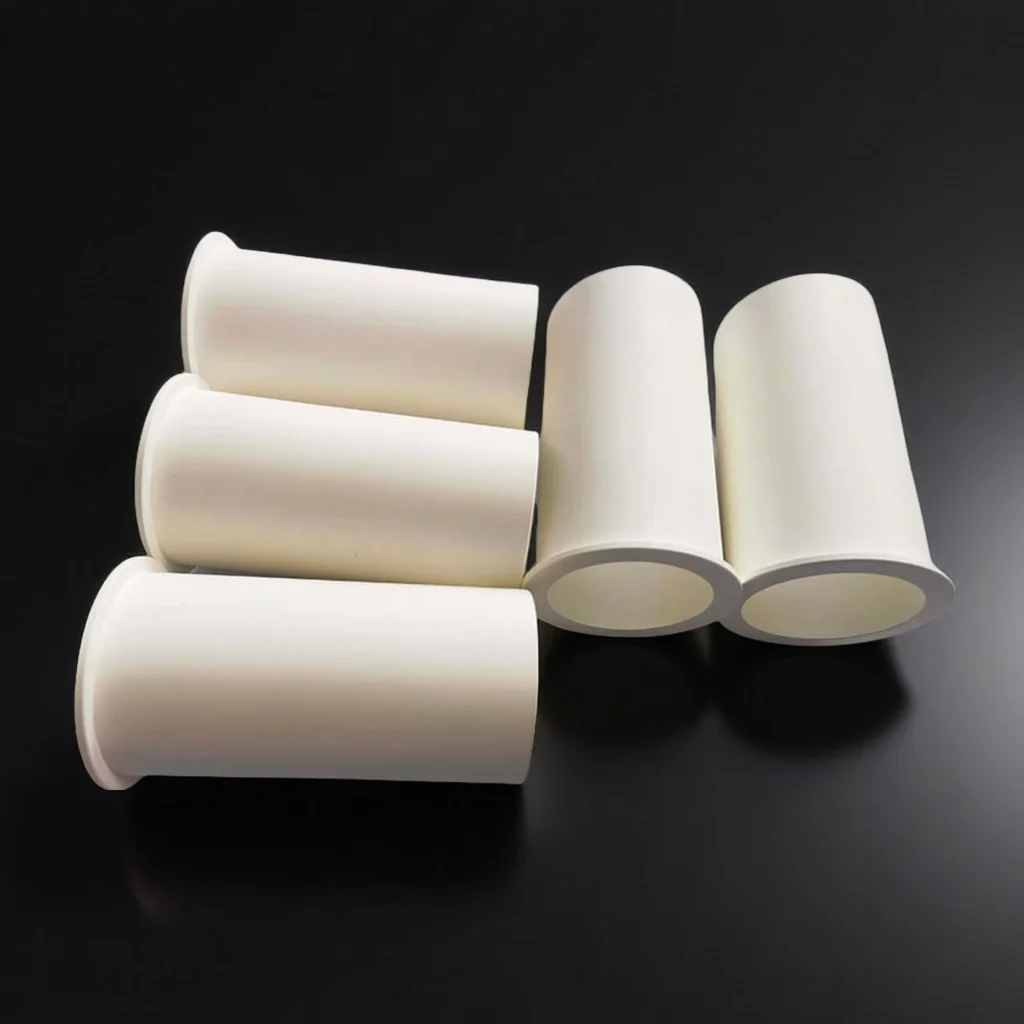
thermal insulation and protection for vacuum lines, semiconductor devices and high-temperature sleeves.
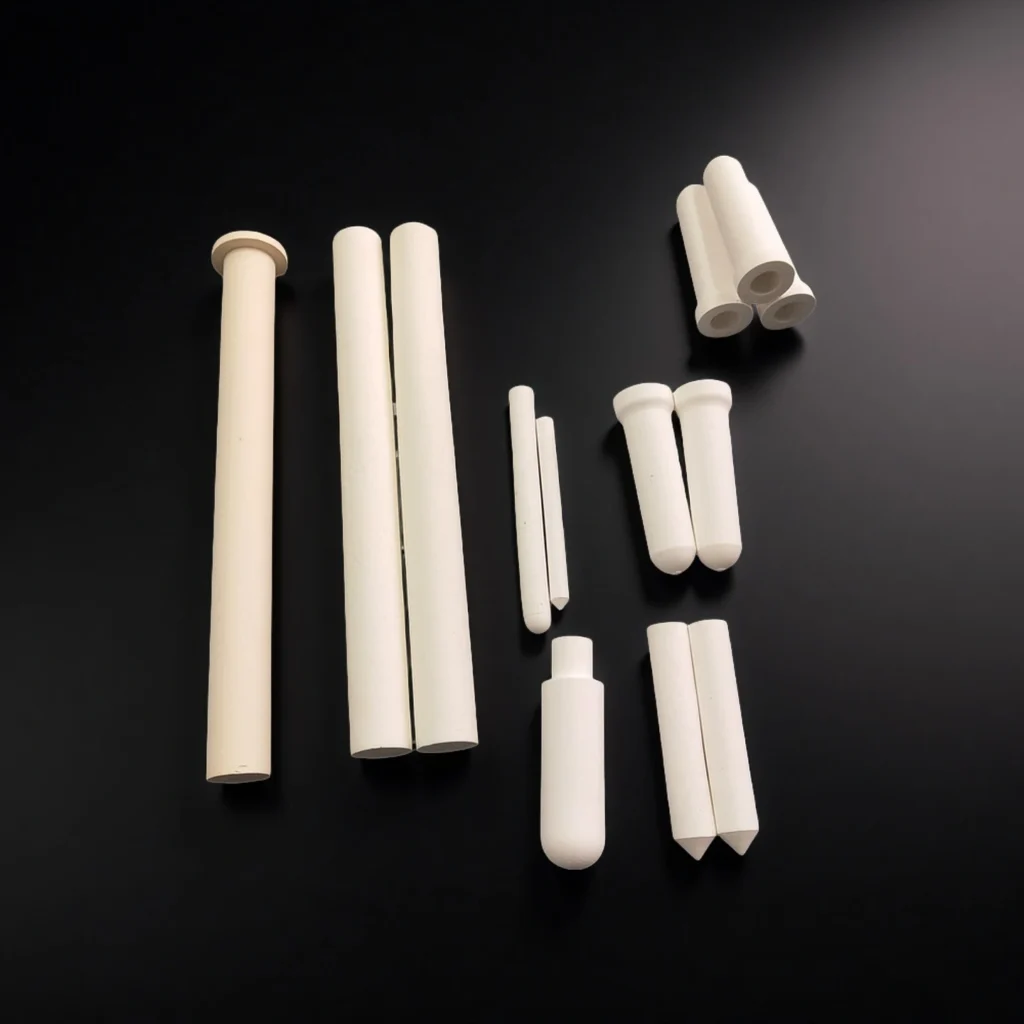
machinable, thermally stable pins, spacers and supports for vacuum and heat-resistant assemblies.
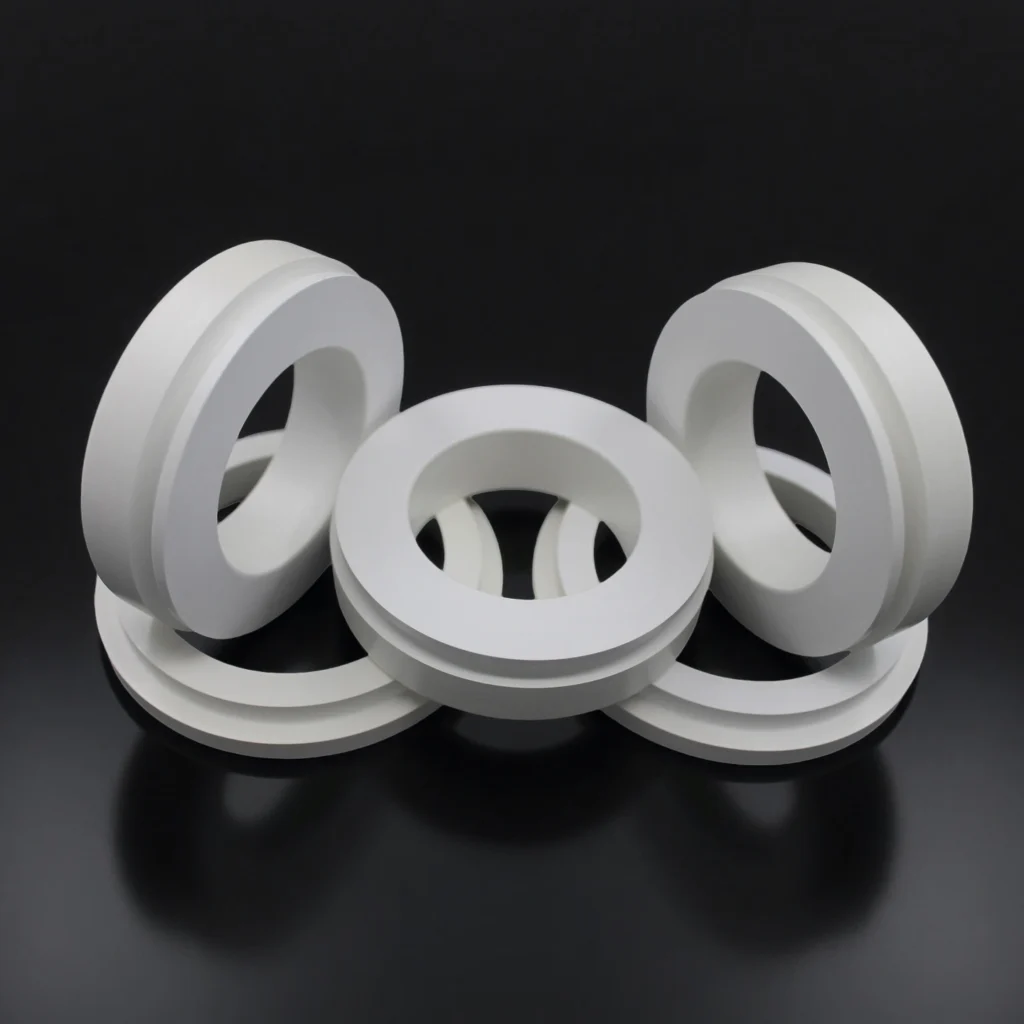
non-wetting, dimensionally stable insulation and sealing for casting, metal processing and furnace systems.
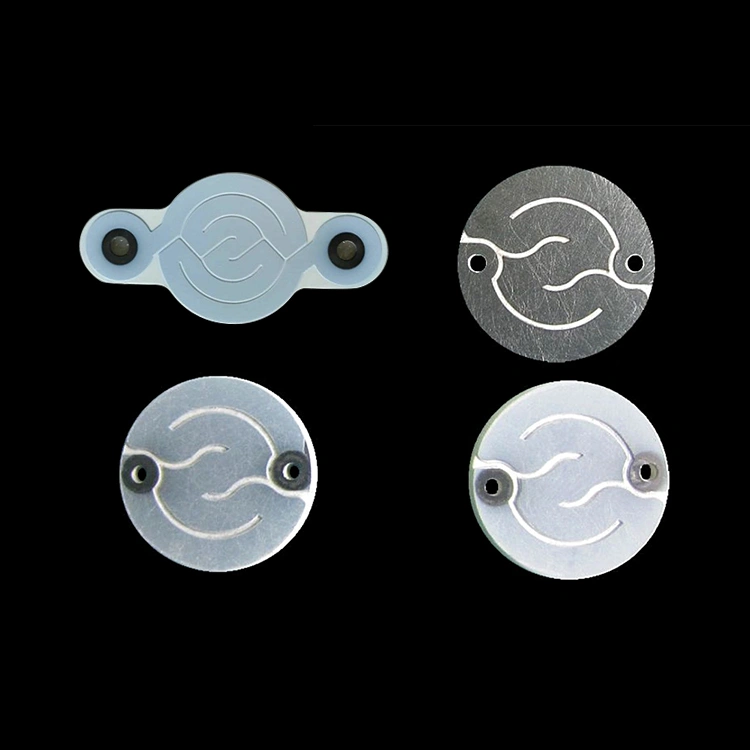
uniform heat and electrical insulation for precise temperature control in vacuum and semiconductor systems.
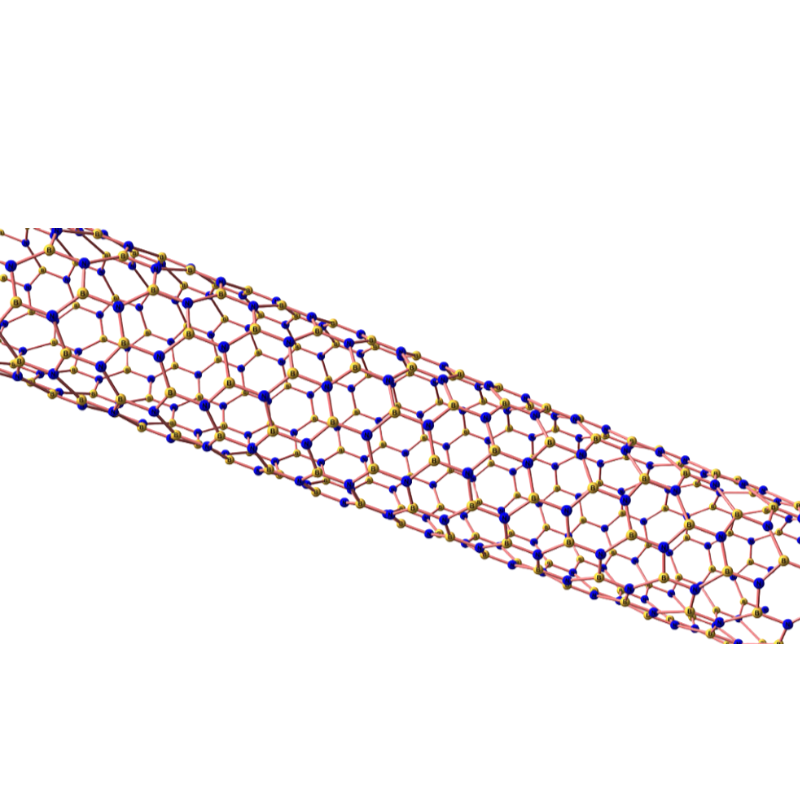
strength and oxidation resistance for composites, thermal barriers and electrical insulation.
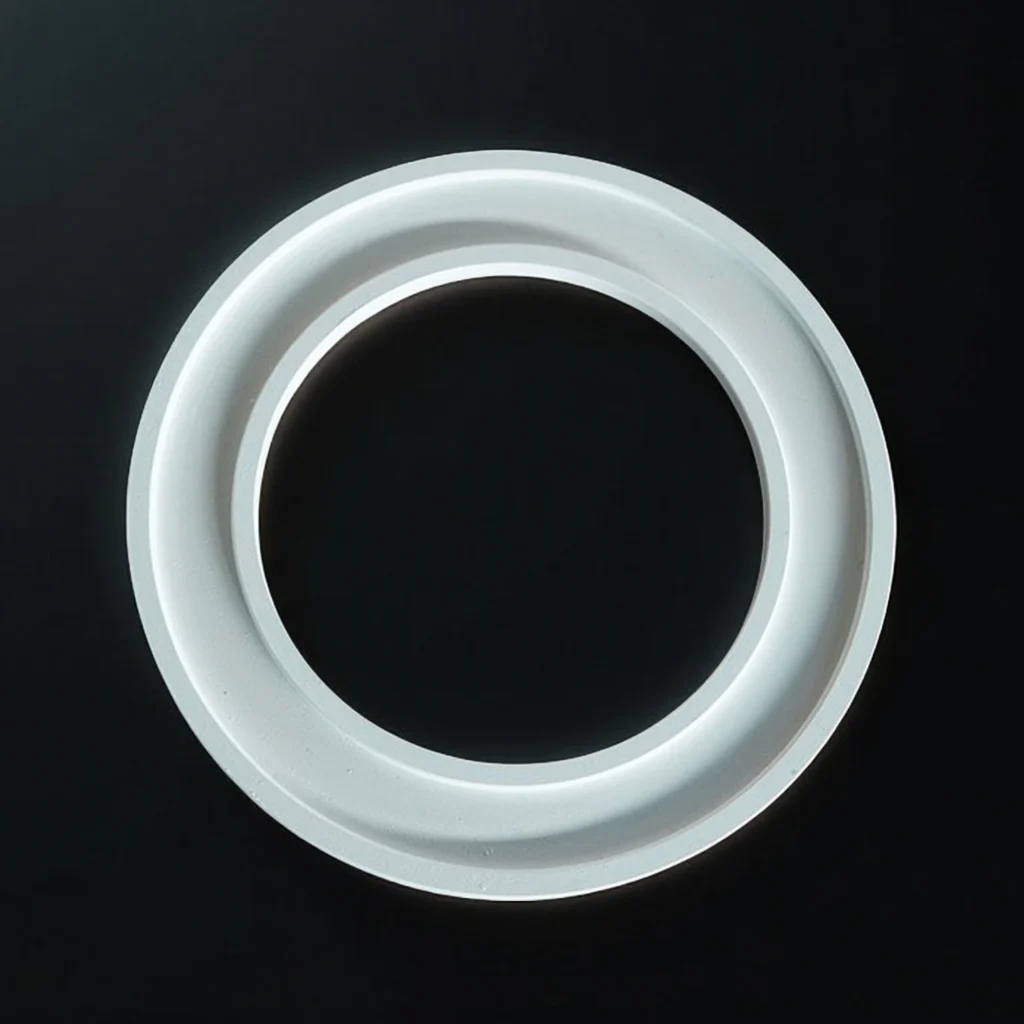
stable insulation and heat management for spacers and seals in high-temperature vacuum assemblies.
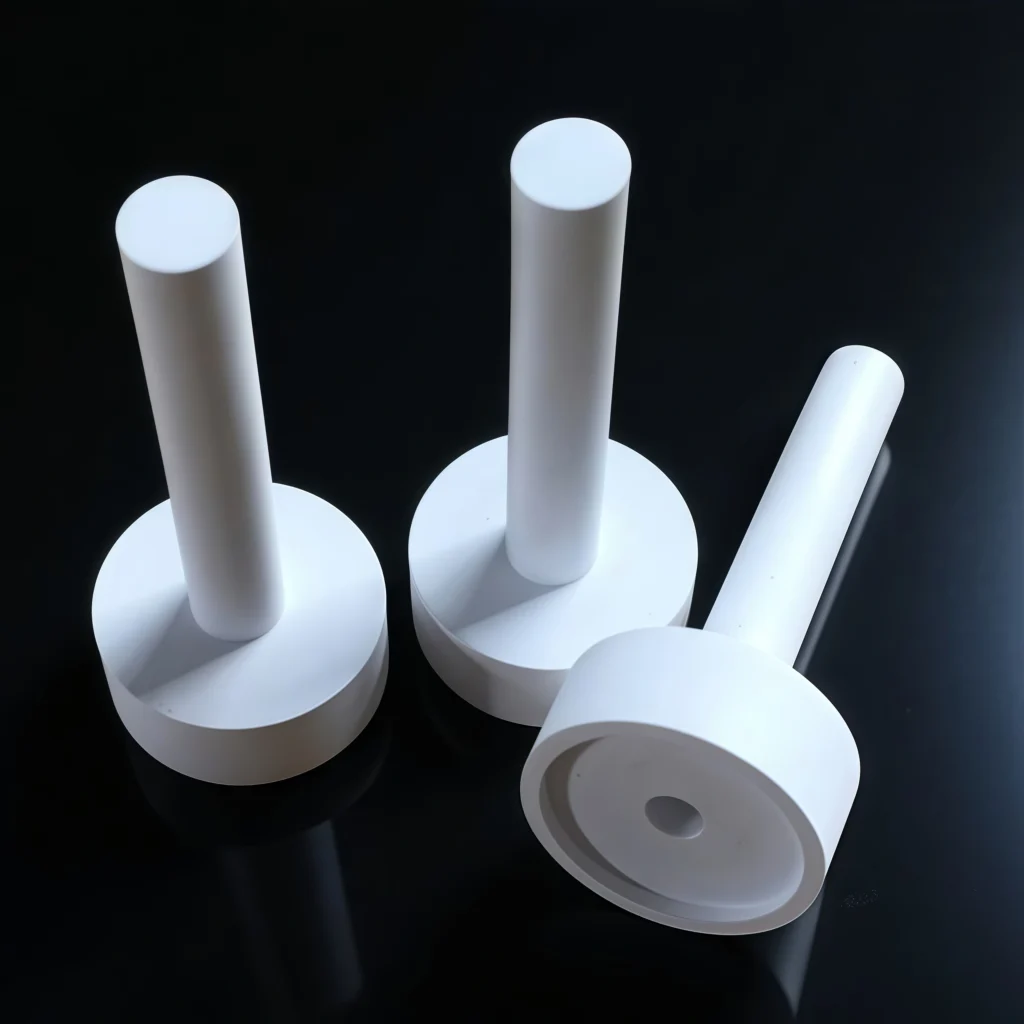
dielectric strength and thermal stability for electrode supports and vacuum insulation structures.
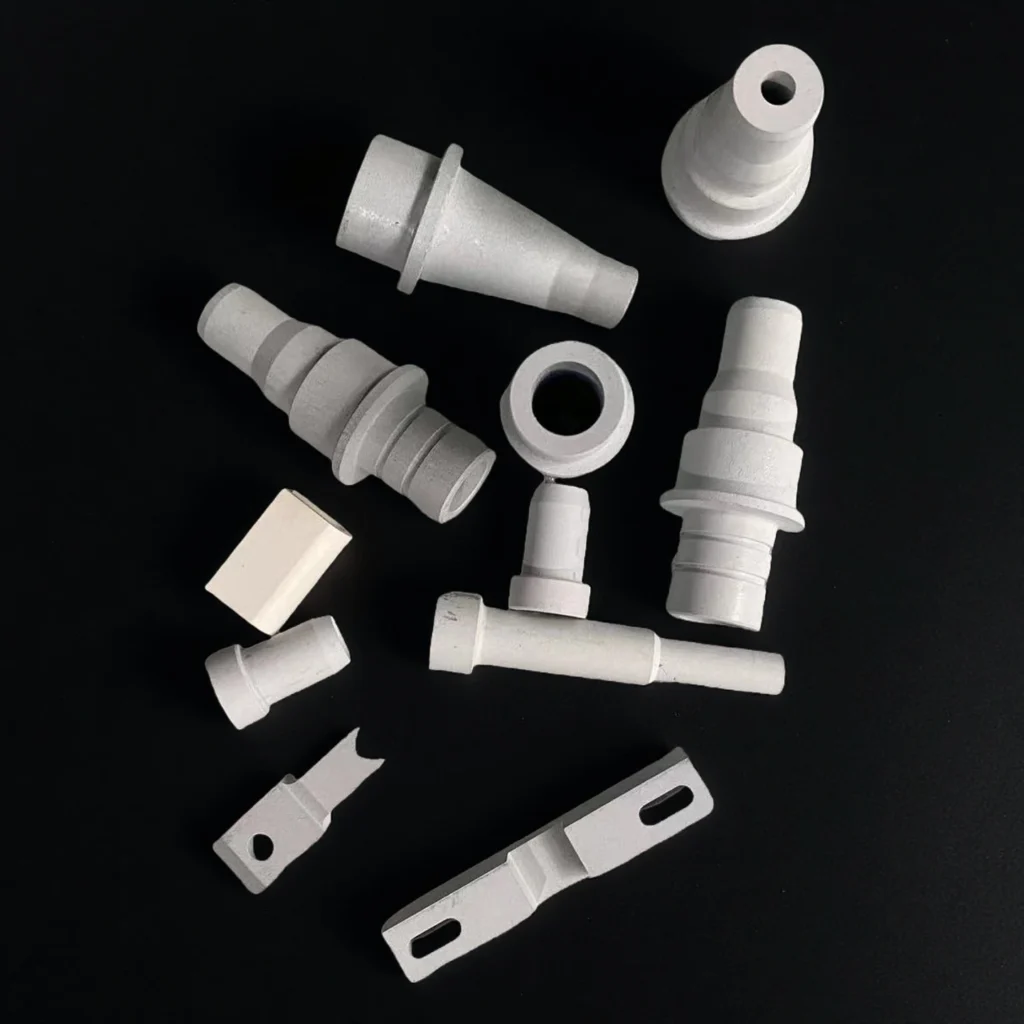
wetting- and erosion-resistant for molten-metal flow, atomization and plasma spraying.
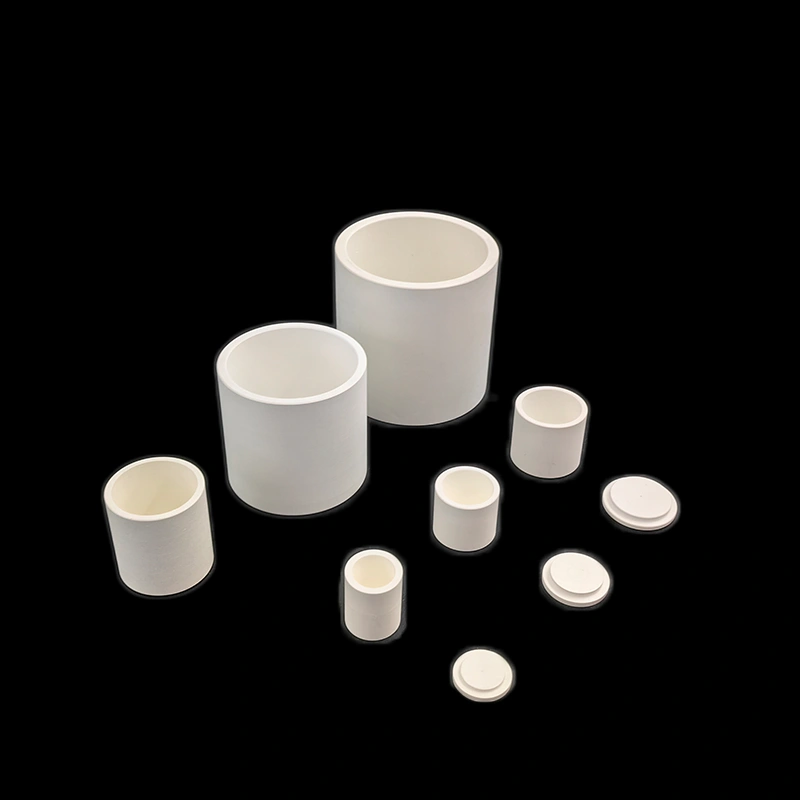
clean, non-wetting containers for melting, evaporation, crystal growth and analytical sampling.
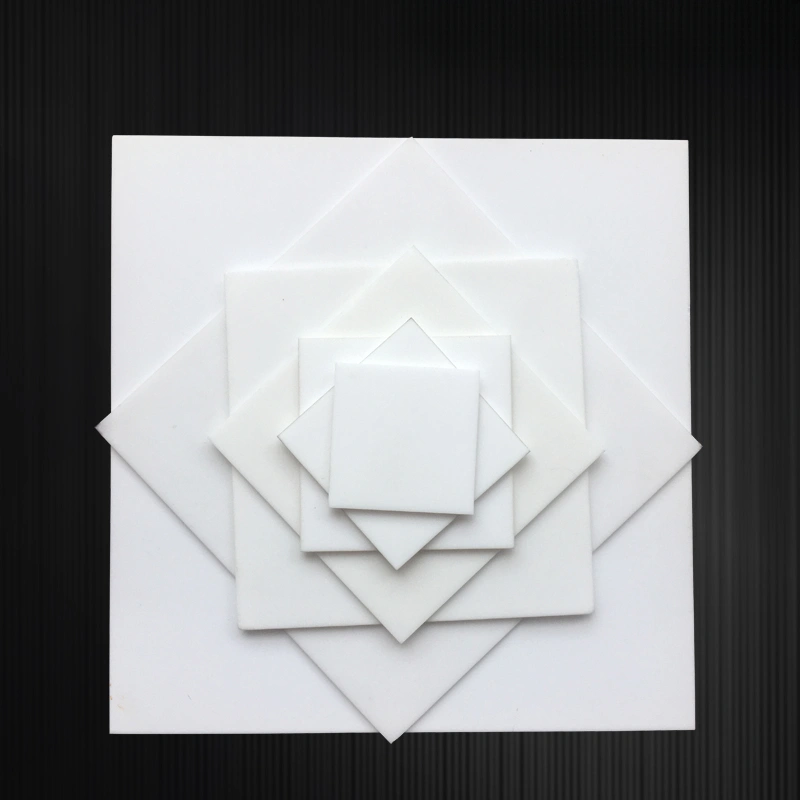
machinable insulating barriers for heat shields, spacers and substrates in vacuum and semiconductor tools.
Not sure which boron nitride grade or form fits your process?
Send your temperature, atmosphere and contact material — we'll recommend the right BN route and form, and confirm feasibility before quoting.
Boron Nitride (BN) Ceramic Properties
Compare dense hot-pressed BN, BN-AlN composite and porous high-purity BN for machined insulation, furnace fixtures, flow nozzles and crucibles. Select the material according to composition, porosity, mechanical requirements and operating conditions.
| Property | Unit / Condition | Dense Hot-Pressed BN — AD-BN-HP | BN-AlN Composite — AD-BN-AN | Porous High-Purity BN — AD-BN-HC |
|---|---|---|---|---|
| Material System | Chemical identity | Hexagonal BN | BN + AlN + Y₂O₃ | Hexagonal BN |
| BN Content | % | 99 — selection composition | >50; typical 50.25 | >99.7 — specified minimum |
| Bulk Density | g/cm³; typical | 1.98 | 2.80–2.90 | 1.60 |
| Porosity | % | 2.6 — typical | Not specified | 25–35 — selection range |
| Flexural Strength | MPa; typical selection value | 35 — three-point bending | 120 — three-point bending | 20 |
| Compressive Strength | MPa; typical selection value | Not specified | 220 | Not specified |
| Thermal Conductivity | W/(m·K); typical selection value | 50 — room temperature | 80 — temperature not specified | 50 — at 20 °C |
| Linear Thermal Expansion Coefficient | ×10⁻⁶/K; typical selection value | 1.5 — 25–1200 °C | 2.8 — room temperature to 1000 °C | −0.5 — 25–1200 °C |
| Volume Resistivity | Ω·cm; room temperature | >10¹⁴ | >10¹³ | >10¹⁴ |
| Typical Applications | Initial material selection | Machined insulators, furnace fixtures and supports | Flow nozzles, casting interfaces and structural fixtures | High-purity crucibles, setters and reduced-thermal-mass components |
Boron Nitride Ceramic Applications
Common boron nitride (BN) ceramic applications — vacuum and thermal processing, non-ferrous metal casting, R&D and analytical equipment, and powder atomization — with the recommended BN part and grade for each.
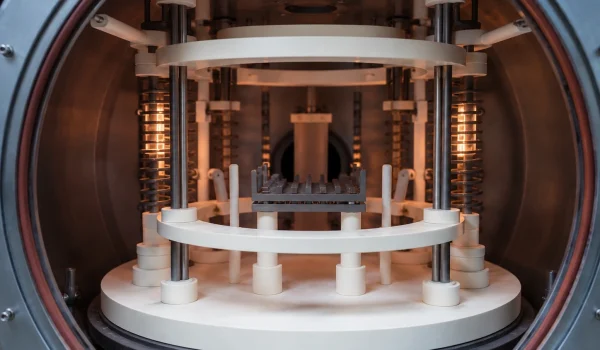
Vacuum & Thermal Processing
For vacuum furnaces, crystal growth and high-temperature insulation.
- Why BN: excellent electrical insulation + thermal stability in vacuum/inert atmospheres, low outgassing.
- Product: HPBN / hot-pressed BN insulators, plates and rings — machined to ±0.05 mm.
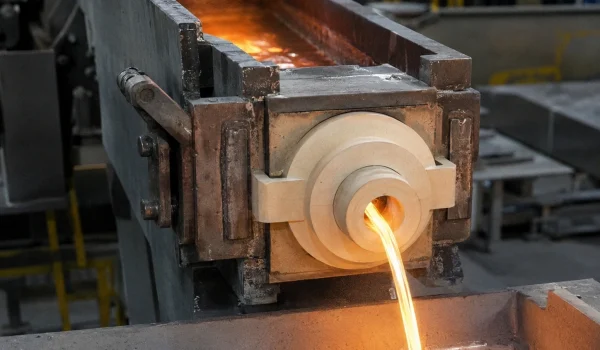
Non-Ferrous Metal Casting
For molten aluminum, zinc and non-ferrous metal handling.
- Why BN: not wetted by molten non-ferrous metals — clean release, long service life.
- Product: BN flow rings, break rings, nozzles and liners.
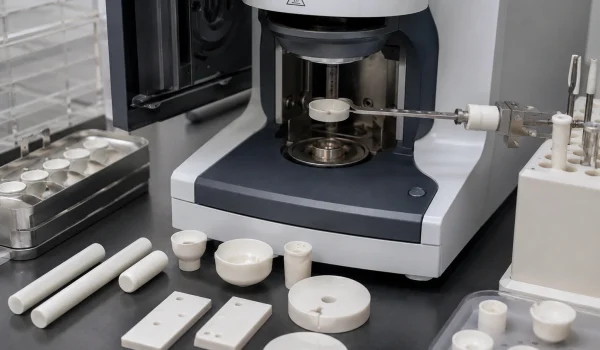
R&D and Analytical Equipment
For laboratory high-temperature and analytical setups.
- Why BN: machinable BN gives complex custom shapes with a clean, inert surface for sensitive samples.
- Product: machinable BN crucibles, fixtures and sample holders — prototypes welcome.
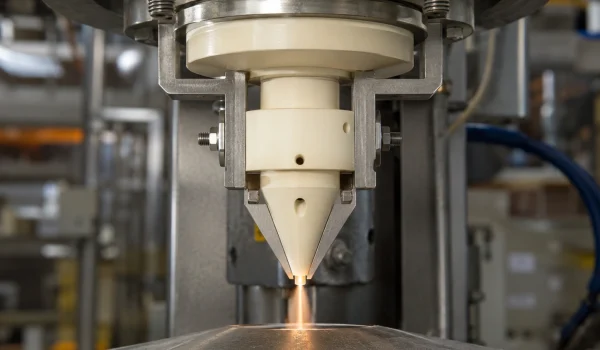
Powder Metallurgy & Atomization
For metal powder atomization and powder processing.
- Why BN: thermal-shock resistant and non-wetting for stable molten-metal flow through nozzles.
- Product: BN / BN-ZrO₂ atomization nozzles and guides in fixed bore sizes.
Custom Boron Nitride (BN) Ceramic Manufacturer
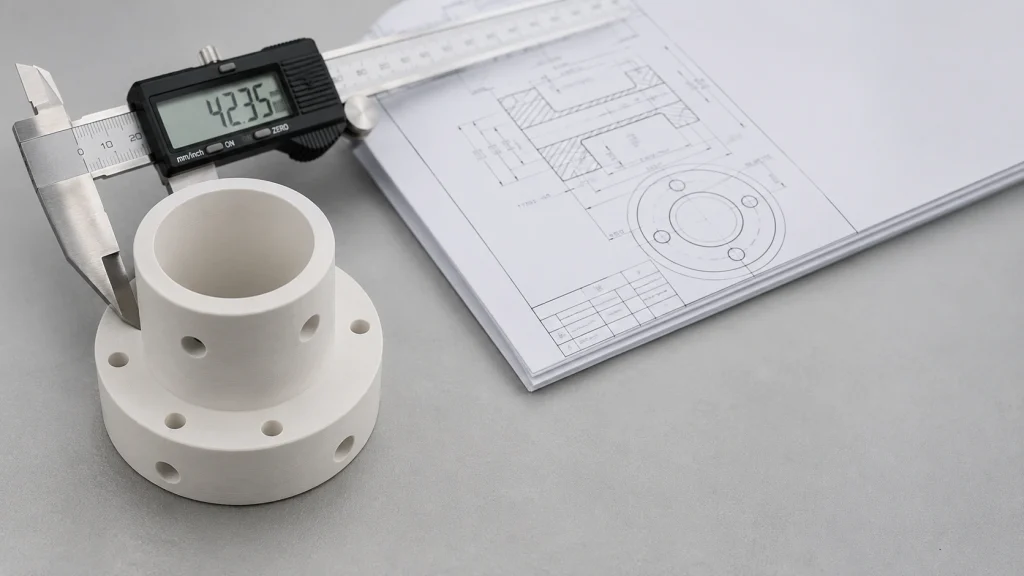
ADCERAX is a China-based boron nitride (BN) ceramic manufacturer producing custom BN components to your drawings or samples — flexible geometries, tight tolerances and stable batch quality, with lead time confirmed after engineering review.
Customization Options
Extra-large / Extra-small diameters, non-standard thicknesses, and ultra-long / ultra-short lengths.
Provide higher - level dimensional accuracy and concentricity control than the standard.
Flanges, steps, threads, drilling holes, grooves, etc.
Adjust the material according to the application requirements.
Polish and grind the surface to achieve a specific surface roughness.
Customization Process
Send your drawing, CAD file or sample with grade, size, tolerance and quantity. Our engineers review it and quote with lead time.
After the quote is approved, we prototype samples (1–50 pcs) when needed, so you can test and validate before production.
On approval, we run batch production with CNC machining, sintering and polishing — every part checked for dimensions, purity and finish.
Finished parts are securely packed and shipped worldwide via DHL/FedEx/UPS or your carrier, with full documentation.
Trusted Boron Nitride Ceramics Supplier with Precision Manufacturing
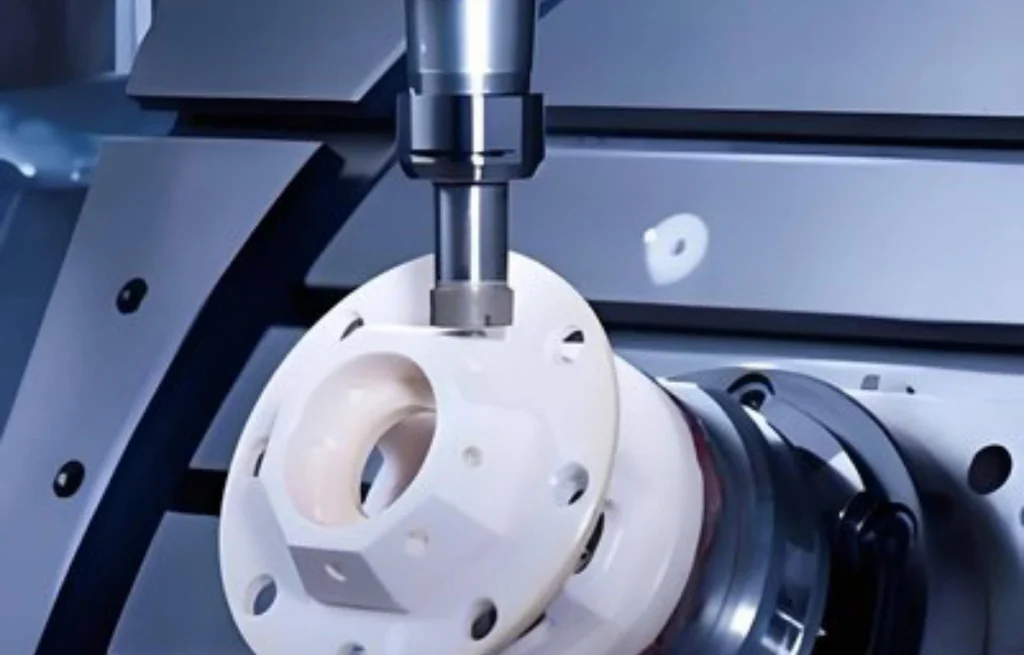
ADCERAX manufactures boron nitride (BN) ceramics using isostatic pressing, hot pressing and precision machining — custom BN parts in flexible sizes and complex geometries for industrial use.
BN Ceramics Processing Capacity
ADCERAX boron nitride (BN) ceramics are easily machinable—similar to graphite yet electrically insulating. They can be precisely shaped with standard carbide tools on conventional CNC machines.
🔷 Precision Forming & Machining: From pressing to CNC milling, complex BN parts are shaped with stable dimensional accuracy.
🔷 High-Accuracy Equipment: Multi-axis machines ensure ±0.05 mm precision and uniform surface finish across production.
🔷 Fast & Cost-Effective Manufacturing: Simplify processing, shorten lead times, and reduce machining costs without special diamond tools.
🔷 Surface Finishing & Coating: BN ceramics can be finely polished, coated, or impregnated to achieve specific surface roughness or oxidation resistance
BN Ceramics Manufacturing Strengths
Handling molten metals (like Aluminum, Zinc, Copper) and glasses presents significant challenges due to wetting, chemical reactions, and thermal stress. Our Boron Nitride Ceramic offers superior chemical inertness and non-wetting characteristics, leading to tangible benefits:
- Reduced Contamination: Prevents molten materials from sticking or reacting, ensuring the purity of your melt.
- Increased Component Lifespan: Resists erosion and chemical attack, reducing downtime for nozzle, or fixture replacement.
- Improved Process Yield: Facilitates smoother casting, pouring, and handling operations.
Ideal for nozzles, break rings, thermocouple sheaths, and fixtures in metal processing, casting, glass forming, and PVD coating environments.

Boron Nitride (BN) Ceramic FAQ
Common boron nitride (BN) ceramic questions — temperature and atmosphere, BN grades, machining and part selection. Send your drawing for an engineering review.
Hot-pressed BN (HPBN) is typically usable up to about 850–900 °C in air and up to roughly 1800–2000 °C in inert or vacuum atmospheres, depending on grade. High-purity PBN is also used at very high temperatures in inert/vacuum processes. Exact limits are grade- and application-specific — send your operating temperature and atmosphere and we confirm a suitable grade.
Boron nitride is non-wetting to many molten metals and glasses, so the melt is less likely to stick to or react with the part. This helps reduce contamination and extend service life in casting, atomization and crucible use. Wetting still depends on the exact metal, temperature and atmosphere, so tell us your contact material and we confirm suitability.
Boron nitride ceramic has a layered hexagonal structure with weak interlayer bonding, so it can be cut, drilled and milled with standard carbide tools while keeping its electrical insulation and chemical stability. This makes custom shapes, holes, slots and tight tolerances practical without diamond tooling.
Choose the BN route by your operating conditions rather than a fixed grade name: atmosphere (air / inert / vacuum), maximum temperature, contact material (molten metal, glass, gas), purity or contamination sensitivity, mechanical load and moisture exposure. Send these and our engineers recommend a hot-pressed BN, machinable BN or PBN route and confirm feasibility before quoting.
Compared with alumina and silicon carbide, boron nitride offers better thermal-shock resistance, strong electrical insulation, non-wetting contact with many molten materials, and easy machining to a drawing. Alumina is a lower-cost general insulator; silicon carbide is harder and better for wear and high-temperature oxidizing service. The best choice depends on temperature, atmosphere, contact material and mechanical load — we help you compare for your application.
Hexagonal boron nitride (h-BN) is a soft, machinable, electrically insulating high-temperature ceramic — the material used for the structural BN parts on this page (tubes, plates, rings, crucibles, nozzles). Cubic boron nitride (c-BN) is a super-hard material used for cutting tools and abrasives; it is a different product and not what these BN ceramic parts are made from.
Yes — ADCERAX makes custom boron nitride parts to your drawing or sample. To quote and prototype quickly, please send: the drawing or sketch (or a sample photo), material route (hot-pressed BN / machinable BN / PBN / not sure), key dimensions and tolerances, operating temperature and atmosphere, contact material, purity needs, and quantity. Lead time is confirmed after engineering review.
You can order boron nitride ceramics directly from ADCERAX, a China-based BN manufacturer with in-house machining. We supply BN tubes, rods, plates, rings, crucibles and nozzles, all customizable to drawings, and support both small-batch prototypes and repeat OEM production with worldwide shipping.
Request an Engineering RFQ Review
Request a Boron Nitride Ceramic Quote
- Drawing / sketch / sample photo (upload; or we help design)
- Material route: Hot-pressed BN / Machinable BN / PBN / Not sure
- Part form: tube / rod / ring / plate / crucible / nozzle / custom
- Key dimensions (OD × ID × length / L×W×T, mm) and tolerances
- Operating temperature (°C) and atmosphere (air / inert / vacuum)
- Contact material / medium (which molten metal, glass, gas…)
- Purity / contamination sensitivity
- Quantity (prototype / small batch / repeat)
- Current pain point (cost / lead time / sticking / insulation / failure / sourcing)
Share your drawing, material route, dimensions, temperature, atmosphere and contact material. Our engineers review manufacturability before quoting — so your quote and samples are accurate the first time.
*Our team will answer your inquiries within 24 hours.
*Your information will be kept strictly confidential.
info@adcerax.com
Tel.:+86-0731-84428843
WhatsApp:+86 19311583352
Within 24 hours