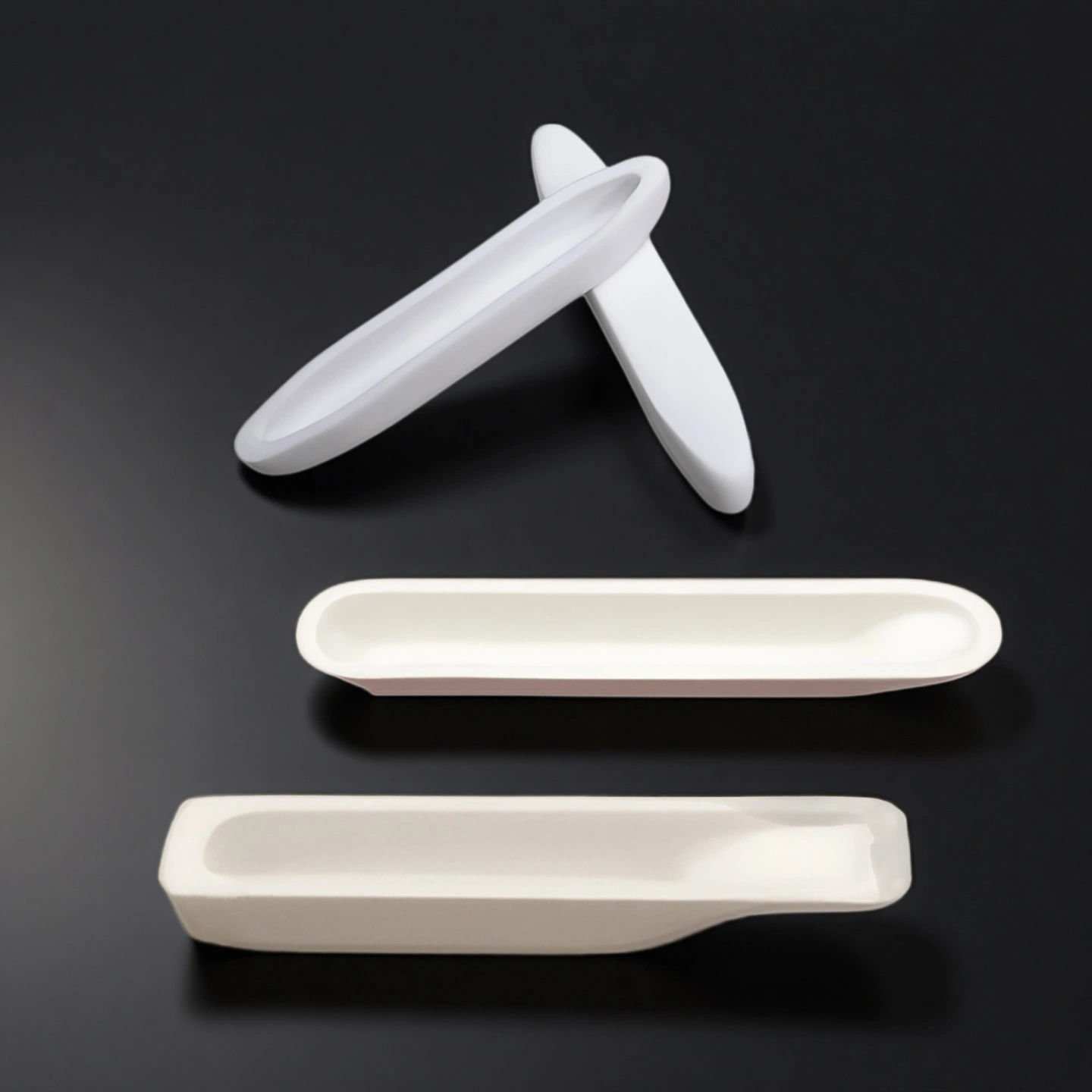
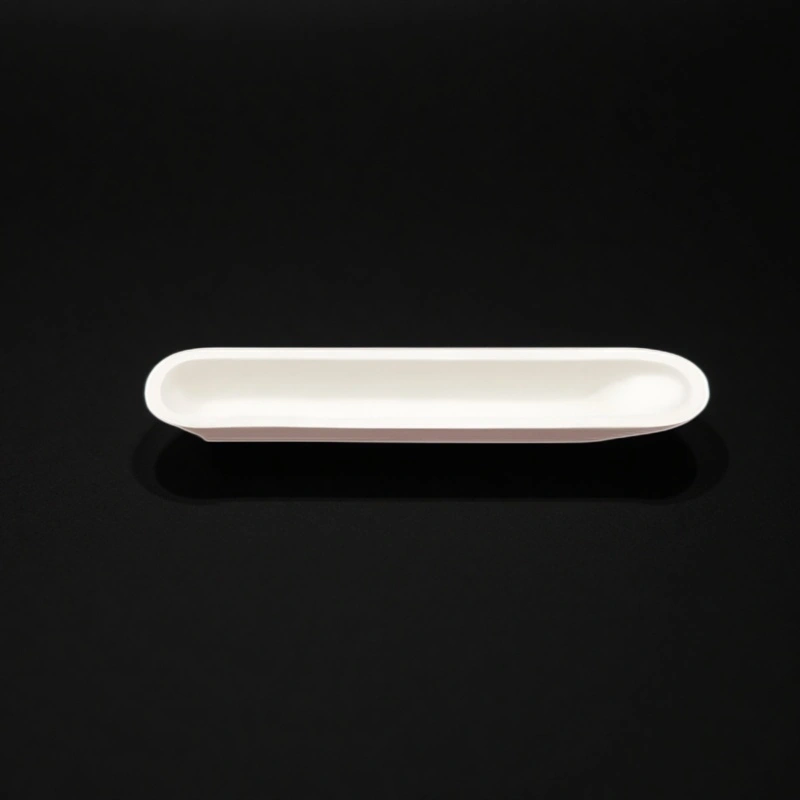
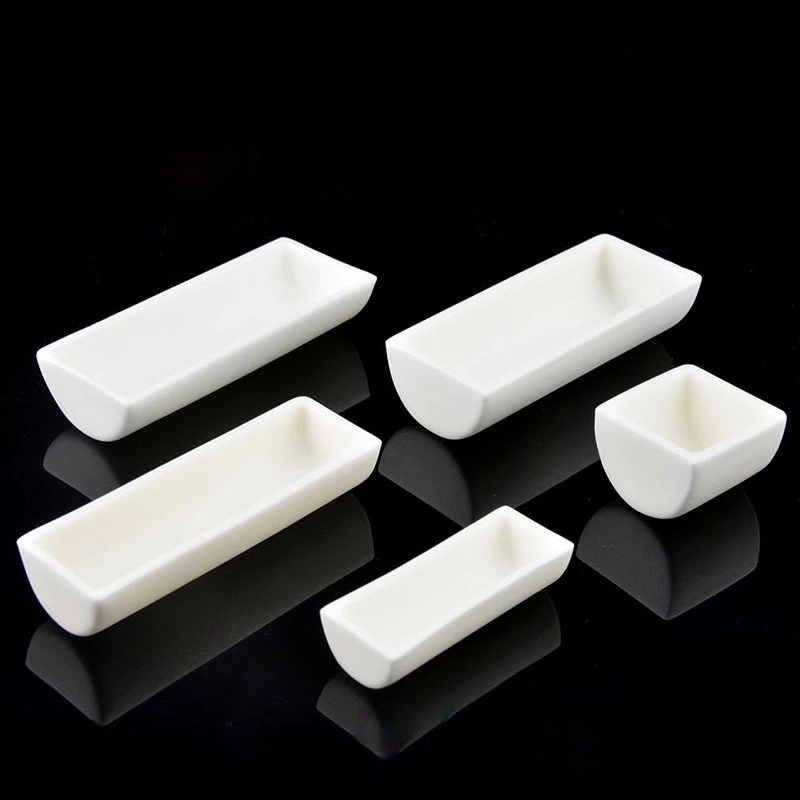
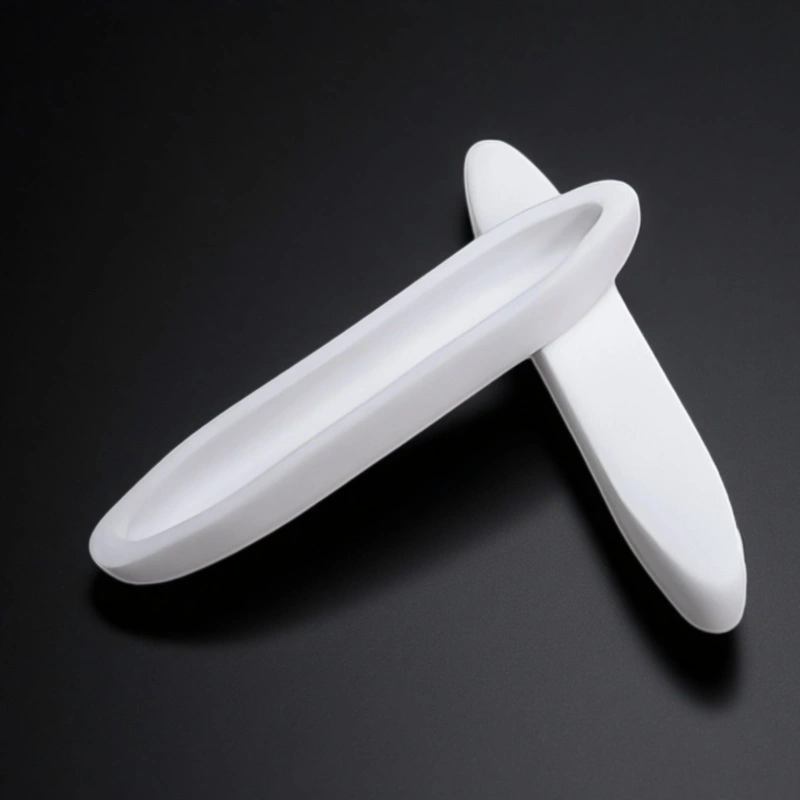
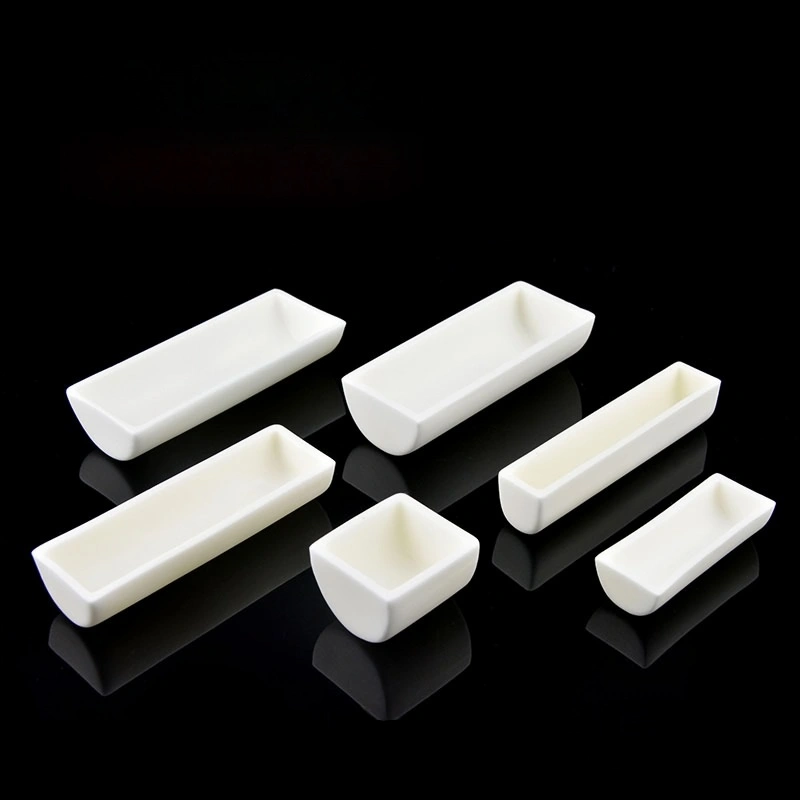
An alumina combustion boat is an open-top ceramic sample holder with a solid, non-perforated base. This page covers curved and narrow boat geometries and boat-shaped crucibles. Choose a boat by its usable cavity, loading clearance and material requirements. For a different geometry, explore alumina combustion boats with holes or compare the wider alumina boat range.
Alumina Combustion Boat Specifications
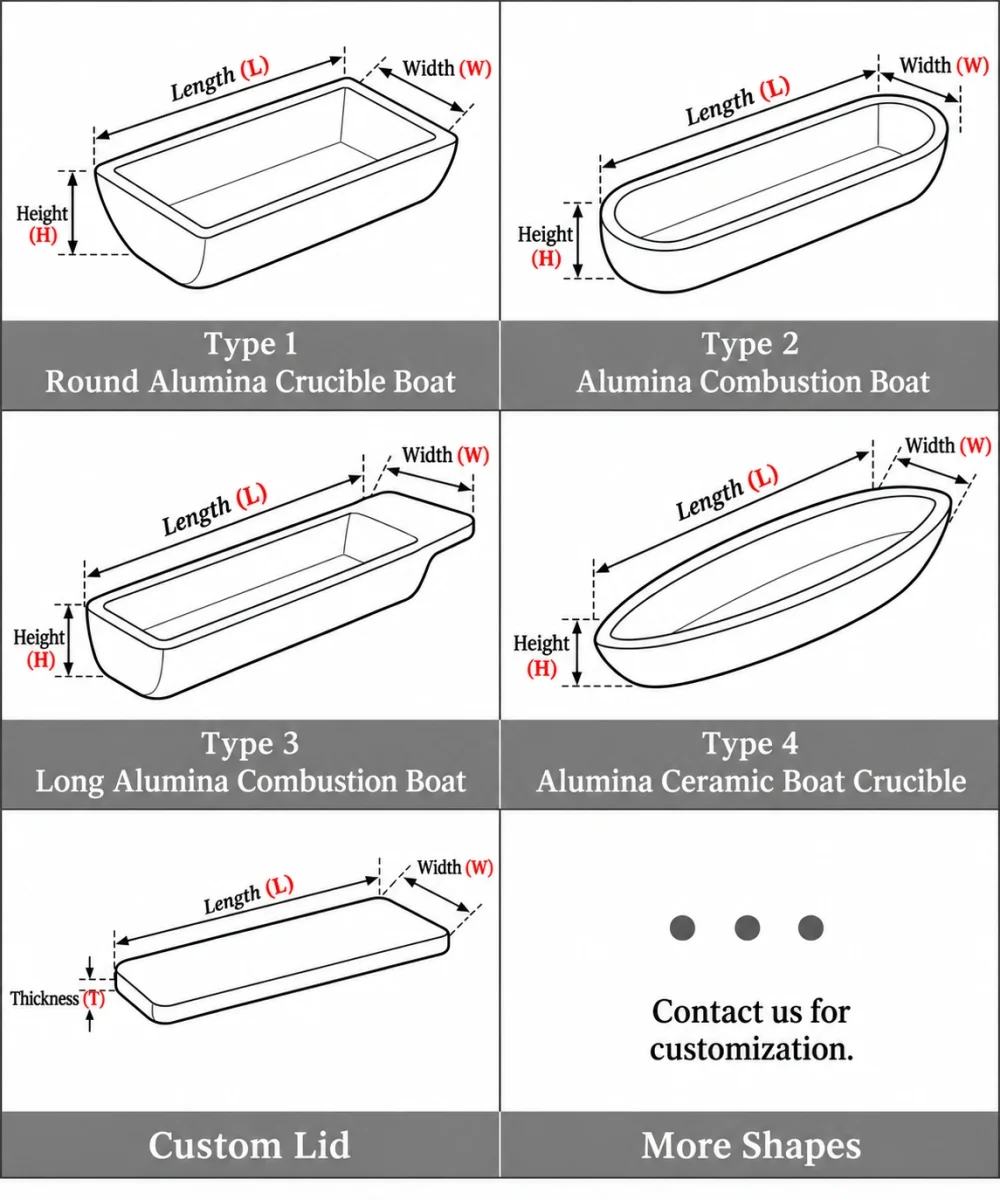
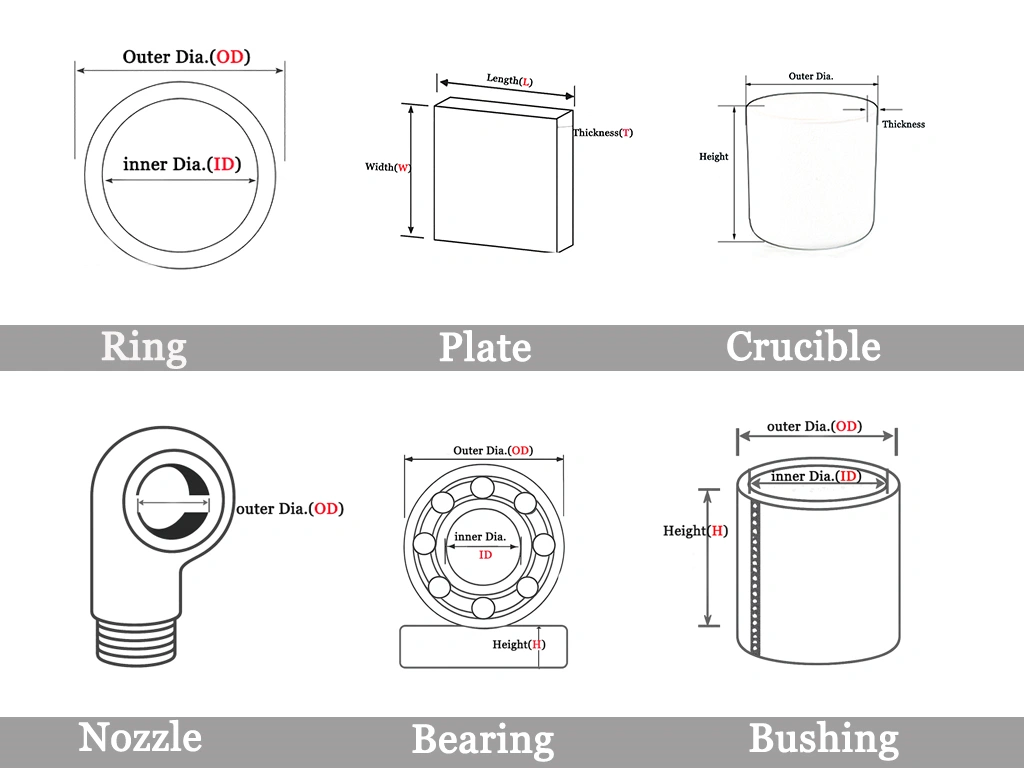
Dimensions below are external L × W × H in millimeters. Use the paired model dimensions to shortlist a boat; usable cavity and loading clearance complete the fit check.
Type 1 — Round Alumina Crucible Boat
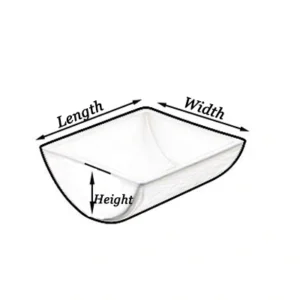
| Item NO. | Length (mm) | Width (mm) | Height (mm) | Remark |
| TE-AS-086-1 | 150 | 40 | 20 | / |
| TE-AS-087 | 100 | 65 | 30 | / |
| TE-AS-089 | 100 | 40 | 25 | / |
| TE-AS-093 | 100 | 20 | 15 | / |
| TE-AS-093-1 | 100 | 20 | 20 | / |
| TE-AS-093-4 | 100 | 30 | 20 | / |
| TE-AS-093-5 | 100 | 40 | 20 | / |
| TE-AS-094 | 60 | 54 | 24 | / |
| TE-AS-095 | 65 | 25 | 16 | / |
| TE-AS-096 | 55 | 35 | 22 | / |
| TE-AS-097 | 40 | 35 | 25 | / |
| TE-AS-098 | 40 | 25 | 17 | / |
| TE-AS-099 | 38 | 34 | 18 | / |
| TE-AS-099-1 | 50 | 40 | 20 | / |
| TE-AS-099-12 | 60 | 30 | 15 | with cover |
| TE-AS-099-13 | 160 | 75 | 40 | / |
| TE-AS-099-14 | 103 | 55 | 30 | / |
| TE-AS-099-2 | 80 | 40 | 17 | / |
| TE-AS-099-3 | 245 | 40 | 20 | / |
| TE-AS-099-4 | 290 | 40 | 22 | / |
| TE-AS-099-8 | 100 | 50 | 30 | / |
| TE-AS-099-9 | 250 | 40 | 18 | / |
| TE-AS-119 | 100 | 40 | 25 | with cover |
| TE-AS-120 | 100 | 40 | 20 | with cover |
| TE-AS-123 | 100 | 20 | 15 | with cover |
| TE-AS-124 | 60 | 54 | 24 | with cover |
| TE-AS-124-2 | 100 | 20 | 20 | with cover |
| TE-AS-124-3 | 100 | 30 | 20 | with cover |
| TE-AS-124-4 | 100 | 50 | 30 | with cover |
Type 2 — Alumina Combustion Boat

| Item NO. | Length(mm) | Width(mm) | Height(mm) | Purity |
| TE-AS-082-3 | 77 | 13 | 8 | 99% |
| TE-AS-080 | 88 | 15 | 9 | 99% |
| TE-AS-079-6 | 97 | 17 | 12 | 99% |
| TE-AS-079-3 | 115 | 30 | 20 | 99% |
| TE-AS-079-2 | 100 | 18 | 12 | 99% |
| TE-AS-079-1 | 85 | 15 | 9 | 99% |
| TE-AS-079 | 43 | 11 | 11 | 99% |
Type 3 — Long Alumina Combustion Boat
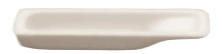
| Item NO. | Length(mm) | Width(mm) | Height(mm) | Purity |
| TE-AS-085-1 | 27 | 7 | 6 | 99% |
| TE-AS-078-1 | 40 | 9 | 9 | 99% |
Type 4 — Alumina Ceramic Boat Crucible
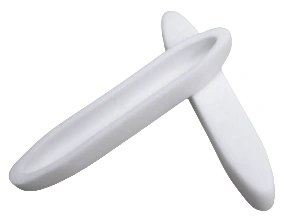
| Item NO. | Length(mm) | Width(mm) | Height(mm) | Purity |
| TE-AS-078-2 | 60 | 11 | 8 | 99% |
Note: The tables show selected standard specifications. For additional sizes, please consult the complete product catalogue or contact ADCERAX for an engineering review.
Alumina Grades for Boat Selection
Compare the material references below against your sample and flux chemistry, analytical requirements and thermal cycle.
| Material grade | Nominal Al₂O₃ (wt%) | Typical density (g/cm³) | Material service-temperature guide (°C) |
|---|---|---|---|
| AD-ALU-999 | 99.90 | 3.94 | 1750 |
| AD-ALU-997 | 99.70 | 3.94 | 1700 |
| AD-ALU-995 | 99.50 | 3.90–3.92 | 1650 |
| AD-ALU-990 | 99.00 | 3.80–3.91 | 1600 |
| AD-ALU-960 | 96 | 3.70 | 1600 maximum in air |
| AD-ALU-950 | 95 | 3.75 | 1400 |
Values describe the alumina material grade, not a rating for every boat size or method. Establish the finished boat's operating conditions and analytical acceptance for the selected geometry, atmosphere, load and heating cycle.
How to Choose an Alumina Combustion Boat
External size and clearance
Compare external L × W × H first, then check clearance in the furnace tube and around the push rod, supports and handling tools. Put critical tolerances on the drawing.
Open or covered
Eight Type 1 sizes are listed with cover. For a covered boat, agree the lid geometry, fit and any vent detail on the drawing.
Usable cavity and sample loading
For a shortlisted size, confirm inner length and depth, wall and base thickness, end shape and lip, so the sample and any flux sit at the right depth.
Material and test method together
Match the alumina grade to the sample and flux chemistry, atmosphere and thermal cycle. For carbon and sulfur analysis, state the target elements and the analytical blank you need to meet.
Alumina vs. Porcelain vs. Quartz Combustion Boats
Three boat materials cover most laboratory combustion work. Use the typical references below to narrow the choice, then confirm the candidate against your temperature, sample chemistry and thermal cycle.
| Selection point | Alumina (this page) | Porcelain (glazed) | Fused quartz |
|---|---|---|---|
| Material temperature guide | 1400–1750 °C by grade — see the table above | Typically around 1050 °C | Typically around 1050 °C continuous |
| Thermal-shock behavior | Moderate; use a controlled insertion and cooling routine | Moderate; glaze can craze with repeated cycling | Excellent; tolerates fast insertion and removal |
| Chemical behavior | Stable with many samples and fluxes; review aggressive fluxes by grade | Glaze may react with fluxes at higher temperatures | Can devitrify in contact with alkalis at high temperature |
| Common choice for | Carbon/sulfur analysis, ashing and burn-off above the porcelain range; boats that must survive repeated handling | Lower-temperature ashing and routine lab work | Fast-cycle work within its temperature range |
Why Alumina Combustion Boats Crack — and How to Prevent It
Most field failures trace to one of four patterns. Checking these before changing the boat design or material avoids replacing the wrong variable.
| Failure pattern | Typical cause | What to check |
|---|---|---|
| Thermal-shock crack | Fast insertion or withdrawal; a hot boat set on a cold or wet surface | Insertion speed and position, cooling station, furnace entry temperature |
| Chip or crack at the rim or ends | Impact during loading; tight clearance against the tube, rod or fixture | Loading clearance, handling tools, incoming-packaging condition |
| Sticking, reaction layer or penetration | Sample or flux reacting with the boat at temperature | Flux chemistry and amount, alumina grade selection, discard criteria |
| Distortion or uneven wear | Overloading or uneven sample placement over repeated cycles | Fill height against the cavity, load distribution, reuse and blank-drift limits |
If results drift, review the boat, tube, fixture, flux and instrument method together before switching the material. Share the crack location and your operating cycle with an enquiry for a design review.
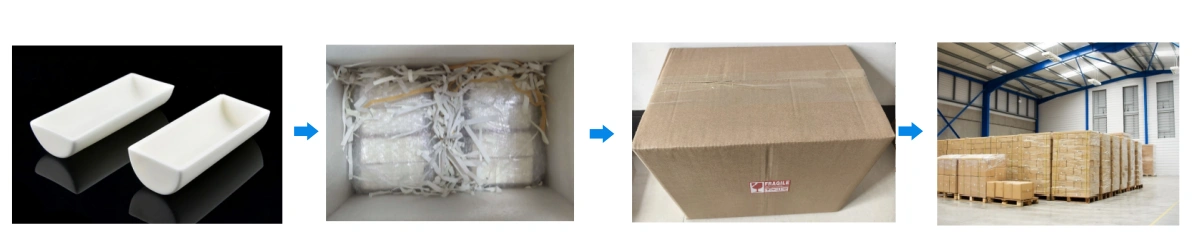
Alumina Combustion Boat Packaging and Transit Protection
Boats ship with per-piece separation and cushioning. Packaging configuration, labeling and incoming-damage criteria are confirmed with each order.