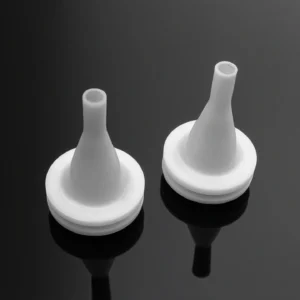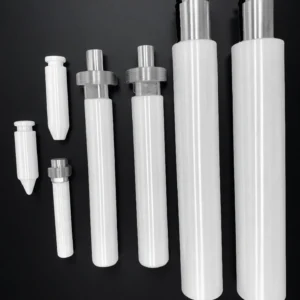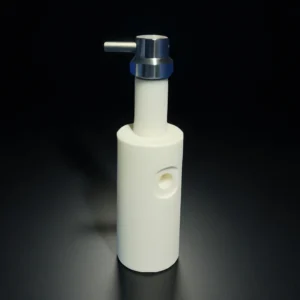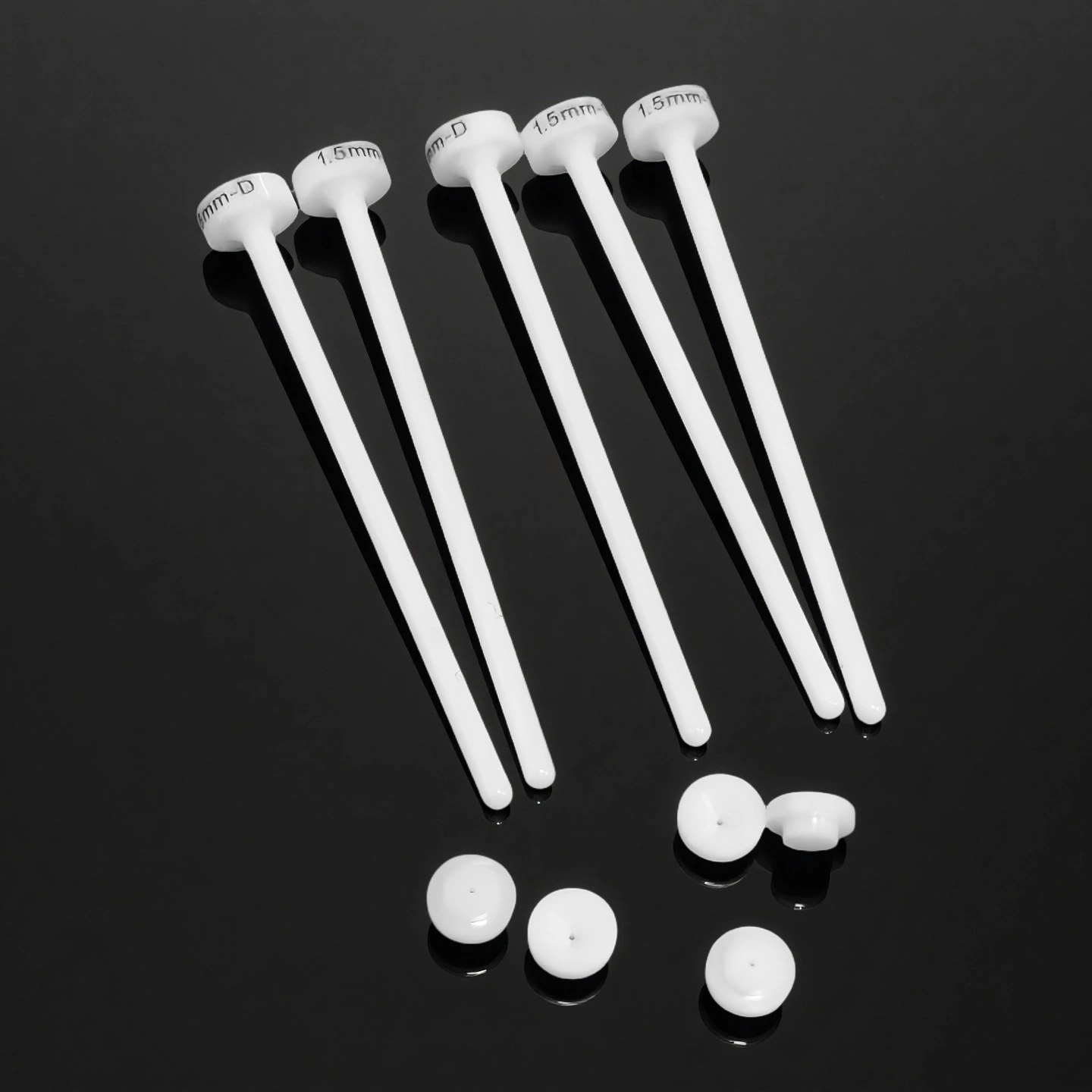
ADCERAX Zirconia Ceramic Piezoelectric Injector Pin is a drawing-based ZrO2 ceramic component used in selected piezo jet dispensing valves, adhesive dosing systems, conductive paste jetting and precision fluid-control assemblies. The dense zirconia ceramic body provides hardness, toughness and chemical stability for repeated contact inside compact valve structures.
Why Zirconia Is Used for Piezoelectric Injector Pins
Zirconia is used for piezoelectric injector pins when the valve component must resist repeated impact, abrasive filler contact and chemical exposure in a compact dispensing structure. Compared with metal pins, dense zirconia ceramic offers higher hardness, better corrosion resistance and lower risk of metal contamination in selected adhesive, coating and precision fluid systems.
For piezo jet valves, the injector pin is not only a wear part. Its tip geometry, surface finish, straightness and dimensional consistency can affect droplet stability, sealing behavior and replacement frequency. ADCERAX reviews these details together with the customer’s valve structure and process fluid before confirming the manufacturing route.
Features of Zirconia Ceramic Piezoelectric Injector Pins
- The zirconia ceramic injector pin provides high hardness and wear resistance, making it suitable for repeated contact inside piezo jet dispensing valves.
- Its fracture toughness helps reduce the risk of sudden chipping during high-frequency movement, vibration or contact with matching valve components.
- The dense ZrO2 ceramic surface offers good chemical stability when working with selected adhesives, resins, conductive pastes and cleaning media.
- The polished pin surface can help support smoother movement, more stable contact and lower residue adhesion in precision dispensing applications.
- Zirconia ceramic is suitable for small impact components where metal pins may wear, corrode or introduce unwanted metal contamination.
- The tip profile, diameter, straightness and surface finish can be reviewed according to the drawing, valve seat, nozzle structure and dispensing material.
- For abrasive or filled fluids, ADCERAX can review filler content, viscosity, cleaning method and operating frequency before confirming whether zirconia is suitable.
Typical Properties of Zirconia Ceramic Piezoelectric Injector Pins
The zirconia ceramic piezoelectric injector pin combines high hardness, toughness and chemical stability to support precision dispensing in piezo jet valve systems.
| Property | Typical Specification | Why It Matters |
|---|---|---|
| Density | 6.0 g/cm³ | A dense ceramic structure helps improve wear resistance, dimensional stability and surface durability in repeated valve movement. |
| Hardness | HV > 1200 | High hardness helps protect the pin surface when dispensing filled adhesives, conductive pastes or abrasive fluids. |
| Flexural Strength | > 1200 MPa | Higher strength helps the small ceramic pin resist bending stress during assembly and repeated contact. |
| Fracture Toughness | ~10 MPa·m¹/² | Good toughness helps reduce chipping risk during high-frequency motion, vibration or valve-seat contact. |
| Thermal Expansion | 10.5 × 10⁻⁶ /K | Stable thermal behavior helps maintain fit with mating valve components under temperature changes. |
| Maximum Operating Temperature | Application-dependent | The usable temperature should be reviewed according to the valve body, seal material, fluid and cleaning process. |
| Chemical Stability | Resistant to many acids, bases and solvents | Chemical stability helps the pin work with selected adhesives, resins, coatings and cleaning media. |
| Wear Resistance | Suitable for repeated dispensing cycles | Wear resistance helps reduce surface damage, unstable contact and replacement frequency in precision dispensing. |
| Elastic Modulus | 200–210 GPa | High stiffness supports stable contact behavior and dimensional consistency in compact valve structures. |
| Jetting Frequency | Reviewed by valve design | Actual frequency depends on the piezo valve, fluid viscosity, filler content, tip geometry and system settings. |
Specifications of Zirconia Ceramic Piezoelectric Injector Pin
| Zirconia Ceramic Piezoelectric Injector Pin | ||
| Item No. | Length(mm) | Width(mm) |
| AT-YHG-YD1001 | Customize | |
Packaging of Zirconia Ceramic Piezoelectric Injector Pin
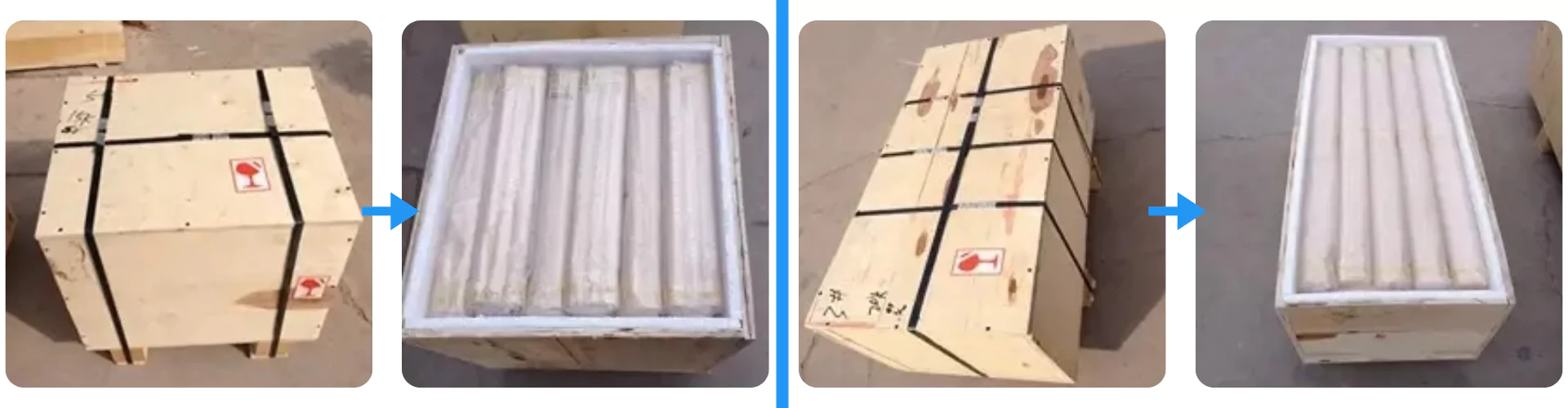
Each zirconia ceramic injector pin should be individually separated to avoid ceramic-to-ceramic contact during transport. Polished tips, small diameters and sharp transition areas require foam positioning, surface protection and reinforced outer packaging. Before shipment, ADCERAX can review visible surface condition, key dimensions and packaging stability according to order requirements.