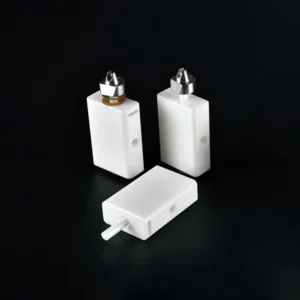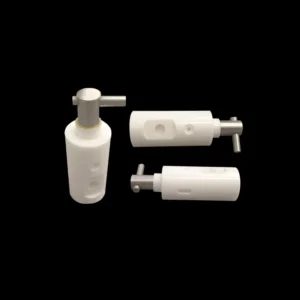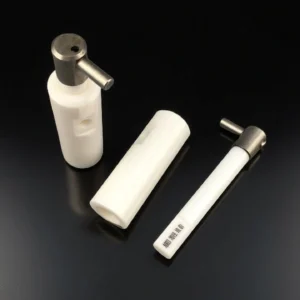
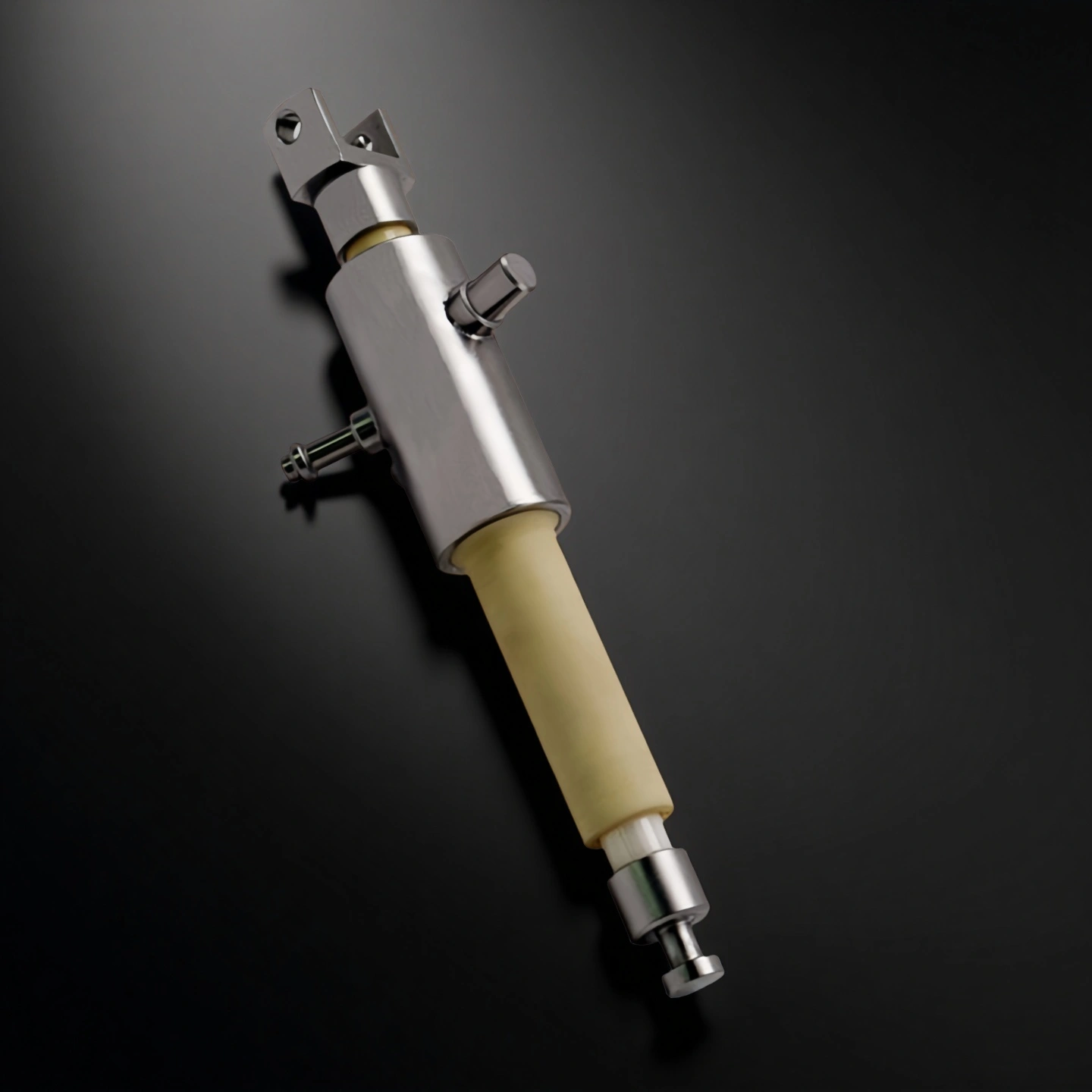
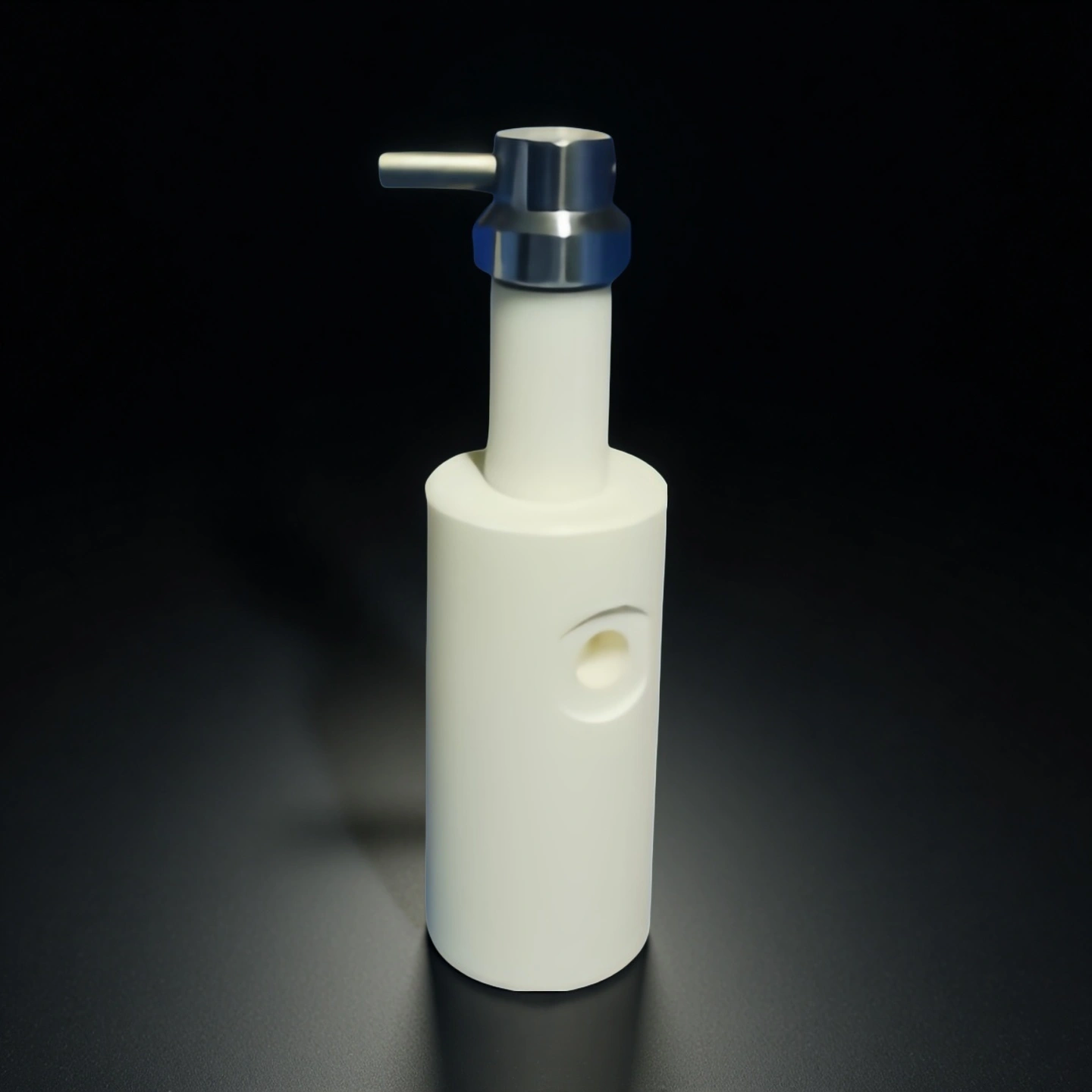
ADCERAX Zirconia Ceramic Filling Pump is used in liquid filling systems where repeatable volume control, wear resistance, chemical stability, and cleanable wetted surfaces are important. Compared with common metal contact parts, zirconia ceramic pump components can reduce wear, corrosion risk, and residue adhesion in suitable operating conditions.
What is a Zirconia Ceramic Filling Pump?
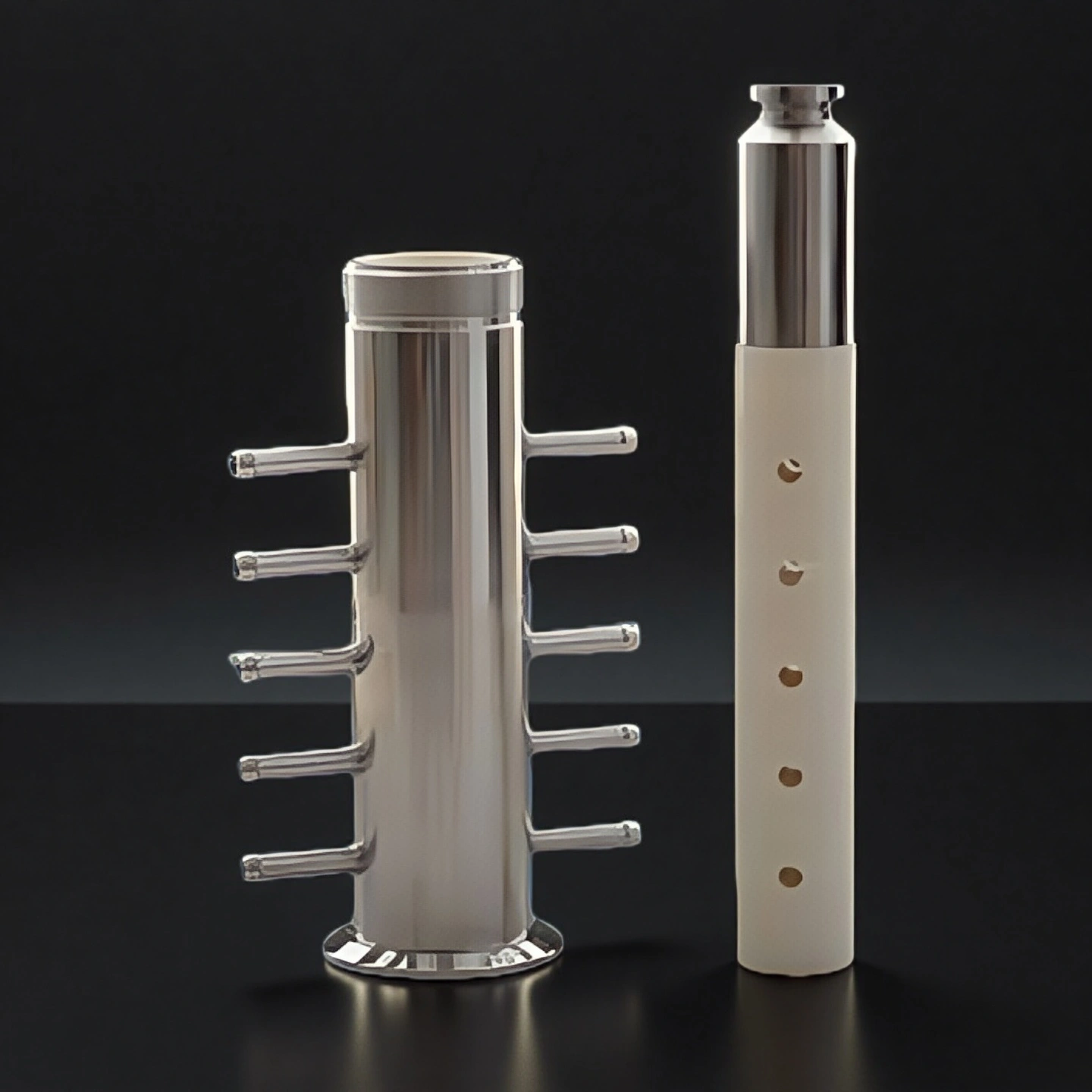
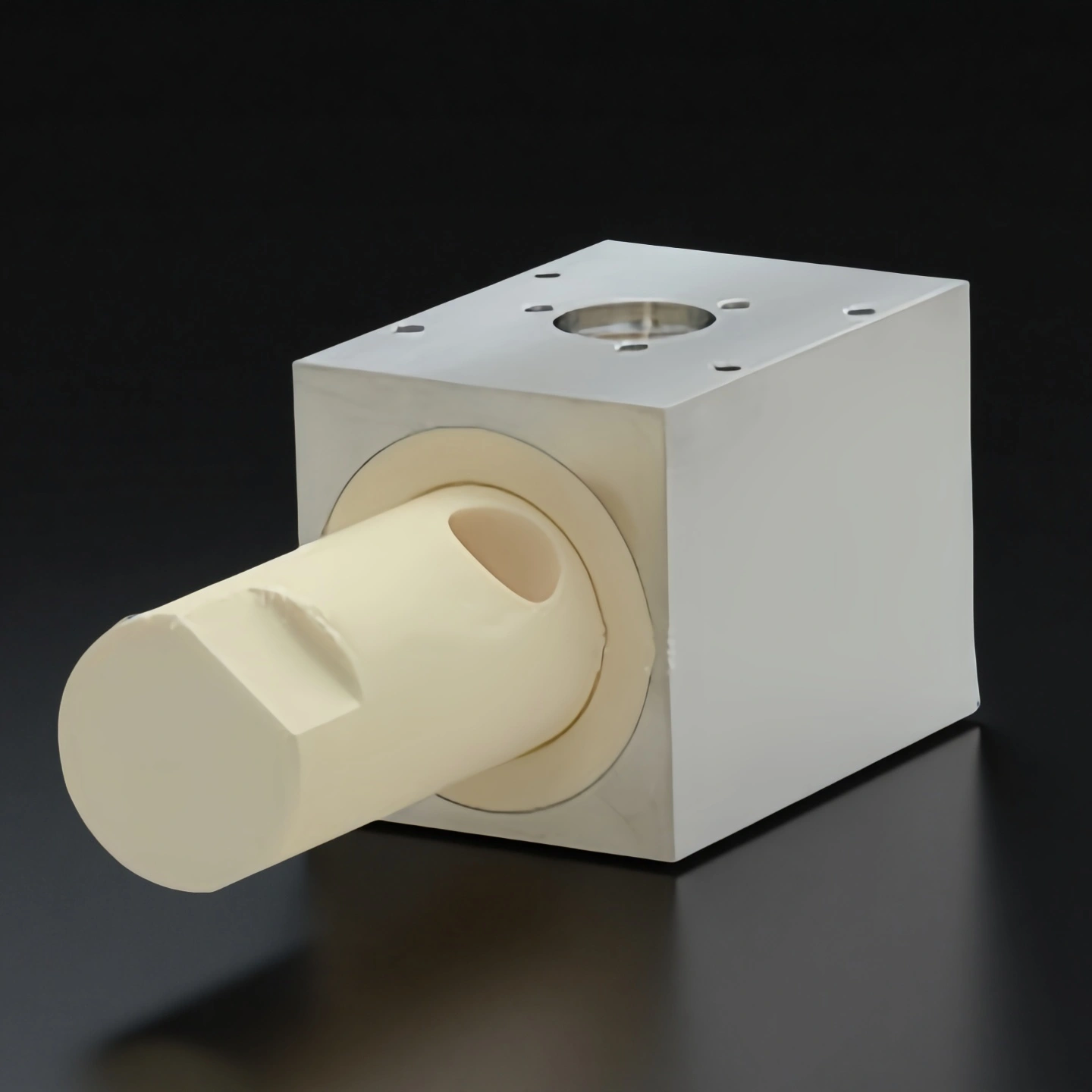
A Zirconia Ceramic Filling Pump is a precision liquid dosing component that uses zirconia ceramic parts in the wetted path, such as the pump body, piston, plunger, sleeve, or valve interface. It is selected when filling equipment requires stable dosing, smooth ceramic contact surfaces, and better resistance to wear or chemical attack than standard metal components can provide.
ADCERAX supplies standard and custom zirconia filling pump components for cosmetic filling, chemical dosing, battery electrolyte filling, and hygiene-sensitive liquid handling systems. Final model selection should be based on filling volume, viscosity, liquid chemistry, operating speed, seal design, and equipment interface.
Why Choose Zirconia Ceramic for Filling Pump Components?
- Wear-resistant ceramic contact surfaces: Zirconia ceramic provides high hardness, helping reduce surface wear during repeated piston or plunger movement.
- Chemical stability in suitable media: Zirconia can resist many acids, alkalis, and solvent-based liquids, but final compatibility should be confirmed according to the exact liquid formula and seal material.
- Stable dimensional behaviour: Dense zirconia ceramic helps maintain pump clearances during repeated operation, supporting consistent liquid dosing.
- Cleanable wetted path: Smooth ceramic surfaces can reduce residue adhesion and support faster cleaning during product changeovers.
- Custom integration support: Pump body geometry, ports, flow paths, piston fit, and sealing interfaces can be adjusted according to drawings or equipment requirements.
Technical Properties for Zirconia Ceramic Filling Pump Components
The following values describe typical zirconia ceramic material properties used for pump components. Actual pump performance depends on pump structure, seal material, liquid chemistry, pressure, temperature, speed, and equipment calibration.
| Property | Typical Value | Engineering Meaning |
|---|---|---|
| Material | Stabilized zirconia ceramic | Used for dense, wear-resistant wetted pump components. |
| Density | 5.65–6.05 g/cm³ | Indicates a dense ceramic structure. |
| Hardness | 1200–1450 HV1 | Supports wear resistance under repeated piston or plunger motion. |
| Bending Strength | 480–1000 MPa | Helps resist mechanical stress in ceramic pump parts. |
| Compressive Strength | 1600–2300 MPa | Useful for loaded pump structures and sealing areas. |
| Fracture Toughness | 6–8 MPa·m¹/² | Improves resistance to cracking compared with more brittle ceramics. |
| Thermal Conductivity | Approx. 3 W/m·K | Helps evaluate heat transfer around the ceramic contact area. |
| Thermal Expansion | Approx. 10 × 10⁻⁶ /K | Helps engineers evaluate clearance and fit under temperature change. |
| Operating Note | Application-dependent | Actual pump temperature range depends on liquid, seals, and equipment design. |
| Compliance Note | Available upon request | RoHS or other compliance information should be confirmed by order requirement. |
Specifications of Zirconia Ceramic Filling Pump
| Zirconia Filling Pump For Cosmetics | |||
| Item No. | Filling Volume (mL) | ZrO₂ Content (%) | Typical Filling Accuracy |
| AT-ZP-2001 | 0.2 | 95 | <1% |
| AT-ZP-2002 | 0.5 | 95 | <1% |
| AT-ZP-2003 | 1 | 95 | <1% |
| AT-ZP-2004 | 2 | 95 | <1% |
| AT-ZP-2005 | 3 | 95 | <0.5% |
| AT-ZP-2006 | 5 | 95 | <0.5% |
| AT-ZP-2007 | 7 | 95 | <0.5% |
| AT-ZP-2008 | 10 | 95 | <0.5% |
| AT-ZP-2009 | 15 | 95 | <0.5% |
| AT-ZP-2010 | 16 | 95 | <0.5% |
| AT-ZP-2011 | 20 | 95 | <0.5% |
| Zirconia Filling Pump for Hygiene-Sensitive Filling Systems | |||
| Item No. | Filling Volume (mL) | ZrO₂ Content (%) | Typical Filling Accuracy |
| AT-ZP-3001 | 0.5 | 95 | <1% |
| AT-ZP-3002 | 1 | 95 | <1% |
| AT-ZP-3003 | 2 | 95 | <1% |
| AT-ZP-3004 | 3 | 95 | <0.5% |
| AT-ZP-3005 | 5 | 95 | <0.5% |
| AT-ZP-3006 | 7 | 95 | <0.5% |
| AT-ZP-3007 | 10 | 95 | <0.5% |
| AT-ZP-3008 | 15 | 95 | <0.5% |
| AT-ZP-3009 | 16 | 95 | <0.5% |
| AT-ZP-3010 | 20 | 95 | <0.5% |
| AT-ZP-3011 | 30 | 95 | <0.5% |
| AT-ZP-3012 | 40 | 95 | <0.5% |
| Zirconia Filling Pump for Food and Additive Filling Equipment | |||
| Item No. | Filling Volume (mL) | ZrO₂ Content (%) | Typical Filling Accuracy |
| AT-ZP-4001 | 1 | 95 | <1% |
| AT-ZP-4002 | 2 | 95 | <1% |
| AT-ZP-4003 | 3 | 95 | <0.5% |
| AT-ZP-4004 | 5 | 95 | <0.5% |
| AT-ZP-4005 | 7 | 95 | <0.5% |
| AT-ZP-4006 | 10 | 95 | <0.5% |
| AT-ZP-4007 | 15 | 95 | <0.5% |
| AT-ZP-4008 | 16 | 95 | <0.5% |
| AT-ZP-4009 | 20 | 95 | <0.5% |
| AT-ZP-4010 | 30 | 95 | <0.5% |
| AT-ZP-4011 | 40 | 95 | <0.5% |
| AT-ZP-4012 | 40-220Custom large-volume model | 95 | <0.5% |
| Zirconia Filling Pump For Battery Electrolytes | ||||
| Item No. | Filling Volume (mL) | Zirconia Content (%) | Approx. Electrolyte Mass | Typical Filling Accuracy |
| AT-ZP-5001 | 0.5 | 95 | 0.5g | <0.3% |
| AT-ZP-5002 | 1 | 95 | 1g | <0.3% |
| AT-ZP-5003 | 2 | 95 | 3g | <0.3% |
| AT-ZP-5004 | 3 | 95 | 8g | <0.3% |
| AT-ZP-5005 | 4 | 95 | 18g | <0.3% |
| AT-ZP-5006 | 5 | 95 | 40g | <0.3% |
FAQs about Zirconia Ceramic Filling Pump
- Q: What liquids can a zirconia ceramic filling pump handle?
A: It can be used for many cosmetic liquids, chemical liquids, battery electrolyte systems, and hygiene-sensitive fluids. Final compatibility depends on liquid chemistry, viscosity, temperature, seal material, and cleaning method. - Q: Is zirconia better than stainless steel for filling pumps?
A: Zirconia is often selected when stainless steel faces wear, corrosion, residue build-up, or contamination concerns. Stainless steel may still be suitable for low-wear and low-corrosion liquid filling applications. - Q: What filling accuracy can be achieved?
A: Typical filling accuracy is usually below 0.5–1%, depending on filling volume, liquid viscosity, pump speed, seal condition, and system calibration. - Q: Can the pump size be customized?
A: Yes. ADCERAX can customize the pump body, piston, plunger, sleeve, valve interface, inlet and outlet ports, sealing structure, and surface finish according to drawings or equipment requirements. - Q: Can it be used for battery electrolyte filling?
A: Yes, zirconia ceramic filling pumps can be used for electrolyte dosing. Compatibility should be checked according to the electrolyte formula, solvent system, working temperature, and sealing material. - Q: What information is needed for a quotation?
A: Please provide filling volume, liquid type, viscosity, operating temperature, required accuracy, equipment interface, drawing, quantity, and cleaning method. These details help us recommend the correct pump structure and ceramic components.
ADCERAX Packaging of Zirconia Ceramic Filling Pump
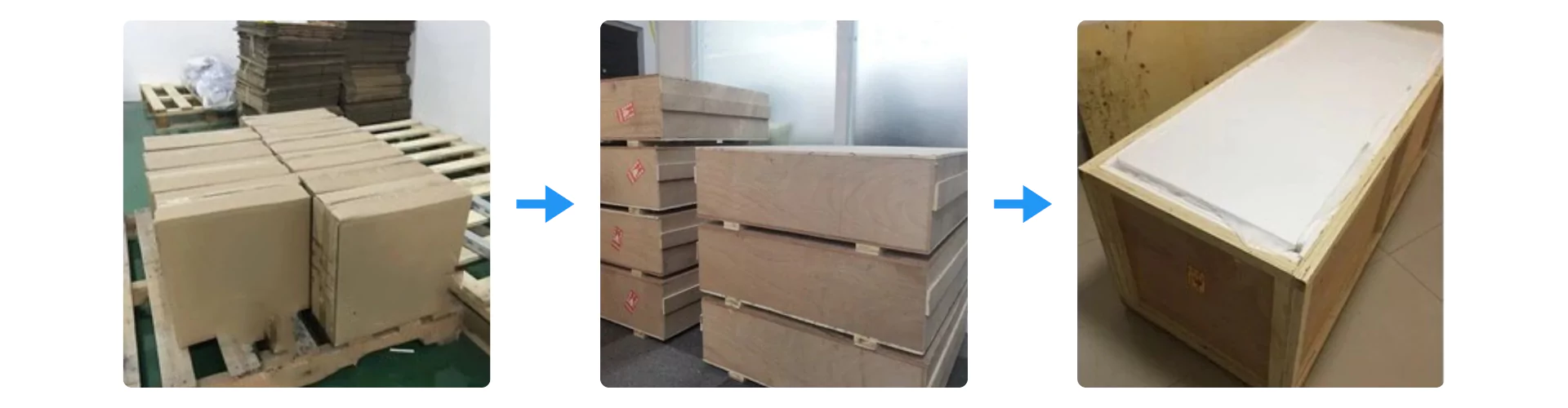
Each ZrO2 Filling Pump is first packed in reinforced cartons to prevent movement during handling. The cartons are then secured inside wooden cases for added impact resistance during international shipping. This multi-layer protection ensures every one of them arrives safely and ready for integration into production lines.