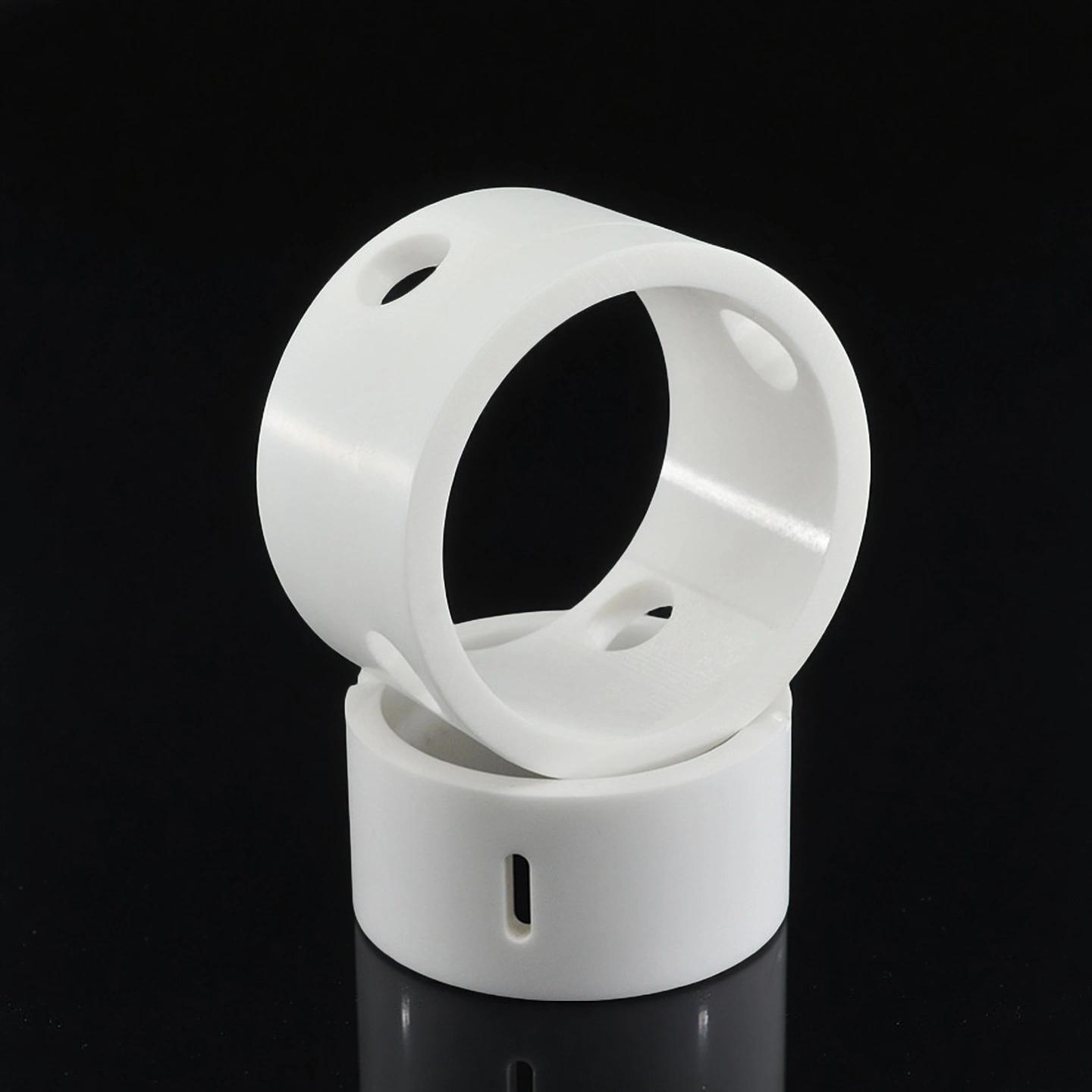
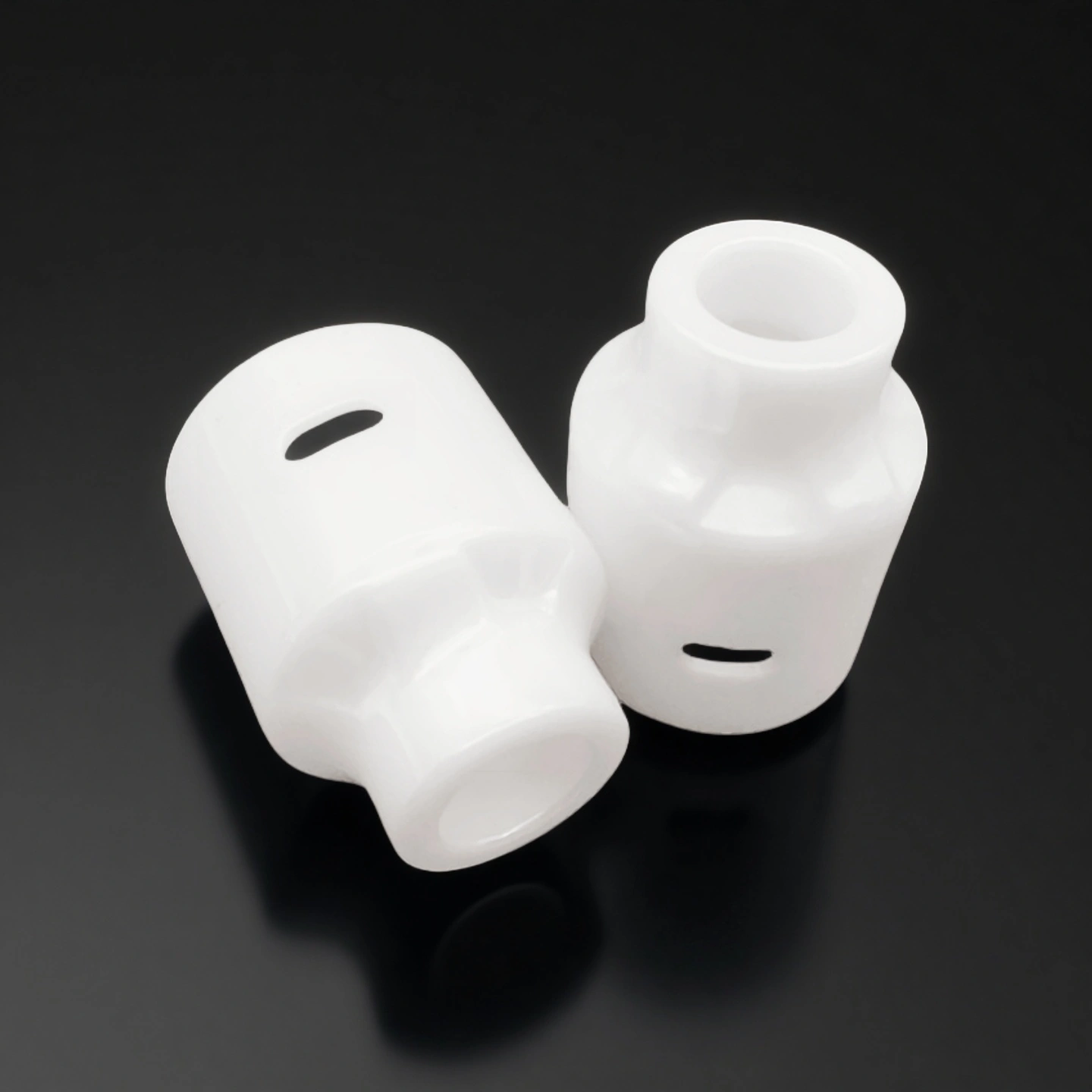
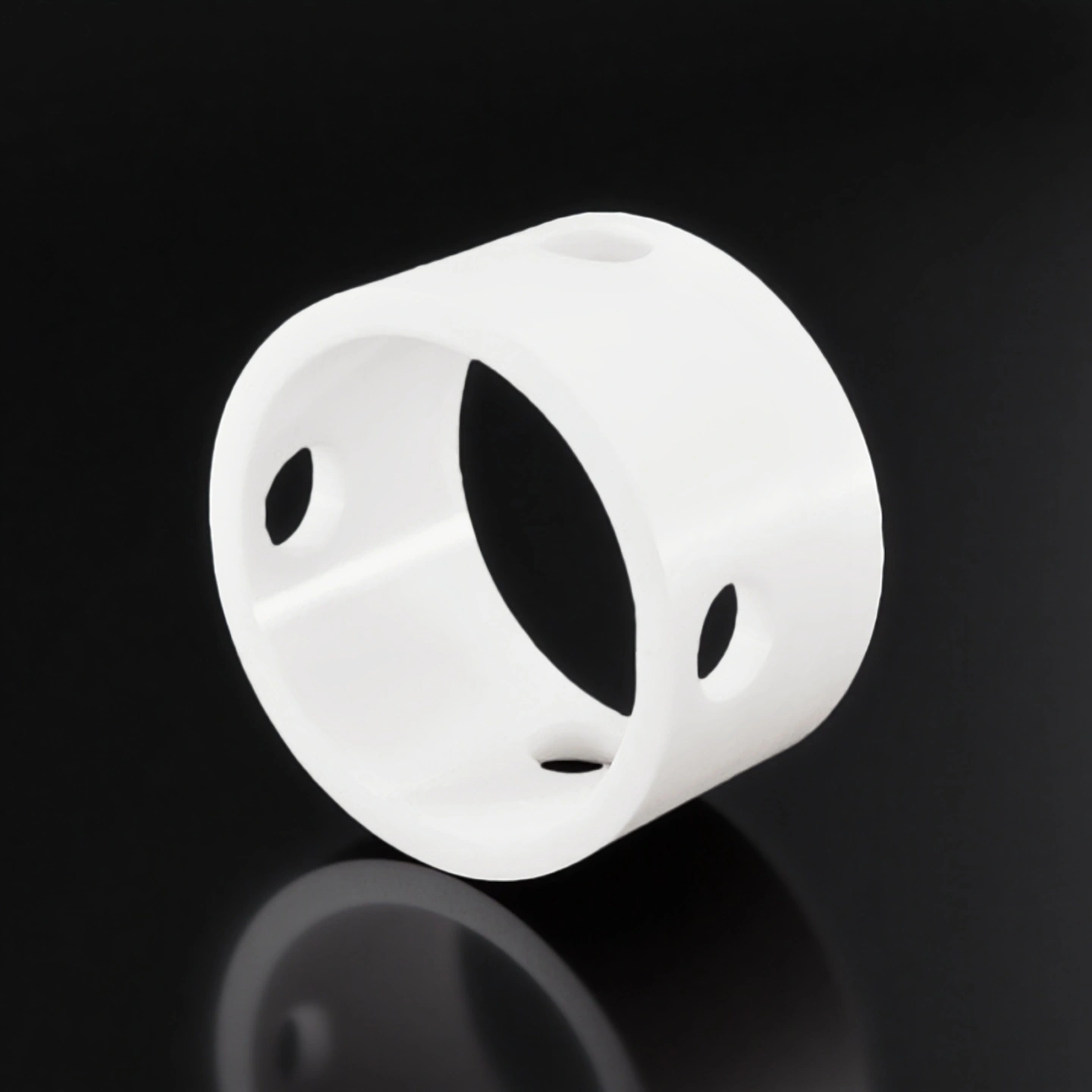
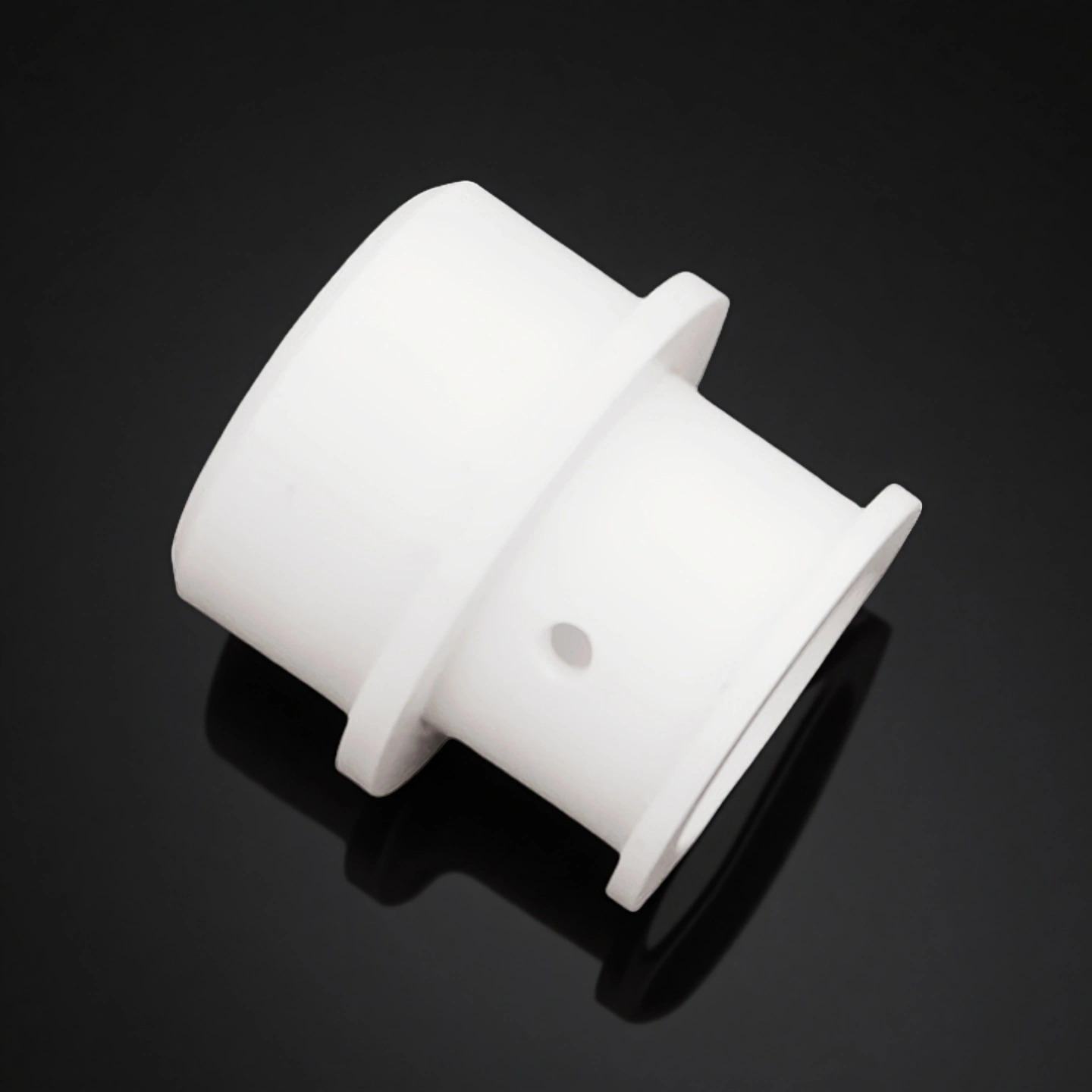
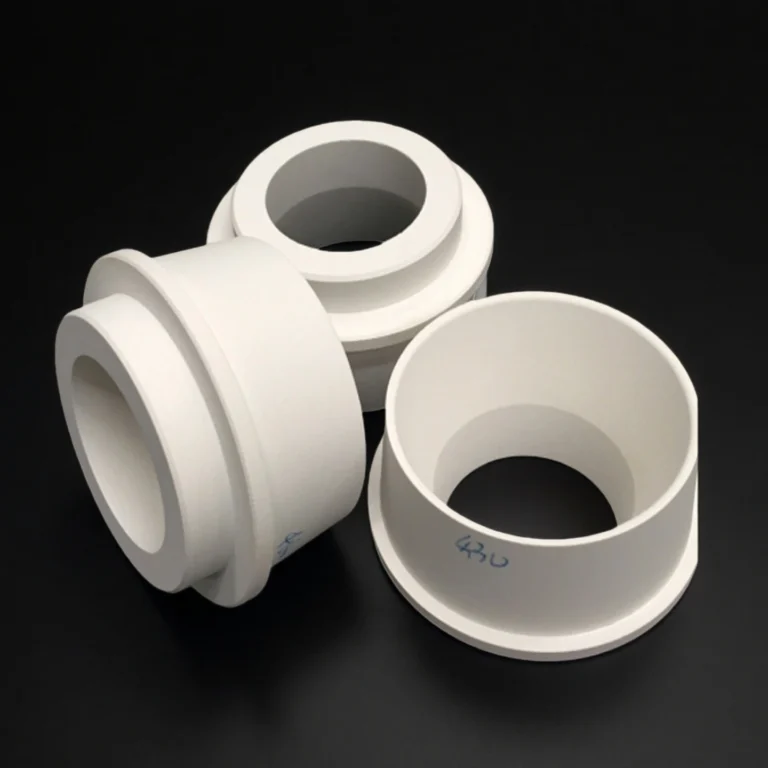
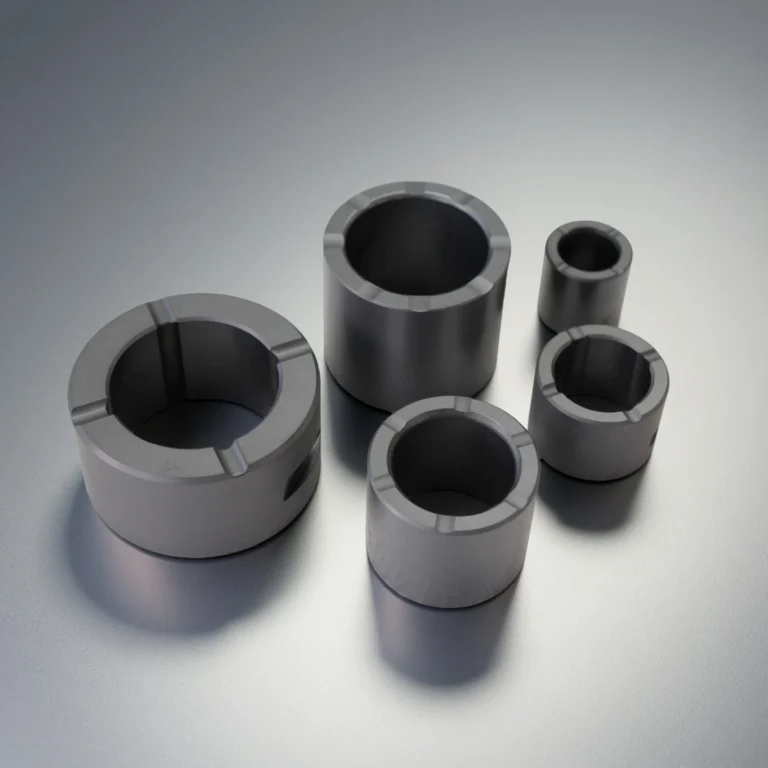
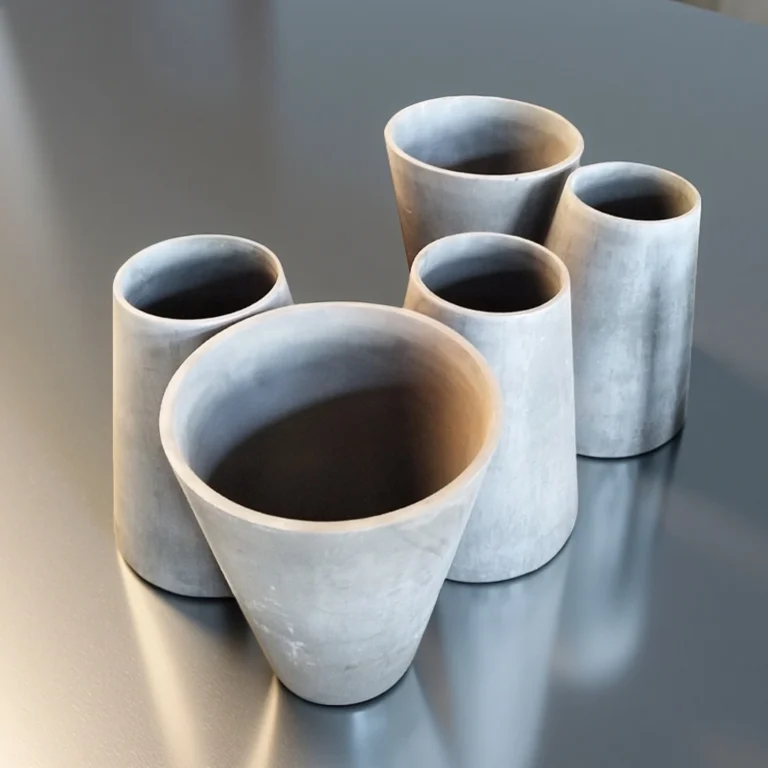
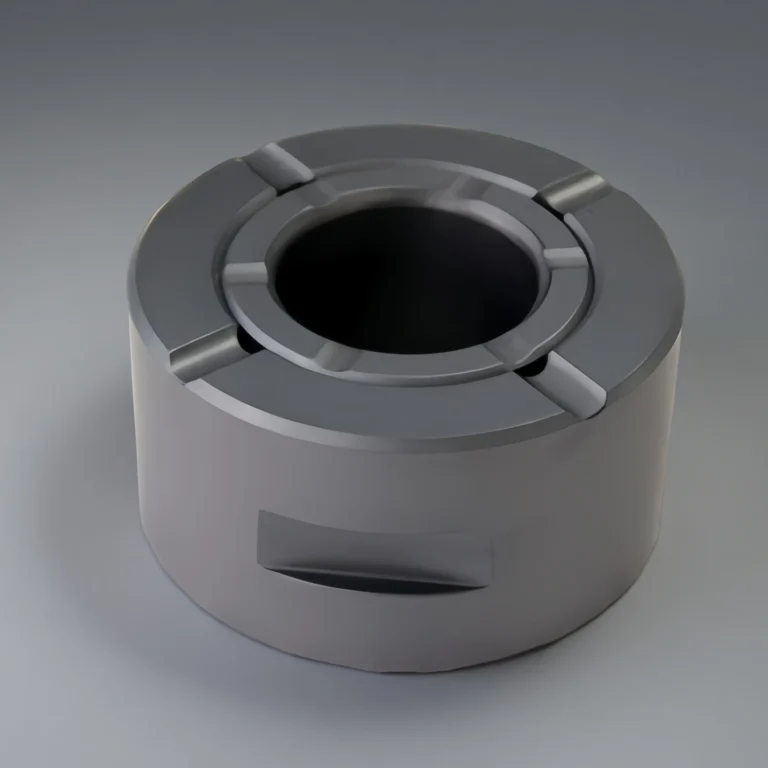
ADCERAX® Zirconia Ceramic Shaft Sleeve is designed to operate between the shaft and bearing, providing a durable barrier that protects both components from direct contact. By reducing friction and absorbing mechanical stress, it helps extend the operational lifespan of rotating assemblies. Commonly integrated into motors, pumps, gear reducers, and engine systems, it ensures consistent performance in demanding industrial environments.
Core Performance Features of Zirconia Ceramic Shaft Sleeve
- High Flexural Strength:
The shaft sleeve achieves up to 1100 MPa in flexural strength, allowing it to withstand high radial loads in rotary systems. This ensures structural integrity even under cyclic stress and sudden torque variations.
- Exceptional Hardness:
With a Vickers hardness of 1300 HV, it offers wear resistance more than 5× higher than 316 stainless steel, minimizing dimensional loss over extended use.
- Extended Service Life:
Lab-based dry-run testing confirms a lifespan increase of over 20× compared to bronze bushings in unlubricated pump systems.
- High-Temperature Stability:
Zirconia structure maintains stability up to 1000 °C continuous and 1200 °C short-term, making it ideal for high-heat pump or engine environments.
- Chemical Inertness:
The material resists acids, alkalis, salts, and solvents, with zero degradation recorded in 24-hour exposure to 10% H₂SO₄ at 60 °C.
- Oxidation Resistance:
After 1000 hours at 800 °C in air, no visible surface scaling or cracking occurs, ensuring reliability in long-cycle operations.
- Ultra-Low Friction Coefficient:
Zirconia achieves a friction coefficient of ~0.0012 under dry contact, significantly reducing heat buildup and wear in boundary-lubrication conditions.
- Self-Lubricating Operation:
Suitable for use in vacuum or non-lubricated assemblies, test runs showed stable rotation at 3000 RPM for 500 hours without lubrication failure.
- Noise Suppression:
Its dense, polished surface reduces vibration and acoustic emissions, lowering operational noise by over 40% in high-speed systems compared to steel sleeves.
Technical Properties of Zirconia Ceramic Shaft Sleeve
The Zirconia Ceramic Shaft Sleeve is engineered for high-load, high-temperature, and chemically aggressive environments where mechanical stability and material purity are essential for long-term reliability. Its dense microstructure, excellent wear resistance, and electrical insulation properties make it suitable for critical applications in pumps, motors, and laboratory equipment.
| Property |
Specification |
| Material Purity |
>99.8% ZrO₂ |
| Density |
6.0 g/cm³ |
| Vickers Hardness |
1300 HV |
| Flexural Strength |
1100 MPa |
| Fracture Toughness (KIC) |
8 MPa·m¹ᐟ² |
| Maximum Service Temperature |
1000 °C (continuous) |
| Thermal Shock Resistance |
ΔT > 400 °C |
| Coefficient of Expansion |
10.3 × 10⁻⁶ /K (20–800 °C) |
| Volume Resistivity |
>10¹² Ω·cm |
| Chemical Resistance |
Stable in H₂SO₄, NaOH, NaCl, etc. |
| Surface Roughness (Ra) |
≤ 0.2 μm (polished finish) |
| Electrical Insulation |
Excellent (non-conductive) |
Specifications of Zirconia Ceramic Shaft Sleeve
Packaging of Zirconia Ceramic Shaft Sleeve
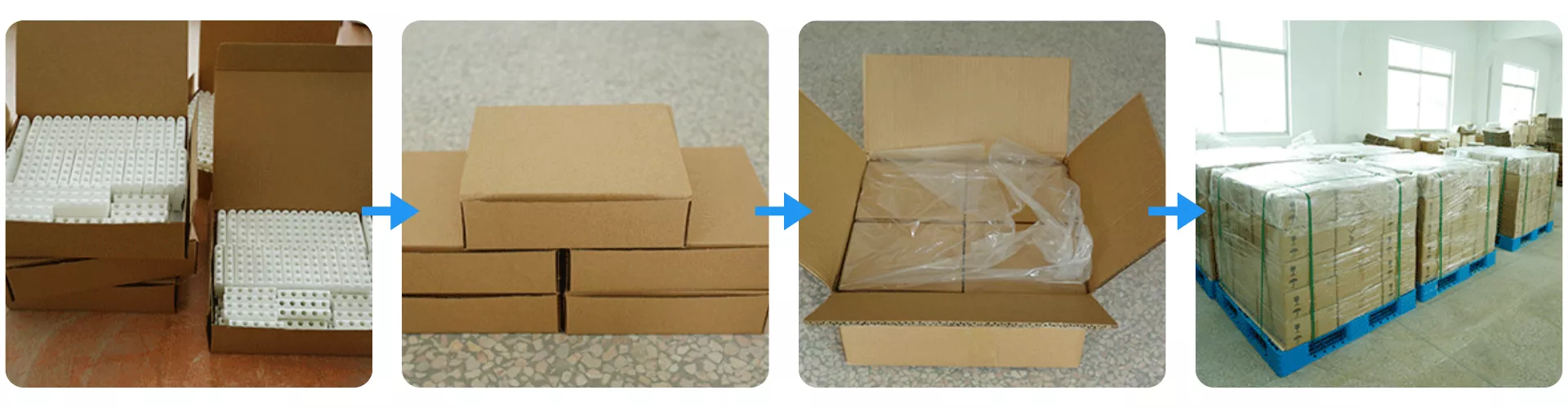
Zirconia Ceramic Shaft Sleeve is packed in precision-cut foam trays to prevent micro-cracks during transit. Each layer is secured in double corrugated boxes with sealed liners for moisture protection. Outer cartons are palletized and stretch-wrapped for safe international logistics.
Solving Friction, Corrosion, and Reliability Challenges with ADCERAX® Zirconia Ceramic Shaft Sleeve
ADCERAX® Zirconia Ceramic Shaft Sleeve addresses multiple performance challenges in rotating mechanical systems by isolating shafts from direct bearing contact. Its high wear resistance, chemical inertness, and thermal stability make it essential in sectors where lubrication is limited, corrosion is aggressive, and operational continuity is critical. The following use cases highlight how this ceramic sleeve performs under specific industrial constraints.
-
Zirconia Ceramic Shaft Sleeve in Chemical Metering Pumps for Fluid Control Systems
✅Key Advantages
1. Corrosion Stability in Acidic and Alkaline Media
The ADCERAX® Zirconia Ceramic Shaft Sleeve remains dimensionally stable after 1,000-hour exposure to 10% H₂SO₄ and 5% NaOH at 60 °C. Its dense microstructure prevents surface pitting and micro‑erosion, maintaining dosing accuracy and mechanical alignment over prolonged operation.
2. Superior Wear Resistance in Abrasive Flow
Under slurry testing with suspended silica particles, zirconia sleeves exhibited <0.002 mm wear loss after 500 hours, outperforming stainless bushings by over 15×. This high abrasion tolerance ensures consistent sealing performance in metering applications with fine solids.
3. Chemical Inertness with Zero Ion Leaching
Material purity above 99.8% ZrO₂ eliminates contamination in sensitive chemical streams. No measurable ion release (<0.05 ppm) was detected after continuous flow testing, safeguarding product purity in high‑precision dosing systems.
✅ ️Problem Solved
A European chemical plant experienced frequent seal failure and shaft scoring within 10 weeks using bronze sleeves in acid metering pumps. After replacing them with ADCERAX® Zirconia Ceramic Shaft Sleeves, pump maintenance intervals extended to 14 months, and dosing deviation dropped from ±3% to ±0.5%. The ceramic’s resistance to both chemical erosion and micro‑vibration maintained pump calibration stability throughout continuous 24/7 operations.
-
Zirconia Ceramic Shaft Sleeve in Automated Conveying Motors for Food Processing Equipment
✅Key Advantages
1. Thermal Shock Endurance During CIP Cycles
ADCERAX® zirconia sleeves withstand rapid temperature shifts from 20 °C to 400 °C without cracking or warping. This resilience allows uninterrupted performance through hundreds of steam sterilization cycles common in food‑grade motor assemblies.
2. Hygienic Non‑Reactive Surface
Polished zirconia with Ra ≤ 0.2 μm resists buildup of organic residues and alkaline detergents. The non‑porous surface eliminates bacterial retention risk and meets food contact cleanliness requirements under FDA 21 CFR 177.
3. Maintenance Reduction Through Self‑Lubrication
Dry‑run testing at 2500 RPM for 600 hours showed no increase in friction torque or surface degradation. This intrinsic self‑lubricating property removes the need for external greasing, reducing maintenance downtime by over 35% annually.
✅ ️Problem Solved
A Korean food packaging facility reported sleeve corrosion and seizure after every 8 weeks due to alkaline cleaning exposure. Implementing ADCERAX® Zirconia Ceramic Shaft Sleeves eliminated oxidation issues, achieving one full year of continuous service without replacement. The reduced cleaning‑related downtime increased conveyor productivity by 42%, while contamination tests confirmed zero metallic residue after CIP procedures.
-
Zirconia Ceramic Shaft Sleeve in Precision Reducers for Robotic Assembly Lines
✅Key Advantages
1. High Rotational Accuracy Under Dynamic Loads
With concentricity tolerance maintained within 0.01 mm and flexural strength of 1100 MPa, the zirconia sleeve sustains alignment under high‑speed rotational loads up to 3000 RPM, minimizing angular displacement errors in robotic reducers.
2. Low Friction and Heat Suppression
Measured friction coefficient of ~0.0012 results in 30% lower heat generation compared to hardened steel sleeves. This stability prevents thermal drift in enclosed gearboxes and improves servo response consistency.
3. Fatigue Resistance in Continuous Motion Cycles
Material fatigue testing under repeated acceleration cycles showed no structural degradation after 2 × 10⁶ load reversals. The combination of high toughness and fine‑grain structure ensures long‑term reliability in robotic end‑effectors.
✅ ️Problem Solved
A Japanese automation integrator observed increasing backlash and vibration in robotic reducers after 1500 operating hours using conventional metal sleeves. Switching to ADCERAX® Zirconia Ceramic Shaft Sleeves reduced torque fluctuation by 28% and maintained angular precision within ±0.002° across 5000 hours of testing. The enhanced dimensional stability under repetitive motion eliminated thermal‑mechanical distortion, improving assembly accuracy and reducing maintenance frequency by half.
Operational Guidance for Zirconia Ceramic Shaft Sleeve
To ensure optimal performance and product longevity, the Zirconia Ceramic Shaft Sleeve must be installed, handled, and maintained according to defined engineering protocols. This section provides clear guidance for industrial users to reduce failure risks, improve component fitment, and extend service cycles in rotating assemblies.
-
Proper Installation Practices
1. Shaft Clearance Validation
Ensure that the shaft tolerance matches the specified interference or clearance fit for ceramics. Misalignment during press-fit may cause internal stresses.
2. Avoid Impact Force
Use a sleeve arbor press or thermal expansion method. Do not hammer or force-fit the sleeve into the housing.
3. Surface Cleanliness
Clean both the shaft and bearing interfaces thoroughly before installation. Any embedded debris increases fracture risk.
-
Handling and Storage Precautions
1. Avoid Localized Pressure
Do not stack sleeves directly without protective layers. Always place them on cushioned trays.
2. Temperature Stability
Store between 10–35°C in low-humidity environments. Avoid thermal shocks during transfer.
3. Protect from Abrasion
Keep sleeves in their original packaging until use. Surface scratches compromise dimensional integrity.
-
Recommended Operating Conditions
1. Stable Load Alignment
Ensure axial and radial loads are evenly distributed. Unbalanced force accelerates wear on one sleeve edge.
2. Controlled Media Flow
Avoid particle-laden or cavitating fluids in pump applications. Use inline filters to prevent sleeve erosion.
3. Moderate Startup Torque
Ramp motor torque gradually. Excessive startup loads can induce surface cracking.
-
Inspection and Replacement Interval
1. Visual Surface Check
Inspect for micro-chipping or hairline cracks after 500 hours of use. Replace if surface flaws are detected.
2. Dimensional Stability Test
Use a bore gauge to check for out-of-roundness beyond ±0.01 mm every 3 months.
3. Rotational Noise Monitoring
Abnormal noise or vibration indicates sleeve misfit. Replace immediately to avoid shaft damage.