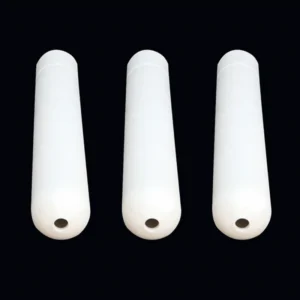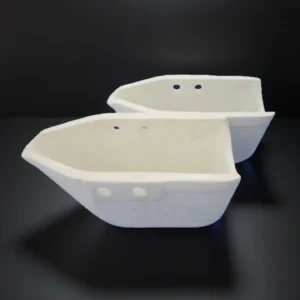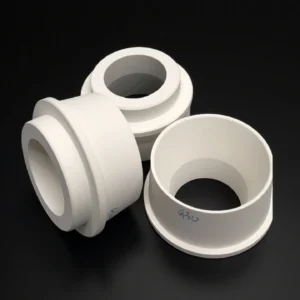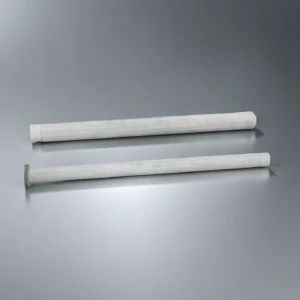
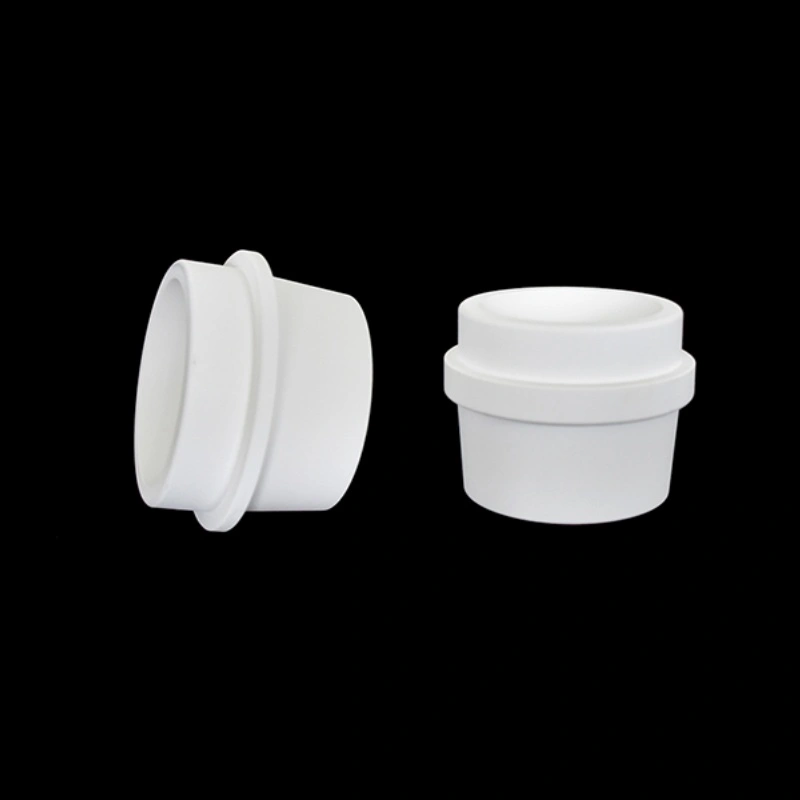
Aluminum Titanate Sprue Bushing for Low Pressure Aluminum Casting Machines

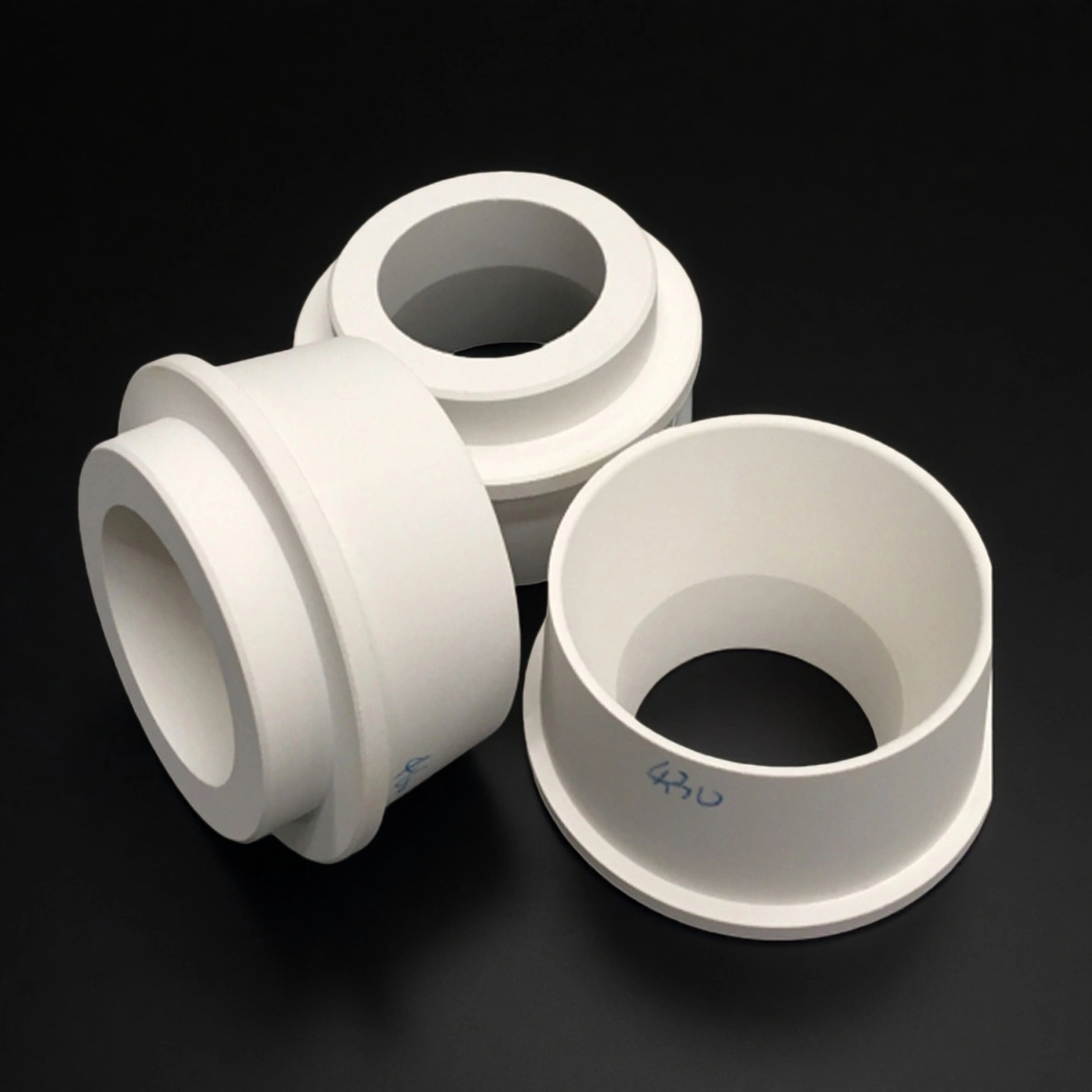
Aluminum titanate sprue bushing for LPDC aluminum casting systems, designed to reduce thermal cracking, molten aluminum adhesion, and bore instability around the riser tube and mold interface. ADCERAX supports drawing-based bore, flange, end structure, and functional surface customization.

Catalogue No. AT-TSL-JK1001
Material Al₂TiO₅-based aluminum titanate ceramic
Linear Thermal Expansion (RT–1000 °C) 0.5–1.5 × 10⁻⁶ / °C
Bulk Density 3.3–3.5 g/cm³
Thermal Conductivity at ~800 °C ≈0.8–1.5 W/m·K
Engineering RFQ Review
Small-Batch Custom Support
Factory-Direct Manufacturing
Drawing & Process Review

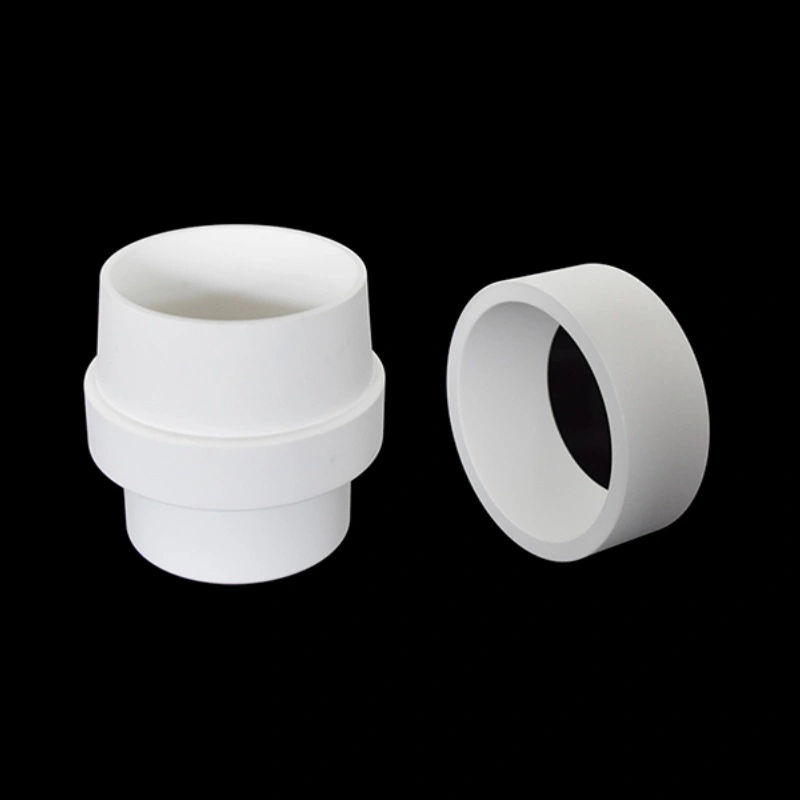
ADCERAX Aluminum Titanate Sprue Bushing is an Al₂TiO₅ ceramic component used in low-pressure aluminum casting machines to connect the riser tube with the mold interface. It guides molten aluminum into the mold cavity while supporting stable flow, thermal insulation, and dimensional stability. Its low thermal expansion and reduced aluminum wetting help minimize cracking, metal adhesion, bore wear, and unstable filling in repeated casting cycles.

Problems Solved by Aluminum Titanate Sprue Bushings

An aluminum titanate sprue bushing is mainly used to reduce failure risks in the high-temperature transition area between the riser tube and mold. In this position, conventional refractory or metal components may crack, stick to molten aluminum, deform, or create unstable flow after repeated casting cycles.

  • Thermal cracking during repeated casting cycles: Low thermal expansion helps reduce stress when the bushing is repeatedly heated and cooled.
  • Molten aluminum sticking and oxide buildup: Non-wetting behavior helps reduce metal adhesion on the bore and contact surface.
  • Unstable filling through the sprue area: Controlled bore geometry helps maintain consistent molten aluminum flow into the mold.
  • Frequent downtime caused by sleeve replacement: Better thermal shock resistance can help extend change-out intervals when the design is properly matched.
  • Mismatch with existing casting equipment: Drawing-based machining supports bore, flange, shoulder, step, and end structures for specific LPDC systems.

Key Advantages of Aluminum Titanate Sprue Bushing

Low Thermal Expansion for Cyclic Casting Service

Aluminum titanate ceramic has a very low coefficient of thermal expansion compared with many conventional ceramic and refractory materials. In the sprue area, this helps reduce stress caused by repeated heating and cooling, especially where the bushing contacts metal fixtures, refractory seats, or riser tube assemblies.

Non-Wetting Behavior with Molten Aluminum

The material is commonly selected for molten aluminum contact because it helps reduce aluminum adhesion on the bore and working surface. This supports cleaner metal flow, less oxide buildup, and easier maintenance in low-pressure aluminum casting lines.

Stable Bore Geometry for Controlled Metal Flow

The inner bore of the sprue bushing can be produced according to the drawing or sample. A stable bore helps control the transition of molten aluminum from the riser tube into the mold, reducing flow disturbance caused by worn, cracked, or poorly aligned sleeves.

Custom Flange and End Structures for Machine Fit

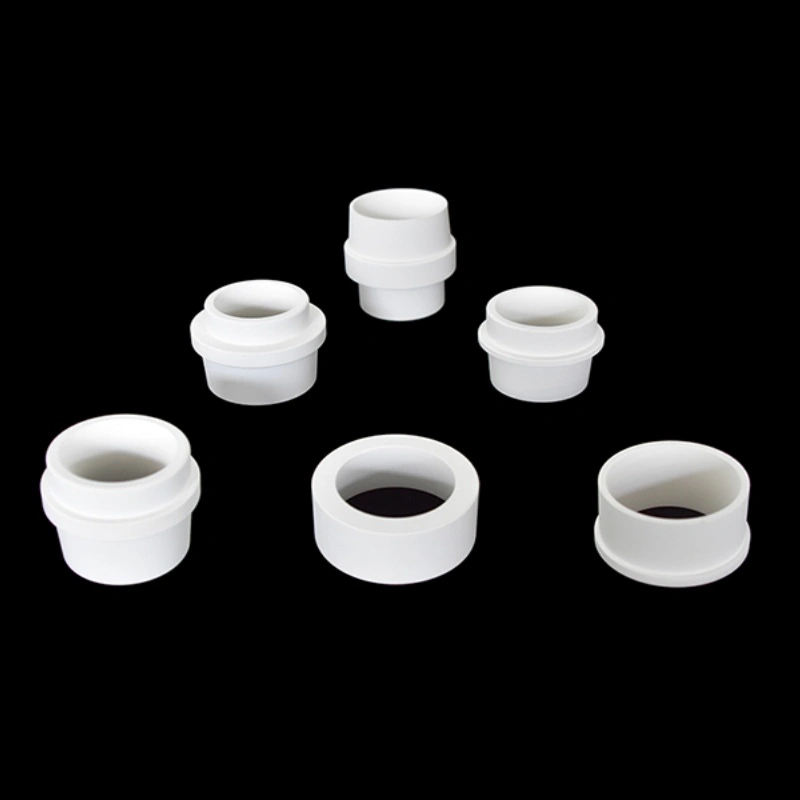
ADCERAX can review flange diameter, flange thickness, shoulder structure, stepped ends, tapered ends, and seating faces according to the equipment layout. This helps the ceramic bushing fit existing LPDC machines, mold plates, and riser tube interfaces more safely.

Suitable for Replacement and Repeat Orders

For replacement projects, customers can provide original drawings, used samples, or key dimensions. ADCERAX can review functional surfaces, tolerance requirements, edge protection, and packaging needs to support consistent supply for repeated foundry maintenance.

Aluminum Titanate Ceramic Sprue Bushing Properties

Parameter Typical Value Description
Coefficient of Thermal Expansion (CTE) 0.5–1.5 ×10⁻⁶ /K Extremely low expansion that maintains dimensional stability under molten aluminum temperatures.
Thermal Shock Resistance Very high Withstands rapid temperature fluctuations without cracking during casting cycles.
Density 2.8–3.0 g/cm³ Medium-density ceramic structure suitable for molten aluminum system components.
Thermal Conductivity 1.5–3.0 W/m·K Helps reduce heat loss along riser tubes, spouts and transfer components.
Maximum Service Temperature 900–1100°C Suitable for typical molten-aluminum environments and transfer systems.
Flexural Strength (MOR) 10–25 MPa Provides sufficient strength for handling, installation and operational load.
Elastic Modulus 20–40 GPa Lower stiffness contributes to excellent thermal shock tolerance.
Porosity 12–25% Supports insulation and limits internal thermal stress accumulation.
Chemical Compatibility Non-wetting to molten aluminum Prevents adhesion, oxide buildup and contamination in casting processes.
Dimensional Stability Stable through long cycles Maintains geometry during prolonged molten-aluminum exposure and thermal cycling.

Aluminum Titanate Ceramic Sprue Bushing Specifications

Item No. Diameter (mm) Thickness (mm) Purity
AT-TSL-JK1001 Customize

How to Choose an Aluminum Titanate Sprue Bushing

Confirm the Casting Process First

For low-pressure die casting, the bushing design should match the riser tube, mold plate, and filling path. For gravity casting or special non-ferrous equipment, the seating method, metal head, and thermal cycle may require different wall thickness or end geometry.

Match the Bore to the Metal Flow Requirement

The inner bore should be selected according to molten aluminum flow rate, riser tube size, mold design, and required filling stability. A bore that is too small may restrict flow, while a bore that is too large may reduce control in the sprue area.

Review Flange and Seating Design

The flange, shoulder, and contact face should distribute clamping load evenly. Sharp corners, uneven seating, or over-tightening may increase the risk of ceramic edge damage during installation.

Define the Functional Surfaces

The customer should identify which areas are used for sealing, alignment, molten metal contact, or mechanical support. These surfaces may require closer tolerance, smoother finish, chamfering, or special inspection.

Provide Operating Conditions with the Drawing

To select a safer design, provide the aluminum alloy type, working temperature, thermal cycling frequency, fixture material, mounting method, and expected replacement interval where available.

Aluminum Titanate Compared with Alternative Materials

Material Option When It May Be Used Why Aluminum Titanate May Be Preferred
Metal Inserts Used where ductility, easy machining, and strong mechanical fixing are required. Aluminum titanate may be preferred when metal deformation, heat loss, or reaction with molten aluminum is a concern.
Conventional Refractory Sleeves Used for cost-sensitive or less demanding casting conditions. Aluminum titanate may provide better thermal shock resistance and lower aluminum wetting in cyclic LPDC service.
Alumina Ceramic Used where hardness, insulation, and general wear resistance are needed. Aluminum titanate is often selected when very low thermal expansion and molten aluminum compatibility are more important.
Silicon Carbide Used where high thermal conductivity, strength, and harsh thermal service are required. Aluminum titanate may be preferred in sprue areas where low thermal expansion and non-wetting behavior are the main concerns.

Aluminum Titanate Sprue Bushing Packaging

  • Aluminum titanate sprue bushings are packed to reduce edge chipping, surface abrasion, contamination, and mixed-part risk during international shipment. Precision bores, flanges, chamfers, and seating faces should be protected with separated wrapping, foam cushioning, inner boxes, and reinforced outer cartons.
  • For repeat orders or multiple sizes, labels can be used to separate drawings, part numbers, quantities, and batches. This helps foundry maintenance teams identify the correct bushing before installation and reduces the risk of mixing similar-looking ceramic parts.
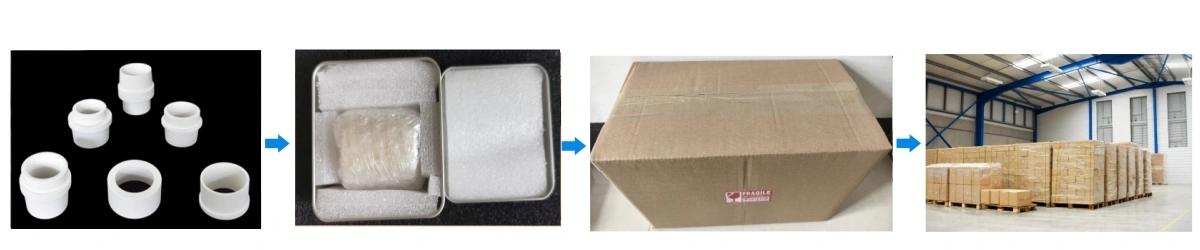

Aluminum Titanate Sprue Bushing Packaging

Aluminum Titanate Sprue Bushing Applications

Low-Pressure Aluminum Wheel Casting

In LPDC wheel casting lines, the sprue bushing is positioned near the riser tube and mold interface. Aluminum titanate helps reduce thermal cracking, metal adhesion, and bore instability in repeated production cycles, supporting more consistent filling and fewer unplanned stops.

Automotive Aluminum Component Foundries

For aluminum brackets, housings, and structural castings, the bushing helps maintain a stable sprue transition where molten metal enters the mold. This is useful when the equipment requires controlled flow, reduced oxide buildup, and reliable alignment across repeated cycles.

Non-Ferrous Casting Equipment

Aluminum titanate sprue bushings can be used in selected non-ferrous casting equipment where molten aluminum contact, thermal cycling, and dimensional fit are important. The final design should be reviewed according to alloy chemistry, temperature, fixture method, and replacement practice.

Riser Tube and Mold Interface Protection

The bushing can act as a protective ceramic interface between the riser tube and mold plate. It helps reduce localized wear, heat loss, and contact damage in areas where metal, ceramic, and refractory components meet.

Replacement of Conventional Refractory Sleeves

When conventional sleeves crack, stick to aluminum, or require frequent replacement, aluminum titanate may be reviewed as a higher-performance alternative. Replacement should be based on the original part dimensions, mounting method, thermal cycle, and failure mode.

Aluminum Titanate Sprue Bushing – Usage Guide

Installation

1. Check that the mating faces of the riser tube, sprue bushing, and mold support are clean, dry, and free from old refractory or metal deposits.
2. Align the inner bore of the aluminum titanate sprue bushing with the riser tube axis to avoid eccentric flow and mechanical contact.
3. Tighten mechanical fixings gradually in a cross pattern, using recommended torque levels so the ceramic flange is clamped evenly without over-stressing it.

Operation

1. Preheat the surrounding area and gating system gradually according to plant procedures to limit thermal shock during the first heat-up.
2. Monitor metal temperature and pressure settings, and avoid sudden large changes that may produce extreme temperature gradients across the sprue bushing.
3. Periodically inspect the bore through access ports or during scheduled stops to check for buildup, erosion, or cracking.

Storage

1. Store aluminum titanate sprue bushings indoors in a dry, vibration-free area, away from direct sunlight and chemical vapors.
2. Keep parts in their original packaging or on padded racks to avoid chipping edges and sealing faces.
3. Record incoming batch numbers and store parts by size and drawing number for easy traceability.

Cleaning and Inspection

1. Remove minor oxide or inclusion buildup using soft non-metallic tools, and avoid impact or scraping with hard metal tools on the ceramic bore.
2. During planned maintenance, check for hairline cracks, glaze changes, or local spalling, and replace units that show structural damage.
3. Document operating hours and cycles between replacements to build a data-based service life expectation for each casting line.

Common Misuse and How to Avoid It

1. Thermal shock from direct flame impingement: Avoid positioning burners directly on the ceramic surface during preheating. Use shielding or adjust the burner angle to warm the area more uniformly.
2. Mechanical over-tightening of flanges: If flange bolts are over-torqued, microcracks can form before operation starts. Use calibrated tools and follow torque guidelines that match the steel structure and ceramic strength.
3. Running with severe buildup inside the bore: Excessive buildup narrows the flow channel and introduces local hot spots. Schedule cleaning intervals based on alloy cleanliness and observed deposition rate to prevent sudden failure.

Aluminum Titanate Sprue Bushing FAQ

  1. Why is aluminum titanate used for sprue bushings in aluminum casting?
    Aluminum titanate is used for sprue bushings because it provides very low thermal expansion, good thermal shock resistance, and reduced wetting by molten aluminum. These properties help reduce cracking, metal adhesion, and unstable flow in the sprue area of aluminum casting systems.
  2. Is an aluminum titanate sprue bushing suitable for low-pressure die casting?
    Yes, aluminum titanate sprue bushings are commonly reviewed for low-pressure aluminum casting systems, especially where the bushing connects the riser tube, mold plate, and sprue area. The final design should match the bore size, flange structure, thermal cycle, and mounting method of the LPDC machine.
  3. How is aluminum titanate different from a conventional refractory sprue sleeve?
    Conventional refractory sleeves may be cost-effective for general casting use, but aluminum titanate is often selected when lower thermal expansion, better thermal shock resistance, and reduced aluminum sticking are required. It may help extend replacement intervals when the geometry and installation method are properly matched.
  4. Can aluminum titanate sprue bushings be customized from drawings?
    Yes, ADCERAX can produce aluminum titanate sprue bushings according to customer drawings or samples. Common custom details include bore diameter, outer diameter, flange size, overall length, shoulder structure, chamfers, stepped ends, and functional seating surfaces.
  5. What information should be provided before ordering a custom sprue bushing?
    Customers should provide the drawing, sample photos, bore size, flange geometry, overall length, tolerance requirements, working temperature, aluminum alloy type, mounting method, and failure description if the part is used as a replacement.
  6. What can cause an aluminum titanate sprue bushing to crack?
    Cracking may be caused by impact, uneven clamping, point loading, sharp edge stress, rapid thermal shock, poor seating, or misalignment with the riser tube and mold interface. Engineering review is recommended if a previous bushing failed repeatedly.
  7. Can aluminum titanate sprue bushings be used with different aluminum alloys?
    Aluminum titanate is commonly used in contact with many molten aluminum alloys, but alloy chemistry, flux use, operating temperature, and cleaning practice should be reviewed before final material and design confirmation.
customize size

Custom Aluminum Titanate Sprue Bushing

Aluminum titanate sprue bushings are typically engineered around each casting line layout. Custom production follows customer drawings, samples, or defined process parameters while maintaining Al₂TiO₅ material performance.

Geometry & Dimensions

  • Inner diameter and outer diameter of the sprue section
  • Total length and effective immersion length
  • Flange diameter, thickness, and bolt circle dimensions
  • Taper angle or cylindrical design of the working bore
  • Smooth transition radius between riser tube and mold interface

Tolerance & Fit

  • Bore diameter tolerance for fit with riser tube, down to ±0.1–0.2 mm on critical areas
  • Flange flatness and parallelism for sealing to the metal structure
  • Concentricity between the bore and the flange face for accurate alignment

End and Interface Details

  • Upper end: fit to riser tube, such as socket, spigot, or straight joint
  • Lower end: open, conical seat, or shaped outlet matching the mold sprue
  • Provision for sealing rings or refractory gaskets around the flange

Material Level

  • Standard aluminum titanate composition for general aluminum casting
  • Stabilized or modified formulations for longer life or special atmospheres

Surface and Finish

  • As-fired surface for standard applications
  • Light ground bore to improve dimensional precision
  • Chamfered edges at inlet and outlet to reduce local erosion

Integration with Surrounding Components

  • Match to aluminum titanate riser tubes, launder segments, or filter boxes
  • Adaptation to customer-specific low-pressure die casting machines and molds

Related Products

ADCERAX - Your Trusted Advanced Ceramics Manufacturing Partner

Direct factory manufacturing with comprehensive ceramic materials expertise and global supply capabilities

China-Based Manufacturer

ADCERAX supplies ceramic components for overseas OEMs, equipment builders, and labs.

Custom Drawing Support

We review drawings, dimensions, materials, and application conditions before quotation.

Ceramic Process Control

Forming, sintering, machining, grinding, and finishing are arranged by part requirements.

Pre-Shipment Inspection

Dimensional checks, visual inspection, and packaging review help reduce procurement risk.

Get in Touch with Us

Our team will be happy to respond to you in less than 24 hours.

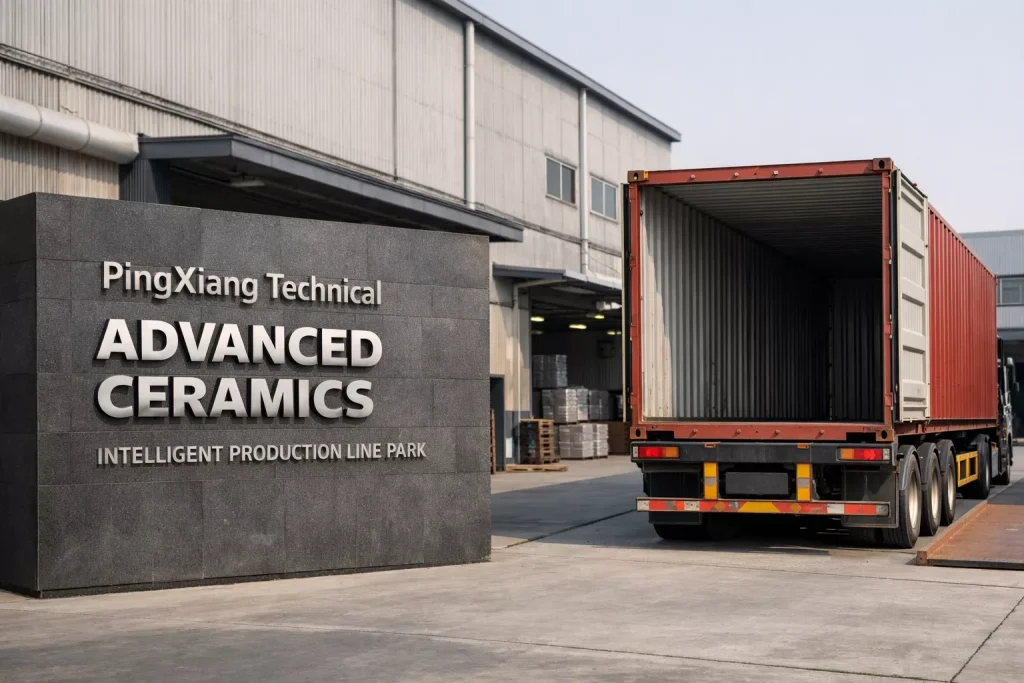
Pingxiang Factory — Silicon carbide, silicon nitride, high-temperature ceramics

Quick Quotation

*Our team will answer your inquiries within 24 hours.

*Your information will be kept strictly confidential.

Ready to Solve Your Engineering Challenge?

Partner with ADCERAX for reliable, high-performance advanced ceramic solutions. Our engineers are ready to discuss your project.

E-mail

info@adcerax.com

Phone

+(86) 0731-74427743 | WhatsApp: +(86) 19311583352

Response Time

Within 24 hours

Quick Quote

The more details you provide, the faster we can quote.

*We respond within 24 hours. All inquiries are confidential.

Get Your Custom Solution

The more details you provide, the faster we can respond.

customize size

*We respond within 24 hours. All inquiries are confidential.

Download Catalog