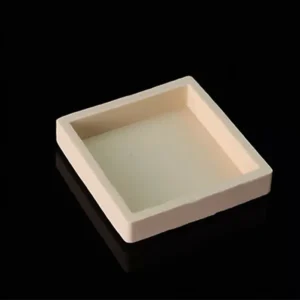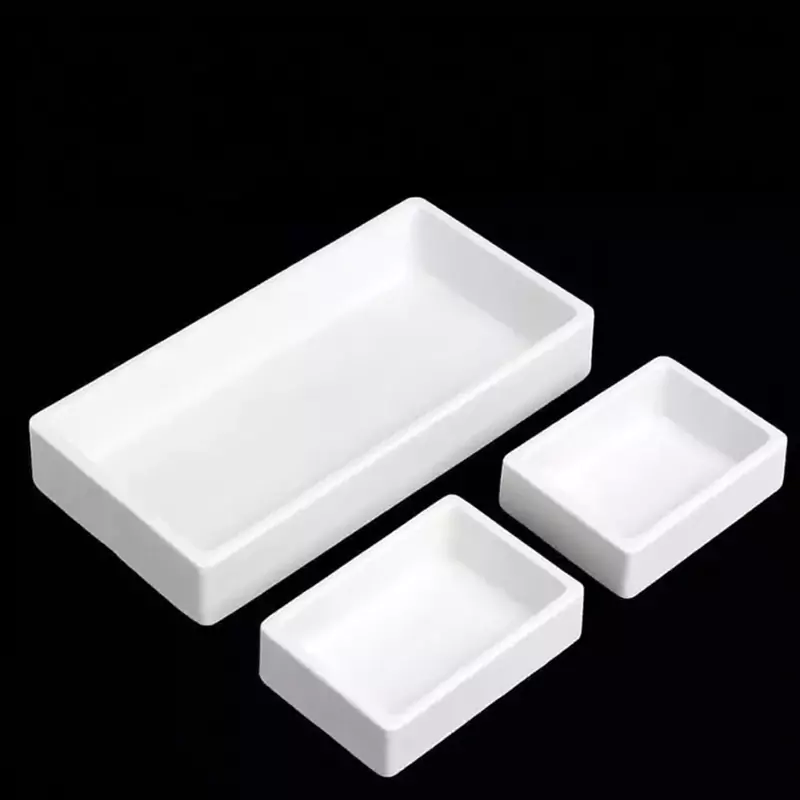
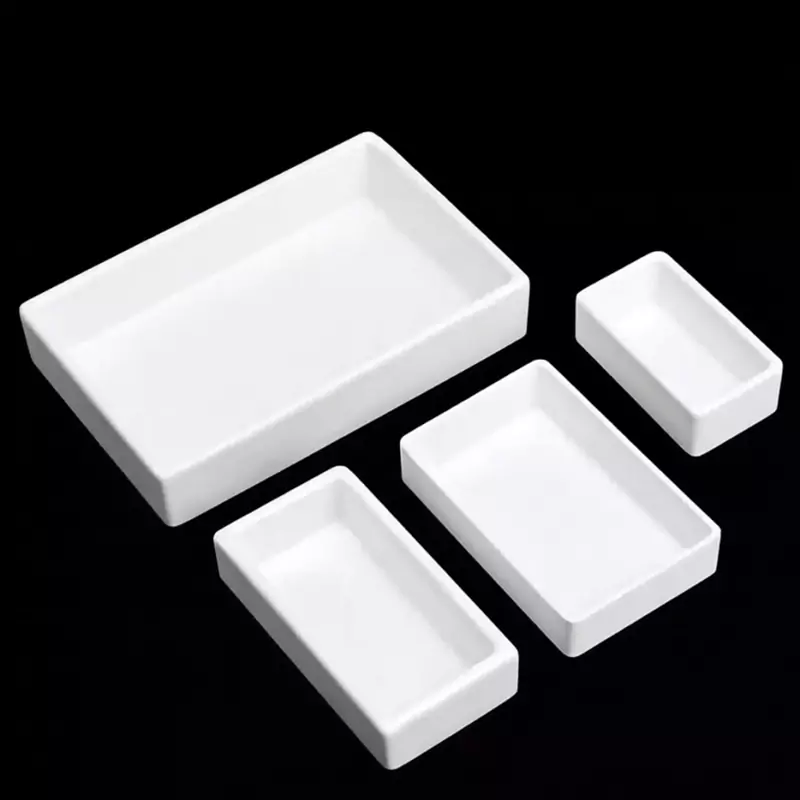
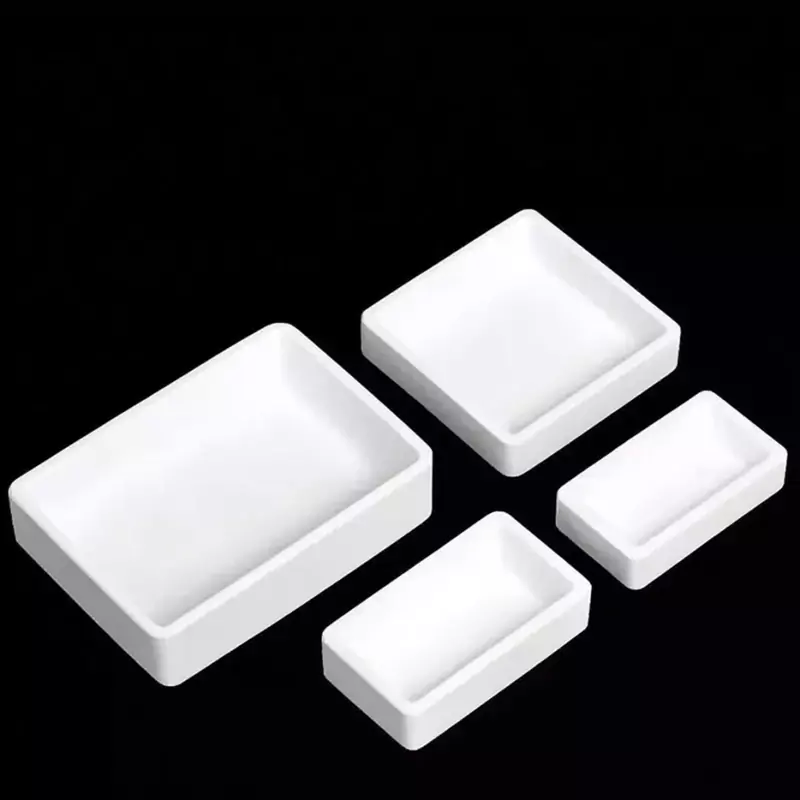
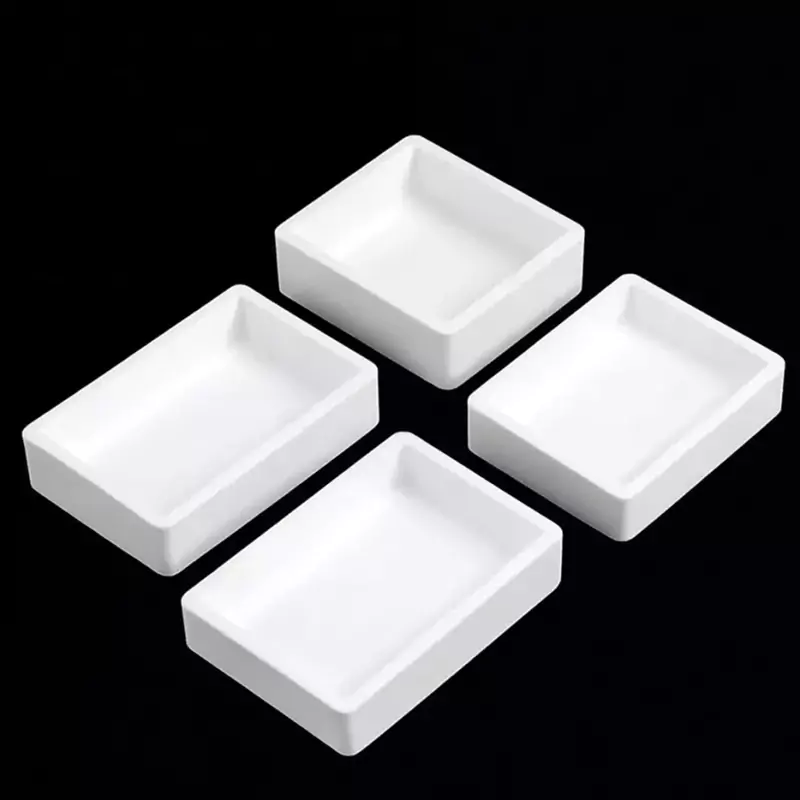
Rectangular Zirconia Crucible for Sample Preparation and Sintering

ADCERAX supplies rectangular zirconia crucibles for high-temperature sample preparation, powder calcination, sintering trials, glaze testing and material research. The flat-bottom geometry helps improve sample contact and heat distribution, while dense zirconia ceramic supports chemical stability, low contamination risk and repeated furnace use.

Standard sizes are available from small laboratory volumes to larger rectangular trays. Custom length, width, height, wall thickness, purity level and surface finish can be reviewed according to your furnace setup, sample type and operating temperature.

Catalog No. AT-YHG-F001
Material Zirconia ≥92%
Density ≥4.5 g/cm³
Open Porosity ≤0.5%
Max Service Temperature 2200 °C
Engineering RFQ Review
Small-Batch Custom Support
Factory-Direct Manufacturing
Drawing & Process Review

What Is a Rectangular Zirconia Crucible?

A rectangular zirconia crucible is a high-temperature ceramic container made from stabilized zirconium oxide for holding powders, pellets, glaze samples, catalyst materials and ceramic test pieces during calcination, sintering or material analysis. Compared with many standard ceramic containers, zirconia offers higher thermal capability, strong chemical resistance and better contamination control in demanding laboratory and pilot-scale furnace processes.

The rectangular shape provides a flat contact area for samples and furnace trays, making it suitable for shallow powder beds, small batch trials and tests that require stable sample distribution.

Key Features of Rectangular Zirconia Crucibles

  • High-temperature stability: Suitable for furnace applications up to 2200 °C, depending on grade, size and heating profile. The crucible helps maintain structural integrity during high-temperature calcination, sintering and material testing.
  • Dense zirconia ceramic body: Made from zirconia ceramic with ZrO₂ content of 92% or above, the crucible provides good chemical stability and helps reduce container-related contamination in sensitive laboratory processes.
  • Low impurity level: Controlled Fe₂O₃ and SiO₂ content helps reduce unwanted sample interaction, making the crucible suitable for material research, ceramic powder testing, glaze trials and high-purity experimental work.
  • High hardness and wear resistance: With density above 4.5 g/cm³ and strong ceramic hardness, the crucible resists surface wear, residue damage and repeated handling in laboratory and pilot-scale furnace use.
  • Low porosity for cleaner testing: Apparent porosity of 0.5% or lower helps reduce liquid absorption, vapor penetration and residue retention, supporting more consistent test results and easier post-firing inspection.

Technical Data for Rectangular Zirconia Crucibles

Rectangular zirconia crucibles are selected when the process requires a combination of high-temperature stability, chemical resistance and low sample contamination. The dense ZrO₂ ceramic body helps reduce liquid or vapor absorption, while the flat geometry supports more consistent sample placement during furnace heating.

Property Specification Engineering Significance
ZrO2 Purity ≥ 92% stabilized zirconia Higher zirconia content helps improve chemical stability and reduces the risk of container-related contamination during material testing and high-temperature sample preparation.
Bulk Density ≥ 4.50 g/cm³ High density indicates a compact ceramic body, which supports better mechanical strength, lower absorption and more stable performance during repeated furnace handling.
Apparent Porosity ≤ 0.50% Low porosity helps reduce liquid absorption, vapor penetration and residue retention, which is important for cleaner testing and easier post-firing inspection.
Maximum Service Temperature 2200 °C The crucible can support demanding high-temperature processes such as calcination, sintering and thermal material research when used with proper heating and cooling control.
Flexural Strength ≥ 350 MPa Good flexural strength helps the crucible resist bending stress, edge damage and handling loads during laboratory and pilot-scale furnace use.
Compressive Strength ≥ 2000 MPa High compressive strength helps the crucible maintain shape under sample weight, stacking pressure or fixture contact in high-temperature test environments.
Thermal Conductivity 2.2–2.5 W/m·K at 1000 °C Moderate thermal conductivity supports controlled heat transfer through the crucible body, which helps reduce sudden thermal gradients during furnace operation.
Thermal Expansion Coefficient 10.5 × 10⁻⁶ /K, RT–1000 °C The expansion behavior helps engineers evaluate dimensional change during heating and cooling, especially when the crucible is used with trays, supports or close furnace clearances.
Acid and Alkali Resistance Stable in HCl, H2SO4 and NaOH Chemical resistance helps reduce reaction between the crucible and many acidic or alkaline samples, but actual compatibility should still be checked by concentration, temperature and exposure time.
Electrical Resistivity > 1012 Ω·cm at 25 °C High electrical resistivity makes zirconia suitable for applications where electrical insulation and stable ceramic behavior are required during material testing or furnace processing.

The values below are typical reference data for rectangular zirconia crucibles. Final material grade, purity, size tolerance and surface finish should be confirmed according to the sample chemistry, working temperature, furnace atmosphere and drawing requirements.

Dimensions of Rectangular Zirconia Crucible

ADCERAX offers standard rectangular zirconia crucibles in multiple volumes, lengths, widths, heights and wall thicknesses. These sizes are suitable for laboratory testing, small-batch sintering, powder calcination and material research.

If the standard list does not match your furnace chamber, sample volume or fixture layout, custom rectangular ZrO₂ crucibles can be produced according to drawings or sample requirements.
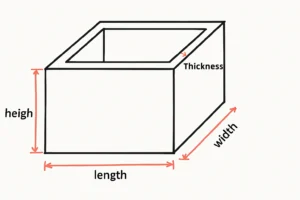
Size for Rectangular Crucibles


Rectangular Zirconia  Crucible
Item No. Volume(ml) Length(mm) Width(mm) Height(mm) Wall Thickness(mm) Purity(%)
AT-YHG-F001 19 50 50 15 3 95
AT-YHG-F002 25 60 30 20 3 95
AT-YHG-F003 34 64 53 17 3 92
AT-YHG-F004 36 66 55 16.8 3 92
AT-YHG-F005 39 70 45 20 3 95
AT-YHG-F006 62 70 70 20 3.5 95
AT-YHG-F007 48 75 50 20 3 95
AT-YHG-F008 72 98 39 29 3.5 92
AT-YHG-F009 43 100 49 16 4 92
AT-YHG-F010 55 100 40 20 3 95
AT-YHG-F011 20 100 35 10 3.5 95
AT-YHG-F012 138 110 110 18 4 95
AT-YHG-F013 19 120 22 16 4 92
AT-YHG-F014 236 135 135 20 5 95
AT-YHG-F015 96 160 80 14 5 92
AT-YHG-F016 475 164 164 25 5 95
AT-YHG-F017 105 84 84 23 4 95
AT-YHG-F018 152 67 67 48 4 95
AT-YHG-F019 98 88 62 27 4 95
AT-YHG-F020 35 64 53 17 3 92
AT-YHG-F021 37 66 55 16.8 3 92
AT-YHG-F022 72 98 39 29 3.5 92
AT-YHG-F023 43 100 49 16 4 92
AT-YHG-F024 19 120 22 16 4 92

Packaging for Rectangular Zirconia Crucibles

Each rectangular zirconia crucible is protected with individual wrapping to reduce surface damage during transport. Standard export cartons and reinforced wooden cases are used according to order quantity, crucible size and shipping method.

For fragile or high-value custom crucibles, ADCERAX can review additional separation, cushioning and labeling requirements before shipment.
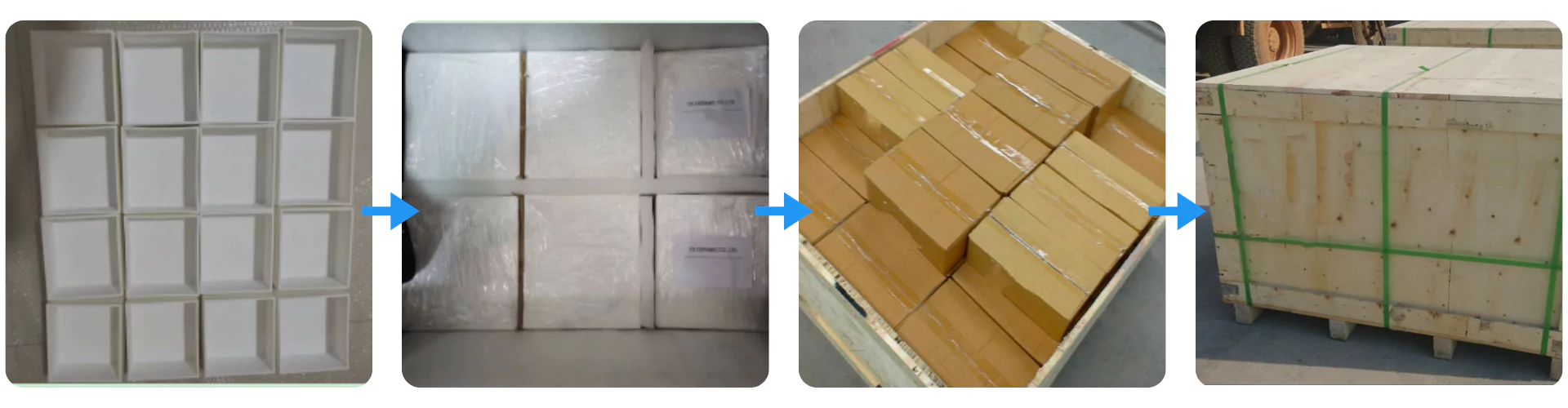

ADCERAX® Packaging Rectangular Zirconia Crucible

Applications of Rectangular Zirconia Crucibles

Rectangular zirconia crucibles are used in high-temperature laboratory and pilot-scale processes where sample cleanliness, thermal stability and chemical resistance are more important than simple container cost. The flat-bottom geometry is suitable for shallow powder beds, test coupons, glaze samples and small sintering batches that require stable placement inside a furnace.

Powder Calcination and Ceramic Research

Rectangular zirconia crucibles are used for calcining ceramic powders, oxide mixtures, catalyst powders and experimental formulations in laboratory furnaces. The rectangular shape allows the sample to spread across a wider base, which helps improve heat exposure compared with deeper containers.

Dense zirconia ceramic also helps reduce liquid or vapor absorption during repeated firing cycles, making it useful for material research where sample contamination, residue adhesion and batch-to-batch consistency must be controlled.

This application is suitable when the buyer needs a stable crucible for oxide powders, advanced ceramic formulations or high-temperature material screening.

Sintering Trials and Material Development

In sintering trials, rectangular ZrO2 crucibles provide a rigid ceramic support for pellets, small components, coupons and test batches. The flat base helps keep samples positioned consistently during heating, soaking and cooling stages.

Zirconia is selected when the process requires higher chemical stability, better thermal capability or lower contamination risk than many routine laboratory crucible materials. It is commonly considered for ceramic R&D, coating material trials, electronic ceramic testing and high-temperature formulation development.

This application is useful when furnace users need repeatable sample support during small-batch sintering or material development tests.

Glass, Glaze and Flux Testing

Glass, glaze and flux testing often involves aggressive melts, color-sensitive samples and residue that can bond to the container surface. A dense rectangular zirconia crucible can help reduce container-derived contamination and provide a more stable vessel for high-temperature test firing.

The rectangular geometry is especially practical when glaze samples, enamel formulations or specialty glass batches need to be spread into a controlled layer for visual inspection, reaction observation or comparative testing after firing.

Before ordering, buyers should confirm the flux composition, peak temperature and cleaning method because aggressive melts may still affect crucible service life.

Catalyst and Chemical Material Testing

Rectangular zirconia crucibles are also used for catalyst activation, oxide reaction testing, precursor heat treatment and chemical material studies. Low open porosity helps reduce unwanted absorption of liquids, vapors and residues, which is important when test repeatability matters.

Zirconia ceramic offers strong resistance to many acids, alkalis and chemically active materials, but actual compatibility depends on concentration, exposure time, operating temperature and furnace atmosphere. For unusual or strongly reactive media, material review before quotation is recommended.

This application is suitable for laboratories and industrial R&D teams that need a chemically stable ceramic crucible for controlled thermal treatment.

How to Use Rectangular Zirconia Crucibles Safely?

To reduce cracking, contamination and premature failure, rectangular zirconia crucibles should be heated and cooled under controlled furnace conditions. Avoid direct flame shock, hard mechanical impact and sudden temperature changes.

  • Safe Handling

    1. Always wear protective gloves and goggles when working with crucibles at high temperatures. Heat exposure during operation may exceed 1000–2000 °C, posing burn risks. Proper protective gear prevents accidents and ensures safe laboratory practices.
    2. Avoid applying localized force with sharp tools or incompatible tongs. Excess pressure on the edges can lead to microcracks that shorten service life. Always use tools designed to match the crucible’s rectangular geometry.
    3. Do not expose the crucible to direct flame torches such as acetylene or alcohol burners. Localized flame shock can cause surface cracks. Controlled furnace heating is essential to protect structural integrity.

  • Thermal Operation Guidelines

    1. Preheat first use: Dry the crucible at a low temperature before high-temperature firing to remove residual moisture and reduce the risk of initial cracking.
    2. Use controlled heating and cooling: Avoid rapid temperature changes. Gradual ramping and cooling help reduce thermal stress, especially during repeated furnace cycles.
    3. Keep safe furnace clearance: Maintain enough space between the crucible and heating elements to prevent direct radiant overload and support more even temperature distribution.

  • Maintenance Practices

    1. Place the crucible on alumina plates or other refractory supports rather than directly on furnace floors. This creates airflow underneath and reduces thermal gradients at the base. Better air circulation prevents uneven wear.
    2. Clean residues carefully after use without abrasive tools. Residual powders or melted material can react with zirconia during the next cycle. A gentle cleaning routine extends the crucible’s operational consistency.
    3. Inspect the crucible regularly for hairline cracks or deformation after multiple heating cycles. Early detection prevents unexpected failures during sensitive experiments. Replacing worn units safeguards test accuracy.

  • Storage Recommendations

    1. Store crucibles in a dry, ventilated environment away from moisture. Humidity can weaken the ceramic over time, leading to premature cracking when reheated. Proper storage preserves strength and stability.
    2. Keep crucibles away from corrosive chemicals or abrasive tools during storage. Prolonged exposure may compromise surface purity. Clean, controlled storage conditions ensure crucibles remain ready for accurate laboratory use.
    3. Prevent direct contact or stacking without protective separators. Contact pressure or collisions can scratch surfaces and reduce resistance to stress. Organizing crucibles with padding reduces damage risk.

Frequently Asked Questions About Rectangular Zirconia Crucibles

  1. Q1: What is a rectangular zirconia crucible used for?
    A rectangular zirconia crucible is used for high-temperature sample preparation, powder calcination, ceramic sintering trials, glaze testing, catalyst research and chemically sensitive material studies. Its flat-bottom shape is suitable for shallow powder beds, test coupons and samples that require stable placement inside a furnace.
  2. Q2: What temperature can a rectangular zirconia crucible withstand?
    ADCERAX rectangular zirconia crucibles can be used for high-temperature furnace applications up to 2200 °C, depending on zirconia grade, crucible size, furnace atmosphere, sample load and heating profile. For repeated thermal cycles, controlled heating and cooling are recommended to reduce thermal stress.
  3. Q3: Is zirconia better than alumina for rectangular crucibles?
    Zirconia is usually selected when higher temperature capability, stronger chemical resistance or lower sample contamination risk is required. Alumina is often more economical for routine laboratory use. If the sample is aggressive, high-value or sensitive to contamination, zirconia may be the better material choice.
  4. Q4: Should I choose 92% or 95% zirconia purity?
    A 92% zirconia crucible is suitable for many laboratory and industrial heat-treatment tests. A 95% zirconia crucible may be preferred when the process requires lower contamination risk, better chemical stability or more sensitive material evaluation. The final choice depends on sample chemistry, peak temperature and test accuracy requirements.
  5. Q5: Can ADCERAX make custom rectangular zirconia crucibles?
    Yes. ADCERAX can review custom rectangular zirconia crucibles according to drawings, samples or furnace requirements. Length, width, height, wall thickness, bottom thickness, corner radius, edge chamfer, surface finish and purity level can be discussed before quotation.
  6. Q6: How does a zirconia crucible help reduce sample contamination?
    A dense zirconia ceramic body with low apparent porosity helps reduce liquid absorption, vapor penetration and residue retention during high-temperature testing. This is useful for ceramic powders, glaze samples, catalyst materials and research samples where container-related contamination needs to be controlled.
  7. Q7: How can I reduce cracking during repeated furnace use?
    Use gradual heating and cooling, avoid direct flame shock, keep enough clearance from heating elements and place the crucible on a compatible refractory support. Before first use, dry the crucible at low temperature to remove moisture. After repeated cycles, inspect the corners, edges and base for hairline cracks.
customize size

Custom Rectangular ZrO₂ Crucibles for Furnace and Sample Requirements

ADCERAX supplies standard and custom rectangular zirconia crucibles for laboratory furnaces, pilot testing and material research. Length, width, height, wall thickness, bottom thickness, edge chamfer, flatness, surface finish and purity level can be customized.

Before quotation, we review the furnace size, sample volume, temperature, atmosphere and sample chemistry to confirm material suitability.

Customized Geometry

The crucible’s geometry can be adapted to fit specific furnace designs and research needs.

  • Flat Base — Ensures stable support in high-temperature platforms
  • Wall Profile — Provides consistent thickness for uniform thermal distribution
  • Corner Design — Improves handling and reduces mechanical stress points

Material Purity Options

Different purity levels can be offered to balance cost and performance priorities.

  • High ZrO₂ — Provides chemical stability for sensitive experimental processes
  • Low Impurities — Minimizes contamination risks in analytical sample testing
  • Consistent Matrix — Maintains stable performance across repeated heating cycles

Surface Finishing

Surface treatments can enhance resistance and performance in demanding applications.

  • Smooth Interior — Reduces residue adhesion during melting and sintering
  • Polished Edges — Lowers risk of microcracks during handling and operation
  • Clean Finish — Supports purity standards required for advanced laboratories

Related Products

ADCERAX - Your Trusted Advanced Ceramics Manufacturing Partner

Direct factory manufacturing with comprehensive ceramic materials expertise and global supply capabilities

China-Based Manufacturer

ADCERAX supplies ceramic components for overseas OEMs, equipment builders, and labs.

Custom Drawing Support

We review drawings, dimensions, materials, and application conditions before quotation.

Ceramic Process Control

Forming, sintering, machining, grinding, and finishing are arranged by part requirements.

Pre-Shipment Inspection

Dimensional checks, visual inspection, and packaging review help reduce procurement risk.

Get in Touch with Us

Our team will be happy to respond to you in less than 24 hours.

Pingxiang Factory — Silicon carbide, silicon nitride, high-temperature ceramics

Quick Quotation

*Our team will answer your inquiries within 24 hours.

*Your information will be kept strictly confidential.

Ready to Solve Your Engineering Challenge?

Partner with ADCERAX for reliable, high-performance advanced ceramic solutions. Our engineers are ready to discuss your project.

E-mail

info@adcerax.com

Phone

+(86) 0731-74427743 | WhatsApp: +(86) 19311583352

Response Time

Within 24 hours

Quick Quote

The more details you provide, the faster we can quote.

*We respond within 24 hours. All inquiries are confidential.

Get Your Custom Solution

The more details you provide, the faster we can respond.

customize size

*We respond within 24 hours. All inquiries are confidential.

Download Catalog