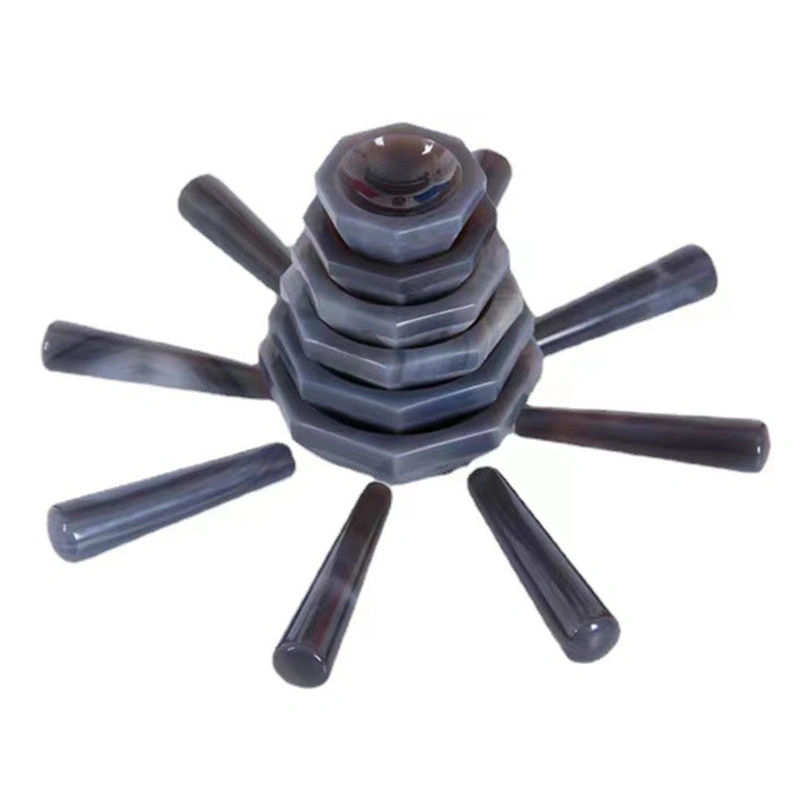
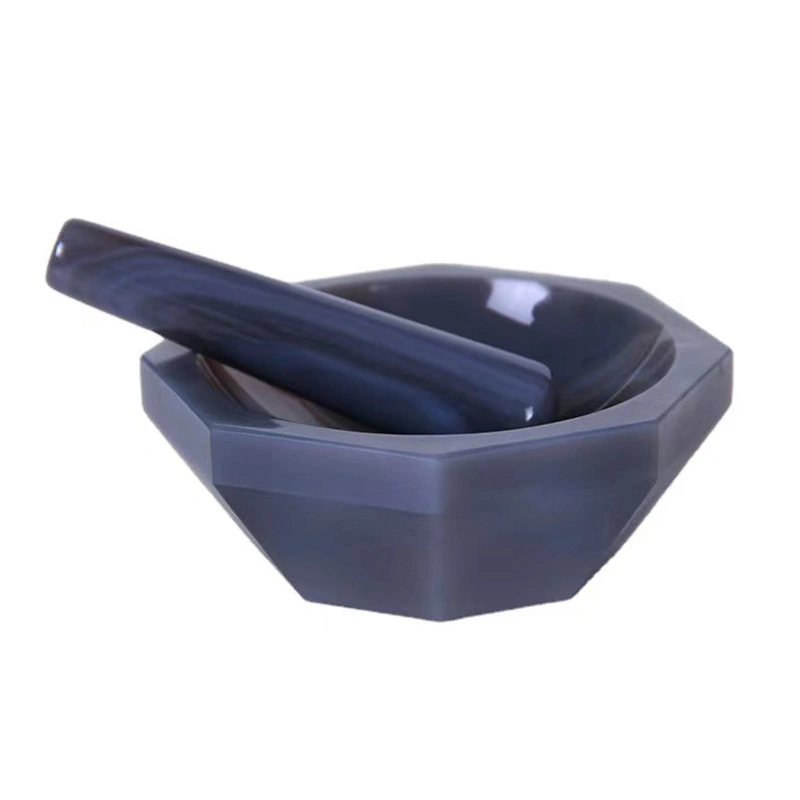
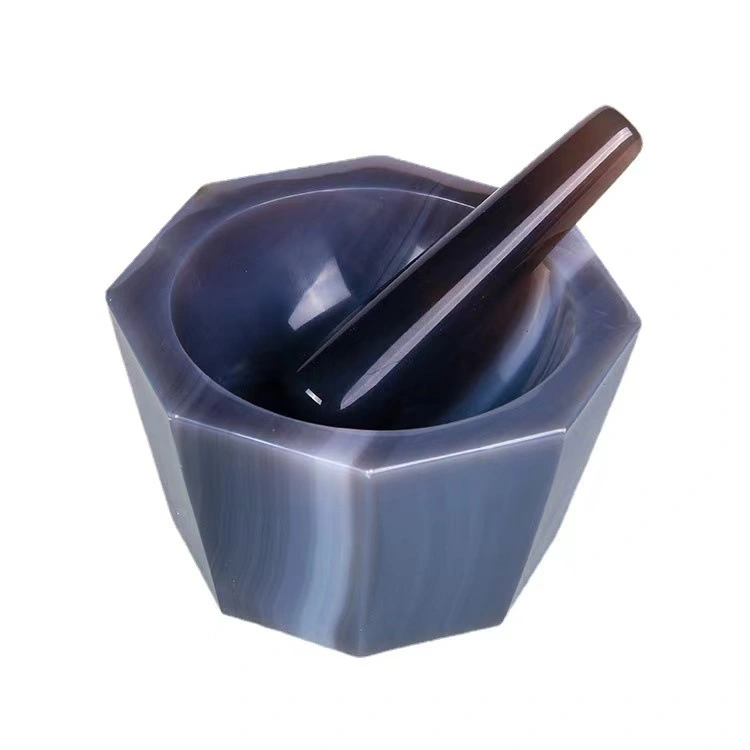
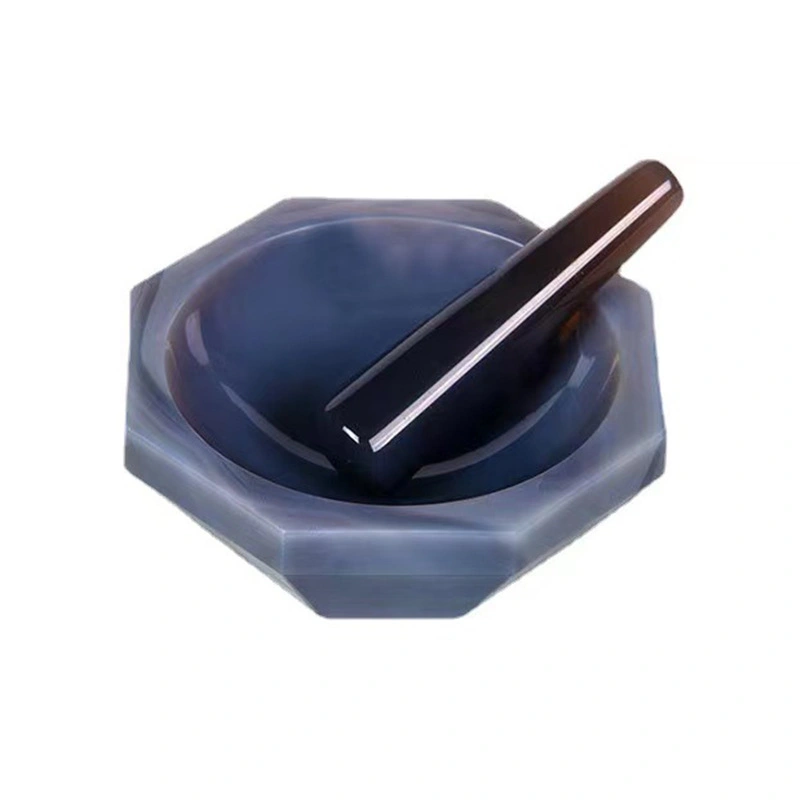
What Is an Agate Mortar and Pestle?
An agate mortar and pestle is a non-metallic laboratory grinding set used to crush, grind and homogenize small solid samples into fine powder. It is commonly selected for analytical sample preparation when labs need a hard, smooth and low-residue grinding surface that helps reduce metallic contamination and makes cleaning verification easier between sample batches.
Why Labs Choose Agate Mortar and Pestle Sets
Polished Agate Grinding Surface
The polished agate grinding surface helps powder move smoothly across the bowl during crushing, mixing and fine grinding. It also makes visible residue easier to check after cleaning, which is helpful for labs that handle multiple sample types.
Non-Metallic Contact Surface
Agate provides a hard, non-metallic grinding contact surface. This helps reduce the risk of introducing metallic particles compared with steel or tungsten carbide tools, especially in analytical sample preparation and trace-sensitive workflows.
Matched Bowl and Pestle Fit
A matched mortar and pestle set gives the operator better control during grinding. The bowl shape and pestle contact area work together to support stable circular movement, smoother powder homogenization and more consistent handling.
Deep-Form Bowl Option
Deep-form agate mortar bowls provide extra working depth for light, fluffy or electrostatic powders. This helps reduce powder loss, dusting and sample spillover during manual grinding or mixing.
Replacement Pestle Option
Replacement agate pestles can be reviewed when the bowl is still usable but the pestle contact tip is worn or damaged. This helps laboratories extend the use of matched grinding sets without replacing the entire set every time.
Agate Mortar and Pestle Technical Properties
| Technical Parameter | Typical Spec | Why Buyers Care |
|---|---|---|
| Material (Agate) | SiO₂-rich dense agate for bowl and pestle | It defines the non-metal contact surface and overall grinding behaviour. |
| Hardness (Mohs) | 6.5–7.0 Mohs | Higher hardness improves wear resistance and helps keep grinding performance stable over time. |
| Density | 2.55–2.65 g/cm³ | Consistent density usually correlates with uniform structure and a more predictable handling feel. |
| Grinding Surface Finish (Ra) | Polished inner bowl; common target Ra ≤ 0.4 μm | A smoother surface is easier to clean and helps reduce residual carryover between samples. |
| Bowl Dimensions | ID / OD / Depth (mm), plus “deep form” option | Size determines batch capacity, powder containment, and operator control during circular grinding. |
| Dimensional Tolerance | Typical ±0.1 mm (select sizes can be tighter) | Tolerance affects repeatable volume, fit consistency, and replacement compatibility across repeat orders. |
| Fit Class (Pestle–Bowl Matching) | Matched set; optional tighter fit by request | Fit stability reduces “skipping” and improves control when moving from crushing to fine homogenization. |
| Recommended Service Temperature (Guidance) | Common catalogue guidance: up to ~350°C (process-dependent) | Buyers need a clear limit to avoid misuse in heating steps and reduce the risk of thermal damage or cracking. |
How to Choose the Right Agate Mortar and Pestle Size
Choose the size based on sample volume, powder behavior and grinding motion. Compact bowls work better for small analytical batches, while larger or deeper bowls provide more working space and help reduce powder loss during mixing or homogenization.
Type 1: agate mortar bowl size option for laboratory sample grinding
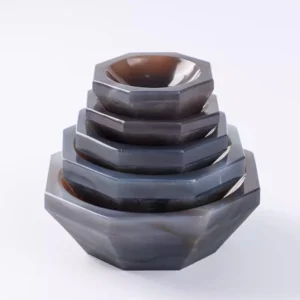
| Agate Mortar Bowl | ||||
| Item | Inner Diameter (mm) | Outer Diameter (mm) | (Depth of Bowl)mm | (Height of Bowl) mm |
| AT-MN-YB1001 | 30 | 40 | 9 | 21 |
| AT-MN-YB1002 | 40 | 55 | 13 | 25 |
| AT-MN-YB1003 | 50 | 65 | 15 | 28 |
| AT-MN-YB1004 | 60 | 75 | 18 | 30 |
| AT-MN-YB1005 | 70 | 85 | 21 | 32 |
| AT-MN-YB1006 | 80 | 95 | 24 | 35 |
| AT-MN-YB1007 | 90 | 105 | 27 | 40 |
| AT-MN-YB1008 | 100 | 115 | 30 | 45 |
| AT-MN-YB1009 | 110 | 125 | 32 | 45 |
| AT-MN-YB1010 | 120 | 136 | 34 | 50 |
| AT-MN-YB1011 | 130 | 150 | 40 | 55 |
| AT-MN-YB1012 | 140 | 160 | 45 | 60 |
| AT-MN-YB1013 | 150 | 170 | 50 | 65 |
| AT-MN-YB1014 | 160 | 180 | 55 | 70 |
| AT-MN-YB1015 | 170 | 190 | 55 | 70 |
| AT-MN-YB1016 | 180 | 200 | 60 | 75 |
| AT-MN-YB1017 | 190 | 210 | 60 | 75 |
| AT-MN-YB1018 | 200 | 220 | 65 | 80 |
Type 2: replacement agate pestle for matched mortar and pestle sets
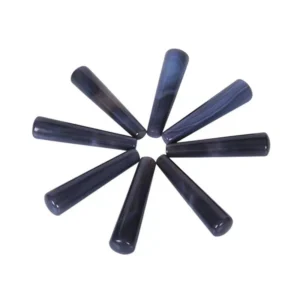
| Agate Grinding Pestle | ||||
| Item | Products | Length (mm) | Bottom Diameter of Pestle (mm) | Top Diameter of Pestle (mm) |
| AT-MN-YB2001 | Agate mortar and pestle, 30 mm (with slim pestle) | 30-40 | 10-12 | 6-7 |
| AT-MN-YB2002 | Agate mortar and pestle, 40 mm (with slim pestle) | 40-50 | 10-12 | 6-7 |
| AT-MN-YB2003 | Agate mortar and pestle, 50 mm (with slim pestle) | 50-60 | 12-13 | 6-8 |
| AT-MN-YB2004 | Agate mortar and pestle, 60 mm (with thick pestle) | 60-70 | 12-13 | 6-8 |
| AT-MN-YB2005 | Agate mortar and pestle, 70 mm (with thick pestle) | 70-80 | 13-15 | 6-8 |
| AT-MN-YB2006 | Agate mortar and pestle, 80 mm (with thick pestle) | 80-90 | 13-15 | 8-10 |
| AT-MN-YB2007 | Agate mortar and pestle, 90 mm (with thick pestle) | 80-90 | 15-18 | 8-10 |
| AT-MN-YB2008 | Agate mortar and pestle, 100 mm (with thick pestle) | 90-100 | 15-18 | 10-12 |
| AT-MN-YB2009 | Agate mortar and pestle, 110 mm (with thick pestle) | 100-110 | 18-20 | 12-14 |
| AT-MN-YB2010 | Agate mortar and pestle, 120 mm (with thick pestle) | 110-120 | 20-22 | 12-14 |
| AT-MN-YB2011 | Agate mortar and pestle, 130 mm (with thick pestle) | 120-130 | 22-23 | 14-16 |
| AT-MN-YB2012 | Agate mortar and pestle, 140 mm (with thick pestle) | 130-140 | 23-24 | 14-16 |
| AT-MN-YB2013 | Agate mortar and pestle, 150 mm (with thick pestle) | 140-150 | 24-26 | 16-18 |
| AT-MN-YB2014 | Agate mortar and pestle, 160 mm (with thick pestle) | 150-160 | 26-28 | 16-18 |
| AT-MN-YB2015 | Agate mortar and pestle, 170 mm (with thick pestle) | 160-170 | 28-30 | 18-20 |
| AT-MN-YB2016 | Agate mortar and pestle, 180 mm (with thick pestle) | 170-180 | 30-35 | 20-23 |
| AT-MN-YB2017 | Agate mortar and pestle, 190 mm (with thick pestle) | 180-190 | 30-35 | 23-25 |
| AT-MN-YB2018 | Agate mortar and pestle, 200 mm (with thick pestle) | 190-200 | 35-40 | 23-25 |
Agate vs Porcelain, Alumina and Tungsten Carbide Mortars
| Mortar Material | Main Advantage | Main Limitation | Suitable Use |
|---|---|---|---|
| Agate | Smooth, hard and non-metallic grinding surface | More brittle than some engineered ceramics or metals | Analytical sample preparation, low-residue grinding and sensitive powders |
| Porcelain | Cost-effective and widely available | More porous and harder to clean for trace-sensitive work | General lab grinding and low-cost routine use |
| Alumina | Hard and wear-resistant ceramic option | May not be as smooth or low-residue as polished agate for some analytical work | Ceramic powder grinding, lab consumables and high-wear general use |
| Tungsten Carbide | Very hard and strong for aggressive grinding | Can introduce metallic elements into sensitive samples | Hard minerals, high-force grinding and mechanical sample reduction |
Agate Mortar and Pestle Packaging
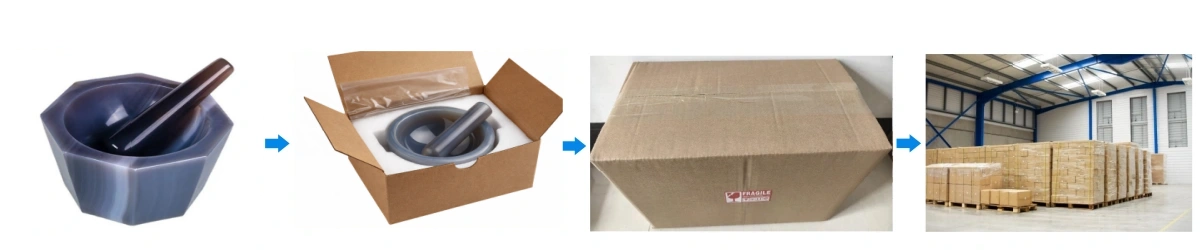
- Foam-insert protection for bowl rim and pestle tip to reduce transit chipping risk