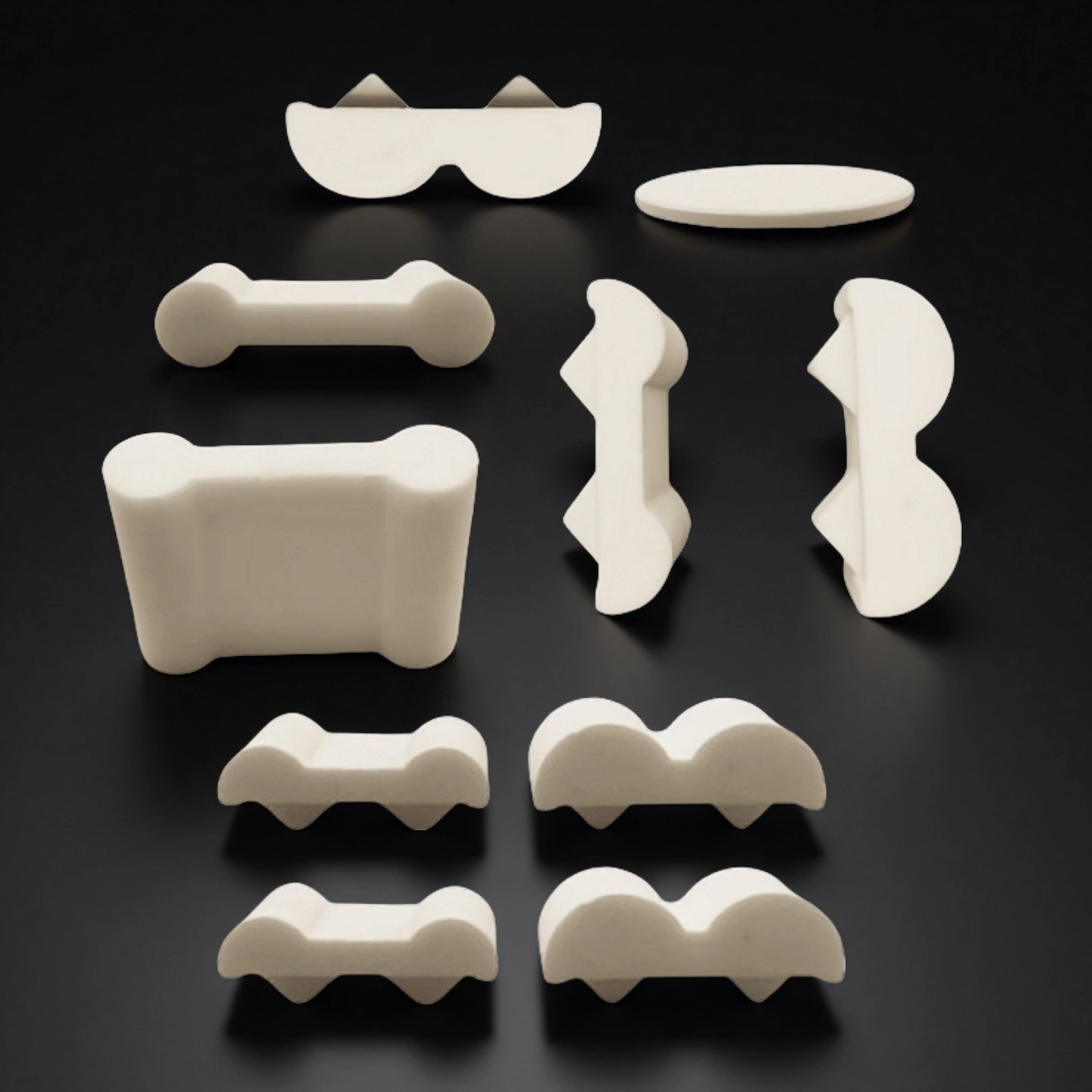
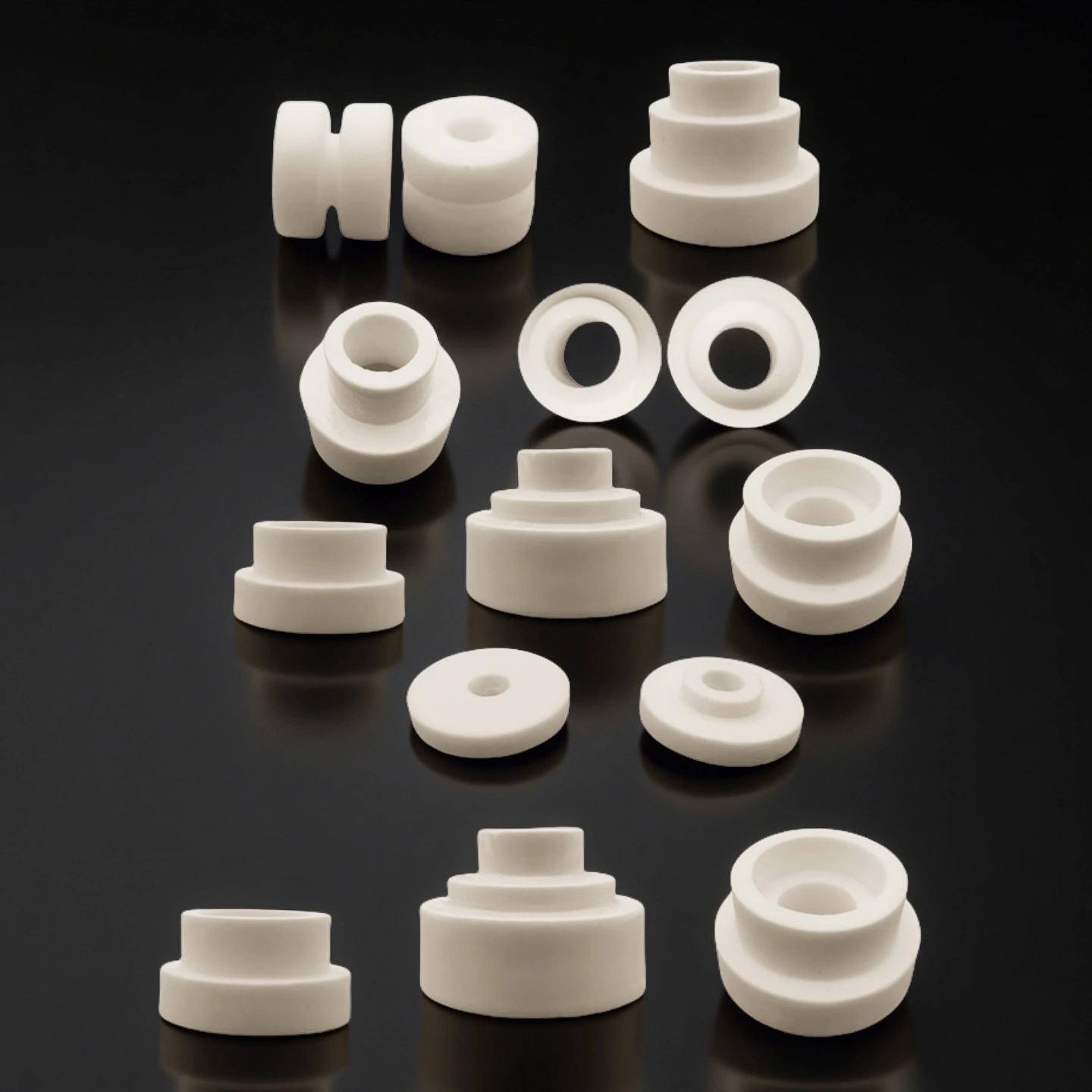
Alumina Insulator Parts for Industrial Heaters and Power Equipment

Keep conductors electrically separated and accurately positioned in industrial heaters, power assemblies and high-voltage equipment. ADCERAX supplies alumina ceramic insulator parts — sleeves, bushings, standoffs, discs, wire guides and terminal supports — in six alumina grades and standard or drawing-based geometries.

Catalogue No. AT-AM1-001
Material  95%-99.9% Al2O3
Electrical isolation Volume resistivity >10¹⁴ Ω·cm at 20–25°C
Grade selection range 1400°C (95%) to 1750°C (99.9%) by grade.
Diameter/Size Download More Sizes
Engineering RFQ Review
Small-Batch Custom Support
Drawing-Based Production
Drawing & Process Review

Alumina ceramic insulator parts are dense Al₂O₃ components that keep conductors electrically separated from surrounding metal structures while simultaneously locating them in position. They are used wherever a part must resist both electrical breakdown and mechanical load at elevated temperature — in industrial furnaces, heater terminal boxes, power electronics enclosures, high-voltage test rigs and automation fixtures.

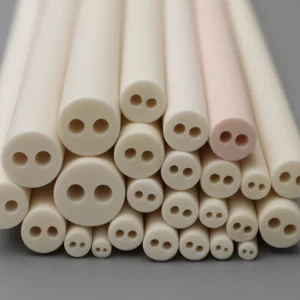
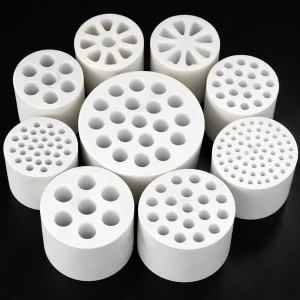
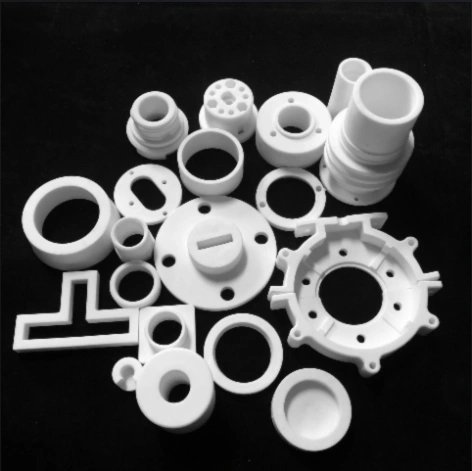
ADCERAX produces these parts as sleeves and bushings, standoffs and spacers, rings and washers, multibore wire guides, and terminal and heater supports. Each geometry serves a specific assembly task:

  • A sleeve locates a conductor through its housing.
  • A standoff sets spacing between live parts and a frame.
  • A multibore guide keeps individual conductors separated through a hot zone.

Standard round discs in the AT-AM1 series are held in stock, and drawing-based geometries — including slots, counterbores, flanges and mounting holes — are produced to 2D or 3D drawings.

Alumina Insulator Parts Specifications

Type 1: Round Alumina Plate

Standard round discs in 96%–99% alumina, Ø30–100 mm. Select from the table. Drawing-based options add a centre bore, mounting holes, slots or a defined contact face to any size in this range.
Alumina ceramic plate

Round Alumina Plate
Item no. Diameter(mm) Thickness(mm) Purity
AT-AM1-001 100 20 96%-99%
AT-AM1-002 90 5.5 96%-99%
AT-AM1-003 80 14.5 96%-99%
AT-AM1-004 70 7.5 96%-99%
AT-AM1-005 60 4.5 96%-99%
AT-AM1-006 50 6 96%-99%
AT-AM1-007 40 5 96%-99%
AT-AM1-008 30 4 96%-99%

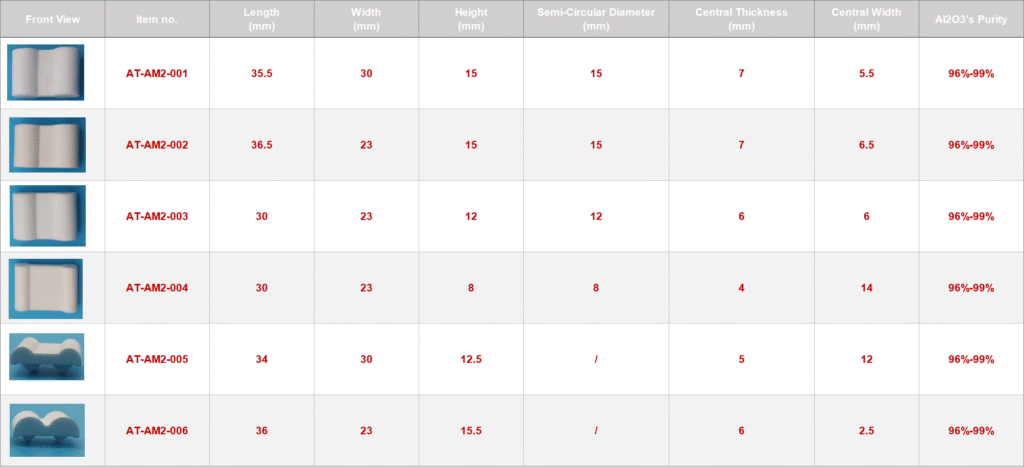
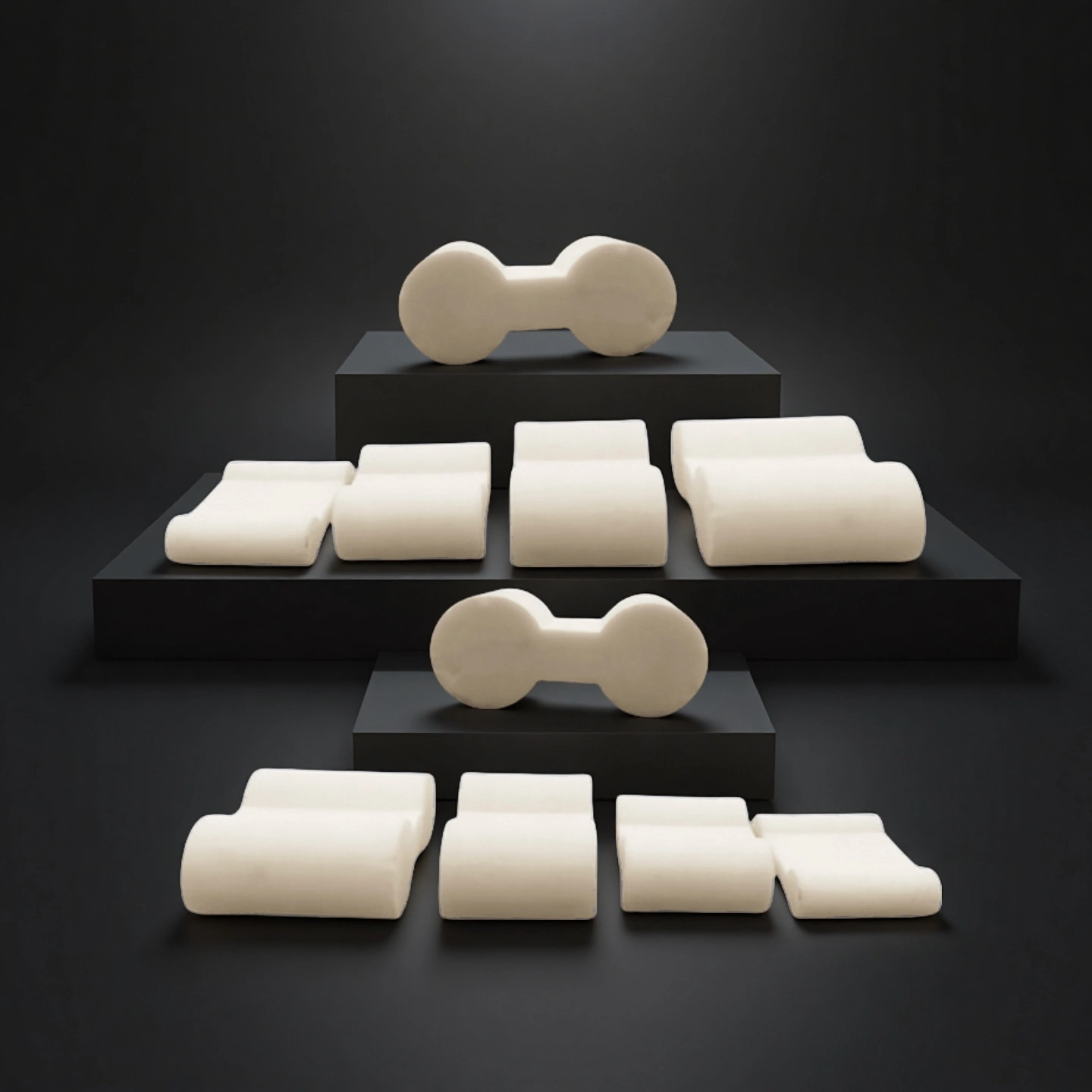
Type 2: Alumina Ceramic Cushion

1

Type 3: Alumina Ceramic Clip

Alumina Ceramic Insulation Structural Parts1

Type 4: Aluminum Oxide Heat Sink

Alumina Ceramic Insulation Structural Parts2

Type 5: Aluminum Oxide Connector

Alumina Ceramic Insulation Structural Parts3

Type 6: Aluminum Oxide Column

Alumina Ceramic Insulation Structural Parts4

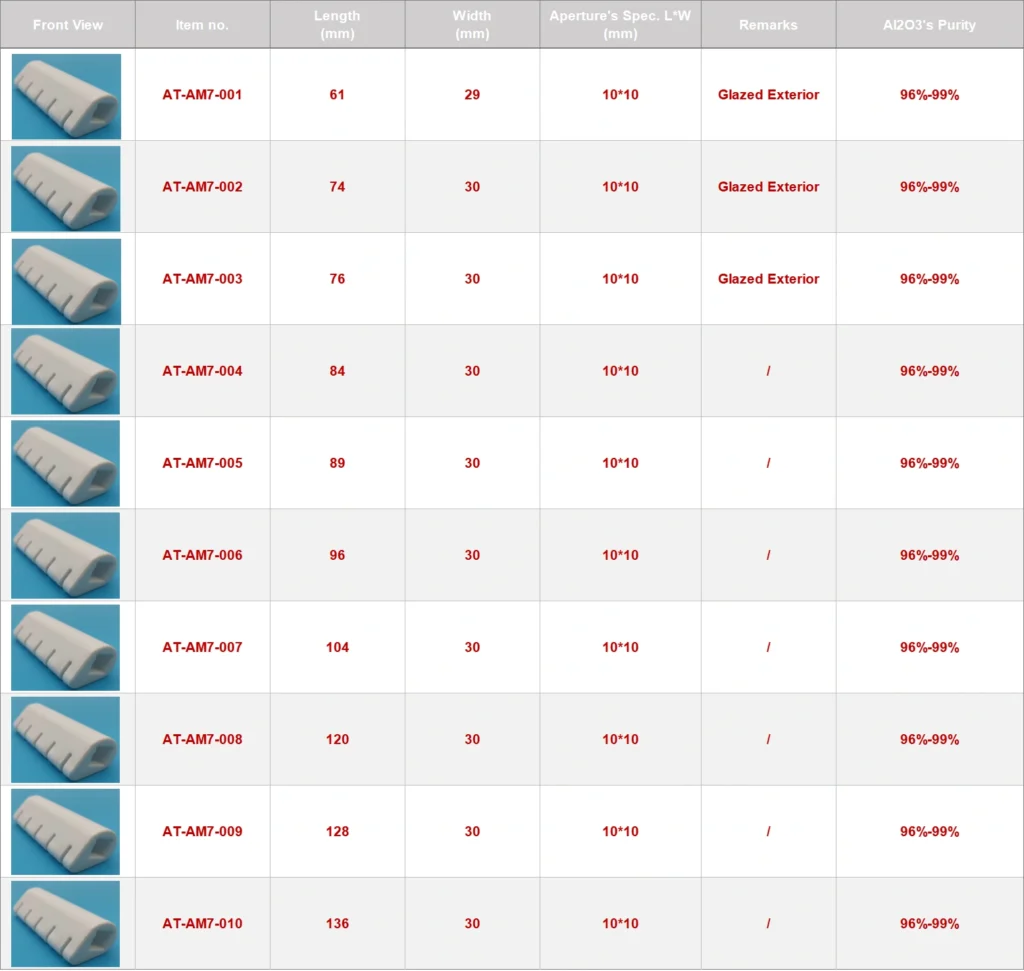
Type 7: Alumina Install Ceramic Strips
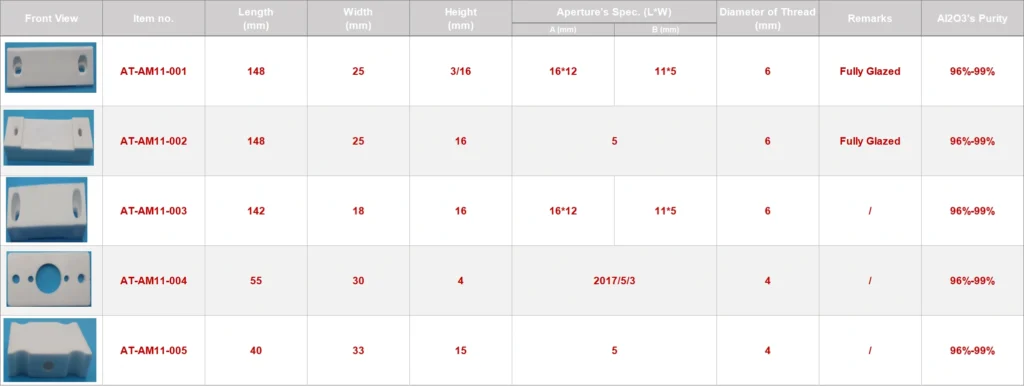
Alumina Ceramic Insulation Structural Parts5

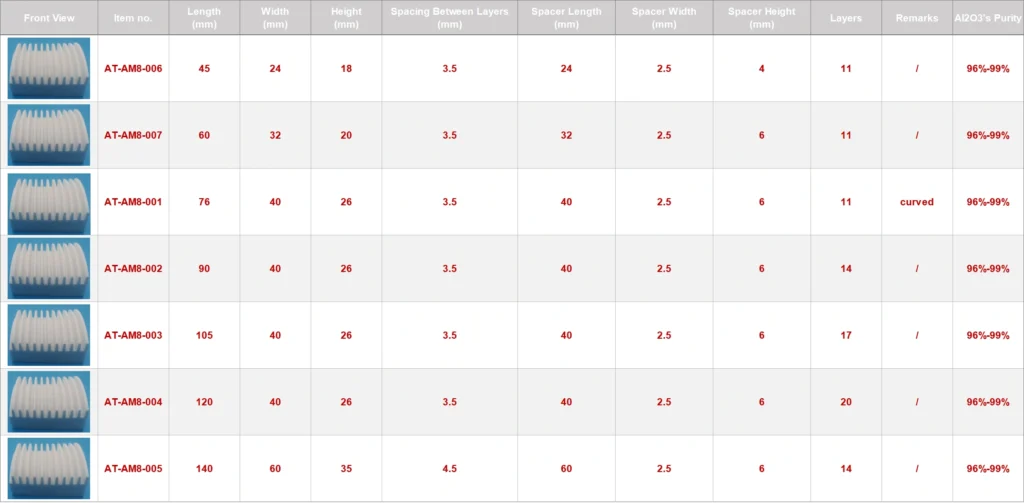
Type 8: Alumina Install Ceramic Block
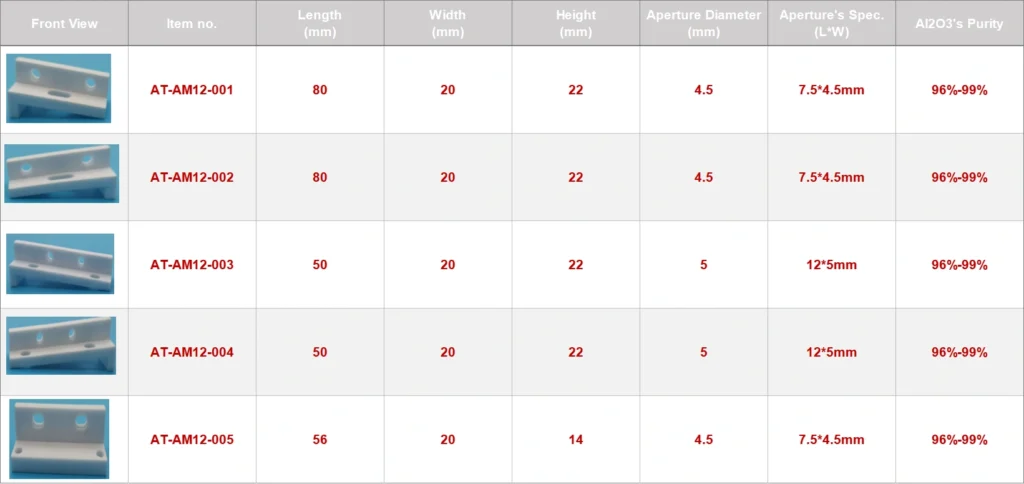
Alumina Ceramic Insulation Structural Parts6

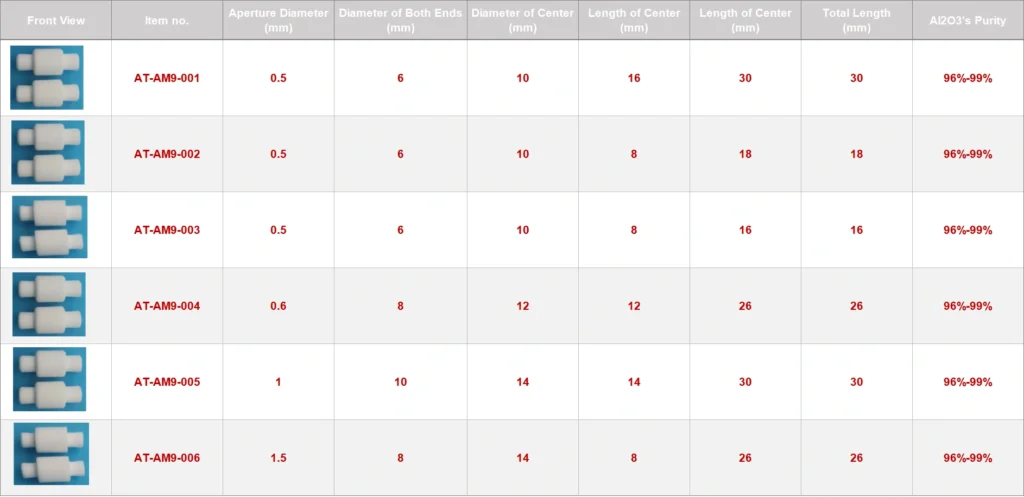
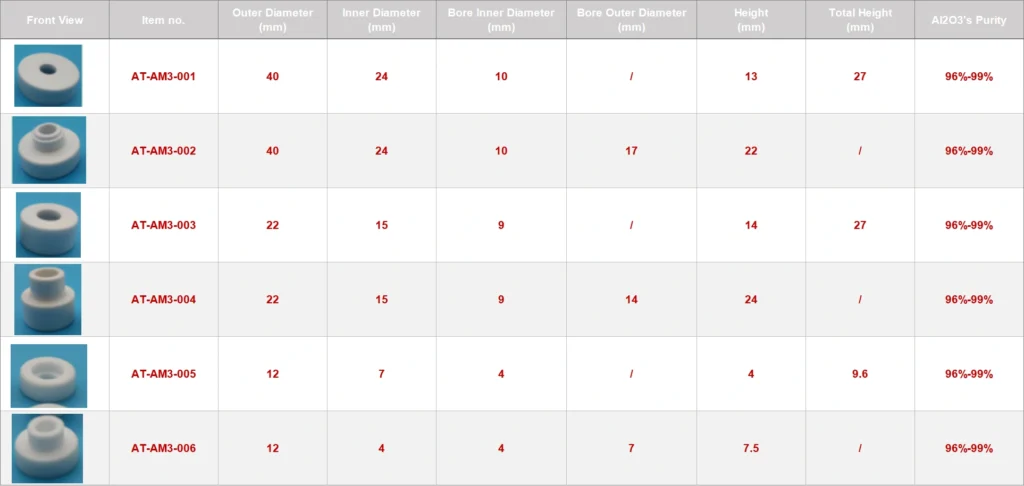
Type 9: Alumina Ceramic Sleeve I

Alumina Ceramic Insulation Structural Parts7

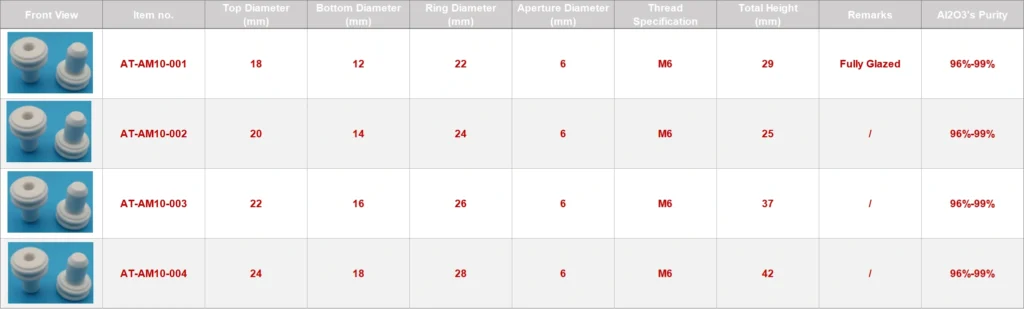
Type 10: Alumina Ceramic Sleeve II

Alumina Ceramic Insulation Structural Parts8

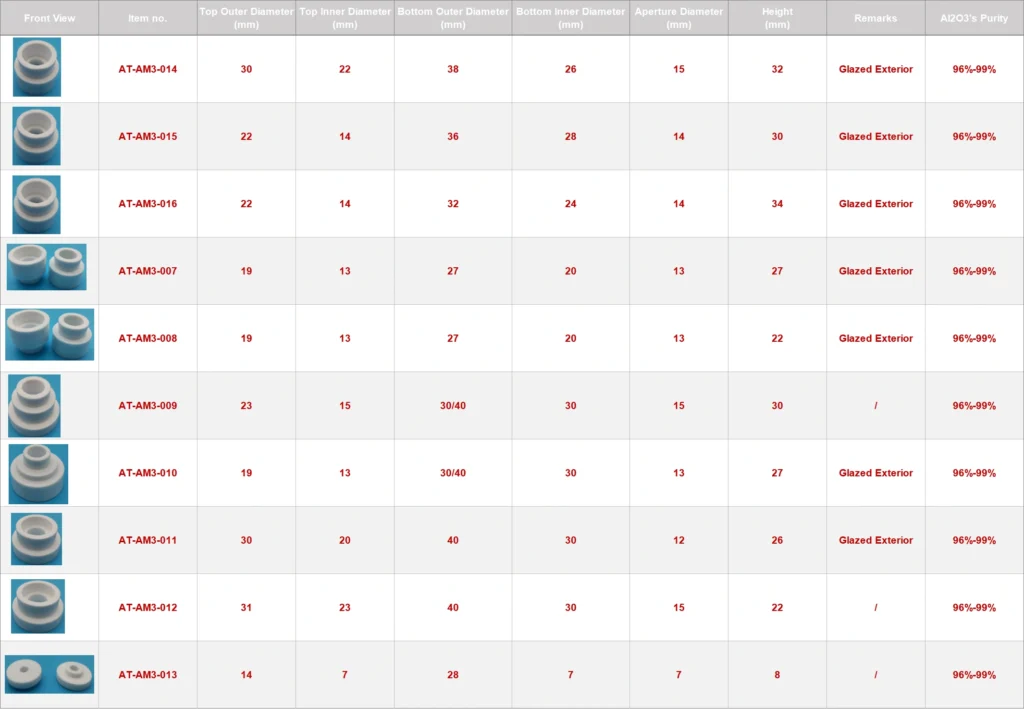
Type 11: Alumina Ceramic Seat

Alumina Ceramic Insulation Structural Parts-Alumina Ceramic Seat

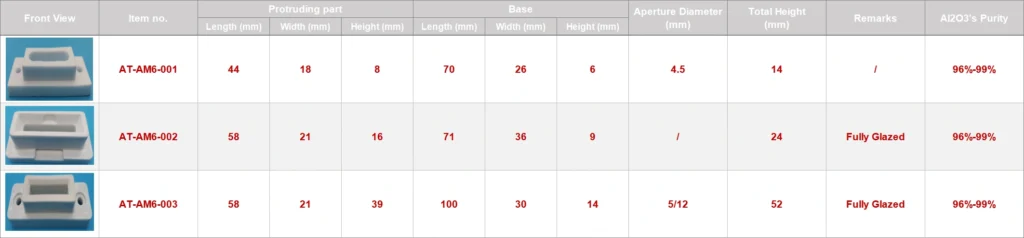
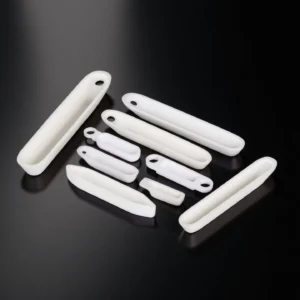
Type 12: Alumina Ceramic Terminal Support Insulator
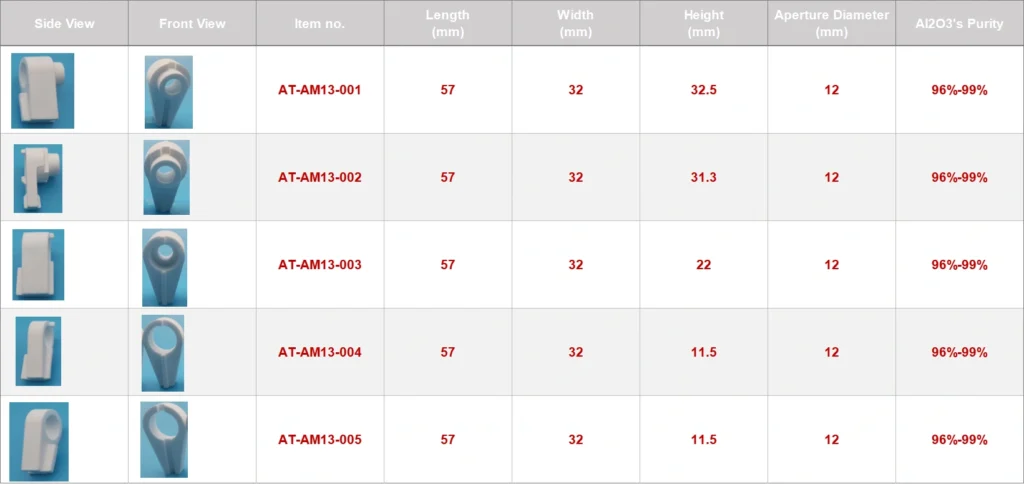
Alumina Ceramic Seat

Type 12: Alumina Ceramic Support Bottle
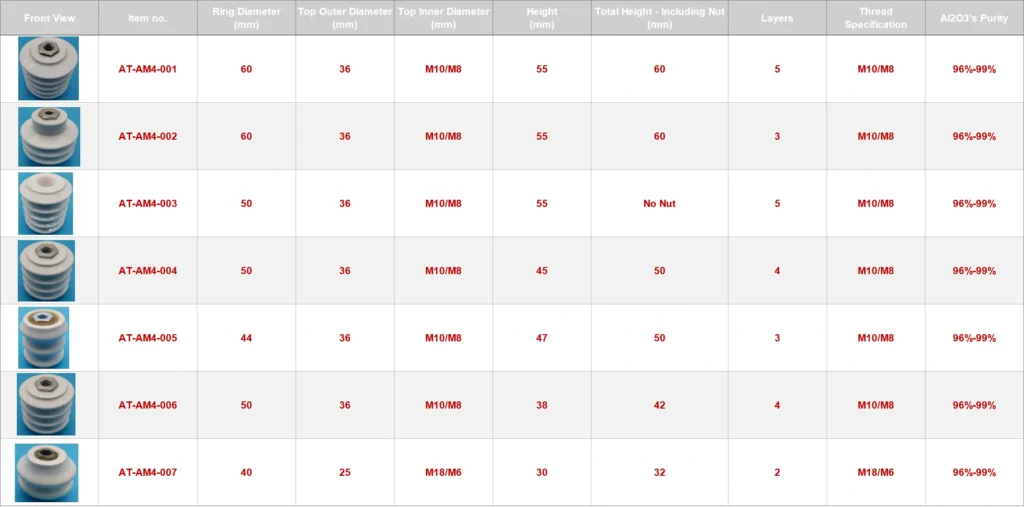
Alumina Ceramic Support Bottle

Type 12: Alumina Ceramic Wiring Seat
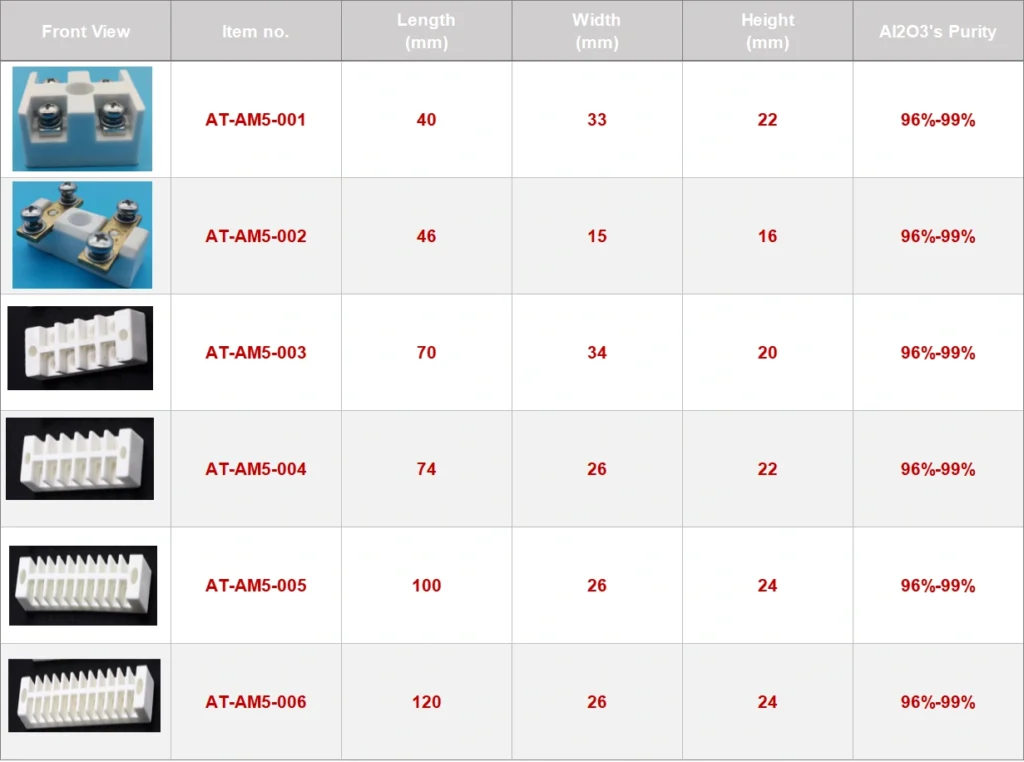
 Alumina Ceramic Wiring Seat

Download the Product Catalogue

Alumina Ceramic Insulator Parts Properties

Compare electrical and thermal material references by grade. Finished-part voltage and thermal duty are specified for the actual insulation path, mounting and service conditions.

Material reference 95% Al₂O₃ 96% Al₂O₃ 99% Al₂O₃ 99.5% Al₂O₃ 99.7% Al₂O₃ 99.9% Al₂O₃
Thermal conductivity (W/(m·K)) 18–25 at 25°C 25 at 20°C 24 at 25°C 30–38 at 25°C 35–40 at 25°C 35–42 at 25°C
Volume resistivity (Ω·cm at 20°C) >10¹² 10¹⁴ typical >10¹⁴ >10¹⁴ >10¹⁴ >10¹⁴
Dielectric strength (kV/mm; test specimen) 10; 5 mm 8.3 AC; 6.35 mm 10; 5 mm 10; 5 mm 10; 5 mm 10; 5 mm
Material temperature selection limit (°C) 1400 1600 in air 1600 1650 1700 1750

Choose the grade together with geometry, conductor arrangement and operating temperature. Agree the finished-part or assembly electrical test for the selected design.

Alumina Ceramic Insulator Parts Packaging

  • Individual protection: Each part or matched set is wrapped in soft material to prevent ceramic-to-ceramic contact and edge chipping.
  • Extra cushioning: Bores, slots and mounting holes receive additional padding.
  • Rigid packaging: Large or fragile parts are secured in a rigid outer carton with foam inserts.
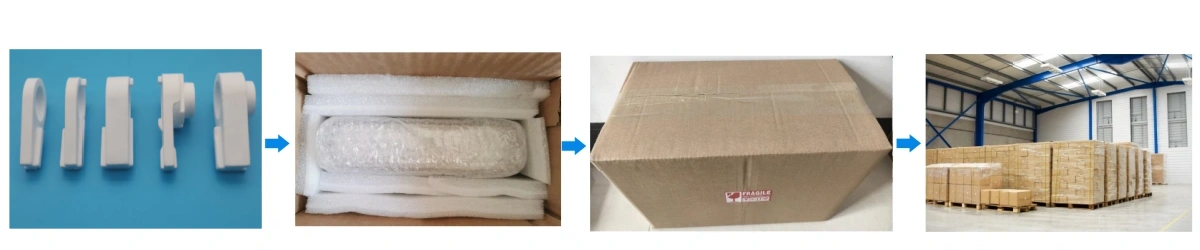
Alumina Ceramic Insulator Parts Packaging

Alumina Ceramic Insulator Parts Applications

  • Industrial Furnaces and Heating Systems

    1. Typical uses: Furnace terminal boxes, heater lead-throughs and heating-element supports.
    2. Main function: Provide electrical insulation and support for heater coils and busbars at elevated temperatures.
    3. Design focus: Match the alumina grade and geometry to temperature, load, atmosphere and insulation requirements.overy effort.

  • Power Electronics, Drives and High-Voltage Cabinets

    1. Typical uses: Busbar supports, insulating spacers, inverters, transformers and electrical test equipment.
    2. Main function: Maintain spacing between live components and grounded structures.
    3. Design focus: Specify clearance, creepage distance and mounting dimensions to suit the voltage and available space.

  • Welding, Plasma Cutting and Automation Fixtures

    1. Typical uses: Welding torch bodies, plasma nozzle assemblies and robotic fixture mounts.
    2. Main function: Electrically separate current-carrying parts from surrounding structures.
    3. Design focus: Review heat exposure, metal spatter, process gases, wear and mounting fit.

Alumina Ceramic Insulator Parts Usage Instructions

  • Installation

    1. Check dimensions and tolerances against your drawings before installation, especially the inner diameter fit on studs and the outer diameter fit in mounting holes.
    2. Avoid excessive mechanical stress on alumina ceramic insulator parts during tightening; use torque values specified for the metal fasteners, and support the ceramic to prevent bending.
    3. Where high-voltage is present, align flats, grooves or ribs on the insulators according to your creepage distance design to keep surfaces free of sharp field concentrations.

  • Operation

    1. Verify that the actual operating temperature and voltage are within the design envelope for the chosen alumina grade and creepage distances.
    2. In dusty or humid environments, keep ceramic surfaces as clean as practical to reduce surface leakage and tracking; schedule inspections during planned maintenance stops.
    3. For dynamic systems such as welding arms, ensure that cables and hoses are routed so they do not load the ceramic parts with cyclic bending or impact.

  • Storage

    1. Store alumina ceramic insulator parts in their original packaging or on padded shelves to avoid chipping during handling.
    2. Keep storage areas dry and free from corrosive vapours; while alumina itself is chemically stable, metal inserts and accessories should be protected from corrosion.
    3. Avoid stacking heavy components directly on top of ceramic parts to prevent hidden cracks.

  • Cleaning

    1. Remove dust and light contamination using a soft brush or clean compressed air.
    2. For more stubborn deposits, wipe with a lint-free cloth slightly moistened with appropriate solvent or de-ionised water, then dry thoroughly before energising the equipment.
    3. Do not use metal tools to scrape the ceramic surface, so as not to introduce scratches that can concentrate electric field.

  • Typical User Issues and How to Handle Them

    1. Issue: Cracks appearing after installation
    Cause: Excessive tightening torque or misalignment between metal parts, leading to bending stress on the alumina ceramic insulator parts.
    Handling: Reduce torque to the recommended level, use flat washers to distribute load, and check that mounting faces are parallel and properly machined.

    2. Issue: Unexpected tracking marks or surface discharge
    Cause: Pollution films, moisture or conductive dust accumulating on insulator surfaces, especially near high-voltage terminals.
    Handling: Improve sealing or shielding around the terminals, schedule periodic cleaning, and review creepage distances for the actual contamination class.

    3. Issue: Fit between ceramic bushing and metal stud too tight or too loose
    Cause: Mismatch between nominal tolerances on drawing and actual machining of both metal and ceramic parts.
    Handling: Confirm both tolerance stacks, adjust either the ceramic ID or metal OD for future batches, and for critical assemblies consider pre-production samples to lock the fit before mass production.

Alumina Ceramic Insulator Parts FAQ

  1. Q: Which alumina grade should I choose?
    A: 96% alumina (AD-ALU-960) suits most industrial heater terminal boxes and power cabinet standoffs, with a material selection limit of 1600°C in air. Move to 99%–99.9% grades (AD-ALU-990 to AD-ALU-999) when you need higher density, lower water absorption, lower dielectric loss, or better performance at higher voltage and under surface contamination. The right choice depends on your working temperature, voltage, atmosphere and surface cleanliness requirements.
  2. Q: What dielectric strength and volume resistivity do these parts have?
    A: As material reference values: 96% alumina (AD-ALU-960) gives 8.3 kV/mm AC and 10¹⁴ Ω·cm typical at 20°C; the 99%–99.9% grades (AD-ALU-990 to AD-ALU-999) give 10 kV/mm and above 10¹⁴ Ω·cm. The test specimen differs by grade — 6.35 mm for 96%, 5 mm for the higher grades. The actual insulation performance of a finished part depends on wall thickness, geometry, surface finish and electrode arrangement, so confirm the assembly-level test with ADCERAX.
  3. Q: What is the maximum temperature?
    A: Material selection limits run from 1400°C (95% grade) to 1750°C (99.9% grade). 96% is rated 1600°C in air. These are material limits, not a rated operating temperature for the finished part — actual service temperature depends on mechanical load, thermal gradient and mounting arrangement.
  4. Q: Are they suitable for high-frequency or RF applications?
    A: Yes. Alumina has stable permittivity (9.0–9.8 depending on grade) and low dielectric loss across a wide frequency range, which makes alumina insulator parts suitable for high-frequency power electronics, inverters and certain RF heating systems.
  5. Q: What custom geometries and tolerances are available?
    A: Any drawing-based form: straight or stepped sleeves, bushings, standoff posts, spacers, rings, blocks and custom profiles. Mounting features include counterbores, slots, keyways, through-holes and creepage grooves. Typical tolerances on critical ground features are around ±0.05–0.1 mm depending on size and wall thickness; as-fired sections may use wider tolerances where function allows.
  6. Q: Can a damaged part be used as a pattern for a replacement?
    A: Yes. Intact seating faces, bore openings and the mating metal parts can establish the original fit geometry even from a fractured sample. The fracture location is itself informative — it often points to a clamping, geometry or thermal-movement issue worth addressing in the replacement. Send the old part, or clear photographs of it both assembled and broken, along with its installation position.
  7. Q: What should be agreed for repeat orders?
    A: Lock the alumina grade and drawing revision, then agree critical dimensions, surface and edge acceptance criteria, sampling and inspection methods. Where the order includes an assembly test, define its electrodes, voltage, duration and acceptance criteria separately from the material-grade data.
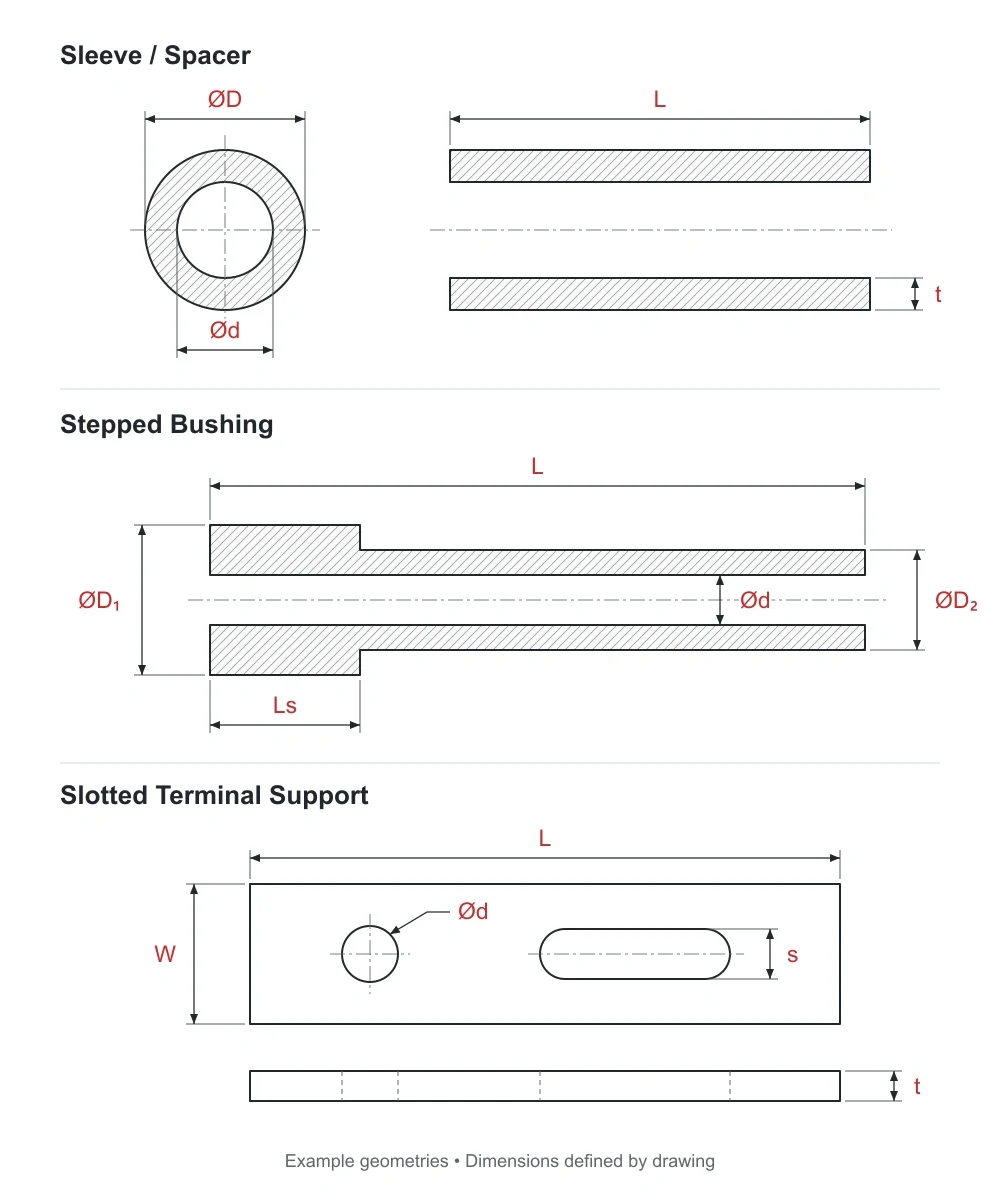
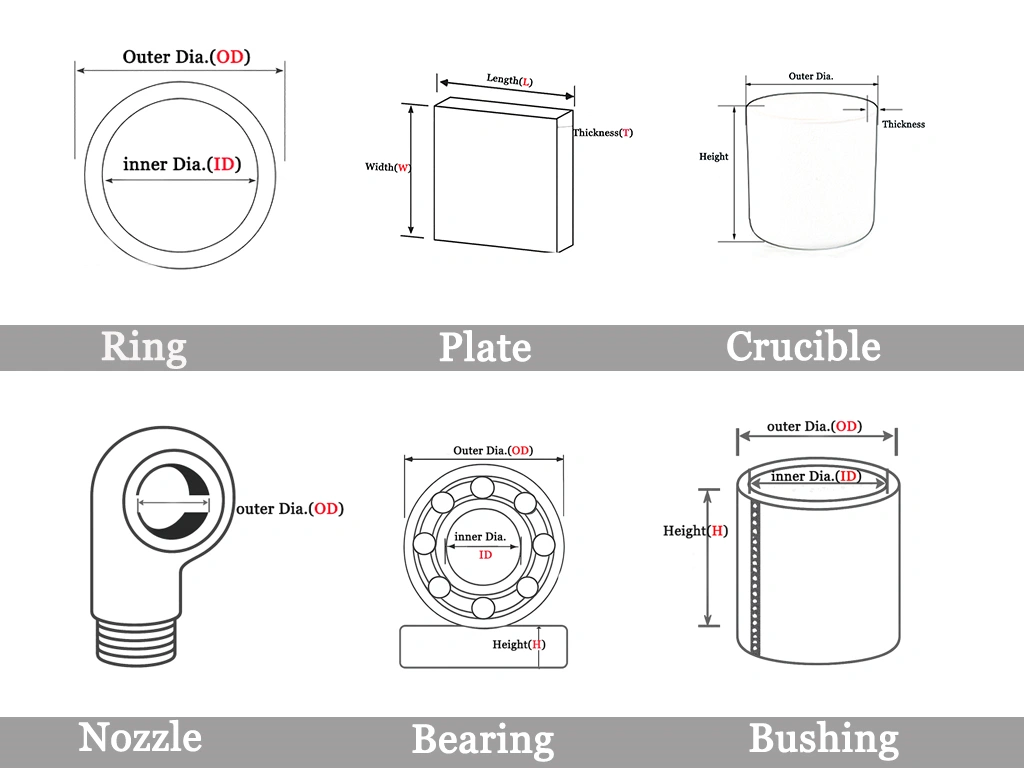
Alumina ceramic insulator parts dimension diagram showing sleeves, stepped bushings and slotted supports with lengths, diameters and thicknesses.

Custom Alumina Ceramic Insulator Parts

ADCERAX produces drawing-based alumina ceramic insulator parts for OEM equipment builders and replacement requirements, covering sleeves, bushings, standoffs, discs, multibore wire guides, terminal supports and complex shaped insulators in all six standard alumina grades.

What you can specify

  1. Material grade — 95% to 99.9% Al₂O₃, selected around your working temperature, voltage and environment.
  2. Dimensions — OD, ID, wall thickness and length, with typical tolerances down to ±0.05–0.1 mm on critical features depending on geometry.
  3. Form and cross-section — straight sleeves, stepped bushings, standoff posts, flat spacers, rings, or custom profiles defined in your CAD.
  4. Mounting features — counterbores, slots, keyways, through-holes, grooves for creepage distance, chamfered or radiused edges.
  5. Surface finish — as-fired for general insulation, or ground and lapped on seating and sealing faces where tighter contact and dimensional control are needed.
  6. Special features (optional) — localized polishing for high-voltage field control; metallization pads or brazeable areas for ceramic-to-metal joints.

Related Products

ADCERAX - Your Trusted Advanced Ceramics Manufacturing Partner

ADCERAX – Custom Ceramic Supply and Engineering Coordination
ADCERAX coordinates drawing review, production and inspection with manufacturing partners against agreed specifications.

China-Based Ceramic Supply Partner

ADCERAX coordinates custom ceramic supply for overseas OEMs, equipment builders, and labs.

Custom Drawing Support

We review drawings, dimensions, materials, and application conditions before quotation.

Ceramic Process Control

Forming, sintering, machining, grinding, and finishing are arranged by part requirements.

Pre-Shipment Inspection

Dimensional checks, visual inspection, and packaging review help reduce procurement risk.

Get in Touch with Us

Our team will be happy to respond to you in less than 24 hours.

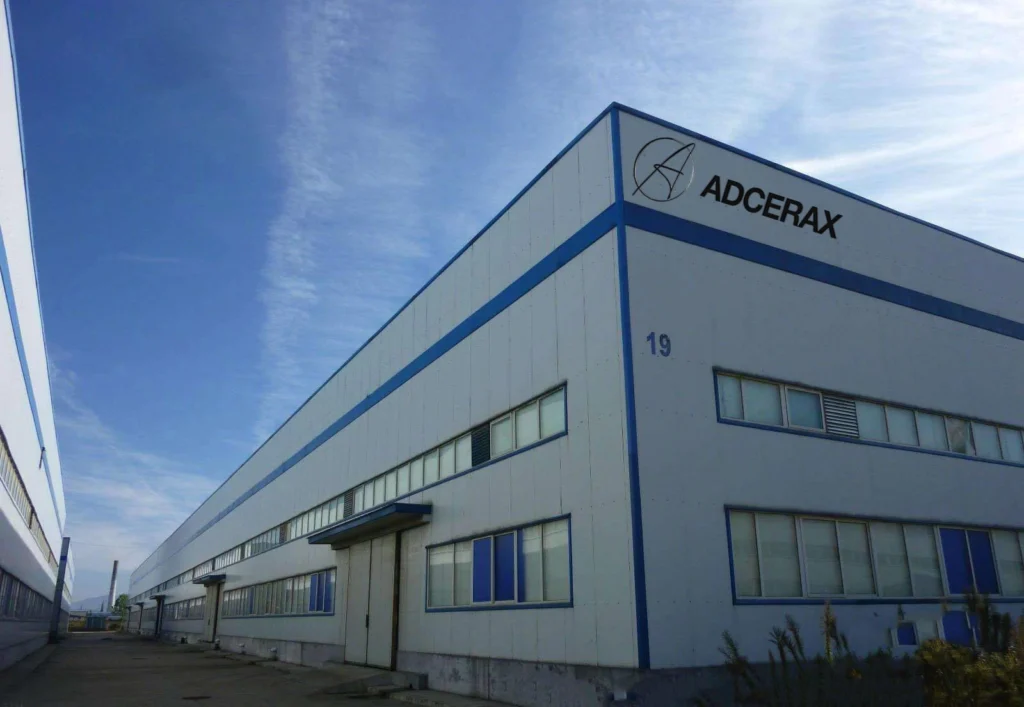
Adcerax's factory

Quick Quotation

*Our team will review your inquiry and respond with the next steps.

*Your information will be kept strictly confidential.

Ready to Solve Your Engineering Challenge?

Partner with ADCERAX for reliable, high-performance advanced ceramic solutions. Our engineers are ready to discuss your project.

E-mail

info@adcerax.com

Phone

Tel: +86-0731-84428843 WhatsApp: +86 19311583352

Response Time

Within 24 hours

Quick Quote

The more details you provide, the faster we can quote.

*All inquiries are confidential.

Get Your Custom Solution

The more details you provide, the faster we can respond.

customize size

*We respond within 24 hours. All inquiries are confidential.

Download Catalog