Alumina Ceramic Retaining Rings for Single-Side Lapping and Polishing

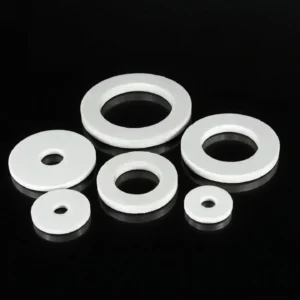
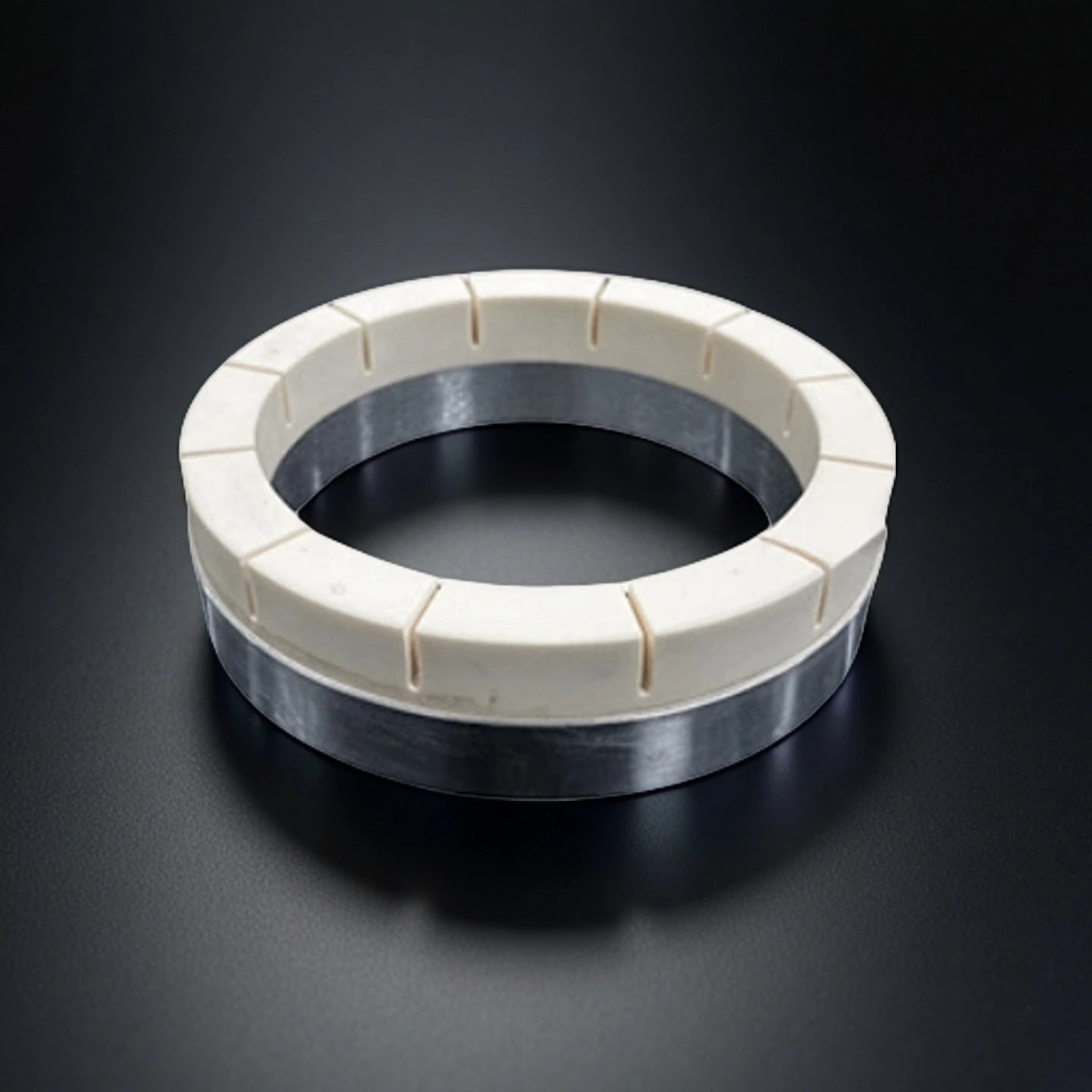
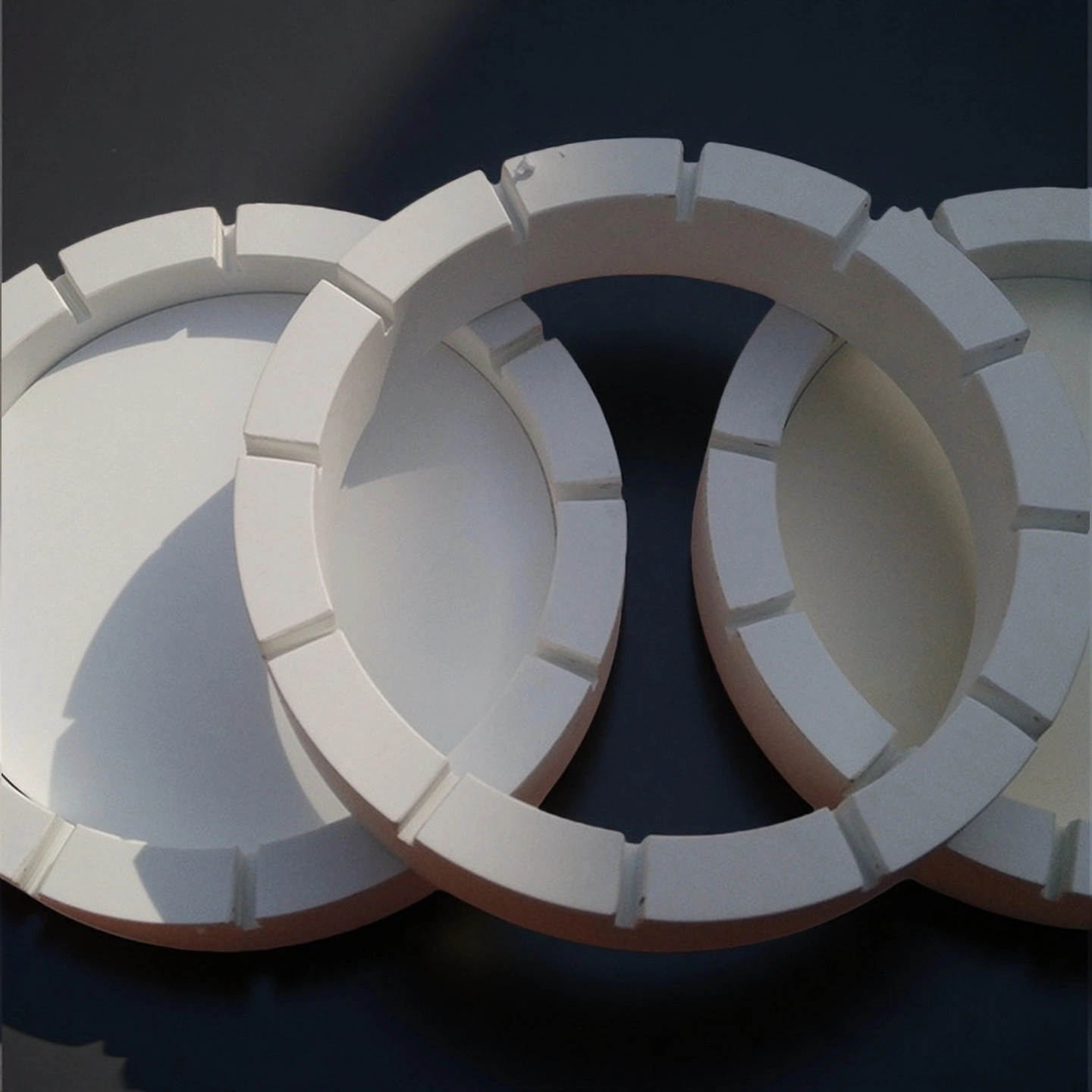
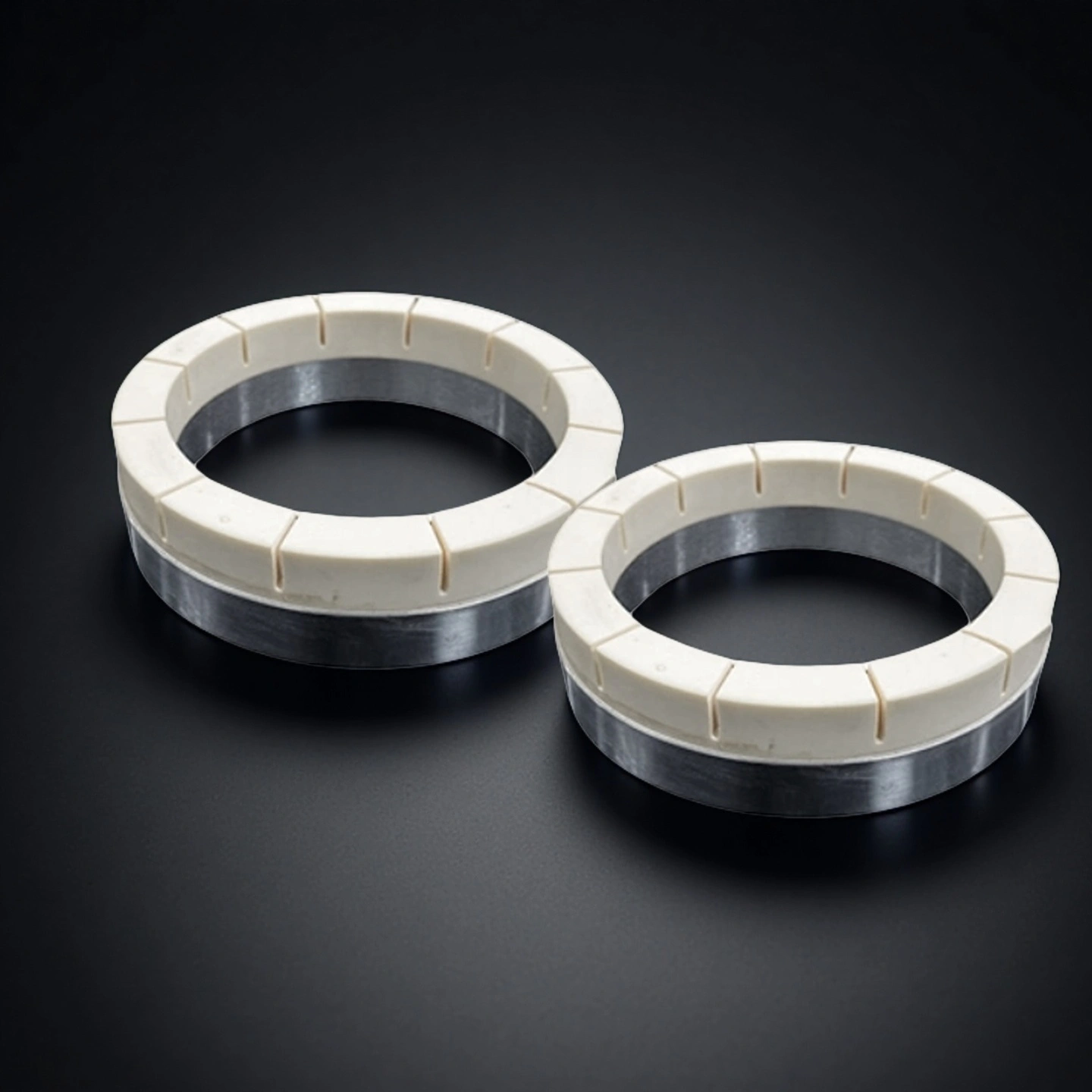
ADCERAX supplies alumina ceramic retaining rings for single-side lapping and polishing machines. Each ring positions and retains workpieces on the lap plate or pad, so parts stay in place while the slurry does the cutting. Rings are supplied from the listed sizes or made to your drawing in 96% to 99.9% alumina.

Catalogue No. AT-YHL-YMH001
Material Al₂O₃
Purity  96%-99.9%
Tolerance (outer/inner diameter) ±0.05 mm (standard)

±0.03 mm (custom)

Dimensions/Sizes Download PDF
Engineering RFQ Review
Small-Batch Custom Support
Drawing-Based Production
Drawing & Process Review

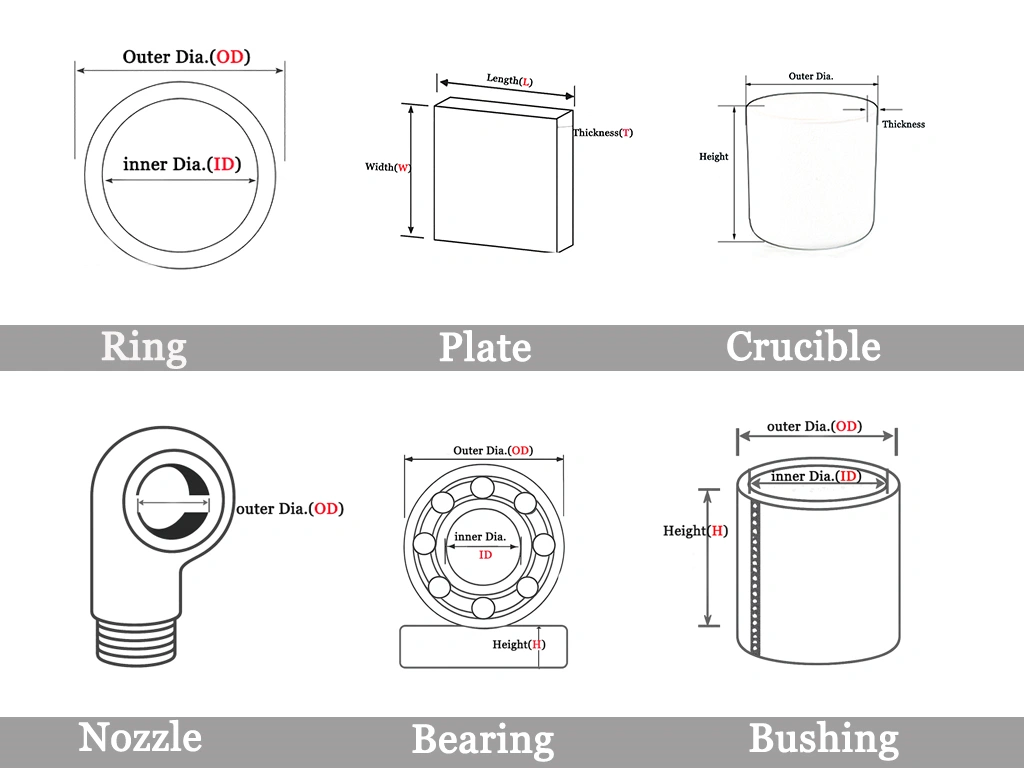
An alumina ceramic retaining ring is a ring made from aluminum oxide (Al₂O₃) that holds workpieces in position on the plate or pad of a single-side lapping or polishing machine. The ring sets where the parts sit, and its inner wall keeps them from moving as the plate turns. Depending on the machine and the job, the same part is also called a lapping ring, a work ring or a conditioning ring.

 Alumina Ceramic Retaining Ring  Properties

Property (typical) 99.9% AD-ALU-999 99.7% AD-ALU-997 99.5% AD-ALU-995 99% AD-ALU-990 96% AD-ALU-960 95% AD-ALU-950
Al₂O₃ content, wt% 99.90 99.70 99.50 99.00 96 95
IEC class C799 C799 C799 C795 C795 C795
Color Ivory Ivory Ivory Ivory White Ivory / white
Density, g/cm³ 3.94 3.94 3.90–3.92 3.80–3.91 3.70 3.75
Water absorption, % ≤0.01 ≤0.05 ≤0.10 ≤0.10 ≈0 (typical) ≤0.20
Flexural strength, MPa 315–340 330 320–350 300–320 300 280
Young's modulus, GPa 359–375 370 365 355 275 340
Fracture toughness Kᵢ꜀, MPa·m½ 3.8–4.2 3.6 3.5 3.3 3.5 3.0
Hardness Mohs 9 Mohs 9 Mohs 9 Mohs 9 HV1 1600 Mohs 9


Specifications of Alumina Ceramic Retaining Ring
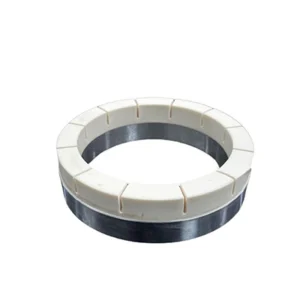
alumina grinding rings

Item Outer Diameter( mm) Inner Diameter(mm) Height(mm) Purity(%)
AT-YHL-YMH001 130 109 40 96-99
AT-YHL-YMH002 143 110 40 96-99
AT-YHL-YMH003 148 120 38 96-99
AT-YHL-YMH004 160 140 43 96-99
AT-YHL-YMH005 170 140 40 96-99
AT-YHL-YMH006 178 140 45 96-99
AT-YHL-YMH007 200 169 45 96-99
AT-YHL-YMH008 205 167 45 96-99
AT-YHL-YMH009 220 182 50 96-99
AT-YHL-YMH010 239 201 45 96-99
AT-YHL-YMH011 273 230 40 96-99
AT-YHL-YMH012 273 241 45 96-99
AT-YHL-YMH013 285 250 55 96-99
AT-YHL-YMH014 290 249 45 96-99
AT-YHL-YMH015 296 251 50 96-99
AT-YHL-YMH016 338 306 40 96-99
AT-YHL-YMH017 340 306 50 96-99
AT-YHL-YMH018 353 315 52 96-99
AT-YHL-YMH019 360 322 60 96-99
AT-YHL-YMH020 380 340 55 96-99
AT-YHL-YMH021 395 362 55 96-99
AT-YHL-YMH022 400 352 60 96-99
AT-YHL-YMH023 420 388 60 96-99
AT-YHL-YMH024 440 388 60 96-99
AT-YHL-YMH025 525 486 60 96-99

Download the Product Catalogue


How to Choose an Alumina Ceramic Retaining Ring

  1. Measure the existing ring
    Provide the OD, ID, height and wall width, plus its seating position: plate, step or carrier. These determine whether a standard AT-YHL-YMH size fits or a custom drawing is needed.
  2. Describe the plate or pad
    Specify its material, diameter and how the ring is driven or held. The contact surface and drive arrangement affect wear.
  3. Check workpiece clearance
    Provide the workpiece diameter, thickness, quantity per batch and clearance to the ring’s inner wall. Allow enough space to prevent edge contact without excessive movement.
  4. Select the alumina grade
    Start with 96% alumina for general lapping and polishing. Review higher-purity grades for stricter purity or thermal requirements, together with the working-face finish.
  5. Define faces and features
    Specify surface finish and flatness for working and load-bearing faces, edge chamfers or radii, and any slurry slots or mounting holes.

Send the ring dimensions first. A drawing, sketch or photos of the existing ring are enough to begin the review.

Alumina vs. Other Retaining Ring Materials

  • Zirconia ceramic
    Choose zirconia when impact and edge chipping are the main concerns. Alumina generally offers greater hardness and stiffness at a lower cost, making it a practical choice for maintaining ring geometry.
  • Silicon carbide
    Consider silicon carbide for demanding abrasive service. For general lapping and polishing, alumina often provides a suitable balance of wear resistance, performance and cost.
  • Stainless steel and aluminum
    Metal rings are easy to machine and tolerate impact, but abrasive slurry can cause wear and release metal particles. Alumina is an alternative where metal contamination is a concern.

Choosing between alumina grades
Start with 96% alumina for general-purpose rings. Consider 99% or higher grades for stricter purity or thermal requirements, and specify the working-face finish and cleaning requirements alongside the grade.

Alumina Ceramic Retaining Ring Packaging

  • Each alumina ceramic retaining ring is individually cleaned and sealed in a dust-free PE bag. Rings are then placed in custom-cut EPE foam inserts within a double-walled corrugated carton to prevent any movement or impact during international transit.
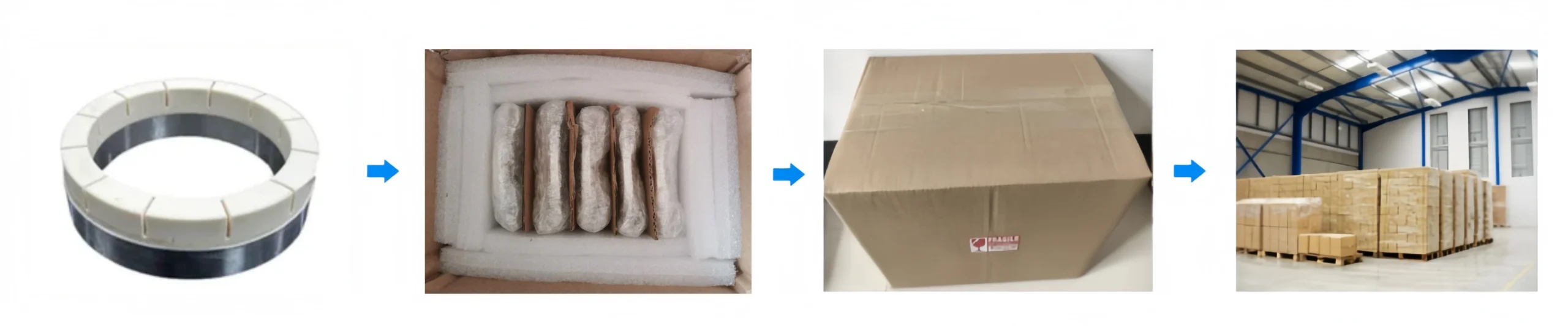
 Alumina Ceramic Retaining Ring Packaging

Applications of Alumina Ceramic Retaining Rings

Alumina retaining rings are used on single-side lapping and polishing machines to hold workpieces in position while the plate or pad and the slurry do the work. The right ring depends on the machine, the plate or pad, the workpiece and the surface you need to reach.

  • Semiconductor Wafers and Substrates

    Used to hold wafers and substrates on single-side lapping and polishing plates. A stable ring diameter keeps the parts in place as the plate turns, which supports even thickness across the part.
    What to check: ring OD/ID against the carrier or plate, working-face flatness, edge condition, cleaning route and the grade you need for the process.

  • Optical Components and Sapphire

    Used when windows, filters and sapphire parts are lapped or polished flat. A ring with a flat, well-finished working face helps hold edge geometry on hard, brittle parts.
    What to check: ring flatness, edge chamfers, the slurry in use, and whether the ring is driven by the plate or the carrier.

  • Flat Honing and Fine Grinding

    Used to retain parts on flat honing and fine grinding machines where a fixed ring keeps the parts from moving out of position under load.
    What to check: the load the ring sees, its wall width, and how the ring is located on the machine.

  • Hard and Brittle Workpieces

    Used for ceramic, glass, quartz and similar parts that chip easily. The ring sets the clearance between the workpiece edge and the ring wall, which is what controls chipping at the part edge.
    What to check: workpiece diameter and quantity, edge clearance, and the chamfer on the ring's inner wall.

  • Chemical Mechanical Polishing (CMP)

    Alumina retaining rings appear in CMP and adjacent planarization setups. These systems are matched to the machine and the carrier head, so the ring is reviewed against the specific head, workpiece and slurry before it is quoted.
    What to check: carrier head model, ring retention method, workpiece and slurry, and the acceptance criteria for the run.

How to Install and Use Alumina Retaining Rings

Follow these steps to get a stable ring diameter and a working face that lasts. Where a step depends on your machine, follow your own process sheet first.

  • Before installation

    1. Inspect: check the working face, the inner and outer edges and the slots for cracks or chips before the ring goes near the machine.
    2. Measure: confirm the OD, ID and height against the ring you are replacing, and note any difference.
    3. Match the seat: check the ring sits correctly on the plate, the step or the carrier, as it was designed to.
    4. Clean the seat: remove slurry residue, burrs and dried abrasive from the plate, carrier and supporting surfaces.
    5. Set the ring down: lower it gently in place with the lifting points or with both hands. Do not hammer, pry or force the ring.

  • During the process

    1. Slurry: keep the slurry distributed across the whole plate, not only at the center, so the ring wears evenly.
    2. Load and speed: run at the pressure and speed in your process sheet; changing either changes how the ring wears.
    3. Temperature: let the ring and the plate reach process temperature together rather than heating or cooling one side quickly.
    4. Watch for: new noise, vibration, a change in how the parts cut, or a ring that starts to move in its seat.

  • Cleaning and storage

    1. Routine cleaning: use a non-abrasive cloth or brush with the rinse medium approved for your process, and complete the drying step before the ring is stored or reused.
    2. Slots and holes: clear the slurry channels each cycle so they do not block up.
    3. Storage: lay the ring flat, protected, in a dry place. Keep rings from touching each other face to face.
    4. Sealed or clean processes: where the ring runs in a clean environment, agree the cleaning and bagging route for the part with us.

  • Checks over the life of the ring

    1. Height and diameter: measure at set intervals so you can see wear before it changes the parts.
    2. Working face: look for uneven wear, grooves and polished bands.
    3. Edges and slots: look for chips at the edges and blocked or rounded slot corners.
    4. Re-lapping: a ring that is worn evenly and is not cracked can be re-lapped. Re-lapping reduces the height, so the new height has to go into your setup.
    5. Replacement: retire a ring that is cracked, chipped at the edges, or worn to the point where it no longer locates the parts.

Alumina Ceramic Retaining Rings FAQ

  1. Q: How do I find an alumina ceramic retaining ring that fits my machine?
    A: Start with the OD and ID of the ring you use now, then compare them with the listed sizes in the specifications table. If nothing in the list matches, send a drawing, a sketch or photos of the old ring with the dimensions you can measure, and we will review a made-to-drawing ring.
  2. Q: Should I use an alumina or a zirconia retaining ring?
    A: Alumina is harder and holds its shape well, and it costs less. Zirconia has higher fracture toughness, so it tolerates impact and edge chipping better. Where rings chip at the edges during handling, zirconia is often the safer choice; where stiffness and flatness over long runs matter most, alumina is usually chosen. The decision usually follows the failure mode you see on the ring you are replacing.
  3. Q: Can you machine slots, holes and steps into a retaining ring?
    A: Yes. Radial slots, through holes, blind holes, steps, grooves and chamfers are machined to your drawing on CNC diamond grinding equipment, including slot width and spacing for slurry flow and edge chamfers to reduce chipping. Their size and position are confirmed on the drawing at quotation.
  4. Q: What is the maximum size you can supply?
    A: The listed range is OD 130–525 mm, ID 109–486 mm and height 38–60 mm, across 25 part numbers. Sizes outside the list are made to drawing; send the dimensions you need and we will confirm feasibility before quoting.
  5. Q: Can a retaining ring be re-lapped or re-surfaced?
    A: If wear is even and the ring is not cracked or chipped, the working face can be re-lapped. Re-lapping reduces the height, so the new height has to go back into your process setup. Rings with edge chipping or cracks are not re-worked, because the defect would carry into the next run.
  6. Q: Can you copy a retaining ring from an old part or a sample?
    A: Yes. Send photos of the old ring with the OD, ID and height you can measure, or send the part itself. We measure it, review the working face, edges and any wear pattern, and come back with a drawing for confirmation before production.
  7. Q: What is the lead time and minimum order quantity for a retaining ring?
    A: Prototypes and first articles typically take 1 to 4 weeks, and repeat orders 2 to 6 weeks, depending on quantity and features. Single pieces are possible for high-value rings; for standard sizes the usual minimum is 3 pieces. Lead time and quantity are confirmed at quotation, not before.
  8. Q: Do you sign an NDA for a custom retaining ring?
    A: Yes. As a supplier working from your drawings, ADCERAX can sign a mutual NDA. We accept your template or provide a standard two-way NDA, so drawings and process details stay confidential.
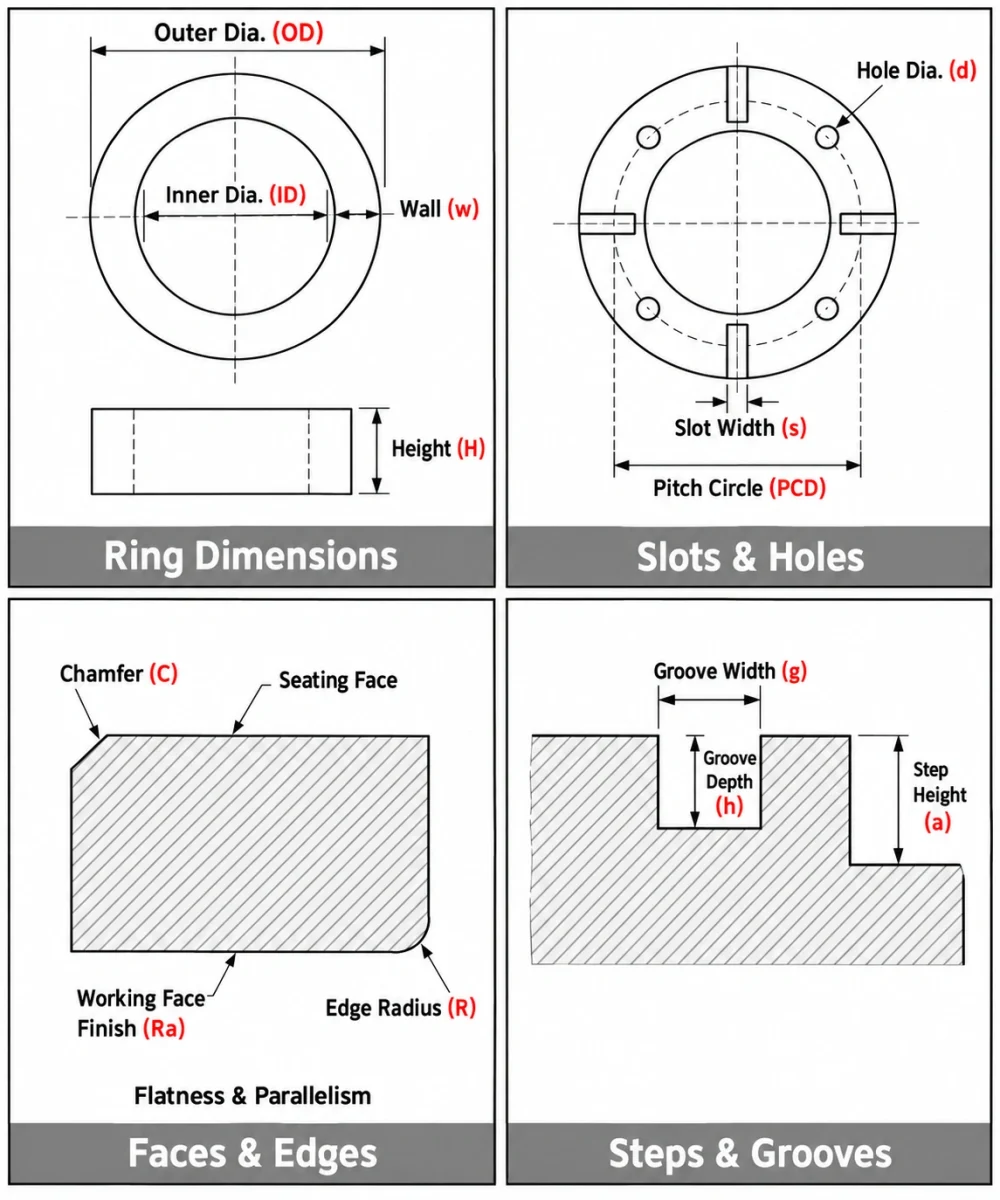
Alumina ceramic retaining ring diagrams showing outer and inner diameters, height, wall width, slots, mounting holes, working faces, chamfers, steps and grooves.

Custom Alumina Ceramic Retaining Rings

If no listed size matches your machine, the ring is made to your drawing, a sketch, an old part or a sample. You can specify:

  • Dimensions: outer diameter, inner diameter, height and wall width, with tolerances set on your drawing.
  • Flatness and parallelism: on the working face and the seating face, where the ring runs against the plate or pad.
  • Roundness, concentricity and runout: between the OD, ID and datum faces, for rings that locate in a carrier or on a step.
  • Slots and holes: radial slots, through holes and blind holes for slurry flow, mounting or alignment, with width, depth and spacing confirmed on the drawing.
  • Steps, grooves and reliefs: shoulders that locate the ring, reliefs that clear a carrier, and grooves that carry slurry.
  • Edges: chamfers, radii and corner breaks at defined locations, plus deburring requirements, to reduce chipping in handling.
  • Surface finish: as-fired, ground, lapped or polished, specified face by face, with an Ra value where the working face matters.
  • Alumina grade: 96%, 99%, 99.5%, 99.7% or 99.9% alumina, or your internal material code.
  • Cleaning and packing: the cleaning route you need and how the ring has to be packed.
  • Inspection and traceability: agreed dimensional checks, material documents and batch labeling.

Tolerances depend on ring diameter, wall width and the features on the part, so they are confirmed on your drawing at quotation. Send the ring you use now, or the dimensions you can measure, and we will come back with a drawing for confirmation before production.

Related Products

ADCERAX - Your Trusted Advanced Ceramics Manufacturing Partner

ADCERAX – Custom Ceramic Supply and Engineering Coordination
ADCERAX coordinates drawing review, production and inspection with manufacturing partners against agreed specifications.

China-Based Ceramic Supply Partner

ADCERAX coordinates custom ceramic supply for overseas OEMs, equipment builders, and labs.

Custom Drawing Support

We review drawings, dimensions, materials, and application conditions before quotation.

Ceramic Process Control

Forming, sintering, machining, grinding, and finishing are arranged by part requirements.

Pre-Shipment Inspection

Dimensional checks, visual inspection, and packaging review help reduce procurement risk.

Get in Touch with Us

Our team will be happy to respond to you in less than 24 hours.

Adcerax's factory

Quick Quotation

*Our team will review your inquiry and respond with the next steps.

*Your information will be kept strictly confidential.

Ready to Solve Your Engineering Challenge?

Partner with ADCERAX for reliable, high-performance advanced ceramic solutions. Our engineers are ready to discuss your project.

E-mail

info@adcerax.com

Phone

Tel: +86-0731-84428843 WhatsApp: +86 19311583352

Response Time

Within 24 hours

Quick Quote

The more details you provide, the faster we can quote.

*All inquiries are confidential.

Get Your Custom Solution

The more details you provide, the faster we can respond.

customize size

*We respond within 24 hours. All inquiries are confidential.

Download Catalog