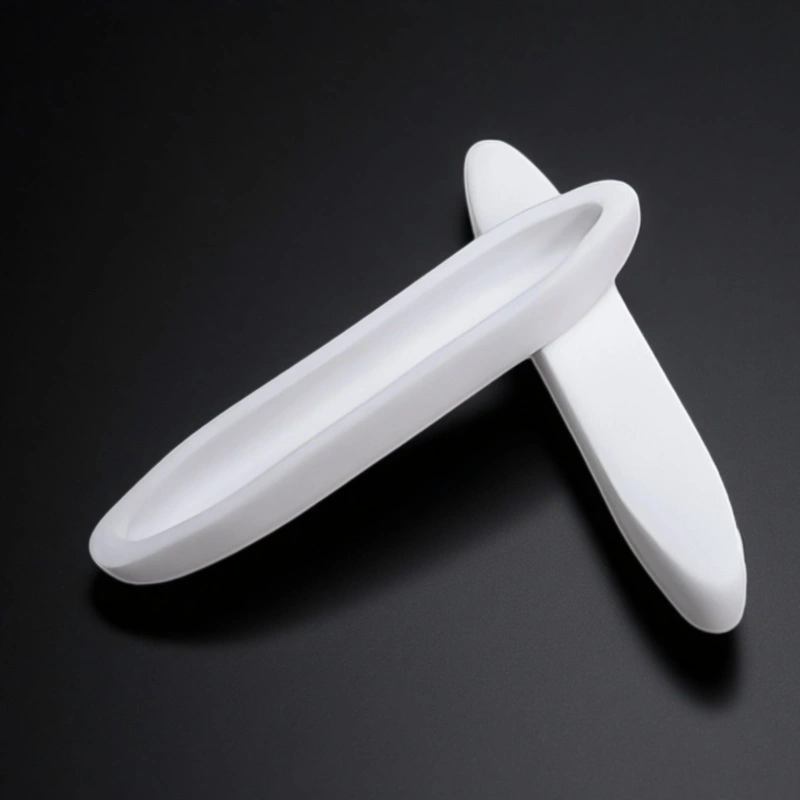
Alumina Combustion Boats — Match Your Analyzer, or Send a Drawing

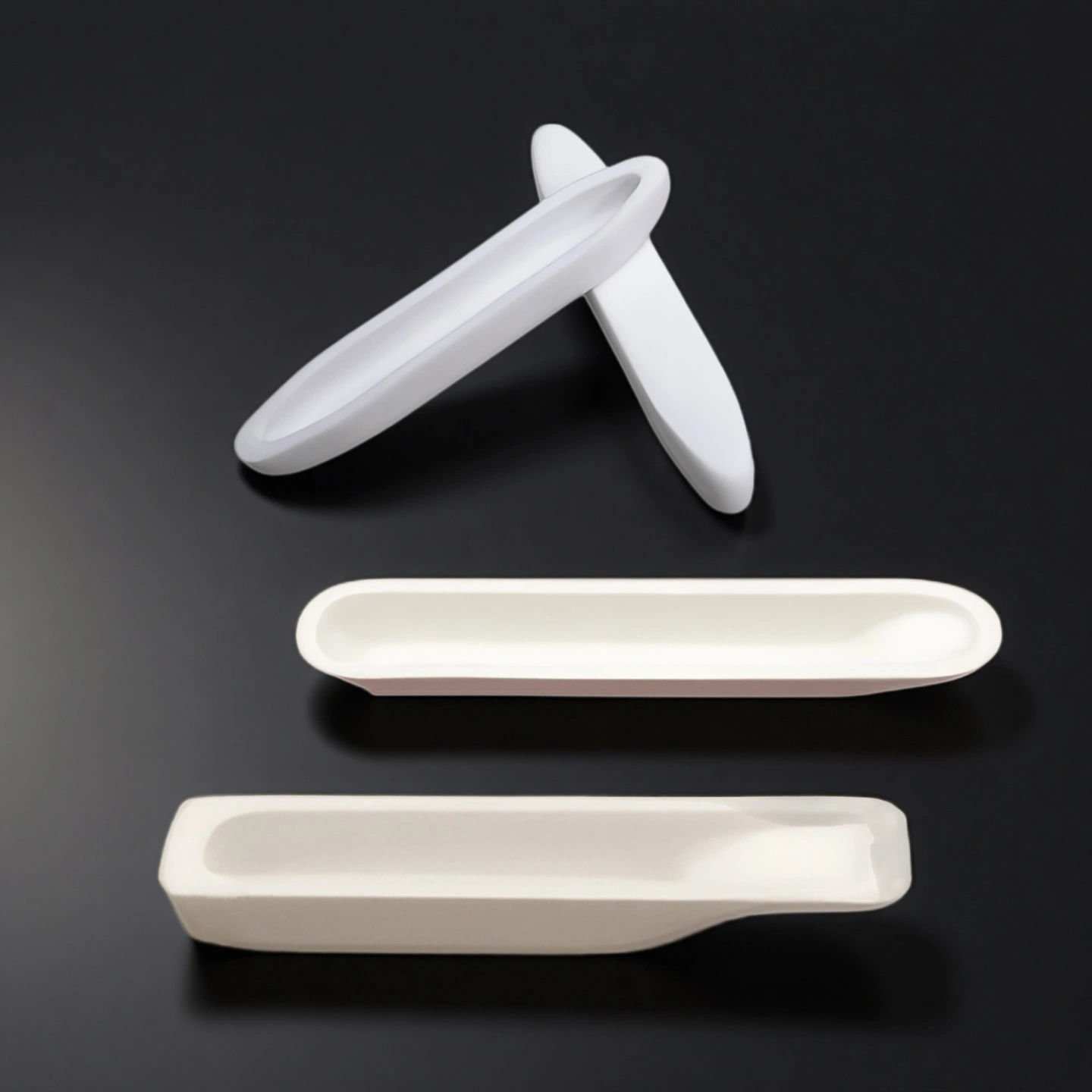
Alumina combustion boats hold samples during furnace loading and heating. Their solid-base, open-top cavities suit methods that need a defined sample holder, with geometry selected around the sample load and equipment path.

Catalog No. AT-AF-001
Material ≥ 96% Al2O3
Working Temperature Up to 1700°C (99.7% purity)
Application Horizontal resistance-furnace elemental analysis and tube-furnace heating
Boat configurations Compact narrow, curved and covered designs
Dimensions/Sizes Download PDF
Engineering RFQ Review
Small-Batch Custom Support
Drawing-Based Production
Drawing & Process Review

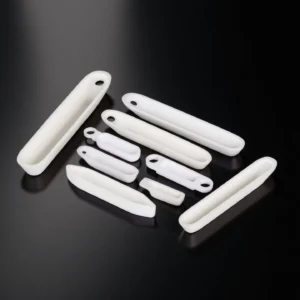
An alumina combustion boat is an open-top ceramic sample holder with a solid, non-perforated base. This page covers curved and narrow boat geometries and boat-shaped crucibles. Choose a boat by its usable cavity, loading clearance and material requirements. For a different geometry, explore alumina combustion boats with holes or compare the wider alumina boat range.

Alumina Combustion Boat Specifications

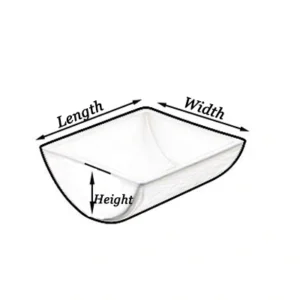
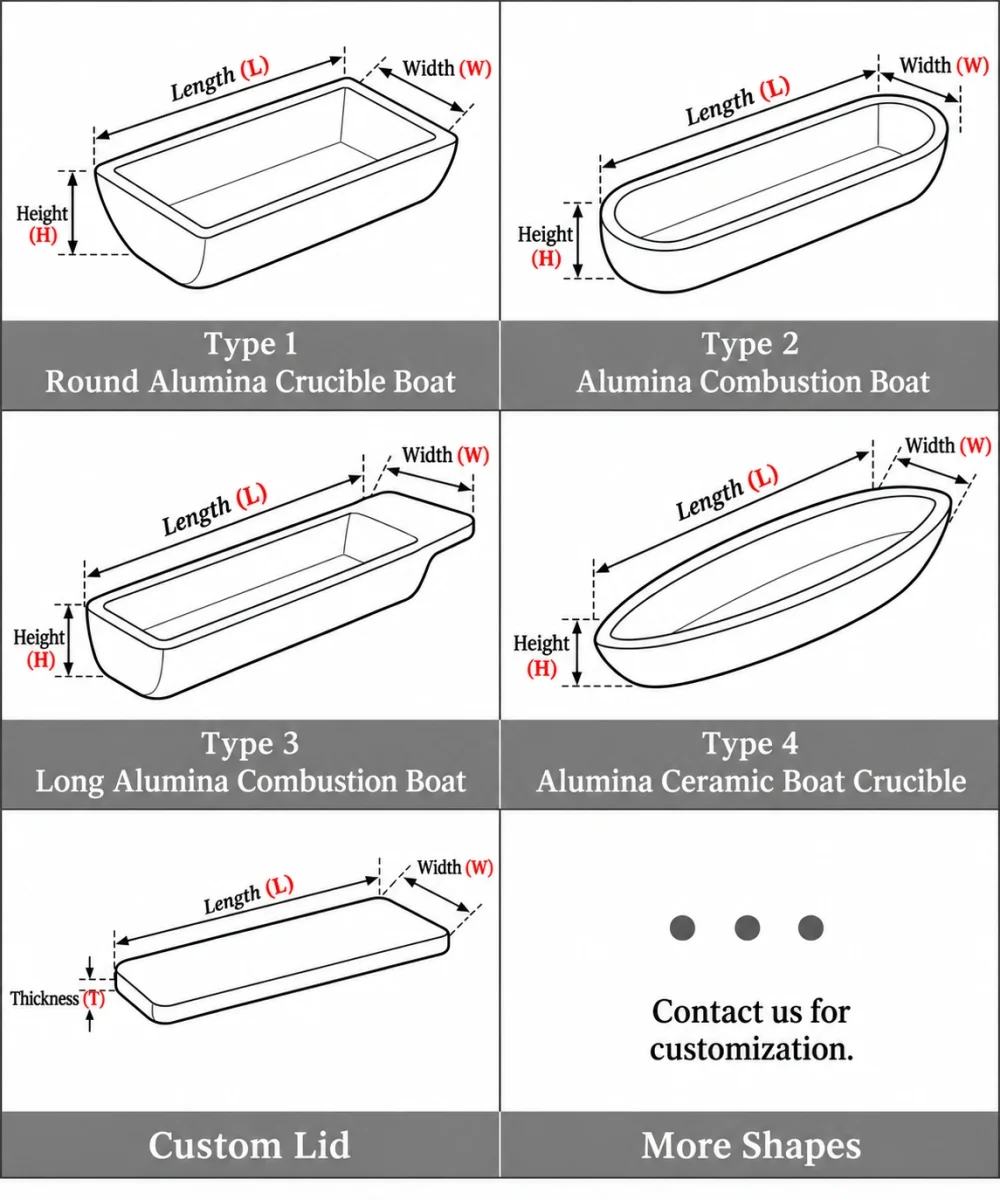
Dimensions below are external L × W × H in millimeters. Use the paired model dimensions to shortlist a boat; usable cavity and loading clearance complete the fit check.

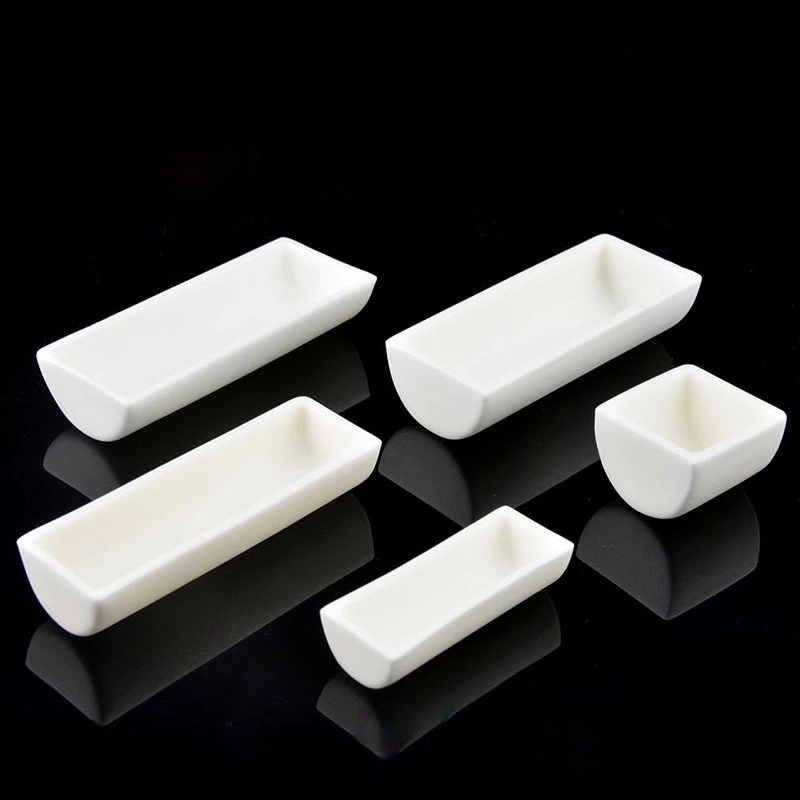
Type 1 — Round Alumina Crucible Boat
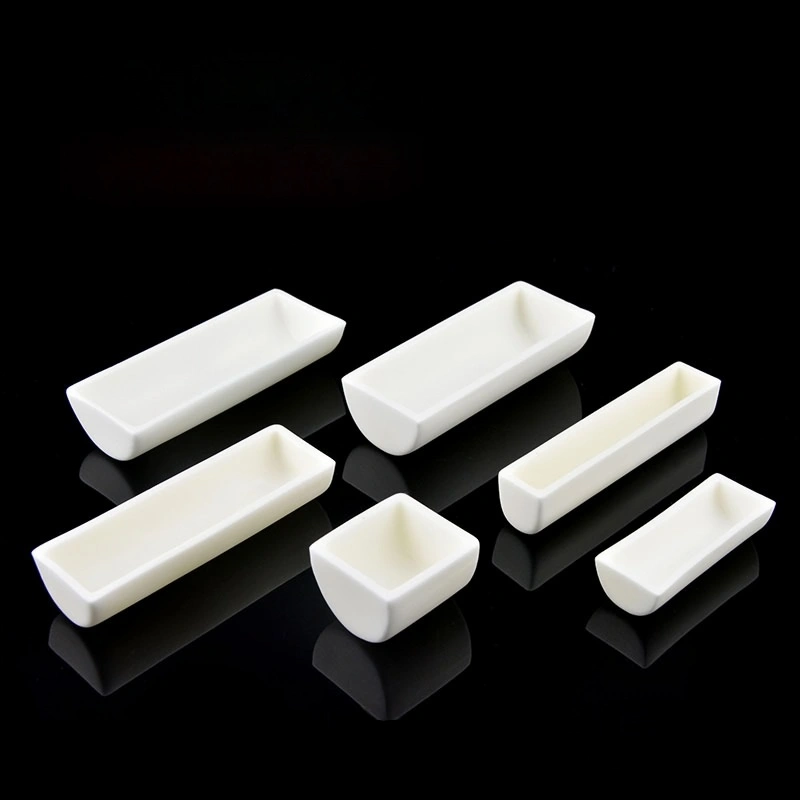
Semi-circle alumina crucible boats with lids

Item NO. Length (mm) Width (mm) Height (mm) Remark
TE-AS-086-1 150 40 20 /
TE-AS-087 100 65 30 /
TE-AS-089 100 40 25 /
TE-AS-093 100 20 15 /
TE-AS-093-1 100 20 20 /
TE-AS-093-4 100 30 20 /
TE-AS-093-5 100 40 20 /
TE-AS-094 60 54 24 /
TE-AS-095 65 25 16 /
TE-AS-096 55 35 22 /
TE-AS-097 40 35 25 /
TE-AS-098 40 25 17 /
TE-AS-099 38 34 18 /
TE-AS-099-1 50 40 20 /
TE-AS-099-12 60 30 15 with cover
TE-AS-099-13 160 75 40 /
TE-AS-099-14 103 55 30 /
TE-AS-099-2 80 40 17 /
TE-AS-099-3 245 40 20 /
TE-AS-099-4 290 40 22 /
TE-AS-099-8 100 50 30 /
TE-AS-099-9 250 40 18 /
TE-AS-119 100 40 25 with cover
TE-AS-120 100 40 20 with cover
TE-AS-123 100 20 15 with cover
TE-AS-124 60 54 24 with cover
TE-AS-124-2 100 20 20 with cover
TE-AS-124-3 100 30 20 with cover
TE-AS-124-4 100 50 30 with cover


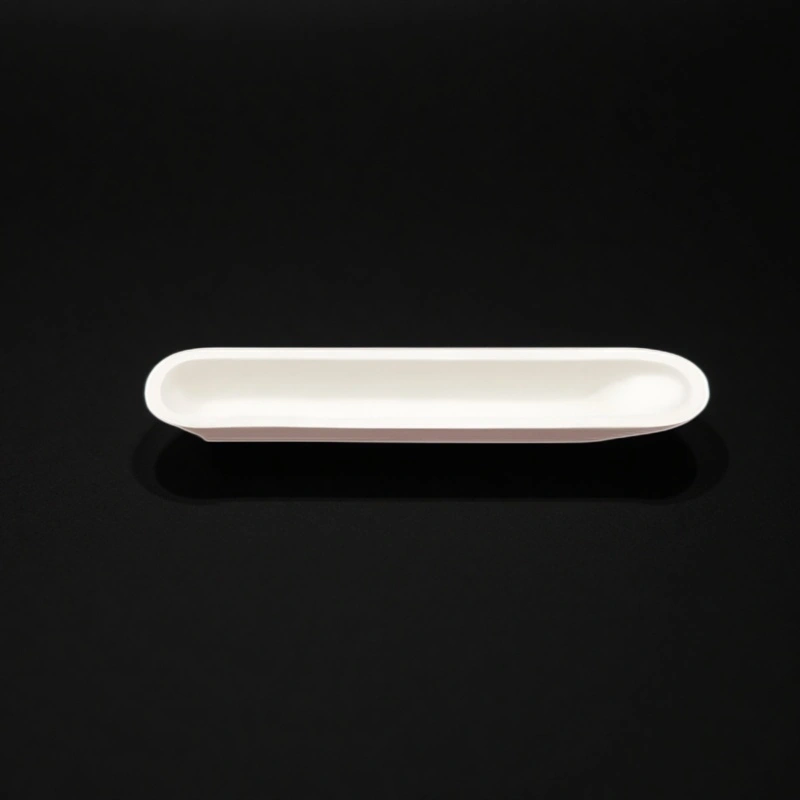
Type 2 — Alumina Combustion Boat

Alumina combustion boat dimensions

Item NO. Length(mm) Width(mm) Height(mm) Purity
TE-AS-082-3 77 13 8 99%
TE-AS-080 88 15 9 99%
TE-AS-079-6 97 17 12 99%
TE-AS-079-3 115 30 20 99%
TE-AS-079-2 100 18 12 99%
TE-AS-079-1 85 15 9 99%
TE-AS-079 43 11 11 99%


Type 3 — Long Alumina Combustion Boat

Long alumina combustion boat dimensions

Item NO. Length(mm) Width(mm) Height(mm) Purity
TE-AS-085-1 27 7 6 99%
TE-AS-078-1 40 9 9 99%


Type 4 — Alumina Ceramic Boat Crucible
Alumina ceramic boat crucible dimensions

Item NO. Length(mm) Width(mm) Height(mm) Purity
TE-AS-078-2 60 11 8 99%

Note: The tables show selected standard specifications. For additional sizes, please consult the complete product catalogue or contact ADCERAX for an engineering review.

Download Size Guide

Alumina Grades for Boat Selection

Compare the material references below against your sample and flux chemistry, analytical requirements and thermal cycle.

Material grade Nominal Al₂O₃ (wt%) Typical density (g/cm³) Material service-temperature guide (°C)
AD-ALU-999 99.90 3.94 1750
AD-ALU-997 99.70 3.94 1700
AD-ALU-995 99.50 3.90–3.92 1650
AD-ALU-990 99.00 3.80–3.91 1600
AD-ALU-960 96 3.70 1600 maximum in air
AD-ALU-950 95 3.75 1400

Values describe the alumina material grade, not a rating for every boat size or method. Establish the finished boat's operating conditions and analytical acceptance for the selected geometry, atmosphere, load and heating cycle. 

How to Choose an Alumina Combustion Boat

External size and clearance

Compare external L × W × H first, then check clearance in the furnace tube and around the push rod, supports and handling tools. Put critical tolerances on the drawing.

Open or covered

Eight Type 1 sizes are listed with cover. For a covered boat, agree the lid geometry, fit and any vent detail on the drawing.

Usable cavity and sample loading

For a shortlisted size, confirm inner length and depth, wall and base thickness, end shape and lip, so the sample and any flux sit at the right depth.

Material and test method together

Match the alumina grade to the sample and flux chemistry, atmosphere and thermal cycle. For carbon and sulfur analysis, state the target elements and the analytical blank you need to meet.


Alumina vs. Porcelain vs. Quartz Combustion Boats

Three boat materials cover most laboratory combustion work. Use the typical references below to narrow the choice, then confirm the candidate against your temperature, sample chemistry and thermal cycle.

Selection point Alumina (this page) Porcelain (glazed) Fused quartz
Material temperature guide 1400–1750 °C by grade — see the table above Typically around 1050 °C Typically around 1050 °C continuous
Thermal-shock behavior Moderate; use a controlled insertion and cooling routine Moderate; glaze can craze with repeated cycling Excellent; tolerates fast insertion and removal
Chemical behavior Stable with many samples and fluxes; review aggressive fluxes by grade Glaze may react with fluxes at higher temperatures Can devitrify in contact with alkalis at high temperature
Common choice for Carbon/sulfur analysis, ashing and burn-off above the porcelain range; boats that must survive repeated handling Lower-temperature ashing and routine lab work Fast-cycle work within its temperature range


Why Alumina Combustion Boats Crack — and How to Prevent It

Most field failures trace to one of four patterns. Checking these before changing the boat design or material avoids replacing the wrong variable.

Failure pattern Typical cause What to check
Thermal-shock crack Fast insertion or withdrawal; a hot boat set on a cold or wet surface Insertion speed and position, cooling station, furnace entry temperature
Chip or crack at the rim or ends Impact during loading; tight clearance against the tube, rod or fixture Loading clearance, handling tools, incoming-packaging condition
Sticking, reaction layer or penetration Sample or flux reacting with the boat at temperature Flux chemistry and amount, alumina grade selection, discard criteria
Distortion or uneven wear Overloading or uneven sample placement over repeated cycles Fill height against the cavity, load distribution, reuse and blank-drift limits

If results drift, review the boat, tube, fixture, flux and instrument method together before switching the material. Share the crack location and your operating cycle with an enquiry for a design review.

Alumina Combustion Boat Packaging and Transit Protection

Boats ship with per-piece separation and cushioning. Packaging configuration, labeling and incoming-damage criteria are confirmed with each order.
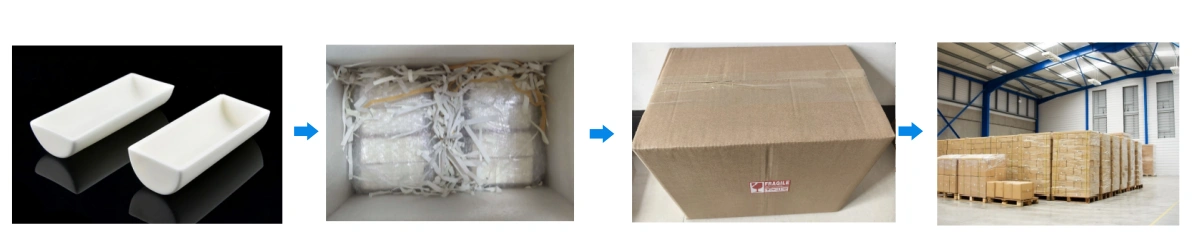
Alumina combustion boat packaging

Alumina Combustion Boat Applications

ADCERAX alumina combustion boats are developed for elemental-analyzer manufacturers, replacement-consumable suppliers, testing laboratories, and industrial QA/QC teams that require consistent ceramic sample carriers for high-temperature combustion processes.

Carbon and sulfur elemental analysis in horizontal resistance furnaces

In suitable carbon/sulfur analysis workflows, the boat carries the sample through a horizontal resistance furnace. Check the instrument, combustion tube and loading method, then validate the sample, flux, analytical blank and handling under your own method.

Consumable distributors, laboratories and service providers

Second-source and private-label supply starts from the original part, drawing and equipment interface. Approve sample fit and method performance before assigning a repeat-order SKU; record packaging, labels and change control.

Laboratory furnace oxidation, ashing and burn-off work

For general furnace work, specify the sample chemistry, loading depth, atmosphere and thermal cycle, and set residue, cleaning and discard criteria for that process. A boat that fits an analyzer is not automatically suited to a general-furnace or standardized ash method.

Alumina Combustion Boat Usage Instructions

  • Before loading: inspect for cracks, chips, distortion and contamination; check dimensions, contact points and loading clearance. Set the sample amount, depth and flux to your validated method.
  • Heating and handling: follow the approved equipment profile and any method-specific preconditioning. A material temperature guide is not an insertion or cooling schedule.
  • Storage and cleaning: protect boats from impact, dust and cross-contamination. Choose the cleaning method against the residue and the analytical blank you must hold.
  • Reject or investigate: set limits for cracks, chips, distortion, adhered residue and blank drift. If results drift, check the boat, tube, fixture, flux and instrument method before reusing the boat.

Reuse is method-dependent. Define acceptance criteria for your own process instead of assuming a universal cycle count.


Alumina Combustion Boat FAQ

  1. Q: Can these combustion boats be used in LECO, ELTRA, or HORIBA analyzers?
    A: Potentially, but compatibility is not confirmed by the analyzer brand alone. The analyzer model, existing part number, boat dimensions, tube clearance, loading fixture, and operating method must be reviewed. Final compatibility should be validated through fit and sample testing.
  2. Q: Which alumina purity should I choose?
    A: ADCERAX can review 95%, 99%, 99.5%, and 99.7% alumina options. The appropriate grade depends on the operating temperature, sample and flux chemistry, atmosphere, blank-background requirement, and service conditions. Higher purity is commonly considered for applications with stricter impurity or background limits.
  3. Q: What is the maximum working temperature?
    A: Typical material references range from approximately 1500 °C for 95% alumina to a maximum-use reference of about 1750 °C for selected 99.5% and 99.7% alumina grades. The permitted operating temperature also depends on the boat geometry, load, atmosphere, heating and cooling rate, and dwell time.
  4. Q: Can an alumina combustion boat be reused?
    A: Reuse depends on the sample, flux, contamination level, cleaning method, thermal cycling, and handling conditions. There is no universal number of reuse cycles. Boats with cracks, chipped rims, surface damage, or unstable blank performance should be replaced.
  5. Q: Why can an alumina combustion boat crack during use?
    A: Common causes include rapid temperature changes, impact during loading, insufficient equipment clearance, uneven sample loading, contact between a hot boat and a cold or wet surface, or an incompatible sample or flux. The crack location and operating cycle should be reviewed before changing the material or boat design.
  6. Q: Can ADCERAX develop a replacement from an old part or photograph?
    A: Yes. ADCERAX can review an existing part number, dimensioned drawing, old-part sample, or clear top, side, and end photographs with a scale. The proposed replacement remains subject to dimensional approval and application testing before it is adopted as a backup or second source.
  7. Q: What dimensions, tolerances, and features can be customized?
    A: Customization can include overall length, width, depth, wall thickness, cavity profile, corner radius, rim and end shape, holes, bevels, surface condition, and lid design. Achievable tolerances depend on the boat size, geometry, forming process, and inspection method and are confirmed through drawing review.
  8. Q: How do I match the cavity to my sample quantity?
    A: Compare the sample and flux volume with the usable inner length, width, depth and intended fill height. Outer dimensions help check equipment fit; the inner profile determines the loading space. Check the intended loading in a candidate sample before fixing the order specification.
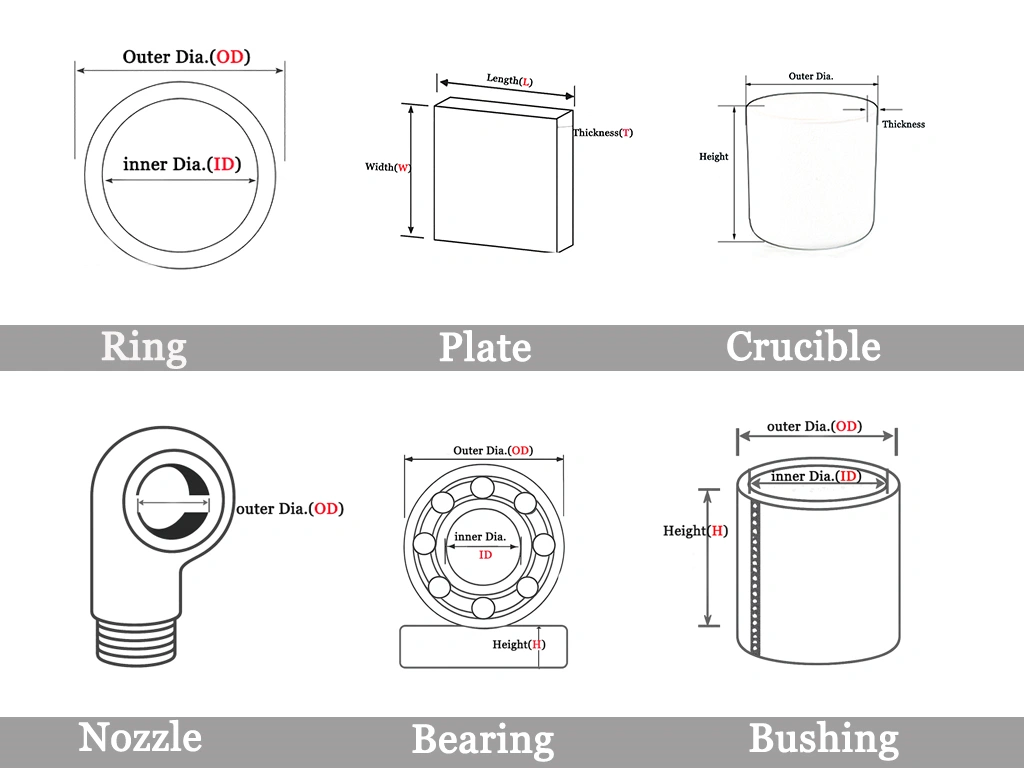
Dimension diagrams of four alumina boat types and a custom lid, showing length, width, height and lid thickness.

Custom Alumina Combustion Boats and Sample-to-Batch Supply

Start from a 2D/3D drawing, a dimensioned sketch or an existing part. Small sample quantities can be reviewed before a batch order, with the geometry, alumina grade and acceptance requirements defined for your project.

Details to put on the drawing

  • External and usable internal dimensions; shallow or deep cavity; wall and base thickness; critical tolerances and datum surfaces.
  • Rectangular, oval or other profile; flat or curved base; sloped or straight ends; corner radius, bevel and lip details — all subject to manufacturability review.
  • Surface and cleanliness requirements, including as-sintered or finished surfaces, with measurable acceptance criteria where critical.
  • Cover geometry and fit, including any recess or vent; a close-fitting lid is not a gas-tight seal.
  • Alumina grade, relevant impurities, sample and flux chemistry, atmosphere, temperature profile, and any blank or reuse criteria.

Quotation request: key inputs

  • Identification: instrument or furnace model, loading method and the original part number if available.
  • Geometry: drawing, dimensioned sketch or old-part photos.
  • Supply: sample and batch quantities, expected annual demand and requested delivery date.

For a perforated geometry, use the alumina boat with hole enquiry route and specify the hole size, location and intended function.

Related Products

ADCERAX - Your Trusted Advanced Ceramics Manufacturing Partner

ADCERAX – Custom Ceramic Supply and Engineering Coordination
ADCERAX coordinates drawing review, production and inspection with manufacturing partners against agreed specifications.

China-Based Ceramic Supply Partner

ADCERAX coordinates custom ceramic supply for overseas OEMs, equipment builders, and labs.

Custom Drawing Support

We review drawings, dimensions, materials, and application conditions before quotation.

Ceramic Process Control

Forming, sintering, machining, grinding, and finishing are arranged by part requirements.

Pre-Shipment Inspection

Dimensional checks, visual inspection, and packaging review help reduce procurement risk.

Get in Touch with Us

Our team will be happy to respond to you in less than 24 hours.

Adcerax's factory

Quick Quotation

*Our team will review your inquiry and respond with the next steps.

*Your information will be kept strictly confidential.

Ready to Solve Your Engineering Challenge?

Partner with ADCERAX for reliable, high-performance advanced ceramic solutions. Our engineers are ready to discuss your project.

E-mail

info@adcerax.com

Phone

Tel: +86-0731-84428843 WhatsApp: +86 19311583352

Response Time

Within 24 hours

Quick Quote

The more details you provide, the faster we can quote.

*All inquiries are confidential.

Get Your Custom Solution

The more details you provide, the faster we can respond.

customize size

*We respond within 24 hours. All inquiries are confidential.

Download Catalog