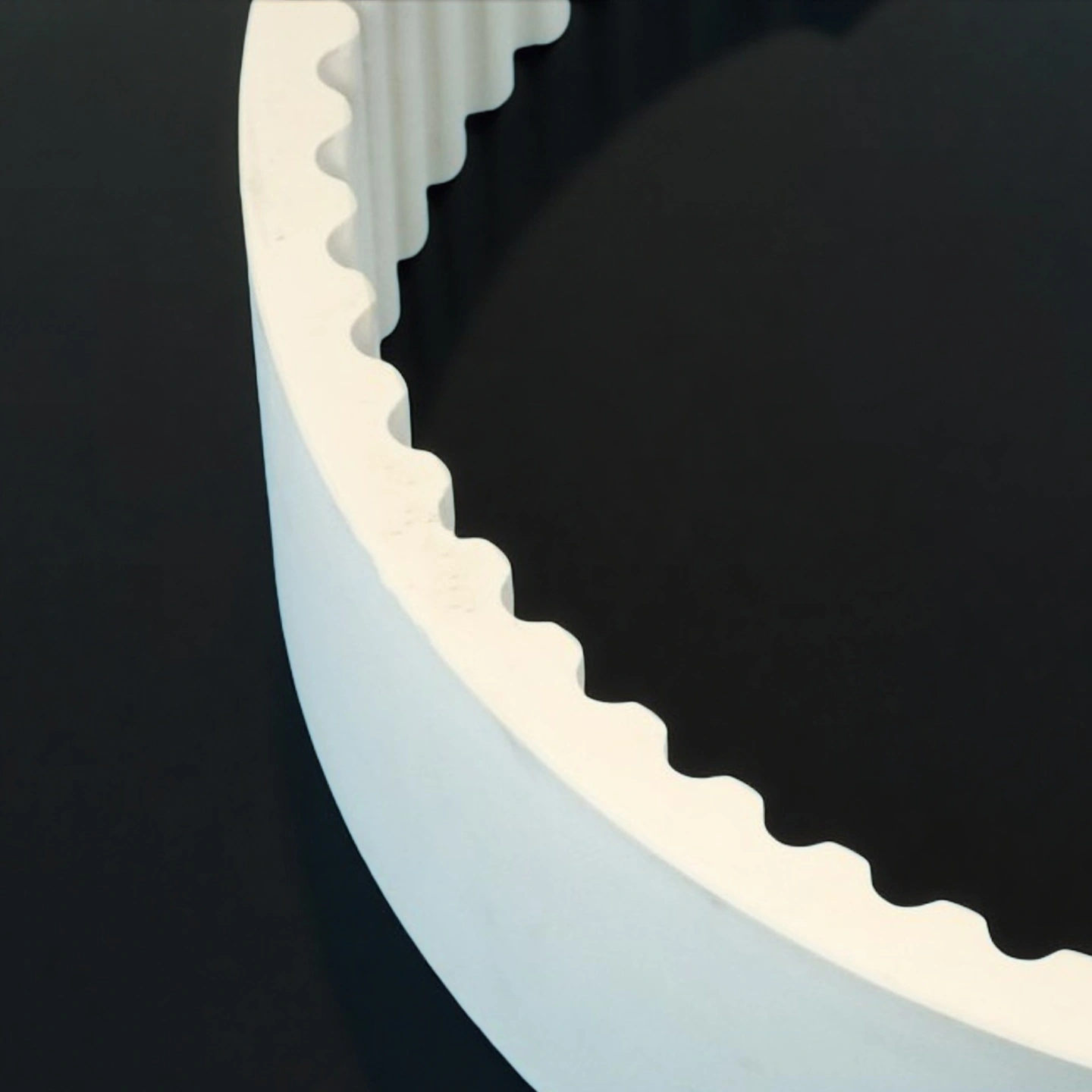
Alumina Internal Ring Gears

ADCERAX supplies alumina internal ring gears for assemblies that call for a hard ceramic contact surface and electrical insulation. Start with the size range below, then match the tooth and mounting geometry to your assembly.

Catalog No. AT-SM-C001
Material 95%-99.7% Al2O3
Drawing-based configuration Tooth profile, gear mesh and mounting features
Ring form Internal teeth for a mating-pinion assembly
Dimensions/Sizes Download PDF
Engineering RFQ Review
Small-Batch Custom Support
Drawing-Based Production
Drawing & Process Review

Alumina Ring Gears — What They Are and Where They Fit

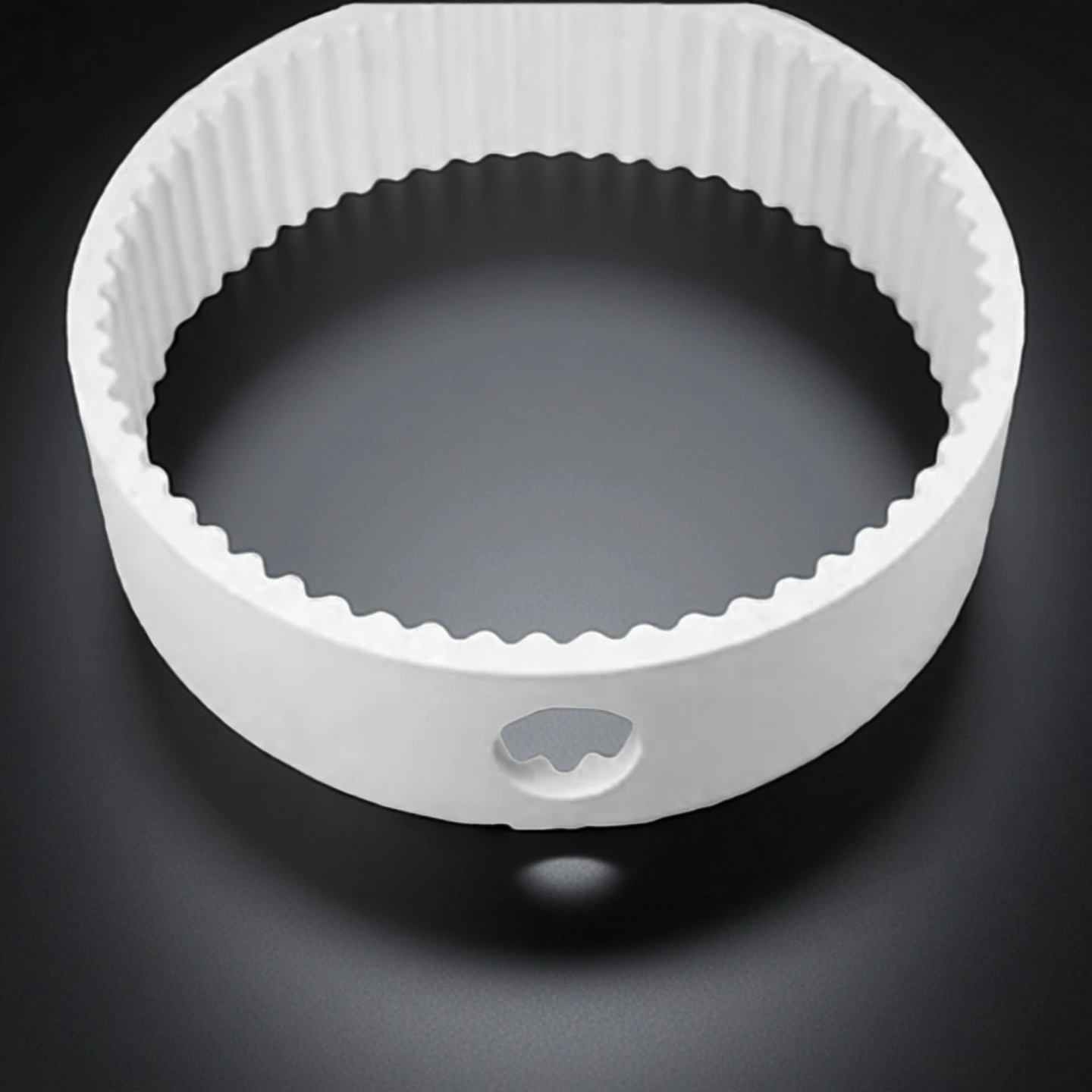
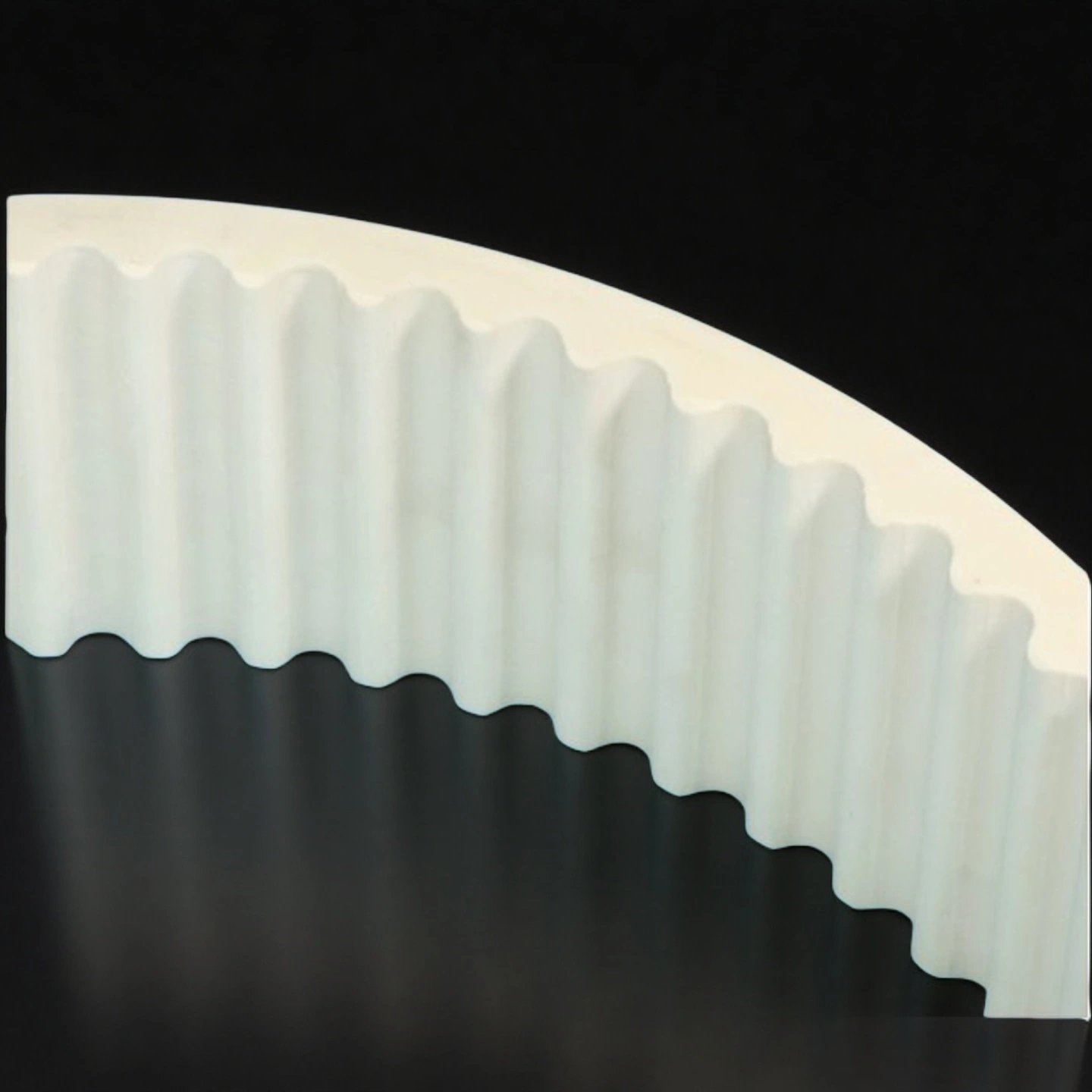
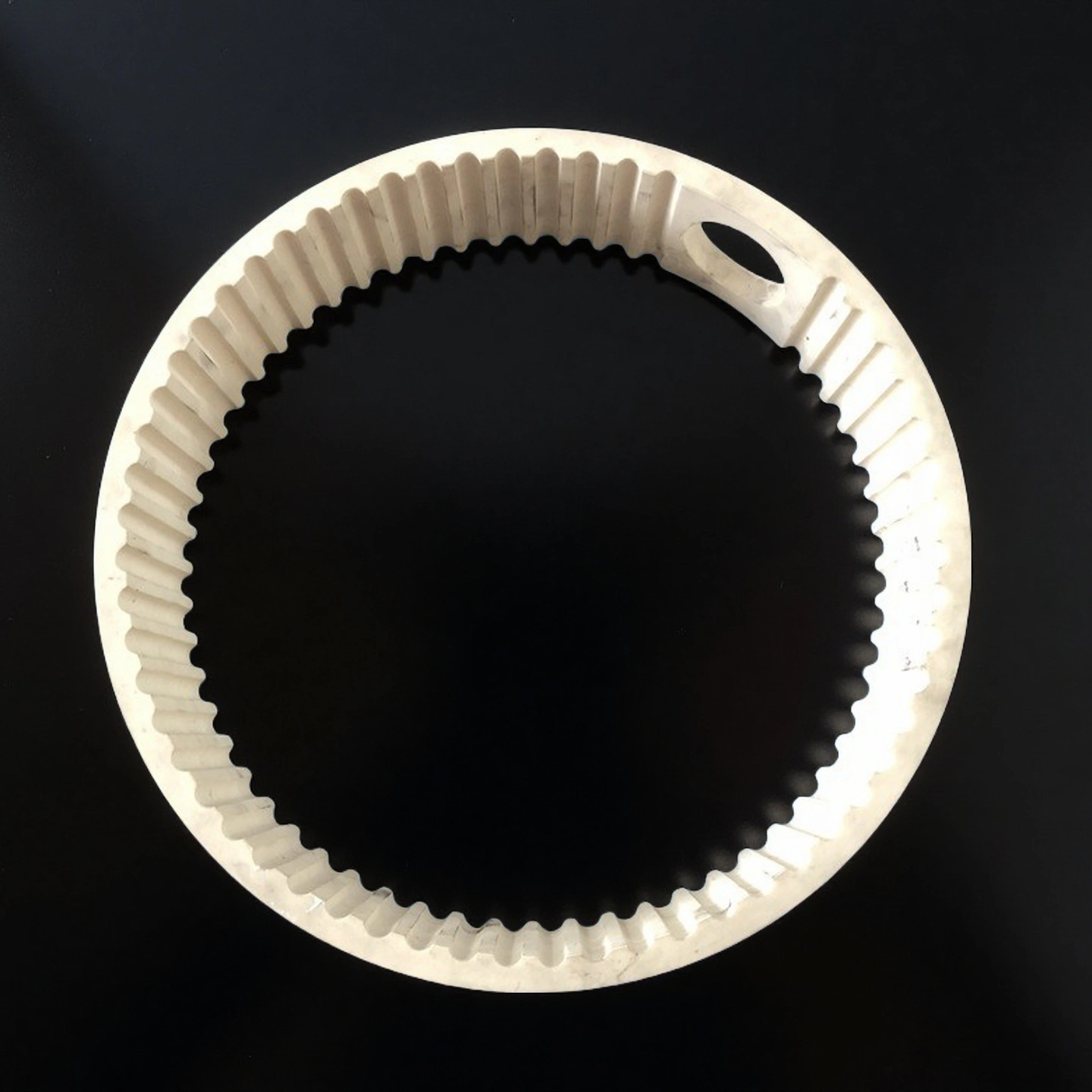
An alumina ring gear is a ceramic gear ring with internal teeth, made from high-purity aluminium oxide. The ring gear transmits torque or indexes motion while providing a hard, wear-resistant contact surface and electrical insulation between the ceramic teeth and adjacent metallic parts.

ADCERAX supplies ring gears for OEM assemblies in dosing pumps, gear-type flow meters, compact actuators and indexing mechanisms where metal gears wear, corrode or create unwanted conductive paths. The ring and mating pinion are selected and specified together, not as a drop-in replacement for an existing gear pair without design review.

Alumina Ring Gear Specifications

Alumina Ring Gear
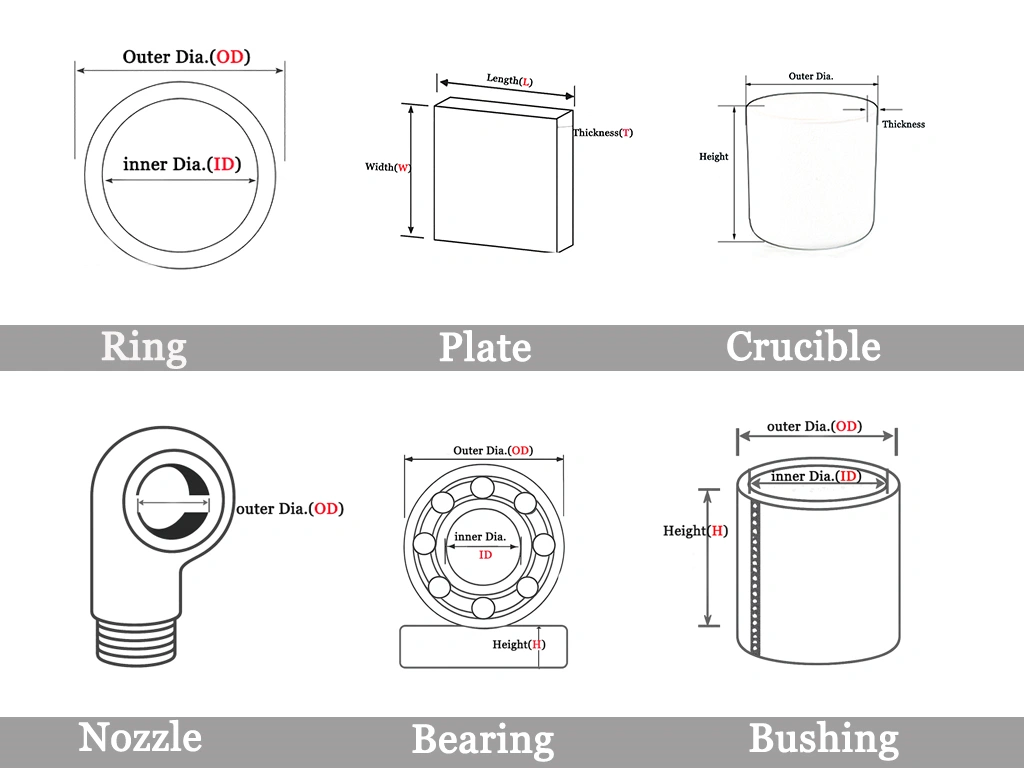
Item No. Outer Diameter(mm) Inner Diameter(mm) Thickness(mm) Height(mm) Number of Gear Purity(%)
AT-SM-C001 360 334 13 65 80 95-99
AT-SM-C002 460 420 20 100 70 95-99
AT-SM-C003 490 440 25 120 80 95-99
AT-SM-C004 500 450 25 120 140 95-99
AT-SM-C005 640 600 20 136 200 95-99
AT-SM-C006 700 650 25 157 220 95-99

Download the Product Catalogue

Alumina Ceramic Ring Gear Properties

Property Unit/condition AD-ALU-950 AD-ALU-960 AD-ALU-990 AD-ALU-995 AD-ALU-997 AD-ALU-999
Al₂O₃ content wt%, nominal 95 96 99.00 99.50 99.70 99.90
IEC 60672-3 class Composition group C795 C795 C795 C799 C799 C799
Bulk density g/cm³, typical 3.75 3.70 3.80–3.91 3.90–3.92 3.94 3.94
Flexural strength MPa, 20 °C 280 300 300–320 320–350 330 315–340
Compressive strength MPa, 20 °C 2000 2000 2400 2400 2500 2558–2900
Fracture toughness, KIC MPa·m½ 3.0 3.5 3.3 3.5 3.6 3.8–4.2
Young's modulus GPa 340 275 (20 °C) 355 365 370 359–375
Hardness See note Mohs 9 1600 HV1 Mohs 9 Mohs 9 Mohs 9 Mohs 9
Mean CTE 10⁻⁶/K, interval 7.6 (25–800 °C) 8.2 (25–1000 °C) 7.2 (25–800 °C) 7.6 (25–800 °C) 7.6 (25–800 °C) 7.6 (25–800 °C)
Thermal conductivity W/(m·K) 18–25 (25 °C) 25 (20 °C) 24 (25 °C) 30–38 (25 °C) 35–40 (25 °C) 35–42 (25 °C)
Volume resistivity Ω·cm, 20 °C >10¹² 10¹⁴ >10¹⁴ >10¹⁴ >10¹⁴ >10¹⁴
Dielectric strength kV/mm, specimen 10 (5 mm) 8.3 (AC, 6.35 mm) 10 (5 mm) 10 (5 mm) 10 (5 mm) 10 (5 mm)
Service temperature guide °C, application-dependent 1400 1600 max in air 1600 1650 1700 1750
Water absorption % ≤0.20 ≈0 ≤0.10 ≤0.10 ≤0.05 ≤0.01

How to Select an Alumina Ring Gear

Work through five steps in order: envelope → tooth system → support → duty → material grade. Each decision helps define the next.

1. Check the available space

The six listed AT-SM-C models span OD 360–700 mm and ID 334–650 mm. Use a listed OD/ID pair as the starting point if it fits your assembly; keep each model’s paired dimensions together.

If no listed pair fits, provide your drawing for a custom review.

2. Match the tooth system to the pinion

Define the module or diametral pitch, tooth count, pressure angle, profile shift and tooth thickness against the mating pinion.

Confirm centre distance, backlash and the required first-article contact pattern. Include the pinion drawing with your enquiry so the gear pair can be reviewed together.

3. Define support and mounting

Specify the bore fit, locating face, datums and runout limits. Provide even circumferential support to avoid concentrating loads on a few teeth.

Include the mounting material and operating temperature range so differential thermal expansion can be reviewed.

4. State the operating duty

Provide torque, speed, starts/stops, reversing cycles, fluid, lubrication and temperature range. These conditions guide both the geometry review and material selection.

5. Choose the alumina grade

All six grades are dense-sintered alumina, but higher purity does not improve every property equally:

  • Strength: 95% alumina is listed at 280 MPa, compared with 320–350 MPa for 99.5% and 315–340 MPa for 99.9%.
  • Toughness: 96% alumina is listed at 3.5 MPa·m½, compared with 3.3 for 99% and 3.8–4.2 for 99.9%.
  • Other priorities: Review thermal expansion, electrical performance and cost against the assembly requirements.

Tell us whether your main concern is tooth chipping, strength, insulation, thermal cycling or cost. Send the ring and pinion drawings with the operating conditions so we can recommend a starting grade for review.

Alumina Compared with Stainless Steel, Polymers and Other Ceramics

  1. Stainless steel
    Suitable for high loads and impact where the fluid is compatible. Consider alumina when steel wear, corrosion or metal contamination limits performance. Ceramic gears require careful control of shock loads and alignment.
  2. Engineering polymers
    PEEK and PVDF can suit lighter loads and moderate temperatures. Alumina offers greater stiffness and dimensional stability where polymer deformation affects tooth clearance or pump performance.
  3. Silicon nitride
    Consider silicon nitride when impact or rapid temperature changes dominate. Alumina remains an option where hardness, insulation and cost are the main priorities.
  4. Silicon carbide
    Consider silicon carbide for demanding abrasive or chemical service. Confirm compatibility with the actual fluid and the feasibility of machining the required tooth geometry.
  5. Zirconia
    Offers higher strength and toughness at moderate temperatures. Alumina may be preferable for hotter, continuous service, subject to the selected grade and operating conditions.

Confirm performance for the complete gear pair

Material choice alone does not establish torque capacity or service life. Review tooth geometry, mounting, the mating pinion and operating duty, then confirm performance through first-article evaluation.


Alumina Ceramic Ring Gear Packaging

  • Each alumina ring gear is individually protected with soft cushioning or blister packaging to avoid chipping of tooth edges during transport.
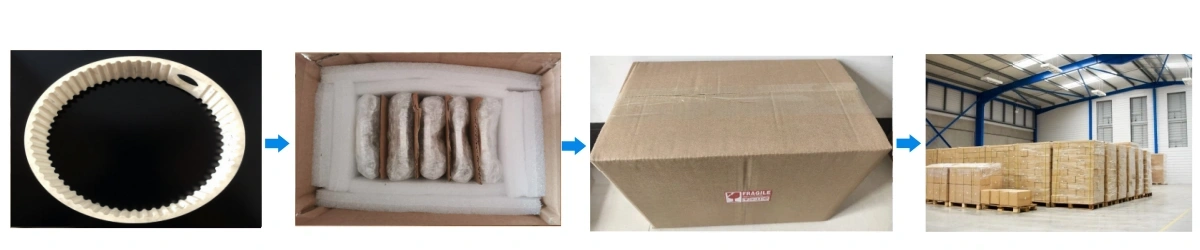
Alumina Ceramic Ring Gear Packaging

Alumina Ring Gears in Pumps, Flow Meters and Actuators

  • Internal Gear Pumps and Dosing Pumps

    In an internal gear pump or a dosing pump, the ring gear and its mating pinion form the displacement element. Alumina is specified when the fluid attacks metal surfaces or when metal ions cannot be tolerated in the process. The ceramic ring holds its tooth geometry in contact with acids, alkalis, solvents and filled media, and it does not gall or cold-weld to a metal pinion the way two stainless components can.

    The material choice for this duty usually starts with the fluid rather than the load. Fluid composition, concentration, temperature and suspended solids decide whether 95–99% alumina is suitable, and how much hardness and chemical resistance the application actually needs. Where the pump runs dry or with marginal lubrication, the tooth-load and speed envelope needs to be reviewed at quotation; alumina tolerates dry running better than most polymers but does not forgive misalignment.

  • Gear-Type Flow Meters and Process Instruments

    In a gear flow meter, the measuring element turns with the flow and the clearance between gear and chamber sets the displacement volume. A worn measuring gear changes that volume, and the meter drifts. Alumina ring gears keep their tooth profile and bore geometry in service, so the displacement volume stays closer to the value established at calibration.

    The second reason instruments use alumina is the electrical path. A ceramic measuring element breaks the conductive route between the wetted mechanism and the electronics in the head, which simplifies isolation design in meters that sit close to drives or in systems where stray currents would otherwise reach the sensor circuit. Alumina is also an option where a non-metallic wetted surface is required and stainless steel contact is restricted.

    For flow meter work, the useful inputs at enquiry are the fluid, the flow range, the differential pressure, the temperature and the particle content. The gear geometry and the chamber clearance are then defined together, because the meter's accuracy depends on the pair, not on the ring alone.

  • Compact Actuators and Indexing Mechanisms

    In compact actuators, motor-driven valves and indexing mechanisms, an alumina ring gear can carry torque and motion in one part while providing electrical isolation between the drive and the load. That removes the separate insulating element that a metal gear train needs, which shortens the stack and simplifies the housing design.

    The design question in this duty is usually thermal. Alumina keeps its shape and stiffness over a wide temperature range, so tooth engagement stays consistent through thermal cycling, but the ceramic ring and its metal hub expand at different rates. The mean thermal expansion figures in the grade table are the input for that fit calculation, and the working temperature range has to be known before a bore fit can be fixed.

    For actuator work, send the torque, speed, duty cycle, start-stop or reversing pattern, the operating temperature range and the mounting interface. Where the drive runs at high speed, the runout and balance of the ring also matter and should be defined on the drawing.

Ring gear life in any of these duties depends on the gear pair and the operating conditions as much as on the material. Send the mating pinion drawing or the existing gear set details with the enquiry so the mesh can be reviewed before the ring geometry is finalised.


Alumina Ceramic Ring Gear Usage Instructions

Follow the approved drawing and assembly procedure. Fit, load and temperature limits must be defined for the specific gear pair.

  • Installation

    1. Check alignment, bore cleanliness and the locating face before assembly.
    2. Support the ring evenly. Never hammer the ceramic or apply force through the teeth.
    3. Use thermal-assisted fitting only under an approved procedure. Avoid open flames and sudden temperature changes.
    4. Stop if assembly force rises sharply. Check the fit and alignment, then verify runout and seating after mounting.

  • Operation

    1. Stay within the agreed torque, speed, shock-load and temperature limits.
    2. Use a lubricant compatible with the process and mating pinion. Review dry-running, start-stop and reversing duty before commissioning.
    3. Begin at reduced load and monitor temperature, noise and vibration. Control heating and cooling rates.

  • Storage and Handling

    1. Keep rings clean and dry in protective packaging or separate padded compartments.
    2. Do not stack bare rings or rest hard objects on tooth edges. Unpack only when ready to install.

  • Cleaning and Inspection

    1. Use approved, compatible cleaners. Avoid hydrofluoric acid and strong hot caustic solutions.
    2. For insulating applications, remove cleaning residues, dry fully and handle with clean gloves.
    3. Inspect tooth edges, roots, holes and slots for chips or cracks against the agreed acceptance criteria.
    4. Record critical dimensions, runout and backlash as a baseline. Compare these during maintenance to identify wear.

  • Replacement and Rework

    1. Have bore grinding or other modifications reviewed by a qualified ceramic machining supplier.
    2. Assess the complete gear pair before replacing a worn metal ring with ceramic. Check the pinion, mounting fit, lubrication and contact pattern together.

Alumina Ring Gear – Frequently Asked Questions

  1. Q: Where is alumina ring gear typically used?
    A: An alumina ring gear is a gear ring made from aluminum oxide ceramic that transmits torque or indexes motion in pumps, flow meters, actuators and compact automation equipment where wear resistance, electrical insulation and temperature stability are required.
  2. Q: How does an alumina ring gear compare with a stainless steel gear ring in wear performance?
    A: Due to its higher hardness and chemical resistance, an alumina ring gear can offer a significantly lower wear rate than many stainless steels in abrasive or corrosive fluids, which can extend service life and reduce maintenance intervals.
  3. Q: Can alumina ring gears be used in high-temperature mechanisms?
    A: Many alumina grades remain mechanically stable up to around 1500 °C in air, so an alumina ring gear can be used near elevated temperature zones as long as the design accounts for thermal expansion and load.
  4. Q: Are alumina ring gears suitable for food or pharmaceutical dosing pumps?
    A: Alumina is an inert ceramic and is widely used as a technical material; its suitability for regulated food or pharmaceutical systems depends on the specific equipment certification and process requirements. The alumina ring gear can support low wear and cleanability, but final compliance must be assessed at system level.
  5. Q: What tolerances are typical for the bore and runout of an alumina ring gear?
    A: For many OEM applications, bore tolerances in the H7 range and controlled runout and concentricity consistent with the module and speed are feasible, provided the design and inspection requirements are defined at the quotation stage.
  6. Q: Can I specify a helical alumina ring gear instead of a spur gear?
    A: Yes, helical alumina ring gears are possible if the tooth geometry, helix angle and load conditions are appropriate and the manufacturing process is matched to the required accuracy.
  7. Q: How should a worn metal gear set be upgraded?
    A: Evaluate the complete mating gear set, fits and lubrication. Depending on that evaluation, replace both mating components or re-qualify the contact pattern so that the ceramic ring works with the assessed gear pair.
  8. Q: How should bore rework be planned?
    A: Define the final bore tolerance and machining features before manufacture. Later rework is carried out by a specialist ceramic machinist using suitable diamond tools and machining conditions for the part.
  9. Q: What needs to be assessed for food or pharmaceutical equipment?
    A: Evaluate the selected material, process-fluid contact, cleaning procedure and surface requirements together with the equipment’s documentation and acceptance criteria. Agree the component documentation required for the intended system.
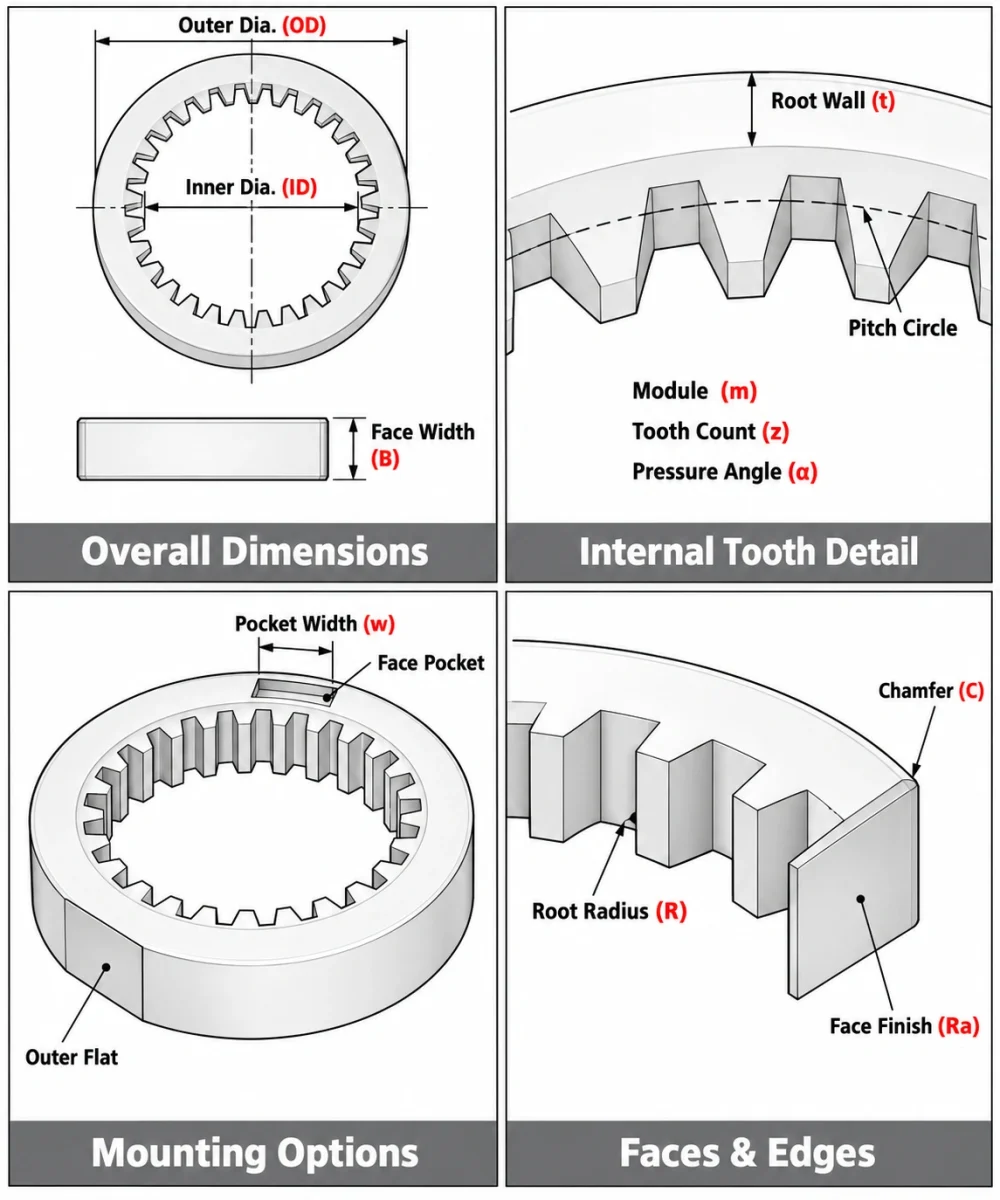
Alumina internal ring gear diagrams showing outer and inner diameters, face width, tooth parameters, mounting options, chamfers and surface finish.

Custom Alumina Ring Gears — Define the Geometry and Grade

ADCERAX supplies ring gears to agreed drawings. Include these six items in your enquiry:

  1. Gear geometry
    Specify OD, ID, face width, tooth count, module or pitch, pressure angle and tooth form. Include helix details where applicable and the mating pinion drawing.
  2. Tolerances and fits
    Define bore fit, runout, face flatness, parallelism and datums. State any required gear accuracy standard and measurement method.
  3. Bore and hub features
    Identify keyways, flats, splines, pockets and reliefs. Confirm material thickness near tooth roots and the mating hub material.
  4. Material grade
    Select AD-ALU-950, 960, 990, 995, 997 or 999, or describe your performance priorities. Special formulations are reviewed separately.
  5. Surface condition
    Mark as-fired, ground or lapped areas. Specify critical roughness values and inspection criteria for tooth edges, roots, holes and slots.
  6. Acceptance and traceability
    Agree identification, material records, first-article checks, sampling and protective packaging. Confirm the drawing revision and change-control requirements.

Record critical requirements and acceptance methods on the drawing before production.

Related Products

ADCERAX - Your Trusted Advanced Ceramics Manufacturing Partner

ADCERAX – Custom Ceramic Supply and Engineering Coordination
ADCERAX coordinates drawing review, production and inspection with manufacturing partners against agreed specifications.

China-Based Ceramic Supply Partner

ADCERAX coordinates custom ceramic supply for overseas OEMs, equipment builders, and labs.

Custom Drawing Support

We review drawings, dimensions, materials, and application conditions before quotation.

Ceramic Process Control

Forming, sintering, machining, grinding, and finishing are arranged by part requirements.

Pre-Shipment Inspection

Dimensional checks, visual inspection, and packaging review help reduce procurement risk.

Get in Touch with Us

Our team will be happy to respond to you in less than 24 hours.

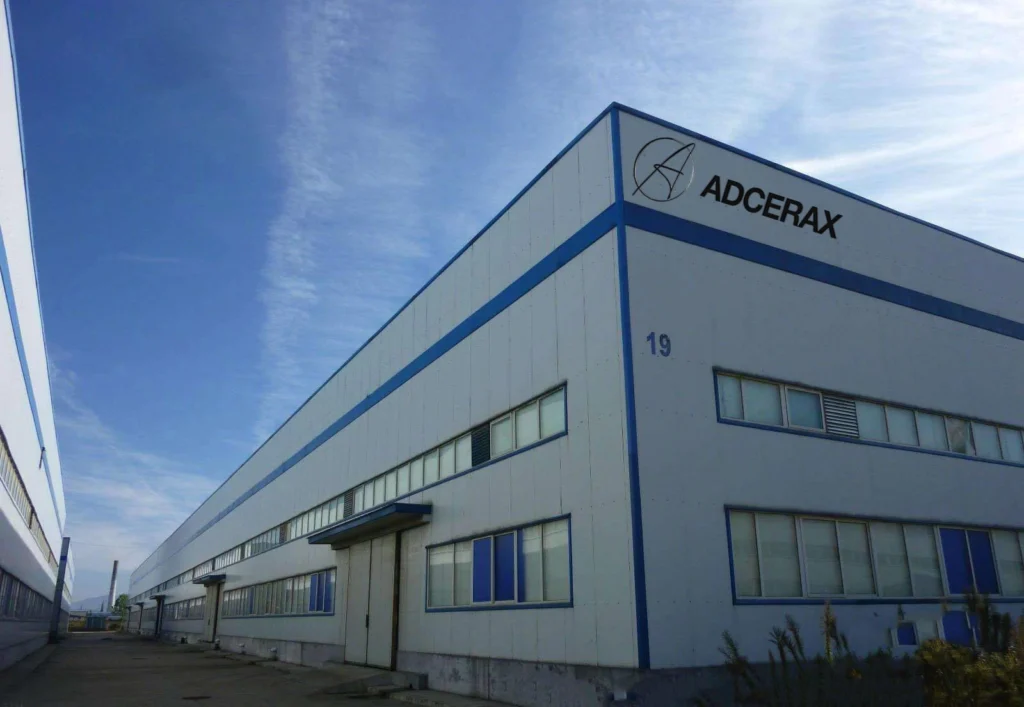
Adcerax's factory

Quick Quotation

*Our team will review your inquiry and respond with the next steps.

*Your information will be kept strictly confidential.

Ready to Solve Your Engineering Challenge?

Partner with ADCERAX for reliable, high-performance advanced ceramic solutions. Our engineers are ready to discuss your project.

E-mail

info@adcerax.com

Phone

Tel: +86-0731-84428843 WhatsApp: +86 19311583352

Response Time

Within 24 hours

Quick Quote

The more details you provide, the faster we can quote.

*All inquiries are confidential.

Get Your Custom Solution

The more details you provide, the faster we can respond.

customize size

*We respond within 24 hours. All inquiries are confidential.

Download Catalog