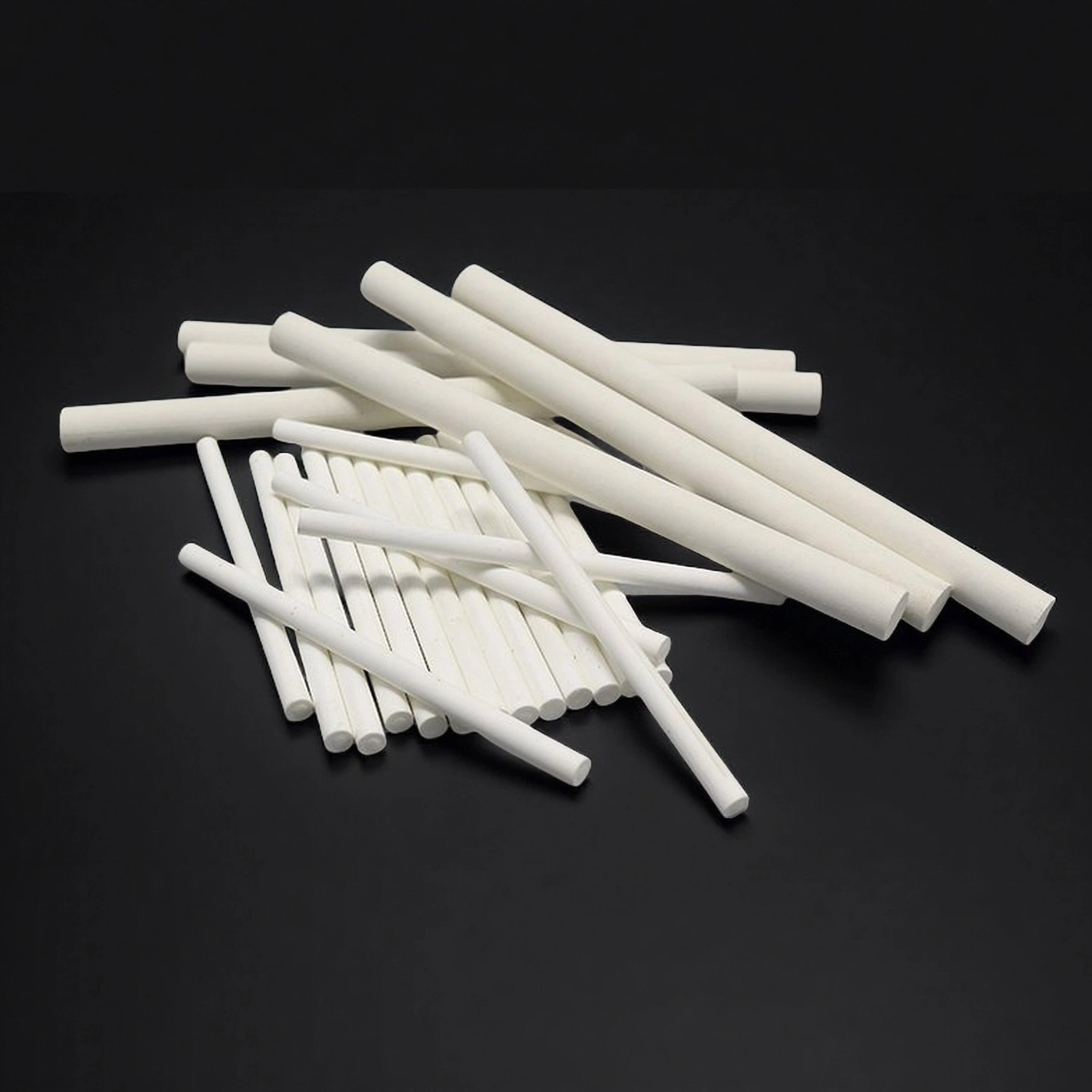
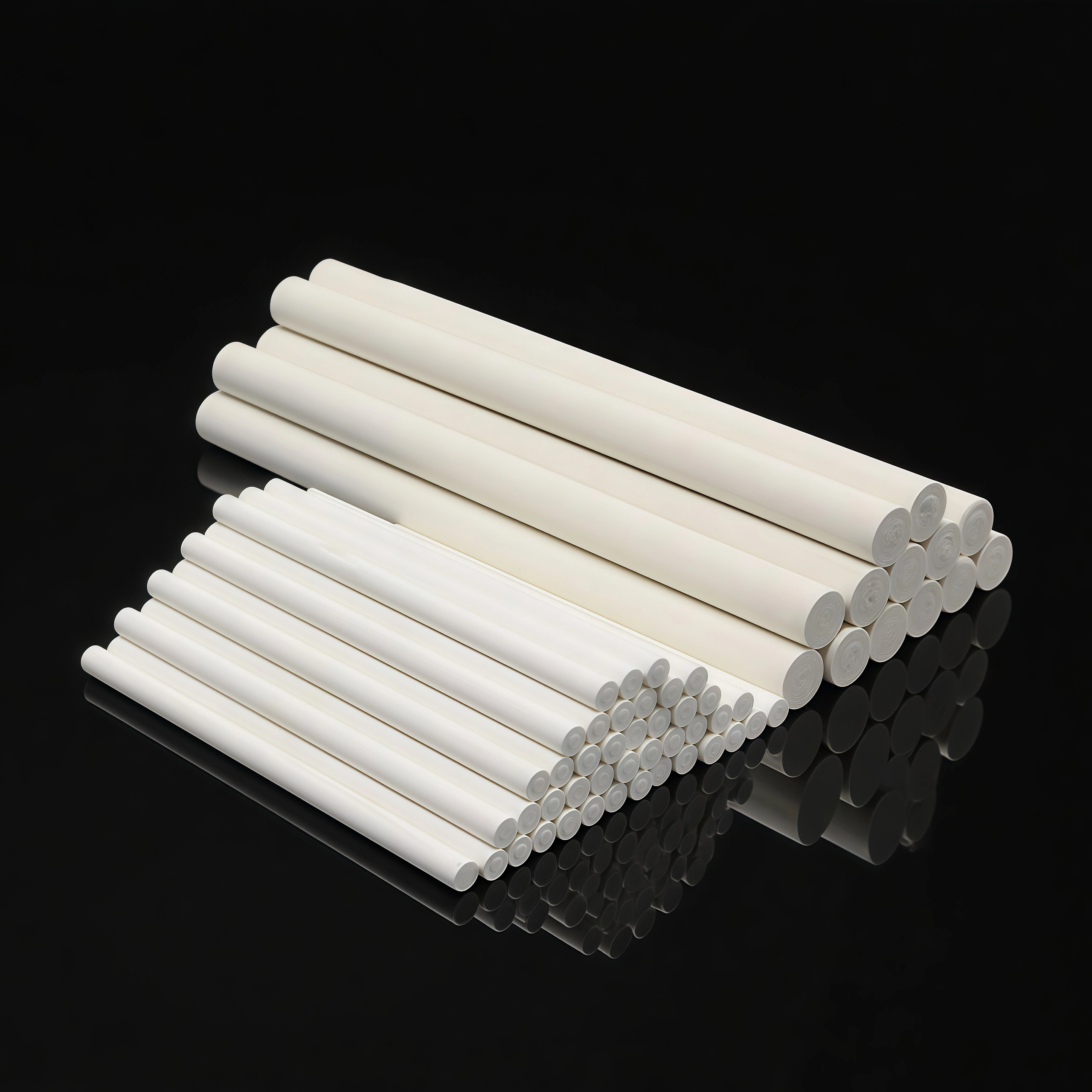
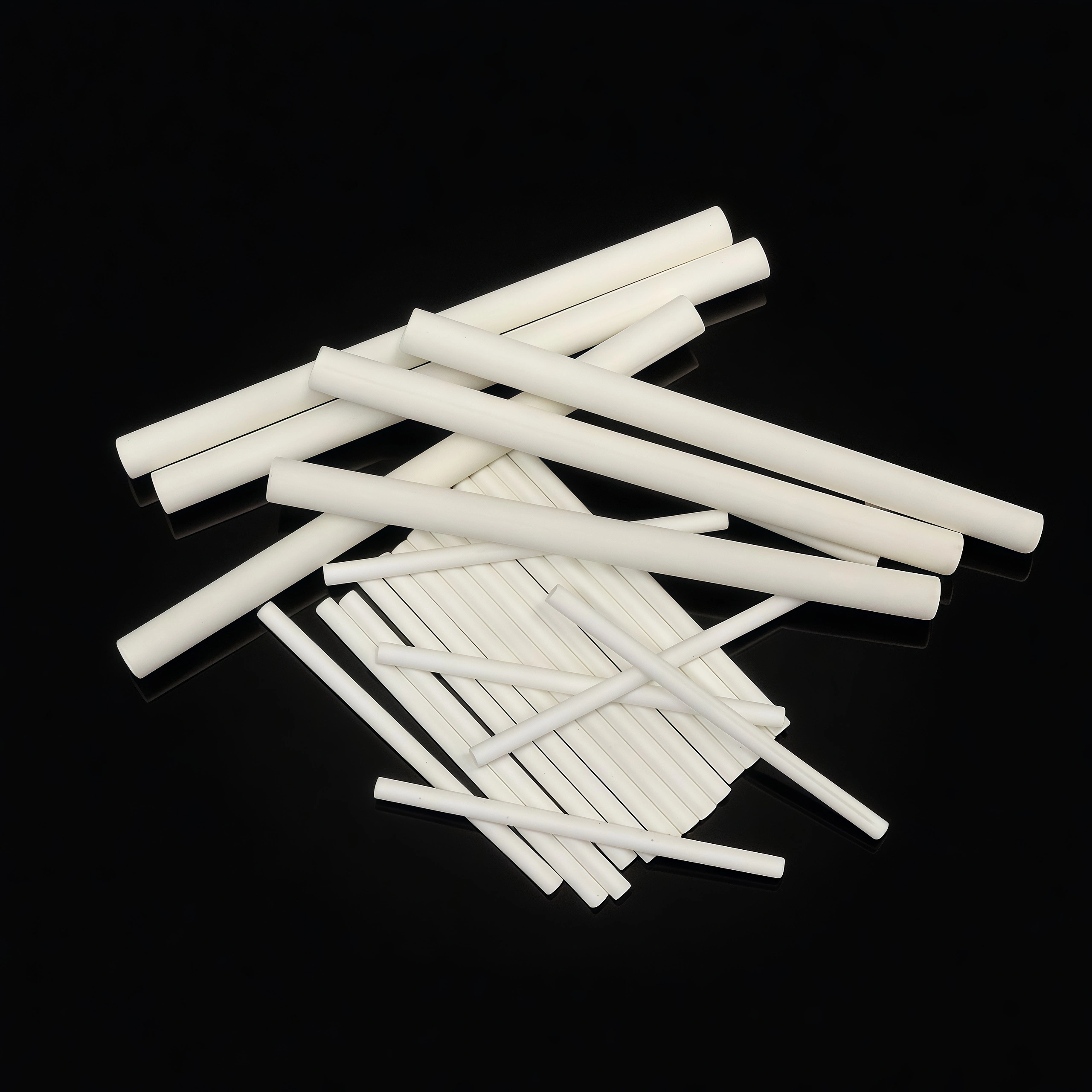
What Is a Magnesium Oxide Rod?
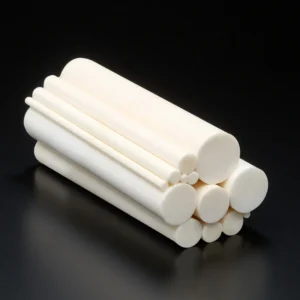
A magnesium oxide rod is a solid or machined MgO ceramic component used for high-temperature electrical insulation, heater support, laboratory furnace fixtures and ceramic spacing applications. MgO ceramic combines electrical insulation with thermal conductivity, making it useful in assemblies where heat must be transferred while electrical leakage, contamination and dimensional movement must be controlled.
Why Use MgO Ceramic Rods?
MgO ceramic rods are selected when alumina, quartz or standard ceramic spacers cannot provide the required balance of insulation, heat transfer and chemical stability. In heater assemblies, MgO helps support heating elements while maintaining electrical separation. In laboratory and furnace systems, machined MgO rods can act as stable supports, spacers or positioning components in high-temperature zones.
Magnesium Oxide Rod Benefits
- Electrical insulation with heat transfer — supports heater cores, thermocouple and MI cable insulation while conducting heat.
- Structure options — solid, single-hole and multi-hole insulator cores to your wire/bore layout.
- Custom machining — cut-to-length, chamfered ends, bore designs and ground surfaces after drawing review.
- High-temperature fit — suitable for selected high-temperature use when grade, atmosphere and load are reviewed.
- Kept-dry handling — MgO is hygroscopic; supplied in dry packaging and dried before critical insulation use.
Magnesium Oxide Rod Properties
|
Properties |
Unit |
Value |
|
Material |
% |
99 MgO |
|
Density |
g/cm³ |
3.5 |
|
Bulk Density |
g/m³ |
2.8 |
|
Apparent Porosity |
% |
20 |
|
Compressive Strength |
MPa |
50 |
|
Flexural Strength |
MPa |
16 |
|
Refractoriness |
SK |
<42 |
|
Thermal Conductivity |
W/(m.K) |
28-53 |
|
Coefficient of thermal expansion (20~1000℃) |
10-6/K |
13 |
|
Oxidizing atmosphere |
(℃) |
2200 |
|
Reducing atmosphere |
(℃) |
1700 |
Standard and Custom MgO Rod Specifications
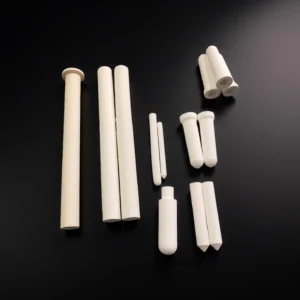
ADCERAX supplies standard magnesium oxide rods for common heater and furnace assemblies, and also supports drawing-based custom MgO rods for OEM equipment builders, laboratory systems and high-temperature fixtures. Customers can specify diameter, length, bore design, end geometry, chamfer, surface finish and tolerance requirements according to the actual installation environment.
Common Failure Risks and Design Checks
Most MgO rod failures are related to installation stress, moisture exposure, thermal shock or incorrect atmosphere selection rather than material name alone. Before production, ADCERAX reviews drawings and application conditions to help identify avoidable risks.
| Failure Risk |
Possible Cause |
Prevention Method |
| Cracking during heating |
Fast ramp rate or uneven local heating. |
Use gradual heating and avoid direct flame impingement. |
| Insulation drop |
Moisture absorption or surface contamination. |
Keep rods dry and clean before installation. |
| Edge chipping |
Tight fit, impact or improper handling. |
Add chamfers and avoid forcing the rod into the assembly. |
| Bending or breakage |
Long unsupported span or vibration. |
Add ceramic supports or reduce unsupported length. |
| Chemical attack |
Wrong atmosphere or reactive media. |
Confirm atmosphere and contact material before use. |
| Poor assembly fit |
Tolerance mismatch or unclear drawing. |
Confirm OD, length, bore design and tolerance before production. |
Magnesia Rod Packaging
- Each rod is individually wrapped in foam or bubble film
- Bulk packed in reinforced cardboard boxes with foam

Magnesium Oxide Rod Applications — Built for the Hot Zone
From heater cores to temperature-sensing assemblies, magnesium oxide rods help keep conductors separated, supported and correctly positioned in high-temperature systems. ADCERAX offers solid and precision-bored designs tailored to your assembly drawing.
-
Heater Cores & Heating Assemblies
MgO rods are commonly used as insulating cores and wire supports in cartridge, tubular, sheathed and hot-runner heaters. Single-hole and multi-hole designs guide resistance wire, maintain conductor spacing and allow heat to move toward the surrounding sheath.
Design focus: OD-to-sheath fit, bore size and position, wire layout, rod length and end geometry.
-
Thermocouples & MI Cable
Bored MgO rods separate and position sensor or conductor wires inside thermocouples and mineral-insulated cable assemblies. Hole count, bore diameter, spacing and overall dimensions can be matched to the internal conductor layout.
Design focus: conductor diameter, insulation distance, bore alignment, assembly fit and operating atmosphere.
-
Laboratory Furnaces & High-Temperature Fixtures
Solid or machined MgO rods can be evaluated as spacers, locating pins, supports and positioning components in laboratory furnaces, tube furnaces and sintering setups.
Design focus: mechanical load, support span, thermal cycling, mating materials and contamination limits.
-
Confirm the Operating Environment
MgO can be considered for selected basic or alkaline high-temperature environments, but it is not a universal refractory. Atmosphere, process chemistry, thermal shock, moisture exposure and mechanical load should be reviewed before use.
MgO Rod Selection Guide
Selecting a magnesium oxide rod is not only a size decision. Engineers should evaluate the heating method, operating atmosphere, insulation requirement, mechanical load, thermal cycling frequency and moisture exposure before confirming the final material grade and geometry.
| Selection Factor |
What to Check |
Why It Matters |
| Temperature profile |
Continuous temperature, peak temperature and heating rate. |
Rapid gradients may increase cracking risk. |
| Electrical insulation |
Voltage level, leakage risk and moisture exposure. |
MgO insulation performance depends on dryness and cleanliness. |
| Atmosphere |
Air, inert gas, vacuum or reactive gas exposure. |
Certain reducing or chemically aggressive atmospheres may require review. |
| Mechanical support |
Load, span length, vibration and installation stress. |
Long rods may need support to avoid bending or impact damage. |
| Geometry |
Solid, hollow, multi-bore or special end design. |
Complex geometry affects forming and machining feasibility. |
| Surface finish |
As-fired, ground or polished contact surfaces. |
Surface condition affects fit, friction and contamination risk. |
| RFQ data |
Drawing, quantity, tolerance, application and temperature. |
Complete data helps avoid incorrect material selection. |
Magnesium Oxide Rod Usage Instructions
Proper installation, controlled heating and cooling, dry storage and careful handling help reduce the risk of damage to magnesium oxide rods. Because MgO performance depends on grade, geometry, moisture condition, atmosphere, mechanical load and thermal cycling, the final operating procedure should be reviewed for each assembly.
-
Installation
1. Verify fit and dimensions: Confirm the rod diameter, length, bore layout, end geometry and tolerances against the approved drawing before installation.
2. Maintain alignment: Align the rod with mating components and conductors to avoid bending stress, side loading or uneven thermal expansion.
3. Avoid excessive force: Support the rod during insertion and do not force, twist, bend or strike the ceramic.
4. Support slender rods: Provide intermediate support when required by the rod diameter, unsupported span, mechanical load or vibration. Support spacing should be confirmed by engineering review.
-
Usage
1. Confirm operating limits: Review the continuous and peak temperatures, mechanical load, atmosphere and thermal cycling conditions before use.
2. Control heating and cooling: Use gradual, uniform temperature changes to reduce thermal shock and internal stress.
3. Verify material compatibility: Confirm the process atmosphere, chemical environment and contacting materials for each application. Do not assume MgO is suitable for every high-temperature environment.
4. Maintain electrical insulation: Keep the rod dry and free from dust, oil and other contaminants before energizing the assembly. Drying or preheating may be required for critical insulation applications.
-
Storage
1. Control the environment: Store rods in a dry, clean and dust-free area protected from moisture and condensation.
2. Retain protective packaging: Keep rods in their original moisture-protective packaging until required and reseal unused components after opening.
3. Prevent contamination: Protect the ceramic surfaces from liquids, oils, acids, reactive chemicals and loose metal debris during storage and handling.
4. Check before reuse: After extended storage or damaged packaging, inspect the rods and evaluate whether controlled drying is required before critical electrical insulation use.
-
Cleaning
1. Remove loose contamination: Use clean, dry, oil-free air or a lint-free cleaning method approved for the assembly.
2. Avoid water exposure: Do not wash, soak or immerse MgO rods unless the cleaning and re-drying procedure has been reviewed and validated.
3. Protect machined surfaces: Do not scrape, grind or polish contaminated surfaces without engineering review. Replace components with cracks, chips or other visible damage.
-
Cautions
1. Avoid mechanical shock: MgO ceramic is brittle and may crack or chip under impact, bending force or excessive vibration.
2. Handle clean surfaces carefully: Use clean gloves when handling machined surfaces to reduce oil and particle contamination.
3. Inspect before operation: Quarantine rods with visible cracks, chips, deformation, surface damage or signs of chemical reaction for engineering review.
4. Avoid localized heating: Prevent rapid temperature changes, direct flame impingement and concentrated hot spots unless specifically considered in the assembly design.
5. Do not reuse damaged rods: Damaged components may reduce electrical insulation and assembly reliability and should be replaced.