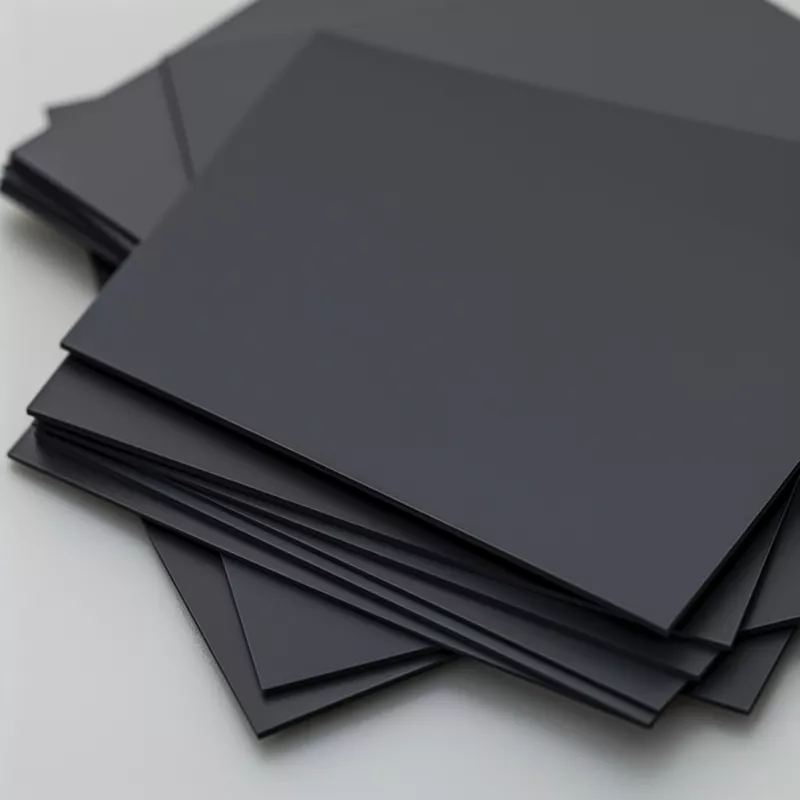
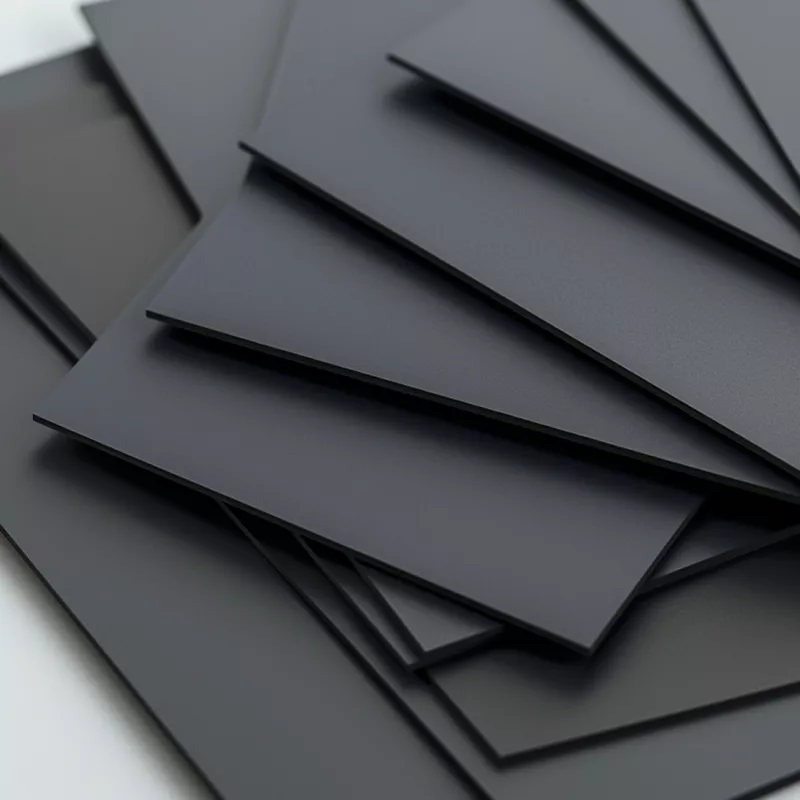
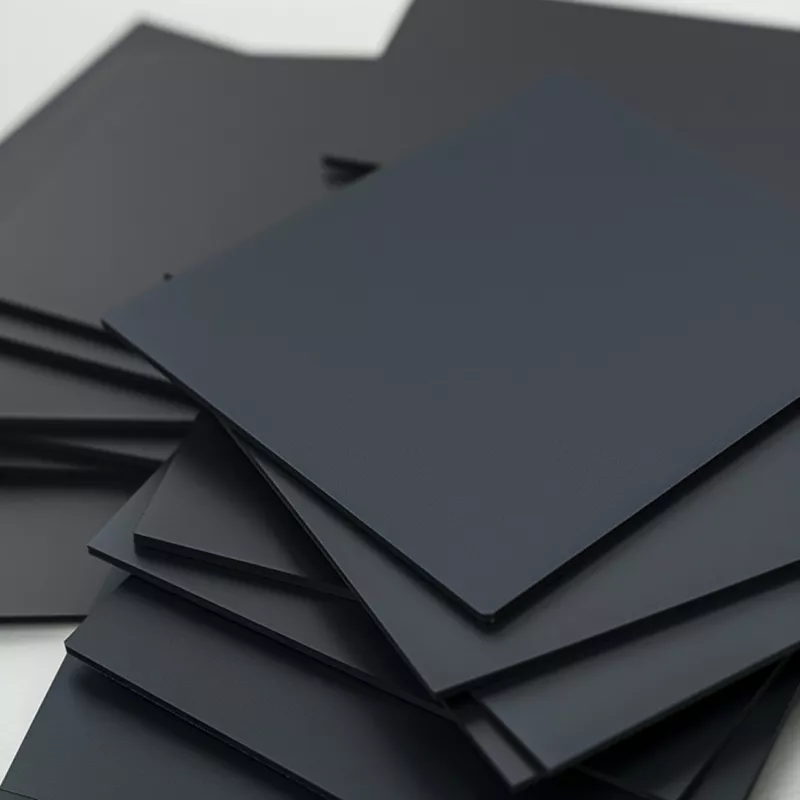
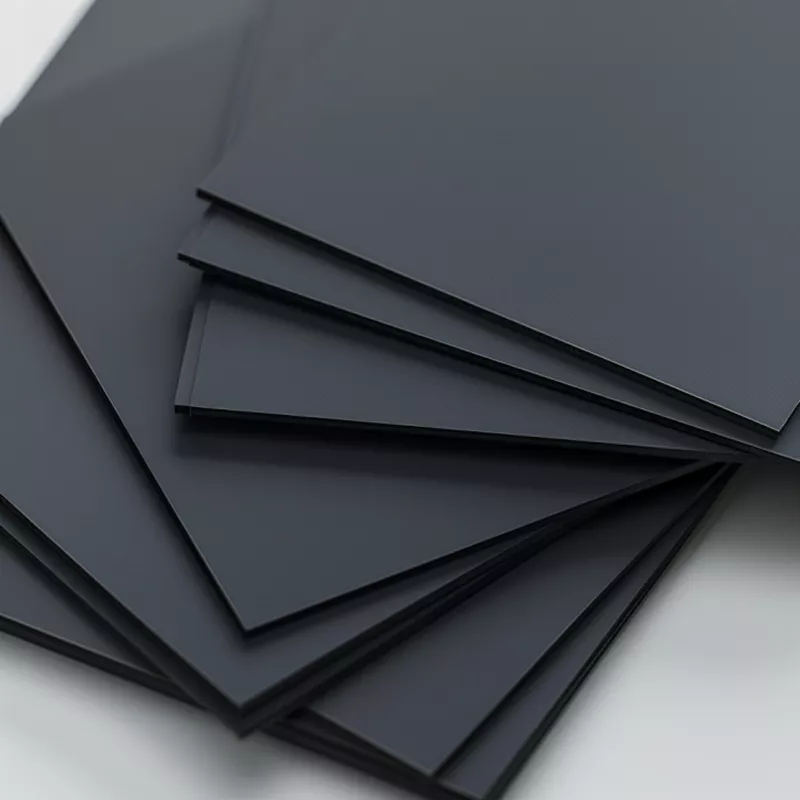
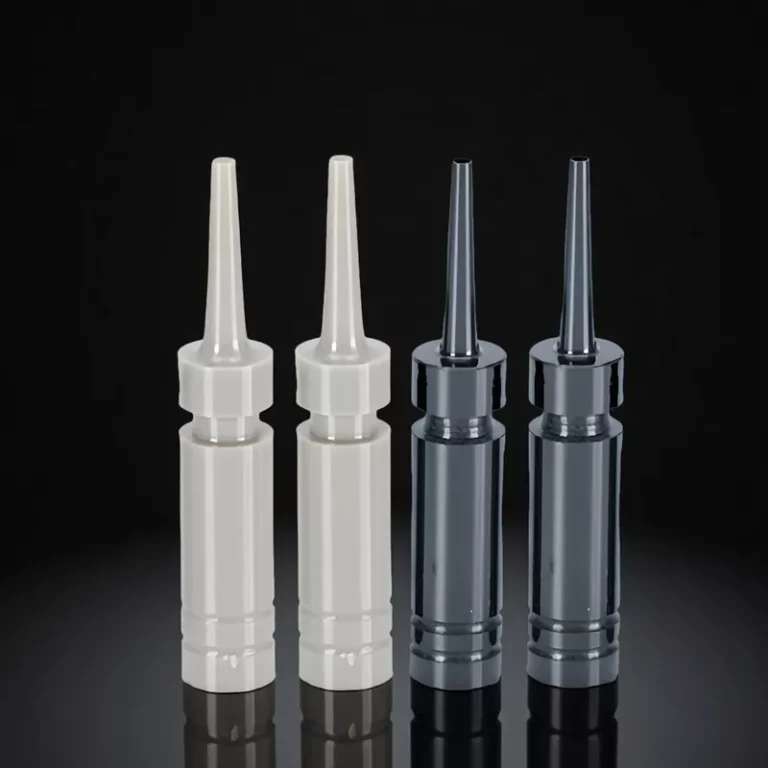
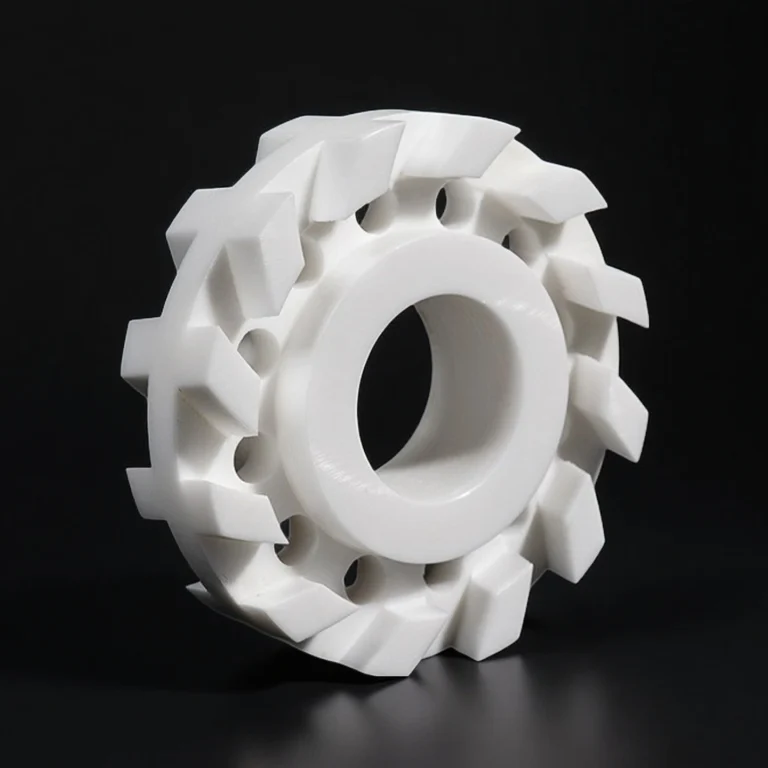
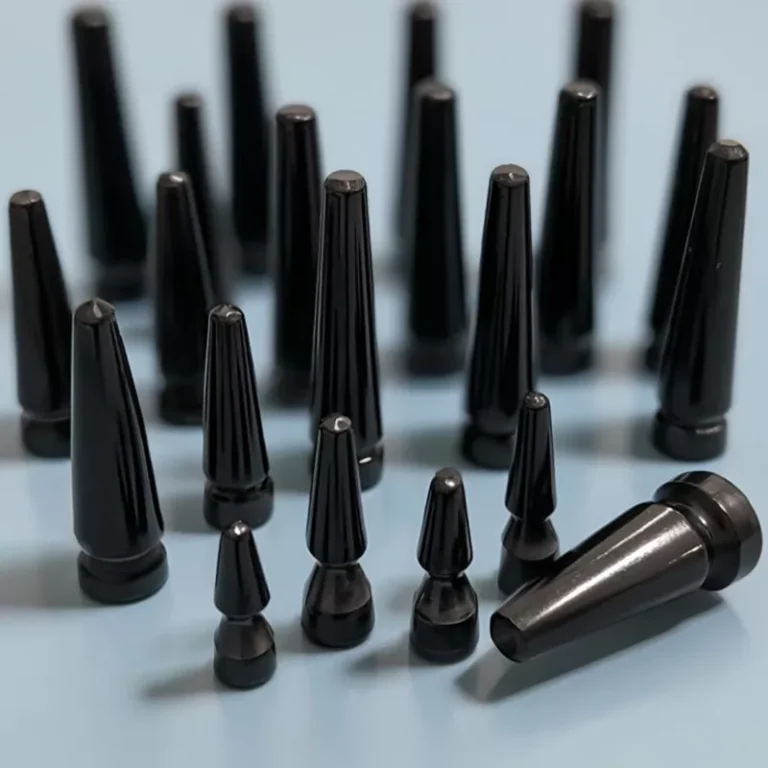
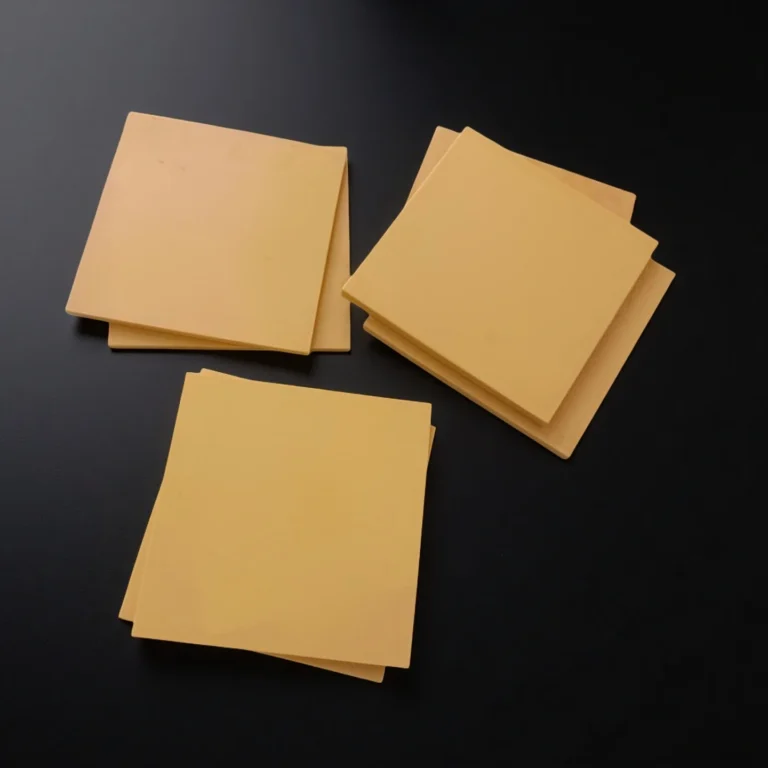
ADCERAX® Black Zirconia Ceramic Substrate is a high-strength ceramic platform designed for demanding industrial modules that require mechanical durability, electrical insulation, and light-blocking performance. Its black composition supports applications in power electronics, sensor systems, and optical assemblies where glare control and stable thermal behavior are critical. Compared to conventional alumina substrates, Black Zirconia Ceramic Substrate offers enhanced fracture resistance and stable operation under corrosive and high-temperature conditions. It is widely adopted by equipment manufacturers in the EV, industrial automation, and measurement device sectors.
Features of Black Zirconia Ceramic Substrate
- Thermal Expansion: Its coefficient of thermal expansion is 9.5×10⁻⁶ K⁻¹, minimizing mismatch with other materials in layered assemblies.
- Thermal Conductivity: Thermal conduction rates of 2.5–3.0 W/m·K help manage localized heat without substrate deformation.
- Electrical Insulation: It exhibits volume resistivity near 10¹⁴ Ω·cm, ensuring electrical isolation for high-voltage or precision applications.
- Optical Shielding: The black variant reduces stray reflections and light interference, making it suitable for IR and camera module integration.
- Surface Uniformity: Available in fine-polished or double-polished finishes, it supports consistent bonding and alignment in precision optical platforms.
- Dielectric Constant: With a dielectric constant of ~28 at 1 MHz, it ensures predictable signal behavior in RF or circuit-mounted configurations.
- Toughness: Enhanced toughness reaches 8–9 MPa·m½, reducing the likelihood of crack propagation under load or impact during assembly.
- Hardness: With a Vickers hardness of 1100–1200 HV, it resists surface wear and maintains tolerance during repeated contact or sliding operations.
- Flexural Strength: The substrate achieves a flexural strength of up to 1000 MPa, supporting structural applications in clamping and sensor mounting. This allows for secure component positioning without risk of fracture.
Technical Properties of Black Zirconia Ceramic Substrate
Black Zirconia Ceramic Substrate exhibits high strength, electrical insulation, thermal resilience, and optical shielding, making it suitable for integration in electronic, optical, and high-stress industrial modules.
| Property |
Specification |
| Material Composition |
Y₂O₃-stabilized Black Zirconia |
| Color Appearance |
Opaque black |
| Density |
5.6–6.0 g/cm³ |
| Flexural Strength |
900–1000 MPa |
| Vickers Hardness |
1100–1200 HV |
| Fracture Toughness |
8–9 MPa·m½ |
| Thermal Conductivity |
2.5–3.0 W/m·K |
| Coefficient of Thermal Expansion |
9.5×10⁻⁶ K⁻¹ |
| Volume Resistivity |
~10¹⁴ Ω·cm |
| Dielectric Constant (1 MHz) |
~28 |
| Maximum Working Temperature |
~800 °C |
| Chemical Resistance |
Acid and alkali resistant |
Specifications of Black Zirconia Ceramic Substrate
|
Black Zirconia Ceramic Substrate |
|
Model |
Size |
|
AT-HG-J1001 |
Customized |
Packaging of Black Zirconia Ceramic Substrate
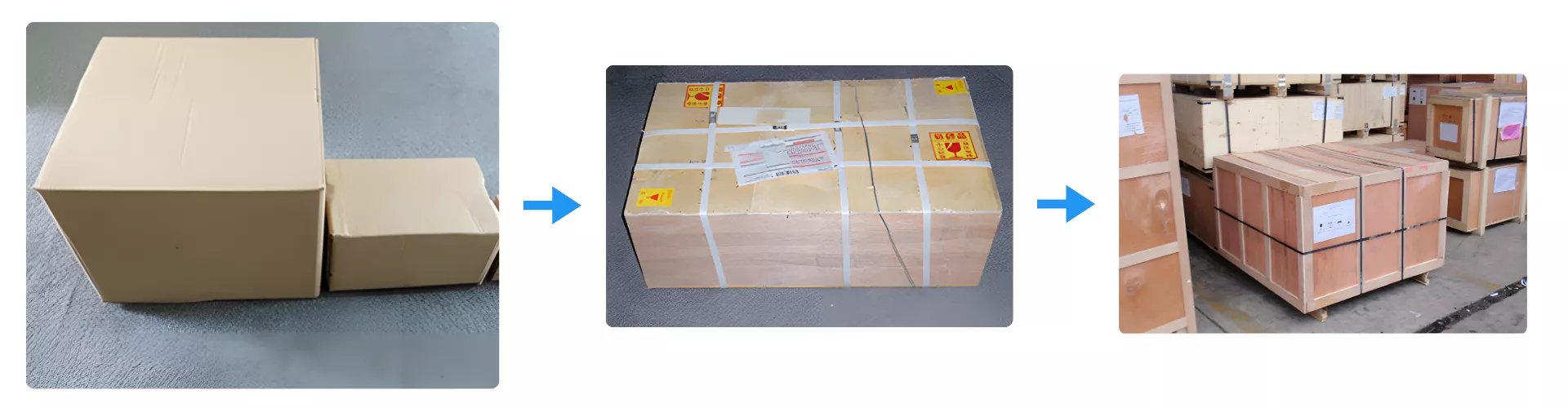
Black Zirconia Ceramic Substrate is securely packed using multi-layer carton protection, followed by reinforced wooden casing. Each package is clearly labeled with handling instructions to prevent damage during international transit. Final palletization ensures stability for bulk shipments and forklift handling.
Solving Precision, Shielding, and ESD Challenges with ADCERAX® Black Zirconia Ceramic Substrate
ADCERAX® Black Zirconia Ceramic Substrate enables stable, contamination-free, and optically shielded performance in applications where traditional white ceramics or metals fail due to reflectivity, fragility, or thermal mismatch.
-
Black Zirconia Ceramic Substrate in IR Sensor Housing Modules
✅Key Advantages
1. Controlled Infrared Absorption
The surface of the substrate maintains <1% reflectivity in the 8–12 µm IR band, minimizing signal interference. Its dense microstructure ensures uniform absorption, allowing sensors to capture accurate temperature differentials even under fluctuating light conditions.
2. Thermal Stability at High Operating Temperatures
Black Zirconia Ceramic Substrate withstands continuous exposure up to 800 °C, maintaining shape and emissivity stability. This prevents thermal drift or misalignment in long-duration infrared detection systems.
3. Chemical and Environmental Resistance
The substrate’s corrosion-resistant surface endures acidic vapors (pH 2–12) found in industrial sensing chambers. This ensures optical windows remain uncontaminated and stable in chemical and environmental monitoring equipment.
✅ ️Problem Solved
A European thermal imaging manufacturer faced false signal triggers in their IR sensors due to high reflection from white alumina housings. Sensor error rates exceeded 15% in high-temperature testing environments.
ADCERAX® replaced the reflective substrates with Black Zirconia Ceramic Substrates featuring <1% IR reflectivity and 9.5×10⁻⁶ K⁻¹ CTE, reducing false signals to below 1.5% and enabling continuous operation during 24-hour thermal cycles without distortion or contamination.
-
Black Zirconia Ceramic Substrate in ESD-Safe Probe Fixtures
✅Key Advantages
1. Stable Electrical Resistivity Control
The substrate maintains surface resistivity of 10¹¹–10¹⁴ Ω/sq, achieving optimal electrostatic discharge balance. This protects IC components while preventing charge accumulation during automated probe testing.
2. Exceptional Wear Life Under Repetition
With a hardness of ~1200 HV, the material endures >10⁵ probe contact cycles without wear marks or dimensional loss. This stability ensures long-term alignment accuracy in high-throughput semiconductor testing lines.
3. Non-Contaminating Surface Finish
Its polished, pore-free structure eliminates particle release, maintaining ISO Class 5 cleanroom compatibility. This reduces yield loss caused by particulate contamination or static-induced failures.
✅ ️Problem Solved
A Japanese semiconductor test facility reported fixture wear and static-induced chip damage during 40,000-cycle testing, leading to 6% yield loss.
ADCERAX® implemented Black Zirconia Ceramic Substrate fixtures with stable 10¹² Ω/sq resistivity and 1200 HV hardness, extending fixture life beyond 120,000 test cycles and reducing ESD-related IC failures to below 0.5% in production validation.
-
Black Zirconia Ceramic Substrate in Laser Optical Alignment Systems
✅Key Advantages
1. Ultra-Low Reflective Surface Finish
The black ceramic exhibits <0.3% visible light reflectance, preventing back-scatter interference in precision laser optics. This allows laser alignment repeatability within ±0.002° angular deviation.
2. High Flatness and Rigidity
Each substrate maintains flatness deviation <2 µm over 100 mm, ensuring stable beam alignment and minimal distortion in optical calibration equipment.
3. Consistent Thermal Expansion Match
With a CTE of 9.5×10⁻⁶ K⁻¹, it aligns with metallic mount structures, maintaining positional stability through 200+ thermal cycles from room temperature to 700 °C without mechanical shift.
✅ ️Problem Solved
An industrial metrology company experienced calibration drift in laser measurement modules after extended beam exposure, with beam deviation reaching ±0.01° due to substrate reflectivity and heat-induced expansion.
ADCERAX® supplied precision Black Zirconia Ceramic Substrates featuring <0.3% reflectance and 9.5×10⁻⁶ K⁻¹ expansion, resulting in sustained optical alignment stability for over 500 hours of continuous operation and eliminating recalibration downtime across their inspection lines.
User Guide for Safe Handling and Integration of Black Zirconia Ceramic Substrate
To ensure maximum performance, stability, and service life, Black Zirconia Ceramic Substrate must be handled, stored, and assembled with precision. This guide outlines key recommendations for cleanroom use, thermal cycling, bonding, and surface maintenance—tailored to B2B engineering and procurement environments.
-
Cleanroom Handling Recommendations
1. Wear ESD-Safe Gloves
Operators must use anti-static gloves or tweezers to prevent oil contamination or surface charging during substrate placement. Direct skin contact can introduce particles or micro-abrasions on polished surfaces. Cleaning should be performed using filtered isopropyl alcohol (IPA) and lint-free wipes.
2. Use Controlled Air Environments
Black Zirconia Ceramic Substrate should be unpacked only in ISO Class 5 or better cleanrooms. Ambient airborne particles may settle into edge chamfers or drilled holes, affecting assembly yield. Keep handling time minimal and surfaces covered when not in use.
3. Avoid Abrasive Contact Surfaces
Do not place substrates directly on metallic or coarse ceramic trays. Use PEEK or PTFE-lined carriers during transit between process stations to avoid scratches or microchipping.
-
Assembly and Mounting Precautions
1. Support at Multiple Points
Due to high hardness and low flexibility, substrates should be mounted on flat, buffered surfaces with support at ≥3 points. Avoid cantilevered configurations that may induce tensile stress during thermal cycling.
2. Avoid Torque or Spot Clamping
Do not apply concentrated force on edges or corners using screws or clamps. Use distributed clamping with compliant materials like silicone gaskets or torque-limited fasteners to prevent edge cracking.
3. Account for CTE Matching
While the substrate has a CTE of 9.5×10⁻⁶ K⁻¹, it must still be assembled with materials that do not cause thermal stress mismatch across 25–800 °C.
-
Thermal Cycling and Operating Guidelines
1. Preheat Gradually Before Use
Avoid thermal shock by ramping substrate temperature <5 °C/min up to 600–800 °C. Sudden heating may cause microcrack initiation even within rated limits.
2. Stabilize Before Functional Load
Before applying operational voltage or optical load, maintain the substrate at target temperature for ≥10 minutes to ensure full structural equilibrium.
3. Monitor for Stress Accumulation
If substrates are exposed to repeated cycles >500 times, inspect visually and dimensionally. Slight changes in surface planarity or edge rounding may indicate accumulated thermal fatigue.
-
Storage and Surface Maintenance
1. Store in Desiccated, Shock-Proof Trays
Black Zirconia Ceramic Substrate must be stored in anti-static ESD foam trays within humidity <45% RH conditions. Avoid stacking or vertical orientation unless slotted safely.
2. Avoid Contact with Strong Solvents
Do not expose substrates to acetone, HF, or alkali cleaners. These may react with any surface functional phase or alter gloss uniformity. Use only neutral pH ultrasonic cleaners when needed.
3. Inspect Before Reuse or Reprocessing
Before reinstallation or post-processing, always perform visual inspection under 5× magnification and confirm absence of edge cracks, delamination, or reflectivity irregularities.