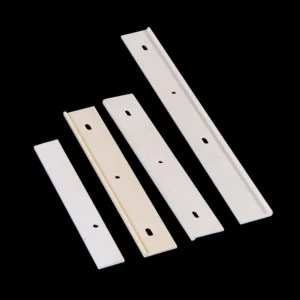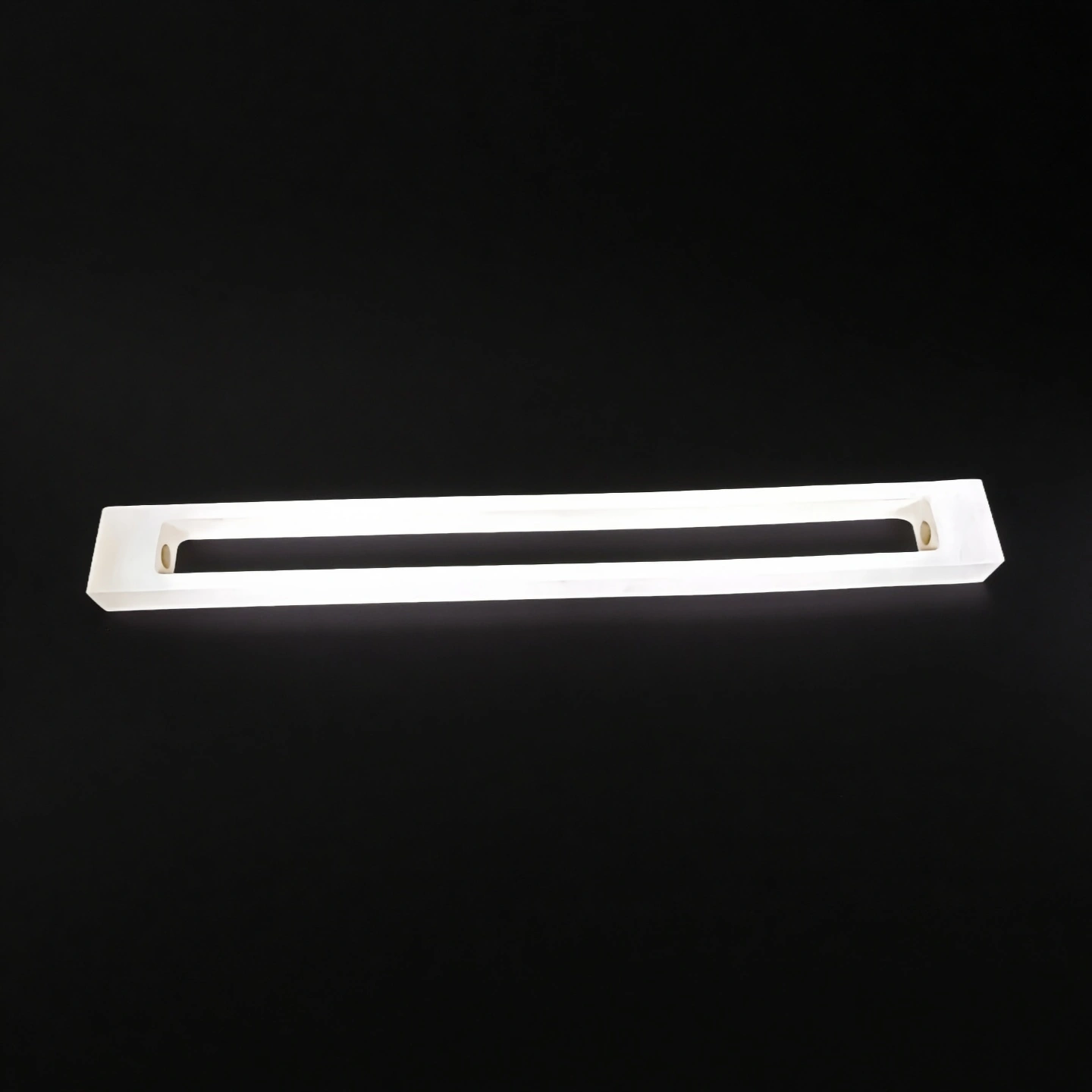
Custom High Purity Alumina Ceramic Insulation Frame

ADCERAX supplies custom high-purity alumina ceramic insulation frames for high-voltage, vacuum, laser and industrial equipment assemblies. These machined Al₂O₃ frames help separate conductive parts, support alignment and maintain stable insulation under heat, pulsed voltage or controlled atmospheres.

Frame geometry, alumina grade, apertures, hole position, flatness, surface finish and operating conditions can be reviewed before quotation.

Catalogue No. AT-HP-K01
Material Al₂O₃
Purity  99%-99.99%
Dielectric strength approx. 14–23 kV/mm
Coefficient of thermal expansion (25–600°C) approx. 7–8×10⁻⁶ K⁻¹
Engineering RFQ Review
Small-Batch Custom Support
Factory-Direct Manufacturing
Drawing & Process Review

What Is a High Purity Alumina Ceramic Insulation Frame?

A high purity alumina ceramic insulation frame is a machined Al₂O₃ structural insulator used to separate conductive parts, support assemblies and maintain electrical isolation in high-voltage, vacuum, laser and industrial equipment. It is selected when polymer, glass or metal-supported insulation parts cannot meet the required temperature resistance, dielectric stability, dimensional accuracy or cleanliness level.

ADCERAX supplies drawing-based alumina insulation frames with reviewed material grade, outer size, aperture geometry, mounting holes, flatness, edge design and surface finish according to the operating environment.

Why Use Alumina Ceramic for Insulation Frames?

High-purity alumina ceramic is often selected for insulation frames because it combines electrical insulation, thermal stability and mechanical support in one rigid component. It is especially useful when the frame must separate conductive parts, keep stable geometry and fit into compact high-voltage or controlled-atmosphere assemblies.

Stable Electrical Insulation

Dense alumina ceramic helps separate conductive parts in high-voltage, pulsed power and compact module assemblies. Compared with many polymer or composite insulation materials, alumina provides stronger insulation stability under heat, electrical stress and long-term equipment operation.

Reliable Shape Stability During Thermal Cycling

For equipment exposed to repeated heating and cooling, alumina maintains its shape better than many softer insulation materials. This helps the frame keep hole alignment, aperture position and contact surfaces stable during long-term use.

Cleaner Performance in Vacuum or Gas-Filled Systems

High-purity alumina can be selected for vacuum, laser and gas-filled equipment where low contamination risk and clean surfaces are important. It helps reduce the risk of material degradation, surface residue or insulation instability caused by less stable insulation materials.

Mechanical Support for Precision Assemblies

A machined alumina ceramic frame can support electrodes, connectors, optics mounts, housings or positioning references. Its rigid structure helps maintain assembly spacing and mechanical alignment when the surrounding module requires both insulation and support.

High Purity Alumina Ceramic Insulation Frame Properties

Property Unit 96% Al₂O₃ 99% Al₂O₃ 99.5% Al₂O₃ 99.6% Al₂O₃ 99.7% Al₂O₃ 99.8% Al₂O₃ 99.9% Al₂O₃ 99.99% Al₂O₃
Alumina content % 96 99 99.5 99.6 99.7 99.8 99.9 99.99
Density g/cm³ 3.6-3.75 3.83 3.89 3.91 3.92 3.93 3.94 3.98
Color white Ivory Ivory Ivory Ivory Ivory Ivory Ivory
Water absorption % 0 0 0 0 0 0 0
Young’s modulus (Elastic modulus) GPa 300 350 375 356 357 358 359 362
Shear modulus GPa 152
Bulk modulus GPa 228
Poisson’s ratio 0.22
Compressive strength MPa 1910 2210 2600 2552 2554 2556 2558 2570
Flexural strength MPa 260 300 379 312 313 314 315 320
Fracture toughness MPa·m¹ᐟ² 4
Hardness GPa 14.5 17 17 23 24 25 26 30
Thermal conductivity W/m·K 22 24 35 32–37 33–38 34–39 35–40 36–42
Thermal shock resistance ΔT °C 222 223 224 225 228
Maximum use temperature (no load) °C 1450 1680 ≤1750 1755 1760 1765 1770 1800
Coefficient of thermal expansion 10⁻⁶/°C 7.6 7.6 8.4
Volume resistivity Ω·cm >1×10¹⁴ >1×10¹⁴ >1×10¹⁴ >1×10¹⁴ >1×10¹⁴ >1×10¹⁴ >1×10¹⁴ >1×10¹⁴
Dielectric constant (relative permittivity) 9.2 9.5 9.8 9.83 9.84 9.85 9.86 9.92
Dielectric strength kV/mm 15 19 16.9 23.2 23.4 23.6 23.8 24
Dissipation factor (loss factor @ 1 kHz) 0.0002


Custom Alumina Ceramic Insulation Frame Specifications

Custom Alumina Ceramic Insulation Frame Specifications
Item No. Outer Size Aperture / Window Thickness Hole / Slot Design Surface Finish
AT-HP-K01 Custom Custom Custom Custom As-sintered, ground or polished


How to Select the Alumina Grade for an Insulation Frame

For most custom insulation frame projects, purity should not be selected by number alone. The frame size, mounting force, aperture shape, surface finish, operating temperature, voltage condition and cleaning method often have a stronger influence on service reliability. ADCERAX can review whether a 99.5% or 99.8% alumina grade is more suitable before quotation.

Grade Direction When It Is Usually Considered
96% alumina Cost-sensitive industrial insulation parts where ultra-clean surfaces are not required.
99% alumina General high-temperature and electrical insulation parts with better stability than lower-grade ceramics.
99.5% alumina Precision insulation frames requiring stronger dielectric stability and cleaner surfaces.
99.8% alumina High-voltage, vacuum, laser or precision module assemblies where insulation stability and low contamination risk are more important.
99.9%+ alumina Only when the application clearly requires a higher purity grade and ADCERAX confirms availability before quotation.

Mounting Notes to Reduce Cracking and Insulation Failure

Ceramic insulation frames are strong under compression but sensitive to point loading and bending stress. For large frames or thin wall sections, the mounting design should distribute load evenly and avoid forcing the ceramic into a misaligned metal housing. If the operating voltage, pulse mode or temperature profile changes, the frame design should be reviewed before reuse.

Risk Recommended Prevention
Corner cracking Use larger internal radii, protected edge design and avoid sharp stress concentration.
Screw over-tightening Use torque-controlled fastening and load-spreading washers or metal plates.
Uneven contact surface Confirm flatness and remove burrs from mating metal parts before installation.
Thermal shock Avoid sudden temperature changes beyond the reviewed design condition.
Surface contamination Keep ceramic surfaces clean and avoid oil, metal particles or conductive dust.
Electric field concentration Review aperture spacing, edge chamfer and clearance distance during design.

High Purity Alumina Insulation Frame Packaging

  • Each alumina ceramic insulation frame is individually separated using foam or soft interlayers to avoid ceramic-to-ceramic contact.
  • Parts are packed in clean PE bags and then located in custom cut foam or honeycomb cartons to minimize movement during transport.
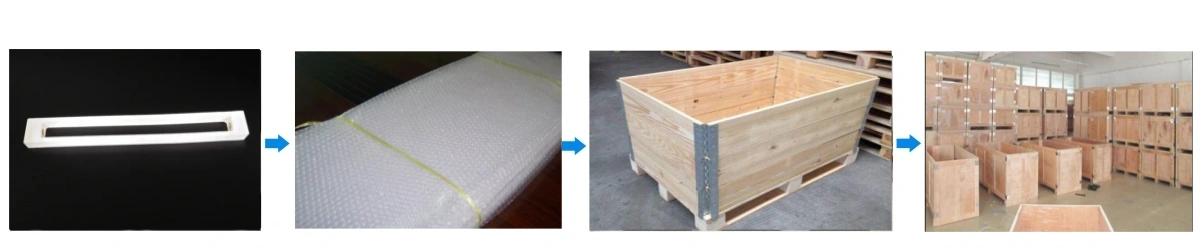

High Purity Alumina Insulation Frame Packaging

Where Alumina Ceramic Insulation Frames Are Used

  • High-Voltage Vacuum and Pulsed Power Modules

    Alumina ceramic insulation frames are used in power modules, vacuum assemblies and pulsed systems where conductive parts must remain separated under electrical stress. The frame can support connectors, electrodes, feedthrough areas or shield structures while helping maintain stable clearance and mechanical alignment.

    Typical design concerns: voltage level, creepage distance, aperture spacing, edge radius, mounting pressure and vacuum compatibility.

  • Industrial Laser and Gas-Filled Equipment

    In laser and gas-filled systems, alumina frames can support discharge electrodes, optics mounts or structural reference points while helping reduce contamination risk compared with some polymer insulators. Ground or lapped surfaces may be reviewed where the frame contacts seals, housings or precision alignment parts.

    Typical design concerns: gas cleanliness, thermal cycling, surface finish, hole position, cleaning method and assembly tolerance.

  • Electronics and Semiconductor Equipment Hardware

    For electronics and semiconductor equipment hardware, alumina ceramic insulation frames may be used in non-wafer-contact structural, electrical insulation or module support positions. They can help maintain electrical separation, flatness, particle control and mechanical alignment in equipment assemblies where polymer insulation parts may not be suitable.

    Typical design concerns: cleanliness requirement, flatness, particle control, voltage insulation, mounting force and inspection method.

Use Guide – High Purity Alumina Ceramic Insulation Frame

  • Installation

    1. Handle the alumina ceramic insulation frame with clean gloves, supporting it from the underside to avoid stress on corners.
    2. Ensure all mating metal surfaces are clean, flat and free from burrs before positioning the frame.
    3. Use torque-limited tools and load-spreading washers so that clamping force is applied evenly; avoid forcing misaligned parts into place.

  • Use

    1. Keep applied voltage, pulse shape and creepage distances inside the design envelope determined during engineering.
    2. Respect ramp rates recommended for alumina when heating or cooling to avoid excessive thermal shock.
    3. Periodically inspect high field regions and corners for microcracks or discolouration during scheduled maintenance.

  • Storage

    1. Store the insulation frame in cushioned trays or dedicated racks with dividers; avoid stacking heavy components on top.
    2. Maintain storage areas dry and free from corrosive vapours or dust that could contaminate the ceramic surface.

  • Cleaning

    1. Remove loose particles with dry, oil-free compressed air or a soft antistatic brush.
    2. For deeper cleaning, use neutral pH detergents in deionised water, rinse thoroughly and dry at a moderate temperature suitable for alumina ceramics.

  • Typical Misuse and Corrective Notes

    1. Over-tightening screws directly on the frame may cause local microcracks; use torque guidelines and metallic load plates to distribute load.
    2. Levering or prying against ceramic edges during maintenance – can chip corners; design fixtures so that metallic parts are removed before lifting the insulation frame.
    3. Operating outside design temperature or pulse parameters – can accelerate ageing; if process conditions change significantly, review creepage distances and material limits before re-use.

FAQ – High Purity Alumina Ceramic Insulation Frame

  1. What is an alumina ceramic insulation frame used for?
    An alumina ceramic insulation frame is used to separate conductive parts, support mechanical alignment and provide stable electrical insulation in high-voltage, vacuum, laser, gas-filled and industrial equipment assemblies.
  2. Is alumina ceramic suitable for high-voltage insulation?
    Yes. Dense alumina ceramic is widely selected for electrical insulation because it has high volume resistivity, strong dielectric behavior and good thermal stability. Final suitability should still be reviewed according to voltage level, creepage distance, pulse mode and surface condition.
  3. What alumina purity should I choose for an insulation frame?
    For many precision insulation frames, 99.5% or 99.8% alumina is commonly reviewed. The right grade depends on operating temperature, voltage stress, vacuum or gas exposure, cleanliness requirement, frame size and budget.
  4. Can ADCERAX machine custom holes, slots and window shapes?
    Yes. ADCERAX can review drawing-based frame designs with inner windows, mounting holes, slots, countersinks, counterbores, grooves, chamfers, rounded corners and controlled datum surfaces.
  5. How can cracking be reduced during installation?
    Cracking risk can be reduced by using flat mating surfaces, torque-controlled fasteners, load-spreading washers, rounded internal corners and proper alignment before tightening. Point loading on thin walls or sharp corners should be avoided.
  6. Can alumina ceramic replace polymer or mica insulation parts?
    It can be considered when polymer, mica or composite insulators cannot meet the required temperature resistance, dimensional stability, vacuum cleanliness or electrical insulation stability. The mounting design must be adjusted because ceramic behaves differently under bending and impact.
  7. What information is needed for quotation?
    Please provide a 2D or 3D drawing, outer dimensions, aperture size, hole layout, tolerance requirements, alumina grade, surface finish, operating voltage, temperature range, vacuum or gas condition, quantity and any inspection requirements.
customize size

Custom High Purity Alumina Ceramic Insulation Frame

ADCERAX supplies high-purity alumina ceramic insulation frames mainly according to customer drawings. Geometry, tolerances, material grade and surface details can be reviewed so the frame can fit directly into the target module or equipment assembly.

  • Outer frame envelope – overall length, width and thickness ranges for small modules up to large panels, with defined tolerances on each axis and controlled corner radii.

  • Inner window/apertures – single or multiple windows, rectangular or stepped shapes, rounded corners, slot-type apertures, and spacing to match optical paths, gas flow channels or clearance distances.

  • Holes and slots – clearance or threaded holes, feedthrough holes, alignment slots, countersinks and counterbores for screws, dowels and locating pins.

  • Wall thickness layout – uniform or stepped wall thickness, local ribs, thicker bosses under fasteners or high field regions, and relief pockets to reduce weight.

  • Functional faces – flatness and parallelism requirements on sealing faces, contact faces and datum surfaces; optional reference edges for assembly alignment.

  • Edge and corner design – chamfers, bevels and corner radii to reduce local electric field stress, minimise chipping risk and improve handling safety during maintenance.

  • Surface finish – as-sintered surfaces in non-critical areas, ground or lapped surfaces where gaskets, o-rings or metal housings contact the high purity alumina ceramic insulation frame, and optional polished areas if needed.

  • Material and grade details – 99.8% alumina grade selection within your dielectric and temperature range, with options for specific bulk density or porosity limits if required.

Related Products

ADCERAX - Your Trusted Advanced Ceramics Manufacturing Partner

Direct factory manufacturing with comprehensive ceramic materials expertise and global supply capabilities

China-Based Manufacturer

ADCERAX supplies ceramic components for overseas OEMs, equipment builders, and labs.

Custom Drawing Support

We review drawings, dimensions, materials, and application conditions before quotation.

Ceramic Process Control

Forming, sintering, machining, grinding, and finishing are arranged by part requirements.

Pre-Shipment Inspection

Dimensional checks, visual inspection, and packaging review help reduce procurement risk.

Get in Touch with Us

Our team will be happy to respond to you in less than 24 hours.

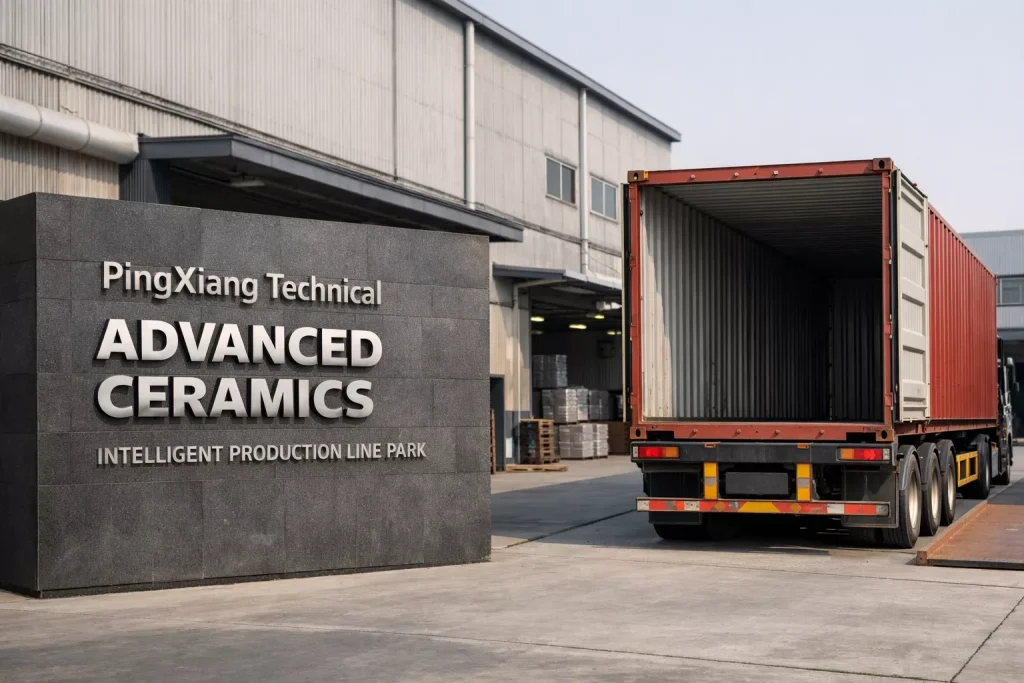
Pingxiang Factory — Silicon carbide, silicon nitride, high-temperature ceramics

Quick Quotation

*Our team will answer your inquiries within 24 hours.

*Your information will be kept strictly confidential.

Ready to Solve Your Engineering Challenge?

Partner with ADCERAX for reliable, high-performance advanced ceramic solutions. Our engineers are ready to discuss your project.

E-mail

info@adcerax.com

Phone

+(86) 0731-74427743 | WhatsApp: +(86) 19311583352

Response Time

Within 24 hours

Quick Quote

The more details you provide, the faster we can quote.

*We respond within 24 hours. All inquiries are confidential.

Get Your Custom Solution

The more details you provide, the faster we can respond.

customize size

*We respond within 24 hours. All inquiries are confidential.

Download Catalog