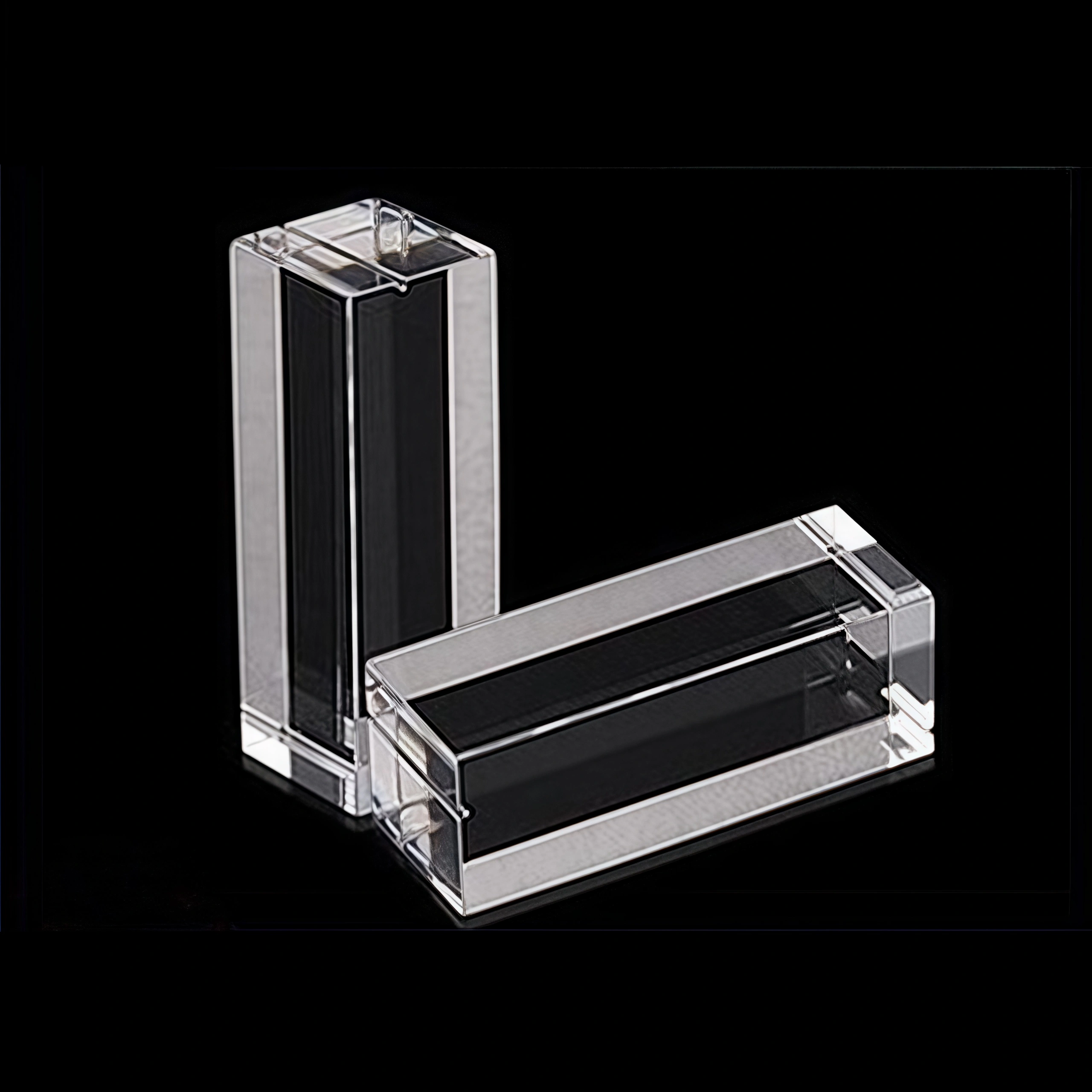
What Is a Sapphire Optical Window?
A sapphire optical window is a polished window cut from single-crystal Al₂O₃ (synthetic sapphire). It is hard (Mohs 9), chemically stable and transparent from the UV into the mid-IR, which is why it is used to protect lasers, sensors and cameras, and to seal vacuum, plasma and high-temperature observation ports. Sapphire is a single crystal with a defined orientation and slight birefringence — it is not polycrystalline alumina and not ordinary glass.
Choose Your Sapphire Window Type
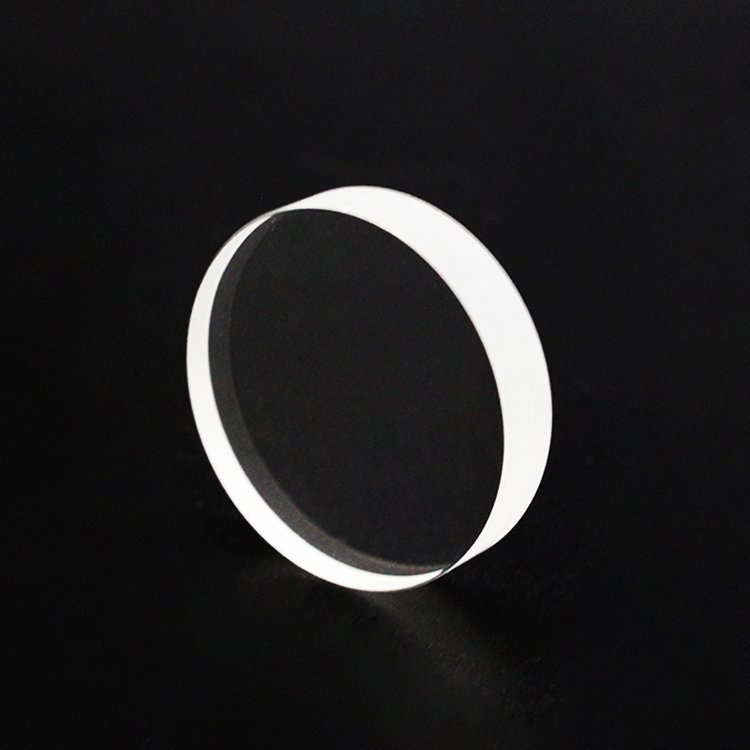
Round Sapphire Windows
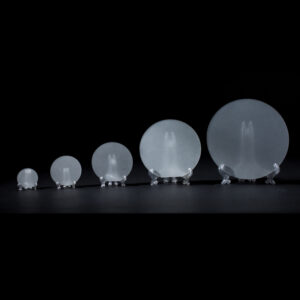
For circular protective windows, sensor covers, optical ports and viewport blanks. Configure diameter, thickness, clear aperture, polished surfaces, edge form, coating and orientation as required.
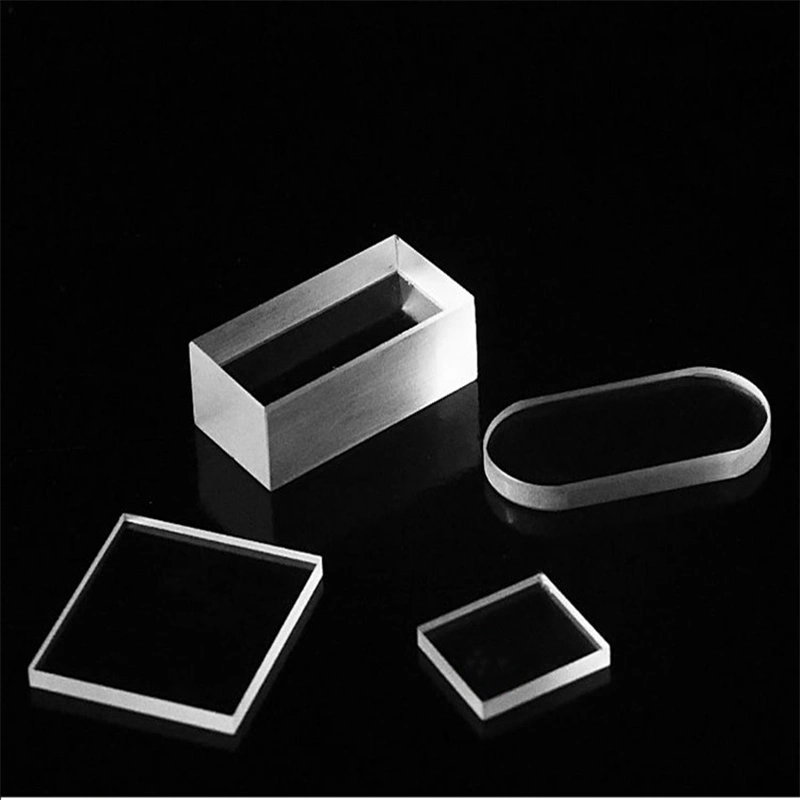
Square & Rectangular Sapphire Windows
For imaging, scanning, analytical and equipment-panel optical openings where a non-circular clear aperture or housing geometry is required.
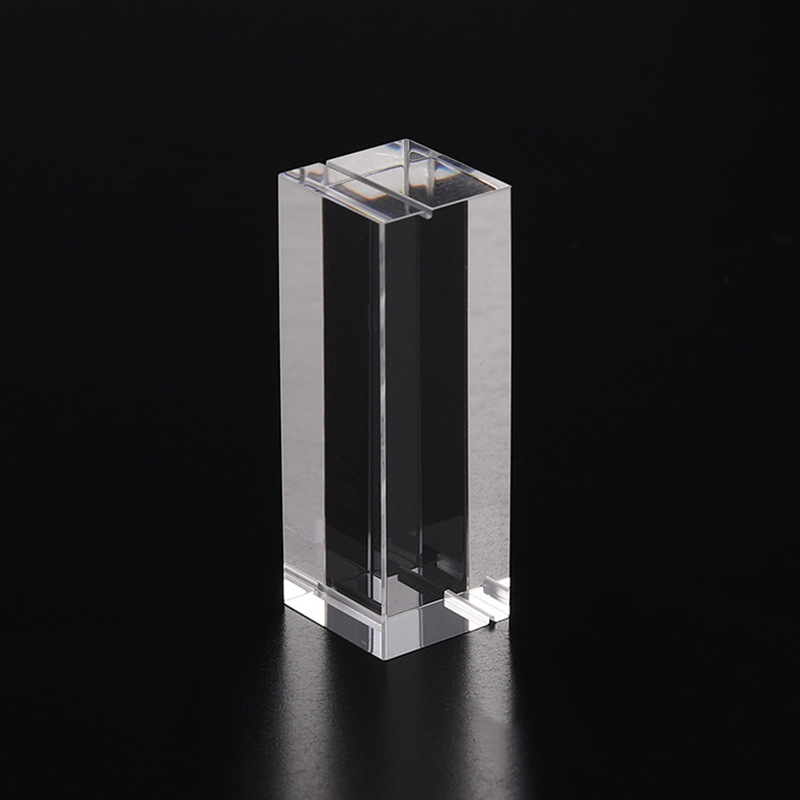
Custom Sapphire Windows
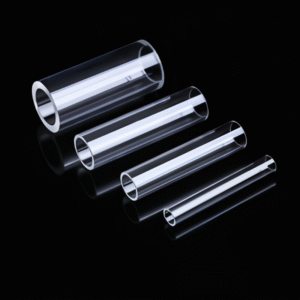
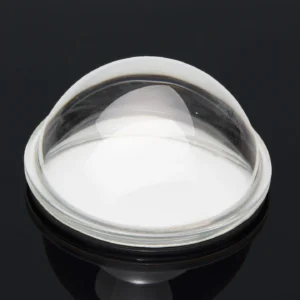
Drawing-based stepped, slotted, wedged, ring-type or other profiled windows can be reviewed with optical surface, edge, coating and mounting requirements defined together.
Choose the Right Sapphire Window for Your Optical & Environmental Requirements
| Application Requirement | Recommended Window Direction | Specifications to Define | Why These Specifications Matter |
|---|---|---|---|
| Laser / Beam Protection | High-quality polished sapphire window with wavelength-specific coating where required | Wavelength, angle of incidence (AOI), beam diameter, optical power / pulse energy or fluence, scratch-dig, flatness or transmitted wavefront, coating, clear aperture | An “AR-coated” description alone is not enough to determine laser suitability. The coating specification must be matched to the wavelength, AOI, beam conditions and optical-load requirement. |
| Sensor / Camera / Imaging | Protective or transmitting sapphire window | Spectral band, clear aperture, surface quality, parallelism or wedge, crystal orientation where polarization is relevant, coating | Surface scatter, unwanted reflections and wedge can reduce signal quality, shift the optical path or affect image performance. |
| Vacuum / Plasma Process Viewport | Sapphire window blank with drawing-defined edge and seating geometry | Clear aperture, thickness, edge geometry, sealing interface, vacuum or process environment, temperature, plasma / chemical exposure, inspection requirement | The sapphire window can be reviewed as an optical component, but complete flange, sealing and UHV assembly performance must be evaluated at the system level. |
| High-Temperature / Chemical Observation | Protective sapphire sight or process window | Temperature range and cycling, atmosphere or chemical media, pressure differential where applicable, mounting method, coating requirement, cleaning method | Sapphire’s high-temperature material capability does not define the allowable operating temperature of the complete mounted window assembly. |
| Analytical / Spectroscopy / Optical Instruments | Optical-grade sapphire window | Target wavelength range, transmitted-beam requirement, scratch-dig, flatness or wavefront, parallelism or wedge, coating | A broad material transmission range does not replace the instrument’s required spectral band, throughput, wavefront or stray-light specification. |
Sapphire Optical Window Properties
| Property | Typical / Reference Value | Selection Relevance |
|---|---|---|
| Material Identity | Synthetic sapphire / single-crystal Al₂O₃ | Distinguishes sapphire from ordinary glass and polycrystalline alumina. |
| Density | ~3.97–3.98 g/cm³ | Useful for material identification and mass estimation. |
| Mohs Hardness | 9 | Supports scratch- and wear-resistance requirements without implying that the surface is scratch-proof. |
| Typical Optical Transmission Band | ~0.20–5.5 μm material reference | Covers UV, visible, NIR and part of the MWIR; actual window transmission depends on thickness, surface condition, orientation and coating. |
| Refractive Index | nₒ ≈ 1.768 / nₑ ≈ 1.760, wavelength-dependent | Relevant to the optical design and the birefringent nature of sapphire. |
| Birefringence | ~0.008 typical | Crystal orientation may matter in polarisation-sensitive or precision imaging systems. |
| Thermal Conductivity | ~40 W/m·K at room temperature, orientation/source dependent | Provides a material reference for thermally demanding window environments. |
Reference note: Typical sapphire material reference values only. Optical performance varies with wavelength, thickness, crystal orientation, surface finish, coating and test method. Final acceptance follows the approved window drawing and optical specification.
Sapphire Optical Window Data and Specifications
Optical Window Specification Options
| Specification | Available / Review Basis | Why It Matters |
|---|---|---|
| Material | Optical-grade synthetic sapphire / single-crystal Al₂O₃ | Defines the material as single-crystal sapphire rather than ordinary glass or polycrystalline alumina. |
| Shape | Round, square and rectangular; stepped, slotted, wedged or other profiled geometry by drawing review | Controls mechanical fit, sealing interface and usable clear aperture. |
| Crystal Orientation | Random and C-plane as core options; additional specified orientations by project review | Can matter in birefringence- or polarization-sensitive optical systems. |
| Surface Finish | Optical polish; SSP or DSP where the design requires one or both polished faces | Affects scatter, transmission and the usable optical surface. |
| Surface Quality | Scratch-dig specified according to the optical requirement; protective and high-precision grades reviewed by project | Controls allowable surface defects, scatter and defect sensitivity. |
| Flatness / Transmitted Wavefront | Specified by clear aperture, test method and optical-system requirement | Can affect beam quality, imaging and wavefront distortion. |
| Parallelism / Wedge | Specified according to beam, imaging and assembly requirements | Controls beam deviation, ghost reflections and face-to-face angular error. |
| Clear Aperture | Defined in the drawing or optical specification | Defines the usable optical area independently from the overall part size. |
| Edge | Ground, chamfered, beveled, stepped or drawing-defined edge | Supports mounting, sealing and handling requirements. |
| Coating | Uncoated or project-specified AR, broadband AR or other functional coating subject to coating review | Matches reflection and transmission performance to the required wavelength and angle of incidence. |
| Optical Band | Sapphire material reference spans UV through visible and NIR into part of the MWIR; final window performance depends on thickness, polish, orientation and coating | Prevents a material transmission range from being mistaken for guaranteed component transmission. |
| Dimensional Tolerance | Defined by drawing and window geometry | Controls mechanical fit and assembly compatibility. |
Sapphire Optical Window Specifications
| Part No. | Size(Diameter × Thickness) | Orientation | Typical Optical Use |
| AT-CKP-001 | 10.0×2.0mm | Random | Compact laser sensor cover or small IR inspection window |
| AT-CKP-002 | 12.0×1.0mm | Random | Thin optical protection window for low-load sensor assemblies |
| AT-CKP-003 | 12.0×2.0mm | Random | General-purpose optical window for UV, VIS or IR instruments |
| AT-CKP-004 | 12.0×4.0mm | Random | Thicker protective window for compact viewport assemblies |
| AT-CKP-005 | 15.0×2.0mm | Random | Laser head protection window or small process sight window |
| AT-CKP-006 | 18.0×4.0mm | Random | Thick sapphire viewport for sealed inspection modules |
| AT-CKP-007 | 20.0×2.0mm | Random | Standard sapphire optical window for imaging and sensor protection |
| AT-CKP-008 | 25.0×0.5mm | Random | Ultra-thin sapphire cover for compact optical devices |
| AT-CKP-009 | 25.0×1.0mm | Random | Thin protective sapphire window for instrument housings |
| AT-CKP-010 | 25.0×2.0mm | Random | General optical viewport for laser, vacuum or process equipment |
| AT-CKP-011 | 25.4×1.0mm | Random | One-inch sapphire window for optical inspection systems |
| AT-CKP-012 | 26.0×1.0mm | Random | Sensor protection window for UV, VIS or NIR transmission |
| AT-CKP-013 | 35.0×2.0mm | Random | Larger sapphire optical window for viewport and imaging assemblies |
Sapphire Optical Window Optical Processing, Inspection & Packaging
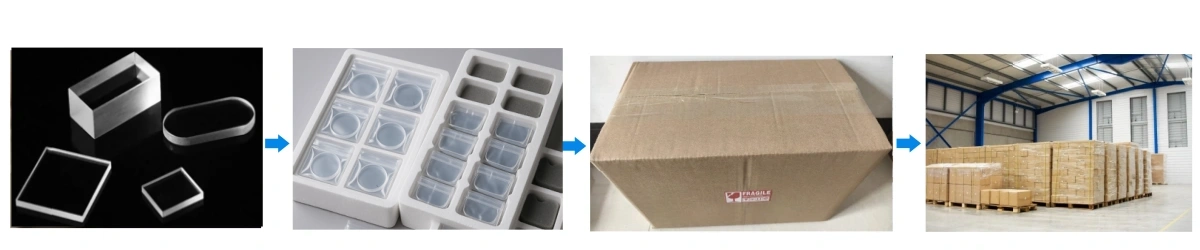
Single-crystal sapphire material selection → crystal-orientation verification where required → cutting/profile machining → grinding and lapping → optical polishing → edge/step / slot finishing → coating where specified → dimensional and optical inspection → clean protective packaging. The approved drawing and optical specification define the final process route and acceptance criteria.
Inspection Points
| Inspection Point | What Is Checked | Customer Input |
|---|---|---|
| Dimensions / Edge | OD or L×W, thickness, step, chamfer/bevel, hole/slot/profile where applicable | Drawing and dimensional tolerances |
| Clear Aperture | Usable optical zone and edge exclusion | Clear-aperture dimension / optical zone |
| Surface Quality | Scratch-dig and cosmetic-defect acceptance | Specified grade / applicable standard |
| Flatness / Wavefront | Surface figure or transmitted wavefront where required | Limit, test wavelength and aperture where applicable |
| Parallelism / Wedge | Face-to-face angle or beam-deviation-related geometry | Angular or optical limit |
| Surface Roughness | Measured only where relevant and with a defined method | Ra/RMS plus measurement method and area |
| Crystal Orientation | Crystal cut/orientation marking where required | C-cut or other specified orientation |
| Coating | Coating side, wavelength band, AOI and ordered optical criterion | Coating specification |
| Visual Cleanliness | Particles, residue, coating contamination and protective handling | Cleanliness/packaging requirement |
| Identification | Coating side, orientation, lot or inspection label where ordered | Marking/traceability requirement |
Packaging