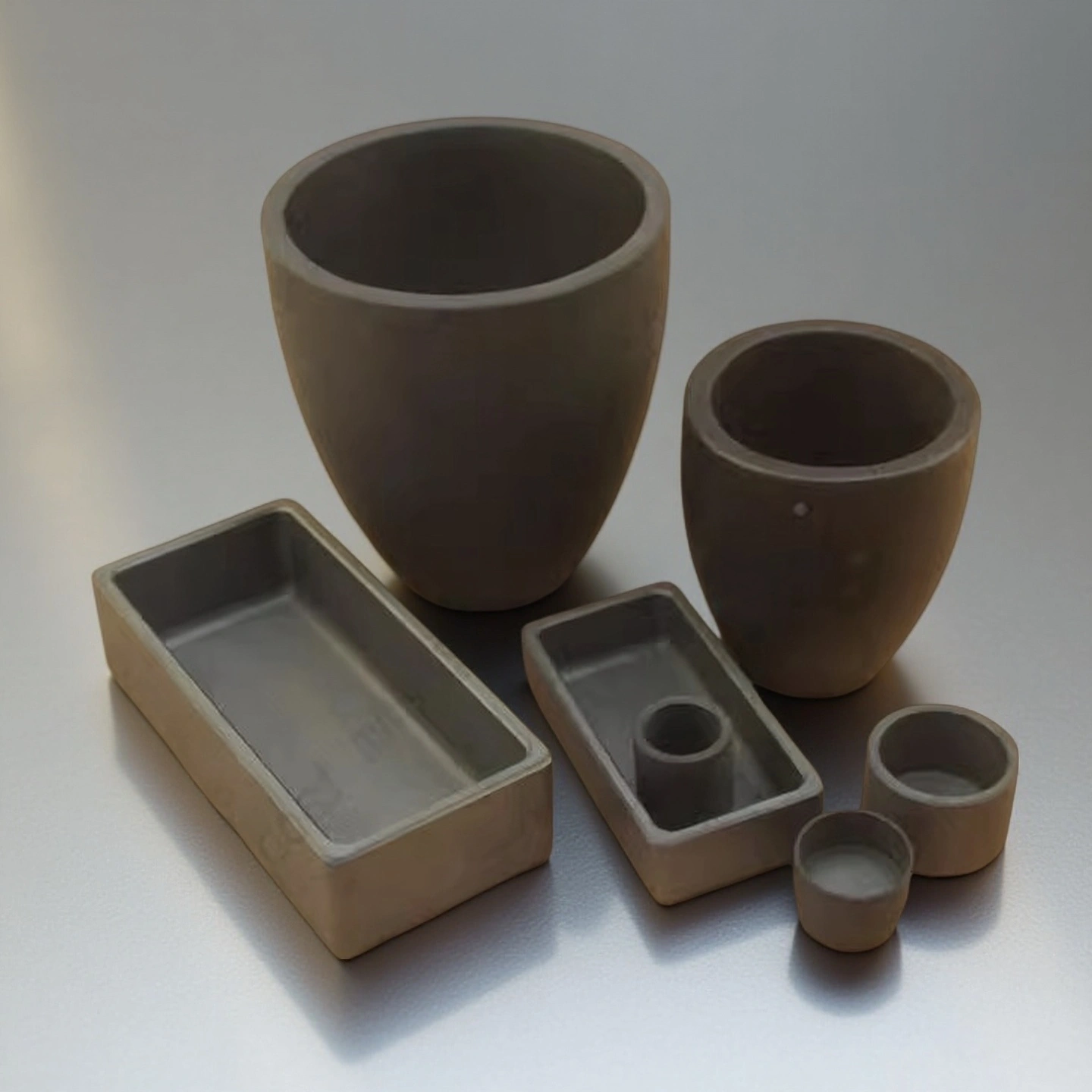
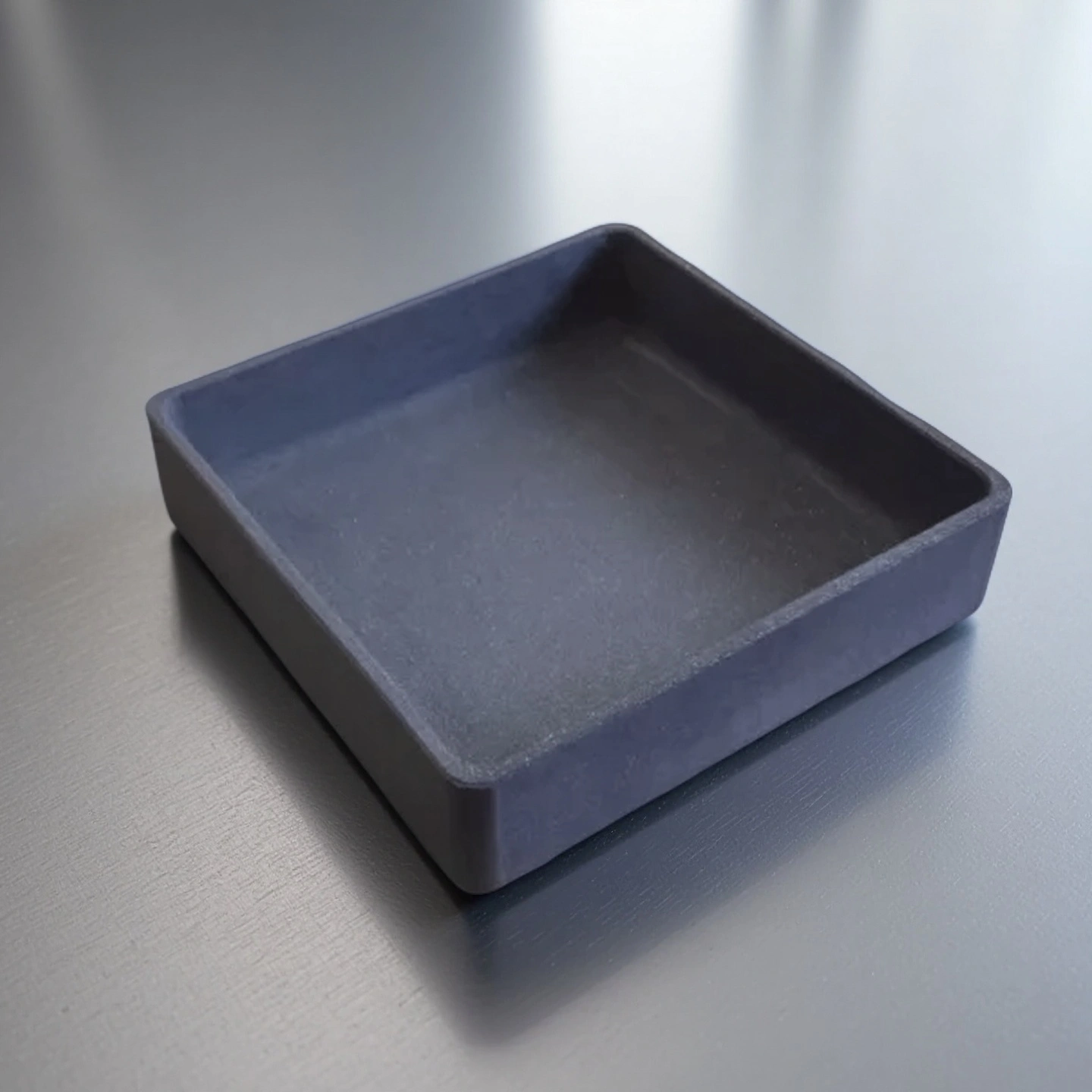
What Is a Silicon Carbide Ceramic Tray?
Silicon carbide ceramic trays are high-temperature support components used to carry ceramic parts, metal powder compacts, electronic ceramic substrates, oxide ceramic parts and other workpieces through sintering, firing, calcination or heat-treatment cycles. Compared with common alumina trays, SiC trays provide higher thermal shock resistance, stronger hot strength and better dimensional stability under repeated furnace loading.
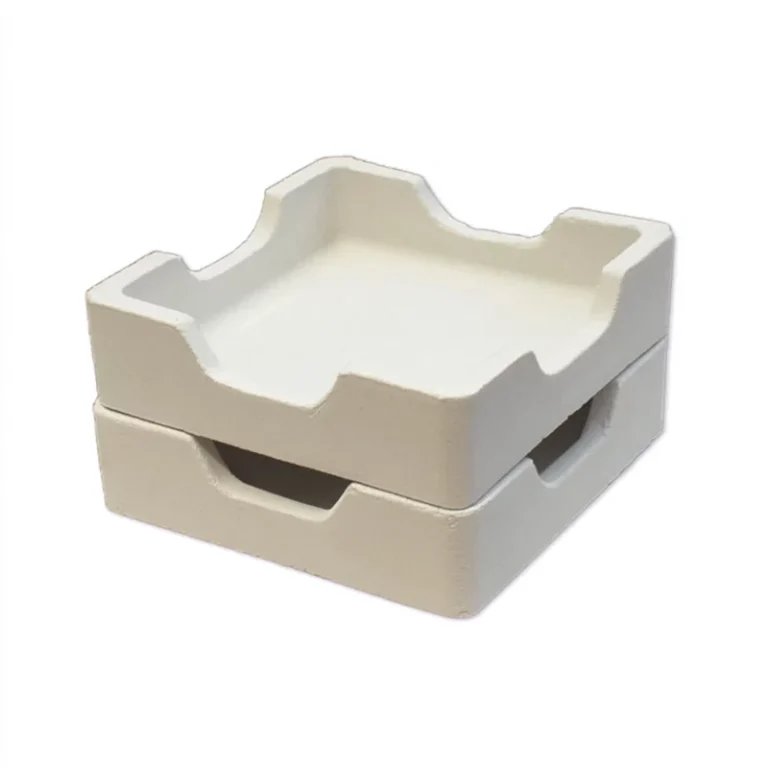
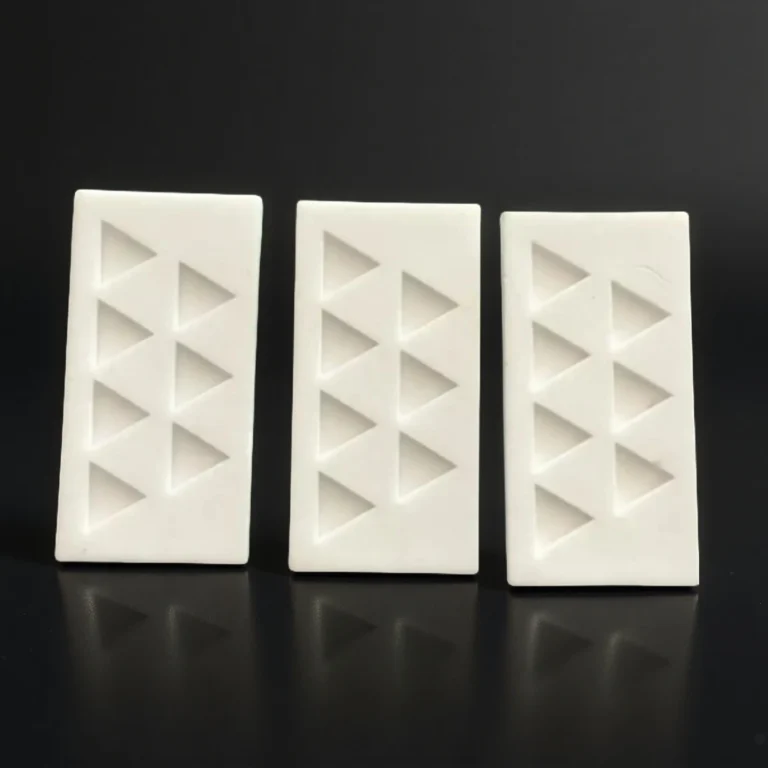
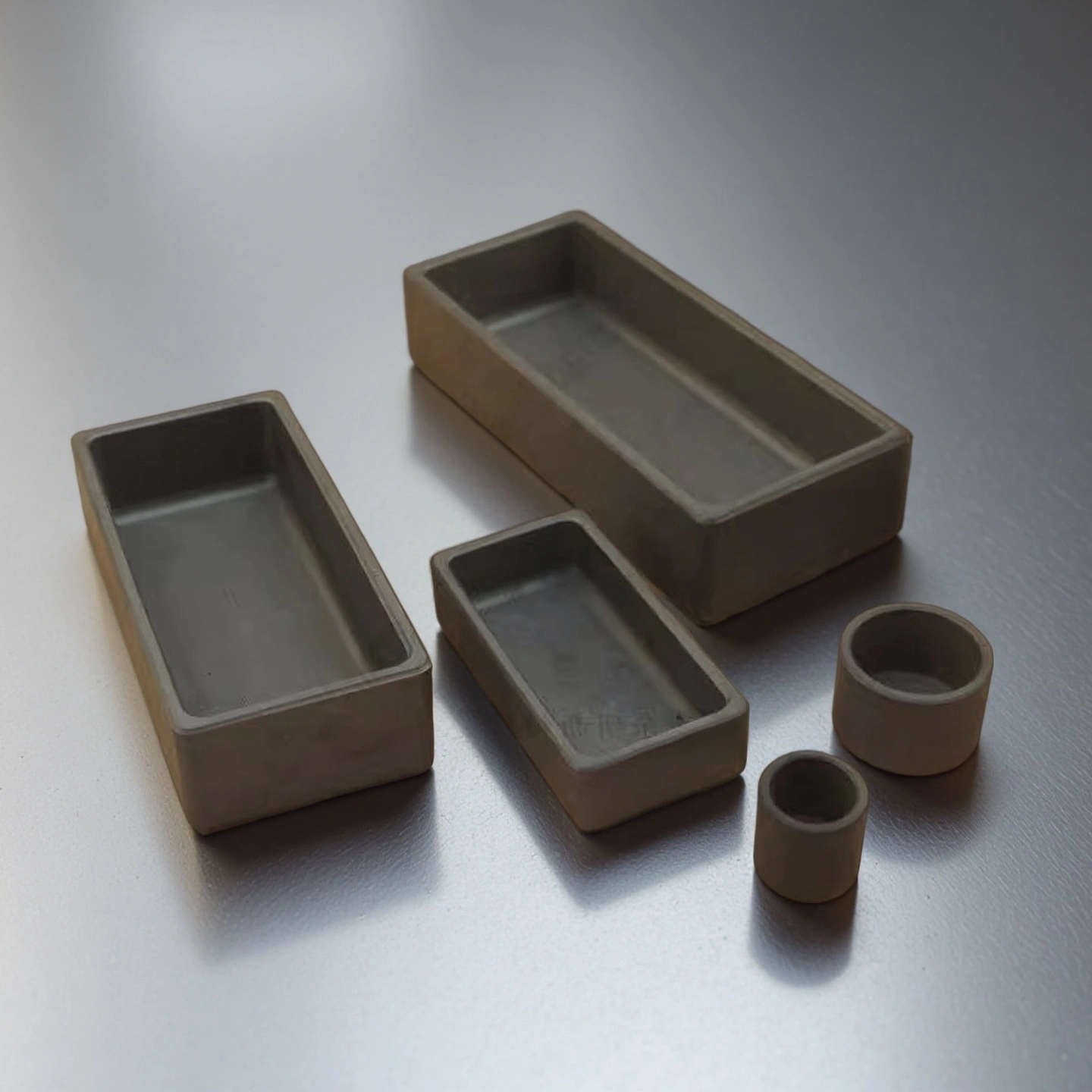
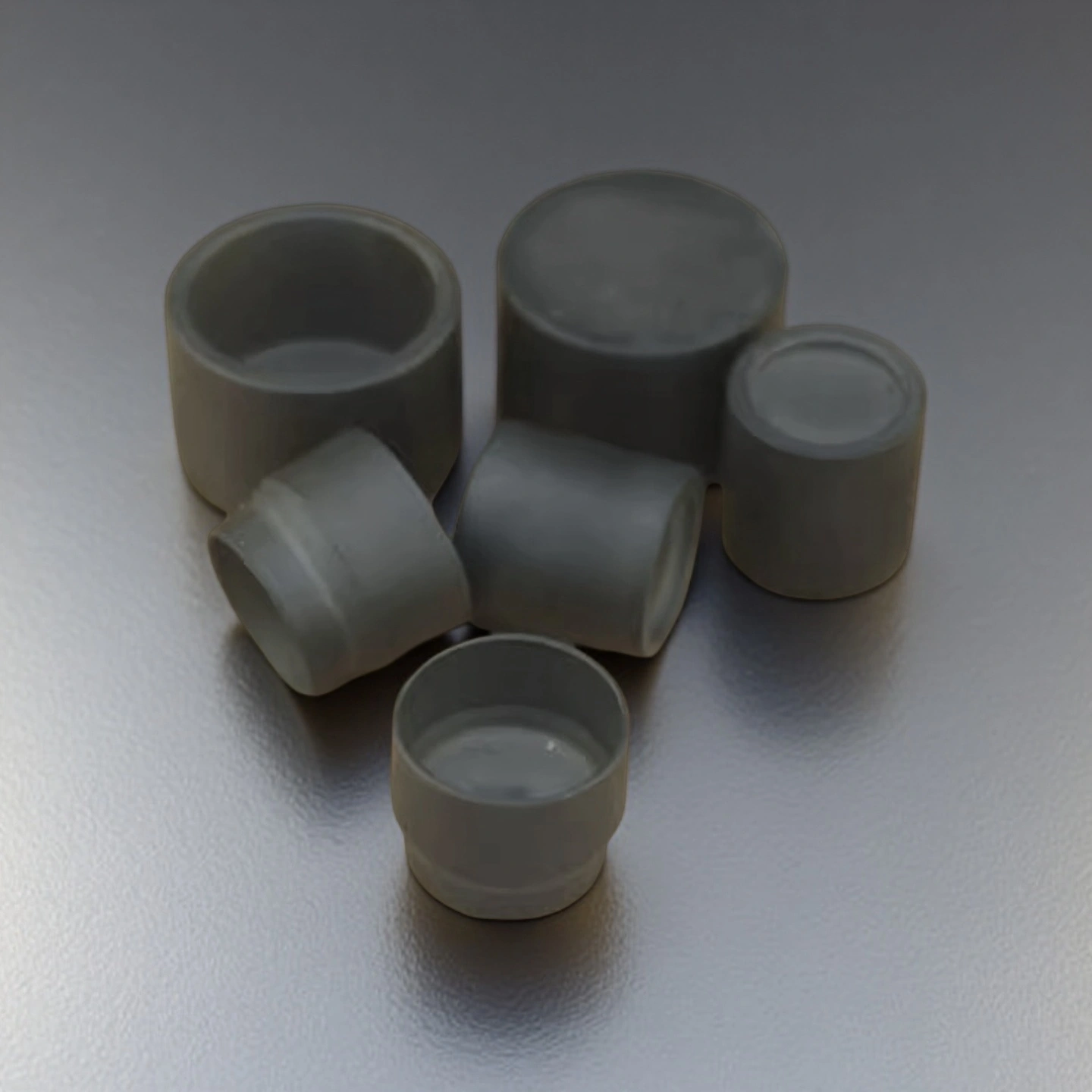
ADCERAX supplies standard rectangular and round SiC ceramic trays, as well as drawing-based custom trays for batch furnaces, tunnel kilns, shuttle kilns, roller kilns, vacuum furnaces and controlled-atmosphere thermal processing lines. Tray size, wall thickness, support ribs, surface finish, edge design and loading pattern can be adjusted after reviewing the working temperature, atmosphere, workpiece weight and furnace structure.
Why Use SiC Trays in High-Temperature Sintering?
In sintering and firing processes, the tray is not only a carrier. It affects heat transfer, part flatness, contamination risk and loading stability. Silicon carbide ceramic trays are selected when standard refractory trays deform, crack, release particles or shorten maintenance intervals under repeated high-temperature cycles.
| Engineering Requirement | Why SiC Ceramic Helps |
|---|---|
| High-temperature loading | SiC maintains better strength and rigidity at elevated temperature than many standard oxide ceramic supports. |
| Thermal cycling | Low thermal expansion and good thermal shock resistance help reduce cracking during repeated heating and cooling. |
| Flat part support | Properly designed tray geometry helps reduce warping risk for substrates, discs and compacted parts. |
| Low contamination risk | Dense SiC surfaces can reduce particle shedding when the material and surface finish are correctly selected. |
| Furnace integration | Rectangular, round, notched, ribbed or custom trays can be designed for different kiln loading systems. |
Advantages of Silicon Carbide Ceramic Trays
- Controlled dimensional accuracy – Tray size, thickness and flatness can be reviewed according to furnace layout, support span and drawing requirements.
- Repeated furnace cycle stability – SiC ceramic trays are suitable for repeated high-temperature use when loading weight, heating rate and cooling conditions are properly controlled.
- Custom geometry support – Rectangular, round, grooved, notched, ribbed, stepped and drawing-based tray designs are available for different furnace systems.
- Lower defect risk – Proper material selection and surface finish help reduce warping, particle release and contact-related defects during sintering.
- Strong ceramic body – Dense SiC ceramic structure helps reduce edge abrasion, handling damage and crack-initiation risk during furnace loading and unloading.
SiC Ceramic Tray Properties
|
Property |
Unit |
Reaction-sintered SiC (SiSiC) |
Nitride-Bonded Silicon Carbide (NBSiC) | Pressureless Sintered Silicon Carbide (SSiC) |
| Free Silicon Content |
% |
85 |
80 |
99 |
|
Free Silicon Content |
% |
15 |
0 |
0 |
|
Density |
g/cm3 |
3.02 |
2.72 |
3.1-3.15 |
|
Max. Service Temp. |
℃ |
≤1380 |
1550 |
≤1600 |
|
Vickers Hardness |
kg/mm2(HV) |
2500 |
2500 |
2800 |
|
Coefficient of Thermal Expansion |
K-1×10⁻⁶ |
4.5 |
5 |
4.1 |
|
Bending Strength |
Mpa(20℃) |
250 |
160 |
380 |
|
Mpa(1200℃) |
280 |
180 |
400 |
|
|
Modulus of Elasticity |
Gpa(20℃) |
330 |
220 |
420 |
|
Gpa(1200℃) |
300 |
/ |
/ |
|
|
Thermal Conductivity |
W/m.k(1200℃) |
45 |
15 |
74 |
|
Porosity |
% |
<0.1 |
12 |
<0.1 |
Standard SiC Tray Shapes and Size Options
ADCERAX provides both standard SiC tray formats and custom dimensions. Standard trays are suitable for quick replacement or sample testing, while custom trays are recommended when the furnace has fixed loading rails, limited chamber space, special stacking methods or strict part-flatness requirements.
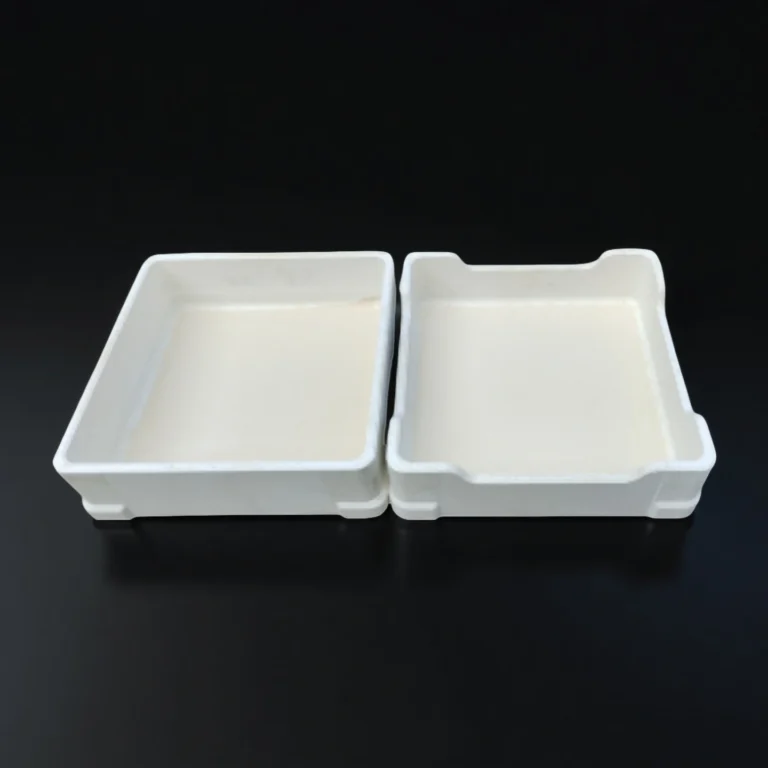
Type 1-Rectangular SIC Ceramic Trays
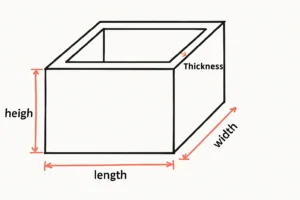
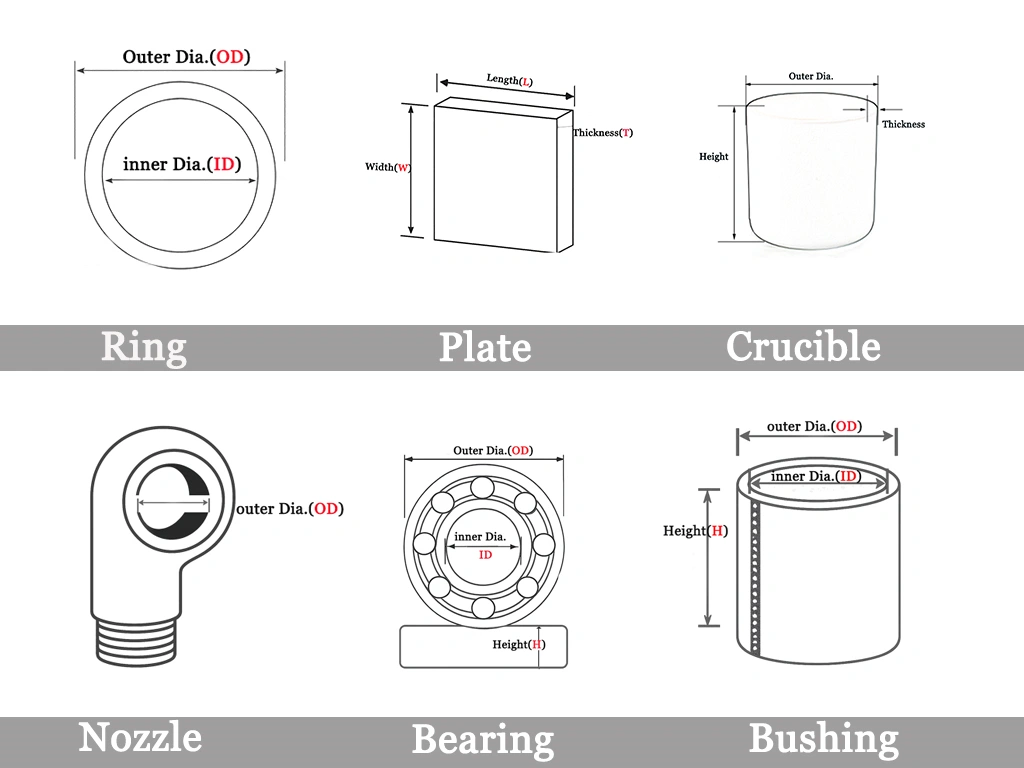
| Item | Length(mm) | Width(mm) | Height(mm) | Thickness(mm) |
| AT-SIC-G1037 | 51.5 | 25.5 | 20.5 | 3.5 |
| AT-SIC-G1038 | 70 | 70 | 25 | 5 |
| AT-SIC-G1039 | 80.5 | 67.5 | 21 | 5 |
| AT-SIC-G1040 | 100 | 100 | 30 | 4 |
| AT-SIC-G1041 | 100 | 30 | 25 | 5 |
| AT-SIC-G1042 | 122 | 49 | 37 | 5 |
| AT-SIC-G1043 | 150 | 150 | 80 | 5.5 |
| AT-SIC-G1044 | 160 | 160 | 72 | 7 |
| AT-SIC-G1045 | 175 | 175 | 50 | 6 |
| AT-SIC-G1046 | 180 | 70 | 35 | 5.5 |
| AT-SIC-G1047 | 190 | 80 | 40 | 6 |
| AT-SIC-G1048 | 200 | 35 | 8 | 5.5 |
| AT-SIC-G1049 | 265 | 175 | 20 | 8 |
| AT-SIC-G1050 | 300 | 300 | 110 | 6 |
| AT-SIC-G1051 | 300 | 300 | 150 | 6.5 |
| AT-SIC-G1052 | 300 | 300 | 175 | 7.5 |
| AT-SIC-G1053 | 320 | 320 | 110 | 6.5 |
| AT-SIC-G1054 | 320 | 320 | 48 | 5.5 |
| AT-SIC-G1055 | 320 | 320 | 60 | 6 |
| AT-SIC-G1056 | 320 | 320 | 75 | 6 |
| AT-SIC-G1057 | 320 | 320 | 80 | 7 |
| AT-SIC-G1058 | 320 | 320 | 85 | 8 |
| AT-SIC-G1059 | 490 | 255 | 50 | 10 |
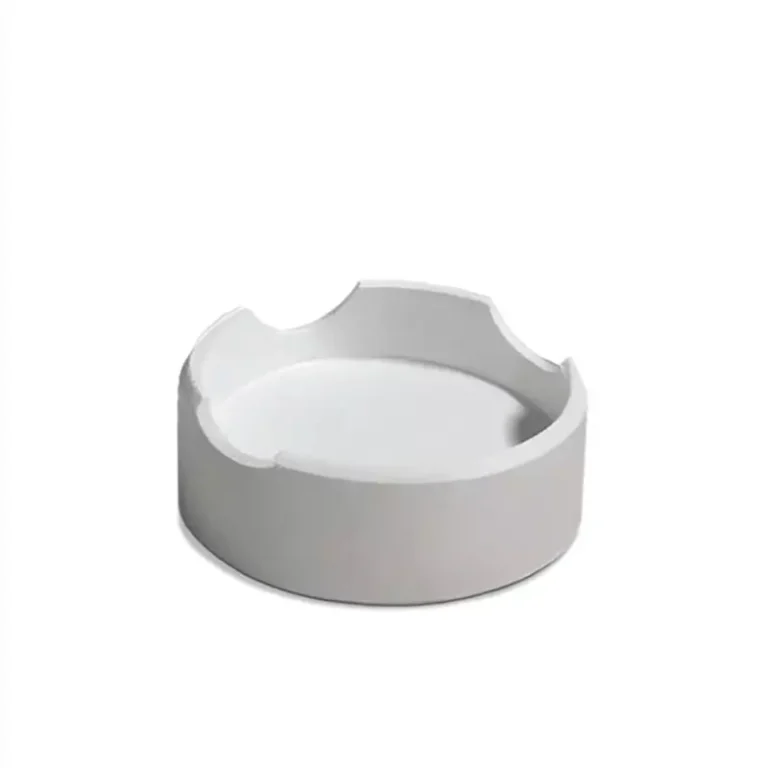
Type 2-Round SIC Ceramic Trays
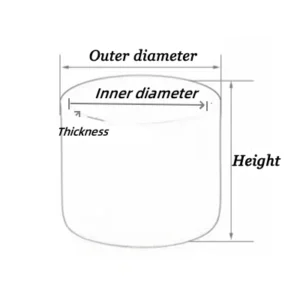
| Item | Outer Diameter(mm) | Inner Diameter(mm) | Height(mm) | Thickness(mm) |
| AT-SIC-G1001 | 10.0 | 7.8 | 19.0 | 1.1 |
| AT-SIC-G1002 | 12 | 8 | 26 | 2 |
| AT-SIC-G1003 | 14.5 | 10.5 | 33.5 | 2 |
| AT-SIC-G1004 | 20 | 16 | 31 | 2 |
| AT-SIC-G1005 | 22 | 16 | 80 | 3 |
| AT-SIC-G1006 | 23 | 19 | 81 | 2 |
| AT-SIC-G1007 | 28 | 21 | 110 | 3.5 |
| AT-SIC-G1008 | 29 | 22 | 17.5 | 3.5 |
| AT-SIC-G1009 | 29 | 24 | 19.7 | 2.5 |
| AT-SIC-G1010 | 32.5 | 26.5 | 29 | 3 |
| AT-SIC-G1011 | 38 | 29 | 32.5 | 4.5 |
| AT-SIC-G1012 | 38 | 29.8 | 45 | 4.1 |
| AT-SIC-G1013 | 41 | 33 | 71.5 | 4 |
| AT-SIC-G1014 | 42 | 33 | 73 | 4.5 |
| AT-SIC-G1015 | 45 | 38 | 18 | 3.5 |
| AT-SIC-G1016 | 47.5 | 38 | 74 | 4.75 |
| AT-SIC-G1017 | 51 | 41 | 122 | 5 |
| AT-SIC-G1018 | 51 | 44 | 73 | 3.5 |
| AT-SIC-G1019 | 52 | 39 | 144 | 6.5 |
| AT-SIC-G1020 | 53 | 42 | 124 | 5.5 |
| AT-SIC-G1021 | 60 | 51 | 100 | 4.5 |
| AT-SIC-G1022 | 61 | 51 | 102 | 5 |
| AT-SIC-G1023 | 61 | 52 | 102 | 4.5 |
| AT-SIC-G1024 | 61.5 | 53 | 122 | 4.25 |
| AT-SIC-G1025 | 63 | 52 | 103.5 | 5.5 |
| AT-SIC-G1026 | 65 | 55 | 64.5 | 5 |
| AT-SIC-G1027 | 71 | 61 | 111 | 5 |
| AT-SIC-G1028 | 72.5 | 62.5 | 113 | 5 |
| AT-SIC-G1029 | 73 | 62.5 | 125.5 | 5.25 |
| AT-SIC-G1030 | 80 | 58 | 91 | 11 |
| AT-SIC-G1031 | 93 | 83 | 103 | 5 |
| AT-SIC-G1032 | 94 | 83.5 | 104.5 | 5.25 |
| AT-SIC-G1033 | 100 | 92 | 132 | 4 |
| AT-SIC-G1034 | 104 | 90 | 182 | 7 |
| AT-SIC-G1035 | 105 | 95 | 135.5 | 5 |
| AT-SIC-G1036 | 380 | 344 | 255 | 18 |
How to Select the Right SiC Tray Material?
Different silicon carbide material systems behave differently under furnace temperature, atmosphere and loading conditions. Before confirming the tray design, ADCERAX reviews whether reaction-bonded SiC, nitride-bonded SiC or pressureless sintered SiC is more suitable for the application.
| Material Option | Better For | Selection Note |
|---|---|---|
| Reaction-Bonded SiC | General high-temperature trays, kiln furniture, structural supports and larger custom shapes. | Suitable when dimensional stability, thermal shock resistance and cost control are balanced. |
| Nitride-Bonded SiC | Kiln furniture and thermal-processing supports where oxidation behavior and mechanical stability are both important. | Often used for repeated firing cycles and industrial furnace support parts. |
| Pressureless Sintered SiC | Higher-density applications requiring stronger chemical resistance and lower porosity. | Recommended when corrosion, high purity or aggressive process media are major concerns. |
For heavy loading, wide-span tray support or repeated rapid heating cycles, tray thickness and reinforcement design are often more important than material grade alone.
Silicon Carbide Ceramic Tray Packing
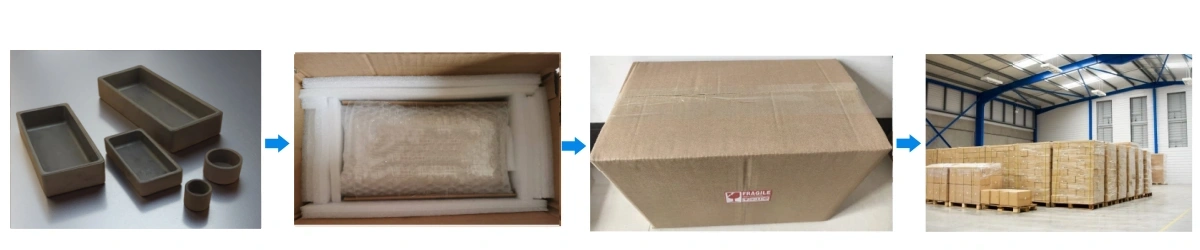
Each tray is individually packed using PE foam surfaces and double-corrugated cartons.