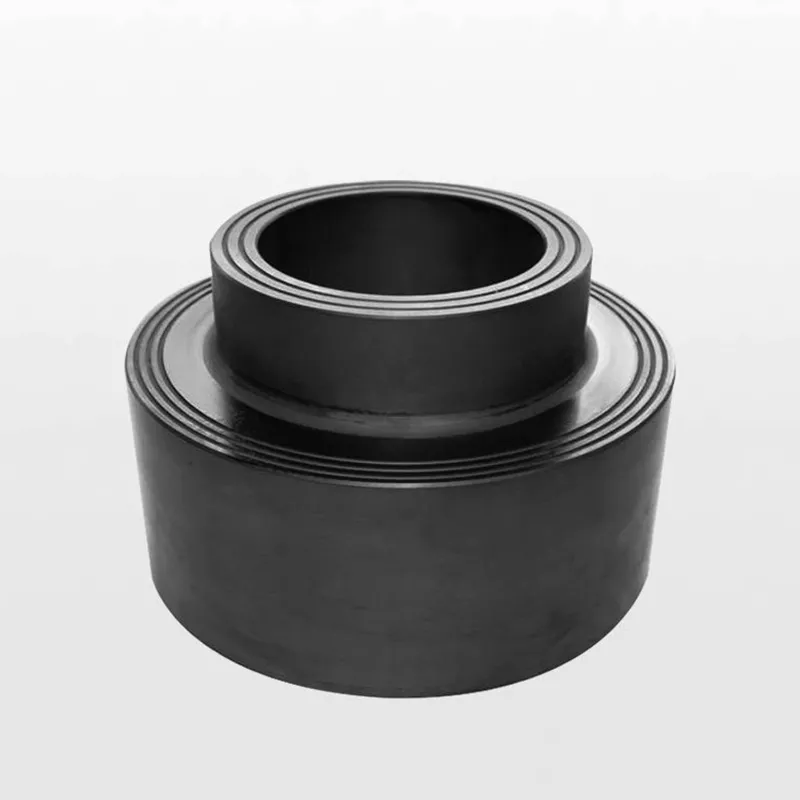
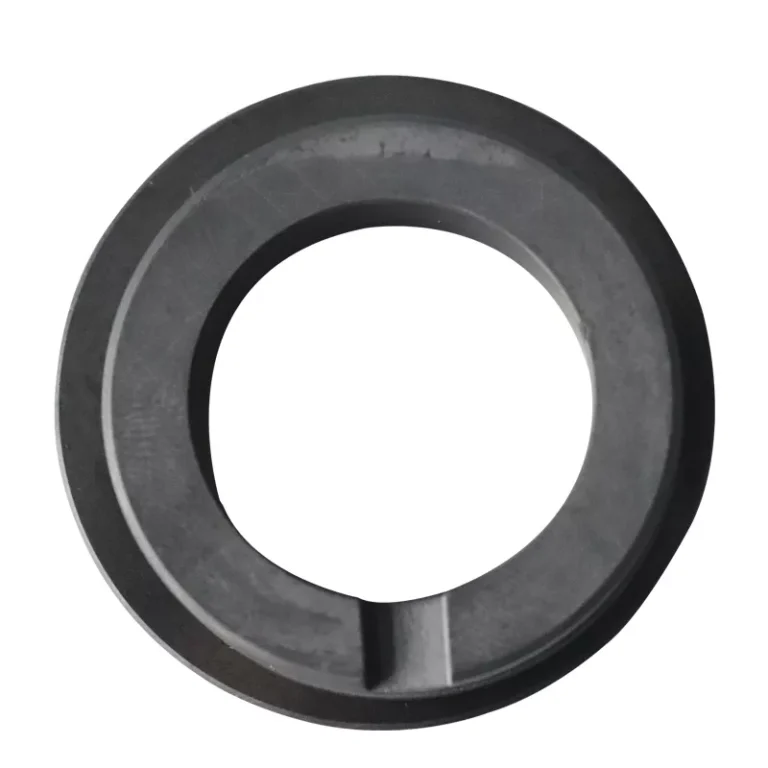
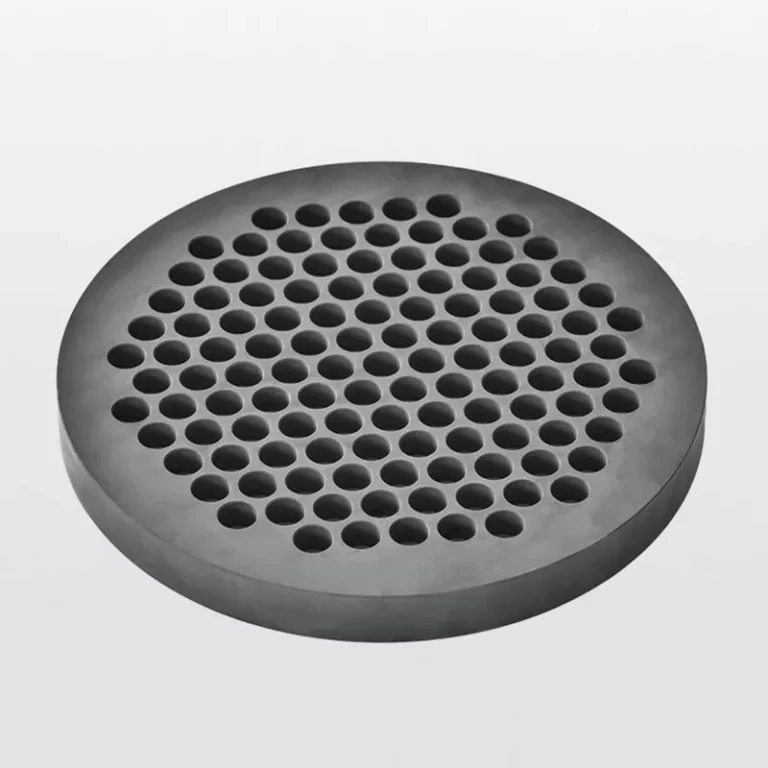
ADCERAX® Silicon Carbide End Cover serves as a corrosion-resistant sealing component engineered for block heat exchangers operating under aggressive chemical, thermal, and pressure conditions. Its material stability allows the component to maintain structural reliability when exposed to HF, sulfuric acid, hydrochloric acid, alkali solutions, and mixed-acid media in continuous industrial service. The design supports stable isolation, long operating cycles, and reduced maintenance frequency across fine chemical production, pharmaceutical processing, and environmental engineering systems.
Engineering Performance Characteristics of Silicon Carbide End Cover
-
High flexural strength of 380–450 MPa enables the end cover to withstand pressure fluctuations without deformation; this provides stable performance under repeated thermal cycling.
-
Compressive strength above 2000 MPa supports long-term sealing pressure in block heat exchangers; this reduces the probability of mechanical failure during extended runtime.
-
Material hardness above 2400 HV minimizes abrasion and prevents surface degradation; this supports multi-year operation in particle-laden flow streams.
-
Full resistance to HF, H₂SO₄, HCl, and mixed acids prevents pitting or swelling during continuous chemical exposure; this ensures predictable sealing reliability throughout the equipment lifecycle.
-
Stable performance in NaOH and KOH solutions minimizes ionic contamination risks; this supports clean operation in pharmaceutical and fine-chemical processes.
-
Oxidation stability below 1350 °C protects the surface layer from chemical degradation; this enables consistent performance in high-temperature oxidizing atmospheres.
-
Thermal conductivity of 28–32 W/m·K supports efficient heat dissipation across the sealing interface; this reduces thermal stress accumulation during rapid temperature rise.
-
Thermal expansion coefficient of 4.5×10⁻⁶/K maintains dimensional stability across a 20–1350 °C range; this reduces the likelihood of sealing misalignment over long operating periods.
-
Temperature resistance up to 1350 °C ensures operational reliability in corrosive heat-exchange streams; this supports long-duration performance in energy-intensive chemical processes.
Technical Specifications of Silicon Carbide End Cover
The Silicon Carbide End Cover delivers stable performance under combined chemical, thermal, and mechanical loads, supported by quantifiable material characteristics that define its suitability for corrosive heat-exchange environments.
| Property |
Specification |
| Material |
Reaction-Bonded Silicon Carbide (RBSiC / SiSiC) |
| Density |
3.03–3.10 g/cm³ |
| Hardness |
>2400 HV |
| Flexural Strength |
380–450 MPa |
| Compressive Strength |
>2000 MPa |
| Thermal Conductivity |
28–32 W/m·K |
| Thermal Expansion Coefficient |
4.5×10⁻⁶ /K (20–1000°C) |
| Maximum Operating Temperature |
1350°C (oxidizing atmosphere) |
| Acid Resistance |
Stable in HF, H₂SO₄, HCl, HNO₃, mixed acids |
| Alkali Resistance |
Stable in NaOH / KOH |
| Oxidation Behavior |
Stable below 1350°C |
| Porosity |
<0.5% |
| Young’s Modulus |
330–410 GPa |
| Electrical Resistivity |
>10⁵ Ω·cm |
Dimensions of Silicon Carbide End Cover
|
SiC End Cover |
|
Item No. |
Diameter(mm) |
Height (mm) |
|
AT-THG-HRK2001-1 |
Customize |
Packaging of Silicon Carbide End Cover
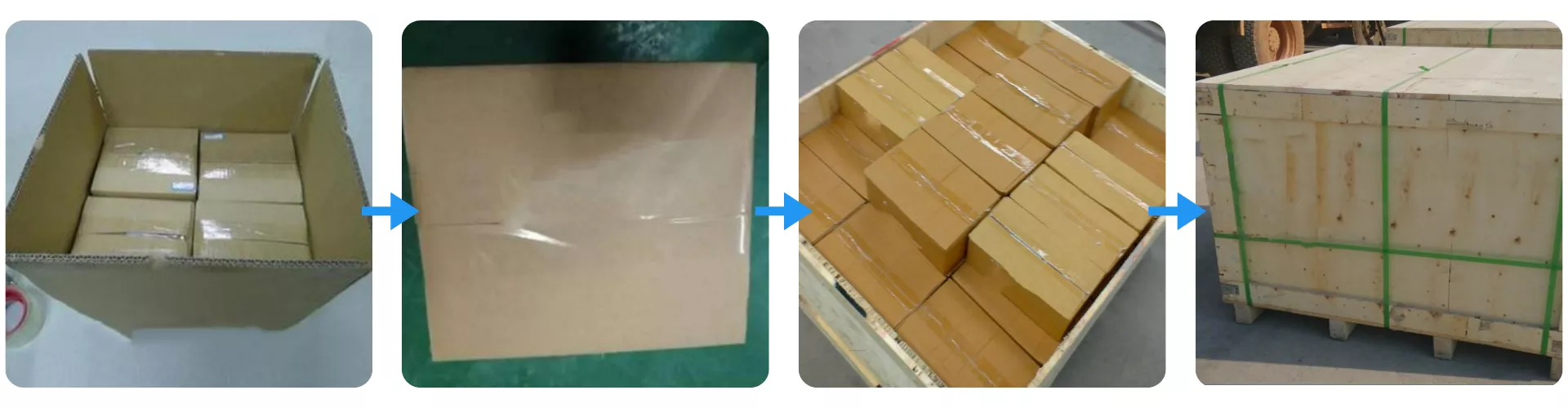
Silicon Carbide End Cover is packed in reinforced inner cartons to protect each component from impact during handling and transit. The sealed cartons are then consolidated into export-grade wooden crates designed for long-distance shipment. This multilayer packaging method ensures stable loading, moisture resistance, and safe arrival at the customer’s facility.
ADCERAX® Silicon Carbide End Cover Solves Corrosive-Process Challenges Across Industrial Heat-Exchange Systems
The Silicon Carbide End Cover from ADCERAX® addresses failure modes commonly seen in corrosive heat-exchange operations, where aggressive acids, solid-laden fluids, and sustained thermal loads demand stable sealing components that can maintain mechanical integrity and ensure long-cycle operation.
-
Silicon Carbide End Cover in HF Acid Heat-Exchanger Units for Fluorochemical Production
✅Key Advantages
1. HF-Resistant SiC Matrix
The reaction-bonded SiC microstructure remains stable in HF streams with concentrations above 30%, where graphite and metals rapidly degrade. This allows the Silicon Carbide End Cover to maintain sealing contact during continuous operation with process temperatures cycling between 80–200°C.
2. Erosion Control in Slurry HF Service
A hardness above 2400 HV reduces surface loss when HF carries fine solids and reaction by-products. Field data from fluorochemical units show that end-cover replacement intervals can increase by a factor of 3–5 compared with graphite plates in similar slurry conditions.
3. Stable Sealing Under Thermal Cycling
A thermal expansion coefficient of 4.5×10⁻⁶/K limits distortion during frequent heat-up and cool-down cycles. This stability helps preserve gasket loading and sealing line contact across more than 2000 combined thermal and pressure cycles.
✅ ️Problem Solved
A fluorochemical plant operating HF heat exchangers experienced seal failures on graphite end covers roughly every 8–12 weeks, usually after periods of aggressive thermal cycling and slurry transport. Each incident led to unplanned shutdowns and extensive inspection of the block stack and piping joints. After transitioning to ADCERAX® Silicon Carbide End Cover units, leak events at the end-cover interface dropped from more than 6 per year to fewer than 2 per year. Recorded operating data showed that maintenance intervals extended from approximately 2000 operating hours to over 6000 hours without sealing-related interventions. Overall line availability in the HF section increased by about 5–7%, with fewer corrective interventions on the heat-exchange block assembly.
-
Silicon Carbide End Cover in Sulfuric Acid Waste-Heat Recovery Reactors
✅Key Advantages
1. Oxidation Stability in Hot Acid Vapor
The Silicon Carbide End Cover maintains structural integrity in oxidizing atmospheres up to 1350°C, where metallic components suffer rapid scale formation. In sulfuric acid waste-heat sections typically running between 250–400°C, this stability preserves sealing surfaces over campaigns of 6–12 months.
2. High Load Capacity for Long Campaigns
A compressive strength above 2000 MPa allows the end cover to withstand sustained bolting loads without creep or edge deformation. This load-bearing capability keeps contact pressure within design limits even after thousands of hours of continuous reactor operation.
3. Low Porosity Against Acid Ingress
Bulk porosity below 0.5% limits acid ingress into the ceramic body, avoiding subsurface crack initiation during start-up and shutdown phases. Test data from plant inspections show significantly reduced edge erosion depth compared with graphite plates after more than 4000 hours in hot acid vapor service.
✅ ️Problem Solved
In a sulfuric acid waste-heat recovery unit, operators reported progressive edge recession and surface erosion on graphite end plates over each campaign, which led to sealing pressure loss before the planned shutdown window. During several years of operation, this premature degradation triggered unplanned maintenance events two to three times per year. After installing ADCERAX® Silicon Carbide End Cover components, post-campaign inspections over more than 5000 operating hours found only minor surface wear and no measurable loss of sealing contact width. The number of seal-related interventions in the waste-heat block was reduced to a single inspection aligned with the regular annual outage. Reactor uptime in the acid section increased by approximately 4–6%, with more predictable planning of maintenance windows.
-
Silicon Carbide End Cover in Chloride-Rich VOC Off-Gas Heat Recovery Systems
✅Key Advantages
1. Erosion Resistance in Particulate Off-Gas
With hardness above 2400 HV, the Silicon Carbide End Cover resists abrasion from gas streams containing more than 5% entrained particulates from upstream scrubbers. This erosion resistance preserves sealing-step geometry even after thousands of hours in chloride-rich VOC service.
2. Dimensional Stability Under Rapid Heating
The combination of a thermal expansion coefficient of 4.5×10⁻⁶/K and operating capability up to 1350°C helps the component tolerate rapid temperature ramps in off-gas systems. This stability limits distortion at the sealing interface during repeated start-stop cycles and load-following operation.
3. Chemical Robustness in Chloride and Acid Aerosols
The SiC matrix remains stable in mixed chloride and acid aerosols that typically affect metal and polymer-lined components. Plant measurements show that sealing surface condition remains within acceptable flatness and roughness criteria after more than 3000 hours of exposure to chloride-bearing VOC streams.
✅ ️Problem Solved
An environmental engineering installation using VOC off-gas heat recovery reported recurrent degradation of metallic end covers caused by a combination of chlorides, acidic condensate, and particulate erosion. Over time, this degradation reduced heat-recovery efficiency by an estimated 8–12% and shortened maintenance intervals to less than one operating quarter. After converting to ADCERAX® Silicon Carbide End Cover units, inspection records over multiple campaigns showed that sealing surfaces retained their geometry, and leakage-related efficiency loss was no longer observed. Maintenance intervals for the heat-recovery module extended to more than 4000 operating hours, and the energy-recovery efficiency remained within 95–98% of design across successive reporting periods.
ADCERAX® Silicon Carbide End Cover User Guide for Safe and Efficient Operation
The Silicon Carbide End Cover requires proper handling, installation, and maintenance to ensure consistent sealing performance in corrosive and high-temperature heat-exchange systems. This guide provides practical, engineer-focused instructions to help users maintain operational stability, extend component life, and avoid preventable failures during long-cycle industrial service.
-
Pre-Installation Handling of the Silicon Carbide End Cover
1. Inspect sealing surfaces before assembly
Each end cover should be visually checked for surface cracks, scratches, or contamination to prevent sealing instability. Any visible defects can influence compression uniformity during operation. Conducting this inspection before installation reduces unexpected shutdown risks.
2. Avoid localized impact during transportation
Silicon carbide components tolerate load but remain sensitive to sharp mechanical shocks on edges or sealing steps. Using cushioned support and controlled lifting prevents micro-fractures that could enlarge under thermal cycling. Proper handling increases long-term sealing reliability.
3. Clean all interfaces before mounting
The sealing face must be free from dust, residual packaging fibers, or chemical deposits. Contamination between surfaces may cause uneven load distribution once the system pressurizes. Cleaning with soft brushes and neutral solutions helps preserve sealing consistency.
-
Installation Guidelines for Consistent Sealing Performance
1. Confirm alignment with the heat-exchange block
Misalignment between the end cover and block interface can create non-uniform sealing stress, increasing failure likelihood during thermal expansion. Proper alignment ensures full-surface contact and stable axial compression. Using alignment tools improves installation precision.
2. Apply uniform compression force
Excessive localized pressure may generate stress points exceeding material strength thresholds, while insufficient load reduces sealing capability. Even torque application across fastening points maintains predictable sealing performance. This method supports system integrity under repeated thermal cycles.
3. Verify compatibility with sealing materials
Gaskets or seals must withstand exposure to HF, H₂SO₄, HCl, alkalis, and mixed acids. Incompatible materials may soften or embrittle during operation, leading to leaks. Selecting suitable sealing media improves long-term system stability.
-
Operational Recommendations for High-Demand Chemical Processes
1. Monitor temperature gradients during startup
Rapid thermal rise may induce stress concentration within the cover-body structure, especially under mixed-acid flow. Controlled ramp-up reduces internal temperature differential and extends service life. Gradual heating also protects surrounding block components.
2. Maintain stable flow conditions
Abrasive slurries and particulate-rich media require sustained flow to prevent erosion acceleration at localized points. Uniform flow distribution reduces wear on sealing steps. Consistent operating parameters support predictable performance.
3. Check for changes in sealing pressure
Progressive reduction in bolt tension or gasket load may impact long-cycle sealing performance. Periodic inspection helps identify early signs of deformation or load relaxation. Corrective adjustments sustain long-term reliability.
-
Maintenance and Long-Cycle Service Practices
1. Conduct periodic system inspections
Checking sealing interfaces after defined intervals helps detect surface wear or chemical etching before they progress. Early detection prevents unplanned outages and supports stable equipment performance. Routine inspection intervals depend on chemical concentration and system temperature.
2. Document operating hours and conditions
Tracking conditions such as temperature cycles, acid concentration, and flow rate assists in predicting replacement windows. Documented data provides a baseline for optimizing preventive maintenance strategies. Accurate records also support future engineering evaluation.
3. Store spare components appropriately
End covers should be stored in dry, vibration-free, and dust-controlled environments. Physical separation prevents edge chipping during handling. Proper storage ensures that spare components retain their original sealing integrity.