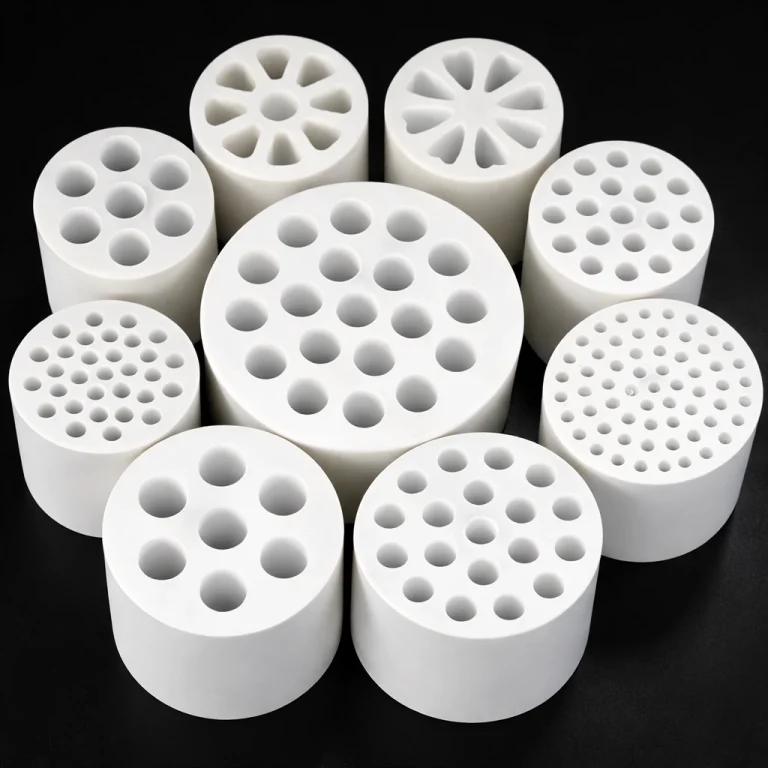
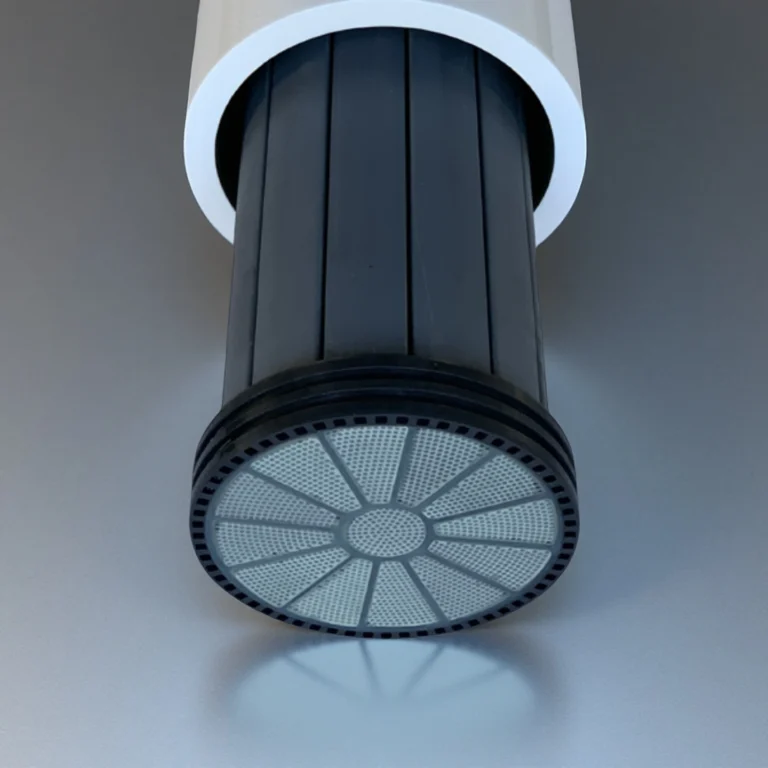
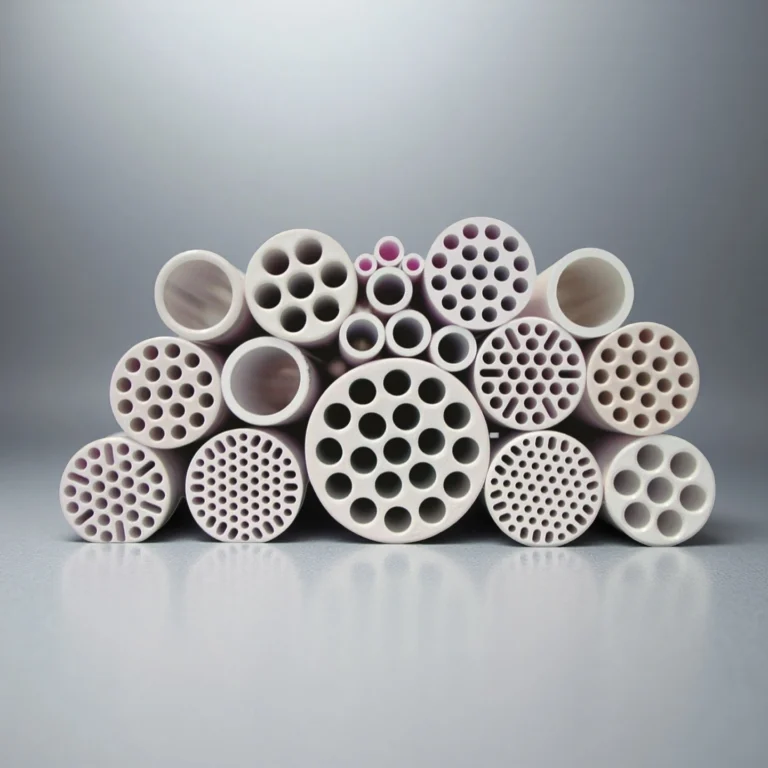
ADCERAX® Silicon Carbide Flat Sheet Ceramic Membrane is engineered from high-purity recrystallized SiC, delivering stable permeability and mechanical strength under demanding water and wastewater treatment conditions. Its hydrophilic microstructure, high porosity, and strong chemical resistance enable higher flux and lower operating cost compared with organic, tubular, and alumina-based membranes. This fully inorganic flat-sheet configuration supports compact system design, long service life, and reliable performance across municipal plants, industrial filtration, and seawater pretreatment.
Performance Characteristics of the Silicon Carbide Flat Sheet Ceramic Membrane
-
Enhanced Hydrophilicity
The SiC microstructure allows rapid wetting and maintains immediate permeability with >3000 LMH/(m²·h·bar) pure-water flux at 25 °C.
This improves early-stage filtration efficiency and reduces TMP build-up during continuous operation.
-
High Porosity Structure
A fully interconnected pore network provides porosity typically >40–45%, improving permeate flow pathways.
This reduces required membrane area and significantly enhances energy efficiency in submerged filtration towers.
-
Stable Flux Under Load Variation
The membrane maintains operational stability when influent solids fluctuate by ±30%, preventing shock-load fouling.
This ensures predictable performance in MBR aeration tanks and high-COD industrial wastewater systems.
-
Resistance to Oil and Organic Fouling
Surface energy characteristics reduce irreversible fouling from industrial oils by over 50% compared with organic UF membranes.
This allows consistent flux performance in refinery wastewater, petrochemical streams, and PFAS–PAC coupled filtration.
-
High Mechanical Rigidity
Recrystallized SiC maintains structural integrity under vacuum suction pressures up to –0.7 bar without deformation.
This stability enables reliable operation during aeration-scour cycles and high-solids filtration.
-
Compact and Fully Modular Design
A frame-free flat-sheet configuration enables installation of up to 42 sheets per module, achieving 7.5 m² filtration area.
This improves packing density and allows engineering teams to expand or retrofit capacity with minimal structural modification.
Technical Specifications of Silicon Carbide Flat Sheet Ceramic Membrane
The Silicon Carbide Flat Sheet Ceramic Membrane exhibits stable filtration performance supported by its recrystallized SiC microstructure, high porosity, chemical durability, and resistance to thermal and mechanical stresses encountered in municipal, industrial, and seawater treatment systems.
| Parameter |
Value |
| Effective Filtration Area |
0.177 m2 |
| Support Layer Material |
Silicon Carbide |
| Filtration Layer Material |
Silicon Carbide |
| Filtration Accuracy |
0.1 μm |
| Dimensional Specification |
L600×W145×T6 mm |
| Pure Water Flux |
≥3000 L/(m2·h·bar) @25°C |
| Operating Temperature |
5–65°C |
| pH Range |
2–12 |
| Maximum Operating Pressure |
-0.7 bar |
| Maximum Backwash Pressure |
1.2 bar |
| Cleaning Methods |
Backwash/Air Scouring/Spraying/Chemical Cleaning |
Dimensions of Silicon Carbide Flat Sheet Ceramic Membrane
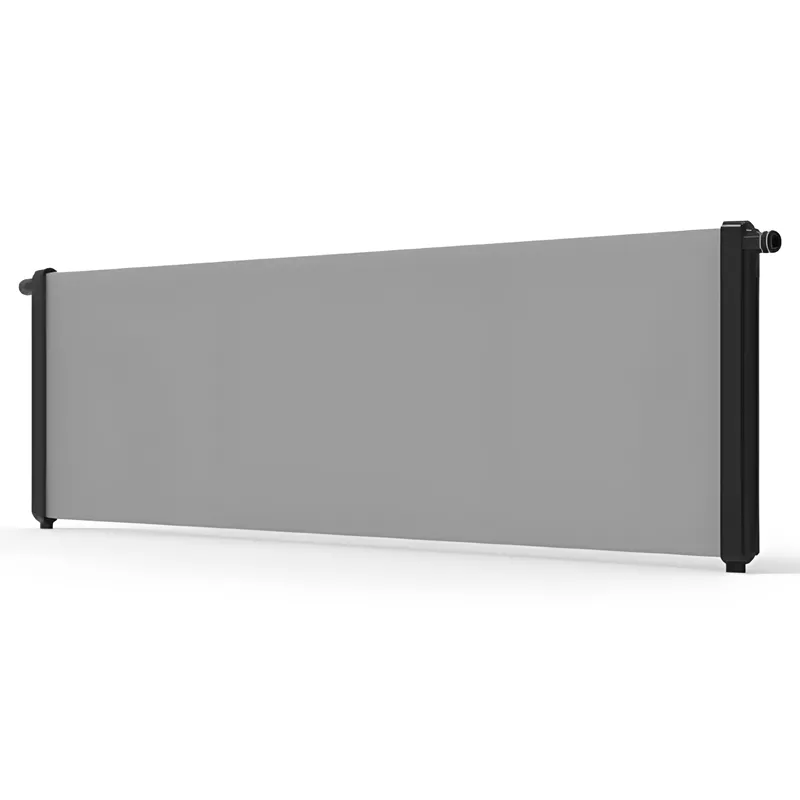
|
Silicon Carbide Flat Sheet Ceramic Membrane |
|
Model |
Element Specification (mm) |
Filtration Accuracy |
Effective Filtration Area |
Module Specification (mm) |
Membrane Sheet Quantity |
Total Filtration Area |
|
AT-SICP-01 |
L600×W145×T6 mm |
0.1 μm |
0.177 m2 |
L750×W715×H160 mm |
42 |
7.5 m2 |
Packaging of Silicon Carbide Flat Sheet Ceramic Membrane
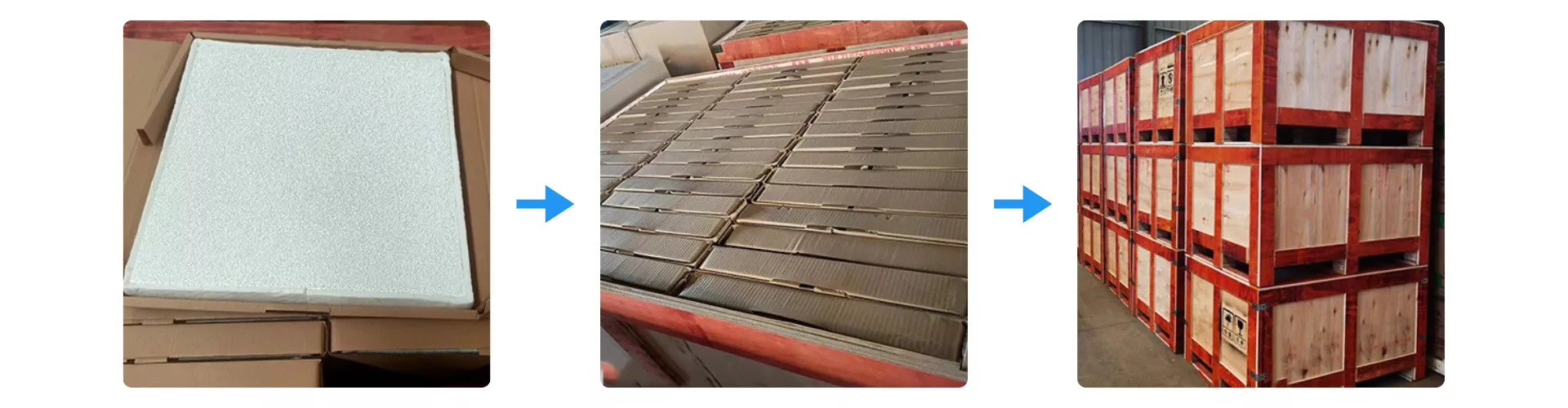
Silicon Carbide Flat Sheet Ceramic Membrane is individually protected using foam-lined cushioning to prevent impact or vibration during transport. Each membrane is then secured in reinforced cartons arranged in stable palletized layers to avoid bending or edge damage. The final shipment is packed in export-grade wooden crates to ensure safe handling and long-distance delivery.
ADCERAX® Silicon Carbide Flat Sheet Ceramic Membrane Solves Engineering Challenges Across Demanding Filtration Environments
The ADCERAX® Silicon Carbide Flat Sheet Ceramic Membrane is engineered for municipal, industrial, and seawater-related filtration scenarios where suspended solids, corrosive chemicals, variable feedwater quality, and high-fouling loads challenge the stability of conventional membrane materials.
-
Silicon Carbide Flat Sheet Ceramic Membrane in Bioreactor Effluent & Sludge Concentration
✅Key Advantages
1. Low TMP Growth Under High MLSS
In mixed-liquor environments where MLSS routinely moves from mid to high ranges, the Silicon Carbide Flat Sheet Ceramic Membrane shows a slower transmembrane pressure rise than polymeric sheets. Field data from MBR retrofits indicate average TMP growth reductions of 30–40% over equivalent operating periods, stabilizing flux during peak biological activity.
2. High Flux Recovery After Biological Fouling
After exposure to sludge-bound organics and oil-associated particulates, permeability recovery after chemical cleaning remains above 95% for multiple cycles. Trials in full-scale bioreactors demonstrate that polymeric membranes often stabilize at only 60–70% of initial flux, while the SiC flat sheet returns close to baseline, supporting longer uninterrupted operation.
3. Stable Flux in Variable Solids Loading
Under daily solids fluctuations in biological effluent and sludge concentration systems, the SiC membrane maintains flux variation typically within ±10–15% of the design value. This contrasts with polymeric modules that often show flux drops exceeding 30% once solids and viscosity rise, leading directly to unstable filtration rates and compressed filtration–relaxation windows.
✅ ️Problem Solved
In one municipal MBR upgrade, operators reported that polymeric membranes suffered flux losses of more than 40% within the first operating year when MLSS and organic loading spiked during wet seasons. Cleaning intervals gradually shortened from weekly to every two to three days, and TMP escalated rapidly whenever sludge rheology shifted, disrupting long-duration biological cycles. After replacing the modules with ADCERAX® Silicon Carbide Flat Sheet Ceramic Membrane, flux decline over the same period was measured at less than 15%, with cleaning intervals restored to weekly or longer. The plant recorded a markedly smoother TMP curve and reduced operational interruptions, particularly during seasonal load swings and periods of limited aeration control.
-
Silicon Carbide Flat Sheet Ceramic Membrane in Mining & Metallurgical Slurry Filtration
✅Key Advantages
1. Abrasion Tolerance in High-Solids Slurries
In wet-metallurgy circuits carrying mineral fines and dense slurry, the SiC flat sheet maintains structural integrity where weaker membranes experience surface scoring and pore collapse. Comparative testing shows that alumina and polymeric membranes may lose more than 30% of permeability after several months of abrasive operation, while the Silicon Carbide Flat Sheet Ceramic Membrane typically retains over 80–85% of initial flux in the same period.
2. Chemical Stability in Metal-Rich Brines
In environments containing dissolved metal ions and oxidant-based reagents, the SiC matrix remains stable across a pH band from 2 to 12 and under repeated oxidant exposure. Monitoring campaigns in hydrometallurgical lines indicate that conventional membranes can see service life reduced by half when exposed to aggressive brines, whereas SiC elements keep their pore structure and performance for campaigns that are often 2–3 times longer.
3. Consistent Filtration at High Slurry Density
When solids concentrations rise into typical dense-slurry ranges, permeability losses for SiC flat sheets remain comparatively moderate. Industrial pilot data show that, at high slurry densities, SiC membranes sustain flux levels that are 40–60% higher than alumina membranes under similar shear and chemical conditions, allowing operators to meet throughput targets without oversizing filtration trains.
✅ ️Problem Solved
A tungsten-processing facility operating wet-metallurgy circuits previously relied on alumina and polymeric membranes for tailings clarification and process-water recovery. Within the first year, operators recorded flux reductions exceeding 50% and frequent element replacements due to abrasion and chemical attack from metal-rich brines. During a phased trial with ADCERAX® Silicon Carbide Flat Sheet Ceramic Membrane, flux measured after extended operation remained above 80% of the initial value, even under elevated slurry density and oxidant use. Replacement intervals were extended by more than a factor of two, and the plant reported fewer unplanned stoppages associated with membrane damage and slurry-induced plugging.
-
Silicon Carbide Flat Sheet Ceramic Membrane in Seawater Desalination Pretreatment & PFAS-Coupled Activated Carbon Filtration
✅Key Advantages
1. Oxidant-Resistant Performance in Pretreatment Trains
In desalination pretreatment where free chlorine, ozone, or peroxide are routinely applied, polymeric membranes often show visible degradation once oxidant residuals remain in the range commonly used for biofouling control. Long-term exposure tests demonstrate that the Silicon Carbide Flat Sheet Ceramic Membrane sustains stable permeability and structural integrity at oxidant levels that cause more than 20–30% flux loss in polymeric modules over comparable operating hours.
2. High-Flux Operation for Compact RO Protection
High porosity and hydrophilic SiC grains enable higher flux at design transmembrane pressure, which directly supports more compact RO pretreatment trains. Case studies in coastal plants show that, for similar feedwater conditions, SiC flat sheets can deliver flux values 30–50% higher than alumina membranes, allowing engineers to achieve the same RO protection with fewer membrane banks and reduced footprint.
3. Reduced Pore Blockage in PFAS–PAC Systems
When powdered activated carbon is used upstream for PFAS removal, pore blockage is a frequent cause of early performance decline. Trials in PAC-coupled systems indicate that SiC flat sheets experience long-term flux losses limited to around 15–20%, whereas polymeric membranes under the same conditions commonly show declines exceeding 40–50% due to PAC accumulation and irreversible fouling.
✅ ️Problem Solved
A seawater desalination facility integrating PFAS control via PAC dosing had persistent issues with polymeric pretreatment membranes, which lost more than 40% of flux within the first months of operation and required frequent chemical cleaning to remain within RO feed specifications. Oxidant dosing used for biofouling management further accelerated membrane aging, shortening the useful life of the pretreatment units and putting additional stress on the downstream RO arrays. After switching the pretreatment stage to ADCERAX® Silicon Carbide Flat Sheet Ceramic Membrane, the plant recorded flux decline limited to approximately 20% over equivalent runtime, despite maintaining similar oxidant programs and PAC dosages. Cleaning intervals were extended, RO differential pressures became more stable, and the protective effect of the pretreatment stage on the RO elements significantly improved.
ADCERAX® Silicon Carbide Flat Sheet Ceramic Membrane User Guide for Reliable On-Site Operation
The Silicon Carbide Flat Sheet Ceramic Membrane requires proper handling, startup configuration, and operational control to achieve long-cycle stability in municipal, industrial, and seawater-pretreatment systems. This guide summarizes essential engineering considerations to help users maintain consistent flux, minimize fouling, and ensure long-term operational safety across various treatment environments.
-
Installation & Start-Up Preparation
1. Structured Handling Protocol
Engineered ceramic sheets must be lifted from their edges to avoid concentrated stress on the filtration surface. Proper alignment within the module frame prevents torsional loading during negative-pressure or positive-pressure operation. Ensuring even seating across all membrane units helps maintain uniform hydraulic distribution.
2. System Priming Requirements
A controlled wetting process allows the hydrophilic SiC microstructure to reach optimal permeability before filtration begins. Gradual pressurization avoids sudden transmembrane pressure surges that could destabilize early-cycle flow. Maintaining stable feedwater conditions during priming supports predictable flux onset.
3. Feedwater Conditioning Essentials
Screening out oversized particulates minimizes mechanical abrasion of the membrane surface. Stabilizing pH and preventing sudden oxidant spikes ensures consistent interaction with the ceramic matrix. Maintaining inlet turbidity within normal operating bands reduces early fouling risk.
-
Operational Stability & Filtration Management
1. Balanced Transmembrane Pressure Control
Stable TMP is required to maintain target flux in submerged and pressurized configurations. Gradual modulation avoids hydraulic shock that may promote particulate compaction on the surface. Operating within recommended TMP bands helps extend filtration cycle length.
2. Aeration & Flow Distribution Management
Air-scouring improves surface turbulence and delays fouling accumulation in sludge-rich or seawater environments. Uniform airflow across the module array ensures consistent shear forces and predictable cleaning intervals. Maintaining constant aeration intensity supports long-term performance stability.
3. Monitoring of Flux & Recovery Behavior
Tracking normalized flux provides an early indication of feedwater changes or rising particulate load. Evaluating flux recovery after periodic rinsing helps determine cleaning frequency. Recording operational trends improves predictive maintenance accuracy.
-
Cleaning Procedures & Membrane Protection
1. Physical Cleaning Guidelines
Backpulse or forward flushing maintains open pore pathways and reduces early-stage particulate layering. Air-water cleaning sequences deliver effective agitation without damaging the ceramic sheet. Using controlled cleaning intervals preserves mechanical integrity over long service cycles.
2. Chemical Cleaning Compatibility
The SiC membrane tolerates acids, bases, and oxidants commonly required for industrial cleaning regimes. Adhering to regulated exposure durations prevents excessive chemical consumption while ensuring full cleaning recovery. Selecting chemistry appropriate to the fouling type maximizes efficiency.
3. Long-Cycle Stability Measures
Regular monitoring of cleaning recovery helps identify shifts in feedwater quality. Maintaining reagent concentrations within verified limits supports predictable membrane response. Ensuring consistent cleaning protocol execution safeguards long-term reliability.
-
Storage, Handling & Long-Distance Transport Safety
1. Dry Storage Conditions
Membranes should be stored in a controlled environment away from elevated humidity or dust. Protective liners should remain intact until installation begins. Keeping the modules free from accidental load-bearing contact avoids microcrack formation.
2. Safe Handling During Movement
Manual and mechanized handling must avoid edge impacts that could propagate structural stress. Palletized transport minimizes vibration and maintains flatness across stacked units. Secured restraint during transport prevents sliding and bending.
3. Packaging Integrity Verification
Inspection of foam-lined cartons and wooden crates ensures shock absorption capability before shipment. Reinforced strapping maintains stability during multipoint transit. Confirming crate integrity on arrival ensures the membranes remain undamaged.