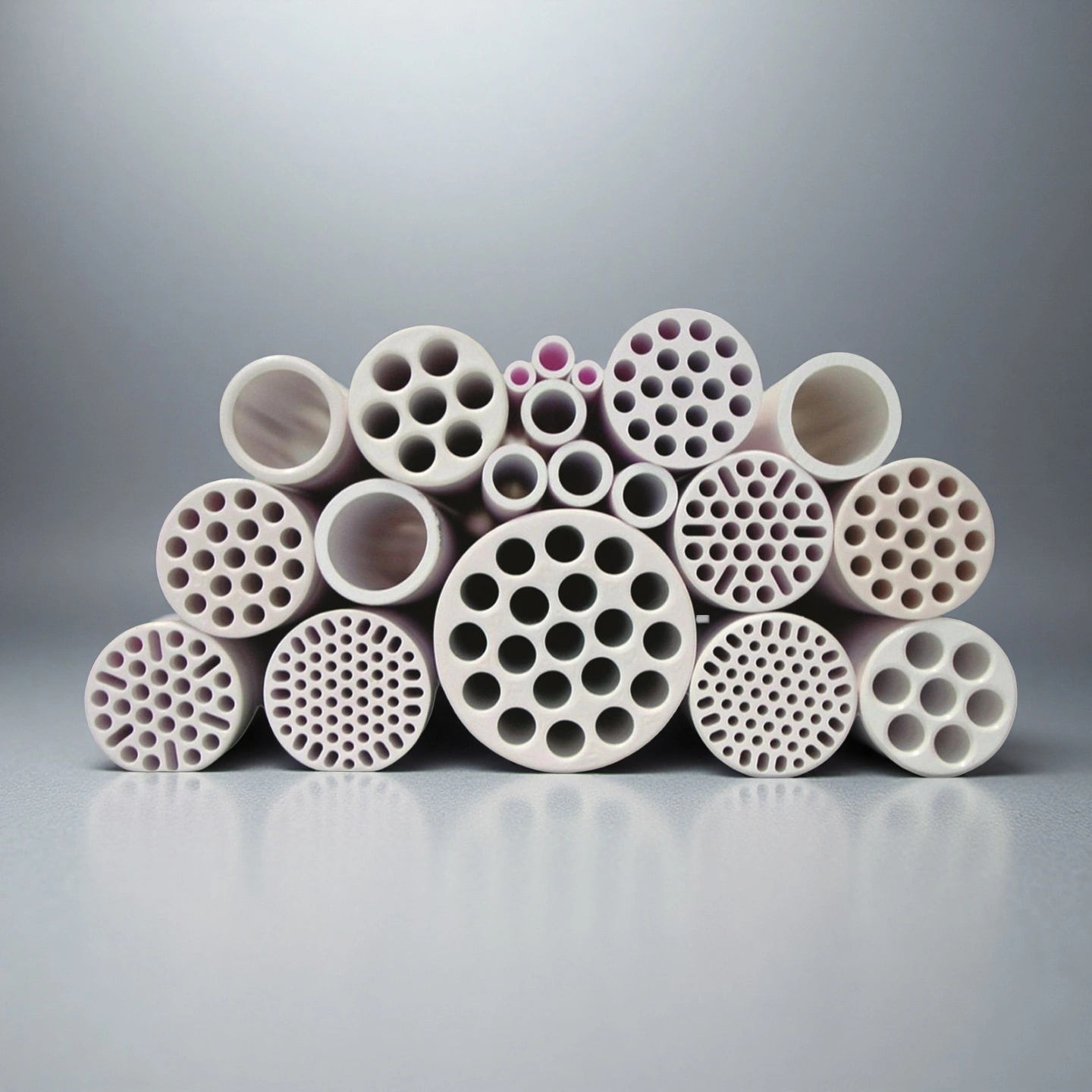
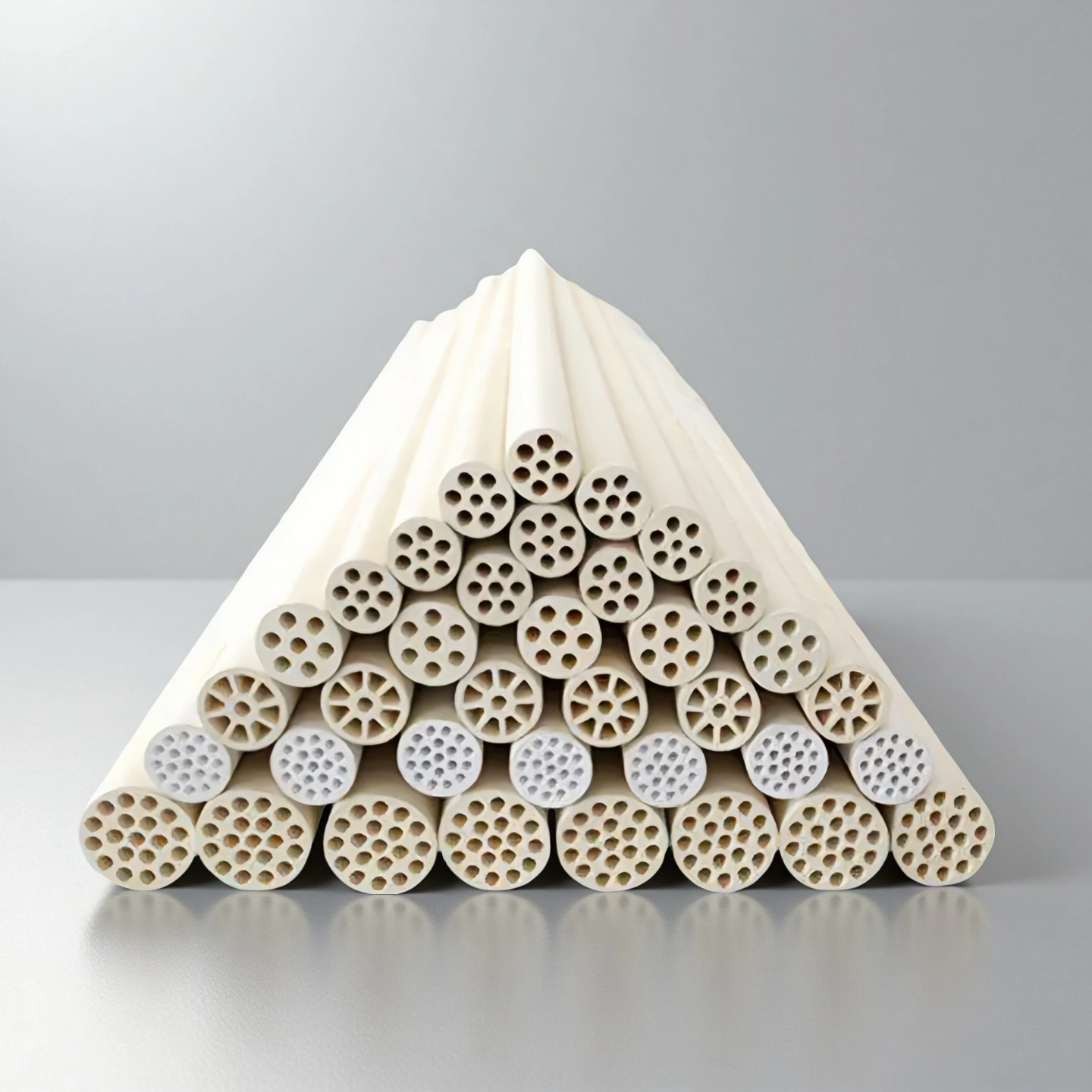
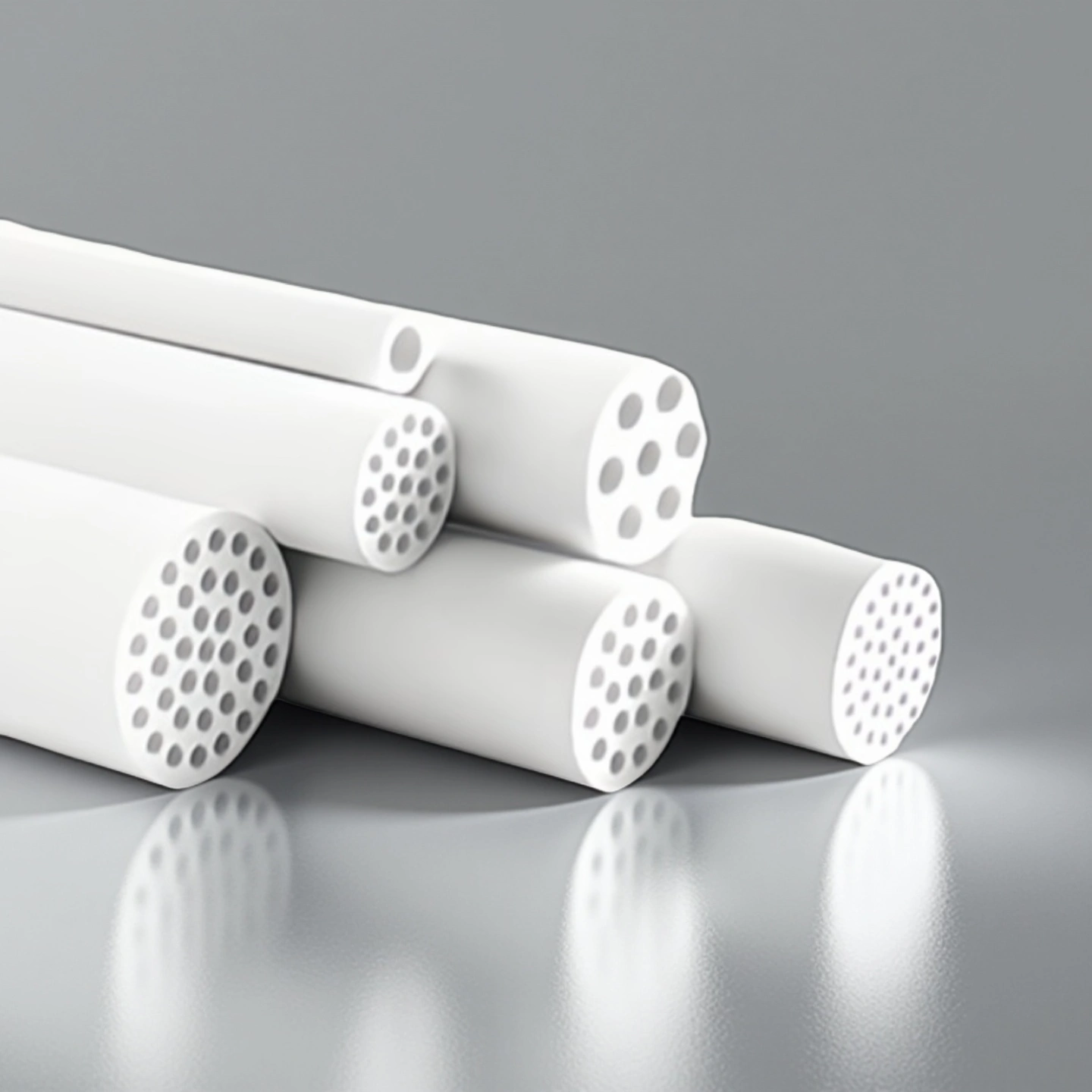
Zirconia Ceramic Membrane Tube for MF/UF Process Filtration

ADCERAX supplies stabilized zirconia ceramic membrane tubes for microfiltration and ultrafiltration duties in wastewater treatment, food clarification, solvent recovery, and chemical process separation. Standard multi-channel tubes and custom pore-size, channel-count, length, and interface designs are available for engineering review.

Catalogue No. AT-YHG-MG1001
Material Yttria- or magnesia-stabilized zirconia (≥99.8% ZrO₂)
Structure Porous support with a fine separation layer
Pore / Cut-Off Options MF and UF grades available
Channel Count Multi-channel options available
Engineering RFQ Review
Small-Batch Custom Support
Factory-Direct Manufacturing
Drawing & Media Review

What Is a Zirconia Ceramic Membrane Tube?

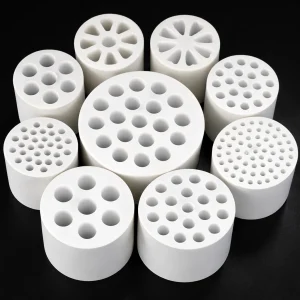
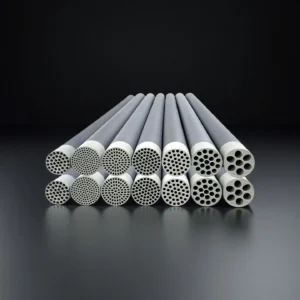
A zirconia ceramic membrane tube is a tubular inorganic filtration element made with a porous ceramic support and a fine zirconia separation layer. It is used for microfiltration and ultrafiltration where polymer membranes may suffer from chemical attack, repeated CIP cleaning, solvent swelling, or unstable flux under harsh process conditions.

Technical Considerations for Zirconia Membrane Tubes

Zirconia Ceramic Membrane Tube delivers reliable filtration under extreme thermal, chemical, and mechanical conditions, making it suitable for use in continuous processing lines and corrosive liquid environments across industrial sectors.

Property Specification
Material Composition ≥99.8% zirconium dioxide (ZrO₂), stabilized with Y₂O₃ or MgO
Membrane Structure Asymmetric multilayer (support + selective skin)
Open Porosity 35–45%
Mean Pore Size 0.01–0.1 µm (UF/MF range)
Pure Water Flux 400–800 L/m²·h·bar at 25 °C
Flexural Strength ≥800 MPa
Compressive Strength ≤1500 MPa
Thermal Operating Range 5 °C to 850 °C (dry), ≤350 °C (wet)
Thermal Expansion Coefficient 10.5 × 10⁻⁶ K⁻¹
pH Resistance Range 0–14 (continuous exposure)
Chemical Resistance Stable in H₂SO₄, NaOH, NaClO, ethanol, acetone
Surface Roughness (Ra) ≤0.2 µm (top layer)
Backwash Pressure Tolerance ≤6 bar
Cleaning Compatibility CIP/SIP, autoclave, NaOH, HNO₃, steam ≤150 °C
Service Life >5 years in standard industrial duty

When to Use Zirconia Membrane Tubes Instead of Polymer or Alumina Membranes?

Zirconia membrane tubes are selected when the filtration line needs stronger chemical resistance, repeated cleaning tolerance, and more stable pore structure than polymer membranes can provide. They are especially useful in feeds containing acids, alkalis, solvents, fine suspended solids, or high-fouling organic matter.

Process Challenge Why Zirconia Helps Buyer Check Before RFQ
Frequent CIP cleaning The ceramic structure helps resist swelling and chemical attack. Provide cleaning agent, concentration, temperature, and cycle frequency.
Fine particle or catalyst recovery Controlled pore grades support MF/UF separation. Provide particle size, target retention, and feed viscosity.
Oily or high-COD wastewater Inorganic ceramic surfaces tolerate aggressive cleaning better than many polymer filters. Provide COD, oil content, solids load, and TMP range.
Solvent-containing streams Zirconia can be considered where polymer membranes soften or deform. Provide solvent type, concentration, and operating temperature.
Long operating cycles A rigid ceramic tube can support repeated backwash and process cleaning. Provide module design, seal type, and pressure conditions.

Zirconia vs Alumina, SiC, and Polymer Membrane Tubes

Membrane Material Best Fit Main Advantage Selection Caution
Zirconia Ceramic Fine clarification, aggressive cleaning, solvent or chemical separation Strong chemical durability and stable pore structure Cost is usually higher than alumina or polymer options.
Alumina Ceramic General water and wastewater filtration Cost-effective ceramic membrane option May not be the first choice for the most aggressive solvent or CIP cycles.
Silicon Carbide Ceramic High-solids, abrasive, high-throughput wastewater High permeability and abrasion resistance Material and module cost should be checked against throughput demand.
Polymer Membrane Mild water treatment and low-cost replacement systems Lower initial cost and wide availability May swell, deform, or lose performance under harsh solvents, heat, or strong cleaning chemicals.

Available Zirconia Membrane Tube Configurations

Zirconia Ceramic Membrane Filter Tube
Item No. Bore Quantities Picture Bore Diameter (mm) Membrane Area Size Micro filter Super filter Fine ultrafiltration
AT-YHG-MG1001 19 3.5mm 0.05 m2 Outer Diameter:25mm,Length :250mm 0.14μm,0.2μm,0.45μm,0.8μm,1.4μm 15KD,50 KD,150KD,300KD 1 KD,3KD,5KD,8KD
AT-YHG-MG1002 23 3.5mm
AT-YHG-MG1003 7 6mm 0.16m2
AT-YHG-MG1004 8 6mm
AT-YHG-MG1005 19 3.5mm
AT-YHG-MG1006 23 3.5mm
AT-YHG-MG1007 49 2.5mm
AT-YHG-MG1008 19 6mm 0.35m2
AT-YHG-MG1009 25 5.5mm
AT-YHG-MG1010 37 3.6mm

Packaging for Zirconia Membrane Tubes

Zirconia Ceramic Membrane Tube is securely packed in foam-lined wooden crates to prevent damage during international transit. Each tube is individually wrapped with shock-resistant cushioning to avoid surface scratches or impact stress. Custom-fit compartments ensure stability and separation throughout handling and shipping.
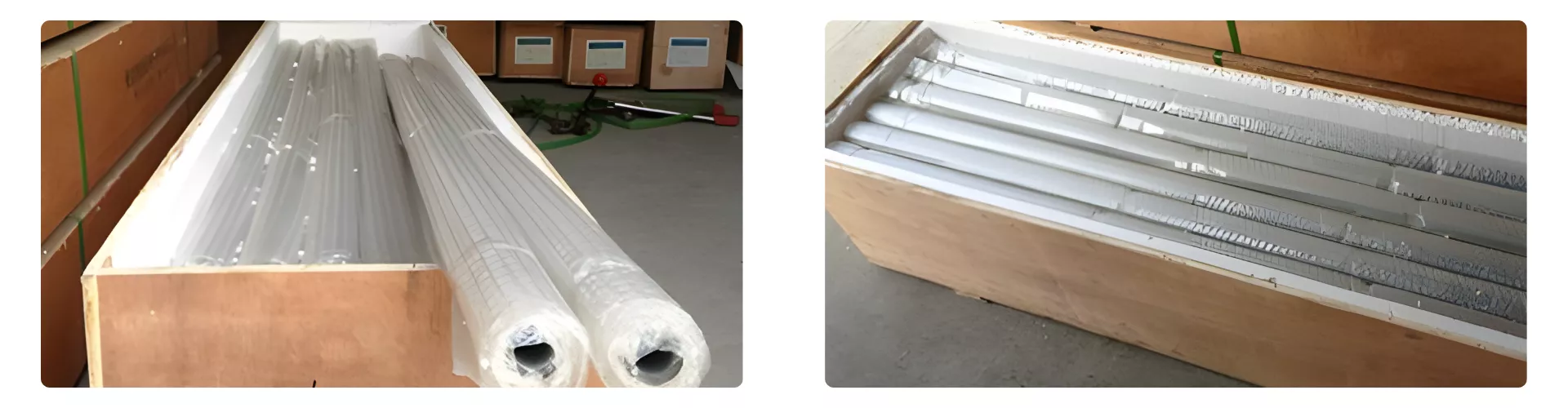
ADCERAX® Packaging of Zirconia Ceramic Membrane Tube

Application Fit for Zirconia Ceramic Membrane Tubes

ADCERAX® Zirconia Ceramic Membrane Tube is specifically engineered to address filtration challenges in industries requiring stable throughput, chemical durability, and consistent purity. Its micro-porous structure and strong mechanical stability enable reliable separation and purification in diverse continuous-flow systems.

  • Food and Beverage Clarification

    Zirconia membrane tubes can be used for milk, juice, beverage, and fermentation-stream clarification where low-temperature operation, repeated cleaning, and stable permeate quality are important. Before selection, confirm feed viscosity, suspended solids, target turbidity, cleaning chemistry, and required pore grade.

  • Chemical Solvent and Catalyst Recovery

    For fine chemical production, zirconia membrane tubes are suitable for separating fine particles, catalysts, or solids from solvent-containing process streams. The final design should be reviewed against solvent type, pH, operating temperature, pressure, and cleaning method.

  • Oily and High-COD Wastewater Treatment

    Zirconia ceramic membrane tubes can support oily wastewater, textile wastewater, and high-COD effluent pretreatment where fouling, chemical cleaning, and backwash stability are key concerns. Feed composition, oil content, solids load, and TMP range should be provided before quotation.

  • Process Clarification Before Downstream Treatment

    ZrO₂ membrane tubes can be used as a durable pretreatment element before RO, ion exchange, evaporation, or reuse systems. They help reduce suspended solids and process instability when the feed stream requires a clean and repeatable filtration step.

Practical User Guide for Zirconia Ceramic Membrane Tube

To ensure stable performance, long service life, and optimal separation results, Zirconia Ceramic Membrane Tube users must follow proper operational and maintenance guidelines. This section outlines key precautions and best practices during installation, cleaning, storage, and system integration for industrial process users.

  • Installation Guidelines

    1. Support Structure: A rigid frame or housing must be used to secure the membrane without bending stress. Improper alignment may lead to hairline cracks or seal failure under pressure.
    2. Sealing Integrity: Use compatible gaskets or O-rings that withstand CIP chemicals and elevated temperatures. Avoid metal-to-ceramic point loads which may cause microfractures.
    3. Orientation & Flow: Install with correct flow direction marked on the module. Reverse installation may disrupt pore gradient performance and reduce filtration efficiency.

  • Cleaning and Maintenance

    1. Cleaning Agents: Use alkaline (NaOH) or oxidizing agents (NaClO ≤500 ppm) for periodic flushing. Avoid strong acids which degrade seals and mounting.
    2. Backflushing Frequency: Apply reverse pressure pulses every 8–12 hours of continuous use. This restores flux performance and minimizes membrane compaction.
    3. Drying Process: Before storage, dry membranes with filtered compressed air or ambient heat under 60°C. Avoid direct flame or sunlight exposure.

  • Operation Parameters

    1. Pressure Control: Keep transmembrane pressure (TMP) below 0.4 MPa during normal operation. Overpressure can cause crack propagation within the ceramic layer.
    2. Temperature Range: Operate within 5–80°C for typical aqueous solutions. Higher temperatures may accelerate thermal expansion mismatch with housing materials.
    3. pH Compatibility: Zirconia membranes tolerate pH 3–10 continuously. For extreme pH cycles, monitor seal degradation and replace accordingly.

  • Storage and Handling

    1. Protective Packaging: Always store the membrane in its original foam-lined crate. Avoid unprotected contact with hard objects during handling.
    2. Moisture Prevention: Keep in a dry, ventilated environment to prevent microbial growth inside pores. Use desiccant packs if humidity >60%.
    3. Inventory Rotation: Follow FIFO (First-In, First-Out) principle to minimize long-term storage exposure, especially in coastal or high-humidity areas.

FAQs About Zirconia Ceramic Membrane Tubes

  1. Q1: What is a zirconia ceramic membrane tube used for?
    A: It is used for MF/UF process filtration in wastewater treatment, food clarification, solvent recovery, catalyst separation, and other liquid-solid separation systems.

  2. Q2: How do I choose the right pore size?
    A: Selection depends on particle size, target retention, feed composition, viscosity, flux requirement, and cleaning method. Please provide your process details for engineering review.
  3. Q3: Is zirconia better than alumina for ceramic membranes?
    A: Zirconia is usually selected when stronger chemical durability, smoother separation behavior, or more aggressive cleaning resistance is required. Alumina can be more cost-effective for general filtration.
  4. Q4: Can the tube be used with strong acids or alkalis?
    A: Zirconia ceramic has strong chemical resistance, but the full assembly must be checked together, including seals, housing, adhesive, and cleaning cycle.
  5. Q5: Can ADCERAX customize the channel count and length?
    A: Yes. Tube length, OD, channel count, pore grade, end interface, and sealing structure can be reviewed according to the filtration module.
  6. Q6: What should I send a quotation?
    A: Please send pore size or MWCO, feed liquid, target separation, flow rate, pressure, temperature, cleaning chemistry, tube size, and drawing if available.
  7. Q7: Is this tube suitable for food clarification?
    A: It can be considered for food and beverage clarification applications, but final suitability depends on the process, cleaning protocol, and compliance requirements.
  8. Q8: How should the membrane tube be packed?
    A: Tubes should be individually protected with cushioning and separated in rigid export packaging to avoid chipping, surface damage, and impact stress.

Information Needed for Zirconia Membrane Tube Quotation

RFQ Detail Why It Matters
Pore size or MWCO Determines separation grade and retention target.
Feed liquid composition Helps evaluate chemical compatibility and fouling risk.
Target particle size or impurity Helps select MF or UF membrane grade.
Flow rate and pressure Affects channel count, membrane area, and module design.
Operating temperature Helps check ceramic, seal, and housing compatibility.
Cleaning chemistry Important for CIP, backwash, and long-term stability.
Tube OD, length, and channel count Ensures fit with the filtration housing.
Drawing or module sketch Reduces design back-and-forth before quotation.

Send us your pore size, feed liquid, pressure, temperature, and tube dimensions. Our team will review the filtration requirement and recommend a suitable zirconia membrane tube configuration.

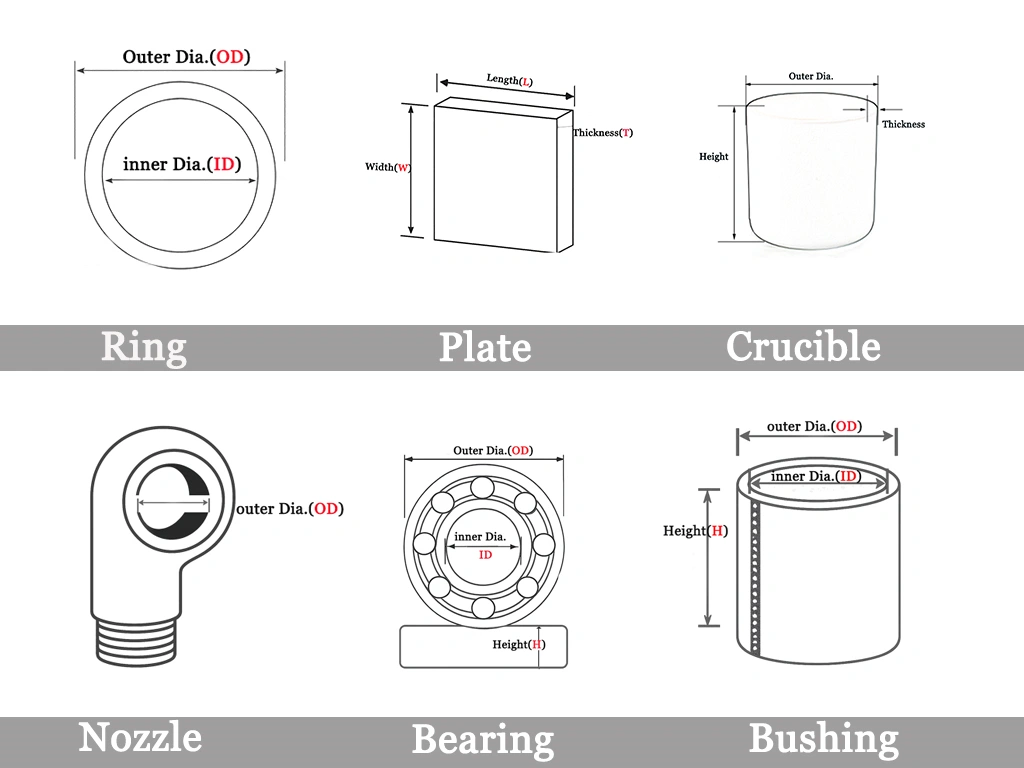
customize size

Customization Services for ZrO2 Membrane Tube

ADCERAX® offers flexible customization of Zirconia Ceramic Membrane Tube to meet your system’s engineering and process control requirements.

Custom Interface Designs for System Integration

Different equipment architectures require unique interface solutions for seamless installation and fluid control.

  • Connector Type
    Threaded, flanged, or smooth-end termination styles
  • End Cap Options
    Welded, bonded, or gasket-mounted sealing interfaces
  • Mounting Structure
    Customized support rings or embedded grooves

Pore Structure Optimization for Targeted Separation

Different materials require different filtration thresholds—membrane geometry can be adjusted accordingly.

  • Pore Size Range
    Engineered for macro, micro, or ultrafiltration needs
  • Layer Configuration
    Single-channel, multi-layer, or graded-density designs
  • Flow Direction
    Inside-out or outside-in operating preference

Geometric Dimensions for Process Compatibility

Flexible shaping solutions can be offered to ensure compatibility with compact, modular, or legacy systems.

  • Tube Length Options
    Adaptable to housing or batch system constraints
  • Outer Diameter Choice
    Aligned with your module or fixture requirements
  • Cross-Section Geometry
    Round, oval, or slot profiles for special flow control

Related Products

ADCERAX - Your Trusted Advanced Ceramics Manufacturing Partner

Direct factory manufacturing with comprehensive ceramic materials expertise and global supply capabilities

China-Based Manufacturer

ADCERAX supplies ceramic components for overseas OEMs, equipment builders, and labs.

Custom Drawing Support

We review drawings, dimensions, materials, and application conditions before quotation.

Ceramic Process Control

Forming, sintering, machining, grinding, and finishing are arranged by part requirements.

Pre-Shipment Inspection

Dimensional checks, visual inspection, and packaging review help reduce procurement risk.

Get in Touch with Us

Our team will be happy to respond to you in less than 24 hours.

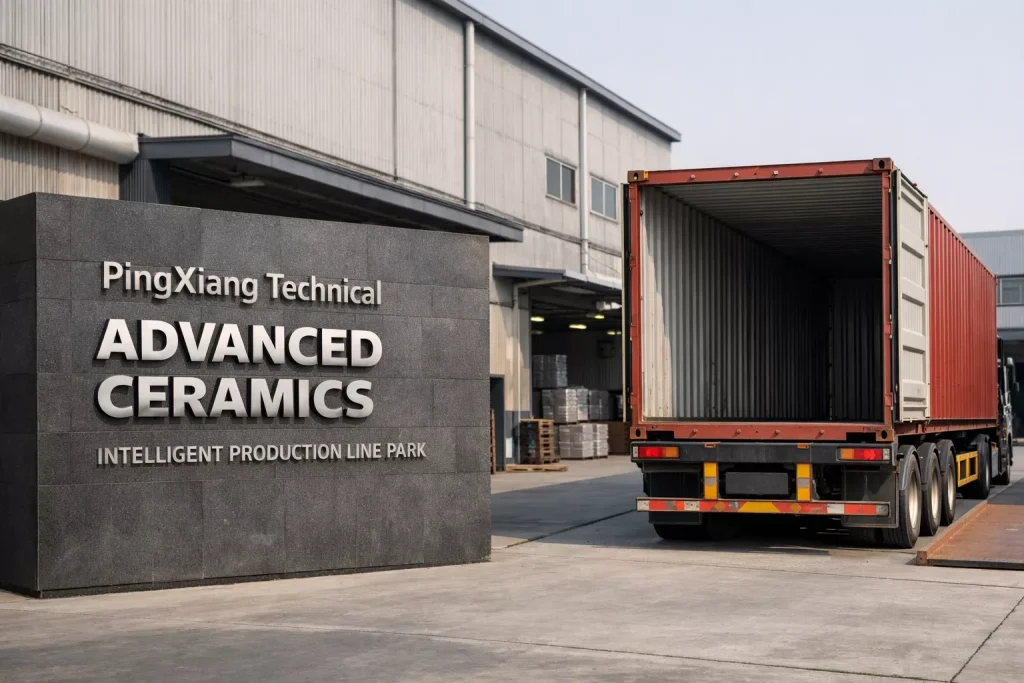
Pingxiang Factory — Silicon carbide, silicon nitride, high-temperature ceramics

Quick Quotation

*Our team will answer your inquiries within 24 hours.

*Your information will be kept strictly confidential.

Ready to Solve Your Engineering Challenge?

Partner with ADCERAX for reliable, high-performance advanced ceramic solutions. Our engineers are ready to discuss your project.

E-mail

info@adcerax.com

Phone

+(86) 0731-74427743 | WhatsApp: +(86) 19311583352

Response Time

Within 24 hours

Quick Quote

The more details you provide, the faster we can quote.

*We respond within 24 hours. All inquiries are confidential.

Get Your Custom Solution

The more details you provide, the faster we can respond.

customize size

*We respond within 24 hours. All inquiries are confidential.

Download Catalog