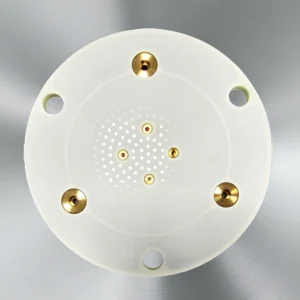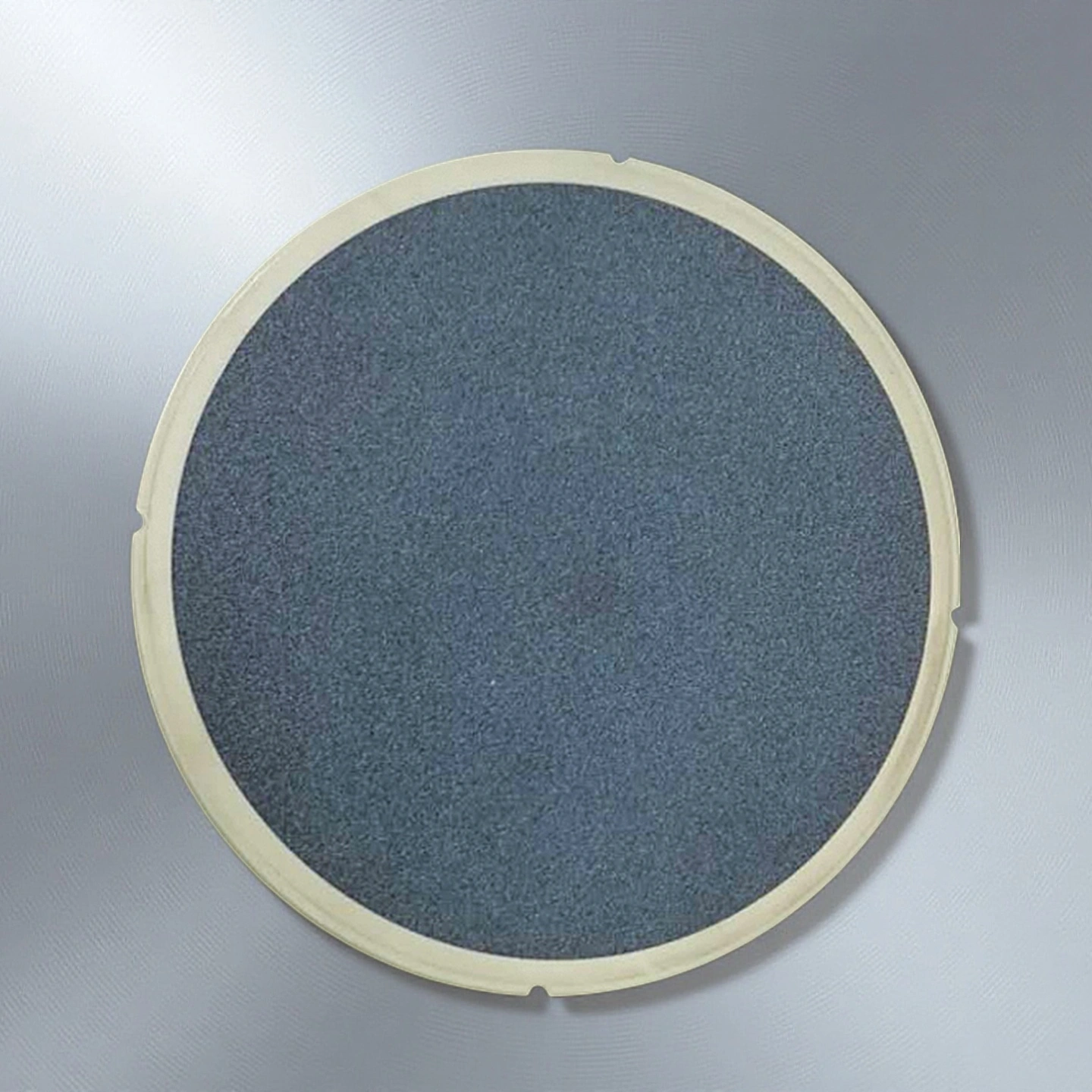

Porous Silicon Carbide Vacuum Chuck for Precision Substrate Handling

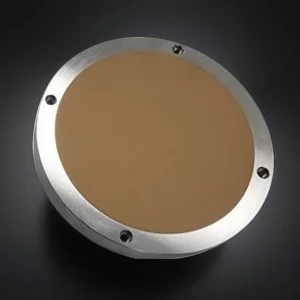
Porous silicon carbide vacuum chucks are microporous SiC holding plates for wafer, PV cell, thin glass and electronics substrate handling. The porous surface helps distribute vacuum force evenly, supporting stable transfer, alignment and inspection.

ADCERAX supplies custom porous SiC vacuum chucks based on drawings, substrate conditions and equipment interfaces, including plate shape, pore layout, vacuum channels, mounting holes and surface finish.

Catalogue No. AT-THG-XP001
Material Porous silicon carbide
Custom Features Plate shape, pore layout, vacuum channels, mounting holes and surface finish
Main Applications Wafer, PV cell, thin glass and electronics substrate handling
Engineering Review ADCERAX reviews material, airflow, mounting and handling conditions
Engineering RFQ Review
Small-Batch Custom Support
Factory-Direct Manufacturing
Drawing & Process Review

What Is a Porous Silicon Carbide Vacuum Chuck?

A porous silicon carbide vacuum chuck is a precision ceramic holding component that uses an interconnected microporous structure to distribute vacuum force across a contact surface. Instead of relying on a small number of suction holes, the porous SiC surface allows more uniform airflow, which helps stabilize thin, fragile or lightweight substrates during automated handling.

This type of vacuum chuck is used in equipment where substrate flatness, surface cleanliness, thermal stability and repeatable positioning are important. Typical applications include photovoltaic cell transfer, wafer handling equipment, thin glass alignment, electronics substrate transfer, inspection fixtures and automated pick-and-place systems.

Compared with metal vacuum plates, porous silicon carbide offers higher hardness, better wear resistance, lower thermal deformation and stronger resistance to many cleaning chemicals. Compared with alumina, SiC can provide better thermal conductivity and stronger performance in high-cycle handling environments where both suction uniformity and dimensional stability matter.

Performance Factors That Affect Porous SiC Vacuum Chuck Selection

The performance of a porous silicon carbide vacuum chuck depends on pore structure, surface finish, vacuum channel design, flatness and equipment alignment. These factors should be reviewed together because suction stability, substrate protection and long-term cleanability are affected by both the ceramic material and the equipment interface.

  • Pore Structure
    It affects airflow response, suction distribution and clogging resistance.

  • Vacuum Channel Design
    It helps balance vacuum force across the porous contact area.

  • Surface Finish
    It should match the sensitivity of wafers, PV cells, thin glass or electronics substrates.

  • Flatness Control
    It supports stable contact and repeatable positioning during transfer or inspection.

  • Edge Treatment
    It helps reduce contact risk when handling thin or fragile substrates.

  • Cleaning Method
    It affects long-term pore stability and vacuum consistency.

Porous Silicon Carbide vs Alumina, Metal and Graphite Vacuum Plates

Material Option Strength Limitation When Porous SiC Is Better
Aluminum or stainless steel plate Easy machining and low initial cost. Wear, thermal expansion and surface deformation may increase over time. Use porous SiC when long-cycle dimensional stability and wear resistance matter.
Alumina porous plate Good insulation and ceramic stability. Lower thermal conductivity and lower toughness than SiC in some handling designs. Use SiC when thermal stability, hardness and repeated handling performance are important.
Graphite plate Good machinability and thermal performance. Particle generation, oxidation and surface contamination may be concerns. Use SiC when cleanliness, chemical resistance and wear control are required.
Porous silicon carbide chuck High hardness, low thermal expansion, chemical stability and controlled suction distribution. Requires proper pore design, machining control and cleaning method. Best suited for demanding substrate handling where suction uniformity and surface stability are critical.

Material and Performance Reference for Porous SiC Vacuum Chucks

The Porous Silicon Carbide Vacuum Chuck is engineered with controlled microporosity, high thermal endurance, and stable mechanical performance suitable for semiconductor, photovoltaic, and precision electronic handling environments. Its material structure supports long-cycle operation under elevated temperatures, chemical exposure, and continuous vacuum load conditions.

Property Specification
Material Composition Recrystallized SiC, purity >98%
Sintering Temperature >2000 °C recrystallization
Bulk Density 2.75–3.05 g/cm³
Open Porosity 10–18% controlled pore ratio
Pore Size Range 2–20 μm engineered micro-pore distribution
Flexural Strength >250 MPa
Compressive Strength >900 MPa
Hardness Mohs ~9
Thermal Conductivity 80–120 W/m·K
Coefficient of Thermal Expansion 4.0×10⁻⁶ /K (25–800 °C)
Maximum Service Temperature >1500 °C in inert and vacuum atmospheres
Chemical Resistance Stable against acids, alkalis, and cleaning chemicals
Surface Roughness (Ra) 0.4–1.2 μm finish optional
Airflow Uniformity Deviation Within ±5%
Particle Generation Ultra-low shedding, suitable for clean handling

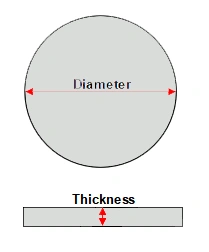
Dimensions of Porous Silicon Carbide Vacuum Chuck
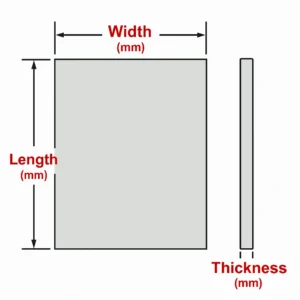
Square porous SiC vacuum chuck dimension reference

Square SiC Vacuum Chuck
Item No. Length(mm) Width(mm) Thickness(mm) Material
AT-THG-XP001 305 305 14 316 stainless steel + microporous ceramic
AT-THG-XP002 305 305 14 316 stainless steel + microporous ceramic
AT-THG-XP003 420 275 20 Aluminum alloy + microporous ceramic
AT-THG-XP004 450 200 20 SKD61 + porous ceramic
AT-THG-XP005 520 520 20 Aluminum alloy + microporous ceramic

Round porous SiC vacuum chuck dimension reference

Round SiC Vacuum Chuck
Item No. Diameter(mm) Thickness(mm) Material
AT-THG-XP006 174 10 316 stainless steel + microporous ceramic
AT-THG-XP007 230 16 316 stainless steel + microporous ceramic
AT-THG-XP008 239 12 Aluminum alloy + microporous ceramic
AT-THG-XP009 240 12 316 stainless steel + microporous ceramic
AT-THG-XP010 320 16 316 stainless steel + microporous ceramic
AT-THG-XP011 325 12 Aluminum alloy + microporous ceramic

Engineering Challenges Solved by Porous SiC Vacuum Chucks

Handling Challenge Production Risk How Porous SiC Helps
Thin substrates are easily cracked during lifting. Local vacuum peaks may create edge stress or bending. Controlled microporosity spreads suction more evenly across the contact area.
Vacuum force becomes unstable during fast transfer. Substrates may slip, tilt or shift during robotic movement. Balanced pore and channel design supports repeatable airflow response.
Metal plates wear or deform after long operation. Surface flatness and adsorption consistency may drift. Silicon carbide provides high hardness and strong dimensional stability.
Cleaning residues block pores or channels. Adsorption force becomes inconsistent across the chuck surface. Proper pore design and cleaning access reduce clogging risk.
Heated process zones cause fixture distortion. Alignment accuracy and handling repeatability may decline. SiC has low thermal expansion and good thermal stability.
Fragile glass or coated substrates are easily scratched. Surface marks may cause downstream optical or inspection failure. Controlled surface finish and edge treatment help reduce contact damage.

Technical Design Factors for Porous SiC Vacuum Chuck Performance

The performance of a porous SiC vacuum chuck depends on the balance between pore structure, vacuum distribution, flatness, surface finish and substrate sensitivity. Before production, ADCERAX reviews how the chuck will contact the wafer, PV cell, glass sheet or electronics substrate, because small changes in pore design or vacuum layout can affect suction stability and handling safety.

Design Factor Why It Matters
Pore size and porosity It affects suction uniformity, airflow response and clogging resistance.
Vacuum channel layout It determines whether vacuum force is balanced across the chuck surface.
Surface flatness It affects substrate contact, positioning stability and handling repeatability.
Surface finish It helps reduce scratches, local pressure points and particle retention.
Substrate thickness It determines how much vacuum force the part can safely tolerate.
Cleaning method It affects long-term pore stability and suction consistency.

Packaging for Porous Silicon Carbide Vacuum Chuck

Porous Silicon Carbide Vacuum Chuck is packed using a multi-layer protection process designed to prevent vibration, moisture exposure, and handling stress during international transport. Each unit is first cushioned and boxed, then reinforced with solid wooden crates to ensure structural stability throughout shipment. This packaging method supports safe delivery to equipment manufacturers and assembly facilities requiring intact, contamination-free ceramic components.
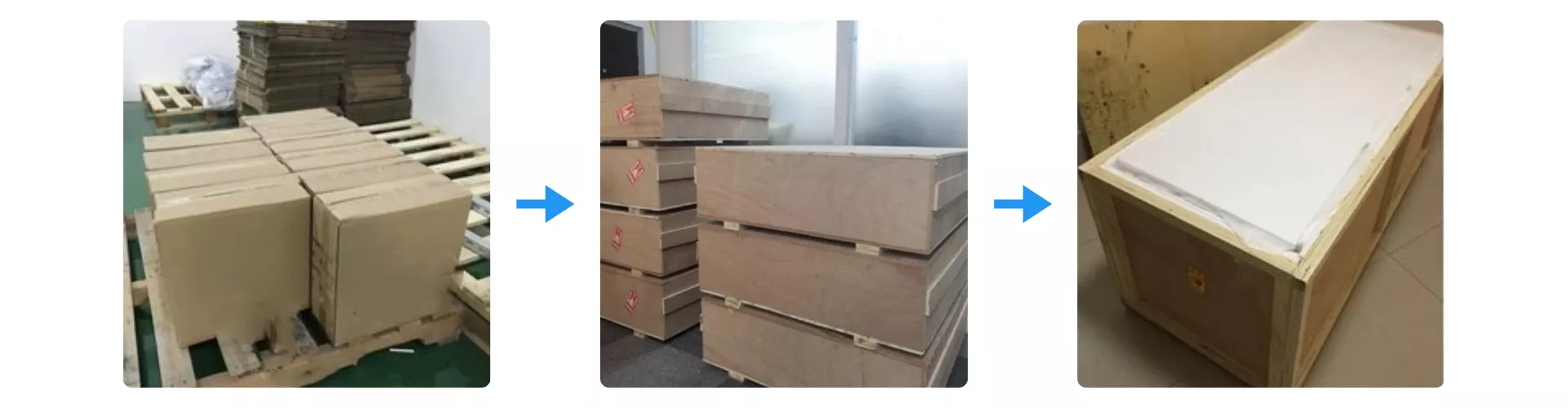

ADCERAX® Packaging of Porous Silicon Carbide Vacuum Chuck

Applications of Porous Silicon Carbide Vacuum Chucks

Porous silicon carbide vacuum chucks are used in automated handling systems where thin, fragile or high-value substrates need stable suction, clean contact and repeatable positioning. ADCERAX supplies custom porous SiC vacuum chucks for photovoltaic, electronics, thin-glass and precision substrate handling equipment according to drawings, substrate conditions and vacuum interface requirements.

  • Porous Silicon Carbide Vacuum Chucks in Photovoltaic Cell Transfer Stations

    In photovoltaic production lines, porous SiC vacuum chucks are used for cell lifting, sorting, transfer and inspection stations. The porous contact surface helps distribute suction across thin cells, while the hard and cleanable SiC structure supports repeated handling in high-throughput equipment.

    Application Position Typical Use
    Cell transfer station Stable lifting and movement of thin solar cells.
    Sorting equipment Repeatable holding during cell classification.
    Inspection fixture Flat support during visual or dimensional inspection.
    Automated handling arm Custom chuck geometry for robotic transfer systems.
  • Porous Silicon Carbide Vacuum Chucks in SMT Micro-Component Placement

    For SMT and micro-component handling, porous SiC vacuum chucks can be used in placement, alignment and inspection equipment where small parts require stable adsorption without mechanical clamping. Custom pore areas, vacuum paths and mounting structures can be designed according to the size and shape of the component.

    Application Position Typical Use
    Micro-component pickup Holding small electronic parts during transfer.
    Ceramic substrate placement Supporting precise positioning before assembly.
    Miniature carrier handling Stable adsorption for small and lightweight parts.
    Inspection station Holding components during optical inspection.
  • Porous Silicon Carbide Vacuum Chucks in Thin Glass and Optical Substrate Handling

    Porous SiC vacuum chucks are also used for thin glass, OLED panels, optical windows and precision glass substrates. The chuck can provide a flat and cleanable support surface for alignment, transfer, coating, bonding or inspection processes where direct mechanical clamping may damage the substrate.

    Application Position Typical Use
    Thin glass transfer Supporting fragile panels during movement.
    OLED panel alignment Stable positioning during alignment steps.
    Optical substrate handling Clean support for coated or polished surfaces.
    Glass inspection fixture Holding glass parts during measurement or inspection.

Safe Operation Guidelines for Porous Silicon Carbide Vacuum Chucks

Proper handling, installation and maintenance help maintain stable suction, clean contact surfaces and reliable substrate protection during automated handling.

  • Pre-Operation Inspection Requirements

    1. Surface Integrity Check
    Inspect the working surface for cracks or impact marks, as structural defects may compromise vacuum continuity and reduce adsorption stability. Confirm that no micro-fractures have developed from previous handling or storage transitions. This step ensures predictable vacuum behavior during thin-substrate processing.
    2. Flatness and Cleanliness Review
    Verify that the contact surface maintains its flatness and is free from debris, residues, or foreign particles. Surface contamination may generate local pressure points that affect substrate alignment. Maintaining a clean interface improves airflow uniformity and reduces mechanical stress on fragile materials.
    3. Vacuum Port and Channel Verification
    Ensure that vacuum inlets, micro-channels, and porous pathways are unobstructed prior to startup. Blocked routes may create irregular suction force and reduce effective holding performance. Clearing these pathways promotes consistent adsorption during high-speed transfer cycles.

  • Installation and System Integration Guidelines

    1. Secure Mounting Alignment
    Position the chuck on the equipment interface so that all mounting points are evenly supported. Misalignment can introduce bending stress and reduce the stability of the suction surface. Proper installation ensures long-term dimensional consistency during repetitive cycles.
    2. Vacuum Line Connection Assurance
    Attach vacuum tubing tightly and verify that seals remain intact under working pressure. Air leakage may cause fluctuating suction intensity and increase the risk of substrate slippage. A stable vacuum line enhances repeatability during automated movement.
    3. System Pressure Calibration
    Calibrate operational vacuum levels according to the equipment’s handling load and substrate thickness. Excessive suction may deform thin materials, while insufficient force may cause lifting failure. Correct calibration maintains operational balance between holding force and material safety.

  • Operational Best Practices in Daily Use

    1. Gradual Vacuum Activation
    Initiate suction progressively to prevent abrupt pressure differentials that may stress fragile substrates. A controlled start reduces the chance of bending or edge cracking. Smooth activation supports consistent substrate placement during automated transfer.
    2. Substrate Placement Handling
    Ensure uniform placement of wafers, cells, or components across the working surface. Uneven loading may cause asymmetric suction distribution and tilt during transport. Balanced positioning maintains predictable movement on conveyor or robotic pathways.
    3. Regular Cycle Performance Checks
    Monitor vacuum pressure behavior at routine intervals to detect early signs of pathway obstruction or material fatigue. Stable pressure trends indicate normal function, while deviation signals potential maintenance needs. Early detection reduces unexpected downtime and quality variation.

  • Cleaning, Maintenance, and Storage Instructions

    1. Surface Cleaning Protocols
    Use non-abrasive cleaning agents and lint-free materials to remove debris without altering surface roughness. Rough cleaning tools may introduce micro-scratches, affecting sensitive substrate contact. Gentle cleaning preserves the stability of surface Ra values.
    2. Vacuum Pathway Maintenance
    Perform periodic negative-pressure flushing or approved cleaning cycles to keep pores and micro-channels clear. Residue buildup may disrupt airflow and reduce adsorption uniformity. Regular flushing helps maintain long-term vacuum consistency.
    3. Safe Storage Conditions
    Store the chuck in a clean, dry, cushioned environment when idle. Exposure to moisture or accidental mechanical contact may degrade its surface condition. Controlled storage minimizes environmental stress between production cycles.

Porous Silicon Carbide Vacuum Chuck FAQ

  1. Q1: What information is needed to quote a custom porous silicon carbide vacuum chuck?

    ADCERAX usually needs the chuck drawing, substrate size, substrate thickness, contact area, vacuum hole or pore layout, mounting interface, surface finish requirement, flatness requirement, operating temperature and cleaning method. If a drawing is not available, a sample part or equipment interface sketch can be reviewed before quotation.

  2. Q2: How should pore size or porosity be selected for a porous SiC vacuum chuck?

    Pore size and porosity should be selected according to substrate weight, surface sensitivity, vacuum pressure, airflow demand and clogging risk. Fine pores are often preferred for delicate substrates, while larger or more open structures may be considered when higher airflow is required. ADCERAX reviews the application before recommending a pore structure.

  3. Q3: Can porous silicon carbide vacuum chucks reduce damage to thin wafers, PV cells or glass?

    Yes, a properly designed porous SiC vacuum chuck can help reduce localized suction peaks by distributing vacuum force across the contact surface. This is useful for fragile substrates such as PV cells, thin glass, ceramic substrates and selected wafer handling equipment. Final performance depends on the substrate, vacuum setting, surface finish and equipment alignment.

  4. Q4: Can ADCERAX manufacture metal-backed porous silicon carbide vacuum chucks?

    Yes, ADCERAX can review designs that combine a porous SiC contact surface with a metal backing or support structure. This type of design may be used when the equipment requires threaded mounting, complex vacuum ports or mechanical reinforcement. The final structure should be confirmed by drawing review.

  5. Q5: How should clogged pores or reduced suction be handled?

    Reduced suction is often related to surface debris, process residues, blocked pores, leaking seals or vacuum line contamination. Cleaning should use non-abrasive methods compatible with the ceramic surface and the production process. If clogging is frequent, the pore design, filtration method and cleaning cycle should be reviewed.

  6. Q6: Is this product suitable for semiconductor equipment?
    Porous silicon carbide vacuum chucks can be used in semiconductor equipment hardware and wafer handling automation when the design requirements are properly reviewed. However, ADCERAX should not claim unsupported semiconductor-grade wafer-contact consumable capability unless the exact material grade, cleanliness requirement, inspection standard and factory confirmation are available.
customize size

Custom Manufacturing Options for Equipment Integration

ADCERAX supplies drawing-based porous silicon carbide vacuum chucks for integration into existing handling, inspection and transfer equipment. Custom options can include plate shape, mounting holes, vacuum ports, channel layout, porous contact zones, edge treatment and backing structure. Each design is reviewed according to the equipment interface and substrate handling requirement.

Custom Option Available Design Examples
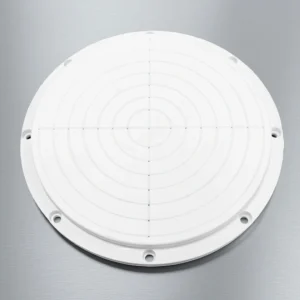
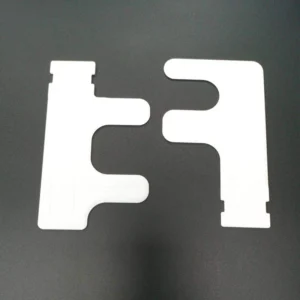
Chuck shape Round, square, rectangular, stepped or irregular profiles.
Mounting structure Counterbored holes, threaded holes, slots, locating pins or edge notches.
Vacuum interface Central ports, side ports, multi-zone channels or customer-defined layouts.
Contact area Full porous surface, partial porous area or patterned suction zones.
Backing support Full ceramic structure or ceramic surface combined with metal support.
Edge treatment Chamfers, radii and protected edges for safer substrate contact.
Inspection items Dimensions, flatness, surface finish and application-specific checks.

Related Products

ADCERAX - Your Trusted Advanced Ceramics Manufacturing Partner

Direct factory manufacturing with comprehensive ceramic materials expertise and global supply capabilities

China-Based Manufacturer

ADCERAX supplies ceramic components for overseas OEMs, equipment builders, and labs.

Custom Drawing Support

We review drawings, dimensions, materials, and application conditions before quotation.

Ceramic Process Control

Forming, sintering, machining, grinding, and finishing are arranged by part requirements.

Pre-Shipment Inspection

Dimensional checks, visual inspection, and packaging review help reduce procurement risk.

Get in Touch with Us

Our team will be happy to respond to you in less than 24 hours.

Pingxiang Factory — Silicon carbide, silicon nitride, high-temperature ceramics

Quick Quotation

*Our team will answer your inquiries within 24 hours.

*Your information will be kept strictly confidential.

Ready to Solve Your Engineering Challenge?

Partner with ADCERAX for reliable, high-performance advanced ceramic solutions. Our engineers are ready to discuss your project.

E-mail

info@adcerax.com

Phone

+(86) 0731-74427743 | WhatsApp: +(86) 19311583352

Response Time

Within 24 hours

Quick Quote

The more details you provide, the faster we can quote.

*We respond within 24 hours. All inquiries are confidential.

Get Your Custom Solution

The more details you provide, the faster we can respond.

customize size

*We respond within 24 hours. All inquiries are confidential.

Download Catalog