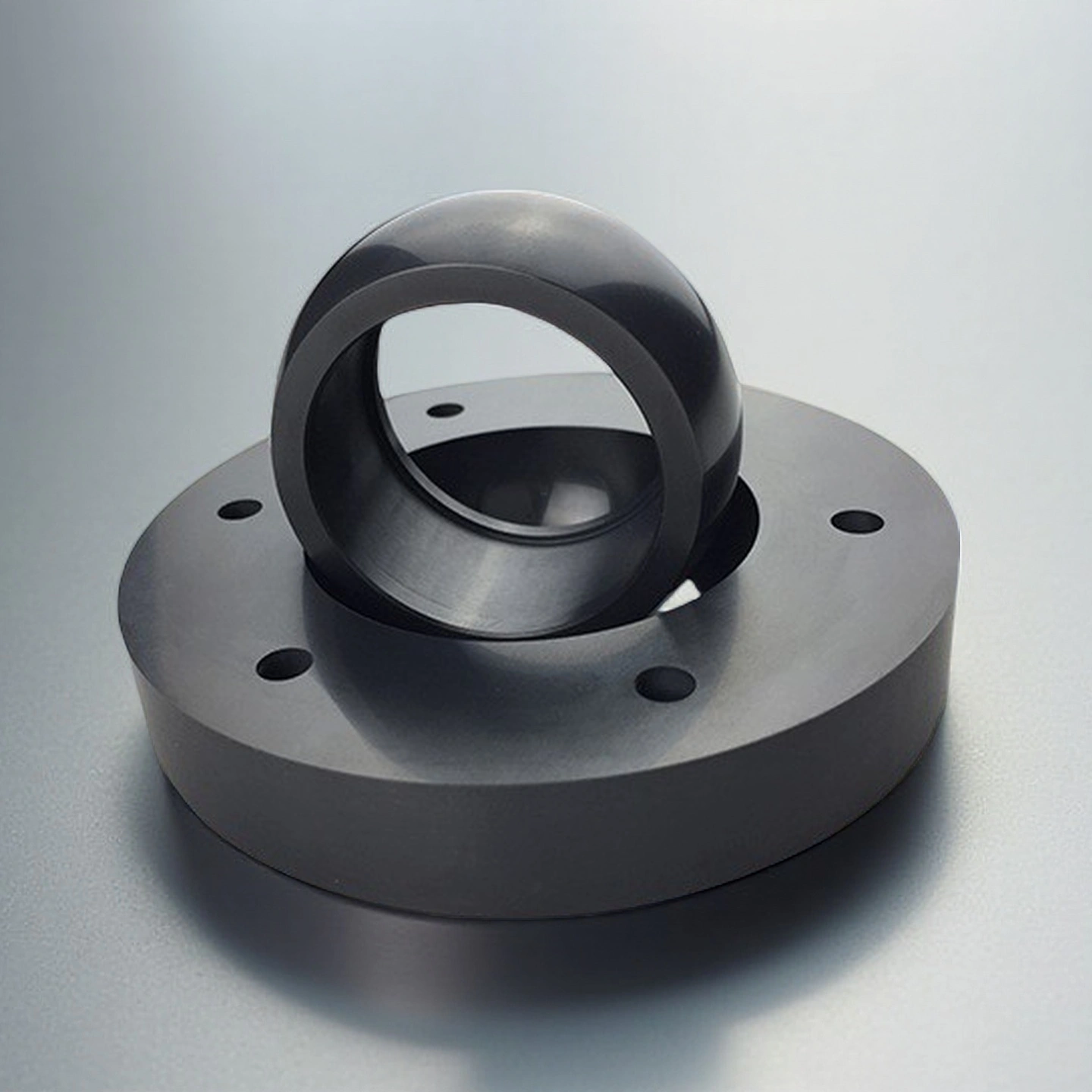
Silicon Nitride Ball Valve for Abrasive Slurry Control

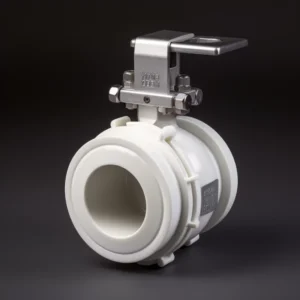
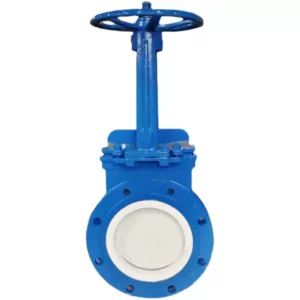
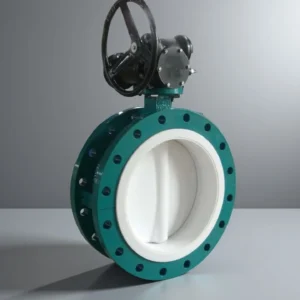
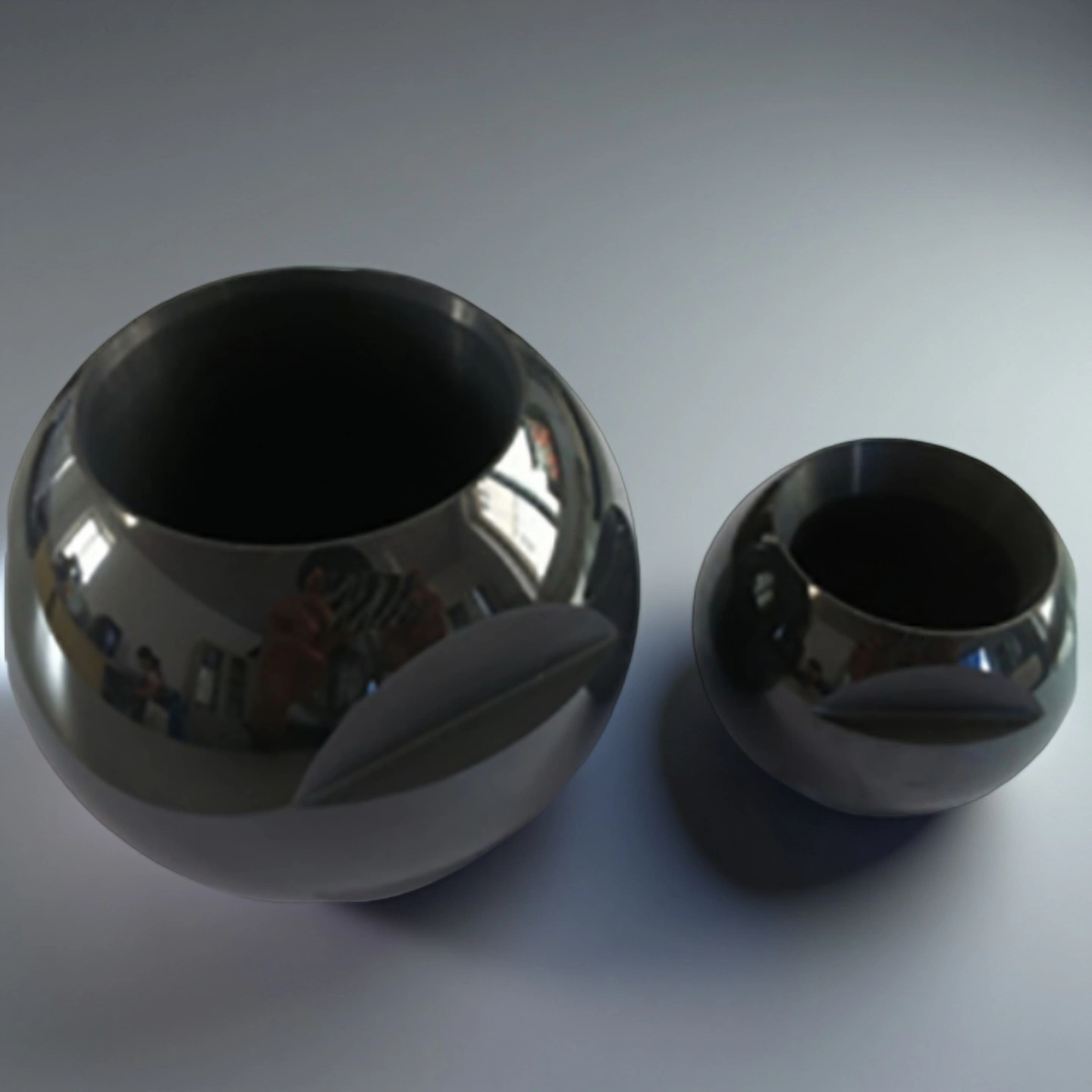
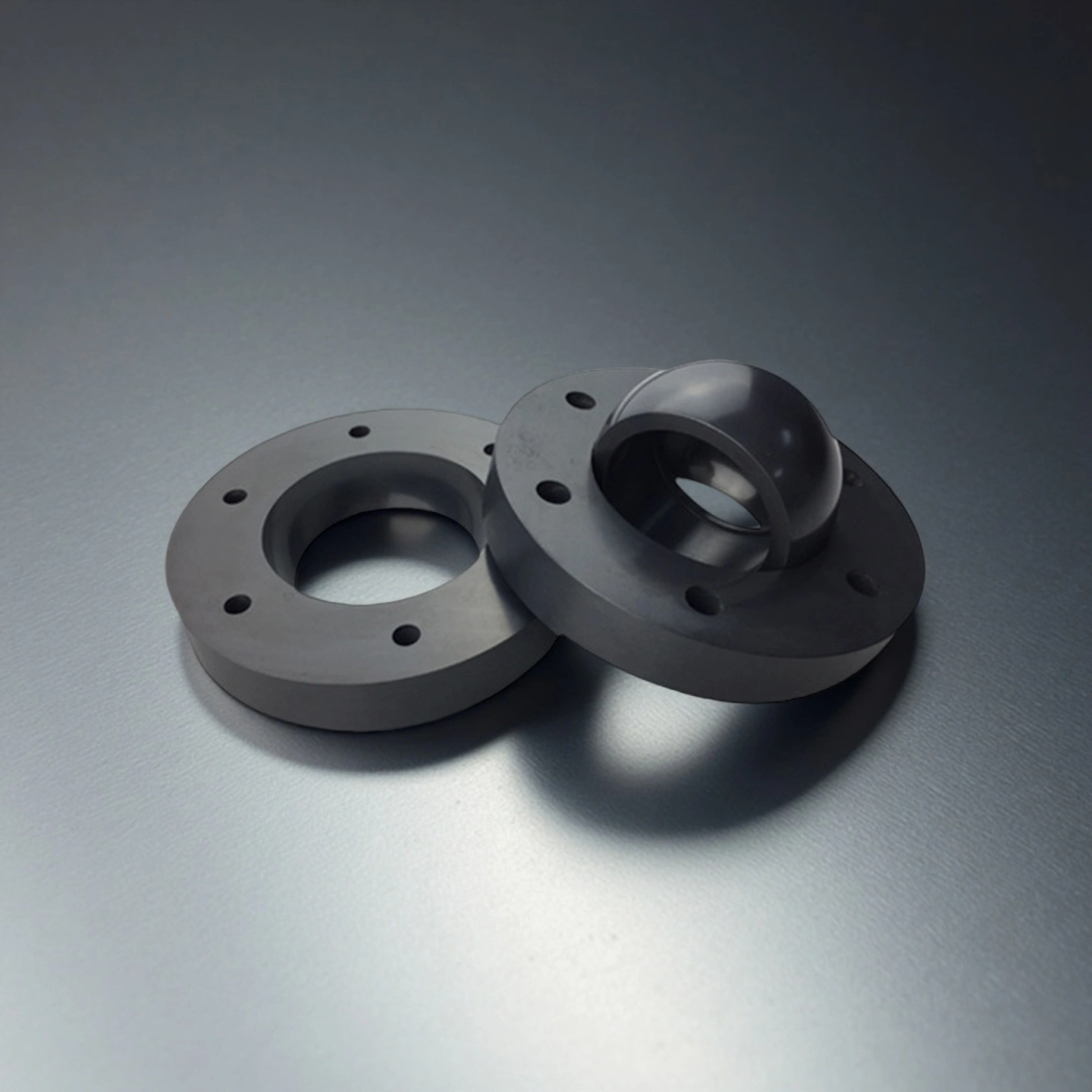
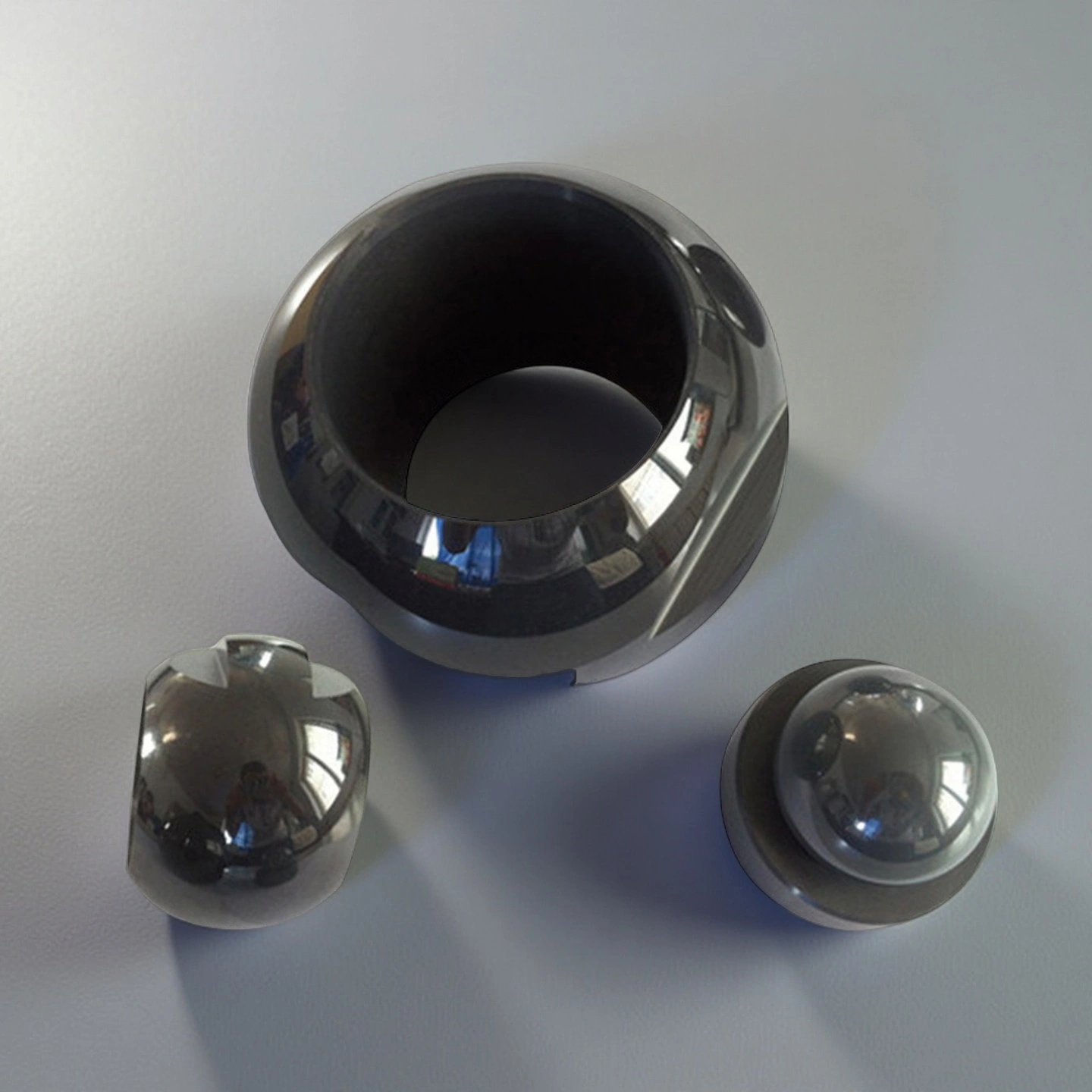
Silicon nitride ball valve with ceramic seat, available in round-port, V-port, and eccentric configurations for abrasive and corrosive slurry control. Common V-port sizes cover DN15–DN150, while larger O-type and eccentric designs can be reviewed by drawing, media condition, pressure class, and actuator requirement.

Catalogue No. AT-SIN-QF001
Material Silicon Nitride
Flexural Strength  ≥ 800 MPa
Thermal Expansion Coefficient 3.2 × 10⁻⁶ /K
Ball roundness tolerance  ≤0.01–0.03 mm (size-dependent)
Engineering RFQ Review
Small-Batch Custom Support
Factory-Direct Manufacturing
Drawing & Process Review

What Is a Silicon Nitride Ball Valve?

A silicon nitride ball valve is a quarter-turn ceramic valve that uses a Si3N4 ball and a precision-lapped ceramic seat to isolate or regulate abrasive, corrosive, or particle-loaded media. Compared with metal-trim valves, the ceramic sealing pair helps reduce wear, galling, and corrosion-related leakage in slurry transfer, chemical dosing, lithium battery material handling, and other harsh fluid-control systems.

ADCERAX supplies round-port designs for on/off shutoff and V-port designs for modulating flow control. Valve size, pressure class, port geometry, ceramic seat pairing, end connection, and actuator interface can be reviewed according to the customer’s drawing, media composition, temperature range, solids loading, and leakage requirement.


Why Use Silicon Nitride in Ball Valve Trims?

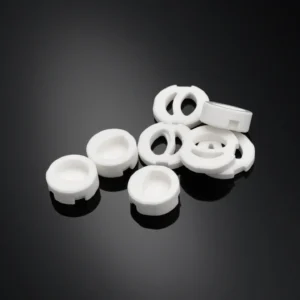
Silicon nitride is selected for ball valve trims when the process media combines abrasion, chemical attack, thermal cycling, and frequent actuation. Its high hardness, low thermal expansion, good fracture toughness, and low density make it suitable for ceramic balls, seats, and flow-control components that must remain dimensionally stable under repeated opening and closing.

For slurry systems, the key value is not only hardness. The sealing band, port edge, seat material, surface finish, and actuator alignment must work together. A properly designed Si3N4 ball valve can help reduce wear-driven leakage, unstable Cv behavior, torque increase, and premature seat damage in applications where conventional metal trims are not reliable enough.

Silicon Nitride Ball Valve Benefits

  • V-port equal-percentage control maintains a stable flow coefficient (Cv) even at small openings, enabling precise slurry dosing and proportional control in variable-density media. The V-notch design ensures linear response across a wide range of operating pressures, minimizing oscillation in closed-loop systems.

  • Si₃N₄ ball + lapped ceramic seat preserves the sealing band under long-term abrasion. The ball roundness (≤0.03 mm) and seat surface finish (Ra ≤ 0.4 µm) are manufactured to ISO 3290-2 standards, helping reduce leakage drift during repeated actuation in abrasive slurry applications when the trim design is properly matched to the media condition.

  • Low CTE pairing between the silicon nitride ball and the ceramic seat minimizes dimensional changes across temperature variations from 20 °C to 120 °C. This compatibility keeps the sealing interface stable in batch or start-stop duties, reducing maintenance caused by thermal fatigue or expansion mismatch.

  • Anti-chipping geometry with port-edge relief mitigates particle impact and prevents micro-cracks during fast actuation. This design feature helps reduce edge damage risk in heavy-solids environments.

  • Actuator-ready ISO 5211 interface simplifies integration with pneumatic or electric actuators. The standardized mounting pad allows quick retrofit and precise positioner feedback without adapter brackets, reducing setup time and ensuring consistent torque alignment during automation upgrades.


Silicon Nitride Ceramic Ball Valve Properties

Si3N4 Type Gas pressure sintering Si3N4 Hot pressing sintering Si3N4 High thermal conductivity Si3N4
Density (g/cm3) 3.2 3.3 3.25
Flexural Strength (MPa) 700 900 600~800
Young Modulus (GPa) 300 300 300~320
Poisson's ratio 0.25 0.28 0.25
Compressive strength (MPa) 2500 3000 2500
Hardness (GPa) 15 16 15
Fracture toughness (MPa*m1/2) 5~7 6~8 6~7
Maximum working temperature (℃) 1100 1300 1100
Thermal conductivity (W/m*K) 20 25 80~100
Thermal expansion coefficient (/℃) 3*10-6 3.1*10-6 3*10-6
Thermal shock resistance (ΔT ℃) 550 800 /


Si3N4 Ball Valve Specifications

The following tables show common silicon nitride ball valve configurations for reference. Final dimensions, pressure class, end connection, ceramic seat design, and actuator interface should be confirmed by drawing review. For slurry, corrosive, or modulating-control applications, ADCERAX recommends checking media composition, solids loading, Cv/Kv requirement, leakage class, and cleaning method before final valve selection.

Type 1: O-Type Silicon Nitride Ball Valve for On/Off Shutoff
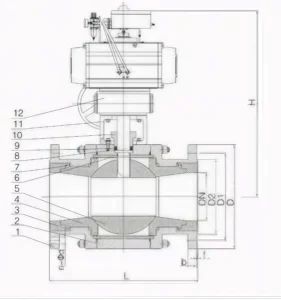
AT-SIN-QF001

O-Type Silicon Nitride Ball Valve for On/Off Shutoff
Item No. DN PH (Mpa) D D1 D2 C H n-d
AT-SIN-QF001 15 1.6 130 95 45 14 180 4-∅14
AT-SIN-QF002 20 1.6 140 105 55 16 190 4-∅14
AT-SIN-QF003 25 1.6 150 115 65 16 220 4-∅14
AT-SIN-QF004 32 1.6 165 135 75 18 235 4-∅18
AT-SIN-QF005 40 1.6 180 145 85 18 255 4-∅18
AT-SIN-QF006 50 1.6 203 160 100 20 270 4-∅18
AT-SIN-QF007 65 1.6 220 180 120 20 310 4-∅18
AT-SIN-QF008 80 1.6 250 195 135 20 370 8-∅18
AT-SIN-QF009 100 1.6 280 215 155 22 430 8-∅18
AT-SIN-QF010 125 1.6 320 245 185 22 510 8-∅18
AT-SIN-QF011 150 1.6 394 280 210 24 590 8-∅23
AT-SIN-QF012 200 1.6 457 335 265 24 750 8-∅23
AT-SIN-QF013 250 1.6 533 506 320 26 850 12-∅23
AT-SIN-QF014 300 1.6 610 460 375 30 920 12-∅25


Type 2:  V-Port Silicon Nitride Ball Valve for Flow Control
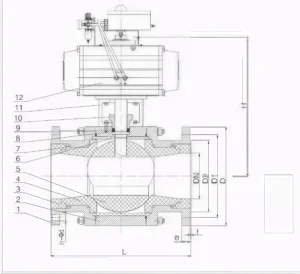
AT-SIN-QF015

V-Port Silicon Nitride Ball Valve for Flow Control
Item NO. DN NPS H L D D1 D2 n-d b f
AT-SIN-QF015 15 1 2" 170 108 90 60.3 34.9 4-M12 11.6 2
AT-SIN-QF016 20 3 /4" 180 117 100 69.9 42.9 4-M12 13.2 2
AT-SIN-QF017 25 1" 185 127 110 79.4 50.8 4-M12 14.7 2
AT-SIN-QF018 32 1-1/4" 220 140 115 88.9 63.5 4-M12 16.3 2
AT-SIN-QF019 40 1-1/2" 230 165 125 98.4 73 4-M12 17.9 2
AT-SIN-QF020 50 2" 247 178 150 120.7 92.1 4-M16 19.5 2
AT-SIN-QF021 65 2-1/2" 270 190 180 139.7 104.8 4-M16 22.7 2
AT-SIN-QF022 80 3" 310 203 190 152.4 127 4-M16 24.3 2
AT-SIN-QF023 100 4" 355 229 230 190.5 139.7 4-M16 24.3 2
AT-SIN-QF024 125 5" 430 356 255 215.9 157.2 4-M20 24.3 2
AT-SIN-QF025 150 6" 490 394 280 241.3 185.7 4-M21 25.9 2
AT-SIN-QF026 200 8" 590 457 345 298.5 215.9 4-M22 29 2


Type 3: Eccentric Silicon Nitride Ball Valve for Heavy Slurry Service
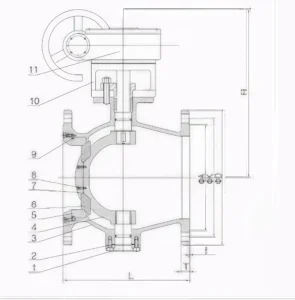
AT-SIN-QF027

Eccentric Silicon Nitride Ball Valve for Heavy Slurry Service
Item NO. PN(Mpa) DN(mm) H L D D1 D2 n-d C F
AT-SIN-QF027 1.6 50 230 124 165 125 100 4-∅18 16 3
AT-SIN-QF028 1.6 65 237 145 185 145 120 4-∅18 18 3
AT-SIN-QF029 1.6 80 260 165 200 160 135 8-∅18 20 3
AT-SIN-QF030 1.6 100 270 194 220 180 156 8-∅18 20 3
AT-SIN-QF031 1.6 125 320 210 250 210 185 8-∅22 22 3
AT-SIN-QF032 1.6 150 340 229 285 240 211 8-∅22 26 3
AT-SIN-QF033 1.6 200 390 243 340 295 265 8-∅23 26 3
AT-SIN-QF034 1.6 250 420 297 405 355 319 8-∅26 30 3
AT-SIN-QF035 1.6 300 510 338 460 410 375 8-∅26 30 4

Round-Port vs V-Port Silicon Nitride Ball Valves

Valve Type Best Used For Buyer Should Check
Round-port Si3N4 ball valve On/off isolation, slurry shutoff, corrosive fluid transfer, batch discharge. Required leakage level, solids content, flange type, pressure class, and cleaning method.
V-port Si3N4 ball valve Flow modulation, dosing, slurry ratio control, coating lines, chemical addition. Required Cv/Kv range, opening angle, actuator accuracy, media viscosity, and control stability.
Eccentric ceramic ball valve Heavy slurry, scaling-prone media, higher seat protection demand. Seat contact design, torque trend, actuator margin, and cleaning frequency.

Si3N4 Ball Valve Packaging

  • Ball/seat contact faces protected with soft caps; valve ports sealed; unit placed in foam cradle within a double-wall carton; palletized for mid/large DN.
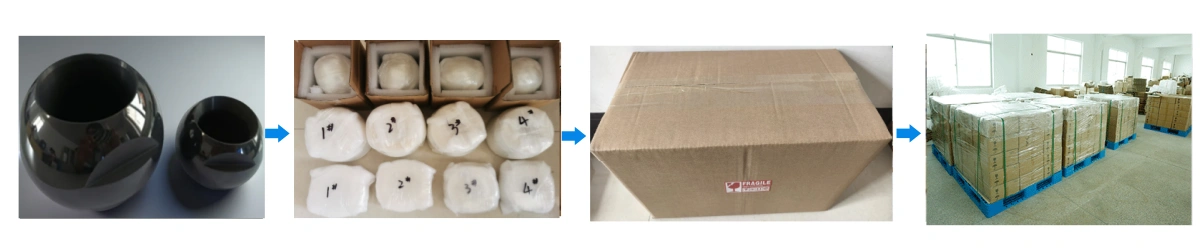

Si3N4 Ball Valve Packaging

Silicon Nitride Ball Valve Applications

  • Lithium Battery Slurry Transfer and Dosing

    Si3N4 ball valves can be used in lithium battery slurry mixing, coating, and transfer lines where abrasive solid particles, viscosity variation, and flow-control stability are important. A V-port trim is preferred when the process requires gradual flow adjustment, while a round-port trim is better suited for shutoff and batch transfer.

  • Hydrometallurgy and Chemical Slurry Lines

    For leaching, neutralization, and slurry recirculation lines, silicon nitride ceramic trims help resist particle erosion and corrosion-related wear. The final valve design should be reviewed according to pH range, solids percentage, particle size, pressure class, and cleaning method.

  • Pulp, Paper, and Coating Systems

    In filler, pigment, and coating slurry systems, a ceramic ball and seat can help maintain sealing stability where fibers, mineral particles, or chemical additives accelerate metal-trim wear. V-port geometry can support smoother modulation when the system requires controlled flow rather than simple shutoff.

  • Industrial Corrosive Fluid Control

    Silicon nitride ball valves may be considered for corrosive or mixed abrasive-corrosive media when stainless steel, hard alloy, or coated metal trims experience rapid wear, sticking, or leakage drift. Material compatibility should always be confirmed before final selection.

Si3N4 Ball Valve Usage Instructions

  • Installation

    1. Verify face-to-face dimension, gasket fit, and flange rating (PN/ANSI) to ensure proper sealing and torque distribution. For V-port trims, align the flow direction arrow precisely to maintain the designed equal-percentage characteristic curve.
    2. Apply calibrated torque on flange bolts to prevent flange distortion and ensure even compression across the sealing gasket. Confirm actuator alignment and stem coupling on the ISO 5211 mounting pad to avoid side-loading on the valve stem.
    3. Before commissioning, flush the pipeline with clean media to remove welding slag, sand, or hard particles that could damage the ceramic seat or sealing band during the first actuation.

  • Operation

    1. For dosing or modulating control, start with the agreed flow-control profile and adjust control settings according to actual media viscosity, solids loading, and valve response. Avoid frequent dry cycling under heavy solids, and monitor torque or leakage trends during scheduled maintenance.
    2. Avoid dry cycling under heavy solids or unlubricated conditions, as ceramic-to-ceramic friction may cause micro-abrasion. If unavoidable, use a slow-open or soft-start actuation profile to minimize edge impact on the Si₃N₄ ball and seat.
    3. During continuous service, monitor torque and leakage trends in the control system. A gradual torque increase often indicates early wear or scaling, prompting cleaning before a full shutdown.

  • Storage

    1. Keep valve ports capped and protect ceramic sealing surfaces from dust, impact, and vibration. Store the valve in a clean, dry environment away from corrosive atmosphere and direct sunlight.
    2. Protect lapped ball and seat surfaces from vibration and impact; if stored longer than three months, reapply a thin protective film of neutral lubricant or silicone-based preservative before reinstallation.
    3. When moving or stacking, use foam or wooden cradles to avoid contact between ceramic components and hard surfaces.

  • Cleaning /Maintenance

    1. After service or scheduled shutdown, flush the line with a compatible cleaning medium to remove deposits from the sealing area. Avoid metal scrapers or abrasive tools on lapped ceramic surfaces. If leakage, torque increase, or surface damage is observed, inspect the ceramic ball, seat band, actuator alignment, and sealing components before reuse.
    2. Avoid metal scrapers or abrasive pads on the lapped surfaces; instead, use soft lint-free cloths or polymer brushes.
    3. Inspect the seat band width, roundness, and leakage class per ISO 5208 / EN 12266-1 standards. Record torque and leakage test data each maintenance cycle to establish a performance baseline.
    4. Replace sealing components if the leakage exceeds the agreed project requirement or if microscopic surface pitting is detected under optical inspection.

  • Common User Mistakes and Solutions

    1. Misalignment during actuator installation → Always check ISO 5211 interface flatness and stem key fit to prevent uneven torque.
    2. Premature wear from solids entrapment → Install upstream filters or strainers (use suitable upstream filtration or flushing based on particle size and process requirements) and perform periodic line flushing.
    3. Valve sticking after long idle periods → Cycle the valve every few weeks to maintain lubrication on the ball-seat contact area and prevent dry friction.

Silicon Nitride Ceramic Ball Valve

  1. Q: What is a silicon nitride ball valve used for?
    A: A silicon nitride ball valve is used to control abrasive, corrosive, or particle-loaded media in slurry transfer, chemical dosing, lithium battery material handling, hydrometallurgy, pulp and paper processing, and other industrial fluid-control systems where metal trims may wear, corrode, or lose sealing stability.
  2. Q: When should I choose a silicon nitride ball valve instead of a metal ball valve?
    A: A silicon nitride ball valve should be considered when stainless steel, hard alloy, or coated metal trims suffer from erosion, galling, sticking, or corrosion-related leakage. It is especially useful when the process media contains hard particles, corrosive chemicals, thermal cycling, or frequent valve actuation.
  3. Q: What is the difference between a round-port and V-port silicon nitride ball valve?
    A: A round-port silicon nitride ball valve is mainly used for on/off shutoff and batch transfer. A V-port silicon nitride ball valve is used for modulating control, dosing, and flow adjustment because the V-shaped opening provides a more gradual flow response at partial openings.
  4. Q: Can a silicon nitride ball valve be used for lithium battery slurry?
    A: Yes. Silicon nitride ball valves can be used in lithium battery slurry handling when the line requires wear resistance, ceramic sealing stability, and controlled flow behavior. The final design should be reviewed based on slurry composition, solids loading, viscosity, pressure, temperature, and required control accuracy.
  5. Q: Can the valve handle acidic or alkaline media?
    A: Silicon nitride has good resistance to many corrosive environments, but compatibility depends on the chemical composition, concentration, temperature, and exposure time. ADCERAX reviews the media conditions before recommending the ceramic ball, seat material, liner, and valve body configuration.
  6. Q: What information is needed for a custom Si3N4 ball valve quotation?
    A: For an accurate quotation, please provide valve size, pressure class, media composition, solids content, temperature range, flow requirement, leakage requirement, end connection, actuator type, drawing or sample reference, and expected order quantity.
  7. Q: Can ADCERAX customize the port geometry?
    A: Yes. ADCERAX can review round-port, V-port, and custom port geometry according to the required shutoff or flow-control function. V-port angle, seat band width, ceramic pairing, and actuator interface can be adjusted after engineering review.
  8. Q: How is leakage performance verified?
    A: Leakage performance can be checked according to the agreed test method and project requirement. For ceramic ball valves, the sealing result depends on ball roundness, seat finish, pressure class, media condition, and assembly alignment.
  9. Q: Can the valve be supplied with pneumatic or electric actuators?
    A: Yes. Silicon nitride ball valves can be designed with actuator mounting interfaces for pneumatic or electric actuation. The actuator selection should consider torque margin, control accuracy, operating frequency, media behavior, and installation space.
  10. Q: What makes silicon nitride different from zirconia or alumina valve components?
    A: Silicon nitride offers a strong balance of wear resistance, fracture toughness, low density, and thermal stability. Zirconia may be preferred where toughness and corrosion behavior are more important, while alumina may be suitable for lower-cost wear or corrosion resistance. The best material depends on the media and valve function.
customize size

Custom Silicon Nitride Ball Valve

Engineering customization for the silicon nitride ball valve focuses on trim geometry, ceramic pairing, and metrology, ensuring each valve matches the specific slurry composition, temperature cycle, and flow control profile required in industrial operation.

  • Port geometry:
    Choose between round-port for isolation duty and V-port 60°/90°/custom angles for equal-percentage flow control. The V-port configuration allows precise modulation under variable slurry viscosity or solids concentration.

  • Ball/seat materials:
    Combine a Si₃N₄ ball with a selection of ceramic seat or liner materials to balance wear, corrosion, and temperature resistance. Different ceramic pairings (e.g., Si₃N₄–Si₃N₄ or Si₃N₄–ZrO₂) can be specified for optimized compatibility with acidic or abrasive media.

  • Ball size & tolerance:
    Available ball diameters range from Ø12–Ø60 mm, manufactured with roundness ≤ 0.01–0.03 mm to ISO 3290-2 standards. The seat band width can be adjusted to control sealing pressure and flow recovery in specific process lines.

  • Surface finish:
    The ball and seat sealing surfaces achieve Ra ≤ 0.2–0.4 µm, depending on valve size and operating pressure. This precision lapping minimizes leakage drift and enhances sealing integrity during frequent actuation.

  • Pressure class & end connections:
    Standard pressure ratings include PN16–PN40 / Class 150–300, with available ANSI/EN flanges, wafer, or BSP/NPT threaded ends for compact installations. Each connection type supports direct replacement of existing metal valves without layout modification.

  • Actuation & control accessories:
    The valve body integrates an ISO 5211 mounting pad for pneumatic or electric actuators, compatible with positioners, limit switches, and solenoid blocks. The standardized interface ensures accurate torque transfer and easy retrofitting in automated systems.


Related Products

ADCERAX - Your Trusted Advanced Ceramics Manufacturing Partner

Direct factory manufacturing with comprehensive ceramic materials expertise and global supply capabilities

China-Based Manufacturer

ADCERAX supplies ceramic components for overseas OEMs, equipment builders, and labs.

Custom Drawing Support

We review drawings, dimensions, materials, and application conditions before quotation.

Ceramic Process Control

Forming, sintering, machining, grinding, and finishing are arranged by part requirements.

Pre-Shipment Inspection

Dimensional checks, visual inspection, and packaging review help reduce procurement risk.

Get in Touch with Us

Our team will be happy to respond to you in less than 24 hours.

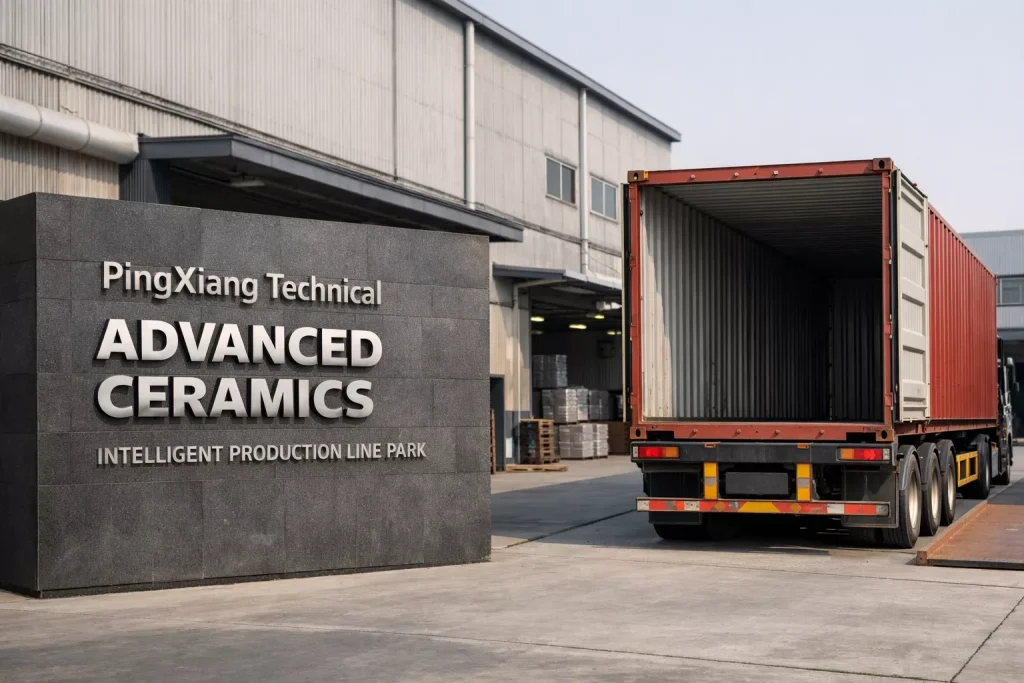
Pingxiang Factory — Silicon carbide, silicon nitride, high-temperature ceramics

Quick Quotation

*Our team will answer your inquiries within 24 hours.

*Your information will be kept strictly confidential.

Ready to Solve Your Engineering Challenge?

Partner with ADCERAX for reliable, high-performance advanced ceramic solutions. Our engineers are ready to discuss your project.

E-mail

info@adcerax.com

Phone

+(86) 0731-74427743 | WhatsApp: +(86) 19311583352

Response Time

Within 24 hours

Quick Quote

The more details you provide, the faster we can quote.

*We respond within 24 hours. All inquiries are confidential.

Get Your Custom Solution

The more details you provide, the faster we can respond.

customize size

*We respond within 24 hours. All inquiries are confidential.

Download Catalog