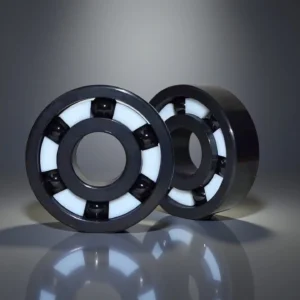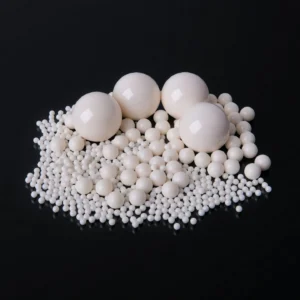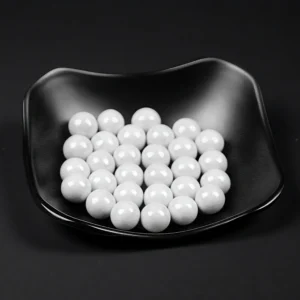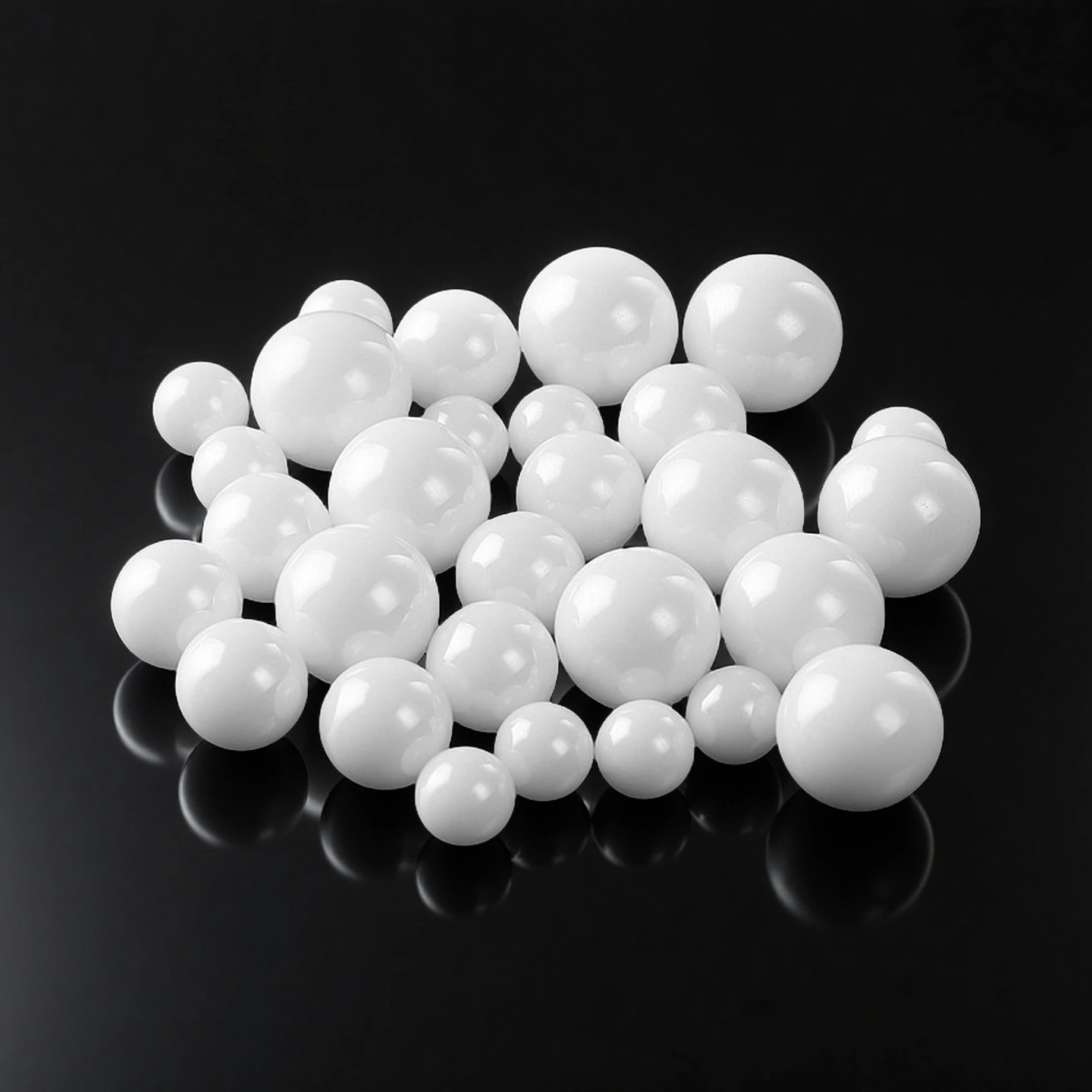
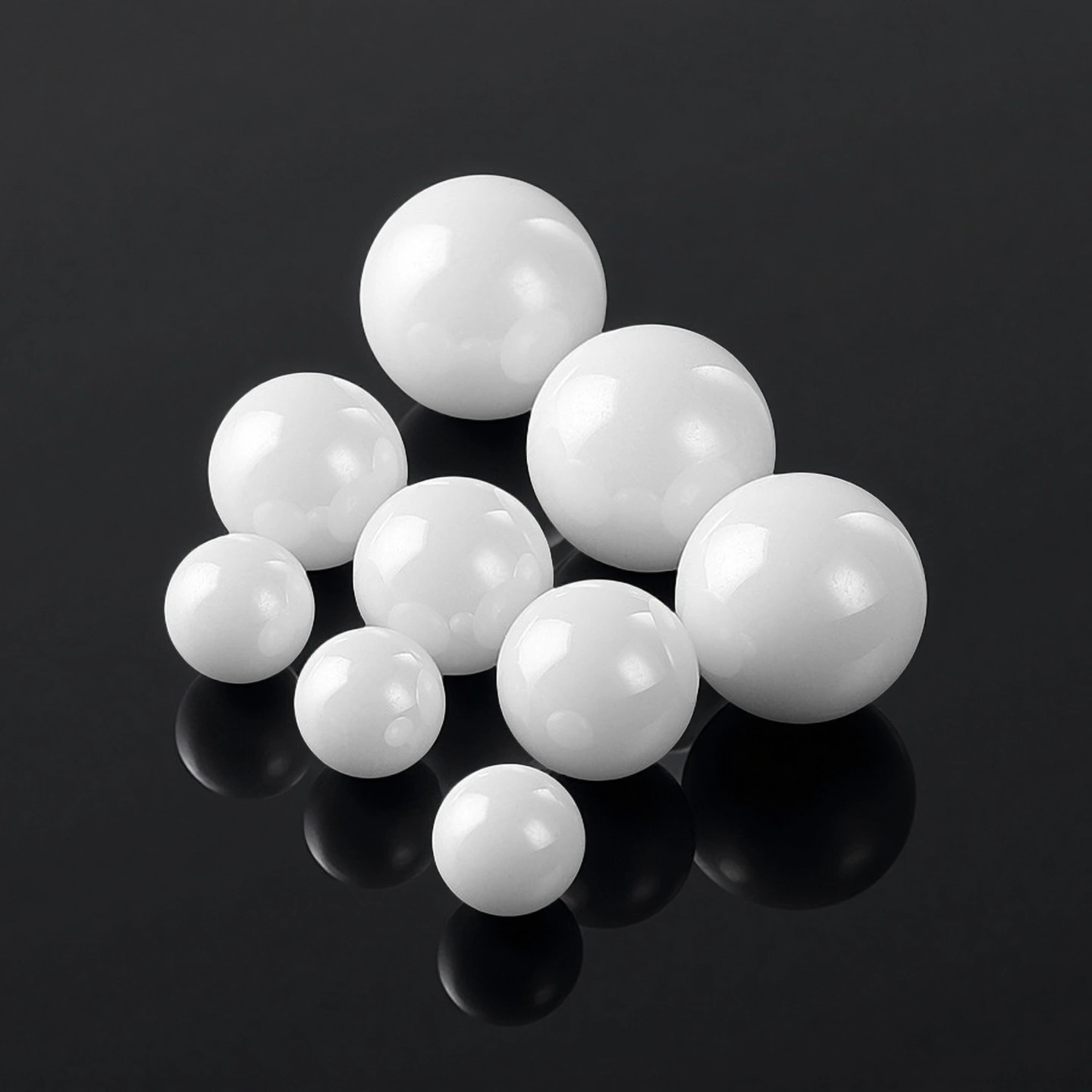
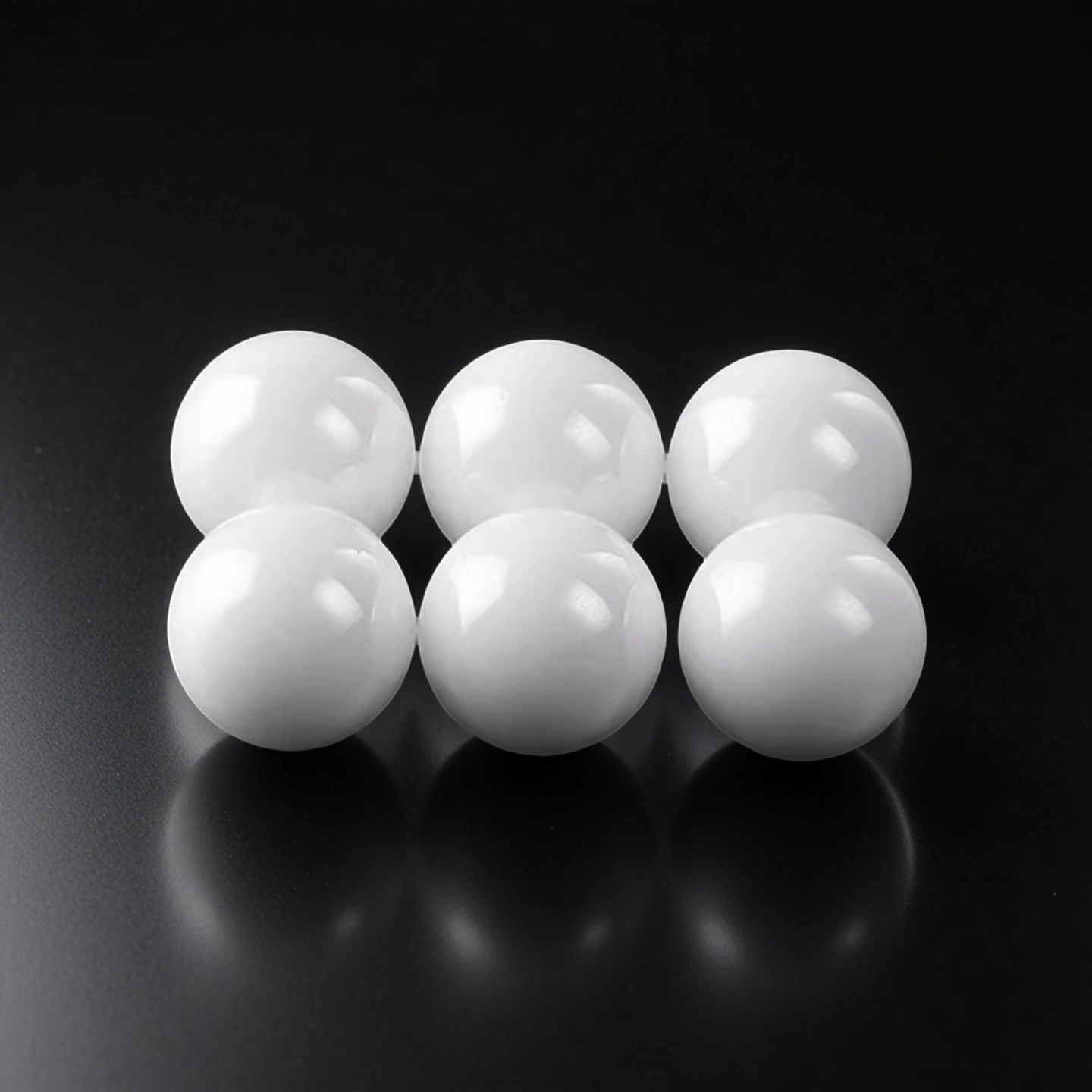
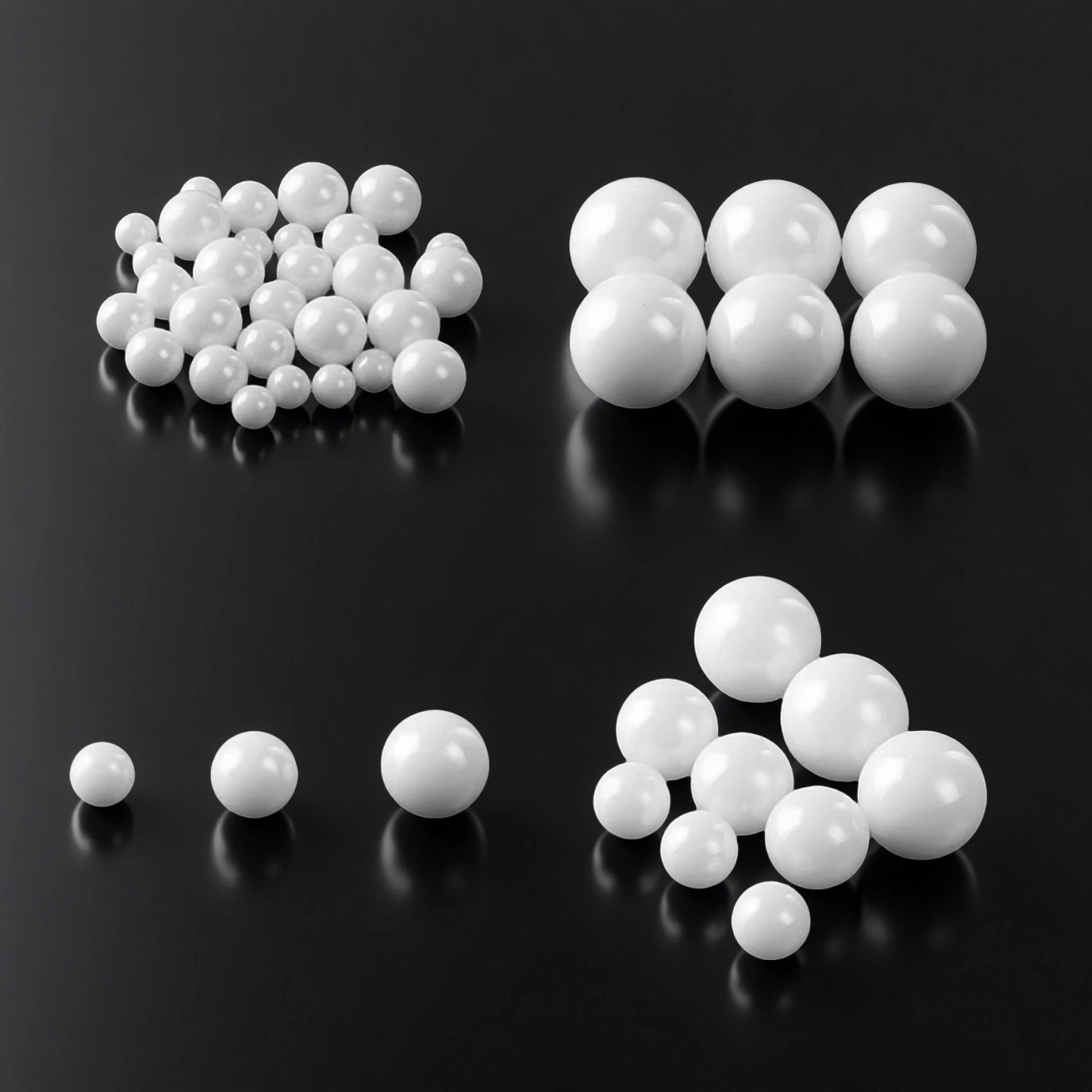
Zirconia ceramic bearing balls are precision ZrO₂ rolling elements used in bearings, pumps, valves, motors and robotic motion assemblies. They are selected when the application requires wear resistance, corrosion stability, electrical insulation, non-magnetic behavior or cleaner contact than steel balls can provide.
Compared with steel bearing balls, zirconia balls are harder, more corrosion resistant and electrically insulating. Compared with alumina balls, zirconia offers higher fracture toughness. Compared with silicon nitride balls, zirconia is usually heavier but can be attractive for corrosion-resistant and chemically stable motion systems.
Key Engineering Advantages of Zirconia Ceramic Bearing Balls
High Hardness
Zirconia ceramic bearing balls have a hard, wear-resistant surface that helps resist abrasive wear during repeated rolling or contact movement. This allows the assembly to maintain smoother motion and more stable contact over longer service intervals.
Corrosion Resistance
ZrO₂ is more stable than steel in many chemical, wet and corrosive working environments. This makes zirconia bearing balls suitable for pumps, valves and fluid-contact assemblies where rust, surface attack or metal contamination may become a problem.
Electrical Insulation
Zirconia does not conduct electricity like metal balls. It is useful in bearing or motion assemblies where electrical isolation, non-conductive rolling contact or reduced electrical interference is required.
Low-Friction Polished Surface
A fine polished zirconia surface supports smoother contact with the race, seat or mating component. When the bearing structure and clearance are designed correctly, this can help reduce vibration, heat build-up and motion instability.
Higher Toughness Than Alumina
Compared with many oxide ceramic materials, zirconia offers stronger resistance to crack growth. This makes it a practical ceramic option when the application involves repeated motion, moderate impact risk or higher mechanical stress than alumina can safely handle.
Technical Properties for Zirconia Ceramic Bearing Balls
The following values are typical reference properties for zirconia ceramic bearing ball applications. Final material grade, size tolerance, surface finish and application suitability should be reviewed according to the bearing structure, load direction, speed, lubrication method, operating temperature and chemical exposure.
| Property | Typical Reference Value | Why It Matters |
|---|---|---|
| Material | Zirconia ceramic, ZrO₂-based grade. | The grade affects toughness, density, corrosion behavior and working temperature. |
| Purity Option | ≥99.5% ZrO₂ option can be reviewed. | Higher purity can help reduce contamination and improve consistency in demanding systems. |
| Hardness | Up to 1200 HV, depending on grade. | Higher hardness helps reduce surface wear during rolling or sliding contact. |
| Density | Around 6.0 g/cm³ for dense zirconia. | Density affects inertia, load response and comparison with silicon nitride or steel balls. |
| Fracture Toughness | Higher than many alumina ceramic grades. | This helps reduce crack propagation risk under repeated mechanical stress. |
| Surface Finish | Polished surface options are available. | Surface finish affects friction, noise, vibration and particle generation. |
| Precision Grade | G5–G200 can be reviewed by requirement. | Higher precision grades support smoother rotation and tighter motion control. |
| Chemical Stability | Compatibility should be reviewed by medium. | This is important for pumps, valves, chemical equipment and wet operating environments. |
Specifications of Zirconia Ceramic Bearing Balls
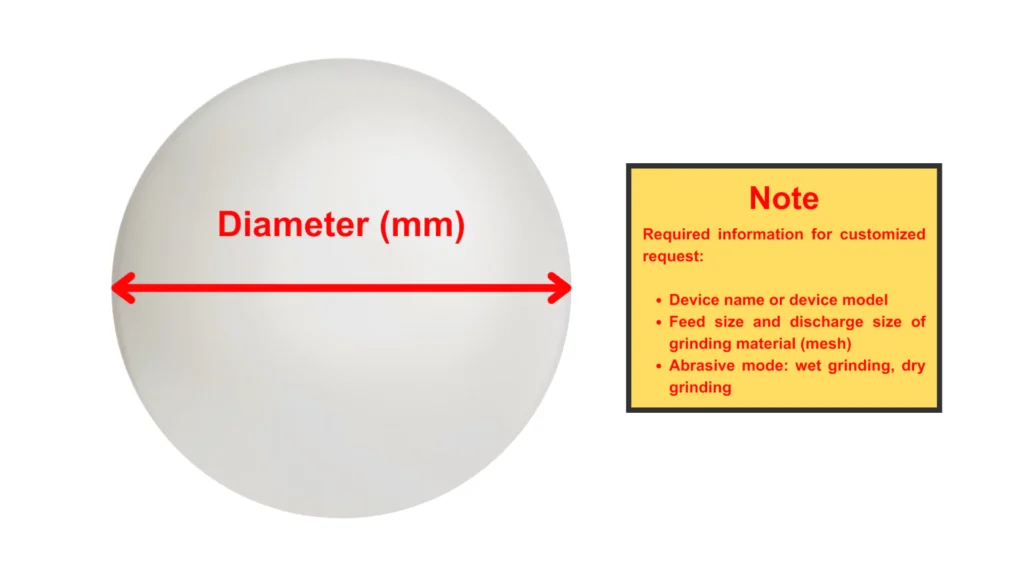
ADCERAX can review standard and drawing-based zirconia ceramic bearing ball sizes according to the required diameter, precision grade, surface finish and application environment. For bearing replacement projects, please provide the original ball diameter, race material, load condition, speed range and failure mode so that the material and grade can be checked before quotation.
| Zirconia Ceramic Ball Precision Grade Table | ||||||
|---|---|---|---|---|---|---|
| Grade | Ball Gauge Value | Ball Deviation Value | Ball Diameter Variation (Individual) |
Ball Batch Diameter Variation | Sphericity Error | Surface Roughness |
| G5 | ±5 | ±0.4 0.2 |
0.13 | 0.25 | 0.13 | 0.014 |
| G10 | ±10 | ±0.4 0.2 |
0.25 | 0.5 | 0.25 | 0.020 |
| G16 | ±10 | ±0.8 0.4 |
0.4 | 0.8 | 0.4 | 0.025 |
| G20 | ±10 | ±0.8 0.4 |
0.5 | 1 | 0.5 | 0.032 |
| G24 | ±12 | ±0.8 0.4 |
0.6 | 1.2 | 0.6 | 0.040 |
| G28 | ±12 | ±0.8 0.4 |
0.7 | 1.4 | 0.7 | 0.050 |
| G40 | ±16 | ±1.6 0.8 |
1 | 2 | 1 | 0.080 |
| G60 | ±16 | ±2.4 1.2 |
1.5 | 3 | 1.2 | 0.1 |
| G100 | ±40 | ±4 2 |
2.5 | 5 | 2.5 | 0.125 |
| G200 | ±60 | ±6 3 |
5 | 10 | 5 | 0.150 |
| Zirconia Ceramic Bearing Balls | |
| Item No. | Diameter(mm) |
| AT-YHG-ZCQ001 | 0.4 |
| AT-YHG-ZCQ002 | 0.5 |
| AT-YHG-ZCQ003 | 0.6 |
| AT-YHG-ZCQ004 | 0.7 |
| AT-YHG-ZCQ005 | 0.8 |
| AT-YHG-ZCQ006 | 0.9 |
| AT-YHG-ZCQ007 | 1 |
| AT-YHG-ZCQ008 | 1.1 |
| AT-YHG-ZCQ009 | 1.2 |
| AT-YHG-ZCQ010 | 1.3 |
| AT-YHG-ZCQ011 | 1.35 |
| AT-YHG-ZCQ012 | 1.4 |
| AT-YHG-ZCQ013 | 1.5 |
| AT-YHG-ZCQ014 | 1.588 |
| AT-YHG-ZCQ015 | 1.6 |
| AT-YHG-ZCQ016 | 1.8 |
| AT-YHG-ZCQ017 | 2 |
| AT-YHG-ZCQ018 | 2.381 |
| AT-YHG-ZCQ019 | 2.5 |
| AT-YHG-ZCQ020 | 2.778 |
| AT-YHG-ZCQ021 | 2.8 |
| AT-YHG-ZCQ022 | 3 |
| AT-YHG-ZCQ023 | 3.175 |
| AT-YHG-ZCQ024 | 3.5 |
| AT-YHG-ZCQ025 | 3.969 |
| AT-YHG-ZCQ026 | 4 |
| AT-YHG-ZCQ027 | 4.5 |
| AT-YHG-ZCQ028 | 4.763 |
| AT-YHG-ZCQ029 | 5 |
| AT-YHG-ZCQ030 | 5.5 |
| AT-YHG-ZCQ031 | 5.536 |
| AT-YHG-ZCQ032 | 5.953 |
| AT-YHG-ZCQ033 | 6 |
| AT-YHG-ZCQ034 | 6.35 |
| AT-YHG-ZCQ035 | 6.747 |
| AT-YHG-ZCQ036 | 7 |
| AT-YHG-ZCQ037 | 7.144 |
| AT-YHG-ZCQ038 | 8 |
| AT-YHG-ZCQ039 | 8.731 |
| AT-YHG-ZCQ040 | 9 |
| AT-YHG-ZCQ041 | 9.525 |
| AT-YHG-ZCQ042 | 10 |
| AT-YHG-ZCQ043 | 10.3188 |
| AT-YHG-ZCQ044 | 11 |
| AT-YHG-ZCQ045 | 11.1125 |
| AT-YHG-ZCQ046 | 11.906 |
| AT-YHG-ZCQ047 | 12 |
| AT-YHG-ZCQ048 | 12.303 |
| AT-YHG-ZCQ049 | 12.7 |
| AT-YHG-ZCQ050 | 13.494 |
| AT-YHG-ZCQ051 | 14 |
| AT-YHG-ZCQ052 | 14.288 |
| AT-YHG-ZCQ053 | 15 |
| AT-YHG-ZCQ054 | 15.875 |
| AT-YHG-ZCQ055 | 16 |
| AT-YHG-ZCQ056 | 17.4625 |
| AT-YHG-ZCQ057 | 18 |
| AT-YHG-ZCQ058 | 18.256 |
| AT-YHG-ZCQ059 | 19.05 |
| AT-YHG-ZCQ060 | 19.844 |
| AT-YHG-ZCQ061 | 20 |
| AT-YHG-ZCQ062 | 20.638 mm |
| AT-YHG-ZCQ063 | 22.225 |
| AT-YHG-ZCQ064 | 23.812 |
| AT-YHG-ZCQ065 | 25.4 |
| AT-YHG-ZCQ066 | 25.875 |
| AT-YHG-ZCQ067 | 26.988 |
| AT-YHG-ZCQ068 | 30 |
| AT-YHG-ZCQ069 | 30.163 |
| AT-YHG-ZCQ070 | 31.75 |
| AT-YHG-ZCQ071 | 32 |
| AT-YHG-ZCQ072 | 34.925 |
| AT-YHG-ZCQ073 | 35 |
| AT-YHG-ZCQ074 | 36 |
| AT-YHG-ZCQ075 | 38.1 |
| AT-YHG-ZCQ076 | 40 |
| AT-YHG-ZCQ077 | 42 |
| AT-YHG-ZCQ078 | 44.45 |
| AT-YHG-ZCQ079 | 45 |
| AT-YHG-ZCQ080 | 50.8 |
| AT-YHG-ZCQ081 | 55 |
| AT-YHG-ZCQ082 | 63.5 |
Packaging of Zirconia Ceramic Bearing Balls
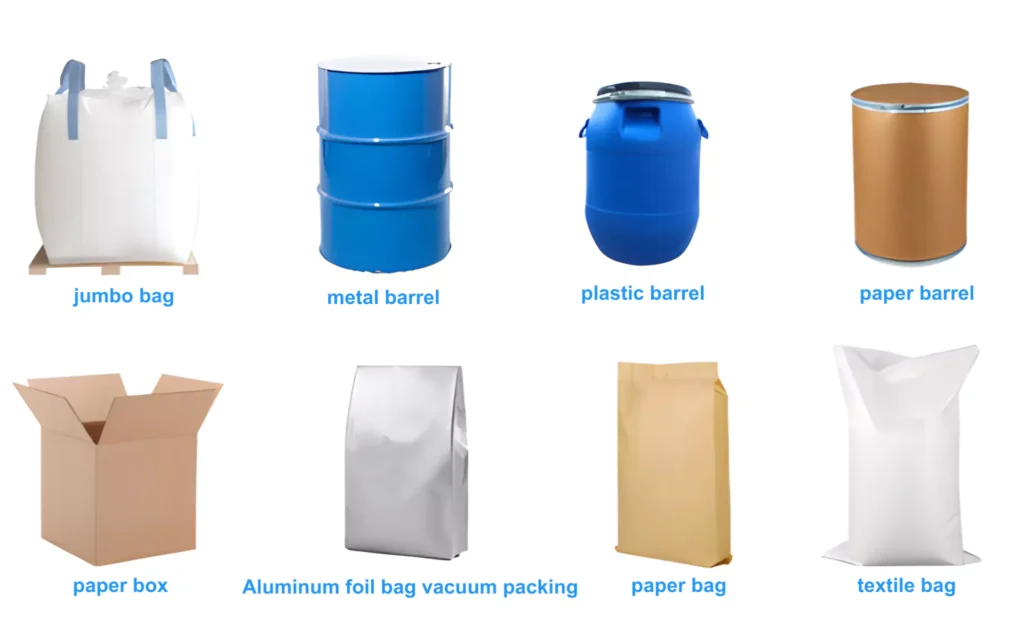
Zirconia ceramic bearing balls should be packed to protect surface finish, roundness and dimensional consistency during international shipment. Small precision balls can be supplied in sealed bags, plastic vials, small boxes or divided trays according to diameter, quantity and precision grade.
For larger balls or precision-grade orders, each batch should be separated and cushioned to reduce ceramic-to-ceramic impact. Before shipment, ADCERAX can review visible surface condition, quantity, label information and outer carton protection according to the order requirement.