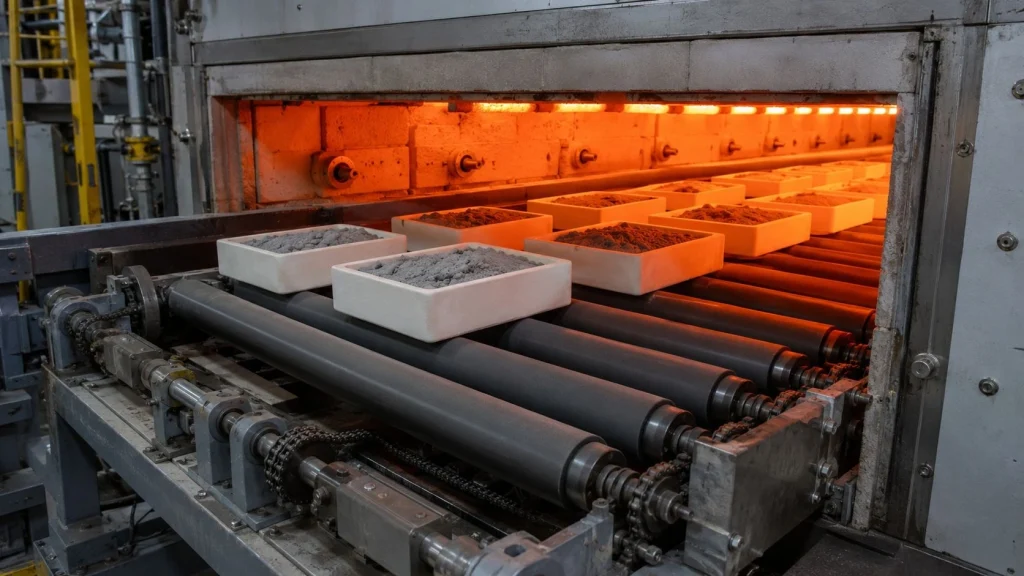
Silicon Carbide Balls—for Bearings, Grinding Media & Valve Service
ADCERAX supplies silicon carbide (SiC) balls — SSiC and RBSiC — for ceramic bearing balls, grinding media and check/valve balls used in pumps, flow control, precision bearings and low-contamination milling.
Send a drawing or old-part photos with the application, diameter, grade/tolerance, surface finish, material route and operating medium, and our engineers review manufacturability before quotation.
SiC balls are a non-magnetic, corrosion- and wear-resistant option where steel, plastic or standard ceramic balls fall short — with support for custom diameters, small batches and backup supply.
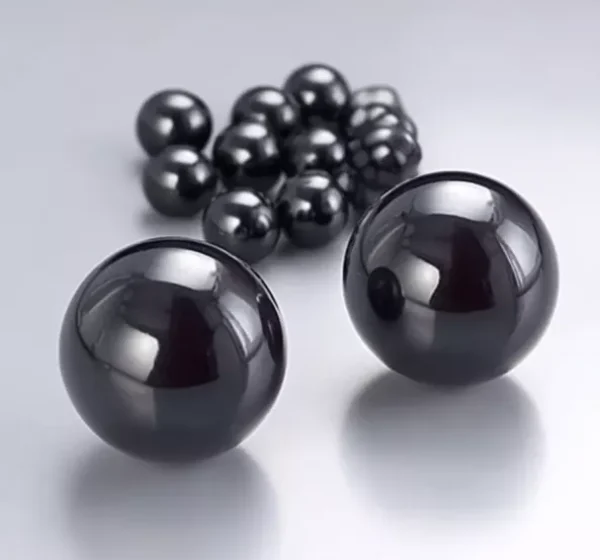
2200 MPa
Load Capacity
What Are Silicon Carbide Balls?
A silicon carbide (SiC) ball is a hard ceramic sphere made from sintered (SSiC) or reaction-bonded (RBSiC) silicon carbide.
SiC balls are used in three main ways: as ceramic bearing balls in precision and corrosion-resistant bearings, as check/valve balls in pumps and flow-control valves, and as grinding media in low-contamination milling. Their hardness, corrosion resistance and non-magnetic, low-density nature make them an option where steel, plastic or standard ceramic balls are limited. The right diameter, grade, surface finish and material route are confirmed per application by engineering review.
Typical Properties of Silicon Carbide Balls (SSiC / RBSiC)
These are typical property ranges by material route — sintered SiC (SSiC) for precision and low-contamination work, reaction-bonded SiC (RBSiC) for cost-effective wear and load service. Use them for selection; confirmed values follow an engineering review of your part and application.
| Property | Unit | SSiC (Precision Route) | RBSiC / SiSiC (Grinding/Load Route) |
|---|---|---|---|
| Density | g/cm³ | 3.10–3.15 | 3.02–3.10 |
| Flexural Strength | MPa | 350–450 | 250–350 |
| Vickers Hardness | GPa | ~22-25 | ~22–24 |
| Fracture Toughness | MPa·m⁰·⁵ | 3–4 | 3–4 |
| Elastic Modulus | GPa | ~410 | 330–410 |
| Thermal Conductivity | W/(m·K) | 110–150 | 150–200 |
| Coefficient of Thermal Expansion | ×10⁻⁶/K | 4.0–4.5 | 4.0–4.5 |
| Maximum Use Temperature (Atmosphere-Dependent,full-ceramic balls only) | °C | ~1600 | ~1350–1380 |
| Corrosion / Wear Resistance | — | Corrosion- and wear-resistant | Corrosion- and wear-resistant |
Note: Typical industry and material-route reference values only. These are not certified ADCERAX values and should be confirmed for each application through engineering review.
Why Engineers Choose Silicon Carbide Balls
Silicon carbide balls are chosen where corrosion, wear, heat, or contamination rule out steel, plastic, or ordinary ceramic balls. The four properties below explain what that means for bearing, valve, and grinding-media service — see the typical properties table above for the figures.
Corrosion & Chemical Resistance
Stable in many corrosive acid/alkali and slurry media — why SiC replaces steel or plastic balls in pumps and check valves.
- Resists strong acids/alkalis (confirm medium)
- Suited to check/valve and pump positions
- Stable sealing in aggressive flows
Wear Resistance & Hardness
High hardness holds shape and surface through long duty cycles.
- Resists abrasive and slurry wear
- Low media loss in milling
- Repeatable roundness and finish
Thermal Stability
Low expansion and thermal-shock resistance keep geometry stable across temperature swings.
- Limits drift under thermal cycling
- Dissipates process heat
- Withstands rapid heating/cooling
Low Contamination & Batch Consistency
Dense, uniform structure gives low metallic pickup and predictable batches.
- Low Fe/metal pickup vs steel media
- Closed porosity resists slurry uptake
- Consistent batch-to-batch behavior
ADCERAX Silicon Carbide Balls Product Range
The ADCERAX silicon carbide ball range covers two contexts: bearing balls for special-environment bearings and grinding media for low-contamination milling. Each is matched by diameter, grade/tolerance, and material route (SSiC / RBSiC) before quotation.
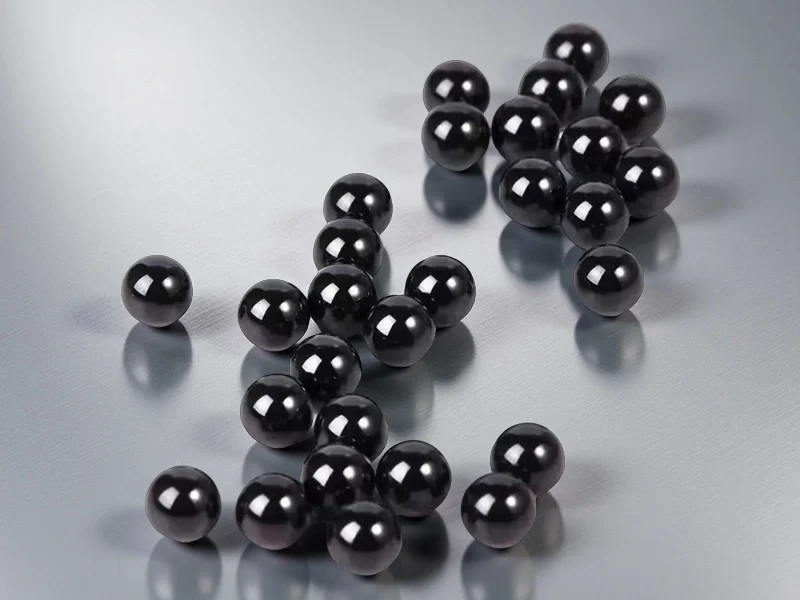
SiC bearing balls hold stable geometry and finish in corrosion-resistant, high-temperature precision bearings.
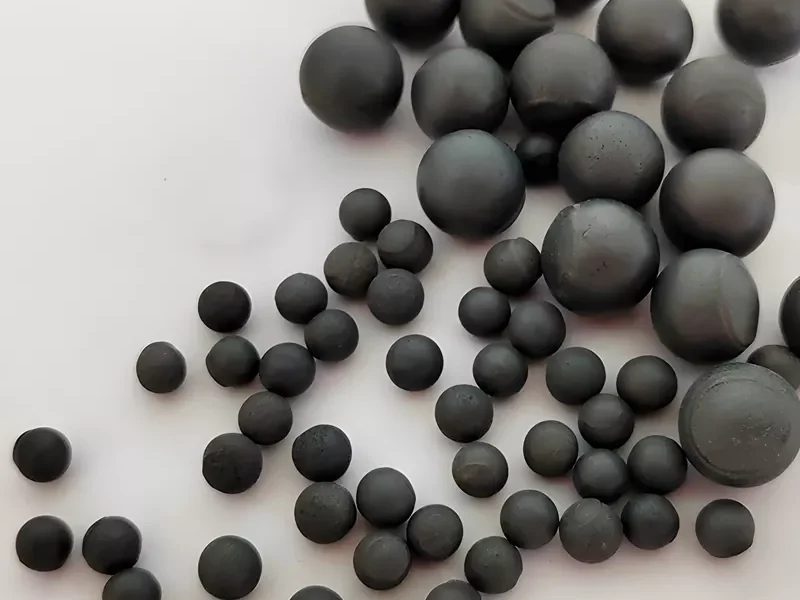
The SiC grinding ball provides aggressive abrasion resistance and shape retention during long-duration dry or wet milling cycles.
Ready to Discuss Your Silicon Carbide Balls?
Send your diameter, grade/tolerance, material route, and working conditions — we review manufacturability and reply with a matched solution.
Industrial Applications of ADCERAX Silicon Carbide Balls
Silicon Carbide Balls are utilized in highly demanding environments that require extreme hardness, thermal stability, and chemical resistance. Their microstructural uniformity supports predictable long-cycle performance across precision bearing platforms and high-energy powder-processing systems.
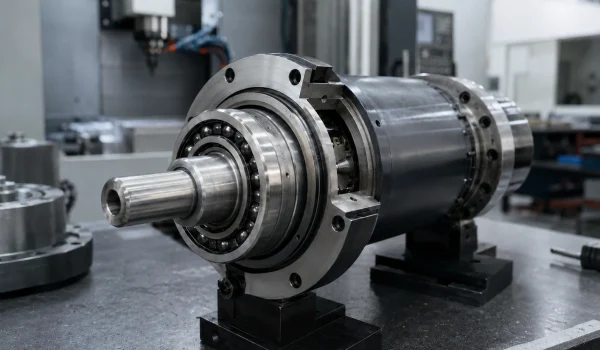
High-Speed & Precision Spindle Bearings
SiC bearing balls suit corrosion-resistant, low-expansion precision bearings. Roundness and Ra to bearing-grade RFQ; load and speed confirmed per application.
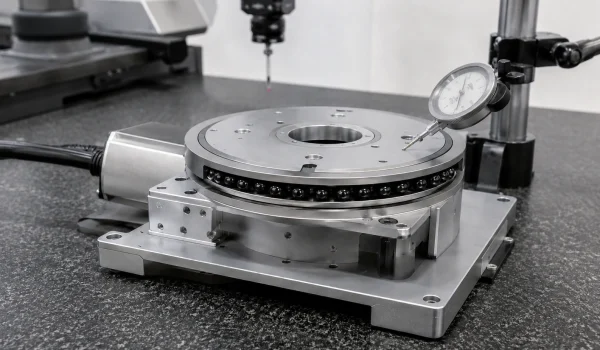
Instrument & Metrology Bearings
In instrument and metrology bearings, SiC balls offer low thermal drift (CTE ~4.2×10⁻⁶/K) and non-magnetic, dimensionally stable behavior — grade and finish confirmed to the instrument.
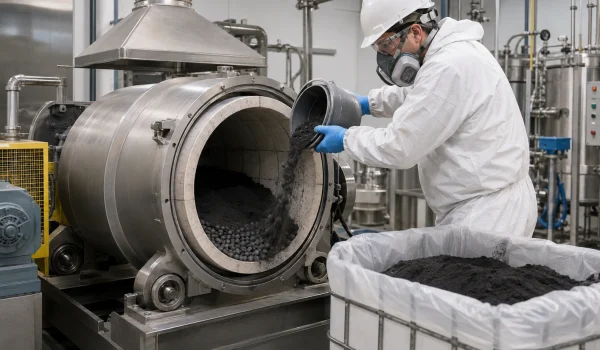
Battery & Ceramic Powder Milling
SiC grinding media are used in low-contamination milling of battery and ceramic powders. High hardness (typical of SiC) supports abrasion resistance and low metallic contamination; medium, contamination limit and batch are confirmed before quotation.
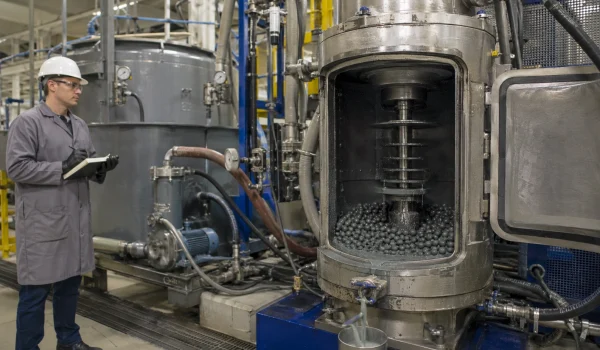
High-Energy Wet/Dry Attrition Grinding
In attrition and high-energy mills, SiC media are selected for hardness and low contamination. Density (~3.10–3.15 g/cm³ typical) and low closed porosity support consistent milling; wear is measured per test rather than guaranteed.
Custom Silicon Carbide Balls to Your Drawing
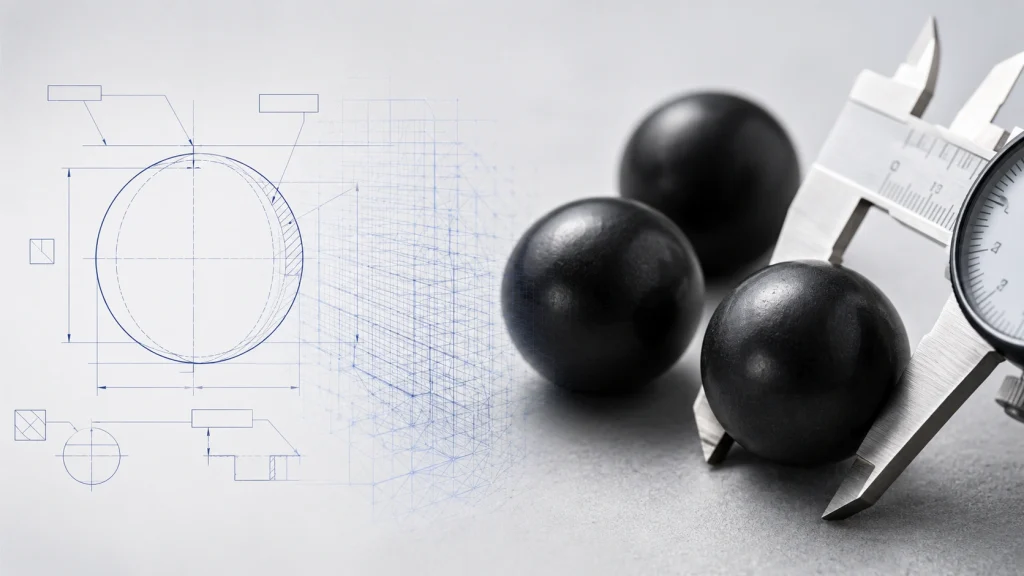
Every ball is reviewed against your application before quotation. Share a drawing, sample or old part with the diameter, grade/tolerance, surface finish, material route and operating conditions.
Customization process
Custom small to large diameters and non-standard sizes to your drawing.
Roundness, sphericity and surface finish (Ra) to bearing- or valve-grade RFQ targets
SSiC for precision/low-contamination, RBSiC for grinding/load, selected by service.
Bearing, check/valve or grinding-media configuration matched to your equipment and medium.
How the custom process works
Send your details
Drawing or old-part photo, plus material, size, media, and quantity.
Engineering review
We check material fit and manufacturability for your working conditions.
Route & quote
You get a ceramic route, feasibility notes, and a quotation.
Sample → repeat
Approve a sample or small batch, then move to repeat production.
In-House Manufacturing Strength for Silicon Carbide Balls
ADCERAX supports silicon carbide ball projects end to end — from drawing review and material-route selection (SSiC or RBSiC) to precision machining and inspection — so bearing and milling requirements are verified before production.
Forming, sintering, machining, finishing, and inspection under one roof — no outsourced quality gaps.
Multi-axis CNC, grinding, and lapping of hard SiC to tight roundness and fine surface finish.
Dimensional and hardness checks with consistent, dense sintered SiC (SSiC / RBSiC).
| Manufacturing Capabilities Overview | |||
|---|---|---|---|
| Category | Capability Description | Representative Data / Equipment Metric | |
| Production Line Scale | Continuous production for bearing & milling grades | 4 independent SSiC/RBSiC lines; 1.8-ton/day total capacity | |
| Precision Shaping | CNC multi-axis forming for silicon carbide ceramic ball geometry | Shaping tolerance up to 0.02-0.005mm | |
| Sintering Capacity | High-temperature furnaces for SiC densification | Maximum furnace temperature 2100°C; multi-zone ±3°C uniformity | |
| Surface Finishing | Automated lapping & polishing for Ra stabilization | Achievable Ra 0.02–0.03 μm for bearing-grade spheres | |
| Microstructure Control | Closed-porosity and density stabilization | Porosity <1%; density 3.05–3.15 g/cm³ | |
| Metrology Inspection | High-resolution measurement of ball geometry | Laser gauge accuracy ±0.001 mm; interferometer Ra resolution 0.001 μm | |
FAQs About ADCERAX Silicon Carbide Balls
Technical answers to help engineers specify, select, and source silicon carbide balls with confidence.
SiC balls are used in three main ways: as ceramic bearing balls in precision and corrosion-resistant bearings, as check or valve balls in pumps and flow-control valves, and as grinding media in low-contamination milling. The right material route, diameter and finish depend on the application and are confirmed by engineering review.
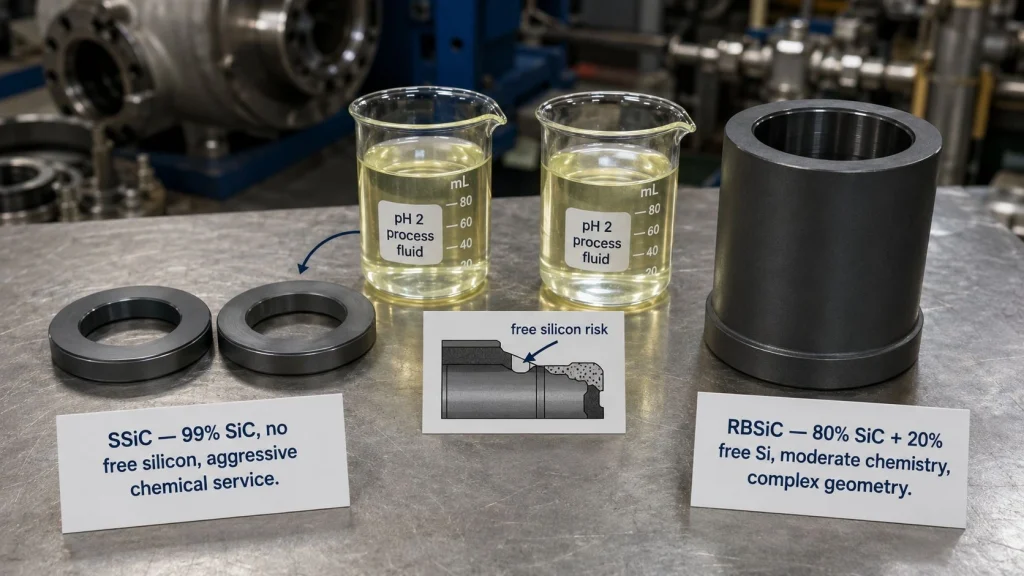
SSiC (sintered silicon carbide) is dense, high-purity and typically used for precision bearing and valve balls and low-contamination grinding. RBSiC/SiSiC (reaction-bonded, contains free silicon) is often used for grinding and load applications; its maximum service temperature is lower. We select the route by service, contamination limit and cost.
We make custom small to large diameters to your drawing; bearing balls and grinding media use different typical ranges. We do not hold all sizes in stock or guarantee a fixed grade — the achievable diameter and tolerance are confirmed per application after review.
We work to bearing- or valve-grade roundness and surface-finish (Ra) targets defined in your RFQ. Precision grade language such as ABMA/Grade numbers is used as RFQ reference, not a default certification. The achievable values depend on diameter and batch and are confirmed by engineering review.
It depends on the medium, temperature and how the current ball fails. SiC is non-magnetic, corrosion-resistant and lower density than steel or tungsten carbide, but it is harder and more brittle. Share the old ball material, failure mode, equipment and medium and we review whether SiC fits — we do not promise a drop-in replacement without review.
Both are used in ceramic bearings. Silicon nitride is well established for high-speed, high-load bearings for its toughness; silicon carbide offers high hardness and corrosion resistance and is often chosen for abrasive or corrosive service. The right choice depends on load, speed, medium and failure mode, confirmed by engineering review.
Yes. We supply SSiC check and valve balls for metering pumps, check valves and flow-control valves in corrosive or abrasive media. The diameter is matched to the valve seat, and the medium, temperature and seat finish are confirmed per drawing. Please confirm whether SiC is specified for your valve.
Yes. We supply SSiC and RBSiC grinding media for battery, ceramic and electronic powder milling where low metallic contamination and abrasion resistance matter. Please share the medium, contamination limit, diameter and batch so we can confirm the right route.
SiC balls are used in bearings, but suitability for high-speed or high-load duty depends on the design, load, speed and lubrication. We review the duty per application rather than assuming a fixed rating, and for very demanding bearing duty silicon nitride is sometimes the more established choice.
No. Silicon carbide balls are non-magnetic and low in density, which is useful in instrument bearings and sensitive assemblies. Note that SiC is a semiconductor, not an electrical insulator — if you need an electrically insulating ball, tell us and we can advise on suitable alternatives.
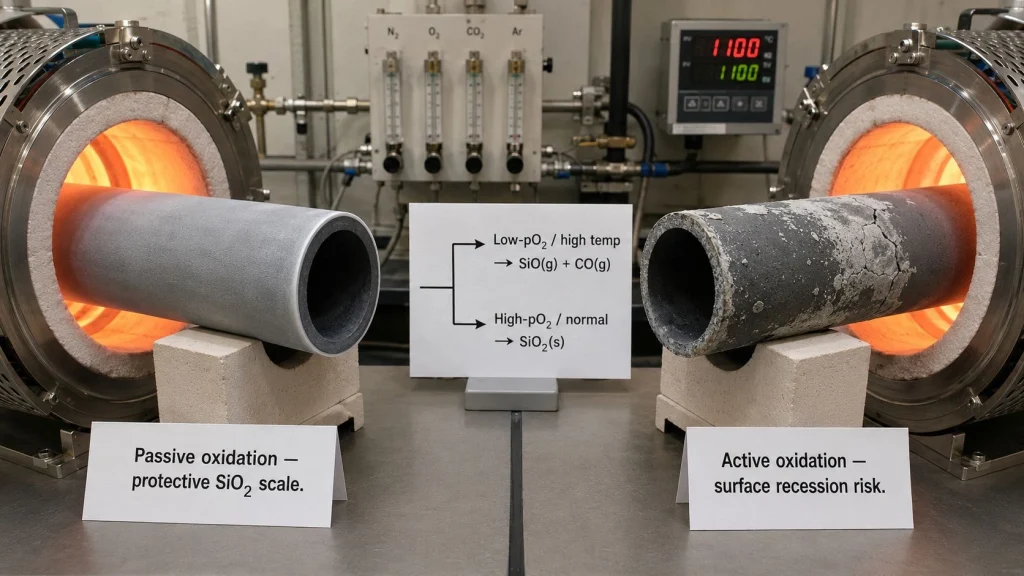
As a typical guide, SSiC is used to around 1600°C and RBSiC to around 1350–1380°C, both atmosphere-dependent. These are material-selection references, not certified limits, and are confirmed for your medium and atmosphere by engineering review.
Silicon carbide is chemically resistant in many acid and alkaline media, which is why it is used in corrosive pump and valve service and in low-contamination milling. Compatibility with a specific medium and temperature should be confirmed per application.
Please provide the application (bearing, check/valve or grinding media), diameter and quantity, grade/tolerance/roundness/surface finish, any material-route preference (SSiC or RBSiC), the medium, temperature and load/speed or contamination limit, and a drawing, sample or old-part photos.
We support low MOQ, samples and small batches, including non-standard diameters and backup-supplier requirements. Exact quantities are confirmed per item after review.
Inspection and test documentation are provided on request after engineering review, based on what applies to your application. We list only certifications and documents we can actually supply.
Request an Engineering RFQ Review
To review your SiC balls, please provide:
- Application: bearing / check-valve / grinding media
- Diameter and quantity
- Material and size / tolerance
- Material route preference (SSiC / RBSiC) if any
- Medium, temperature, load/speed or contamination limit
- Drawing, sample or old-part photos
Replacing a worn or failed part? Send an old-part photo and we check whether SiC balls fit.
*Our team will answer your inquiries within 24 hours.
*Your information will be kept strictly confidential.
Partner with ADCERAX for Silicon Carbide Balls
Looking for a reliable silicon carbide ball supplier? Let us help you with your next project.
info@adcerax.com
Tel.:+86-0731-84428843
WhatsApp:+86 19311583352
Within 24 hours