
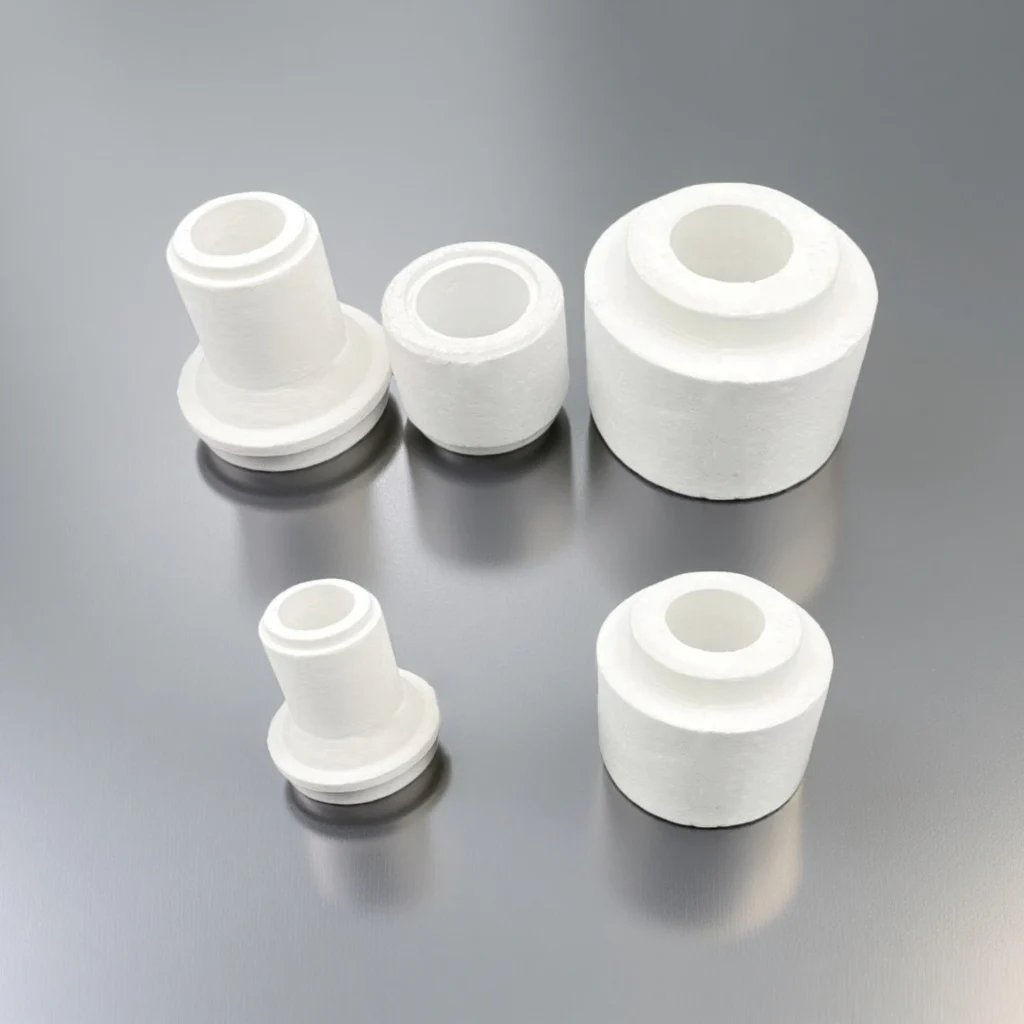
Custom Aluminum Silicate Ceramic Fiber Board, Blocks & Vacuum-Formed Shapes
ADCERAX is a China-based manufacturer of aluminum silicate ceramic insulation for high-temperature equipment — serving furnace OEMs, metal-casting plants, glass lines, and kiln builders.
We supply aluminum silicate ceramic boards, insulation blocks, and custom-machined shapes, in standard sizes or built to your drawings and furnace requirements.
With a stable supply chain and export-focused logistics, we deliver worldwide; lead time is confirmed per order.
🚀Send us your dimensions or drawings and we will prepare a fast, engineered solution for your application.
What Is Aluminum Silicate Ceramic?
Aluminum silicate ceramic is an alumina–silica (Al₂O₃–SiO₂) refractory material used for high-temperature insulation in industrial furnaces, kilns, and process-heating equipment. Fiber-based products provide insulation for furnace linings, thermal barriers, and shaped components.
ADCERAX offers rigid polycrystalline fiber boards and custom insulation shapes in aluminosilicate and high-alumina grades. Made with inorganic binders, these products are available in distinct compositions and densities to support material selection for different furnace temperatures, atmospheres, and installation requirements.Aluminum Silicate Ceramic Product Families
ADCERAX provides a range of Al₂SiO₅ ceramic products, including ceramic fiber, pouring cups, filter boxes, and customized insulation components for high-temperature casting and furnace applications. Standard formats and fully custom shapes are available according to drawings or project requirements.
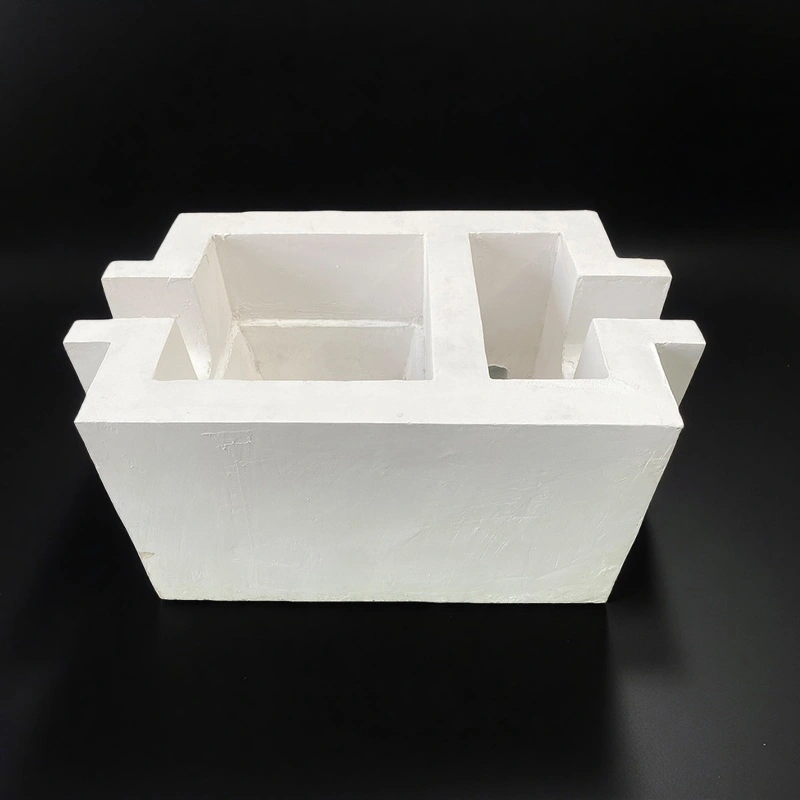
Stabilizes metal flow and keeps molten aluminum insulated during transfer and filling.
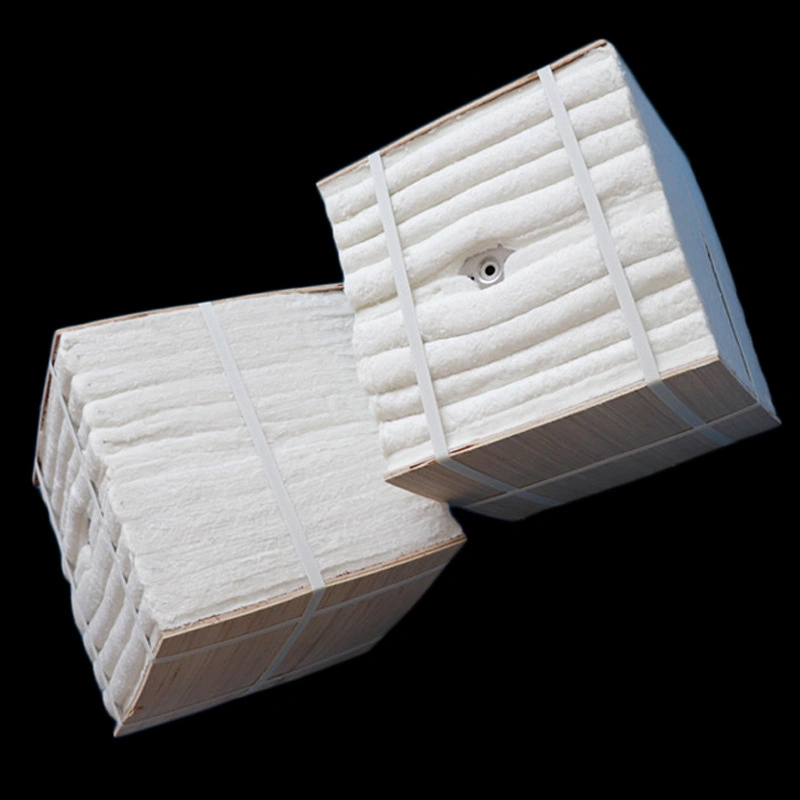
Lightweight, high-temperature insulation for furnaces, kilns, and molten-metal handling.
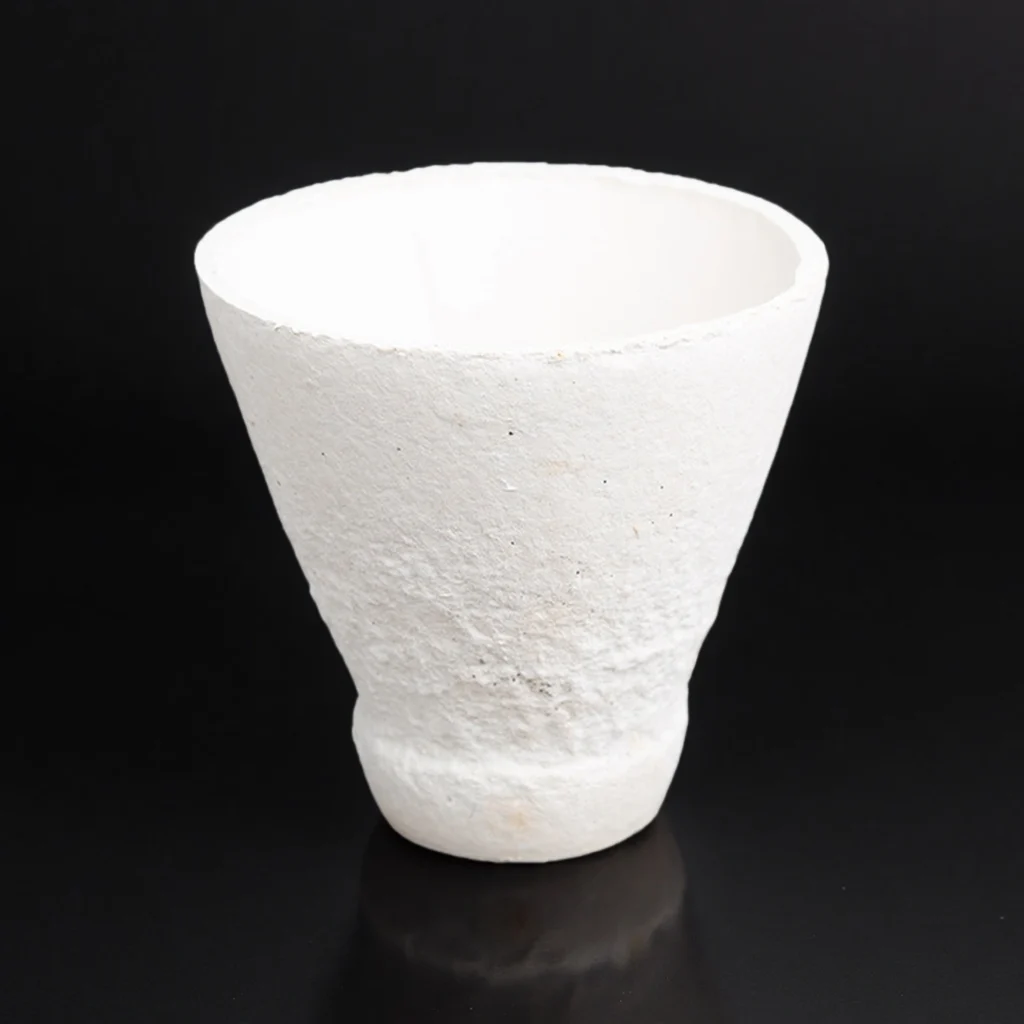
Guides molten metal with smooth, low-turbulence flow — fewer inclusions, defects.
Key Properties of Aluminum Silicate Ceramic
Aluminum silicate ceramics offer stable high-temperature insulation, low thermal conductivity, and dependable dimensional stability under continuous or cyclic heating. This lightweight refractory structure resists thermal shock, preserves mechanical integrity, and minimizes shrinkage — ensuring stable thermal performance in demanding furnace and kiln environments.
Aluminum Silicate Ceramic – Technical Specifications
| Parameter | Aluminosilicate 500 | Aluminosilicate 700 | High-Alumina 250 | High-Alumina 500 |
|---|---|---|---|---|
| ADCERAX Grade | AD-PCF-B84-500 | AD-PCF-B84-700 | AD-PCF-B96-250 | AD-PCF-B96-500 |
| Al₂O₃ Content (wt%) | 83–85 | 83–85 | 95–97 | 95–97 |
| SiO₂ Content (wt%) | 15–17 | 15–17 | 3–5 | 3–5 |
| Bulk Density (kg/m³) | 500 | 700 | 250 | 500 |
| Product Form | Board / formed shape | Board / formed shape | Board / formed shape | Board / formed shape |
The aluminum silicate ceramic that keeps furnaces, kilns, and casting lines stable.
Stable high-temp insulation and consistent thermal performance — standard or built to your drawings. Send your specs for a fast quote.
Where Aluminum Silicate Ceramic Keeps Systems Stable
Aluminum silicate ceramic handles the heat, cycling, and heat loss that metal and dense refractory can't — lightweight insulation that keeps furnaces, kilns, and casting lines at stable, uniform temperature across heat-treatment, glass, metallurgy, and petrochemical service.
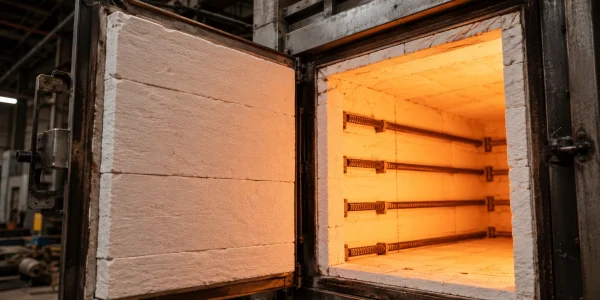
High-Temperature Industrial Processing
Stable insulation for heat-treatment furnaces, tunnel kilns and industrial heaters — helps maintain uniform thermal profiles and reduce heat loss. Low thermal mass can support shorter heat-up times; shrinkage and conductivity confirmed per grade.
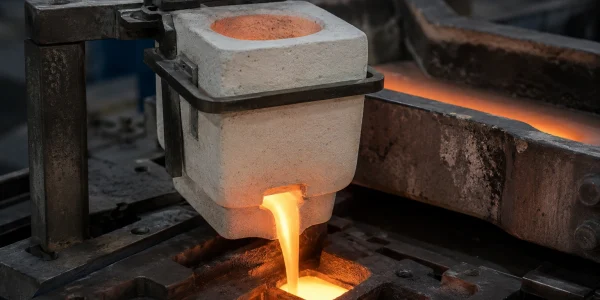
Metallurgy & Metal Casting
For pouring cups, filter boxes, launder systems and molten-metal parts — it supports clean metal flow, non-wetting behaviour and thermal stability. It can reduce metal adhesion and dimensional change during casting, depending on alloy and cycle.
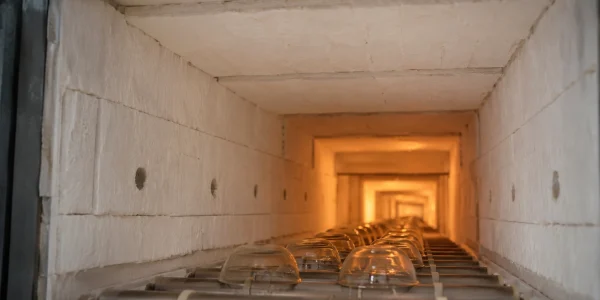
Glass, Ceramic & Building Materials
Lightweight insulation for annealing, sintering and roller kilns — it helps improve temperature uniformity and reduce heat leakage. Lower thermal mass than dense refractory can enable quicker heat-up and cooldown cycles.
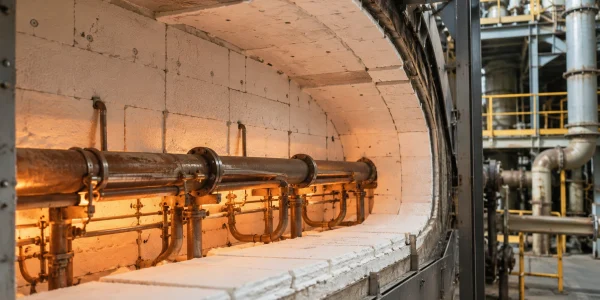
Chemical, Petrochemical & Energy Systems
For cracking furnaces, incinerators and boiler linings — it offers high-temperature resistance and customizable insulation. It can reduce radiant heat transfer and support fuel-saving goals, depending on furnace design and installation.
Custom Aluminum Silicate Ceramic to Your Drawing
Every aluminum silicate part is reviewed against your application before quotation. Share a drawing, sample, or old part with the form (board / block / fiber / filter box / pouring cup), dimensions, mounting interface, and service temperature — and we’ll confirm the right grade and build.
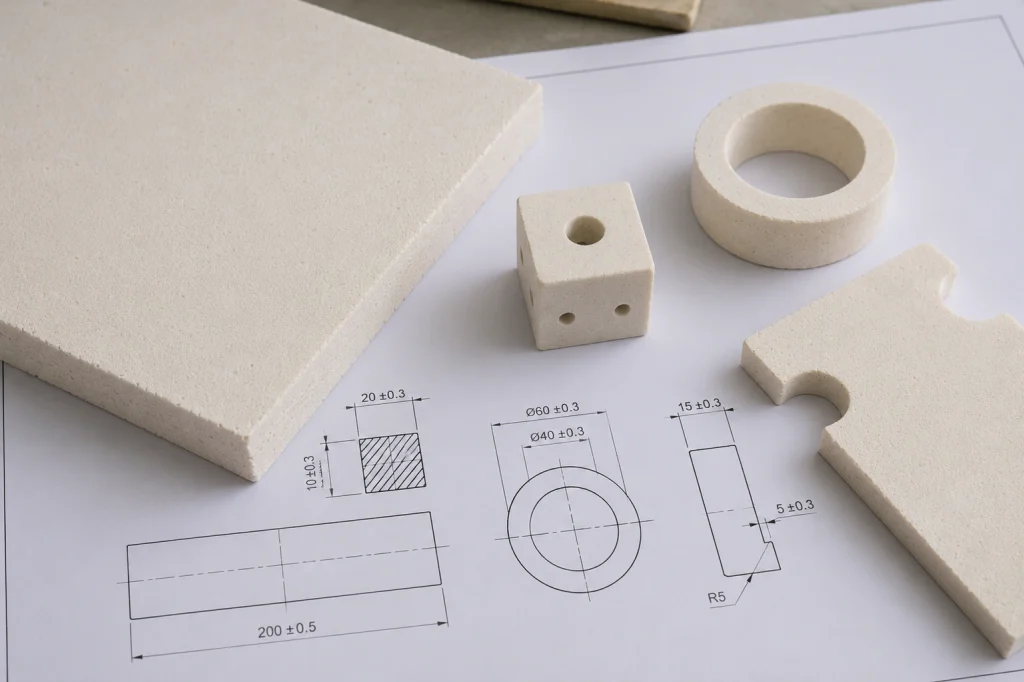
Customization process
Custom boards, blocks, rings and machined shapes — thickness, ID/OD, length and cutouts to your drawing.
Rigid board, block, fiber/blanket, filter box or pouring cup — matched to how the part is used.
Mounting cutouts, holes, seating faces and furnace-geometry fit for a clean install.
Service temperature, density and thermal conductivity — insulation vs. molten-metal contact.
Dimensional tolerance, flatness and machined surface confirmed to RFQ.
How the custom process works
Send your details
Drawing or old-part photo, plus material, size, media, and quantity.
Engineering review
We check material fit and manufacturability for your working conditions.
Route & quote
You get a ceramic route, feasibility notes, and a quotation.
Sample → repeat
Approve a sample or small batch, then move to repeat production.
ADCERAX – aluminum silicate (Al₂SiO₅) ceramic manufacturer
ADCERAX is a China-based aluminum silicate ceramic manufacturer providing insulation boards, refractory shapes, and custom-machined components for furnaces, kilns, metal casting systems, and industrial heating equipment. We focus on stable material quality, reliable thermal performance, and flexible customization to support both prototyping and large-scale production.
Made in our own facility, with quality control from raw-material sourcing to final delivery.
A technical team that reviews your drawing, grade and fit — and supports collaborative design.
From small trial batches to volume production, with complex shapes and tight tolerances to your drawing.
Fast response and export-focused logistics; custom orders in about 3–7 weeks, confirmed per order.
| Manufacturing Capabilities Overview | |||
|---|---|---|---|
| Capability Item | Typical Value / Description | ||
| Material Performance Consistency | Aluminum silicate ceramics are produced with controlled density, uniform fiber structure, and predictable thermal shrinkage. This ensures stable insulation performance, reliable thermal shock resistance and repeatable behavior during continuous or cyclic heating. | ||
| High-Temperature Precision Cutting & Shaping | Our CNC and contour-cutting processes support clean edges, stable thickness, and accurate profiles for furnace linings and insulating shapes. Typical tolerances are maintained within ±0.20–0.50 mm, depending on board density and geometry. | ||
| Advanced Processing Capability | We support complex operations such as multi-step cutting, deep-profile trimming, contour shaping, edge finishing and large-format board handling. These processes allow aluminum silicate ceramics to be machined accurately for insulation assemblies, furnace panels and structural refractory sections while maintaining stable dimensions across batch production. | ||
| Dimensional Stability Under Heat Load | Controlled firing and drying cycles minimize warpage and shrinkage, ensuring each batch maintains consistent dimensions for reliable installation and long service life in high-temperature equipment. | ||
| Strict Thermal & Structural Quality Control | Every lot is inspected for density uniformity, fiber bonding strength, thermal shrinkage rate, surface integrity and dimensional repeatability. This ensures reliable insulation performance in demanding industrial environments. | ||
FAQs About Al₂SiO₅ Ceramic
Its fibrous, porous microstructure gives good thermal shock resistance, letting it tolerate rapid heat-up and cool-down without severe cracking. Performance varies with density; vacuum-formed parts generally hold dimensional stability better under repeated cycles.
Properly formulated boards, filters and pouring cups show non-wetting behaviour with molten aluminum, which can help reduce metal adhesion in suitable molten-aluminum contact applications, depending on alloy, temperature, cycle and surface condition.
Custom dimensions, wall thickness, recesses, tapered shapes, flanges, slots, holes and multi-piece assemblies can be produced from drawings or samples. Vacuum-formed parts allow complex geometries while machined boards give tighter tolerances.
Aluminum silicate ceramic offers a balanced combination of high-temperature capability, thermal shock resistance and shaping flexibility, making it well suited to medium-to-high temperature and cyclic heating environments. Calcium silicate has higher compressive strength but a lower temperature ceiling; mica boards are used mainly for electrical insulation. The right choice depends on temperature, load and function.
Products are made through vacuum forming, wet forming, high-temperature drying, CNC trimming, and in some cases secondary surface finishing. This supports consistent porosity and shape control across batches.
Store parts in a dry, clean, covered environment, protected from moisture and mechanical impact. Prolonged humidity exposure may affect surface condition before installation.
Please share drawings or sketches, form, grade or temperature rating, density, thickness, dimensions, tolerances, use location, contact conditions, annual volume and any special installation requirements. This lets ADCERAX select the right grade and check the process route before quoting.
It is a lightweight, porous refractory insulation material — ceramic fiber board, vacuum-formed shapes and blocks — not a dense structural ceramic. Its bulk density is typically about 500-700 kg/m³ and its strength is low by design; its value is thermal insulation and thermal-shock tolerance, not mechanical load-bearing. Dense mullite or alumina parts are a different product line.
Higher-density boards give better structural retention and hot-face durability but conduct slightly more heat; lower-density grades insulate better but suit backup layers. Grade is selected from working temperature, position (hot face vs backup), mechanical exposure and cycle. Share your furnace conditions and ADCERAX will suggest a suitable grade.
Refractory ceramic fiber (RCF) products have handling, health-safety and regional regulatory considerations, and low-bio-persistence (AES) fibers are available as an alternative for compliance-sensitive markets. ADCERAX reviews the destination and application before recommending a fiber route and does not claim a fixed certified or compliant status without confirmation.
It depends on where it sits in your system: ceramic fiber board and vacuum-formed shapes are used for furnace and kiln linings; filter boxes and pouring cups are used in aluminum casting for containment, filtration and metal flow; blankets, felt, rope and modules handle wrapping, sealing and gap insulation. Share the application or old part and ADCERAX will route you to the right product.
Request an Engineering RFQ Review
To review your aluminum silicate part, please provide:
- Form: board / block / fiber-blanket / filter box / pouring cup / machined shape
- Dimensions: thickness, ID/OD, length/width, cutouts, tolerance
- Grade / density: known preference, or let us recommend by temperature
- Service conditions: service or max temperature, thermal cycling, atmosphere
- Application: furnace / kiln / casting line / boiler; mounting interface
- Installation: mechanical fixing, backup insulation, or mortar/glued
- Current issue: heat loss, cracking, shrinkage, spalling, or adhesion (for replacements)
- Drawing, old part or sample; photos
- Quantity, target lead time and destination
Replacing a worn or failed part? Send an old-part photo and we’ll check the right aluminum silicate grade and fit.
*Our team will answer your inquiries within 24 hours.
*Your information will be kept strictly confidential.
info@adcerax.com
Tel.:+86-0731-84428843
WhatsApp:+86 19311583352
Within 24 hours
