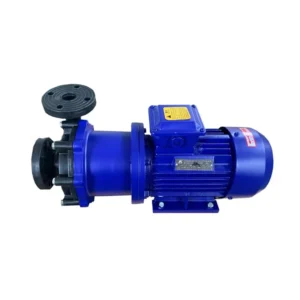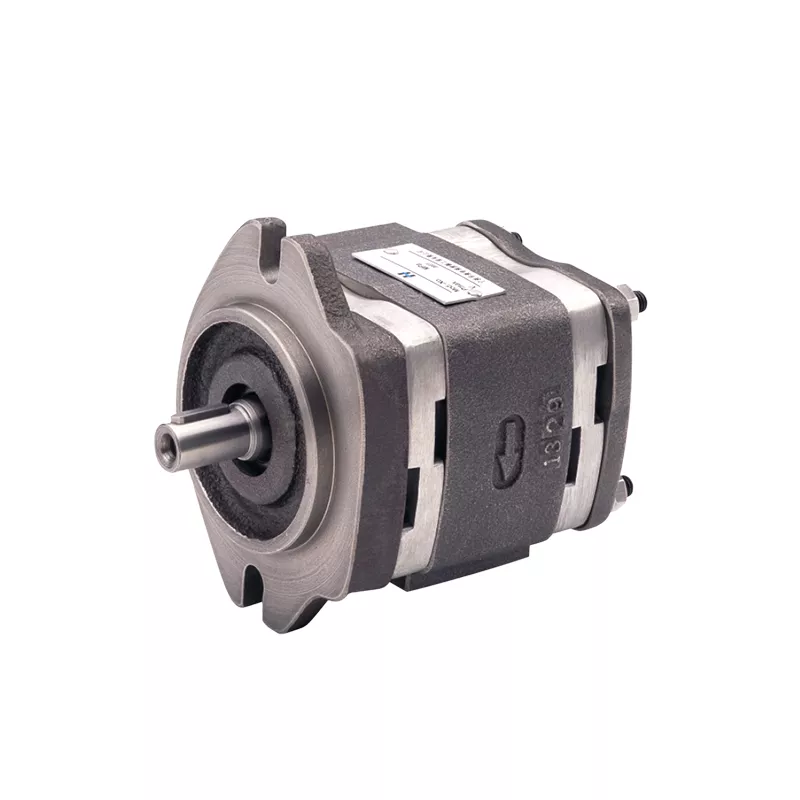
What Is a Silicon Carbide Lined Internal Gear Pump?
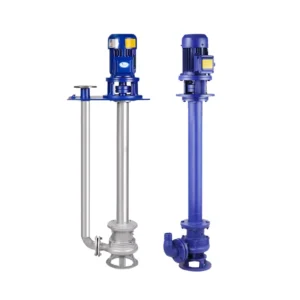
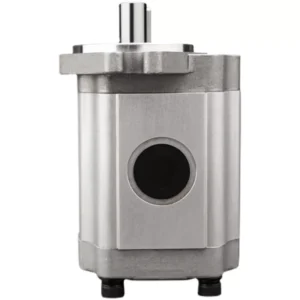
A silicon carbide lined internal gear pump is a positive displacement pump designed for controlled transfer of abrasive, viscous or chemically aggressive fluids. The internal gear mechanism provides steady flow, while silicon carbide contact parts help reduce wear on surfaces exposed to particles, corrosion or temperature-related dimensional changes.
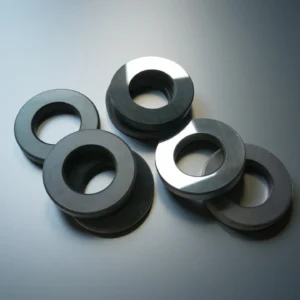
In a custom pump configuration, the SiC contact areas may include chamber liners, wear plates, bushings and mechanical seal faces. ADCERAX reviews the fluid type, viscosity, pressure, temperature, solids content, sealing requirement and installation layout before recommending a suitable pump configuration.
When to Use a SiC Lined Internal Gear Pump?
This pump is suitable when conventional metal-contact gear pumps experience fast wear, leakage risk or unstable flow caused by contaminated oils, viscous fluids or chemically reactive media. It is commonly considered for hydraulic power units, lubrication circulation systems, resin transfer, polymer handling, heavy oil transfer and process-fluid circulation.
A SiC lined internal gear pump is not selected by material alone. The final configuration should be reviewed together with flow rate, pressure, viscosity, temperature, particle size, particle concentration, sealing method, drive speed and piping layout.
Performance Characteristics of Silicon Carbide Lined Internal Gear Pump
- Thermal Expansion Control
SiC components exhibit a thermal expansion coefficient of 4.0–4.5 × 10⁻⁶ /K, significantly lower than common pump metals. This stabilizes rotor engagement when fluid temperatures vary between 20–80°C, preventing growth in volumetric slip. - Structural Rigidity
Silicon carbide provides a flexural strength in the range of 350–450 MPa, which protects the pump chamber from deformation under cycling loads. This rigidity maintains consistent flow delivery in environments where differential pressure fluctuates. - Reduced Material Loss
SiC exhibits an erosion rate up to 10× lower than alloy steel when exposed to abrasive flow environments. This reduces internal wear progression, preserving efficiency in applications where circulating oils are contaminated by gear or bearing wear particles. - Broad Chemical Resistance
Silicon carbide maintains integrity in acids, bases, glycols, and polymeric fluids documented to cause corrosion rates above 0.3 mm/year in standard metal housings. This allows stable operation in chemical-transfer applications using reactive or polymerizing media. - Low Reactivity with High-Viscosity Media
SiC surfaces demonstrate negligible interaction with fluid viscosities up to 50,000 cSt, protecting the pump from thermal or chemical softening. This supports consistent volumetric output when transferring thick resins or adhesive compounds. - Seal Surface Performance
SiC-to-SiC mechanical seal faces record leakage reductions of 30–40% compared to carbon-steel pairings under corrosive fluid exposure. This reduces operational interruptions in chemical circulation modules where seal integrity is a primary reliability factor.
Technical Specifications of Silicon Carbide Lined Internal Gear Pump
The following parameters help review whether a SiC-lined internal gear pump is suitable for abrasive, viscous or chemically aggressive fluid transfer. Final selection should be confirmed according to the actual fluid type, viscosity, temperature, pressure, particle condition, sealing method and installation layout.
| Parameter | Specification | Why It Matters |
|---|---|---|
| SiC Contact Parts | SiC lining, SiC wear plates, SiC bushings and SiC seal faces. | This helps buyers understand which wetted or wear-exposed areas are protected by silicon carbide. |
| Surface Hardness | > 2000 HV. | High hardness helps reduce abrasive wear when the pump handles contaminated oils, metal fines or particle-containing fluids. |
| Chemical Compatibility | Stable against acids, bases, glycols and polymers. | Chemical compatibility helps buyers judge whether the pump is suitable for corrosive or chemically active media. |
| Recommended Service Temperature | 20–80°C recommended. | Media temperature affects viscosity, sealing behavior, internal clearance and pump stability. |
| Viscosity Handling Capability | Suitable for up to 50,000 cSt. | Viscosity is one of the most important factors for pump selection because it affects suction condition, motor load and flow stability. |
| Seal Face Configuration | SiC/SiC or Carbon/SiC. | Seal pairing affects leakage control, friction behavior and compatibility with abrasive or chemically aggressive fluids. |
| Abrasive Particle Tolerance | Effective with 50–150 ppm metal fines. | This helps buyers evaluate whether the pump is suitable for hydraulic oil, lubricating oil or process fluids with solid contamination. |
| Volumetric Efficiency Stability | Maintained under cyclic pressure and viscosity fluctuations. | Stable volumetric efficiency supports more predictable flow when pressure or viscosity changes during operation. |
| Flow Rate Requirement | Confirm according to required L/min or m³/h. | Flow rate is the first selection point for matching the pump model to the actual system demand. |
| Working Pressure Requirement | Confirm according to normal and peak system pressure. | Pressure affects pump housing selection, gear load, seal configuration and long-term operating stability. |
| Port and Installation Layout | Confirm inlet/outlet size, direction and mounting interface. | Port layout and installation dimensions determine whether the pump can fit into the existing piping and equipment system. |
Standard Model Range for SiC Lined Internal Gear Pumps
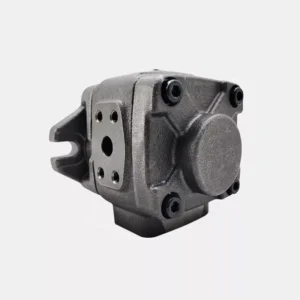
| Type 6 : Silicon Carbide Internal Gear Pump | |||||||
| Type | Flow (m3/h) | Flow (L/min) | Working Pressure (MPA) | Suction Vacuum Height (m) | Import and export caliber (mm) | Speed (Nr/min) | Motor Power (KW) |
| AT-IGP-18.3 | 1.1 | 18.3 | 1.45 | 5 | G3/4" | 1400 | 1.5 |
| AT-IGP-33.3 | 2 | 33.3 | 1.45 | 5 | G3/4" | 1420 | 2.2 |
| AT-IGP-55 | 3.3 | 55 | 0.33 | 5 | G1" | 1400 | 1.5 |
| AT-IGP-83.3 | 5 | 83.3 | 0.33 | 5 | G1/2" | 1420 | 2.2 |
| AT-IGP-135 | 8 | 135 | 0.33 | 3 | 50 | 1440 | 4 |
| AT-IGP-200 | 12 | 200 | 0.33 | 3 | 50 | 1440 | 4 |
| AT-IGP-300 | 18 | 300 | 0.36 | 3 | 70 | 960 | 5.5 |
| AT-IGP-483.3 | 29 | 483.3 | 0.36 | 3 | 70 | 1440 | 7.5 |
| AT-IGP-633 | 38 | 633 | 0.28 | 3 | 100 | 970 | 11 |
| AT-IGP-960 | 58 | 960 | 0.28 | 3 | 100 | 1470 | 18.5 |
| AT-IGP-1200 | 72 | 1200 | 0.28 | 3 | 150 | 740 | 37 |
| AT-IGP-1600 | 96 | 1600 | 0.28 | 2 | 150 | 980 | 45 |
| AT-IGP-1800 | 110 | 1800 | 0.28 | 2 | 200 | 740 | 55 |
| AT-IGP-2500 | 150 | 2500 | 0.28 | 2 | 200 | 980 | 75 |
| AT-IGP-3800 | 230 | 3800 | 0.28 | 2 | 250 | 990 | 110 |
| AT-IGP-5400 | 325 | 5400 | 0.28 | 2 | 250 | 990 | 110 |
Packaging Process for Silicon Carbide Lined Internal Gear Pump
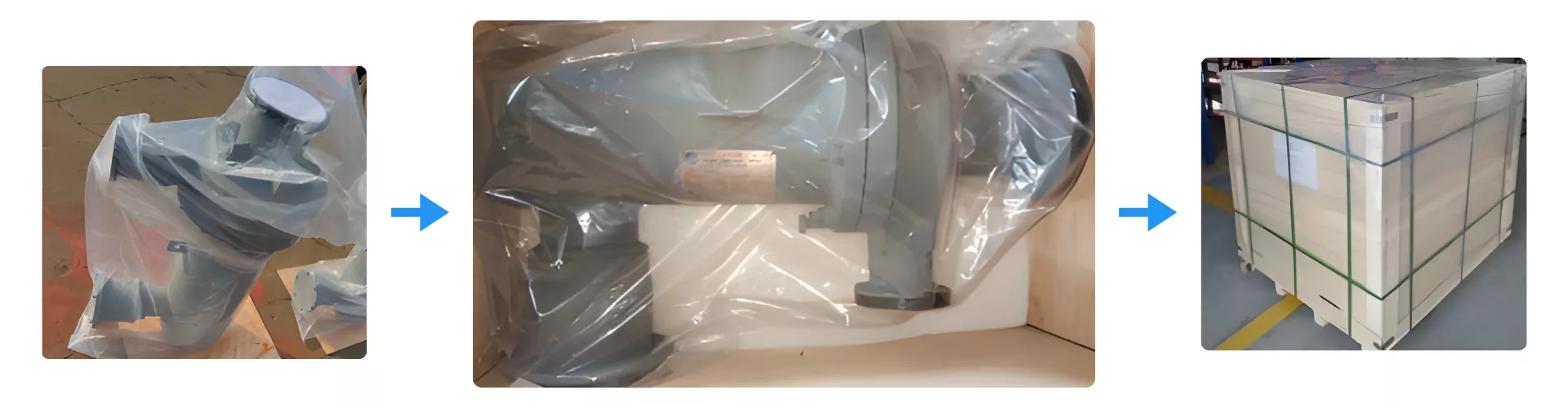
Silicon Carbide Lined Internal Gear Pump is protected through a multi-stage packaging process designed to prevent moisture exposure, vibration, and structural impact during transport. Each pump is first sealed in a corrosion-resistant plastic wrap, then cushioned inside a reinforced wooden crate to stabilize the unit during long-distance shipment. The final palletized configuration ensures safe handling and maintains crate integrity throughout global freight operations.