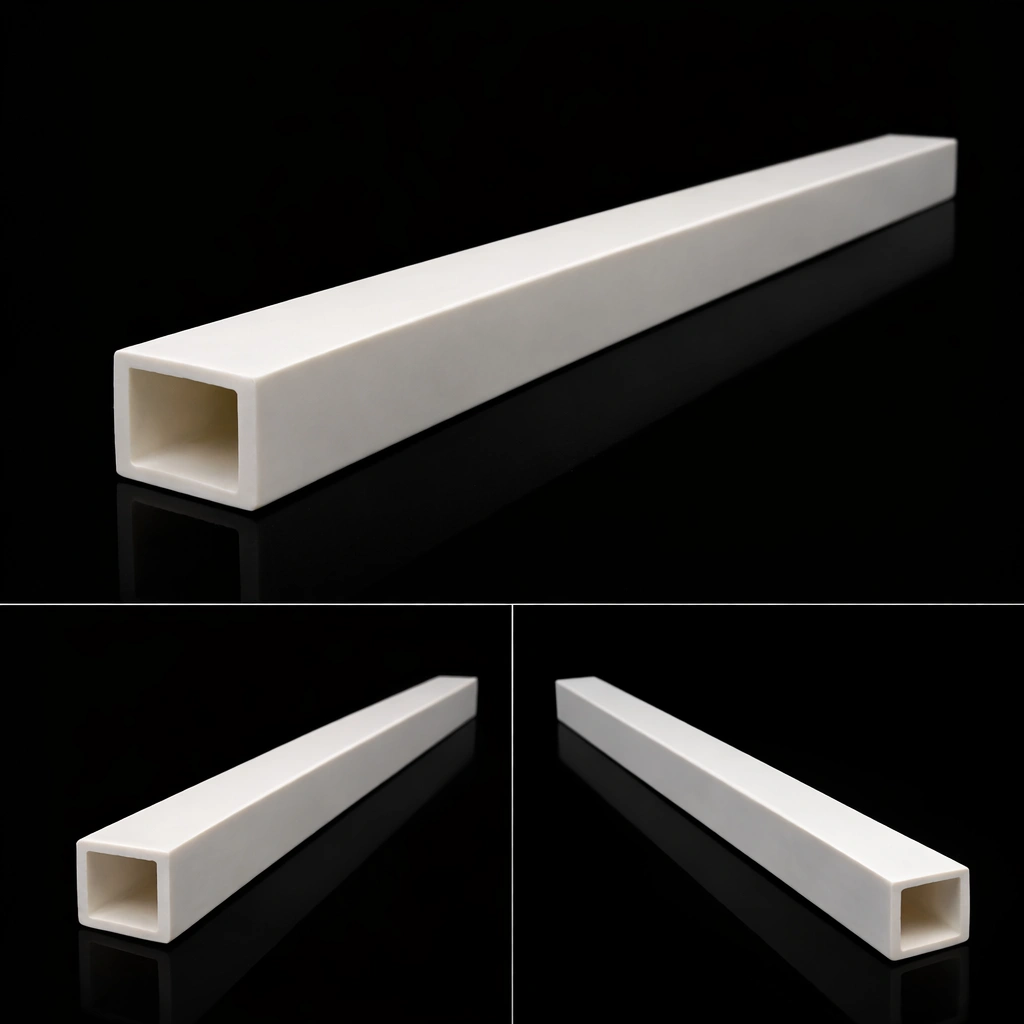
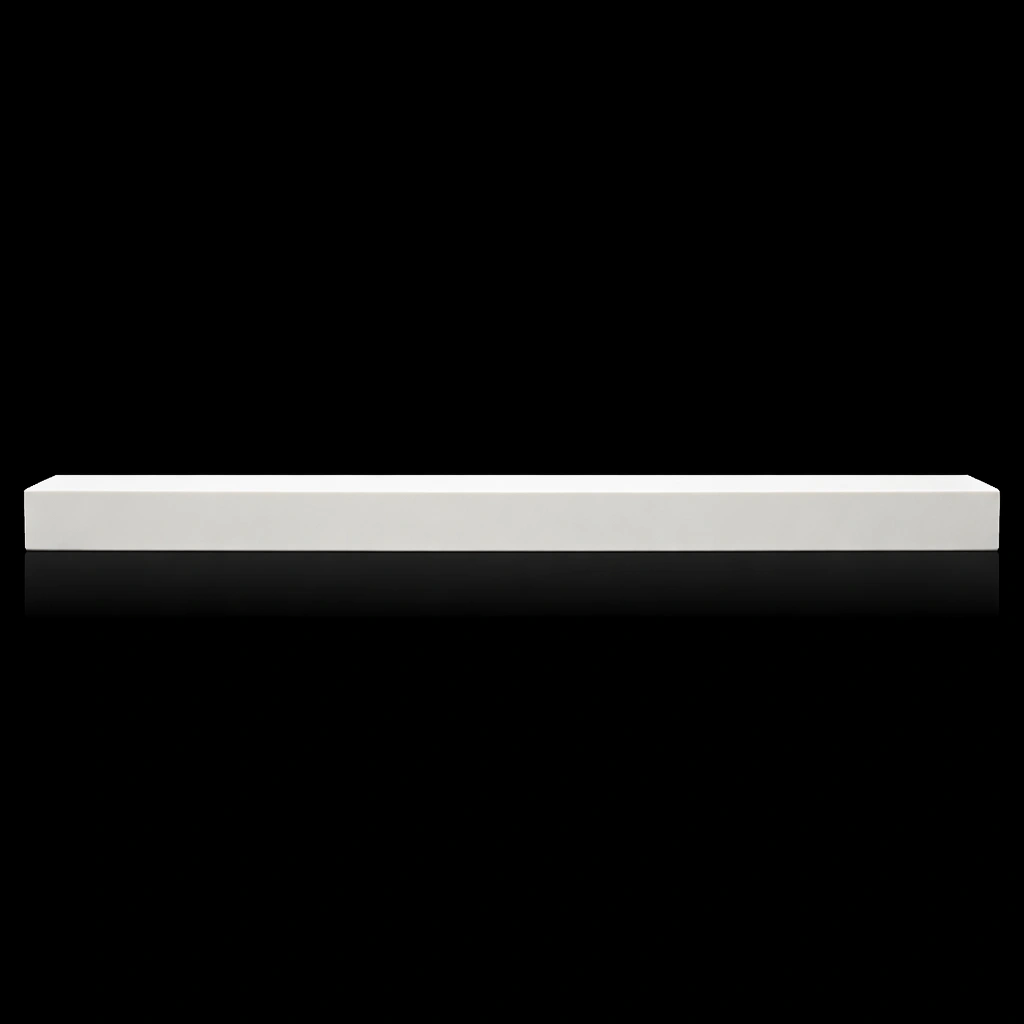
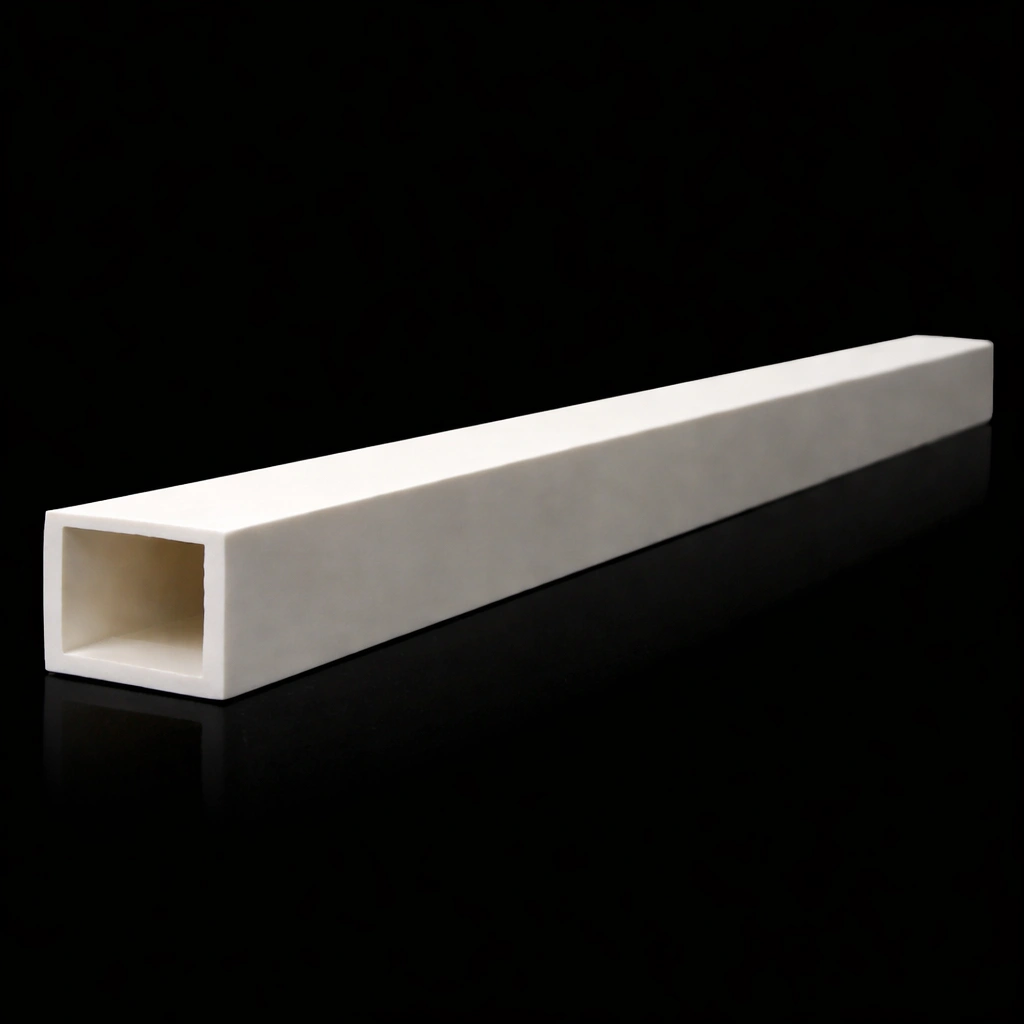
Alumina Ceramic Straightedge Gauge for Precision Inspection

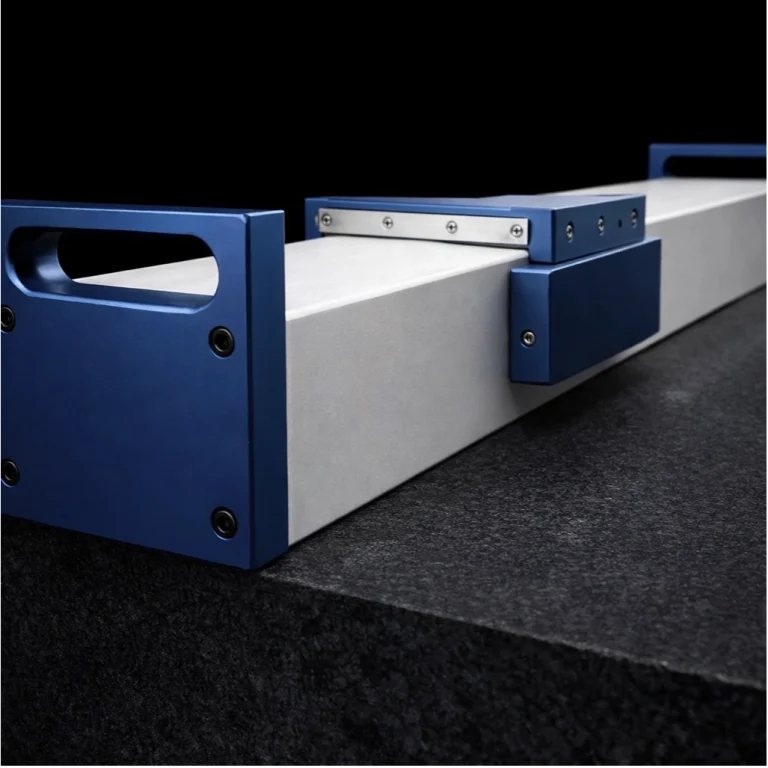
ADCERAX supplies Ceramic Straightedge Gauge options in commonly used shop lengths and also supports drawing-based builds for long-length straightness checks, special cross-sections, handle features, and inspection-document packages aligned to your internal QA workflow.

Catalog No. AT-JYI757570-SG
Material Al2O3
Purity 99% 99.5% 99.7%
Density 1680°c(99%)-1730°c(99.7%)
Dimensions/Sizes Download PDF


24H Standard Dispatch
Small Batch Support OEM
Factory Direct
Expert Engineering Support

A Ceramic Straightedge Gauge is a lapped reference tool used with dial indicators, comparators, or alignment fixtures to verify straightness of machine ways, linear guide mounting surfaces, and inspection stages during setup, maintenance, and acceptance checks.


Benefits of the Ceramic Straightedge Gauge

Reference-face stability for long sweeps:
The Ceramic Straightedge Gauge uses a lapped reference face designed to maintain stable contact with dial indicators during long measurement strokes. This helps reduce measurement drift when checking machine beds, guide rails, or linear stages over extended distances.

Handling-oriented geometry:
The cross-section of the Ceramic Straightedge Gauge can be engineered to maintain structural balance while remaining manageable during manual positioning. This geometry helps operators place and reposition the gauge accurately during repeated straightness checks.

Low sensitivity to corrosion and coolant residue:
Unlike steel straightedges, a Ceramic Straightedge Gauge is not prone to rust formation when exposed to coolant mist, humidity, or chemical residues commonly found in machining environments. This characteristic helps maintain surface integrity during long-term shop-floor use.

Repeatable contact behaviour:
The precision lapped surface of the Ceramic Straightedge Gauge supports consistent stylus contact when used with dial indicators or lever gauges. Stable contact conditions help maintain repeatable readings during multiple measurement passes along the reference edge.

Long-length capability:
Ceramic straightedge gauges are often selected for long-span straightness verification where higher reference accuracy is required. Industry product data reports ceramic straightedges achieving ≤2 μm straightness over 3 m length, enabling higher-resolution straightness verification on large machine assemblies.


Ceramic Straightedge Gauge Properties

Property Unit 99.5% Al₂O₃ 99.6% Al₂O₃ 99.7% Al₂O₃ 99.8% Al₂O₃ 99.9% Al₂O₃ 99.99% Al₂O₃
Alumina content % 99.5 99.6 99.7 99.8 99.9 99.99
Density g/cm³ 3.89 3.91 3.92 3.93 3.94 3.98
Open porosity % 0
Color Ivory Ivory Ivory Ivory Ivory Ivory
Water absorption % 0 0 0 0 0
Young’s modulus (Elastic modulus) GPa 375 356 357 358 359 362
Shear modulus GPa 152
Bulk modulus GPa 228
Poisson’s ratio 0.22
Compressive strength MPa 2600 2552 2554 2556 2558 2570
Flexural strength MPa 379 312 313 314 315 320
Fracture toughness MPa·m¹ᐟ² 4
Hardness GPa 14.1 (≈1440 kg/mm²) 23 24 25 26 30
Thermal conductivity W/m·K 35 32–37 33–38 34–39 35–40 36–42
Thermal shock resistance ΔT °C 222 223 224 225 228
Maximum use temperature (no load) °C ≤1750 1755 1760 1765 1770 1800
Coefficient of thermal expansion 10⁻⁶/°C 8.4
Specific heat J/kg·K 880
Volume resistivity Ω·cm >1×10¹⁴ >1×10¹⁴ >1×10¹⁴ >1×10¹⁴ >1×10¹⁴ >1×10¹⁴
Dielectric constant (relative permittivity) 9.8 9.83 9.84 9.85 9.86 9.92
Dielectric strength kV/mm 16.9 23.2 23.4 23.6 23.8 24
Dissipation factor (loss factor @ 1 kHz) 0.0002


Ceramic Straightedge Gauge Specifications

Ceramic Straightedge Gauge picture

Model No. Size (W×H×L) mm Straightness μm Flatness μm Weight kg
AT-JYI757570-SG 75×75×700 < 1 6.8
AT-JYI757512-SG 75×75×1200 11.6
AT-JYI757514-SG 75×75×1400 < 1.5 13.5
AT-JYI808010-SG 80×80×1000 < 1 12.6
AT-JYI808012-SG 80×80×1200 < 1.5 15.2
AT-JYI808014-SG 80×80×1400 17.7
AT-JYI859715-SG 85×97×1500 < 2 18.5
AT-JYI909018-SG 90×90×1800 21


Ceramic Straightedge Gauge Packaging

  • Rigid protective case with internal supports to prevent bending loads during transport
  • Non-abrasive face protection to prevent lapped surface scuffs
  • Shock-buffer corners to reduce edge-chipping risk at drop points
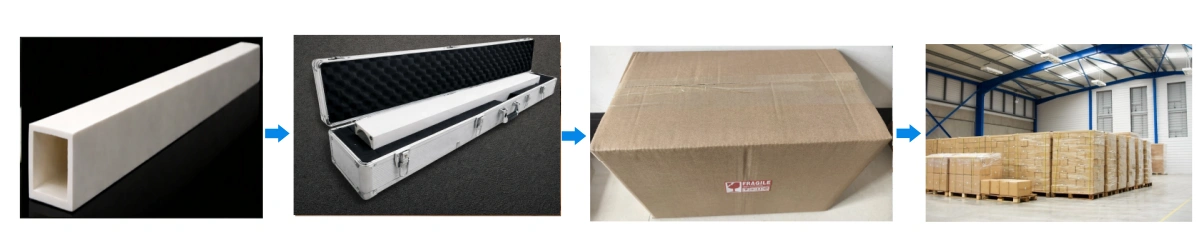
Ceramic Straightedge Gauge Packaging

Applications for Ceramic Straightedge Gauge

  • Machine Tool Alignment & Commissioning

    ✅ Key Advantages

    1. Long sweep confidence: supports acceptance checks where small straightness errors trigger re-scraping or re-shimming.
    2. Reference stability: ceramic straight-edge benchmarks show ≤ 2 μm at 3 m, enabling tighter go/no-go thresholds.
    3. Faster decision loops: reduces repeated “measure–argue–re-measure” cycles across shifts and teams.

    ✅ Problem Solved

    A machine commissioning team often stops progress when axis straightness readings are unstable between operators. When each hour of manufacturing downtime is benchmarked at $260,000 on average across businesses, repeated measurement loops become expensive even before rework begins. Using a straighter, more stable reference reduces the probability that the “reference tool” becomes the variable. Industry data for ceramic straight-edges (3 m) reports ≤ 2 μm straightness, compared with 7–14 μm for metal/stone straight-edges at the same length, which directly tightens the uncertainty band during acceptance decisions.

  • Metrology / QA Straightness Verification

    ✅Key Advantages

    1. Repeatable contact behaviour: lapped reference face supports stable stylus tracking.
    2. Audit-ready reference logic: easier to document straightness checks with a clear reference-face definition.
    3. High-resolution targets: supports μm-level straightness verification workflows on long strokes

    ✅ Problem Solved

    QA teams frequently need a reference they can defend in internal reviews and supplier/customer discussions. Ceramic straight-edge literature highlights a measurable gap at long length—≤ 2 μm (3 m) for ceramic versus 7–14 μm (3 m) for metal/stone—which can reduce borderline disputes when tolerance bands are tight. For organizations that calibrate or validate motion systems, master gages are widely positioned as tools for straightness inspection of axis movement (for example, used in CMMs and machine tools), reinforcing that this is a recognized reference-tool category in metrology workflows.

  • Precision Machining, Assembly Fixtures, and MRO Troubleshooting

    ✅Key Advantages

    1. Shop-floor practicality: geometry can be configured for handling and quick placement.
    2. Reduced corrosion concerns: supports use near coolant residue or humid environments.
    3. Consistent setup: defined supports and face protection help keep readings comparable over time.

    ✅ Problem Solved

    Maintenance teams often need a fast answer: “Is the bed/rail straight enough to run?” When the reference tool is heavy, rust-prone, or easily damaged, the team delays checks or uses less controlled methods, which can extend troubleshooting. Public benchmarks indicating large downtime costs per hour emphasize why faster, more repeatable checks matter when equipment is blocked. A ceramic straightedge gauge, specified with handling features and protected storage, is commonly adopted to reduce reference-related variation and allow quicker confirmation of whether adjustment is needed.

Ceramic Straightedge Gauge User Guide

  • Installation / Setup

    1. Verify the support method before measurement (use defined support blocks; keep spacing consistent each time).
    2. Place the gauge on a clean, burr-free surface; remove chips that can create false highs.
    3. Align the gauge so the reference face is the measurement datum; do not mix faces within one inspection record.

  • Use

    1. Use a dial indicator/lever gauge with a stable stand; keep the stylus angle consistent across the sweep.
    2. Sweep at a steady speed; record readings in a fixed interval plan (e.g., equal spacing).
    3. If results are near the decision limit, repeat with the same supports and compare runs to confirm repeatability.

  • Storage

    1. Store in a rigid case with the reference face protected and supported at defined points.
    2. Avoid stacking loads on the case; sustained bending loads can damage long tools.

  • Cleaning

    1. Use non-abrasive wipes; avoid powders that can scratch lapped faces.
    2. Remove coolant film and fingerprints to keep contact consistent.

  • Common mistakes and fixes

    1. Mistake: Measuring on a dirty surface with small chips under the gauge.
    Fix: Clean both surfaces; re-run the sweep; compare baseline points before full sweep.

    2. Mistake: Changing support points between operators, causing different sag profiles.
    Fix: Use fixed support blocks and document spacing in the inspection record.

    3. Mistake: Using the wrong face or rotating the gauge mid-check.
    Fix: Mark the reference face orientation and keep the same face for the full report.

Ceramic Straightedge Gauge FAQ

  1. What is a Ceramic Straightedge Gauge used for in straightness inspection?
    It is used as a reference edge to verify straightness of machine ways, guide rails, stages, and axis motion using indicator sweeps or comparator setups.
  2. How do I specify straightness for a Ceramic Straightedge Gauge?
    Specify straightness as a numeric limit (μm) over the full working length, and clarify whether any local segment limit is required for acceptance.
  3. Can a Ceramic Straightedge Gauge replace a granite or steel straight edge?
    It can replace them when you want reduced corrosion sensitivity and higher straightness at long lengths; ceramic straight-edge literature reports ≤ 2 μm at 3 m vs 7–14 μm for metal/stone at 3 m.
  4. What length should I choose for a Ceramic Straightedge Gauge?
    Choose a length that covers the target sweep zone without overhang; long-length gauges are common for beds and stages, while shorter gauges fit local alignment tasks.
  5. Does surface finish matter for a Ceramic Straightedge Gauge?
    Yes. A lapped reference face supports stable stylus contact and reduces reading scatter during indicator sweeps.
  6. What cross-section is better: thin or beam-style?
    Beam-style cross-sections reduce deflection risk during handling; thin sections are easier to place but can be more sensitive to support method.
  7. Can I order handle slots or lifting features on a Ceramic Straightedge Gauge?
    Yes. Many buyers specify hand-hold openings, grip flats, or lifting points to reduce drop risk and improve repeatability of placement.
  8. How should I support a Ceramic Straightedge Gauge during measurement?
    Use consistent, defined supports (support blocks) and keep spacing repeatable; changing supports changes the sag profile and can change readings.

Ceramic Straightedge Gauge Reviews

  • ⭐️⭐️⭐️⭐️⭐️
    We added the Ceramic Straightedge Gauge to our acceptance routine for bed way checks. The readings were more consistent between operators, and the report format matched what our QA team needed.
    -- Daniel R. — Quality Manager, Midwest Machine Tool Assembly (USA)
  • ⭐️⭐️⭐️⭐️⭐️
    The ceramic straight-edge gauge was ordered with a custom length and handle openings. The lapped face condition was clean on arrival, and repeat sweeps showed stable behaviour with our comparator setup.
    -- Sophie L. — Metrology Engineer, Calibration Services Group (Germany)
  • ⭐️⭐️⭐️⭐️⭐️
    We sourced through ADCERAX for repeat orders because the specification communication was straightforward. Pricing was workable for stocking, and we could request the same configuration again without re-explaining every detail.
    -- Miguel A. — Procurement Manager, Industrial MRO Distributor (Canada)
  • ⭐️⭐️⭐️⭐️⭐️
    Our Ceramic Straightedge Gauge is mainly used for quick straightness checks after rail replacement. The tool geometry made it easier to handle than our older reference, and placement repeatability improved with defined supports.
    -- Eric W. — Manufacturing Engineer, Precision CNC Shop (UK)
customize size

Customization for Ceramic Straightedge Gauge

Ceramic Straightedge Gauge projects often require specific lengths, reference-face conditions, and handling features to match the inspection method used on machine beds, guide rails, or assembly fixtures. ADCERAX supports Ceramic Straightedge Gauge customization based on drawings, samples, or measurement requirements to ensure compatibility with existing straightness inspection workflows. What You Can Specify:

  • Overall Length
    Inspection length can be defined according to the measurement span of the machine bed or guide rail. Both short inspection gauges and long-length straightedge references can be produced.
  • Cross-Section Geometry
    Rectangular, square, or beam-reinforced profiles can be selected depending on rigidity requirements and handling conditions during inspection.
  • Reference Faces
    Single reference face, dual reference faces, or side reference edges can be specified depending on how the gauge will be positioned during straightness checks.
  • Straightness Requirement
    Straightness tolerance can be defined as μm over the full working length, with optional segment accuracy requirements for high-precision inspection tasks.
  • Surface Finish
    Lapped or polished reference faces can be specified to ensure stable contact when used with dial indicators or lever gauges.
  • Edge Protection Geometry
    Edge chamfer size, corner protection radius, and datum edge definitions can be configured to reduce chipping risk during daily handling.
  • Handling Features
    Grip slots, lifting points, and balanced handling positions can be integrated into the structure to improve operator safety when positioning long gauges.
  • End Configuration
    Squared ends, relieved ends, or end-cap protection interfaces can be defined depending on how the straightedge will be stored or transported.
  • Storage & Protection Design
    Custom protective cases, foam cutouts, support blocks, and transport restraints can be designed to protect the Ceramic Straightedge Gauge during storage and shipping.

Related Products

ADCERAX - Your Trusted Advanced Ceramics Manufacturing Partner

Direct factory manufacturing with comprehensive ceramic materials expertise and global supply capabilities

Direct Factory Manufacturing

China-based ceramic materials production facility with state-of-the-art equipment

Engineering Team

Experienced professionals in advanced ceramics applications and custom design

Quality Control

Strict quality control standards for technical ceramics manufacturing and quality management

Global Supply Chain

Serving customers worldwide with technical ceramics and rapid response

24/7 Technical Support

Round-the-clock support for ceramic components inquiries and technical assistance

500+ Satisfied Customers

Trusted by global customers for advanced ceramic materials and precision components

Get in touch with us

Our team will be happy to respond to you in less than 24 hours.

Adcerax's factory

Quick Quotation

*Our team will answer your inquiries within 24 hours.

*Your information will be kept strictly confidential.

Ready to Solve Your Engineering Challenge?

Partner with ADCERAX for reliable, high-performance advanced ceramic solutions. Our engineers are ready to discuss your project.

E-mail

info@adcerax.com

Phone

+(86) 0731-74427743 | WhatsApp: +(86) 19311583352

Response Time

Within 24 hours

Quick Quote

The more details you provide, the faster we can quote.

*We respond within 24 hours. All inquiries are confidential.

Download Catalog

Get Your Custom Sulution

The more details you provide, the faster we can respond.

customize size

*We respond within 24 hours. All inquiries are confidential.

Download Catalog