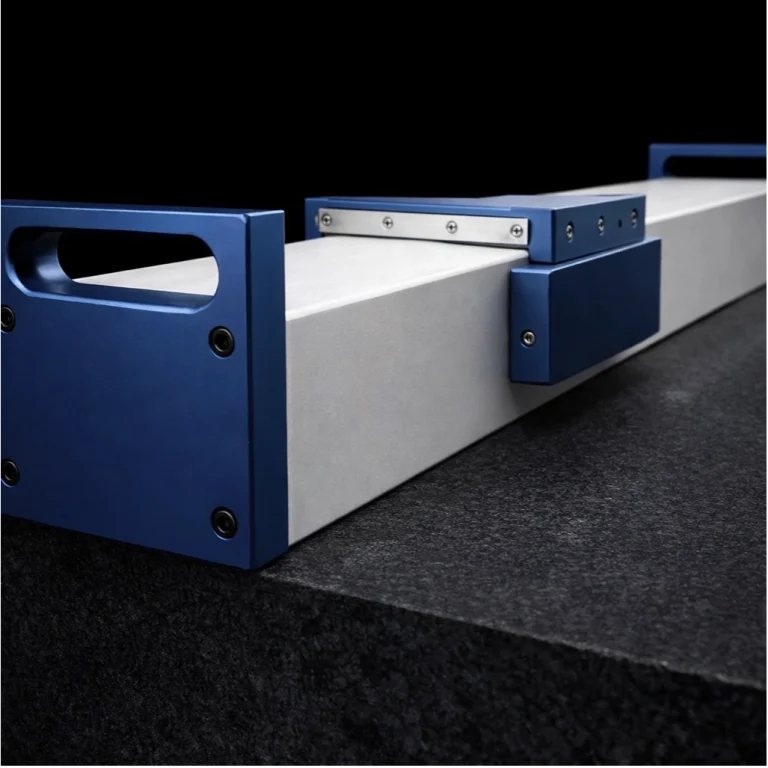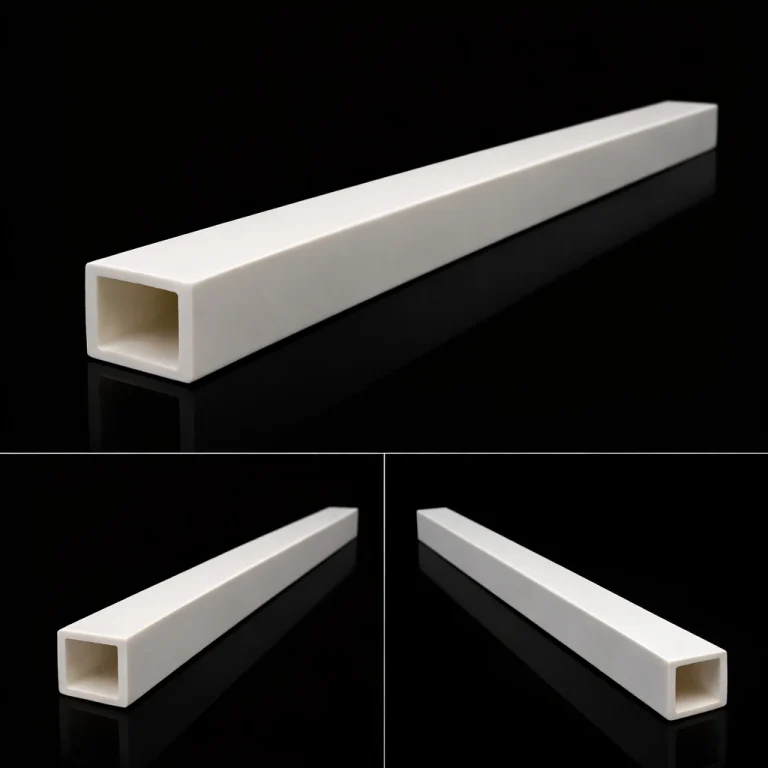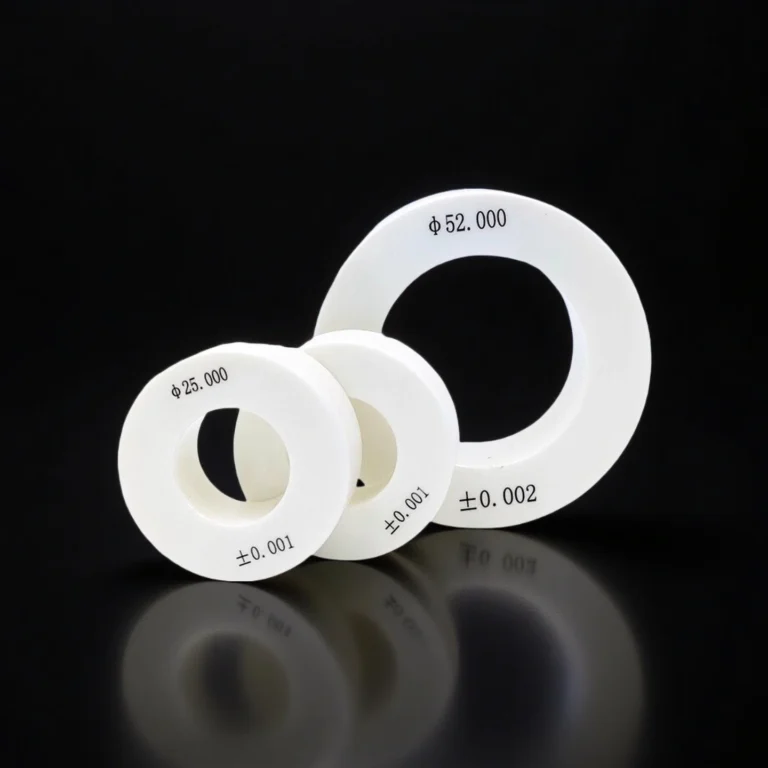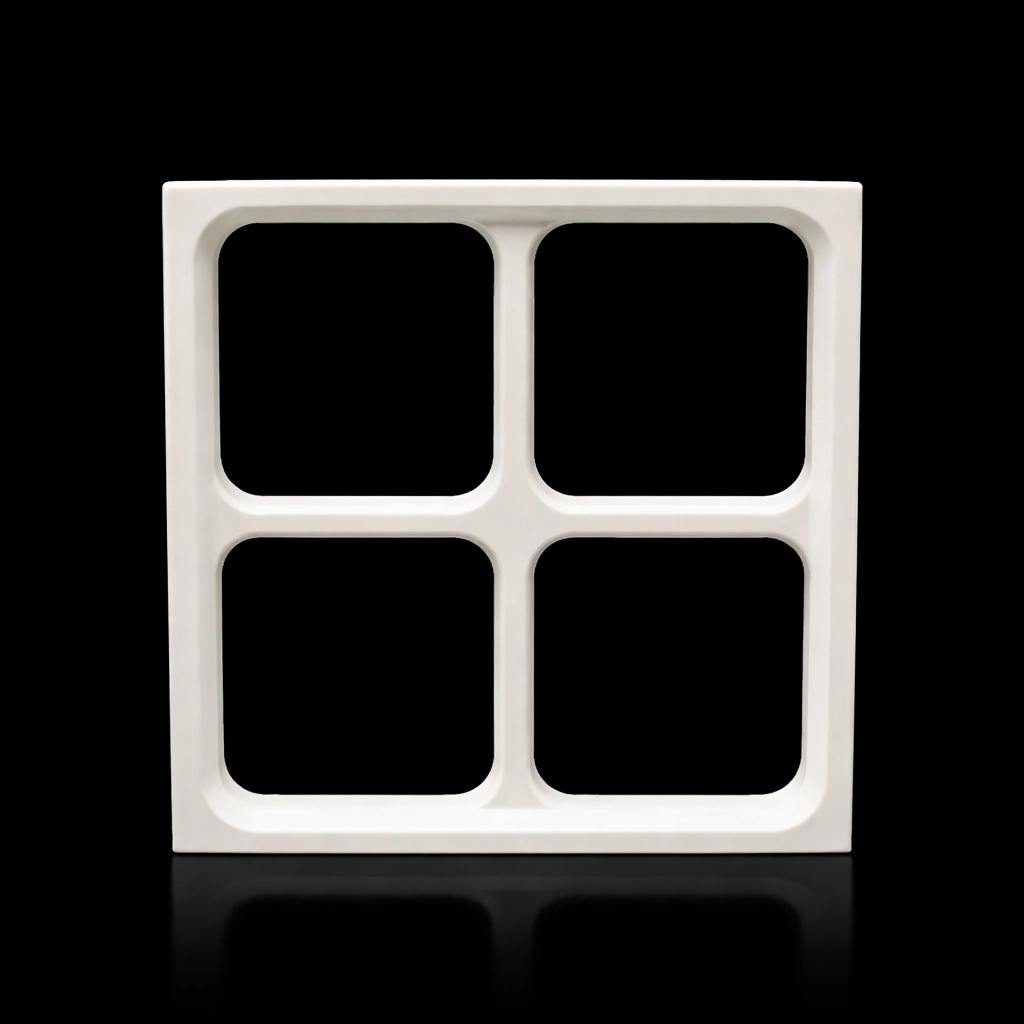
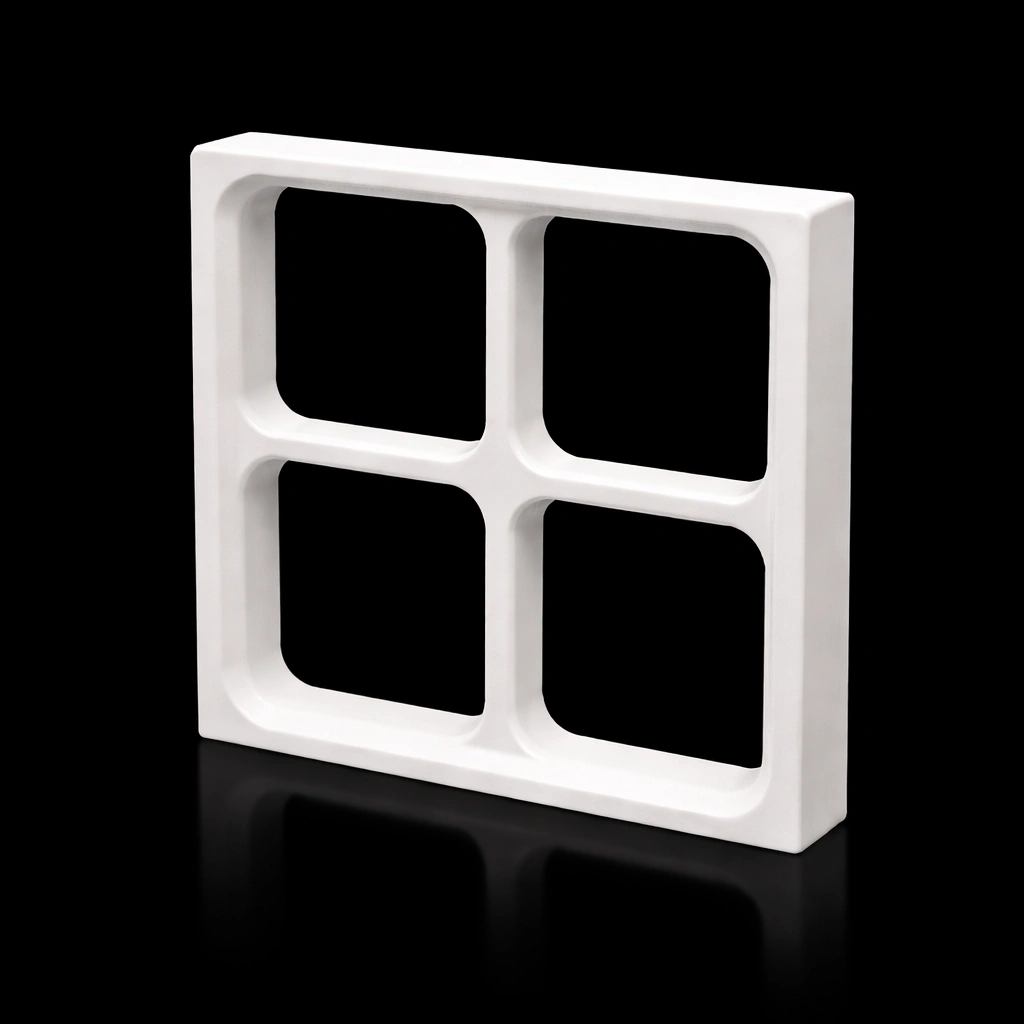
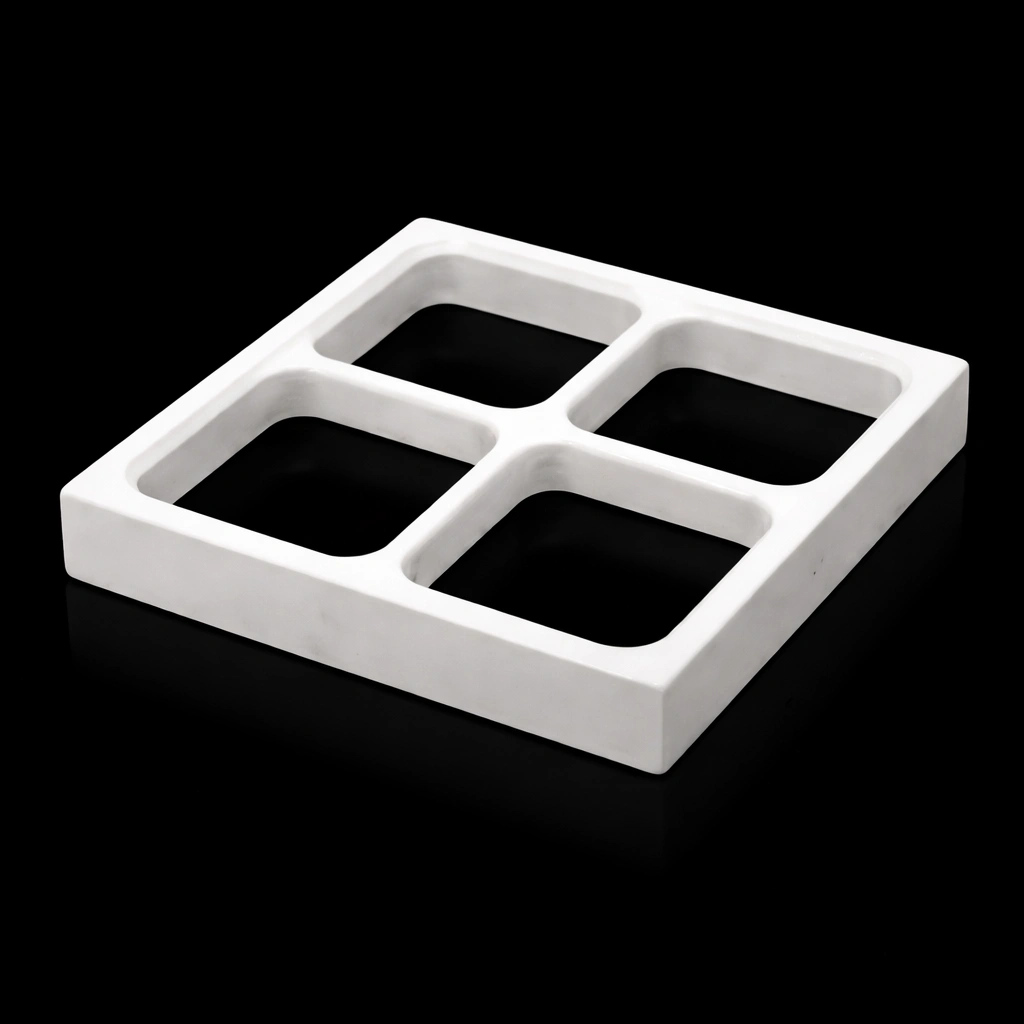
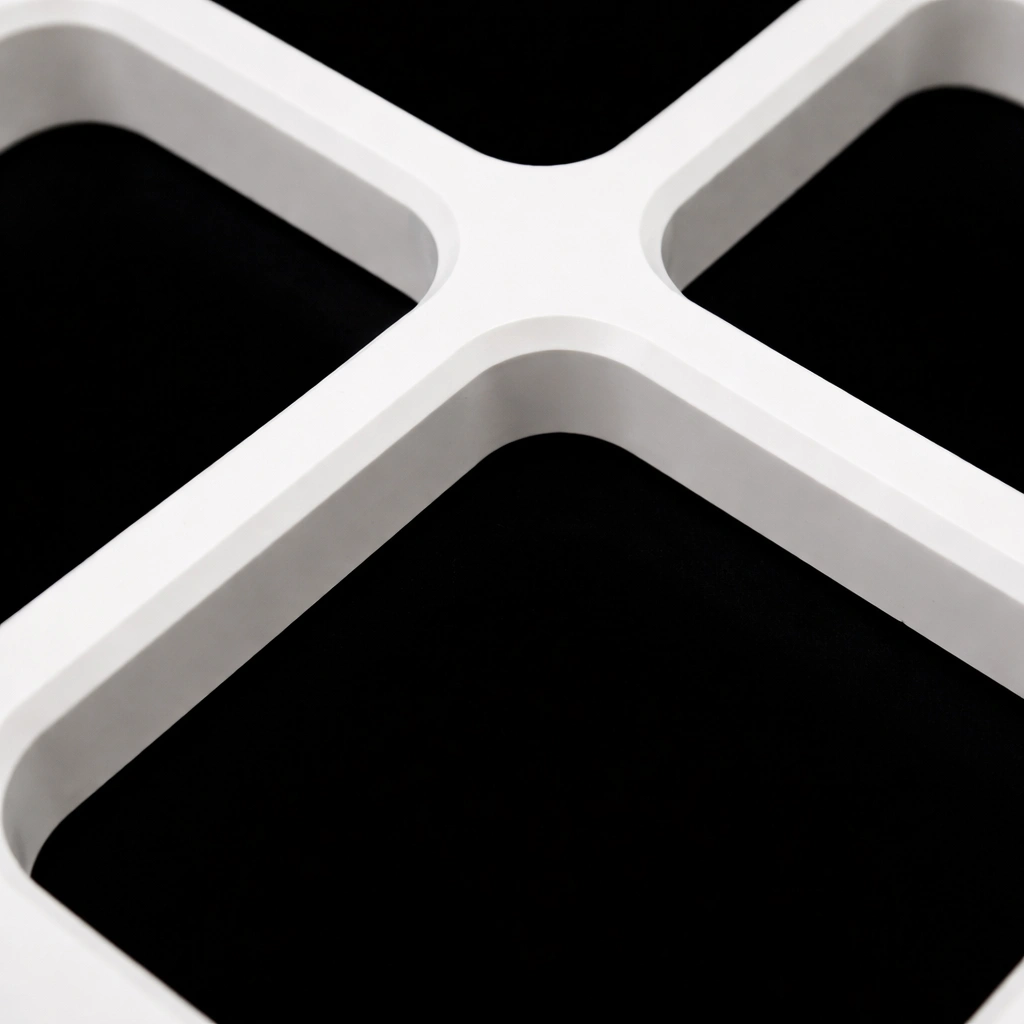
Ceramic Square Gauge is a precision right-angle reference tool made from technical ceramic, used to verify 90° squareness between surfaces, machine axes, fixtures, and inspection setups. It functions like a “master square” in dimensional metrology: you place it on a reference surface and use an indicator, probe, or optical method to check whether a wall, axis, or fixture is truly perpendicular.
Benefits of the Ceramic Square Gauge
- Multi-face reference geometry for flexible squareness verification
The Ceramic Square Gauge is designed with multiple precision reference faces, allowing technicians to position the gauge from different orientations during inspection. This structure helps maintain consistent right-angle verification across different machine setups, fixtures, and measurement positions. - Wear-resistant reference edges for long-term dimensional stability
The contact edges of the Ceramic Square Gauge resist abrasion during repeated indicator or probe contact. This reduces edge rounding over time and helps maintain stable inspection geometry in high-frequency measurement environments. - Low sensitivity to corrosion-related geometry change
Unlike conventional steel reference squares, ceramic surfaces do not oxidize in humid shop environments or coolant-rich machining areas. This helps preserve edge integrity and minimizes long-term geometry drift caused by corrosion. - Non-magnetic body prevents magnetic interference during inspection
The Ceramic Square Gauge does not interact with magnetic chucks, ferrous chips, or residual magnetism in machining environments. This prevents positioning errors that can occur when steel tools are influenced by magnetic attraction. - Stable handling format for fast inspection routines
The rigid ceramic structure and balanced geometry allow operators to position the gauge quickly during maintenance checks or acceptance inspections. This supports efficient “place-and-verify” measurement routines in machine alignment workflows.
Ceramic Square Gauge Properties
| Property | Unit | 96% Al₂O₃ | 99% Al₂O₃ | 99.5% Al₂O₃ | 99.6% Al₂O₃ | 99.7% Al₂O₃ | 99.8% Al₂O₃ | 99.9% Al₂O₃ | 99.99% Al₂O₃ |
| Alumina content | % | 96 | 99 | 99.5 | 99.6 | 99.7 | 99.8 | 99.9 | 99.99 |
| Density | g/cm³ | 3.6-3.75 | 3.83 | 3.89 | 3.91 | 3.92 | 3.93 | 3.94 | 3.98 |
| Color | – | white | Ivory | Ivory | Ivory | Ivory | Ivory | Ivory | Ivory |
| Water absorption | % | 0 | 0 | – | 0 | 0 | 0 | 0 | 0 |
| Young’s modulus (Elastic modulus) | GPa | 300 | 350 | 375 | 356 | 357 | 358 | 359 | 362 |
| Shear modulus | GPa | – | – | 152 | – | – | – | – | – |
| Bulk modulus | GPa | – | – | 228 | – | – | – | – | – |
| Poisson’s ratio | – | – | – | 0.22 | – | – | – | – | – |
| Compressive strength | MPa | 1910 | 2210 | 2500 | 2552 | 2554 | 2556 | 2558 | 2570 |
| Flexural strength | MPa | 260 | 300 | 340 | 345 | 346 | 347 | 348 | 365 |
| Fracture toughness | MPa·m¹ᐟ² | – | – | 4 | – | – | – | – | – |
| Hardness | GPa | 14.5 | 17 | 17 | 23 | 24 | 25 | 26 | 30 |
| Thermal conductivity | W/m·K | 20 | 31 | 31 | 31-33 | 31-33 | 31-33 | 31-35 | 31-35 |
| Thermal shock resistance ΔT | °C | – | – | – | 222 | 223 | 224 | 225 | 228 |
| Maximum use temperature (no load) | °C | 1450 | 1680 | ≤1750 | 1755 | 1760 | 1765 | 1770 | 1800 |
| Coefficient of thermal expansion | 10⁻⁶/°C | 7.6 | 7.6 | 7.6 | 7.6 | 7.5 | 7.5 | 7.4 | 7.4 |
| Volume resistivity | Ω·cm | >1×10¹⁴ | >1×10¹⁴ | >1×10¹⁴ | >1×10¹⁴ | >1×10¹⁴ | >1×10¹⁴ | >1×10¹⁴ | >1×10¹⁴ |
| Dielectric constant (relative permittivity) | – | 9.2 | 9.5 | 9.8 | 9.83 | 9.84 | 9.85 | 9.86 | 9.92 |
| Dielectric strength | kV/mm | 15 | 19 | 16.9 | 23.2 | 23.4 | 23.6 | 23.8 | 24 |
| Dissipation factor (loss factor @ 1 kHz) | – | – | – | 0.0002 | – | – | – | – | – |
Ceramic Square Gauge Specifications
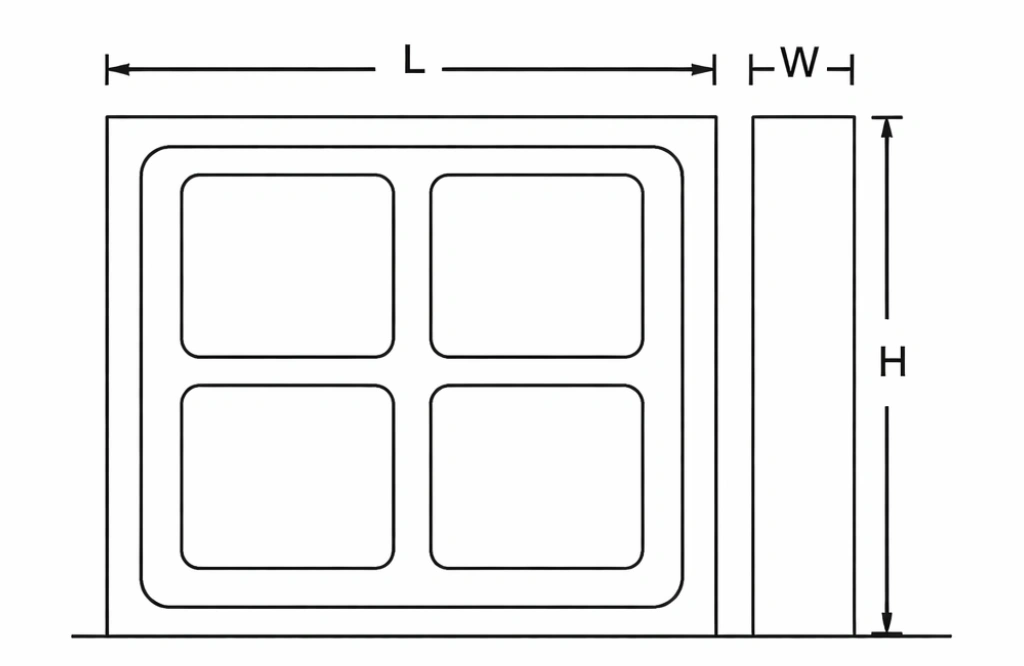
| Model No. | Dimensions (L×W×H) mm | Straightness μm | Perpendicularity μm | Weight kg |
| AT-JYI202050-SG | 200×200×50 | < 1.5 | 3.5 | |
| AT-JYI353550-SG | 350×350×50 | 8.1 | ||
| AT-JYI404050-SG | 400×400×50 | 11 | ||
| AT-JYI454550-SG | 450×450×50 | < 2 | 12.5 | |
| AT-JYI505055-SG | 500×500×55 | / | ||
| Custom | 1000×400×50 | < 2 | / | |
Ceramic Square Gauge Packaging
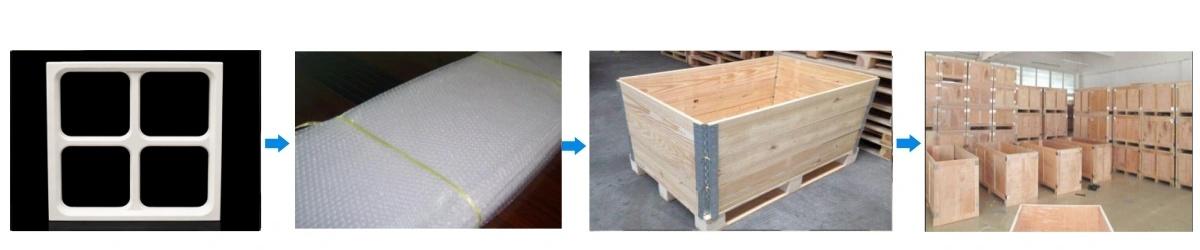
- Each Ceramic Square Gauge is individually protected with edge guards to prevent reference-face impact during transit.
- Shock-absorbing inner packing with rigid outer carton reduces corner chipping risk.