
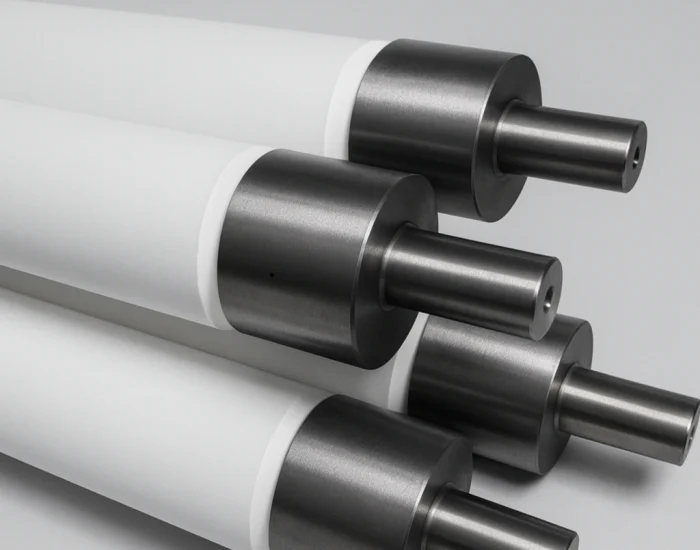
Industrial Ceramic Rollers for Kilns, Furnaces, Glass, and High-Temperature Conveying
ADCERAX manufactures custom ceramic rollers in silicon carbide, fused quartz, alumina and zirconia for equipment manufacturers, kiln builders, glass-processing lines and plant maintenance teams.
We review temperature, load, span, atmosphere, contact surface, dimensions and end interfaces before recommending the material and production route—helping reduce deformation, contamination, premature wear and unplanned downtime.
Factory-direct. Engineering-guided. Consistent batch production.
What Are Ceramic Rollers?
Industrial ceramic rollers are cylindrical or tubular components engineered to support, convey, guide, or rotate products under high temperatures, thermal cycling, corrosive atmospheres, and wear-intensive conditions. They are commonly used in roller kilns, heat-treatment furnaces, glass processing lines, and precision machinery.
Material selection depends on operating temperature, load, span, atmosphere, and contact conditions. Common options include silicon carbide, fused quartz, alumina, and zirconia, each with distinct thermal and mechanical properties.
Designed to support and convey products through kilns and furnaces.
Reduces damage, contamination, and replacement frequency.
Material grades selected for repeated heating and cooling conditions.
Provides stable support with minimal product marking.
Ceramic Roller Material Comparison
Silicon carbide, fused quartz, alumina, and zirconia perform differently under heat, load, thermal cycling, and surface contact. Compare the options below to reduce roller bending, thermal cracking, premature wear, and surface marks on processed products.
| Property | Silicon Carbide (SiC) | Fused Quartz | Alumina (Al₂O₃) | Zirconia (ZrO₂) |
|---|---|---|---|---|
| Typical Grade | RBSiC, SiSiC or SSiC | Opaque fused quartz | 95%–99.7% alumina | Y-TZP zirconia |
| Density | 3.0–3.2 g/cm³ | 2.05–2.20 g/cm³ | 3.7–3.9 g/cm³ | 5.6–6.1 g/cm³ |
| Temperature Capability | 1,380–1,750°C, grade dependent | Up to 1,100°C long-term | 1,450–1,800°C, grade dependent | Up to approximately 1,000°C |
| Thermal Expansion | 3.7–4.5 × 10⁻⁶/K | Approximately 0.55 × 10⁻⁶/K | 7.2–8.5 × 10⁻⁶/K | 10–11 × 10⁻⁶/K |
| Thermal Conductivity | 60–125 W/m·K | Approximately 1.38 W/m·K | 25–34 W/m·K | 2–3 W/m·K |
| Typical Flexural Strength | 250–500 MPa | Approximately 36 MPa for opaque grades | 300–500 MPa | 800–1,400 MPa |
| Key Advantage | High-temperature stiffness and load support | Lowest expansion and excellent thermal cycling | Wear resistance and electrical insulation | High toughness and polishable surfaces |
| Recommended Applications | Roller kilns, firing lines and high-temperature conveying | Glass tempering, annealing and low-marking contact | Guide rollers, wire, textile and wear-intensive equipment | Compact precision rollers and high-wear contact systems |
| Confirm Before Selection | SiC grade, atmosphere, load and supported span | Load, span, runout and surface finish | Purity, thermal cycling, grooves and insulation needs | Temperature, roller size, weight and shaft interface |
Values are typical material references rather than guaranteed component specifications. Final performance depends on material grade, roller dimensions, supported span, load, atmosphere, and manufacturing process.
Choose Ceramic Rollers by Equipment and Process
Start with the equipment, process temperature, supported span, load, atmosphere and product-contact requirement.
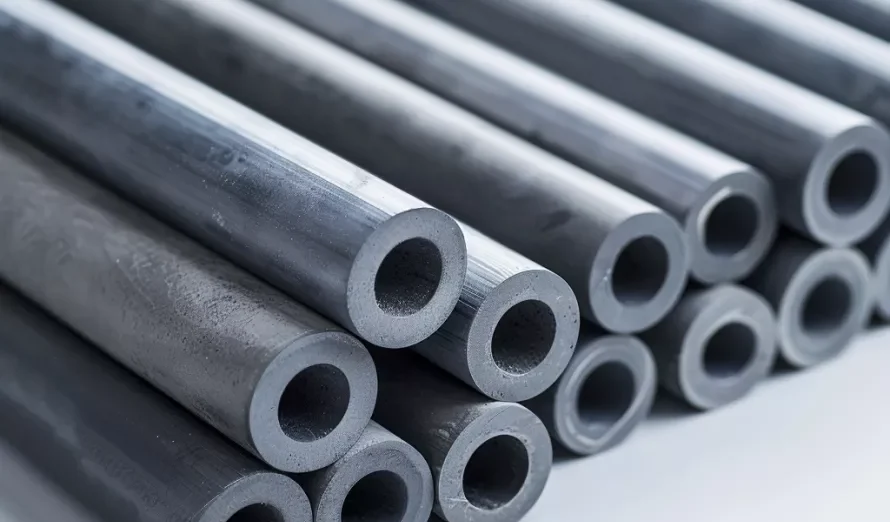
RBSiC and SiSiC roller routes for continuous roller hearth kilns where high-temperature stiffness, load support and thermal cycling matter.
Best fit
Kilns, firing lines and high-temperature conveying
Confirm first
Temperature, atmosphere, load, span, wall thickness and end support
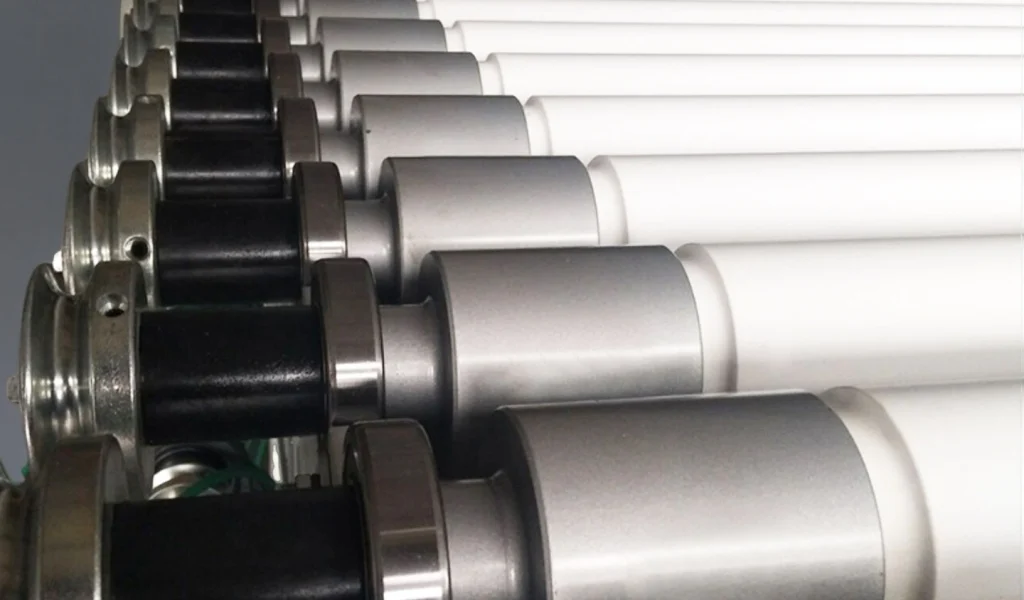
Low-expansion ceramic rollers for glass tempering, heat-treatment furnaces and contact-sensitive conveying systems.
Best fit
Glass lines, furnaces and low-expansion conveying
Confirm first
Runout, surface finish, supported span, line speed and metal end interface
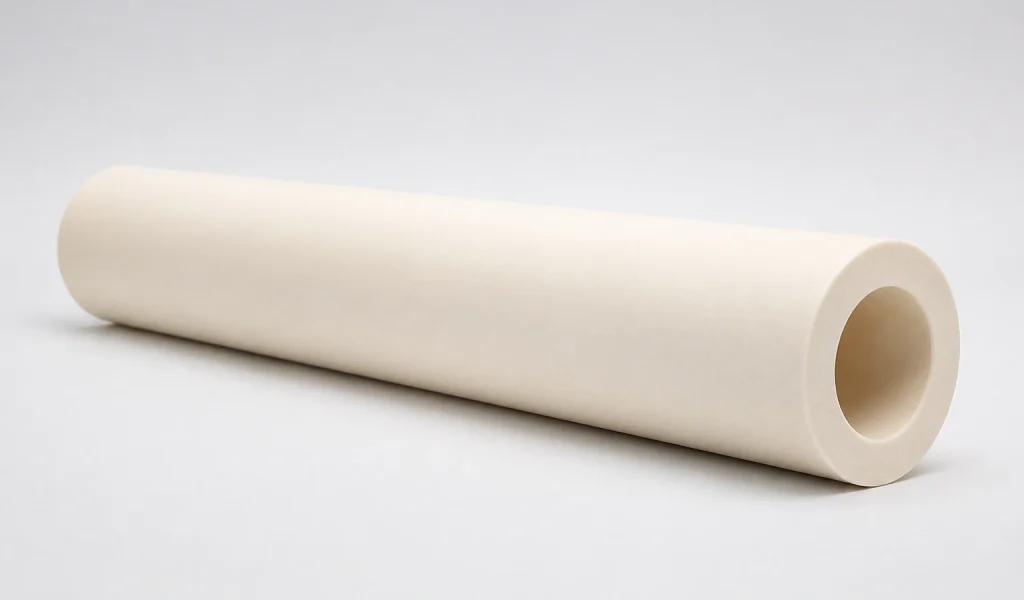
Alumina Ceramic Rollers
Wear-resistant and electrically insulating roller routes for guide systems, machinery and selected kiln conditions
Best fit
Wire guides, textile machinery and general industrial equipment
Confirm first
Purity, porosity, wear mode, groove profile, surface finish and insulation
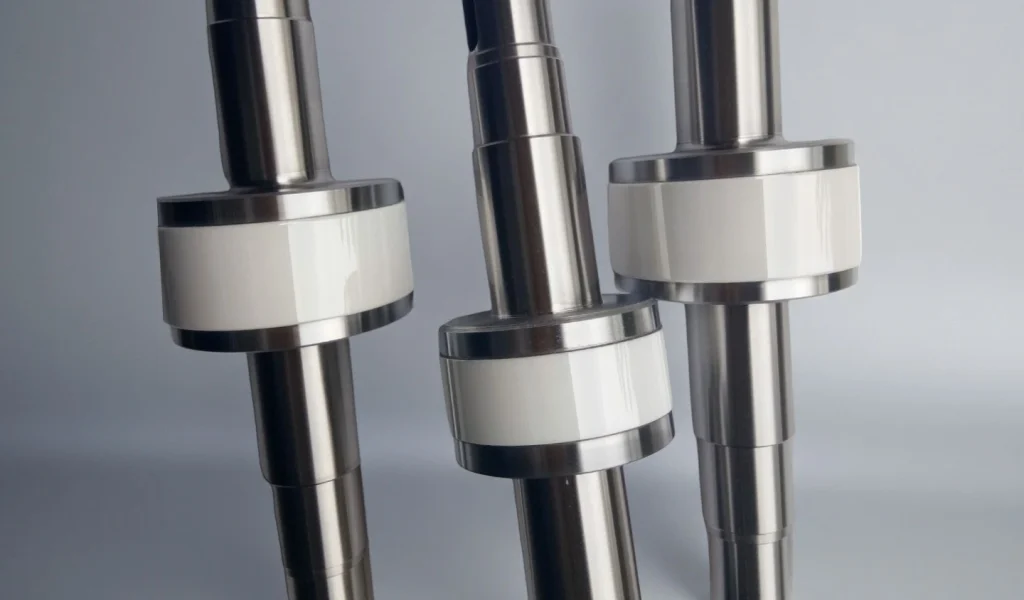
Dense, tough and polishable precision rollers for wear-sensitive contact, stable geometry and custom machinery interfaces.
Best fit
Precision guide, forming and wear-contact systems
Confirm first
Pressure, diameter, roundness, surface finish and shaft interface
Material Selection Guide
How to Select the Right Ceramic Roller Material
The comparison below is a routing guide. Material properties vary with grade, porosity, manufacturing route and test method; project specifications remain subject to engineering confirmation.
| Material route | Thermal behavior | Mechanical / surface behavior | Common equipment fit | Primary limitation to review |
|---|---|---|---|---|
|
RBSiC / SiSiC Silicon carbide |
High-temperature capability with useful thermal conductivity | Atmosphere, load, support design and thermal stress | Roller hearth kilns and continuous firing lines | High stiffness for long spans and supported loads |
| Fused quartz Quartz ceramic | Very low thermal expansion and good thermal-shock behavior | Clean contact surface; runout and span require control | Glass tempering and selected furnace conveying | Mechanical load, supported span and end interface |
| Alumina Dense or kiln-grade routes | Grade-dependent high-temperature performance | Wear resistance, hardness and electrical insulation | Guide systems, machinery and selected kiln zones | Dense and porous kiln grades are not interchangeable |
| Y-TZP zirconia Precision route | Suitable for selected elevated-temperature machinery duties | High toughness, dense surface and fine polishing capability | Smaller precision rollers and wear-contact systems | Not the default material for long high-temperature kiln rollers |
Choose SiC when
high-temperature stiffness, load support and long-span kiln conveying are central.
Choose fused quartz when
low expansion and the quality of a glass-contact surface are central.
Choose alumina when
wear resistance, insulation and cost-effective custom guidance are central.
Choose zirconia when
toughness, polished contact and smaller precision geometry are central.
Not Sure Which Ceramic Roller Fits Your Operating Conditions?
Share your operating temperature, load, span, atmosphere and roller dimensions. We will help you compare silicon carbide, fused quartz, alumina and zirconia options.
Industrial Systems That Use Ceramic Rollers
Each industry uses a different definition of roller performance. The landing page connects these applications without treating them as one universal specification.
Glass processing
Architectural, furniture and appliance glass heat-treatment lines
Wire and cable
Wire drawing, winding, coating and tension-control equipment
Textile machinery
Wear-resistant guides, pulleys and rotating contact components
Powder metallurgy
Continuous sintering and setter-conveying equipment
Industrial automation
Precision guide and forming systems with custom shaft interfaces
Thermal processing
General high-temperature conveying and furnace spare parts
Ceramic firing
Tile, sanitaryware, tableware and technical ceramic roller kilns
Kiln engineering
Industrial furnace OEMs, retrofit contractors and MRO service providers
Custom Ceramic Rollers Engineered to Fit Your Equipment and Process
From replacement rollers to new equipment builds, ADCERAX reviews your drawings, samples, and operating conditions to define material, dimensions, runout, surface finish, and end interfaces—helping reduce fit risks and simplify sample approval and repeat ordering.
Send us your drawing, sample, or operating requirements to discuss suitable ceramic roller materials, dimensions, and design options.
What Can Be Customized in Ceramic Rollers?
- Material and grade: SiC, fused quartz, alumina or zirconia selected around the process.
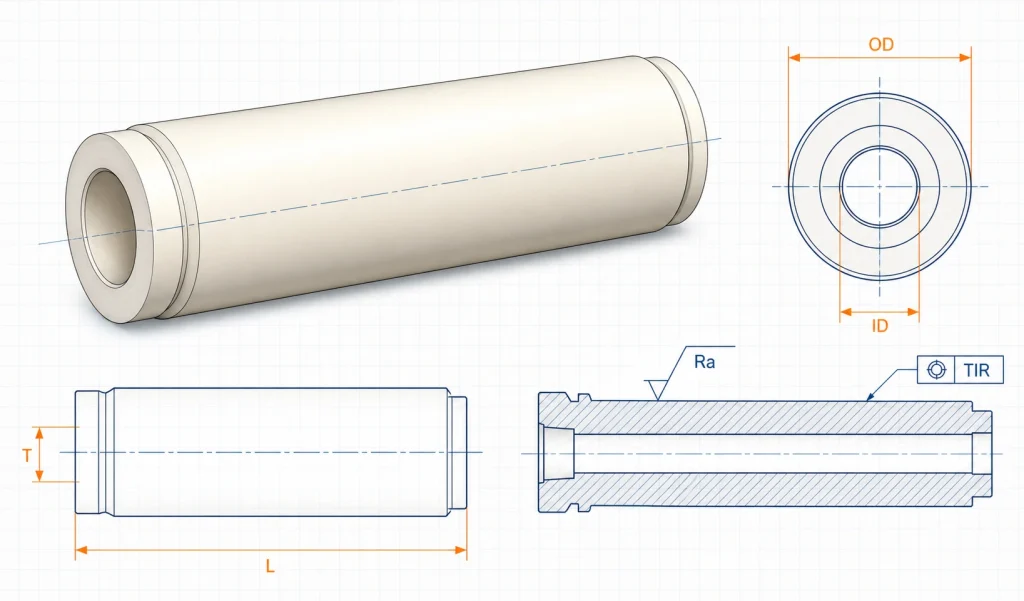
- Body dimensions: OD, ID, wall thickness, overall length and effective working length.
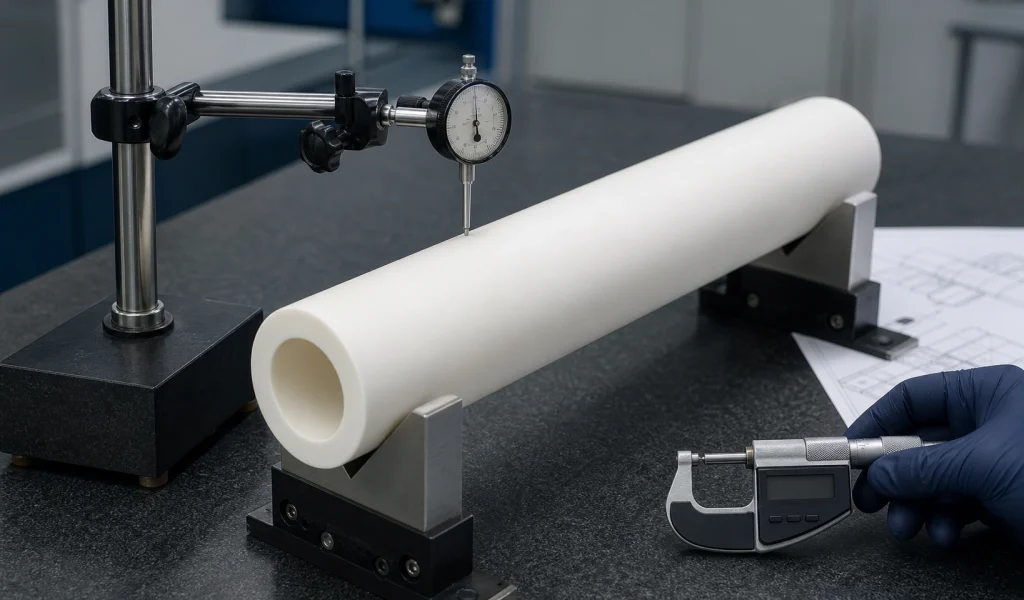
- Rotating geometry: Straightness, roundness, concentricity and total indicated runout.
- Surface condition: As-fired, ground, polished, controlled roughness or application-specific finish.
- End features: Steps, shoulders, grooves, bores, keyed connections and coupling geometry.
- Assembly interfaces: Metal end caps, shafts, bearings, gears and support interfaces reviewed by drawing.
From Review to Delivery
A Six-Step Ceramic Roller Supply Process
-
01
Application Review
Confirm equipment, process conditions, operating requirements, and current failure risks.
-
02
Material Selection
Compare ceramic materials against temperature, load, wear, and surface requirements.
-
03
Drawing Confirmation
Review dimensions, tolerances, surface finish, end interfaces, and inspection points.
-
04
Trial Production
Produce an agreed prototype or trial batch for application testing when required.
-
05
Inspection & Approval
Inspect the rollers against the approved drawing and acceptance criteria.
-
06
Batch Production & Delivery
Arrange repeat production, protective export packing, and international shipment.
Why ADCERAX
A Flexible Manufacturing Partner for Replacement and Custom Rollers
- Factory-direct coordination: fewer handoffs between technical review and production.
- Engineering collaboration: drawings, samples and failure information reviewed before quotation.
- Flexible order quantities: suitable projects can move from small trials to repeat volume orders.
- Standard and custom supply: selected standard items are dispatched quickly after stock confirmation.
- One-source support: multiple advanced ceramic materials, inspection and international shipping.
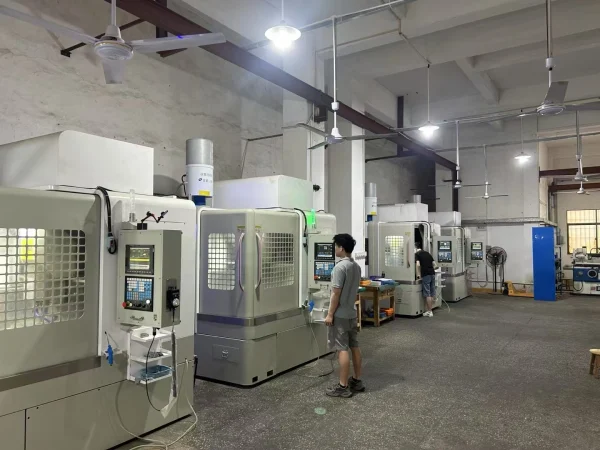
ADCERAX is a China-based manufacturer specializing in custom ceramic rollers for kilns, furnaces, glass processing, and precision machinery. We support each project from material selection and drawing review through ceramic processing, precision finishing, inspection, and export delivery—all based on the roller design and operating conditions.
Frequently Asked Questions About Ceramic Rollers
Short answers for engineers, maintenance teams and industrial buyers.
What are industrial ceramic rollers used for?
Industrial ceramic rollers support, guide or convey products in roller kilns, furnaces, glass tempering lines, wire and cable equipment, textile machinery and other wear- or heat-sensitive systems. The correct material depends on temperature, load, atmosphere, contact surface and roller geometry.
Which ceramic material is best for roller kilns?
Silicon carbide is commonly evaluated for high-load or high-temperature roller hearth kilns because of its stiffness and thermal performance.
High-alumina rollers may suit other firing zones where grade, porosity, thermal cycling and cost must be balanced.
Selection should be based on the complete operating condition, not temperature alone.
When should fused quartz rollers be considered?
Fused quartz ceramic rollers are considered when low thermal expansion, thermal-shock behavior and a clean contact surface are important, especially in glass heat-treatment equipment. Runout, surface condition, support span, load and metal end interfaces must still be specified.
Can ADCERAX reproduce a ceramic roller from a drawing or sample?
Yes. ADCERAX reviews customer drawings, dimensional records, old-part photographs and available samples. A replacement review should include OD, ID, length, wall thickness, end geometry, interfaces, operating conditions and the location of any bending, cracking, wear or surface marking.
Which ceramic roller dimensions can be customized?
Custom options may include outer diameter, inner diameter, wall thickness, overall length, working length, steps, shoulders, grooves, bores, end geometry, metal interfaces and surface finish. Feasibility and achievable tolerances are confirmed for the selected material and dimensions before quotation.
What tolerance information should be included in an RFQ?
State the required OD and ID tolerances, length tolerance, straightness, roundness, total indicated runout, concentricity, surface roughness and any fit requirements at shafts, bearings, gears, couplings or metal end caps. Mark critical dimensions on the drawing.
Can I order a small trial batch before volume production?
Small-batch custom qualification is supported for suitable projects. The trial quantity, inspection plan and approval criteria should be agreed before production so the sample can be evaluated against the same requirements intended for repeat orders.
What can cause a ceramic kiln roller to bend or break?
Possible causes include an unsuitable material grade, excessive span or load, insufficient wall thickness, thermal shock, stopped rotation while hot, misalignment, poor end support, chemical attack, localized cooling or impact during handling. Failure location and operating history should be reviewed before changing the design.
Get a Quote for Your Ceramic Roller Project
Send the information currently available. A drawing is helpful, but not required for an initial review—our engineers can help identify any missing details.
- Application: Kiln conveying, glass processing, furnace support, guiding, or precision rotation.
- Reference: Drawing, sketch, sample, or clear photos showing the roller and end connections.
- Material: Current material, preferred ceramic grade, or performance concerns.
- Dimensions: OD, ID, wall thickness, length, working area, and end geometry.
- Operating conditions: Temperature, atmosphere, chemicals, line speed, and thermal cycles.
- Mechanical conditions: Supported span, roller pitch, load, conveyed product, and end supports.
- Quality requirements: Straightness, TIR, roundness, tolerances, and surface finish.
- Current problem: Bending, cracking, wear, contamination, product marking, or short service life.
ADCERAX reviews material suitability, roller design, manufacturability, and inspection needs before quotation. Our engineers will help confirm any missing details.
*Our team will answer your inquiries within 24 hours.
*Your information will be kept strictly confidential.
info@adcerax.com
Tel:+86-0731-84428843
WhatsApp:+86 19311583352
Within 24 hours
