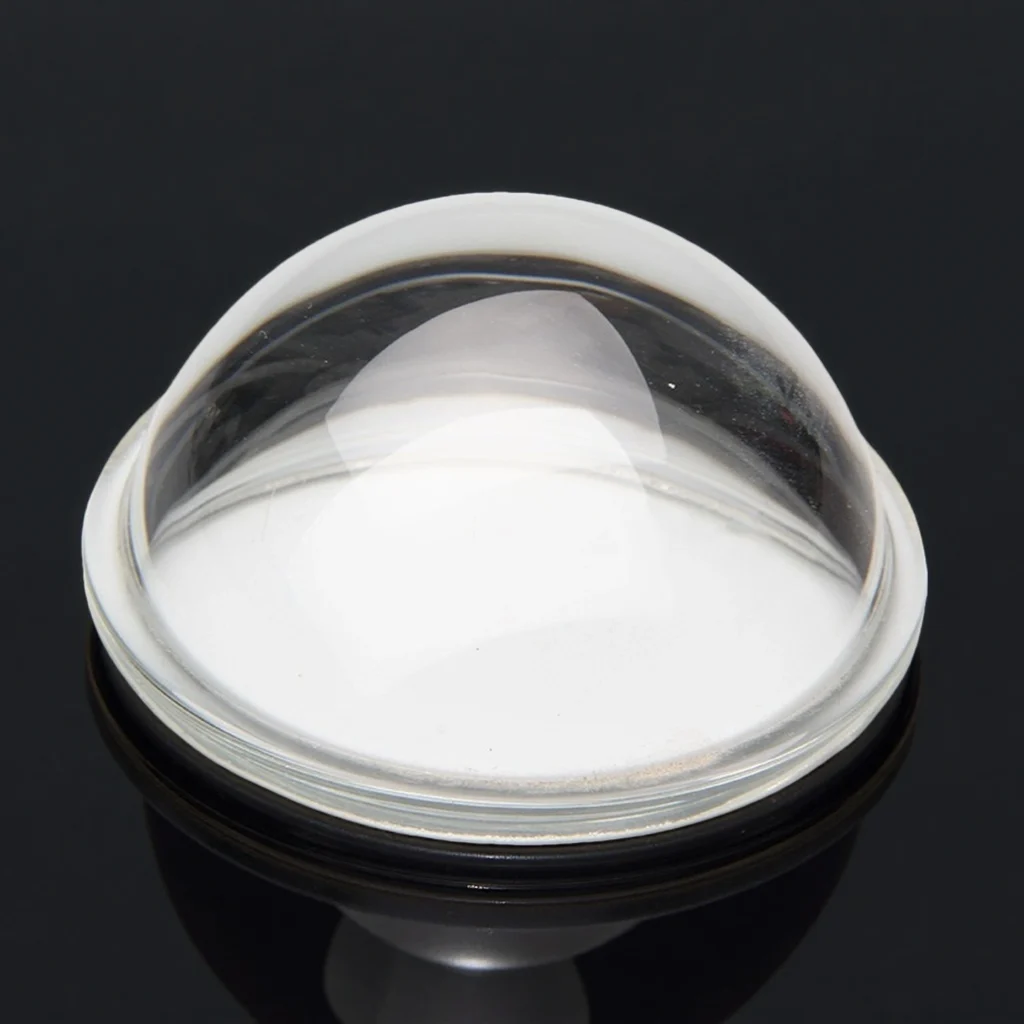
Custom Sapphire Components & Precision Parts
ADCERAX provides sapphire wafers and substrates, optical windows, tubes, rods and thermal-analysis crucibles for optical, semiconductor, vacuum, analytical, high-temperature and precision-equipment applications. Custom sapphire components are also available for application-specific geometries and functional requirements.
Most components use single-crystal Al₂O₃ and are specified by product form, crystal orientation, geometry, functional surfaces and operating conditions. For selected thermal-analysis applications, sapphire crucibles also include a separately defined PC Sapphire / PCA material route.

Product Forms
Wafers • Windows • Tubes • Rods • Crucibles
Material
Single-Crystal Sapphire; PC Sapphire/PCA
Dedicated Product Routes
Choose the Sapphire Product You Need
Start with the product form. Dedicated product pages carry the detailed specification and RFQ logic for established Sapphire product families. If your part does not match one of these forms, use the custom routes below.
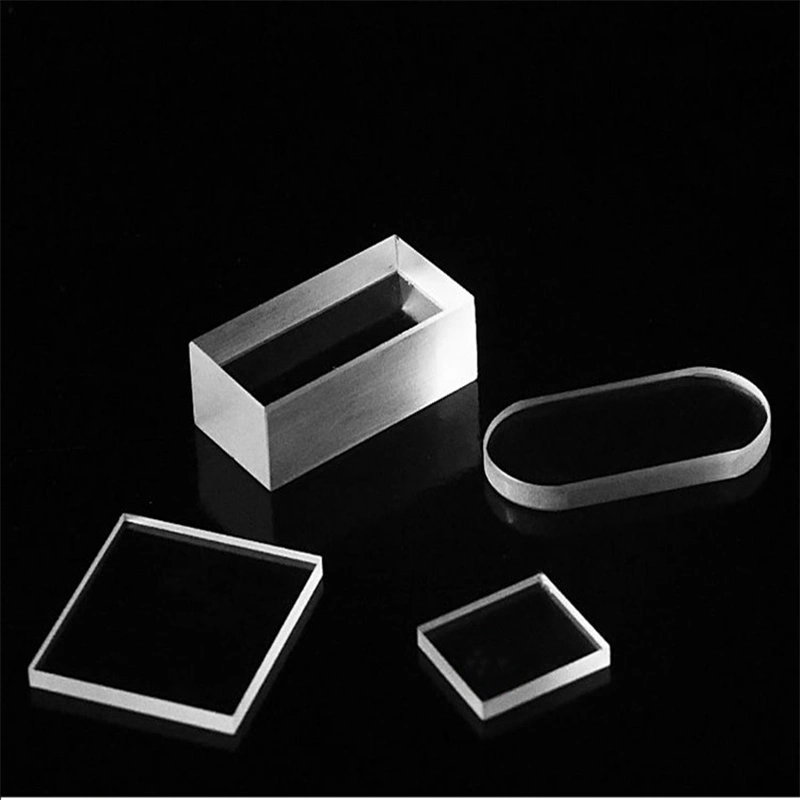
For laser protection, sensors, imaging, vacuum/process observation and harsh-environment optical assemblies.
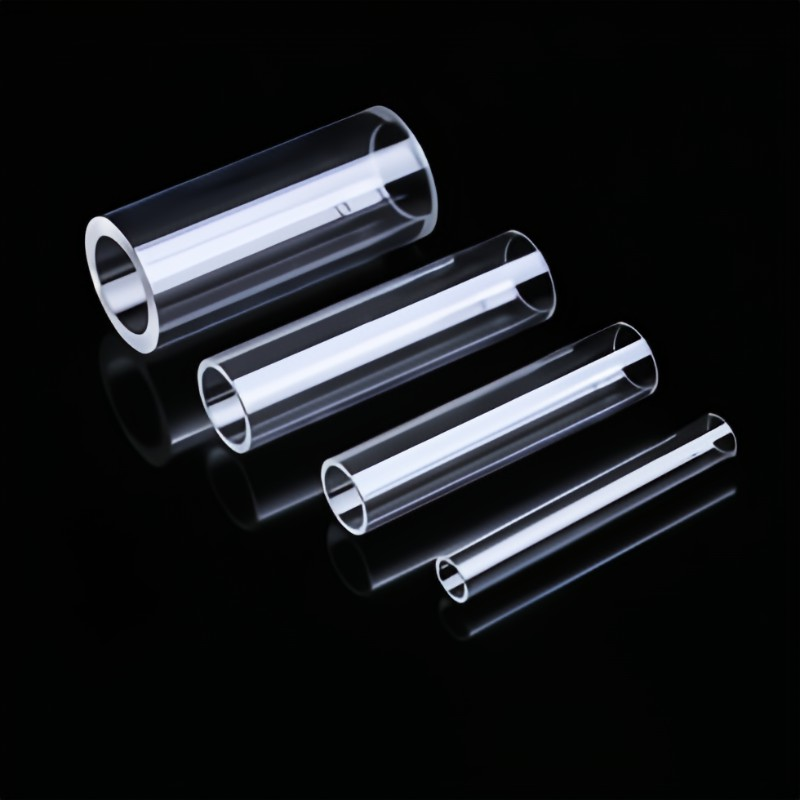
For UV/UVC lamps, plasma/vacuum diagnostics, thermocouple protection, sensor sleeves and high-temperature viewing paths.

Sapphire Rods
Rod blanks, precision-ground, polished and drawing-defined rods for pump plungers, light guides, insulation, wear applications and downstream processing.
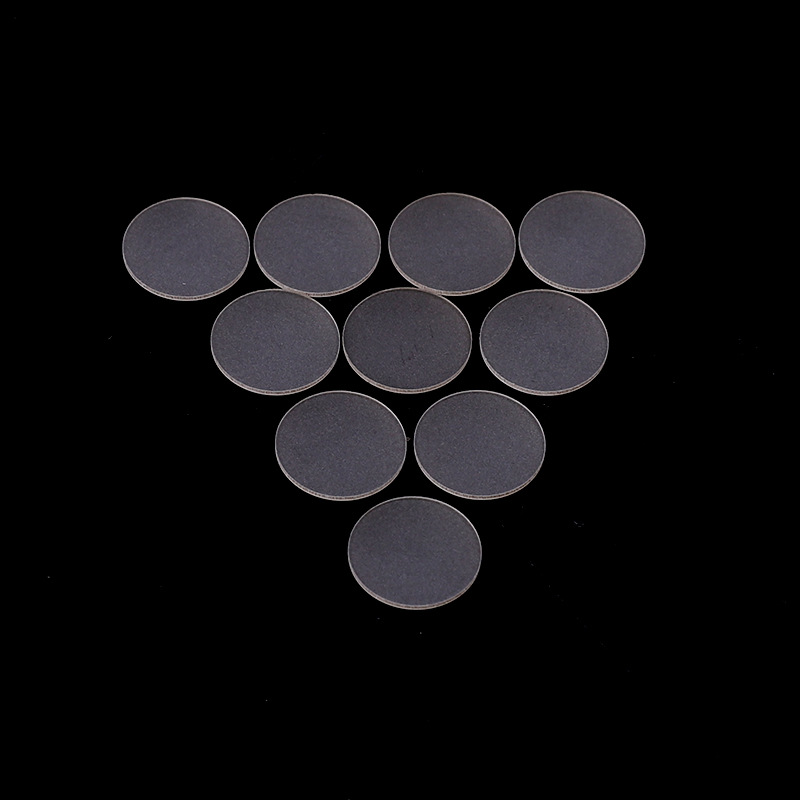
For GaN/AlN epitaxy, LED, SOS/RF, thin-film and research processes where crystal orientation, surface condition and wafer geometry drive the specification.

Sapphire Crucibles
For DSC, TGA, STA and selected LFA/thermophysical-property testing, with single-crystal sapphire and PC Sapphire/PCA treated as separate material routes.

Sapphire Prisms, Light Guides & Optical Shapes
For drawing-defined optical sapphire geometries where crystal orientation, polished faces, optical angles, wavelength and mounting must be reviewed together.
Check first:
Geometry, orientation, polished faces, surface quality, flatness/angle, coating and mounting interface.

Precision & Special-Shaped Sapphire Components
For rings, stepped or multi-feature parts, precision functional components and other application-specific sapphire pieces.
Check first:
Critical dimensions, holes/slots/grooves/steps, functional surfaces, secondary processes, inspection criteria and quantity.
Sapphire Material Properties & Material Routes
Most components use synthetic single-crystal Al₂O₃, with crystal orientation selected by product form and application. Selected thermal-analysis crucibles may also use a separate PC Sapphire / PCA material route.
| Material Information | Value | Material Information | Value |
|---|---|---|---|
| ADCERAX Material Grade | AD-SAP | International Material Name | Single-Crystal Sapphire (α-Al₂O₃) |
| Purity | 99.997 wt% Al₂O₃ | Crystal System | Trigonal; space group R-3c (hexagonal setting) |
| Lattice Parameters | a = 4.758 Å; c = 12.991 Å | Optical Character | Negative uniaxial crystal |
| Growth Methods | Kyropoulos (KY) / Czochralski (CZ) | Dislocation Density | < 1 × 10⁴ cm⁻² |
Physical & Mechanical Properties
Material-selection note: Sapphire combines optical transmission, Mohs 9 hardness, electrical insulation, chemical stability and high-temperature dimensional stability. Because sapphire is anisotropic, crystal orientation, wavelength, polarization and operating temperature should be specified. Values are typical engineering references; final specifications depend on material grade, orientation, test method and component geometry.
| Property | Unit | Typical Value | Condition / Selection Meaning |
|---|---|---|---|
| Density | g/cm³ | 3.97–3.98 | Single-crystal sapphire |
| Mohs Hardness | — | 9 | Scratch-resistance reference |
| Knoop Hardness | HK | 1800 / 2200 | Parallel/perpendicular; 2 kgf reference |
| Tensile Strength | MPa | 400 / 350 | 25°C / 1000°C |
| Flexural Strength (MOR) | MPa | 600 | 25°C; surface- and orientation-dependent |
| Compressive Strength | MPa | 2100 | 25°C |
| Fracture Toughness (KIC) | MPa·m¹ᐟ² | 2.2 | Typical single-crystal value |
| Young’s Modulus | GPa | 350 | 25°C reference |
| Shear Modulus | GPa | 148.1 | 25°C reference |
| Bulk Modulus | GPa | 240 | 25°C reference |
| Poisson’s Ratio | — | 0.29 | 25°C reference |
Custom Engineering
Custom Sapphire Engineering
ADCERAX supports custom sapphire components for application-specific geometries and functional requirements. Product form, orientation, edge design, functional surfaces and inspection are reviewed together.
Starting Form
Form & Orientation
Window/plate blank, tube/sleeve, rod blank, ring, prism/light-guide shape or special-shaped blank; specified orientation where relevant.
Geometry
Features & Interfaces
Round, rectangular or cylindrical profiles, steps, holes, chamfers, slots, grooves and drawing-defined end or edge features.
Surfaces
Precision & Function
Ground, lapped or polished functional surfaces, plus project-specified coating, screen-print or metallized regions where applicable.
Verification
Inspection Planning
Orientation, dimensions, profile, straightness, concentricity, optical surface, angle, feature position or functional geometry as applicable.
-
01Review
Application, part form and project requirements.
-
02Confirm
Material route and crystal orientation.
-
03Define
Critical geometry and functional surfaces.
-
04Integrate
Required coating or secondary process.
-
05Lock
Inspection and acceptance criteria.
-
06Protect
Surface- and edge-sensitive shipment.
Match the Sapphire Product to the Application
Use the operating task to identify the primary Sapphire route, then confirm the product-specific inputs before quotation.

Laser, imaging and sensor protection
Transmit light while protecting lasers, cameras and sensors from abrasion, heat, pressure and chemical exposure.

Vacuum / plasma process observation
Form transparent viewing barriers for monitoring while isolating optics from the chamber environment.

HPLC / analytical pump plungers
Serve as hard, wear-resistant plungers for reciprocating motion and fluid delivery in analytical pumps.

High-temperature optical light guidance
Guide optical signals through high-temperature zones between sensors, light sources and observation points.

DSC / TGA / STA thermal analysis
Contain samples during controlled heating, cooling, heat-flow and mass-change measurements.

Spectroscopy / prisms / optical paths
Redirect, split or guide light through spectroscopy systems and other specialized optical paths.
Sapphire Manufacturing, Engineering & Inspection
ADCERAX supports sapphire components through material-route review, precision machining, grinding, polishing and product-specific inspection. Each control plan is aligned with the product form, functional surfaces and application requirements.
Material & Orientation Control
Single-crystal grade, orientation and product form are reviewed before processing.
Precision Machining & Polishing
Grinding, lapping, polishing and secondary processes are selected to meet functional-surface requirements.
Engineering Support
Geometry, interfaces, coating areas and application conditions are reviewed together.
Repeatable Inspection
Approved drawings, control points and acceptance methods support repeat and second-source projects.
ADCERAX applies product-specific controls to key dimensions, crystal orientation and functional surfaces, ensuring consistent quality across sapphire components.
| Product Type | Typical Control Points |
|---|---|
| Sapphire Wafers / Substrates | Material route, crystal orientation, thickness, TTV, Bow, Warp, surface condition and cleanliness |
| Sapphire Optical Windows | Dimensions, clear aperture, scratch-dig, flatness/wavefront, parallelism/wedge, orientation and coating area |
| Sapphire Tubes / Sleeves | OD, ID, wall thickness, length, straightness, concentricity, end geometry and surface |
| Sapphire Rods | Delivery condition, orientation, OD/length, straightness, roundness, cylindricity/TIR and functional surfaces |
| Sapphire Crucibles | Material route, OD/cavity/height, wall/base, lid/vent, mass or flatness where method-critical, and holder/reference comparison |
| Sapphire Optical Shapes | Geometry, angles, orientation, polished faces, flatness, surface quality and coating |
| Special-Shaped Sapphire Parts | Feature position, datums, holes/slots/grooves/steps, critical mating surfaces and drawing-specific inspection |
FAQ
No. Most industrial sapphire components use synthetic single-crystal Al₂O₃ with crystallographic orientation and birefringence. Transparent alumina is a polycrystalline ceramic route and should not be treated as the same material.
Use wafers/substrates for epitaxy and wafer-format processing, optical windows for flat transmitting or protective optics, tubes for hollow cylindrical paths, rods for solid cylindrical blanks and functional rods, and crucibles for thermal-analysis sample containment. Use the drawing-based optical-shape or special-component route when the part does not fit one of these established families.
No. The Sapphire Crucibles product family includes a single-crystal sapphire route and a separately defined PC Sapphire / PCA route for selected thermal-analysis applications. PC Sapphire / PCA is polycrystalline high-purity alumina and is not single-crystal sapphire.
Start with the product route, application, drawing or dimensions, critical tolerances, material/orientation requirement, surface or functional requirements, quantity and operating environment. Add coating, secondary-process, inspection, packaging or validation requirements where they are part of the design.
ADCERAX can review drawing-defined Sapphire components and reference-part information for manufacturability. Final feasibility and compatibility are confirmed after reviewing the material route, geometry, functional surfaces, tolerances, application conditions and validation method.
Sapphire is often considered when optical transmission, high surface hardness, electrical insulation, chemical stability or high-temperature material stability are required together. The final material choice still depends on the product form, wavelength, load, mounting, environment, process conditions and cost target.
What to Send for a Sapphire Engineering Review
For the fastest first review, choose the product route and send the information you already have. If your project matches a dedicated product family, use that product page for the detailed RFQ.
- Product route and application
- Drawing, specification sheet or reference-part data
- Critical dimensions, tolerances and crystal orientation
- Surface, optical or functional requirements
- Operating environment, quantity and acceptance criteria
Send what you have — even a drawing or a sample is enough to start. Our engineers review material, tolerance and feasibility before quoting.
*Our team will answer your inquiries within 24 hours.
*Your information will be kept strictly confidential.
info@adcerax.com
Tel:+86-0731-84428843
WhatsApp:+86 19311583352
Within 24 hours