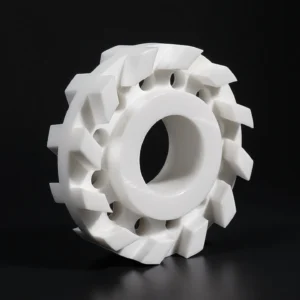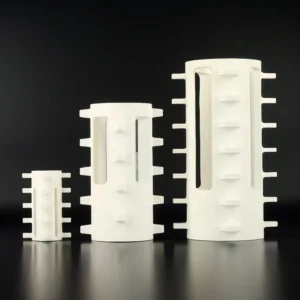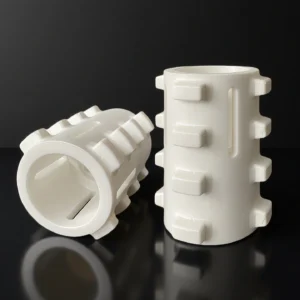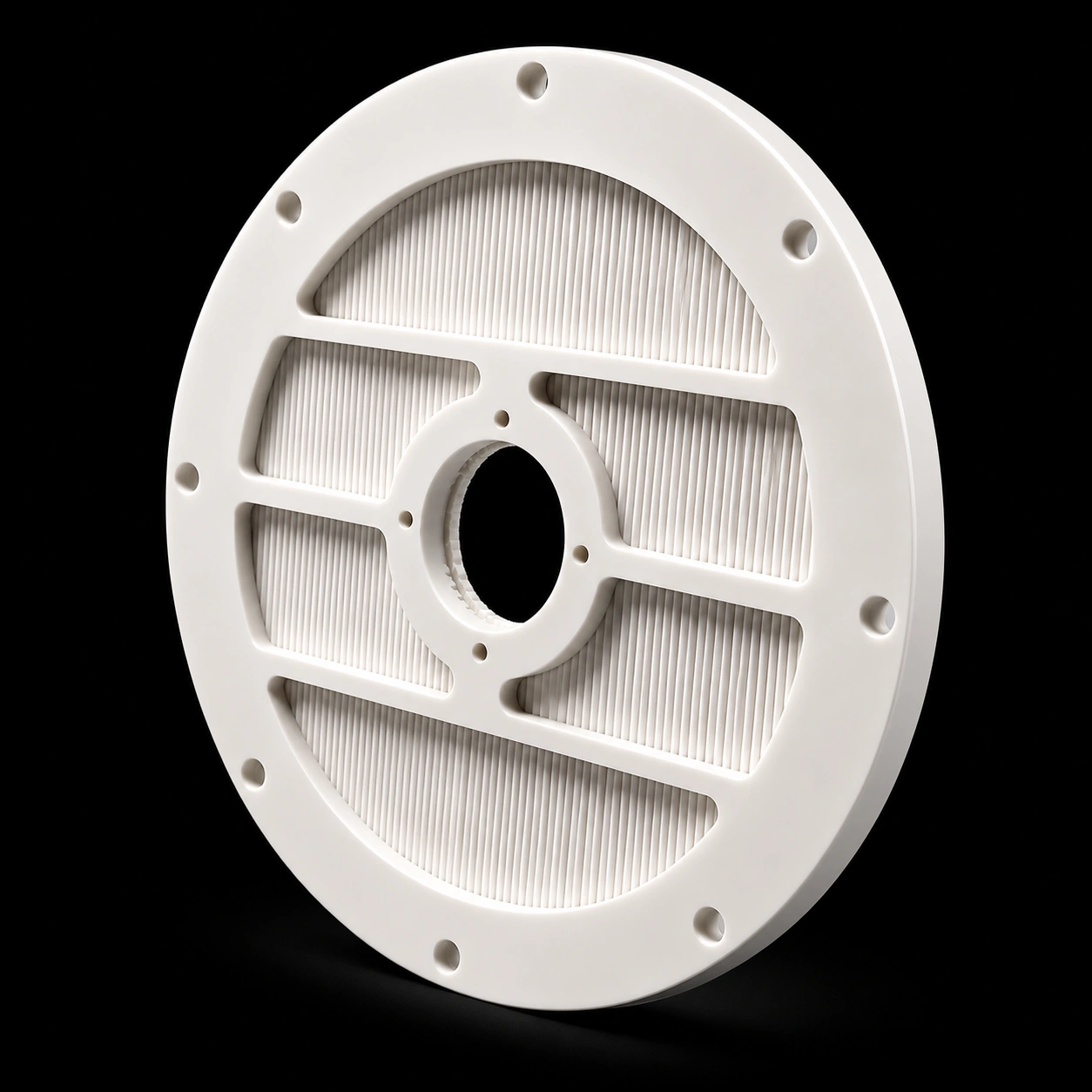
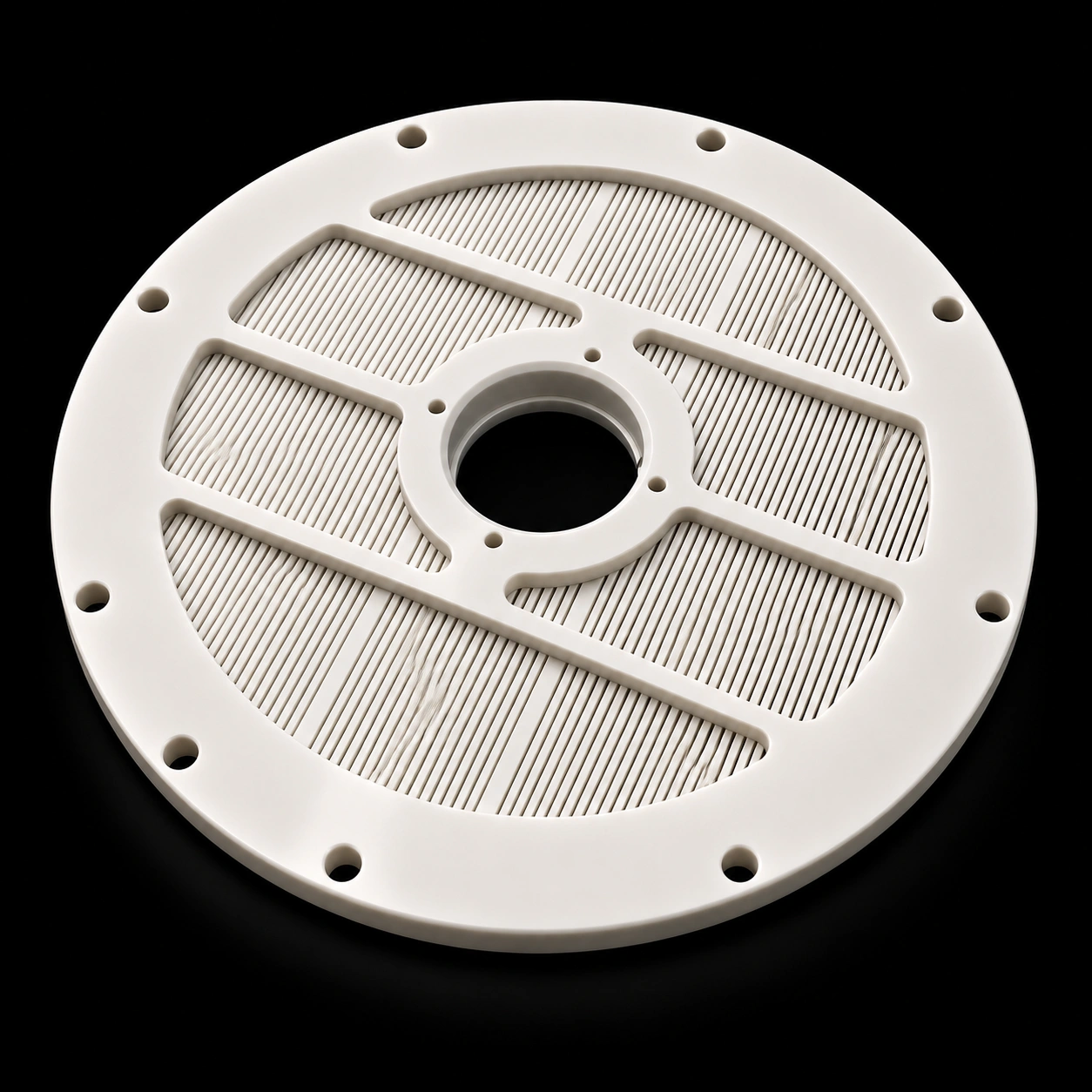
Custom Zirconia Ceramic Separator Screens

Custom zirconia ceramic separator screens are designed to retain grinding media while allowing slurry to pass through the separation zone. Screen opening, geometry, mounting interface, and material are reviewed according to your drawing, bead size, and actual milling conditions.

Product Type Custom / Made to Drawing
Material  Zirconia Ceramic
Screen Opening  Defined according to the smallest bead size in service and process requirements
Custom Dimensions  OD, center bore, thickness, mounting holes, and screen geometry
Application  Wet bead, sand, and basket mill separator systems
Engineering RFQ Review
Small-Batch Custom Support
Factory-Direct Manufacturing
Drawing & Process Review

What Is a Zirconia Ceramic Separator Screen?

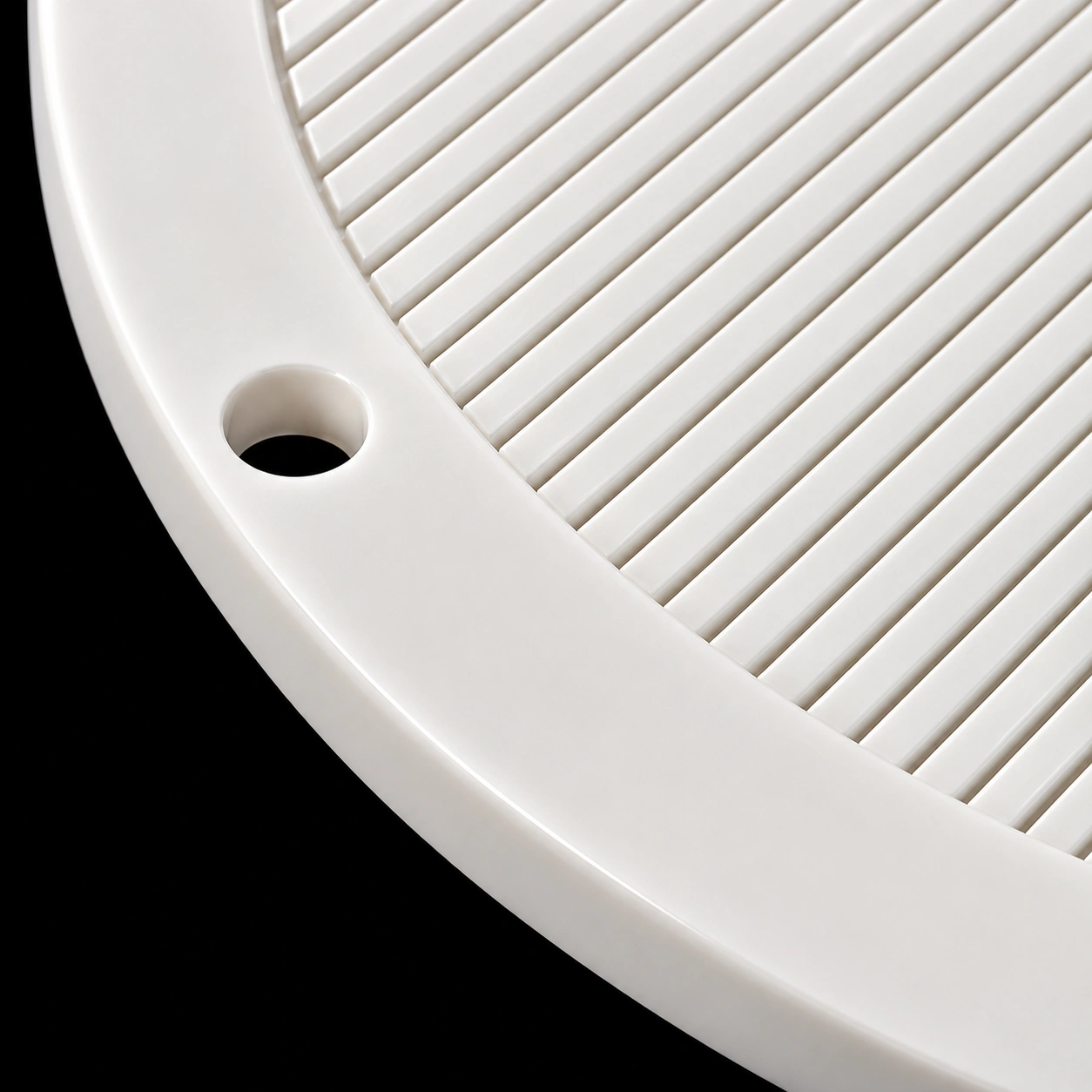
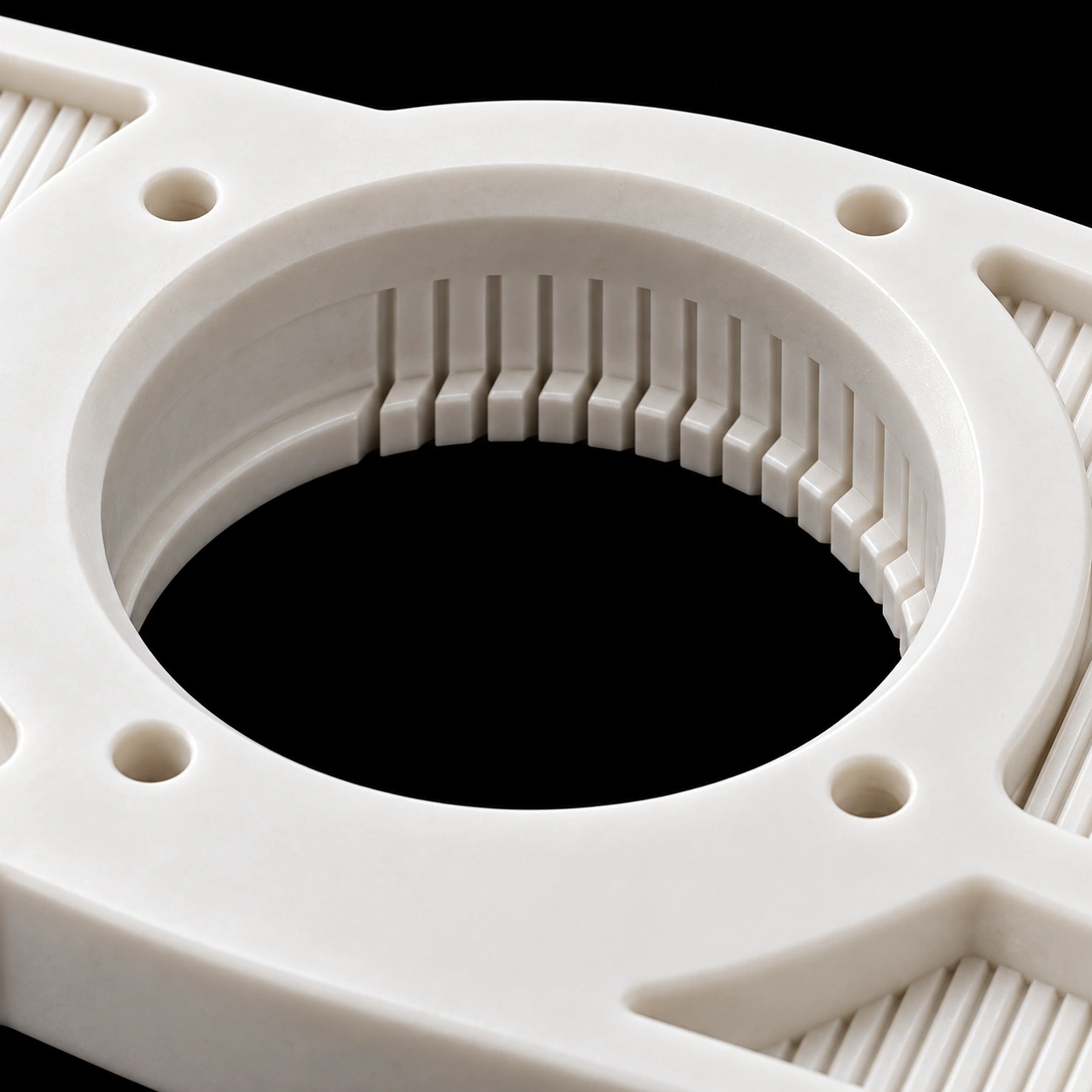
A zirconia ceramic separator screen is a slotted ceramic component used in screen-equipped wet bead, sand or basket mills. Its job is to retain the grinding media while allowing the processed slurry to pass through the separation area.

Bead Size and Zirconia Ceramic Separator Screen Opening References

Published OEM ranges can help frame a preliminary review, but they do not represent ADCERAX manufacturing limits or confirm compatibility with a specific mill configuration.

OEM / Configuration Published Bead Reference Published Screen Opening Review Note
VMA TML Standard From 0.5 mm Not published Keep this configuration separate from TML-NANO when reviewing screen requirements.
VMA TML-NANO From 0.2 mm Not published Nano configurations require their own screen and system review.
WAB DYNO-MILL UBM 0.2–2.5 mm Not published The separation rotor and screen operate as a system; this should not be treated as a flat-screen compatibility statement.

NIEMANN KREIS Basket-Mill Reference

Published Bead Size Published Maximum Screen Opening
0.4–0.7 mm 0.2 mm
0.7–1.2 mm 0.3 mm
1.2–1.7 mm 0.4 mm
1.7–2.4 mm 0.6 mm

Note: These values belong to the named OEM configurations. They are not universal ratios, ADCERAX slot tolerances, or confirmation that one separator screen can cover the full range.

Zirconia Material Selection and System Considerations

The zirconia grade should be selected according to the actual milling conditions rather than by appearance or material name alone.

Selection Factor Why It Matters
Zirconia Grade & Stabilizer Determines the balance of hardness, toughness, wear resistance, and service life.
Slurry Chemistry Helps confirm chemical compatibility with the process media.
Grinding Bead Size Affects wear, impact load, and the required separator opening.
Operating Temperature Influences material stability and long-term performance.
Cleaning Conditions Ensures the ceramic is suitable for repeated chemical or thermal cleaning.
Contamination Requirement Zirconia can reduce metal contact from the separator and is suitable for processes sensitive to metallic wear.

A correctly selected zirconia material can improve wear resistance, extend separator service life, and reduce metallic contamination from the separator component.

Zirconia Ceramic Separator Screen Packaging

Each zirconia ceramic separator screen is individually protected with cushioning material and secured in foam to prevent movement and edge damage during transportation. The slotted area is kept free from direct compression. Reinforced cartons or wooden cases can be used for large or heavy components.
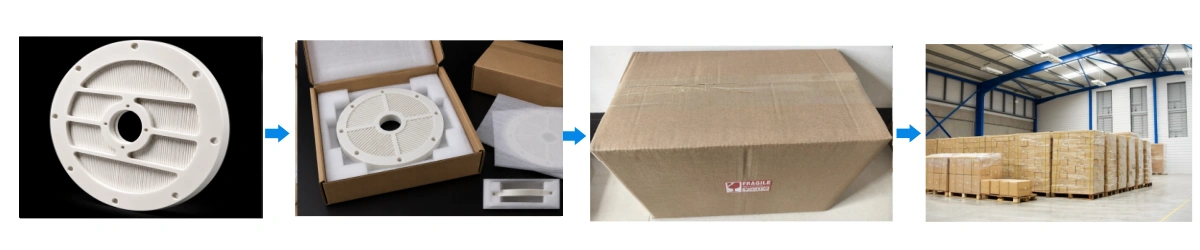

Zirconia ceramic separator screen protected with foam packaging for shipment

Applications of Zirconia Ceramic Separator Screens

Zirconia ceramic separator screens are used in wet milling systems where grinding media must be retained while the processed slurry passes through the separation zone. The separator geometry, opening size, mounting structure, and material should be reviewed for each mill configuration.

  • Bead Mills

    Used in screen-equipped bead mills to retain grinding beads within the grinding chamber while allowing the slurry to pass through the separator area.
    The screen opening should be reviewed together with the smallest bead size in service, slurry conditions, and the actual separator structure.

  • Basket Mills

    Used in basket-mill separation assemblies where the screen or slotted ceramic component forms part of the media-retention system.
    The screen design should match the basket structure, mounting interface, support condition, and required bead-retention opening.

  • Sand Mills

    Used in wet sand-milling systems that rely on a screen, slotted plate, or similar separation component to separate the grinding media from the processed slurry.
    For custom parts, the existing separator drawing or current-part dimensions should be reviewed before confirming the replacement geometry.

  • Custom Replacement Separator Components

    Zirconia ceramic separator screens can also be produced for existing wet-mill assemblies when a customer needs a replacement part based on a drawing, existing component, or equipment interface.
    Critical details include the outer diameter, center bore, screen opening, mounting-hole layout, support structure, sealing condition, and smallest bead size in service.

Zirconia Ceramic Separator Screen Usage Instructions

  • Confirm the Separator Configuration

    Before installation, confirm that the zirconia ceramic separator screen matches the actual wet-mill separation structure, including the outer dimensions, center bore, mounting-hole pattern, support surfaces, and sealing interface.
    Do not determine compatibility from the mill brand or outer diameter alone.

  • Check Bead Size and Screen Opening

    Verify the smallest grinding-bead size still in service and compare it with the required screen opening.
    Worn or broken grinding media should also be considered when defining the maximum allowable opening. Published OEM bead-size references should only be used as configuration-specific guidance, not as universal compatibility limits.

  • Inspect Before Installation

    Check the ceramic screen for visible cracks, chips, damaged slots, blocked openings, or damaged mounting areas before use.
    Confirm that the drawing revision and critical dimensions match the approved part requirements.

  • Install with Even Support

    Position the screen on the intended support surfaces and apply uniform clamping.
    Avoid point loading, forced alignment, excessive tightening, or unsupported installation. Sealing and bypass-clearance requirements should follow the approved equipment interface.

  • Confirm Operating Conditions

    Use the separator within the reviewed process conditions, including slurry characteristics, flow, pressure differential, temperature, and cleaning conditions.
    Changes in grinding media, slurry viscosity, solids content, or operating conditions may require further review.

  • Monitor Initial Operation

    After installation, check the assembly for correct fit, sealing, slurry passage, pressure behavior, and grinding-media retention.
    Investigate any unusual bead leakage, flow restriction, vibration, or abnormal pressure before extended operation.

  • Inspect Regularly for Wear

    Periodically check the screen opening, slot edges, mounting areas, and ceramic surface.
    Review or replace the component if wear, cracks, chips, enlarged openings, or mounting damage may affect retention or fit.

  • Clean Carefully

    Use cleaning methods compatible with the selected zirconia material and process conditions.
    Avoid mechanical impact or aggressive handling during removal and cleaning, and inspect the screen before reinstallation.

Zirconia Ceramic Separator Screen FAQ

  1. Q: What is a zirconia ceramic separator screen used for?
    A: A zirconia ceramic separator screen is used in screen-equipped wet bead, sand or basket mills to retain grinding media while the processed slurry passes through the separation area. It is not a final particle-size classifier or a membrane filter.
  2. Q: Which mills can be considered for a custom separator screen?
    A: A custom review can be considered for wet milling systems that use a fixed screen, slotted plate, ring screen, slotted tube or a screen-assisted separation assembly. A mill brand or model name alone does not confirm fit; the separator architecture, drawing, mounting, support and sealing details must be reviewed.
  3. Q: Which grinding bead sizes are relevant to the review?
    A: Provide the smallest bead size that can remain in service, not only the nominal or average bead size. Wear, broken media and the actual bead-size distribution can change the retention requirement. Published OEM ranges are references for the named systems, not a universal ADCERAX compatibility range.
  4. Q: How should the screen slot width be selected?
    A: Review the smallest in-service bead together with the maximum allowable opening, opening tolerance, wear allowance, open area, mounting bypass risk, slurry viscosity, flow and pressure conditions. There is no universal bead-to-slot ratio that guarantees retention and flow for every mill.
  5. Q: Does a zirconia screen eliminate contamination?
    A: No. Replacing one metal screen with a ceramic component may reduce that screen’s contribution to metallic wear, but zirconia can also wear and other grinding media, rotors, chamber parts, seals and process conditions still affect the system. Any contamination limit must be defined and verified for the project.
  6. Q: What is needed for a custom separator-screen review?
    A: Start with a drawing or current-part photo, the separator architecture and the smallest bead size in service. Helpful follow-up details include overall geometry, slot dimensions and tolerance, mounting and sealing, slurry conditions, flow or pressure information, material and document requirements, inspection criteria, quantity and the required delivery location.

Plan Fit and Acceptance Before Production

1. DRAWING AND DUTY REVIEW Confirm the separator architecture, drawing revision, mounting interfaces, smallest bead in service, slurry conditions and target opening requirement.

2. SAMPLE AND INSPECTION PLAN Define which dimensions and slot locations will be measured, how the maximum opening is judged, which visual defects are unacceptable, and what documents are required.

3. INSTALLATION AND PROCESS VALIDATION Agree who will verify fit, support, sealing, slurry passage, pressure behavior and bead retention before the part is released for repeat purchasing.

customize size

Custom Screen Engineering & Drawing Requirements

For custom separator screens, provide the critical dimensions, slot geometry, mounting details, operating conditions, and acceptance requirements needed for engineering review and quotation.

1. Overall Geometry

a. Provide the outer diameter, center bore, overall thickness, and active screen-zone thickness.
b. These dimensions define the installation envelope and the effective screening area.

2. Slot Geometry

a. Provide the nominal and maximum slot width, tolerance, slot length, quantity, pitch, ligament width, rib layout, and flow direction.
b. These parameters affect bead retention, open area, structural strength, and inspection requirements.

3. Mounting Interface

a. Provide the mounting-hole quantity and diameter, PCD, countersinks, datum faces, support conditions, clamping method, sealing details, and bypass clearance.
b. These details help ensure that the separator fits the actual equipment and mounting structure.

4. Drawing and Tolerance Controls

a. Define the drawing revision, datums, flatness, parallelism, positional tolerances, surface requirements, edge treatment, and allowable crack or chip criteria.
b. These controls make the finished part measurable and repeatable during production and inspection.

5. Process Conditions

a. Provide the smallest bead size in service, slurry viscosity, solids content, flow rate, pressure differential, operating temperature, and cleaning conditions.
b. These conditions help determine whether the screen geometry and ceramic material are suitable for the actual milling process.

6. Inspection and Acceptance Requirements

Define the measurement locations, maximum-opening requirement, sampling method, material documentation, visual inspection criteria, and any sample approval requirements.

Related Products

ADCERAX - Your Trusted Advanced Ceramics Manufacturing Partner

Direct factory manufacturing with comprehensive ceramic materials expertise and global supply capabilities

China-Based Manufacturer

ADCERAX supplies ceramic components for overseas OEMs, equipment builders, and labs.

Custom Drawing Support

We review drawings, dimensions, materials, and application conditions before quotation.

Ceramic Process Control

Forming, sintering, machining, grinding, and finishing are arranged by part requirements.

Pre-Shipment Inspection

Dimensional checks, visual inspection, and packaging review help reduce procurement risk.

Get in Touch with Us

Our team will be happy to respond to you in less than 24 hours.

Pingxiang Factory — Silicon carbide, silicon nitride, high-temperature ceramics

Quick Quotation

*Our team will answer your inquiries within 24 hours.

*Your information will be kept strictly confidential.

Ready to Solve Your Engineering Challenge?

Partner with ADCERAX for reliable, high-performance advanced ceramic solutions. Our engineers are ready to discuss your project.

E-mail

info@adcerax.com

Phone

Tel: +86-0731-84428843 WhatsApp: +86 19311583352

Response Time

Within 24 hours

What Is a Zirconia Ceramic Separator Screen?

A zirconia ceramic separator screen is a slotted ceramic component used in screen-equipped wet bead, sand or basket mills. Its job is to retain the grinding media while allowing the processed slurry to pass through the separation area.

Bead Size and Zirconia Ceramic Separator Screen Opening References

Published OEM ranges can help frame a preliminary review, but they do not represent ADCERAX manufacturing limits or confirm compatibility with a specific mill configuration.

OEM / Configuration Published Bead Reference Published Screen Opening Review Note
VMA TML Standard From 0.5 mm Not published Keep this configuration separate from TML-NANO when reviewing screen requirements.
VMA TML-NANO From 0.2 mm Not published Nano configurations require their own screen and system review.
WAB DYNO-MILL UBM 0.2–2.5 mm Not published The separation rotor and screen operate as a system; this should not be treated as a flat-screen compatibility statement.

NIEMANN KREIS Basket-Mill Reference

Published Bead Size Published Maximum Screen Opening
0.4–0.7 mm 0.2 mm
0.7–1.2 mm 0.3 mm
1.2–1.7 mm 0.4 mm
1.7–2.4 mm 0.6 mm

Note: These values belong to the named OEM configurations. They are not universal ratios, ADCERAX slot tolerances, or confirmation that one separator screen can cover the full range.

Zirconia Material Selection and System Considerations

The zirconia grade should be selected according to the actual milling conditions rather than by appearance or material name alone.

Selection Factor Why It Matters
Zirconia Grade & Stabilizer Determines the balance of hardness, toughness, wear resistance, and service life.
Slurry Chemistry Helps confirm chemical compatibility with the process media.
Grinding Bead Size Affects wear, impact load, and the required separator opening.
Operating Temperature Influences material stability and long-term performance.
Cleaning Conditions Ensures the ceramic is suitable for repeated chemical or thermal cleaning.
Contamination Requirement Zirconia can reduce metal contact from the separator and is suitable for processes sensitive to metallic wear.

A correctly selected zirconia material can improve wear resistance, extend separator service life, and reduce metallic contamination from the separator component.

Zirconia Ceramic Separator Screen Packaging

Each zirconia ceramic separator screen is individually protected with cushioning material and secured in foam to prevent movement and edge damage during transportation. The slotted area is kept free from direct compression. Reinforced cartons or wooden cases can be used for large or heavy components.
Zirconia ceramic separator screen protected with foam packaging for shipment

Quick Quote

The more details you provide, the faster we can quote.

*All inquiries are confidential.

Get Your Custom Solution

The more details you provide, the faster we can respond.

customize size

*We respond within 24 hours. All inquiries are confidential.

Download Catalog