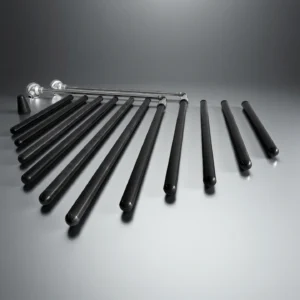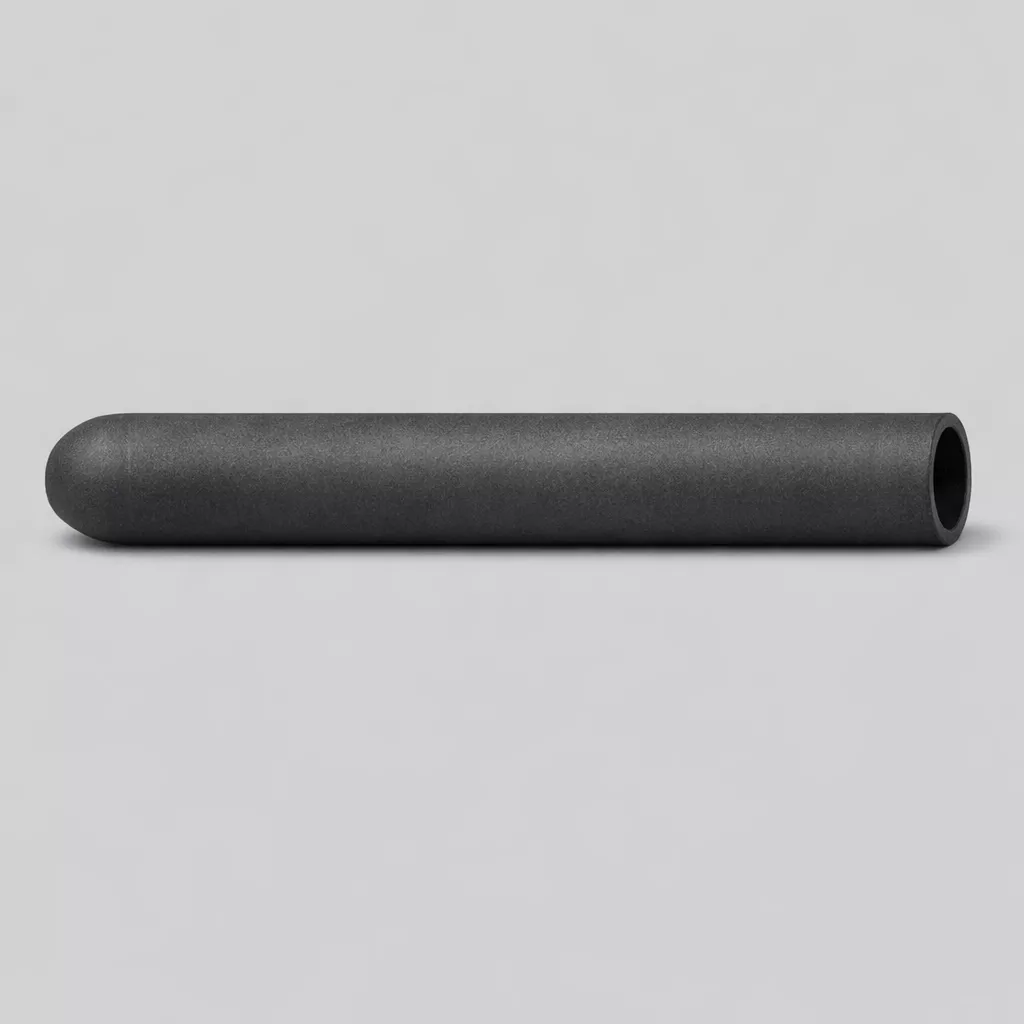
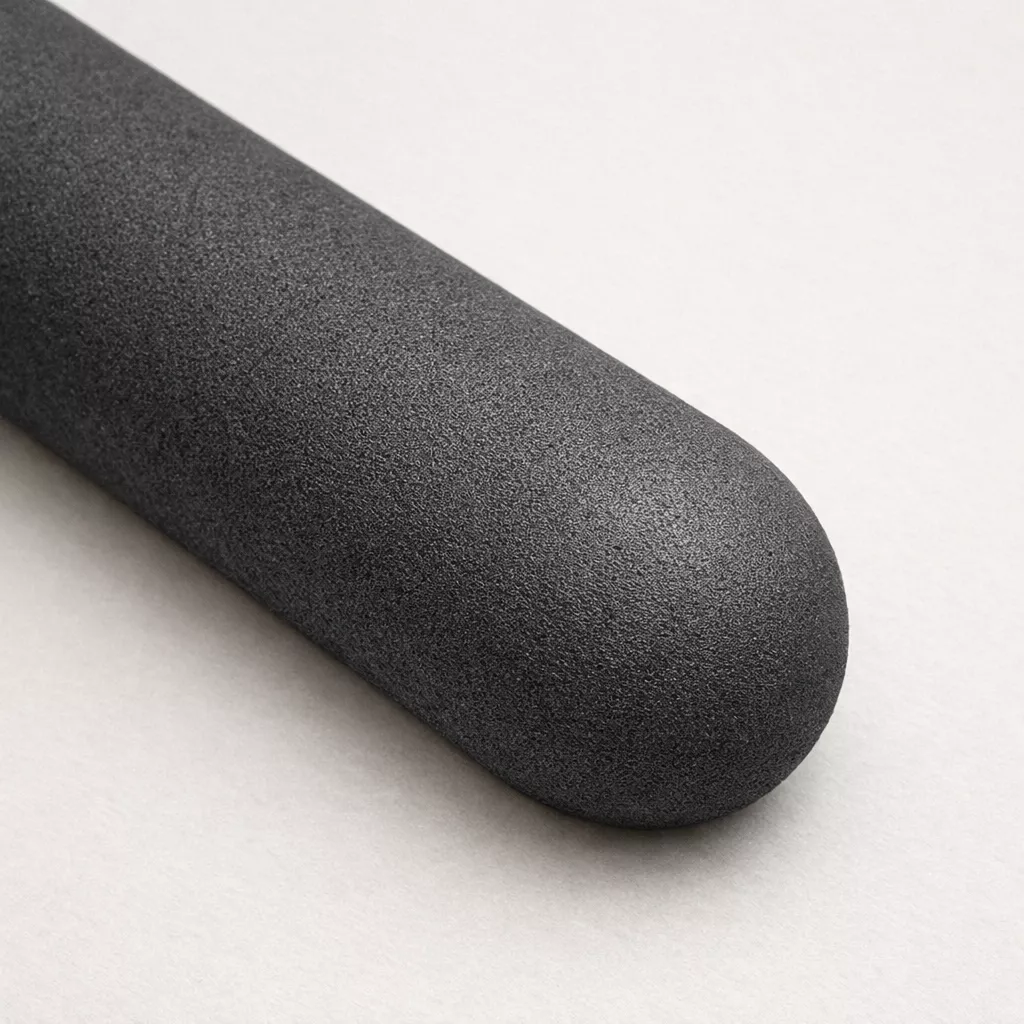
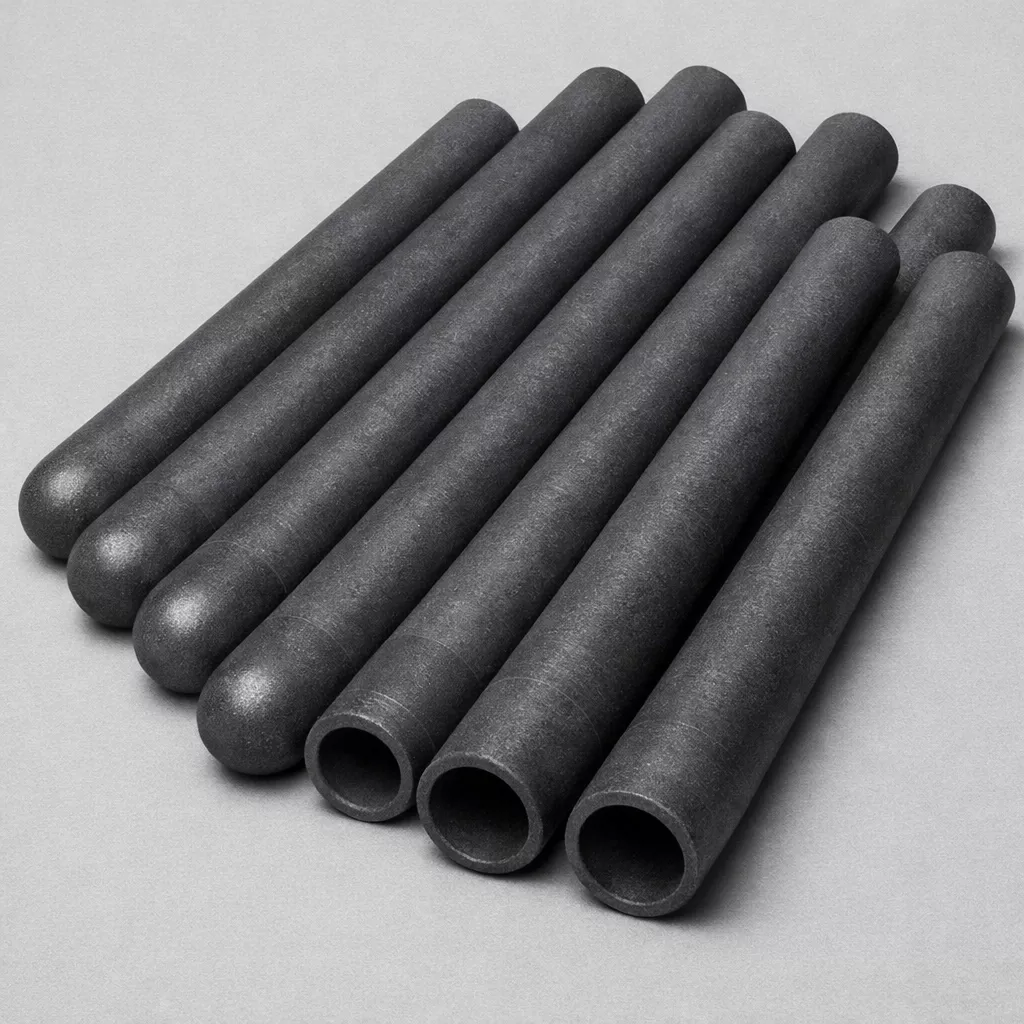
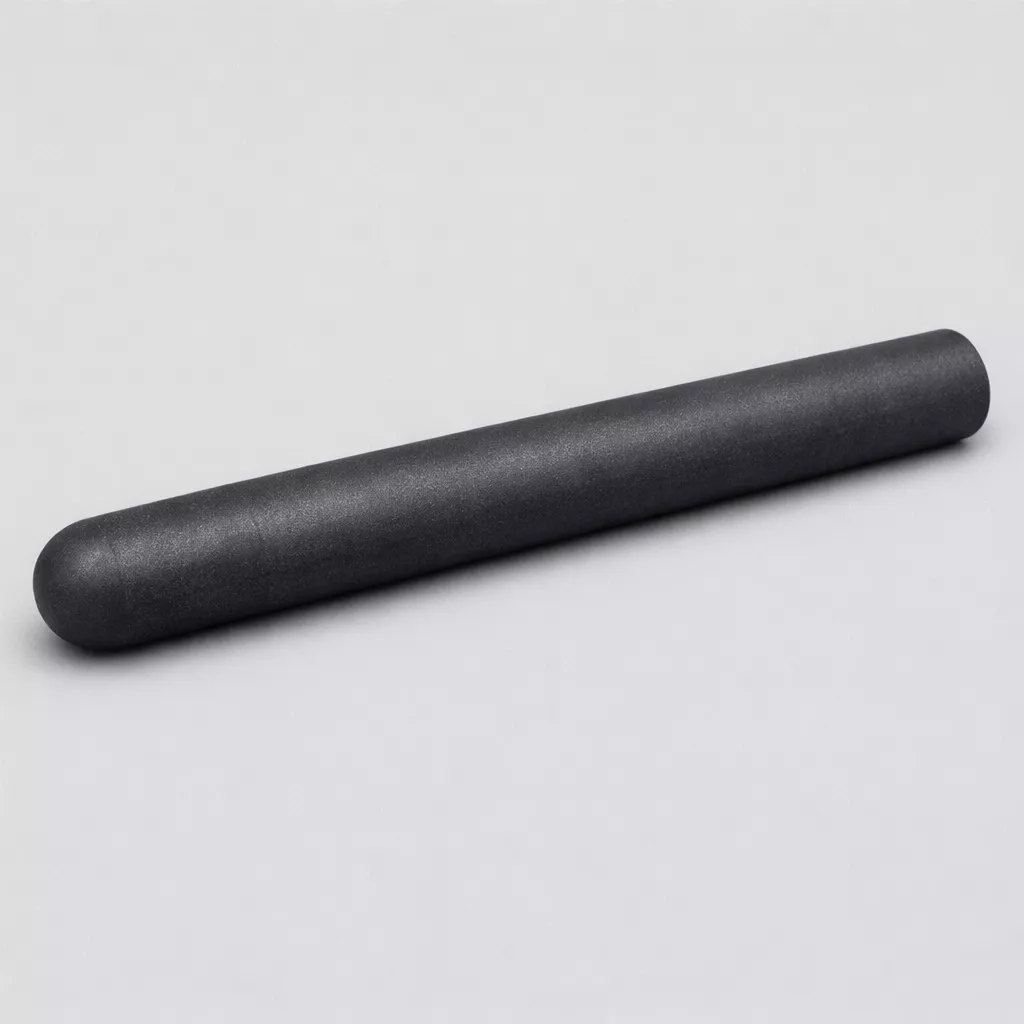
Silicon Carbide Protection Tube for Thermocouple and Furnace Measurement

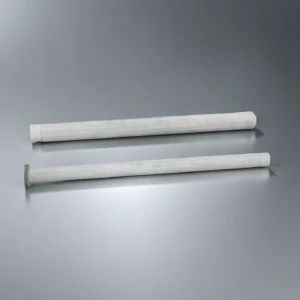
The Silicon Carbide Protection Tube is designed to protect thermocouples, temperature sensors and measurement assemblies in high-temperature furnace, molten metal and corrosive gas environments. Its dense SiC structure helps reduce sensor exposure to thermal shock, oxidation, gas attack and mechanical wear, making it suitable for demanding industrial temperature-control systems.

ADCERAX supports SSiC and RBSiC protection tube options with custom OD, ID, wall thickness, length and closed-end structures. Each tube can be reviewed according to the required furnace atmosphere, immersion depth, sensor type, mounting method and drawing specifications.

Catalogue No. AT-THG-G1001
Material SSiC (Sintered Silicon Carbide) / RBSiC (Reaction-Bonded Silicon Carbide)
Thermal Conductivity 90–120 W/m·K for stable heat transfer
Maximum Service Temperature 1,600–1,650 °C in air; up to 1,900 °C in controlled atmosphere
Download PDF
Engineering RFQ Review
Small-Batch Custom Support
Factory-Direct Manufacturing
Drawing & Process Review

What Is a Silicon Carbide Protection Tube?

A silicon carbide protection tube is a ceramic sleeve used to protect thermocouples or temperature sensors from direct exposure to molten metal, corrosive gas, flame impact and rapid thermal cycling. In industrial furnaces and process heating systems, the tube acts as a stable barrier between the sensor and the working environment, helping maintain measurement accuracy and reduce premature sensor damage.

Compared with many oxide ceramic or metallic protection tubes, SiC protection tubes provide higher thermal conductivity, stronger wear resistance and improved stability in harsh thermal atmospheres. They are commonly selected for aluminum processing, heat-treatment furnaces, chemical process lines, burner ports and other high-temperature measurement positions.

Key Performance Features of Silicon Carbide Protection Tube

  • Dense Microstructure Stability
    The SSiC matrix maintains structural density above 3.10–3.15 g/cm³, enabling resistance to gas penetration during long production cycles.
    This high density supports measurement systems that require stable barrier protection in molten metal environments.

  • Thermal Conductivity Efficiency
    Heat transfer is supported by conductivity values of 90–120 W/m·K, reducing thermal lag for temperature sensors.
    This helps maintain accurate readings under variable furnace heating conditions.

  • Thermal Expansion Control
    The material’s coefficient of 3.6–4.1 × 10⁻⁶/K minimizes dimensional change under rapid heating.
    This reduces shock-related failure during high-frequency thermal cycling.

  • Extended Temperature Endurance
    The tube operates at 1,600–1,650 °C in air, supporting measurement applications inside continuous casting lines.
    In controlled gas atmospheres, stability extends up to 1,900 °C, allowing protection in advanced furnace systems.

  • Corrosion Resistance to Industrial Gases
    The covalent Si–C structure resists SO₂, H₂S, and nitride-forming gases common in chemical plants.
    This reduces sensor degradation when exposed to fluorides, alkalis, or combustion by-products.

  • Molten Metal Compatibility
    The surface remains unwetted by molten aluminum, copper, and zinc, preventing chemical erosion during immersion.
    Lifetimes in these environments often reach 5–10× that of oxide ceramics.

  • Flexural Strength Reinforcement
    Strength values above 350 MPa allow stable operation when inserted into high-velocity gas streams or mechanical guide ports.
    This prevents breakage when the tube is used in long-span or unsupported configurations.

  • Compressive Load Resistance
    The material withstands compressive forces greater than 2,200 MPa, supporting weight-bearing furnace designs.
    This ensures integrity when the tube functions as a support or protection barrier in heated zones.

  • Thermal Cycling Stability
    The microstructure tolerates gradients exceeding 600 °C/min without cracking.
    This performance reduces replacement frequency in rapid-heating furnaces and high-throughput casting systems.

Technical Specifications of Silicon Carbide Protection Tube

ADCERAX® Silicon Carbide Protection Tube is engineered for use in high-temperature, corrosive, and mechanically demanding industrial systems, where stable thermal behavior, predictable structural strength, and long-term chemical resistance are essential for reliable operation.

Property Specification What It Means for Application
Material Type SSiC / RBSiC Allows selection according to thermal shock, corrosion exposure and mechanical loading requirements.
Density 3.10–3.15 g/cm³ Higher density helps limit gas penetration and improves barrier stability in harsh atmospheres.
Apparent Porosity <0.1% Low porosity supports corrosion resistance and reduces infiltration from gas or molten media.
Hardness HV > 2200 Helps resist abrasion from particles, scale and high-velocity furnace flow.
Flexural Strength >350 MPa Supports stable operation in long or partially unsupported tube configurations.
Compressive Strength >2200 MPa Helps the tube resist mechanical loading during installation and high-temperature service.
Thermal Conductivity 90–120 W/m·K Supports faster heat transfer and more responsive thermocouple measurement.
Thermal Expansion Coefficient 3.6–4.1 × 10⁻⁶/K Reduces dimensional change during heating and cooling cycles.
Maximum Service Temperature in Air 1600–1650 °C Suitable for many high-temperature furnace and burner-zone measurement positions.
Maximum Service Temperature in Controlled Atmosphere Up to 1900 °C May support selected high-temperature systems when atmosphere and loading are properly reviewed.
Thermal Shock Resistance Stable under rapid thermal gradients Helps reduce cracking risk during repeated insertion, heating and cooling cycles.
Corrosion Resistance SO₂, H₂S, alkali vapor, molten Al/Cu/Zn Supports thermocouple protection in corrosive gas and non-ferrous metal environments.
Oxidation Resistance High stability at elevated temperatures Helps reduce surface degradation during long furnace campaigns.
Electrical Resistivity High, non-conductive ceramic Supports sensor isolation in many industrial measurement systems.
Microstructure Fine-grain, high-density SiC matrix Improves long-term barrier behavior and surface stability.

Dimensions of Silicon Carbide Protection Tube

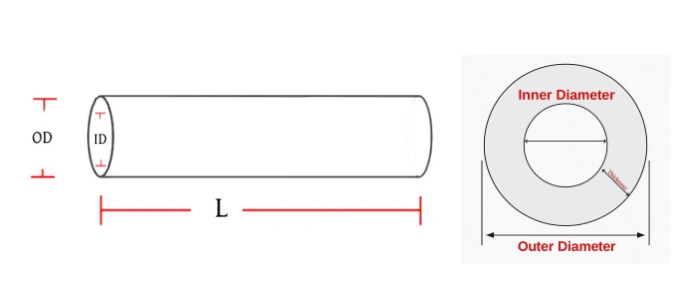
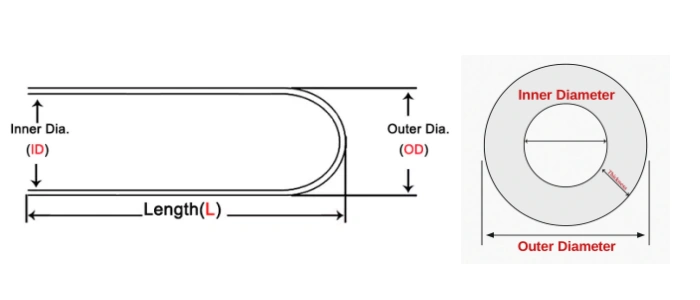
The following silicon carbide protection tube sizes are reference options for preliminary selection. Final availability should be confirmed according to OD, ID, wall thickness, length, closed-end structure, mounting interface, sensor type and operating environment. Custom sizes can be reviewed from drawings, samples or application requirements.

Type 1-SIC Protection Tube One End Closed
size2

Item Outer Diameter (mm) Inner Diameter (mm) Length (mm) SiC Content
AT-THG-G1001 20 10 500 92%
AT-THG-G1002 25 15 500 92%
AT-THG-G1003 30 20 500 92%
AT-THG-G1004 35 25 500 92%
AT-THG-G1005 40 30 500 92%
AT-THG-G1006 45 35 500 92%
AT-THG-G1007 50 40 500 92%
AT-THG-G1008 55 45 500 92%
AT-THG-G1009 60 50 500 92%
AT-THG-G1010 70 25 850 99%
AT-THG-G1011 70 30 850 99%
AT-THG-G1012 90 63 1000 99%
AT-THG-G1013 100 73 1250 99%
AT-THG-G1014 110 80 1200 99%
AT-THG-G1015 119 99 1050 99%
AT-THG-G1016 120 95 1200 99%
AT-THG-G1017 133 105 430 99%
AT-THG-G1018 155 130 1040 99%
AT-THG-G1019 168 140 430 99%
AT-THG-G1020 273 243 700 99%
AT-THG-G1021 280 230 1500 99%
AT-THG-G1022 20 8 1000 99%
AT-THG-G1023 25 13 1500 99%
AT-THG-G1024 30 18 1500 99%
AT-THG-G1025 35 23 1500 99%
AT-THG-G1026 40 26 1600 99%
AT-THG-G1027 50 35 1600 99%
AT-THG-G1028 60 40 1600 99%
AT-THG-G1029 20 10 500 99%
AT-THG-G1030 25 15 500 99%
AT-THG-G1031 30 20 500 99%
AT-THG-G1032 35 25 500 99%
AT-THG-G1033 40 30 500 99%
AT-THG-G1034 45 35 500 99%
AT-THG-G1035 50 40 500 99%
AT-THG-G1036 55 45 500 99%
AT-THG-G1037 60 50 500 99%

Size1

Item Outer Diameter (mm) Inner Diameter (mm) Length (mm) SiC Content
AT-THG-G2001 22 12 1000 99%
AT-THG-G2002 28 18 1000 99%
AT-THG-G2003 32 10 1000 99%
AT-THG-G2004 38 28 1000 99%
AT-THG-G2005 42 32 1000 99%
AT-THG-G2006 47 37 1000 99%
AT-THG-G2007 56 46 1000 99%
AT-THG-G2008 55 45 1000 99%
AT-THG-G2009 68 56 1000 99%
AT-THG-G2010 40 20 500 99%
AT-THG-G2011 30 18 500 99%
AT-THG-G2012 40 25 500 99%
AT-THG-G2013 30 18 400 99%
AT-THG-G2014 40 40 400 99%
AT-THG-G2015 70 25 850 99%
AT-THG-G2016 70 30 850 99%
AT-THG-G2017 90 63 1000 99%
AT-THG-G2018 105 70 1250 99%
AT-THG-G2019 104 82 1200 99%
AT-THG-G2020 120 100 1050 99%
AT-THG-G2021 115 90 1200 99%
AT-THG-G2022 128 90 430 99%
AT-THG-G2023 150 140 1040 99%
AT-THG-G2024 170 140 430 99%
AT-THG-G2025 270 240 700 99%
AT-THG-G2026 285 235 1500 99%
AT-THG-G2027 22 10 1000 99%
AT-THG-G2028 25 13 1500 99%
AT-THG-G2029 30 18 1500 99%
AT-THG-G2030 35 23 1500 99%
AT-THG-G2031 40 26 1600 99%
AT-THG-G2032 50 35 1600 99%
AT-THG-G2033 60 40 1600 99%

download picture Download Silicon Carbide Protection Tube More Size


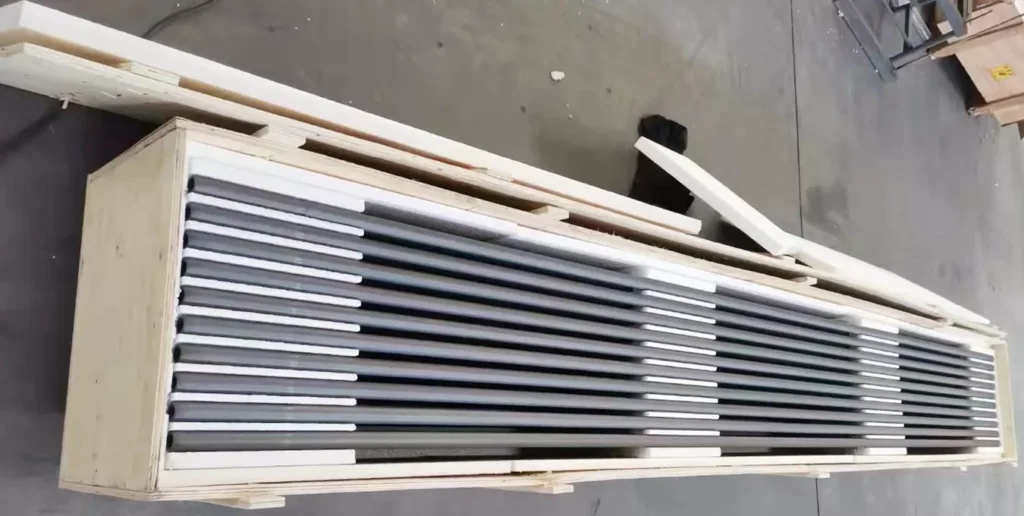
Packaging for Silicon Carbide Protection Tube

Silicon carbide protection tubes are separated with protective spacers and packed with cushioning materials to reduce vibration, edge contact and impact during transport. Long or closed-end tubes can be packed in reinforced cartons or wooden cases according to size, quantity and shipping route.

Packaging for Silicon Carbide Protection Tube

Silicon Carbide Protection Tube Applications in Harsh Temperature Measurement

Silicon carbide protection tubes are used where thermocouples or temperature sensors must remain stable inside high-temperature, corrosive or mechanically aggressive environments. The main selection factors include furnace temperature, atmosphere chemistry, immersion depth, gas velocity, sensor diameter, installation position and expected thermal cycling frequency.

  • Molten Aluminum and Non-Ferrous Metal Temperature Measurement

    In aluminum holding furnaces, degassing stations and non-ferrous metal processing lines, thermocouples are exposed to molten metal contact, oxide films, slag and repeated immersion cycles. A dense silicon carbide protection tube helps isolate the sensor from direct metal attack while maintaining responsive heat transfer.

    For this application, buyers should confirm the melt temperature, immersion depth, preheating method, thermocouple diameter and required closed-end design. Proper matching reduces cracking risk and helps maintain more stable measurement during casting, refining and melt-transfer operations.

  • Corrosive Gas and Chemical Process Heating Lines

    In chemical process heaters, preheaters and exhaust gas lines, sulfur-bearing gases, alkali vapor and oxidizing atmospheres can degrade conventional protection tubes. Silicon carbide provides a dense, chemically stable barrier that helps protect the sensor assembly from gas penetration and surface erosion.

    This application requires careful review of gas composition, temperature range, flow rate and sealing interface. When these factors are properly matched, SiC protection tubes can support longer furnace campaigns and more predictable temperature monitoring in corrosive process environments.

  • Burner Ports and High-Velocity Furnace Zones

    Burner zones expose protection tubes to flame impact, vibration, scale particles and rapid heating cycles. The high hardness and mechanical strength of silicon carbide help reduce abrasion and deformation in these positions.

    For burner-port installation, tube length, unsupported span, mounting clearance and thermal expansion allowance should be reviewed before production. Correct alignment is especially important because bending stress and vibration can shorten service life even when the ceramic material is suitable.

  • Heat Treatment, Kiln and Industrial Furnace Monitoring

    Silicon carbide protection tubes are also used in heat-treatment furnaces, ceramic kilns, sintering equipment and other thermal processing systems where stable sensor protection is required over repeated cycles. The tube helps shield the thermocouple from thermal shock, furnace atmosphere changes and mechanical contact during loading or maintenance.

    For these applications, ADCERAX® can review tube dimensions, closed-end geometry, mounting position and furnace atmosphere to support a more suitable protection tube design.

ADCERAX® Silicon Carbide Protection Tube User Guide for Safe and Efficient Operation

The Silicon Carbide Protection Tube requires proper handling, installation, and maintenance to ensure stable performance in high-temperature and corrosive industrial environments. This user guide provides clear operational recommendations so engineers can maintain measurement accuracy, extend service life, and prevent preventable equipment downtime during continuous production cycles.

  • Pre-Installation Handling Requirements

    1. Initial Inspection Protocol
    Before installation, each tube should be checked for surface integrity, ensuring no microcracks or impact marks are present. Visual evaluation is recommended under adequate lighting to detect early defects that may worsen during heating cycles. Documentation of incoming inspection helps maintain traceability for long-term operational records.
    2. Storage Environment Conditions
    Tubes should be stored in a dry indoor area with stable ambient temperature to avoid moisture absorption in surrounding equipment structures. Protection from accidental impact is essential, and crates should remain closed until installation. Maintaining stable storage conditions helps reduce startup thermal stress during first use.
    3. Handling and Transport Protection
    Manual handling must avoid point impacts, and lifting should be performed using padded supports. Contact with hard metallic surfaces should be minimized to prevent unintended chipping. Controlled movement during internal transport preserves tube geometry prior to installation.

  • Installation Guidelines for High-Temperature Systems

    1. Gradual Heating Recommendations
    A controlled warm-up sequence should be applied, limiting initial temperature rise to avoid abrupt thermal gradients. Gradual heating stabilizes internal structures and reduces the likelihood of thermal shock. This step is especially important when systems operate above 1000 °C.
    2. Correct Positioning in Furnaces and Reactors
    The tube must be aligned vertically or horizontally according to system design to maintain even heat distribution. Misalignment may introduce bending forces that reduce service life, especially in long-length configurations. Ensuring proper seating also improves sensor accuracy in continuous monitoring systems.
    3. Sensor Assembly Fitment
    Instrumentation inserted into the tube should be centered to avoid wall contact during thermal expansion. Secure but non-abrasive mounting prevents internal wear and contamination. Maintaining adequate insertion clearance helps ensure stable long-term measurement performance.

  • Operation in Molten Metal and Corrosive Gas Environments

    1. Immersion Depth and Stability
    When used in molten aluminum or copper baths, immersion depth should remain consistent to ensure homogeneous temperature exposure. Excessive oscillation in molten metal may increase surface stress and shorten lifetime. Stable immersion minimizes mechanical load and preserves consistent thermal transfer.
    2. Gas Atmosphere Considerations
    In SO₂, H₂S, or oxidizing atmospheres, stable airflow around the tube prevents local overheating. Corrosive gas buildup should be avoided by maintaining clean flow paths within ducts. Maintaining adequate clearance ensures predictable chemical interaction across the tube’s surface.
    3. Thermal Cycling Control
    When operating in systems that cycle between high and low temperatures, ramp rates should be moderated to prevent repeated shock. Excessive temperature fluctuation reduces operational life even in SiC materials. Controlled cycling slows cumulative fatigue in long-duration furnace campaigns.

  • Maintenance, Inspection, and Service Life Extension

    1. Routine Inspection Intervals
    Tubes should be inspected at planned intervals for early signs of wear, such as surface roughness or localized discoloration. Regular inspection supports predictive maintenance and reduces unexpected downtime. Recording these observations helps identify furnace or gas-flow imbalances.
    2. Cleaning and Surface Preservation
    Mechanical cleaning should only be performed with non-abrasive tools to avoid micro-etching of the SiC surface. Avoid chemical cleansers that react with high-temperature ceramics. Proper cleaning helps preserve surface density, reducing infiltration in corrosive environments.
    3. End-of-Service Indicators
    Indicators such as reduced thermal response or visible erosion suggest approaching service limits. These signals should trigger planned replacement to maintain process stability. Early recognition of these markers helps prevent processing irregularities and protects downstream equipment.

Silicon Carbide Protection Tube FAQs

  1. Q1: What is a silicon carbide protection tube used for?

    A silicon carbide protection tube is used to protect thermocouples and temperature sensors in high-temperature, corrosive or abrasive environments. It separates the sensor from molten metal, flame contact, corrosive gases and thermal shock while allowing heat transfer for stable temperature measurement. It is commonly used in aluminum processing, furnaces, burner systems, kilns and chemical process equipment.

  2. Q2: Is a silicon carbide protection tube suitable for thermocouple protection?

    Yes. A SiC protection tube is commonly used as an outer ceramic sleeve for thermocouples in harsh furnace or molten metal environments. The tube helps reduce sensor damage caused by oxidation, gas attack, abrasion and sudden temperature changes. The final design should be checked according to thermocouple type, sensor diameter, insertion length, atmosphere and installation method.

  3. Q3: What is the difference between SSiC and RBSiC protection tubes?

    SSiC protection tubes are usually selected for dense structure, strong corrosion resistance and demanding high-temperature service. RBSiC protection tubes may be considered where larger shapes, mechanical toughness or specific production requirements are important. The best choice depends on furnace atmosphere, thermal cycling frequency, mechanical load, tube size and expected service conditions.

  4. Q4: Can silicon carbide protection tubes be used in molten aluminum?

    Silicon carbide protection tubes can be used in many molten aluminum and non-ferrous metal temperature-measurement applications because SiC offers strong thermal conductivity, wear resistance and good chemical stability. For safe selection, buyers should confirm melt temperature, immersion depth, preheating method, slag exposure and the required closed-end structure before production.

  5. Q5: What dimensions can be customized for a SiC protection tube?

    ADCERAX can review custom OD, ID, wall thickness, length, closed-end geometry, connection-end design, surface finish and mounting features. Buyers can provide drawings, samples, sensor dimensions or equipment installation details. Final manufacturability depends on tube size, aspect ratio, wall thickness, material grade and required tolerance.

  6. Q6: What information should be provided for quotation?

    For quotation, please provide the required OD, ID, length, wall thickness, closed-end or open-end structure, material preference, quantity, operating temperature, atmosphere, thermocouple type and application environment. A drawing or sample photo is recommended when the tube has mounting steps, holes, collars, grooves or non-standard end features.

customize size

Custom Silicon Carbide Protection Tube Options

ADCERAX supports custom silicon carbide protection tubes for thermocouple protection, sensor isolation and furnace measurement systems. Customization is reviewed according to the required material grade, OD, ID, wall thickness, length, closed-end shape, surface finish, connection end and operating environment.

For custom projects, buyers can provide a drawing, sample, existing part number or application details. Our engineering team will review the thermal load, atmosphere, installation method and sensor clearance before confirming manufacturability.

Material and Compatibility Tailoring

Material adjustments and compatibility-focused enhancements are carried out to support different atmospheric or thermal regimes.

  • SSiC Material Option
    selected for extreme-temperature and long-cycle durability

  • RBSiC Material Option
    applied where enhanced toughness characteristics are prioritized

  • Atmosphere-Specific Optimization
    aligned to withstand corrosive or oxidizing gas exposure

  • Thermal Response Tuning
    configured for rapid or gradual heating system demands

Surface and Interface Conditioning

Surface preparation and interface finishing are conducted to enhance functional behavior in thermal or corrosive systems.

  • Smooth Inner Finish
    intended for controlled sensor insertion behavior

  • Textured Outer Surface
    used to improve high-temperature bonding stability

  • Protective Coating Layer
    applied where additional corrosion shielding is needed

  • Connection-End Shaping
    configured to support precise alignment mechanisms

Related Products

ADCERAX - Your Trusted Advanced Ceramics Manufacturing Partner

Direct factory manufacturing with comprehensive ceramic materials expertise and global supply capabilities

China-Based Manufacturer

ADCERAX supplies ceramic components for overseas OEMs, equipment builders, and labs.

Custom Drawing Support

We review drawings, dimensions, materials, and application conditions before quotation.

Ceramic Process Control

Forming, sintering, machining, grinding, and finishing are arranged by part requirements.

Pre-Shipment Inspection

Dimensional checks, visual inspection, and packaging review help reduce procurement risk.

Get in Touch with Us

Our team will be happy to respond to you in less than 24 hours.

Pingxiang Factory — Silicon carbide, silicon nitride, high-temperature ceramics

Quick Quotation

*Our team will answer your inquiries within 24 hours.

*Your information will be kept strictly confidential.

Ready to Solve Your Engineering Challenge?

Partner with ADCERAX for reliable, high-performance advanced ceramic solutions. Our engineers are ready to discuss your project.

E-mail

info@adcerax.com

Phone

+(86) 0731-74427743 | WhatsApp: +(86) 19311583352

Response Time

Within 24 hours

Quick Quote

The more details you provide, the faster we can quote.

*We respond within 24 hours. All inquiries are confidential.

Get Your Custom Solution

The more details you provide, the faster we can respond.

customize size

*We respond within 24 hours. All inquiries are confidential.

Download Catalog