Silicon Nitride Thermocouple Protection Tube for Molten Aluminum | Non-wetting, Long-cycle Use

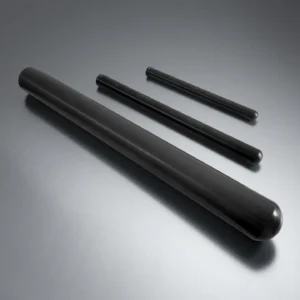
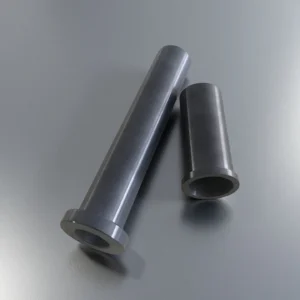
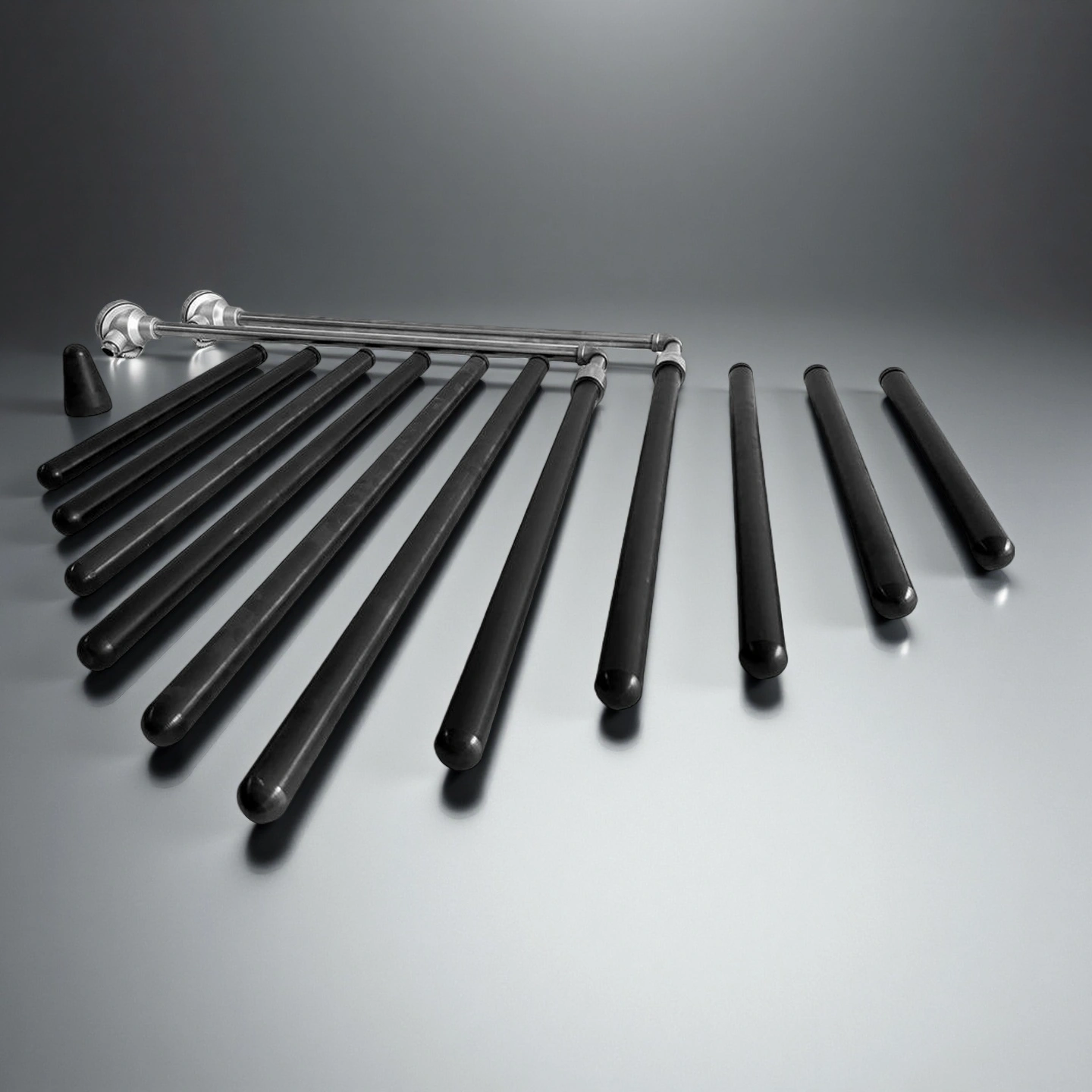
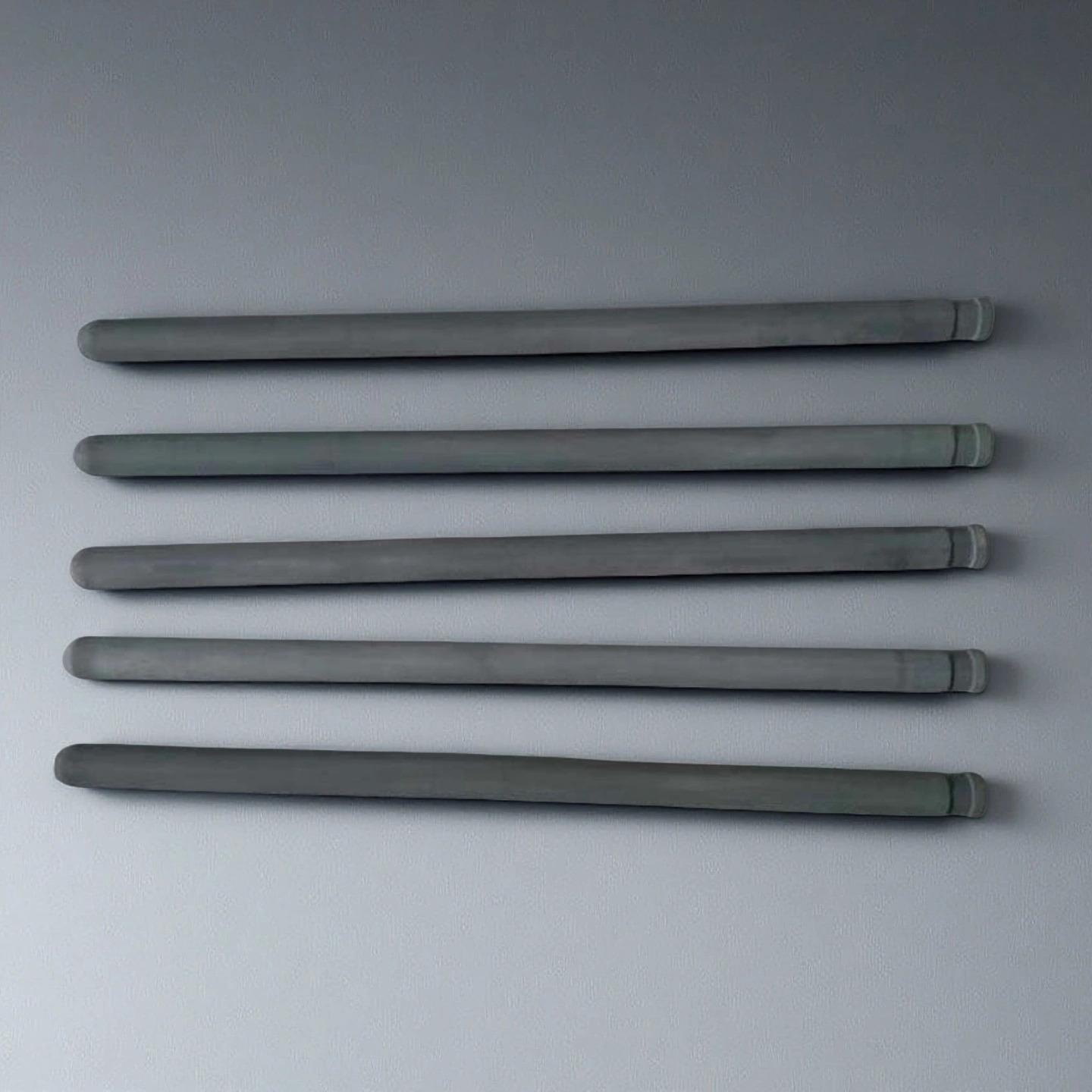
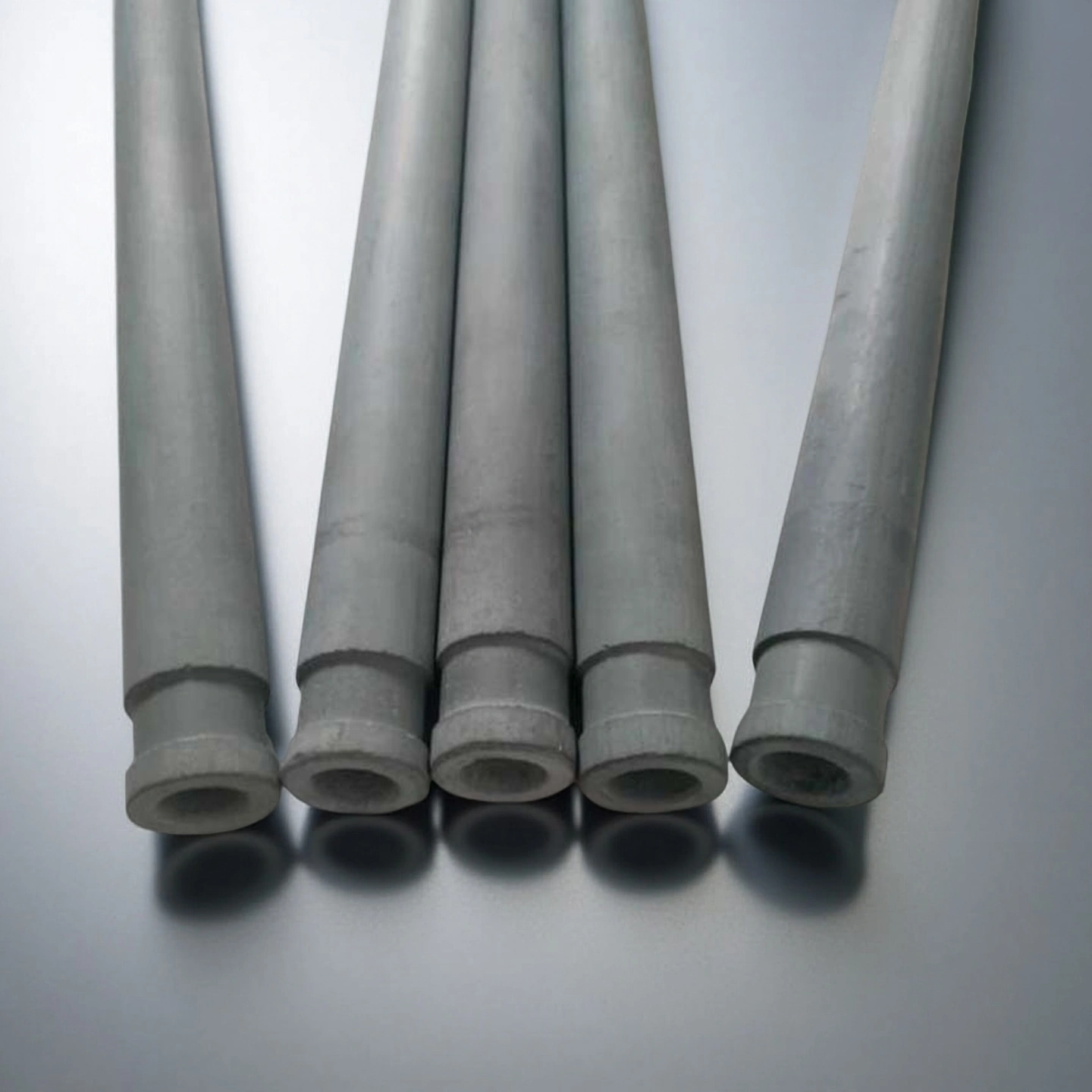
Silicon nitride thermocouple protection tube for continuous temperature measurement in molten aluminum lines; Standard stock covers OD 16/20/25/28/30 mm with matched IDs for K/N/S type assemblies and lengths from 300 to 1200 mm; custom silicon nitride thermocouple protection tube options include flanged, threaded, or sloped ends to fit existing seats and holders.

Catalogue No. AT-DHG-G1001
Material Silicon Nitride
Flexural Strength  >800 MPa
Thermal Expansion Coefficient <3.2 × 10⁻⁶/K
Dimensions/Sizes Download PDF
Engineering RFQ Review
Small-Batch Custom Support
Factory-Direct Manufacturing
Drawing & Process Review

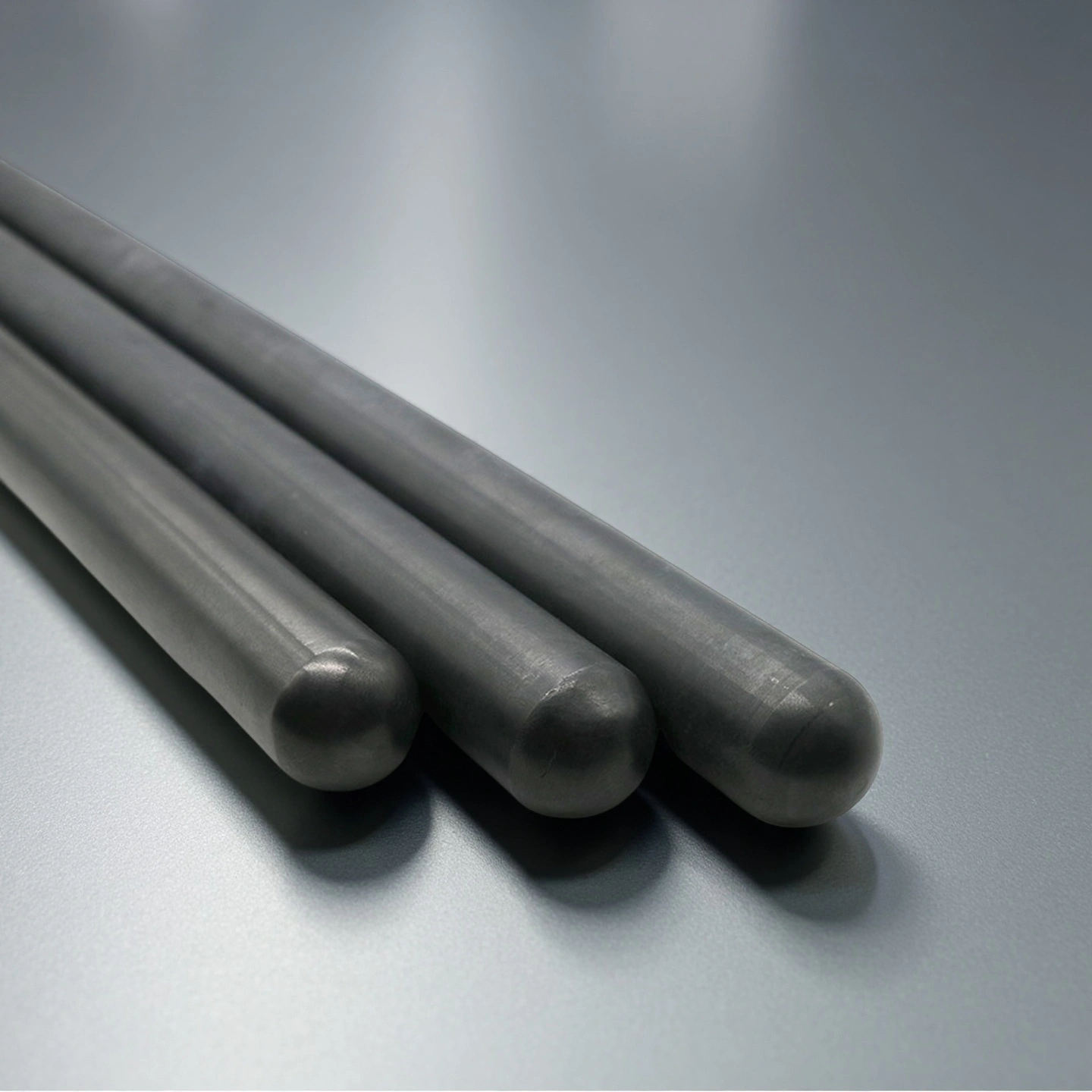
A silicon nitride (Si₃N₄) thermocouple protection tube is a closed-end ceramic sheath that protects a K/N/S thermocouple while it measures molten aluminum, zinc or magnesium. Because Si₃N₄ is not wetted by molten aluminum, it resists metal sticking, oxide build-up and iron contamination, and its thermal-shock resistance keeps readings stable through repeated dips. It is a ceramic, so it must be preheated in stages before immersion — never drop a cold tube straight into the melt.

Silicon Nitride Thermocouple Protection Tube Benefits

  • Non-wetting to Molten Aluminum and Alloys
    — the dense Si₃N₄ surface has low wettability to molten aluminum and Al-Si alloys, which helps limit metal adhesion, oxide buildup, and slag bridging around the thermocouple tip and can reduce temperature drift.

  • Closed-end, gas-tight integrity
    — the sintered/precision-machined closed tip gives a dense structure (typical open porosity near zero) that resists erosion and prevents aluminum ingress into the sensor cavity, typically at 680–750 °C operating ranges.

  • Dimensional stability & repeatability
    — OD/ID tolerance can be held to ±0.1 mm on request and straightness to ≤0.5 mm per 1000 mm, so immersion depth stays consistent across furnaces.

  • Thermal-Shock and Cycling Resistance
    — low CTE (~3×10⁻⁶/K) and high fracture toughness (typically 6–8 MPa·m¹ᐟ²) support repeated dip cycles when the tube is preheated correctly.

  • Sensor & system compatibility
    — fits K/N/S thermocouple cartridges, metal/ceramic seats, compression fittings and flange geometries used in LPDC/HPDC and holding furnaces.

Silicon Nitride Thermocouple Tube Properties

Si3N4 Type Gas pressure sintering Si3N4 Hot pressing sintering Si3N4 High thermal conductivity Si3N4
Density (g/cm3) 3.2 3.3 3.25
Flexural Strength (MPa) 700 900 600~800
Young Modulus (GPa) 300 300 300~320
Poisson's ratio 0.25 0.28 0.25
Compressive strength (MPa) 2500 3000 2500
Hardness (GPa) 15 16 15
Fracture toughness (MPa*m1/2) 5~7 6~8 6~7
Maximum working temperature (℃) 1100 1300 1100
Thermal conductivity (W/m*K) 20 25 80~100
Thermal expansion coefficient (/℃) 3*10-6 3.1*10-6 3*10-6
Thermal shock resistance (ΔT ℃) 550 800 /

Typical published values for sintered Si₃N₄ protection-tube grades, for material selection only


Material Comparison: Si₃N₄ vs. Graphite vs. Alumina vs. Cast Iron/Steel

Option Wetting by Molten Aluminum Iron Contamination Notes
Silicon Nitride Non-wetting None (ceramic) Resistant to thermal shock and suitable for closed-end, gas-tight designs. Preheating is required. Public manufacturer sources describe service life several times longer than cast iron under certain conditions; actual performance is application-dependent.
Graphite Tube Low None Oxidizes and is consumed relatively quickly when exposed to air.
Alumina Tube May stick None Commonly used, but has lower thermal-shock resistance in molten aluminum and may experience sticking or cracking.
Cast Iron / Steel Thermowell Wets and reacts Yes (iron pickup) Inexpensive and widely available, but may erode, contaminate the molten aluminum and shorten service life.


Si3N4 Thermocouple Protection Tube Specifications

Si3N4 Thermocouple Protection Tube
Item No. Outer Diameter (mm) Inner Diameter (mm) Length (mm)
AT-DHG-G1001 16 8 300-1200
AT-DHG-G1002 22 12 300-1200
AT-DHG-G1003 28 16 300-1200
AT-DHG-G1004 30 18 300-1200
AT-DHG-G1005 45 25 300-1200


Silicon Nitride Thermocouple Tube Packaging

  • Each tube is individually packed in foam-lined cartons
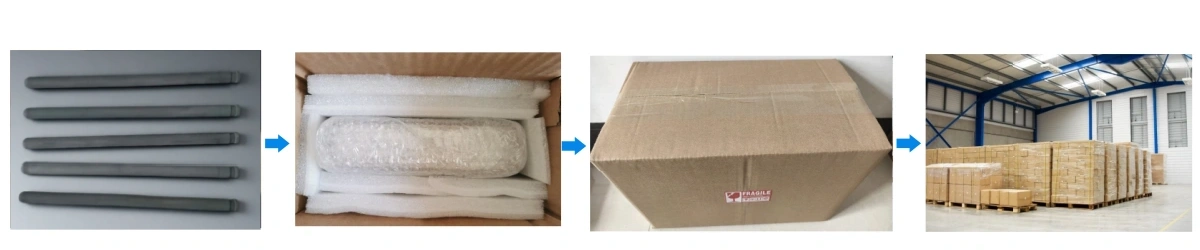
Silicon Nitride Thermocouple Tube Packaging

Silicon Nitride Thermocouple Protection Tube Applications

Silicon nitride thermocouple protection tubes are used for molten aluminum temperature measurement where metal adhesion, iron contamination, thermal cycling, erosion and frequent tube maintenance are concerns. Final tube grade, geometry and installation method should be reviewed against the alloy, melt temperature, immersion pattern and existing failure mode.

  • Low-Pressure and High-Pressure Die Casting (LPDC / HPDC)

    Application: Installed in melt wells, transfer areas or filling systems to measure molten aluminum temperature before casting or injection.

    Why Silicon Nitride Fits

    1. Low wettability helps limit molten aluminum adhesion and oxide buildup on the tube surface.
    2. The ceramic construction does not introduce iron contamination into the melt.
    3. Thermal-shock and erosion resistance make the material suitable for turbulent or cyclic operating conditions when the tube is correctly preheated and installed.
    4. Closed-end configurations help separate the thermocouple from direct contact with molten metal.

  • Holding Furnaces and Transfer Ladles

    Application: Mounted through a furnace roof, sidewall or ladle assembly for continuous or periodic molten aluminum temperature monitoring during holding, transfer, billet casting or sheet-casting operations.

    Why Silicon Nitride Fits

    1. Low molten-aluminium wettability helps reduce slag and dross adhesion.
    2. Resistance to molten aluminum corrosion helps preserve the immersed tube geometry.
    3. Thermal-cycling resistance supports repeated heating and cooling when a controlled preheating procedure is followed.
    4. The nonmetallic tube avoids iron pickup from cast-iron or steel protection tubes.
    5. Custom dimensions can be reviewed for the required immersion depth, mounting seat and thermocouple assembly.

  • Melt Treatment Stations—Degassing, Filtration and Alloy Modification

    Application: Positioned near rotary degassers, ceramic foam filters, transfer troughs or alloy-treatment stations to provide real-time molten aluminum temperature feedback during melt refinement.

    Why Silicon Nitride Fits

    1. Thermal-shock resistance supports intermittent immersion and repeated process cycles.
    2. Low wettability helps limit aluminum and oxide adhesion around the immersed tip.
    3. Ceramic construction avoids iron contamination during melt treatment.
    4. Reviewed closed-end and tip geometries can help protect the sensor in flowing or turbulent melt zones.
    5. Silicon nitride grade selection can be reviewed against the treatment gas, flux chemistry and thermal-cycling conditions.

Silicon Nitride Thermocouple Protection Tube Usage Instructions

  • Handling & care

    This is a ceramic tube. Never insert a cold tube directly into molten metal: preheat in stages (150–200 °C, then 300–400 °C near the melt) to avoid thermal-shock cracking. Immerse and withdraw slowly; avoid contact with furnace walls, impellers and skimming tools; keep the bore dry (moisture can cause a steam burst on first preheat), and remove any tube with tip chips or micro-cracks.

  • Installation

    1. Fit Check Before Use
    a. Confirm OD/ID matches thermocouple cartridge and furnace seat or flange.
    b. Ensure sealing gasket or compression fitting contacts evenly without visible gaps.

    2. Preheating Procedure
    a. Preheat gradually to 150–200 °C using air furnace, then to 300–400 °C near the melt; avoid direct flame contact on the tip.
    b. Never insert a cold tube directly into molten metal to prevent thermal shock cracks.

    3. Insertion Technique
    a. Lower the tube vertically and slowly into the melt; avoid touching furnace walls or impellers.
    b. Maintain immersion depth according to process requirements (typically 30–60 mm below melt surface).

  • Operation

    1. Maintain steady immersion; frequent removal and reinsertion shortens lifespan due to rapid temperature gradients.
    2. Avoid contact with tools, ladles, or molten metal flow to prevent tip erosion or cracks.
    3. Monitor temperature curve; sudden fluctuations may indicate oxide buildup, tube wear, or poor sensor contact inside the tube.
    4. Log each tube’s usage hours or furnace cycles to schedule preventive replacement before failure.

  • Storage

    1. Place tubes in original foam or wooden supports to avoid bending stress or edge impact.
    2. Store in a dry environment; moisture can cause a steam explosion during the first preheating.
    3. Keep away from oils, aluminum fines, and conductive dust that may enter the inner bore and affect sensor insulation.

  • Cleaning & Maintenance

    1. Clean only when the tube is fully cooled to room temperature.
    2. Remove surface oxide or dross gently using non-metallic scrapers or soft abrasive pads; avoid wire brushing or sandpaper on sealing surfaces.
    3. Do not immerse tube in acid/alkali solutions; chemical agents may penetrate micro-cracks and weaken structure.
    4. Inspect for micro-cracks, chipped tips, or oval deformation; discard immediately if structural damage is found.

  • Common Misuse & How to Prevent It

    Issue Cause Prevention / Solution
    Tube cracks during first use Direct cold immersion into a 700 °C melt Always follow staged preheating to at least 300 °C
    Melt leakage from the furnace roof OD mismatch or worn gasket Verify OD tolerance (±0.1 mm) and replace gaskets regularly
    Temperature drift / unstable readings Metal or dross deposited at tip; sensor not fully inserted Clean tip regularly and ensure thermocouple is seated to correct depth

Silicon Nitride Thermocouple Protection Tube FAQ

  1. Q: What is the typical service life of a silicon nitride thermocouple protection tube in molten aluminum?
    A: Service life depends on alloy composition, preheating, and immersion cycles. In stable LPDC or holding furnace conditions, one tube can withstand 200–400 heating cycles or 4–6 weeks of continuous use, significantly longer than graphite or alumina sleeves.
  2. Q: Why does silicon nitride offer better stability in aluminum melt compared to alumina or graphite tubes?
    A: Silicon nitride has a dense, gas-tight structure with low wettability to molten aluminum, comparatively high fracture toughness, and low thermal expansion. This helps limit metal infiltration, thermal cracking, and oxide adhesion during repeated dipping. Actual wetting behavior depends on alloy composition, temperature, atmosphere, and surface condition.
  3. Q: What thermocouple types are compatible with a silicon nitride protection tube?
    A: Standard K, N, and S-type thermocouples can be used. The inner diameter of the silicon nitride tube must match the sensor cartridge to maintain response speed and avoid air gaps that cause signal delay.
  4. Q: Can a silicon nitride thermocouple protection tube be used directly without preheating?
    A: No. Direct immersion from room temperature into molten aluminum (≈700 °C) may cause thermal shock. The tube should be gradually preheated to 300–400 °C to reduce temperature stress, especially during first use.
  5. Q: Is it possible to customize flange, thread, or sealing structure on a silicon nitride thermocouple tube?
    A: Yes. Custom silicon nitride thermocouple protection tubes can include male threads, flat flanges, O-ring shoulders, or bayonet connections. Drawings or sample parts are typically required to ensure fitment accuracy.
  6. Q: How do I buy silicon nitride thermocouple protection tubes — standard sizes or custom, and what about volume?
    A: You can order standard OD/ID/length from stock or custom tubes (flange, thread, sloped or stepped ends) to a drawing. As a China-based manufacturer (not a trading company), ADCERAX makes the tubes in-house, so bulk and repeat orders for multiple furnace lines are supported once sizes, quantity per model and schedule are confirmed. Share a drawing or an old tube to start.

RFQ Checklist — what to send for a fast, accurate review:

1. Drawing or old-tube (failed part) photos

2. Melt type (aluminium/zinc/magnesium) & temperature

3. OD / ID and length; closed-end (flat / dome)

4. Immersion depth & mounting (flange/thread/adapter/seat)

5. Thermocouple type (K / N / S) & cartridge diameter

6. Current tube material & failure mode (sticking/cracking / erosion/drift)

7. Preheat capability on site

8. Quantity & repeat / spare demand.

Typical lead time: quoted per drawing after engineering review.

customize size

Customize Silicon Nitride Thermocouple Protection Tubes

We provide geometry customization and controlled tolerances for OEM integration, furnace upgrades, and multi-line replacements.

1.Outer / Inner Diameter
• OD 16–35 mm, ID matched to thermocouple ceramic/metal cartridge
• Critical sizes can be held at ±0.1 mm; thicker walls for longer tubes or high-impact areas

2. Length
• 250–1500 mm available, straightness deviation ≤0.5 mm per 1000 mm
• Uniform immersion depth ensured across repeated replacement cycles

3. Tip /End Configuration
• Options: closed-end (flat/dome), open-end, sloped, threaded male end, or flange connection
• Tip wall thickness and radius can be adjusted to balance response speed and strength

3. Seat /Interface Type
• O-ring groove, flat gasket seat, compression fitting zone, bayonet or clamp-on shoulder
• Dimensions matched to existing furnace openings or thermocouple holders

4. Surface Condition
• As-sintered finish for general use
• Polished or honed tip for reducing oxide adhesion and melt turbulence
• Light sandblasting available at seat or sealing areas for better friction lock

5. Straightness & Concentricity Control
• Straightness controlled per length class; concentricity between OD/ID maintained for accurate sealing and probe alignment
• Dimensional inspection reports and batch traceability available on request

6. Optional Identification /Traceability
• Product code, batch number, part orientation marking available on tube or packaging
• Supports OEM spare-part numbering for maintenance planning

Related Products

ADCERAX - Your Trusted Advanced Ceramics Manufacturing Partner

Direct factory manufacturing with comprehensive ceramic materials expertise and global supply capabilities

China-Based Manufacturer

ADCERAX supplies ceramic components for overseas OEMs, equipment builders, and labs.

Custom Drawing Support

We review drawings, dimensions, materials, and application conditions before quotation.

Ceramic Process Control

Forming, sintering, machining, grinding, and finishing are arranged by part requirements.

Pre-Shipment Inspection

Dimensional checks, visual inspection, and packaging review help reduce procurement risk.

Get in Touch with Us

Our team will be happy to respond to you in less than 24 hours.

Pingxiang Factory — Silicon carbide, silicon nitride, high-temperature ceramics

Quick Quotation

*Our team will answer your inquiries within 24 hours.

*Your information will be kept strictly confidential.

Ready to Solve Your Engineering Challenge?

Partner with ADCERAX for reliable, high-performance advanced ceramic solutions. Our engineers are ready to discuss your project.

E-mail

info@adcerax.com

Phone

Tel: +86-0731-84428843 WhatsApp: +86 19311583352

Response Time

Within 24 hours

Quick Quote

The more details you provide, the faster we can quote.

*We respond within 24 hours. All inquiries are confidential.

Get Your Custom Solution

The more details you provide, the faster we can respond.

customize size

*We respond within 24 hours. All inquiries are confidential.

Download Catalog