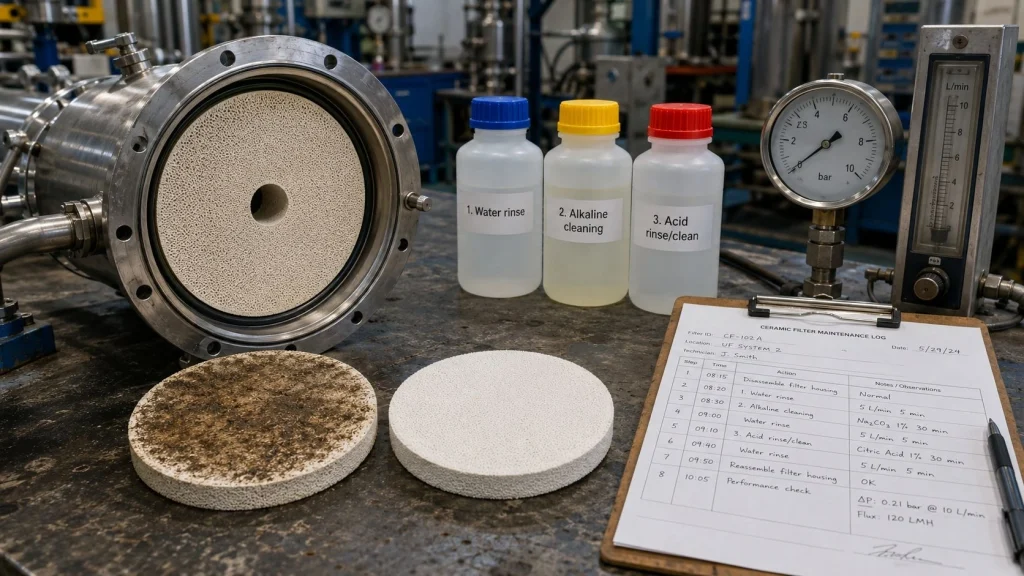
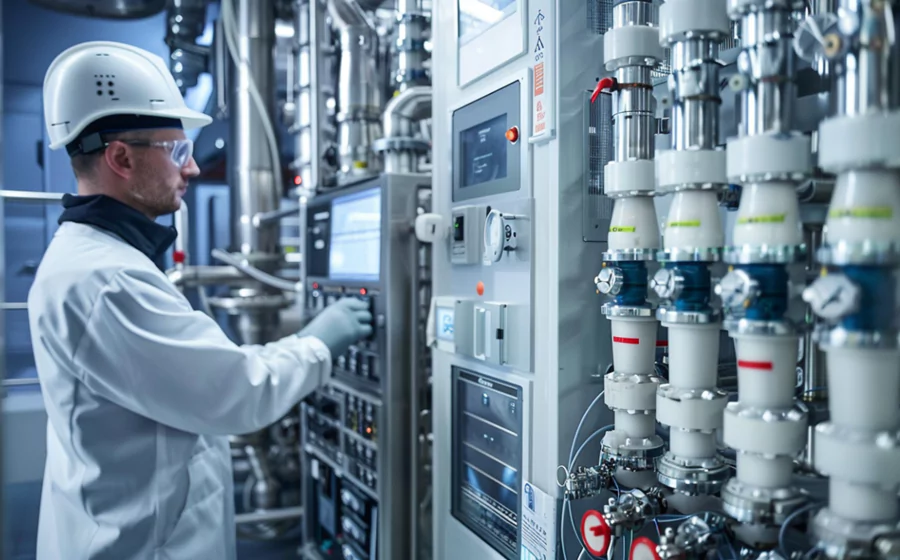
Custom porous alumina tubes for particle filtration, controlled gas distribution and membrane-support duties — engineered to your drawing by ADCERAX, a China-based advanced ceramics manufacturer.
Compare listed porous alumina tube configurations or request a drawing-based quotation from ADCERAX. Start with the job—liquid filtration, gas distribution or support for a separately specified membrane layer—then select the tube geometry, end arrangement and pore grade together.
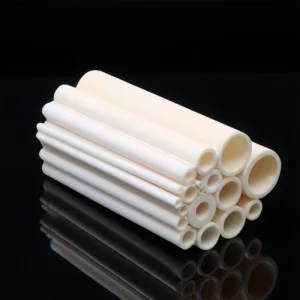
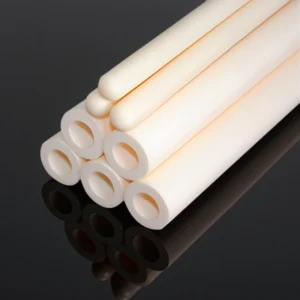
A porous alumina filter tube is a porous ceramic tube sintered with an interconnected open-pore wall, used to filter particles from liquids or gases, distribute gas into a liquid, or carry an active separation layer as a membrane support.
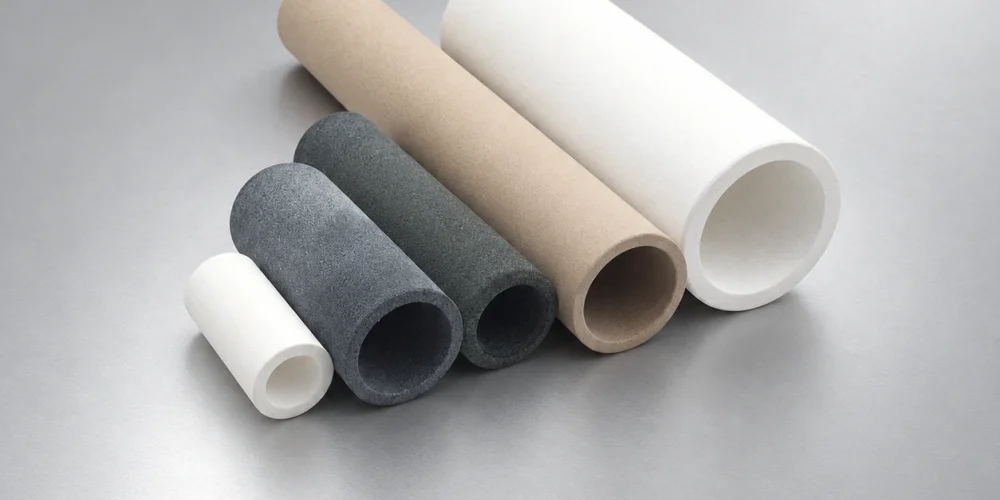
| unit | What must be specified separately |
|---|---|
| Bare porous tube | The selected geometry, pore-grade field, material requirement and end details. Seals, end caps, housing and pressure rating are not established by the tube row. |
| Membrane support | The coating interface, support geometry and pore characteristics required by the layer process. A support is not a finished separation membrane. |
| Element with an active layer | Who supplies the layer and end seals, the layer specification, separation target and acceptance tests. Availability requires a specific engineering review. |
| Diffuser or filtration assembly | Tube, connectors, seals, housing/support and assembly testing responsibilities. Matching tube dimensions alone does not establish a drop-in replacement. |
Compare the open-ended, closed-end and flanged tubes listed below. Read each item number together with its dimensions and pore-size entry. For a different size or interface, send your drawing and application requirements for review.
| Microporous Alumina Filter Tube Closed One End with Flange | |||||||
| Item No. | Outer Diameter(mm) | Inner Diameter(mm) | Length(mm) | Hole Diameter (μm) | Purity % | Flange Diameter (mm) | Flange Height (mm) |
| AT-FT-3001 | 50 | 20 | 500 | 1 | 90% | 65 | 8 |
| AT-FT-3002 | 75 | 45 | 700 | 1-5 | 90% | 88 | 8 |
| AT-FT-3003 | 100 | 60 | 700 | 1-100 | 90% | 120 | 10 |
| AT-FT-3004 | 150 | 100 | 1000 | 1-200 | 90% | 180 | 15 |
| AT-FT-3005 | 200 | 140 | 1000 | 1-200 | 90% | 230 | 15 |
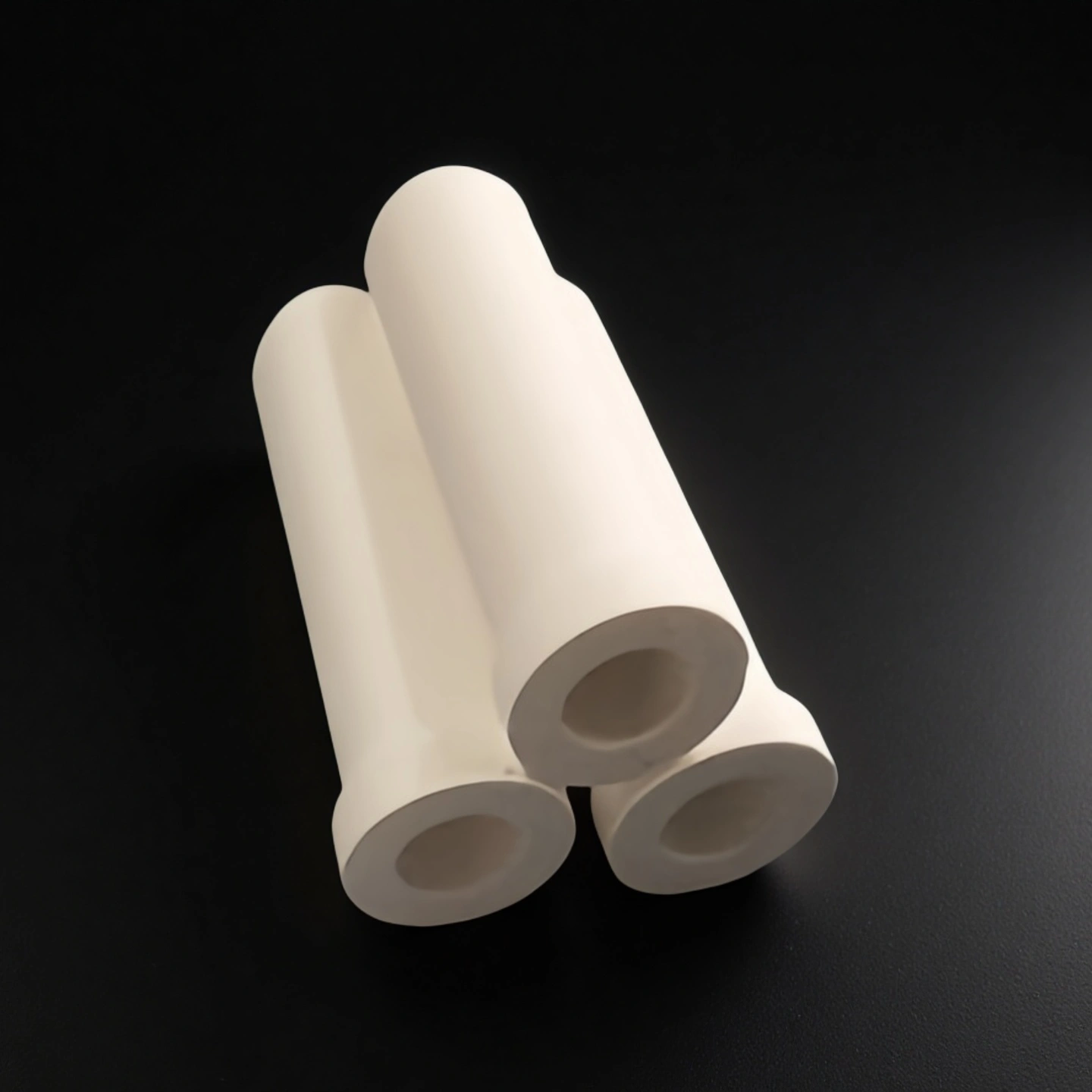
| Microporous Alumina Filter Tube Open Both Ends with Flange | |||||||
| Item No. | Outer Diameter(mm) | Inner Diameter(mm) | Length(mm) | Hole Diameter (μm) | Purity % | Flange Diameter (mm) | Flange Height (mm) |
| AT-FT-4001 | 20 | 12 | 200 | 1-5 | 90% | 35 | 5 |
| AT-FT-4002 | 30 | 20 | 600 | 1-5 | 90% | 40 | 5 |
| AT-FT-4003 | 50 | 38 | 250 | 1-5 | 90% | 65 | 8 |
| AT-FT-4004 | 50 | 30 | 370 | 1-10 | 90% | 70 | 8 |
| AT-FT-4005 | 65 | 53 | 400 | 1-10 | 90% | 73 | 8 |
| AT-FT-4006 | 90 | 75 | 900 | 1-100 | 90% | 110 | 9 |
| AT-FT-4007 | 100 | 60 | 1000 | 1-200 | 90% | 125 | 10 |
| AT-FT-4008 | 100 | 70 | 1000 | 1-200 | 90% | 130 | 10 |
| AT-FT-4009 | 120 | 80 | 1000 | 1-200 | 90% | 135 | 10 |
| AT-FT-4010 | 190 | 130 | 1000 | 20-500 | 90% | 210 | 15 |
| AT-FT-4011 | 200 | 140 | 1000 | 20-500 | 90% | 240 | 15 |
| AT-FT-4012 | 250 | 190 | 1000 | 20-500 | 90% | 275 | 15 |
| AT-FT-4013 | 20-250 | 12-230 | 50-2000 | Customize | 90% | Customize | Customize |
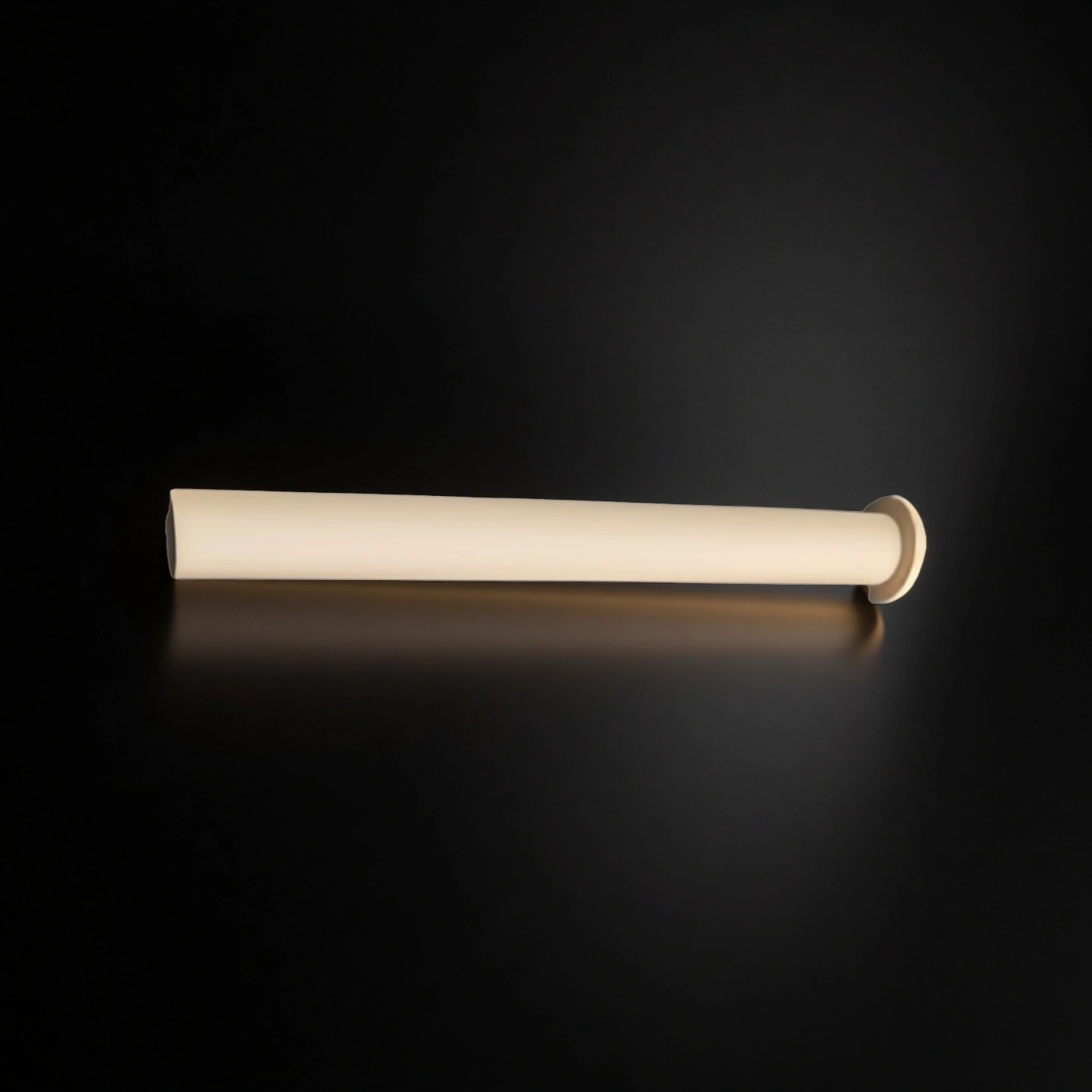
| Microporous Alumina Filter Tube Closed One End | |||||
| Item No. | Outer Diameter(mm) | Inner Diameter(mm) | Length(mm) | Hole Diameter (μm) | Purity % |
| AT-FT-1001 | 35 | 15 | 500 | 0.5-5 | 90% |
| AT-FT-1002 | 38 | 30 | 1200 | 1-5 | 90% |
| AT-FT-1003 | 40 | 22 | 150 | 0.5-5 | 90% |
| AT-FT-1004 | 50 | 42 | 300 | 0.5-5 | 90% |
| AT-FT-1005 | 60 | 40 | 200 | 10-50 | 90% |
| AT-FT-1006 | 60 | 40 | 1500 | 10-50 | 90% |
| AT-FT-1007 | 70 | 60 | 430 | 0.5-5 | 90% |
| AT-FT-1008 | 120 | 100 | 300 | 10-100 | 90% |
| AT-FT-1009 | 20-200 | 14-180 | 50-1500 | Cutomize | Cutomize |
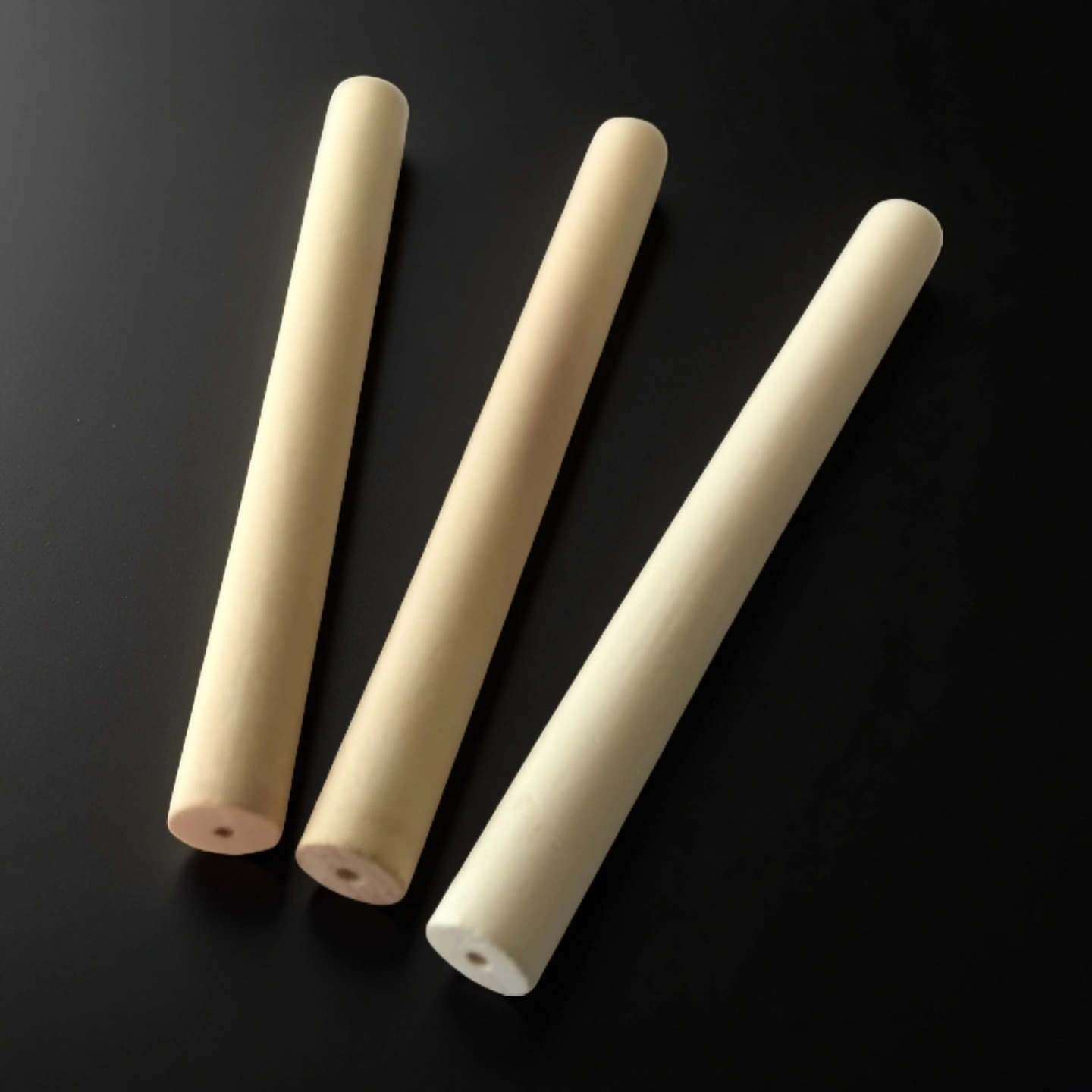
| Microporous Alumina Filter Tube Open Both Ends | |||||
| Item No. | Outer Diameter(mm) | Inner Diameter(mm) | Length(mm) | Hole Diameter (μm) | Purity % |
| AT-FT-2001 | 20 | 12 | 200 | 0.8 | 90% |
| AT-FT-2002 | 30 | 20 | 600 | 0.1-5 | 90% |
| AT-FT-2003 | 50 | 38 | 250 | 0.1-5 | 90% |
| AT-FT-2004 | 50 | 30 | 370 | 0.8 | 90% |
| AT-FT-2005 | 65 | 53 | 400 | 0.1-5 | 90% |
| AT-FT-2006 | 90 | 75 | 900 | 1-200 | 90% |
| AT-FT-2007 | 100 | 60 | 1000 | 1-200 | 90% |
| AT-FT-2008 | 100 | 70 | 1000 | 1-200 | 90% |
| AT-FT-2009 | 120 | 80 | 1000 | 1-200 | 90% |
| AT-FT-2010 | 190 | 130 | 1000 | 1-200 | 90% |
| AT-FT-2011 | 200 | 140 | 1000 | 1-200 | 90% |
| AT-FT-2012 | 250 | 190 | 1000 | 1-200 | 90% |
| AT-FT-2013 | 20-250 | 12-230 | 50-2000 | Customize | Customize |
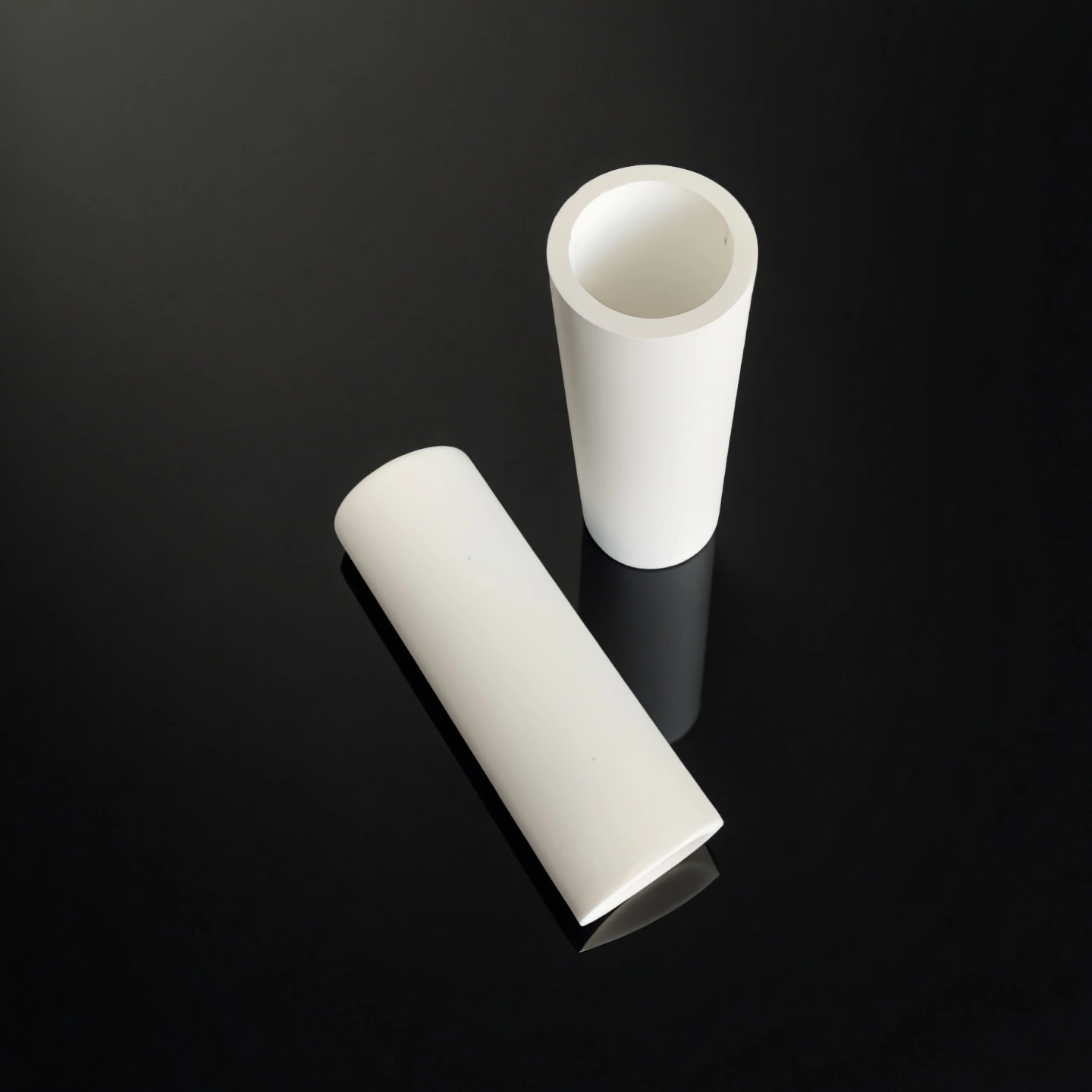
Note: We offer custom dimensions, shapes, and specifications to meet your specific requirements. Contact our engineering team for consultation.
Select the tube size and pore grade together with the intended filtration, gas-distribution or membrane-support application. A nominal pore size alone does not define particle retention, flow rate or pressure rating.
| Selection point | Information to compare |
|---|---|
| Tube dimensions and ends | Item number, OD, ID, overall length, end condition and any flange or sealing features. |
| Pore size and filtration target | The stated pore-size grade, target particle-retention requirement and agreed test method. |
| Flow and pressure drop | Fluid or gas, temperature, flow direction, exposed porous area and required flow rate. |
| Material and operating conditions | Medium, concentration, temperature, exposure time, cleaning conditions and the complete assembly. |
For membrane-support applications, specify the active separation layer separately from the support tube.
Porous alumina tubes serve three application types: particle removal, gas distribution, and membrane support. Performance depends on the complete system—media, temperature, flow rate and pressure—not pore size alone. Identify your application type, then define the operating conditions.
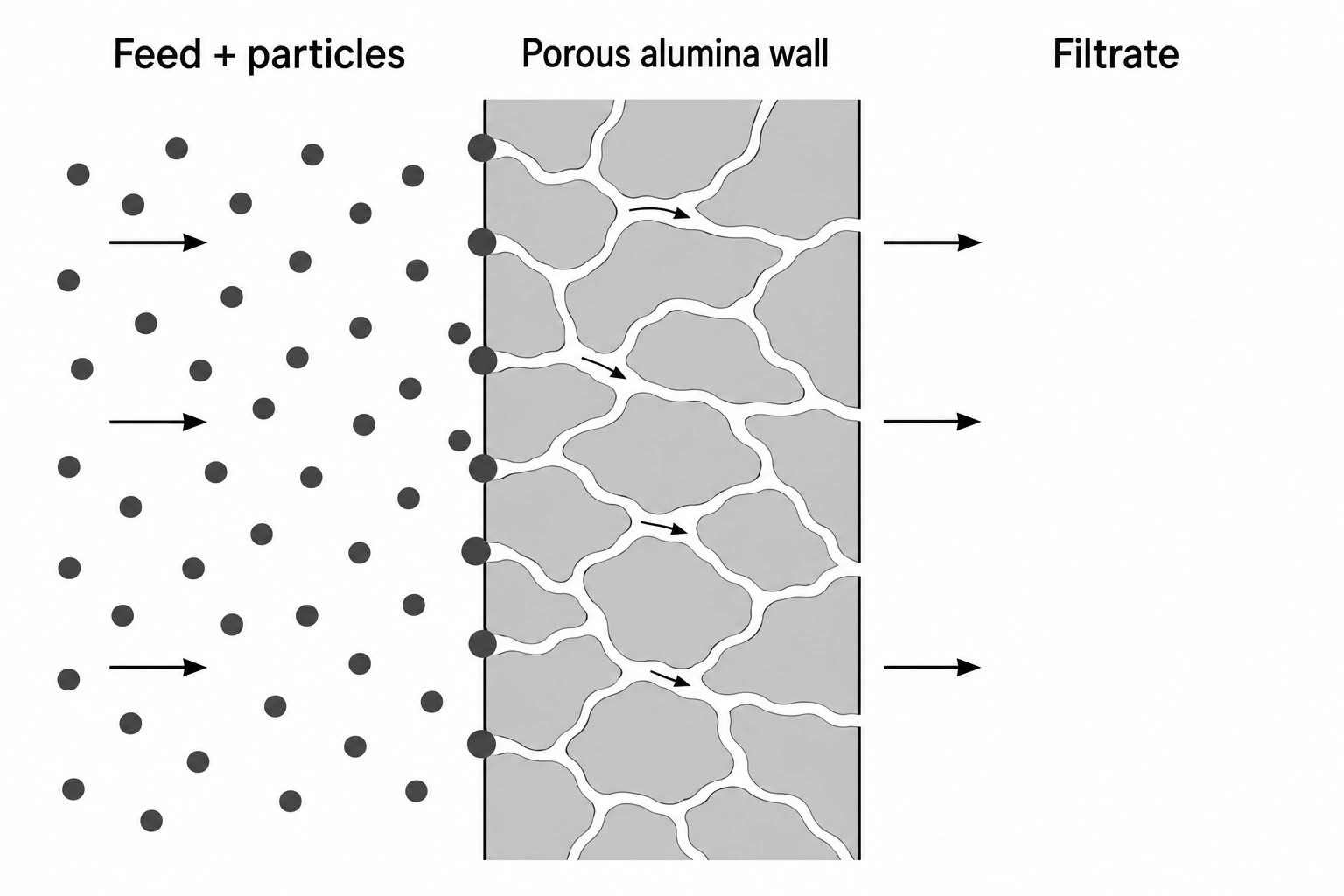
Porous alumina filter tubes remove suspended solids from liquids or gases by capturing particles within the porous wall structure. Filtration performance depends on the complete flow path, not just the nominal pore size.
What to define for filtration applications:
Ready to request a quote? Include the fluid, target particle size and flow conditions in your inquiry.
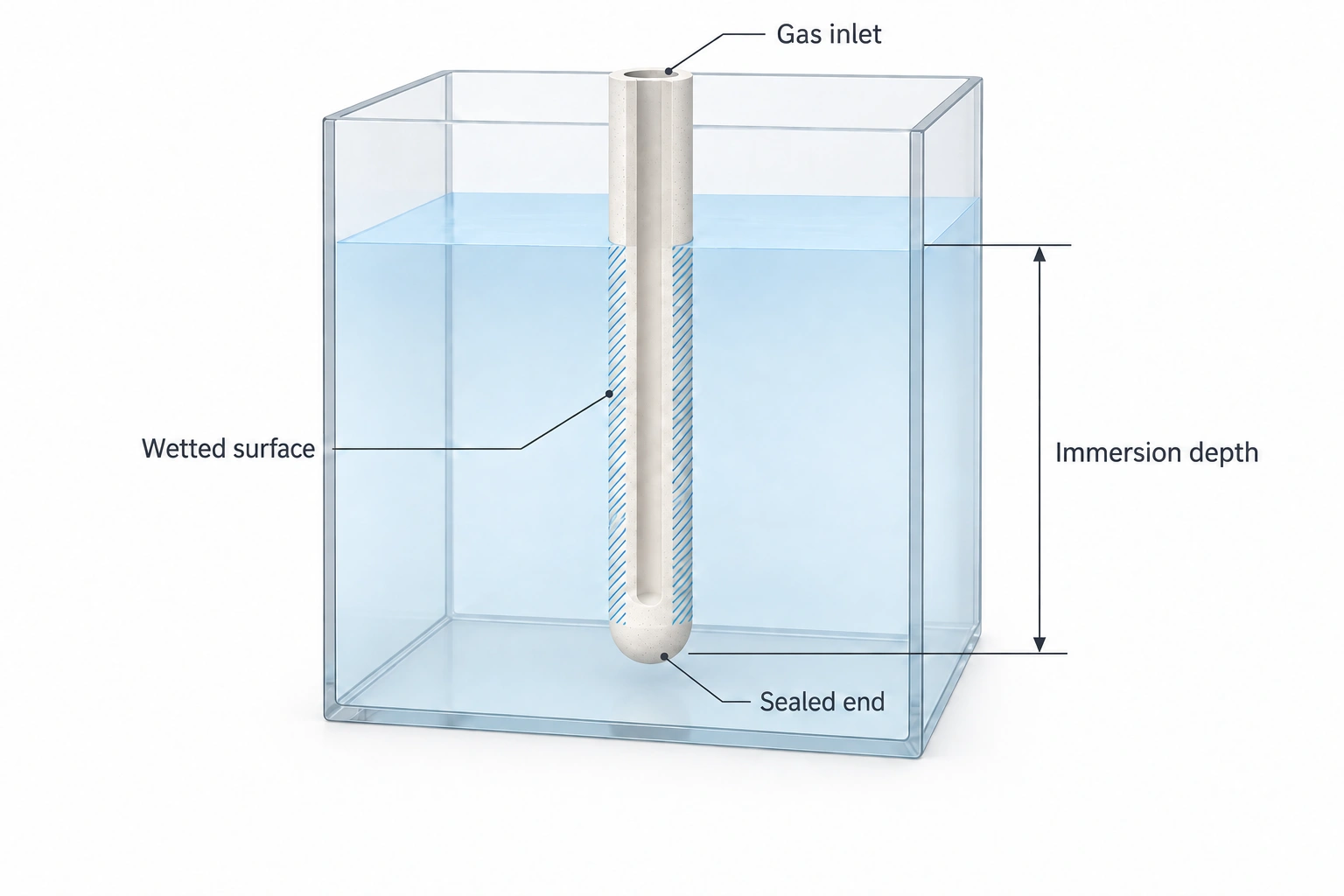
For gas distribution, review the porous alumina tube together with the gas supply, liquid medium, immersion depth and sealing arrangement. Bubble size, gas flow and distribution depend on the assembled system and operating conditions; pore size alone does not define the result.
What to define for gas distribution applications:
Ready to request a quote? Include the gas type, flow target and immersion depth in your inquiry.
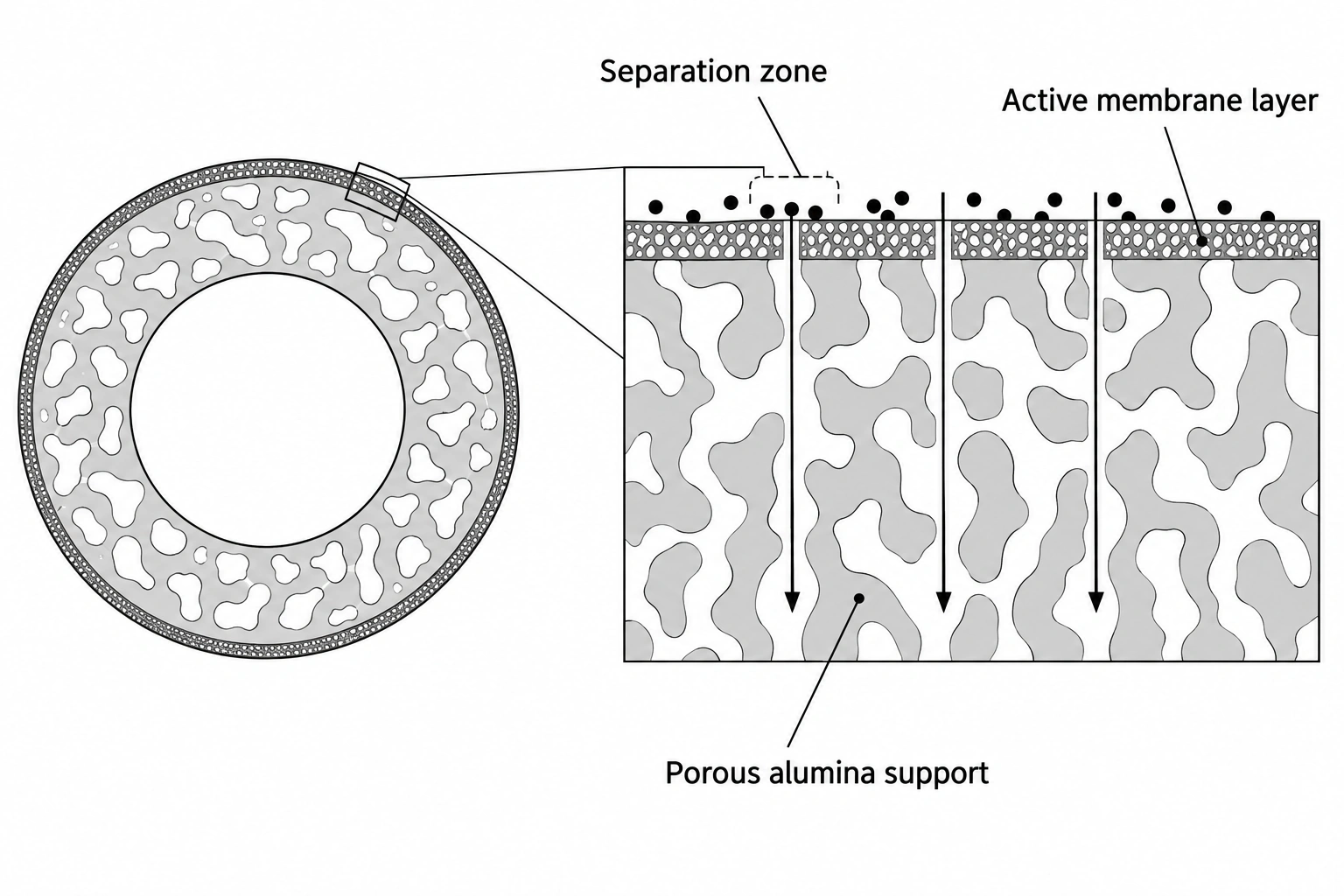
Porous alumina tubes serve as mechanical supports for finer separation layers applied separately. The support provides structural strength and pore network access; the active membrane layer provides the separation performance. These are distinct components with separate specifications.
What to define for membrane support applications:
Ready to request a quote? Specify the support geometry and clarify who provides the active separation layer.
ADCERAX manufactures custom porous alumina tubes to your drawing specifications. You don’t need every technical detail ready to start—provide basic application requirements and geometry first, then we’ll work through pore grade, acceptance criteria and operating conditions together during engineering review.
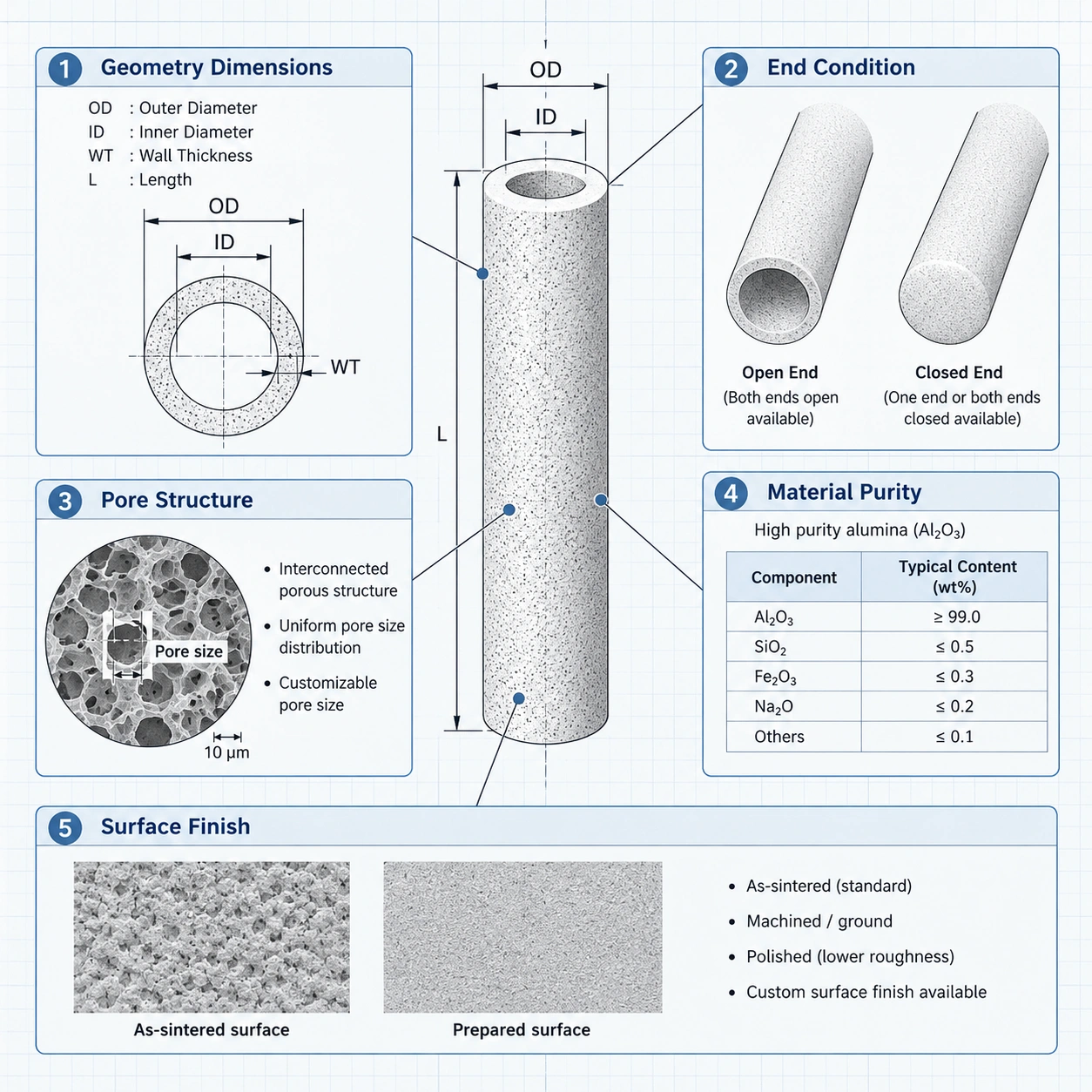
OD, ID, length, end condition and flange dimensions; drawing no./rev., critical tolerances and datum surfaces.
active porous length, seal/potting zones, mounting details and any mating parts to include.
the listed pore size and purity, or the change you need; plus the characterization method and acceptance limit.
mark coatings, sealing and surface finish on the drawing. Each one is reviewed case by case.
medium, temperature, pressure/pressure drop, flow direction and cleaning method.
Agree the geometry and acceptance criteria before evaluating a sample. Use the intended sealing and support arrangement.
Submit application type, drawing or known dimensions (OD, ID, length, end condition) and quantity. Engineering reviews geometry feasibility and pore grade pairing.
Quote includes confirmed geometry–pore pairing, tolerances and lead time. Requested testing is defined in order specification—not assumed as standard.
Tubes manufactured to agreed drawing. Dimensional inspection and order-specified tests performed before shipment.
Agree the packaging, required inspection documents and delivery schedule in the order specification.
Set the sample specification
Test in your assembly
Repeat to the approved spec

Answers to common questions about pore size, product selection, customization and use.
Pore size selection depends on your target particle retention, flow rate and operating pressure—not on pore size alone. Start with your particle size requirement and filtration efficiency target, then consider the media viscosity and allowable pressure drop. Nominal pore size is a selection reference, not an absolute retention rating. We recommend pilot testing with your actual media and particles to confirm the geometry–pore pairing meets your acceptance criteria before committing to production volumes.
Read each listed item number with its own dimensions and pore-size entry. Do not combine values from different rows to define a new tube. For another geometry or pore grade, send a drawing and the application requirements so the combination can be reviewed.
No. A porous support tube provides mechanical strength and a pore network for fluid access. The active separation layer—which defines retention rating, flux and selectivity—is a separate component applied to the support.
If your application requires fine separation (ultrafiltration, nanofiltration or gas separation), specify both the support geometry and the membrane layer material and performance separately. The support does not establish the membrane’s separation performance.
Review mechanical loads, sealing and support, temperature changes, pressure changes and chemical exposure for the complete assembly. Damage, leakage or loss of flow can have different causes. Compare the tube and operating history with the agreed drawing and operating conditions before deciding on a replacement or changing the process.
Suitability depends on the medium, concentration, temperature, exposure time and complete construction, including the porous body, any active layer and seals. Share these conditions for material and assembly review. A purity or pore-size entry alone does not establish the operating temperature or chemical compatibility.
Compare flow, pressure drop and the filtration or gas-distribution result with the agreed acceptance criteria under the stated operating conditions. Check the tube and seals for damage or leakage. Record the conditions and any change in performance so the cause can be reviewed against the system requirements.
Include the inspection or test results your project needs, together with the method and acceptance criteria, in your enquiry. The available testing scope and required documents must be reviewed for the selected tube and agreed in the order. A requested test is not a standard included service.

Request a Quote for a Listed or Custom Porous Alumina Tube
For an initial review, send your application, AT-FT item number or dimensions, end arrangement and quantity. If the design isn’t final, a sketch, old-part photo or drawing helps.
*Our team will answer your inquiries within 24 hours.
*Your information will be kept strictly confidential.
info@adcerax.com
Tel:+86-0731-84428843
WhatsApp:+86 19311583352
Within 24 hours
Send RFQ on WhatsApp
The more details you provide, the faster we can quote.
*All inquiries are confidential.
The more details you provide, the faster we can respond.

*We respond within 24 hours. All inquiries are confidential.