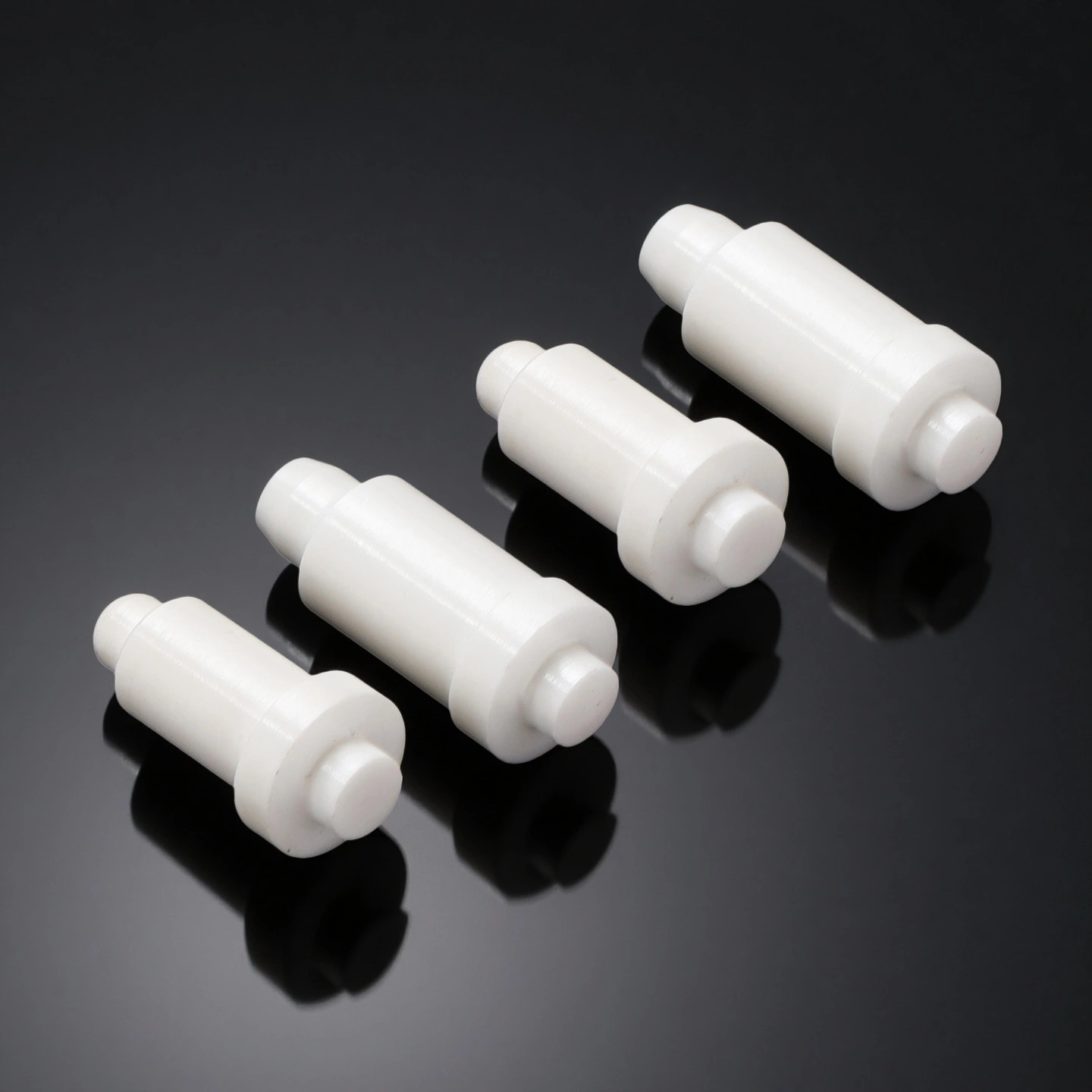
Alumina Locating Pin for Robotic Welding Fixtures

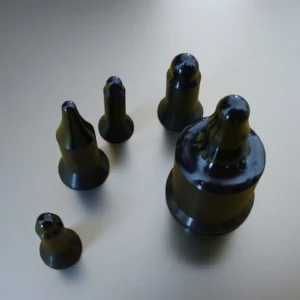
ADCERAX alumina locating pins are precision Al₂O₃ ceramic guide components for positioning weld nuts, studs, sheet metal parts and fixture references in robotic welding cells, BIW tooling and high-temperature fixtures. They help reduce issues caused by steel pins, such as fast wear, weld spatter build-up, current conduction and dimensional instability.

Standard and custom alumina locating pins can be reviewed by diameter, length, head shape, shoulder design, mounting style, tolerance and surface finish. For replacement projects, ADCERAX can review the original metal pin drawing, failure mode and weld station conditions before quotation.

Catalog No. AT-YHL-DWX001
Material ≥ 96% Al2O3
Thermal Resistance Up to 1500°C
Diameter Tolerance ±0.02mm
Vickers hardness (HV) 1700–1800 HV
Engineering RFQ Review
Small-Batch Custom Support
Factory-Direct Manufacturing
Drawing & Process Review

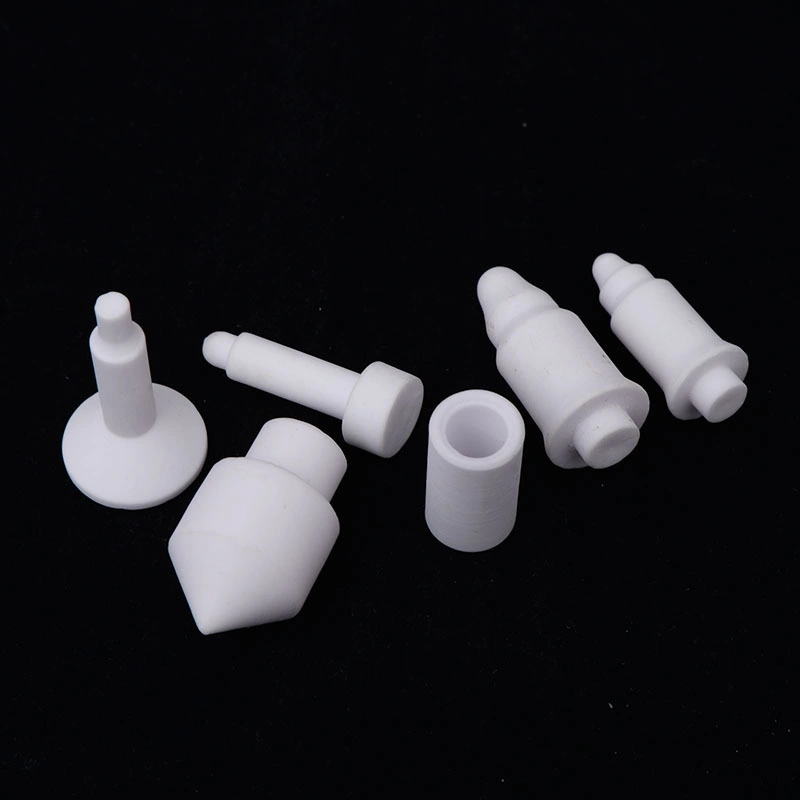
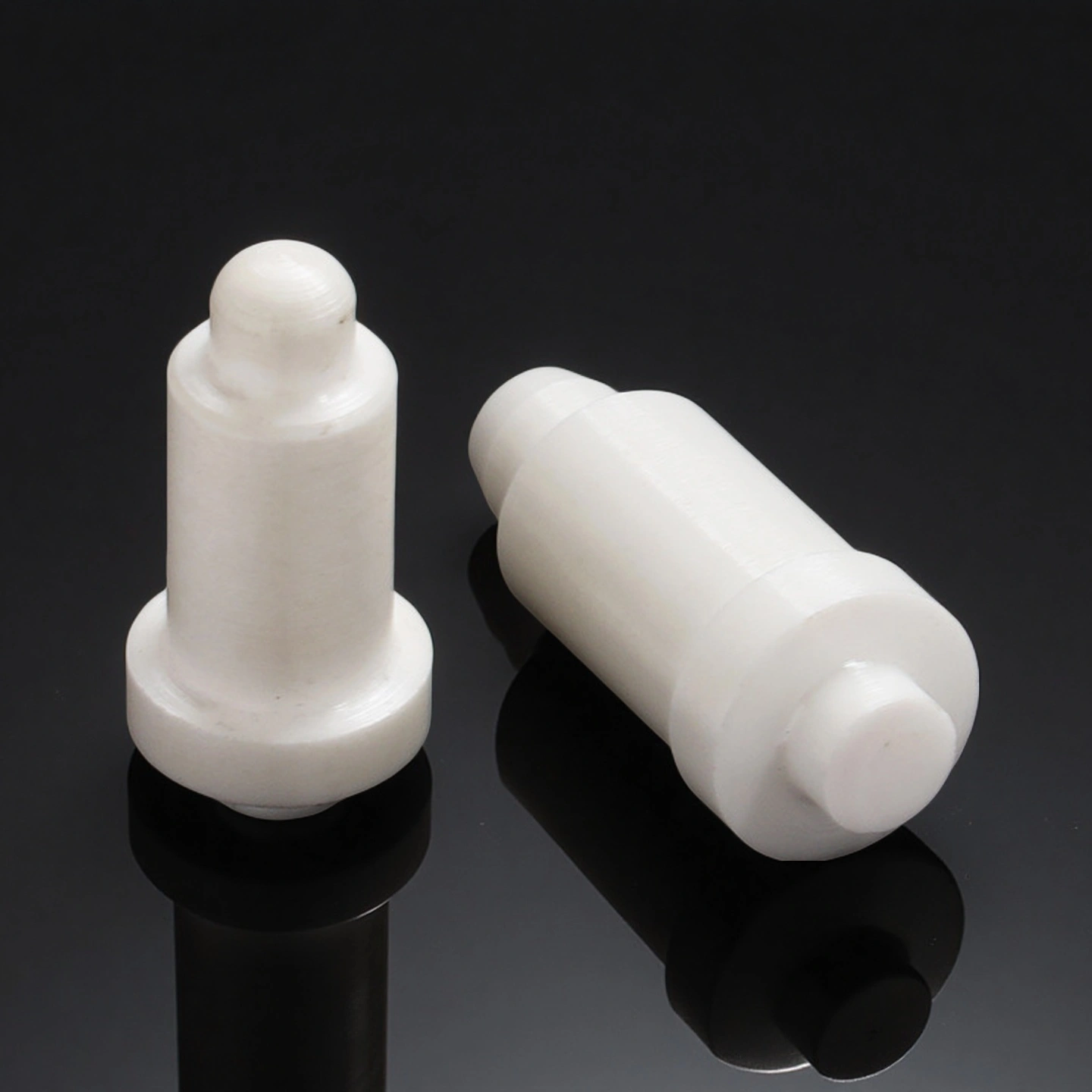
Alumina locating pin is a precision ceramic positioning component made from high-purity aluminum oxide (Al₂O₃). It is widely used in welding fixtures, robotic welding cells, checking fixtures, and high-temperature industrial equipment to accurately locate and support metal parts during processing.

Alumina Locating Pin Benefits

  • Stable diameter for high-cycle welding
    The high hardness of alumina (around 1700–1800 HV) keeps the locating diameter stable against wear, reducing fixture rework and calibration frequency in high-volume robotic welding cells.

  • Electrical insulation during projection and resistance welding
    The ceramic body provides high electrical resistivity, helping control current paths in nut welding and preventing unintended arcing through the pin body.

  • Reduced weld spatter adhesion compared with metal pins
    Alumina surfaces are less prone to spatter build-up than untreated steel pins, which helps maintain repeatable seating of nuts and sheet metal parts and lowers manual cleaning time on fixtures.

  • High-temperature capability for welding and furnace applications
    Depending on grade and design, alumina locating pins can tolerate welding thermal cycles up to around 1200 °C and furnace or lining applications approaching 1600–1700 °C.

  • Customizable heads and mounting features
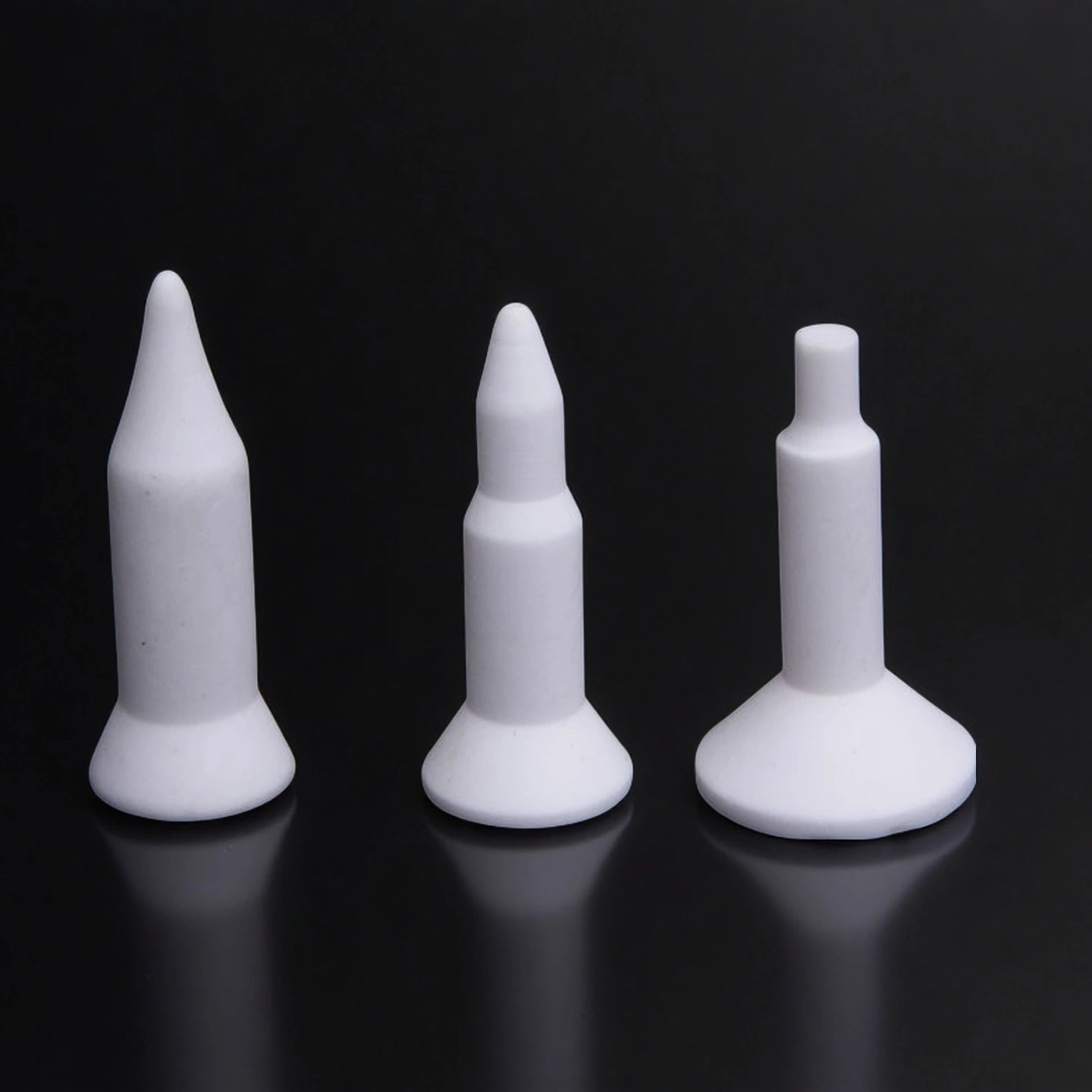
    Pins can be produced with cylindrical, tapered or spherical heads, with shoulders, threads, slots or other features to suit your existing fixture plates, mounting blocks and sleeves.


Alumina Locating Pin Properties

Property Unit 96% Al₂O₃ 99% Al₂O₃ 99.5% Al₂O₃ 99.6% Al₂O₃ 99.7% Al₂O₃ 99.8% Al₂O₃ 99.9% Al₂O₃ 99.99% Al₂O₃
Alumina content % 96 99 99.5 99.6 99.7 99.8 99.9 99.99
Density g/cm³ 3.6-3.75 3.83 3.89 3.91 3.92 3.93 3.94 3.98
Color white Ivory Ivory Ivory Ivory Ivory Ivory Ivory
Water absorption % 0 0 0 0 0 0 0
Young’s modulus (Elastic modulus) GPa 300 350 375 356 357 358 359 362
Shear modulus GPa 152
Bulk modulus GPa 228
Poisson’s ratio 0.22
Compressive strength MPa 1910 2210 2600 2552 2554 2556 2558 2570
Flexural strength MPa 260 300 379 312 313 314 315 320
Fracture toughness MPa·m¹ᐟ² 4
Hardness GPa 14.5 17 17 23 24 25 26 30
Thermal conductivity W/m·K 22 24 35 32–37 33–38 34–39 35–40 36–42
Thermal shock resistance ΔT °C 222 223 224 225 228
Maximum use temperature (no load) °C 1450 1680 ≤1750 1755 1760 1765 1770 1800
Coefficient of thermal expansion 10⁻⁶/°C 7.6 7.6 8.4
Volume resistivity Ω·cm >1×10¹⁴ >1×10¹⁴ >1×10¹⁴ >1×10¹⁴ >1×10¹⁴ >1×10¹⁴ >1×10¹⁴ >1×10¹⁴
Dielectric constant (relative permittivity) 9.2 9.5 9.8 9.83 9.84 9.85 9.86 9.92
Dielectric strength kV/mm 15 19 16.9 23.2 23.4 23.6 23.8 24
Dissipation factor (loss factor @ 1 kHz) 0.0002


Alumina Locating Pin Specifications

The following values are typical reference properties for alumina ceramic grades used in locating pins and fixture components. Final material grade, tolerance, surface finish and service suitability should be reviewed according to pin geometry, weld force, thermal cycle, mounting design and replacement target.

Alumina Locating Pin
Item No. Length(mm) Diameter (mm) Purity(%)
AT-YHL-DWX001 35.6 13.8 95-99
AT-YHL-DWX002 32.5 8.7 95-99
AT-YHL-DWX003 42.2 7.3 95-99
AT-YHL-DWX004 32.4 5.6 95-99
AT-YHL-DWX005 17.7 8 95-99
AT-YHL-DWX006 34.3 8.7 95-99
AT-YHL-DWX007 24.3 6 95-99
AT-YHL-DWX008 21.6 5.8 95-99
AT-YHL-DWX009 23.7 4.9 95-99
AT-YHL-DWX010 33.4 13.6 95-99
AT-YHL-DWX011 33.2 11 95-99
AT-YHL-DWX012 25.7 6.9 95-99
AT-YHL-DWX013 27.1 7.9 95-99
AT-YHL-DWX014 30 10 95-99
AT-YHL-DWX015 28.3 7.8 95-99
AT-YHL-DWX016 25.5 8 95-99
AT-YHL-DWX017 23.2 6.9 95-99
AT-YHL-DWX018 22.6 6.8 95-99
AT-YHL-DWX019 22 8.9 95-99
AT-YHL-DWX020 23 10.4 95-99
AT-YHL-DWX021 27.8 8.7 95-99
AT-YHL-DWX022 27.4 7.7 95-99
AT-YHL-DWX023 23.8 8.8 95-99
AT-YHL-DWX024 24.2 8.6 95-99
AT-YHL-DWX025 28.5 13 95-99
AT-YHL-DWX026 27.3 8.8 95-99
AT-YHL-DWX027 23.7 9.8 95-99
AT-YHL-DWX028 25.2 8.5 95-99
AT-YHL-DWX029 37 12 95-99
AT-YHL-DWX030 27.7 8.7 95-99
AT-YHL-DWX031 27.1 6.6 95-99
AT-YHL-DWX032 29 19 95-99

When to Choose Alumina Locating Pins

Choose alumina locating pins when your fixture needs electrical insulation, stable locating diameter, low weld spatter adhesion and good wear resistance at a controlled cost. Alumina is especially suitable for nut welding fixtures, projection welding tools, checking fixtures and automation cells where steel pins require frequent cleaning or replacement.

If the station has heavy impact, severe misalignment or strong thermal shock, silicon nitride or zirconia locating pins may be reviewed as alternative ceramic materials. ADCERAX can compare alumina, silicon nitride and zirconia based on load direction, weld cycle, pin geometry, replacement frequency and target cost.

Material Selection Comparison

Option Best Fit Buyer Concern It Solves
Alumina locating pin Welding fixtures needing insulation, hardness and cost control. Reduces wear, spatter build-up and current conduction compared with steel.
Silicon nitride locating pin High-impact or high-cycle nut welding stations. Better toughness and thermal shock behavior than alumina in some stations.
Zirconia locating pin Applications needing higher fracture toughness and polished contact. Helps when chipping risk is higher than normal alumina can handle.
Steel locating pin Low-cost, low-cycle fixtures with easy maintenance. Lower initial cost, but higher wear and spatter maintenance risk.
KCF-style pin Welding stations requiring insulation and proven field use. Useful for weld spatter and electrical isolation, but design and material choice must match station conditions.

Alumina Ceramic Locating Pin Packaging

  • Each alumina locating pin is separated by soft protective layers or individual sleeves to avoid chipping of the locating diameter and head during transport.
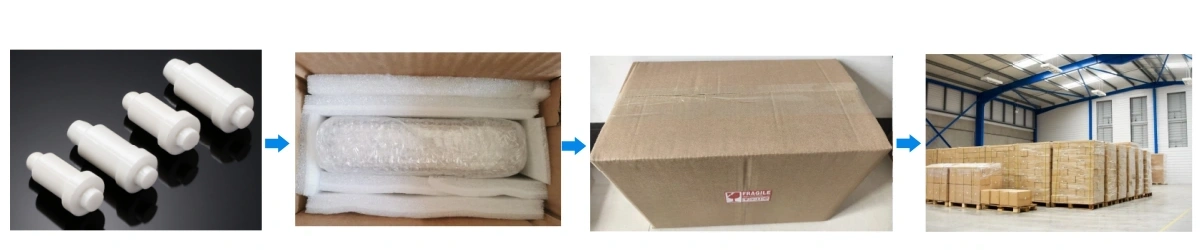

Alumina Ceramic Locating Pin Packaging

Al2O3 Locating Pin Applications

Alumina locating pins are used in fixture systems where accurate part positioning, electrical insulation, wear resistance and repeated production stability are required. In welding and automation environments, the pin is not only a positioning component. It also affects weld quality, fixture maintenance frequency, part loading accuracy and long-term tooling consistency.

  • Automotive Welding Fixtures and BIW Tooling

    Automotive welding fixtures use alumina locating pins to guide weld nuts, studs and sheet metal parts during resistance welding, projection welding and BIW assembly operations. In these stations, the locating pin must keep the part in the correct position while resisting wear, weld spatter build-up and repeated contact with metal components.

    Alumina is useful when steel locating pins begin to lose diameter, collect weld debris or require frequent cleaning. Its hard ceramic surface helps maintain a more stable locating reference across production cycles, while its electrical insulation can help control unwanted current paths around the fixture.

    For replacement projects, the pin geometry should be reviewed according to the weld nut size, hole clearance, loading direction, fixture seat design and the failure mode of the existing metal pin. This helps determine whether alumina is suitable or whether a tougher ceramic material should be considered.

  • Robotic Welding Cells and Automation Fixtures

    Robotic welding cells often run with limited manual adjustment time, so fixture repeatability is important for both part loading and robot path stability. Alumina locating pins provide stable ceramic reference points for automated fixtures that need accurate positioning, controlled insulation and predictable spare-part replacement.

    In automated production, a worn or contaminated locating pin can affect part fit-up, create loading variation or increase fixture touch-up work. A stable alumina locating surface can help reduce these problems by limiting wear and spatter adhesion during repeated operation.

    For robotic cells, ADCERAX can review the locating diameter, working length, head shape, shoulder position and mounting structure together. This is especially useful when the same fixture station handles multiple part variants or when a small pin geometry change may affect robot clearance.

  • High-Temperature Tooling and Furnace Fixtures

    In high-temperature tooling and furnace-related fixtures, alumina locating pins can be used as insulating supports, spacers, guide elements or positioning components where metal pins may oxidize, scale or deform. Alumina offers good temperature resistance, electrical insulation and dimensional stability in many thermal environments.

    These applications usually require more attention to thermal cycling, load direction and contact design. Sharp edges, impact loading or uneven thermal expansion may increase the risk of ceramic chipping, so chamfers, seat clearance and mounting structure should be reviewed before production.

    For furnace fixture use, the material grade, pin length, wall contact area and working temperature should be confirmed according to the actual operating condition. ADCERAX can review drawings or samples to help match the pin design with the required thermal and mechanical environment.

Al2O3 Locating Pin Usage Instructions

  • Installation

    1. Confirm pin material and drawing revision match the fixture documentation before installation.
    2. Inspect each alumina locating pin visually for chips on the locating diameter and head; reject pins with obvious damage.
    3. Align the pin shank with the fixture bore or sleeve carefully and insert by hand where possible; avoid hammering the ceramic body.
    4. Use appropriate clamping (collars, threaded ends, clamps) on the mounting side rather than forcing the ceramic portion against misaligned plates.

  • Use

    1. Apply alumina locating pins only within the specified load, temperature and clamping conditions in your welding or furnace design.
    2. Avoid using pins as levers or pry bars when releasing parts; design separate ejectors or supports for that purpose.
    3. In welding fixtures, keep nuts and sheet metal holes free from heavy burrs that could impact the pin surface.

  • Storage

    1. Store spare alumina locating pins in padded trays or compartments where they cannot impact each other.
    2. Keep storage boxes dry and clean to avoid contamination that might transfer to fixture seats.
    3. Label trays by size, drawing number and fixture to simplify traceability and replacement planning.

  • Cleaning

    1. Remove loose weld spatter and deposits with non-metallic tools (plastic or fibre scrapers) to avoid surface scratching.
    2. For stubborn build-up, use suitable chemical agents or blasting media authorised for ceramic surfaces, following your plant’s safety procedures.
    3. Do not quench hot ceramic pins in water or oil to avoid thermal shock; allow controlled cooling before cleaning.

  • Cautions

    1. Avoid sharp impact on the ceramic head or diameter; even high-strength alumina can chip when hit by hard tools.
    2. Do not exceed recommended service temperature or rapid temperature swings beyond your process design.
    3. Do not modify ceramic pins by grinding or cutting without consulting the supplier, as it may introduce micro-cracks.

  • Common user issues and guidance

    1. Issue: unexpected chipping at the locating edge
    Guidance: review how parts are loaded; if operators slide sharp-edged holes onto the pin, introduce lead-in chamfers on the workpiece or specify a larger chamfer radius on the pin.

    2. Issue: shorter-than-expected lifetime in one station
    Guidance: compare thermal and mechanical loads between stations; if one pin sees higher spatter or impact, consider an alternative head design, sleeve support, or different ceramic grade for that position.

    3. Issue: difficulty replacing pins in the fixture
    Guidance: ensure mounting design includes accessible clamping from the cold side (threads, collars or set screws) and avoid designs where the ceramic must be pressed out through tight steel bores.

Alumina Locating Pin FAQ

  1. What is an alumina locating pin used for?
    An alumina locating pin is used to position weld nuts, studs, sheet metal parts or fixture references in welding tools, robotic cells and checking fixtures. It provides a hard, electrically insulating ceramic locating surface where steel pins may wear, collect spatter or conduct current.
  2. When should I choose alumina instead of steel locating pins?
    Alumina is usually selected when steel locating pins wear too quickly, require frequent spatter cleaning, affect electrical isolation or lose dimensional accuracy in repeated welding cycles. Steel may still be suitable for low-cycle fixtures where cost is the main concern.
  3. Is alumina better than silicon nitride for welding locating pins?
    Alumina offers high hardness, insulation and cost efficiency, while silicon nitride can provide better toughness and thermal shock resistance in more severe stations. The better choice depends on impact load, weld cycle, alignment condition, pin geometry and replacement cost.
  4. What information is needed for a custom alumina locating pin quotation?
    Please provide the pin drawing or sample, guide diameter, tolerance, total length, working length, head shape, shoulder position, mounting style, material grade, surface finish, application condition and expected quantity. Sharing the current failure mode also helps material selection.
  5. Can alumina locating pins be made with threads, shoulders or special heads?
    Yes. Alumina locating pins can be made with cylindrical, tapered, spherical or flat heads, as well as shoulders, stepped bodies, threaded mounting ends, flats, slots, chamfers and identification grooves according to the fixture design.
  6. How can chipping be reduced during installation and use?
    Avoid hammering, side loading, over-tightening or forcing the ceramic pin through misaligned bores. Use proper chamfers, controlled clamping, clean fixture seats and suitable loading guidance so the workpiece does not strike the ceramic edge.
customize size

Custom Alumina Locating Pin Supplier

ADCERAX supplies alumina locating pins as standard sizes and fully custom parts based on your drawing or sample, so you can match existing fixture layouts or redesign pins to increase service life in demanding welding cells. Each alumina locating pin can be optimized for diameter, length, head geometry and mounting style to fit your jig and process window.

  • Locating diameter and tolerance
    • Typical diameters: 4–20 mm (smaller or larger by agreement)
    • Tolerances: up to h6/h7 or application-specific limits

  • Overall length and working length
    • Pin length: 20–150 mm
    • Effective locating length; shoulder position; under-head relief

  • Head design and end details
    • Cylindrical, tapered, spherical or flat heads
    • Stepped pins, double-diameter pins, countersink-compatible heads
    • Mounting ends with straight shank, metric thread or slot

  • Cross-section and special forms
    • Round pins as standard
    • Option for non-round location features: flats, keyways, anti-rotation shapes

  • Material grade and colour
    • 95–99.5% alumina grades
    • White or ivory body; contrast markings if requested

  • Surface finish
    • Ground locating diameter for smooth entry into workpiece holes
    • Polished or fine-ground head surface for reduced spatter adhesion

  • Additional details
    • Chamfers and radii at entry edges
    • Identification grooves or laser-marked reference codes on the shank

Related Products

ADCERAX - Your Trusted Advanced Ceramics Manufacturing Partner

Direct factory manufacturing with comprehensive ceramic materials expertise and global supply capabilities

China-Based Manufacturer

ADCERAX supplies ceramic components for overseas OEMs, equipment builders, and labs.

Custom Drawing Support

We review drawings, dimensions, materials, and application conditions before quotation.

Ceramic Process Control

Forming, sintering, machining, grinding, and finishing are arranged by part requirements.

Pre-Shipment Inspection

Dimensional checks, visual inspection, and packaging review help reduce procurement risk.

Get in Touch with Us

Our team will be happy to respond to you in less than 24 hours.

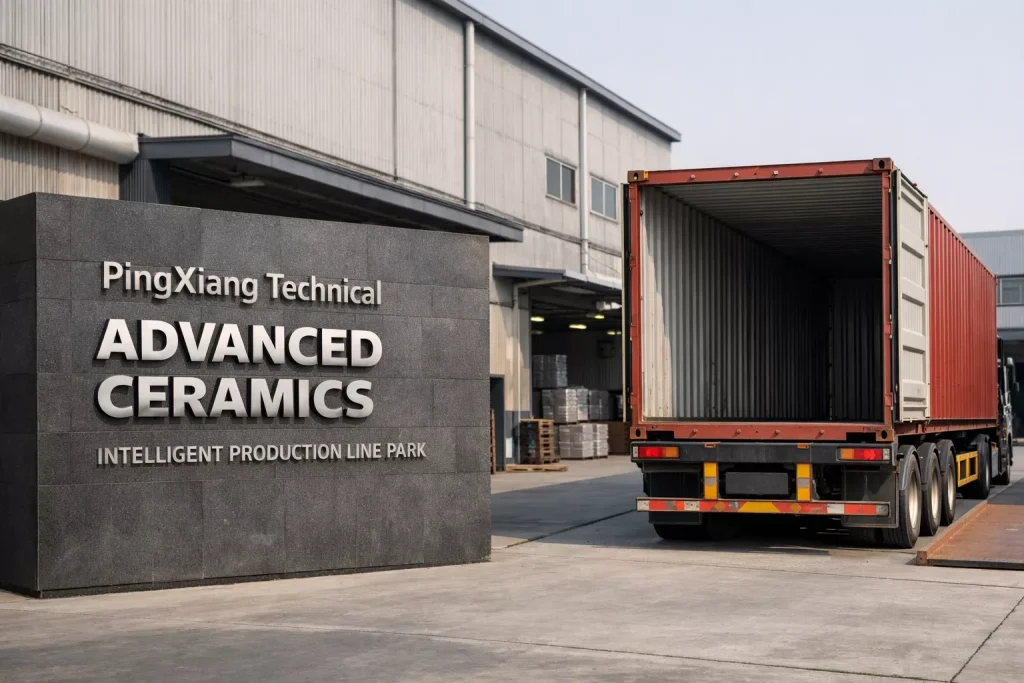
Pingxiang Factory — Silicon carbide, silicon nitride, high-temperature ceramics

Quick Quotation

*Our team will answer your inquiries within 24 hours.

*Your information will be kept strictly confidential.

Ready to Solve Your Engineering Challenge?

Partner with ADCERAX for reliable, high-performance advanced ceramic solutions. Our engineers are ready to discuss your project.

E-mail

info@adcerax.com

Phone

+(86) 0731-74427743 | WhatsApp: +(86) 19311583352

Response Time

Within 24 hours

Quick Quote

The more details you provide, the faster we can quote.

*We respond within 24 hours. All inquiries are confidential.

Get Your Custom Solution

The more details you provide, the faster we can respond.

customize size

*We respond within 24 hours. All inquiries are confidential.

Download Catalog