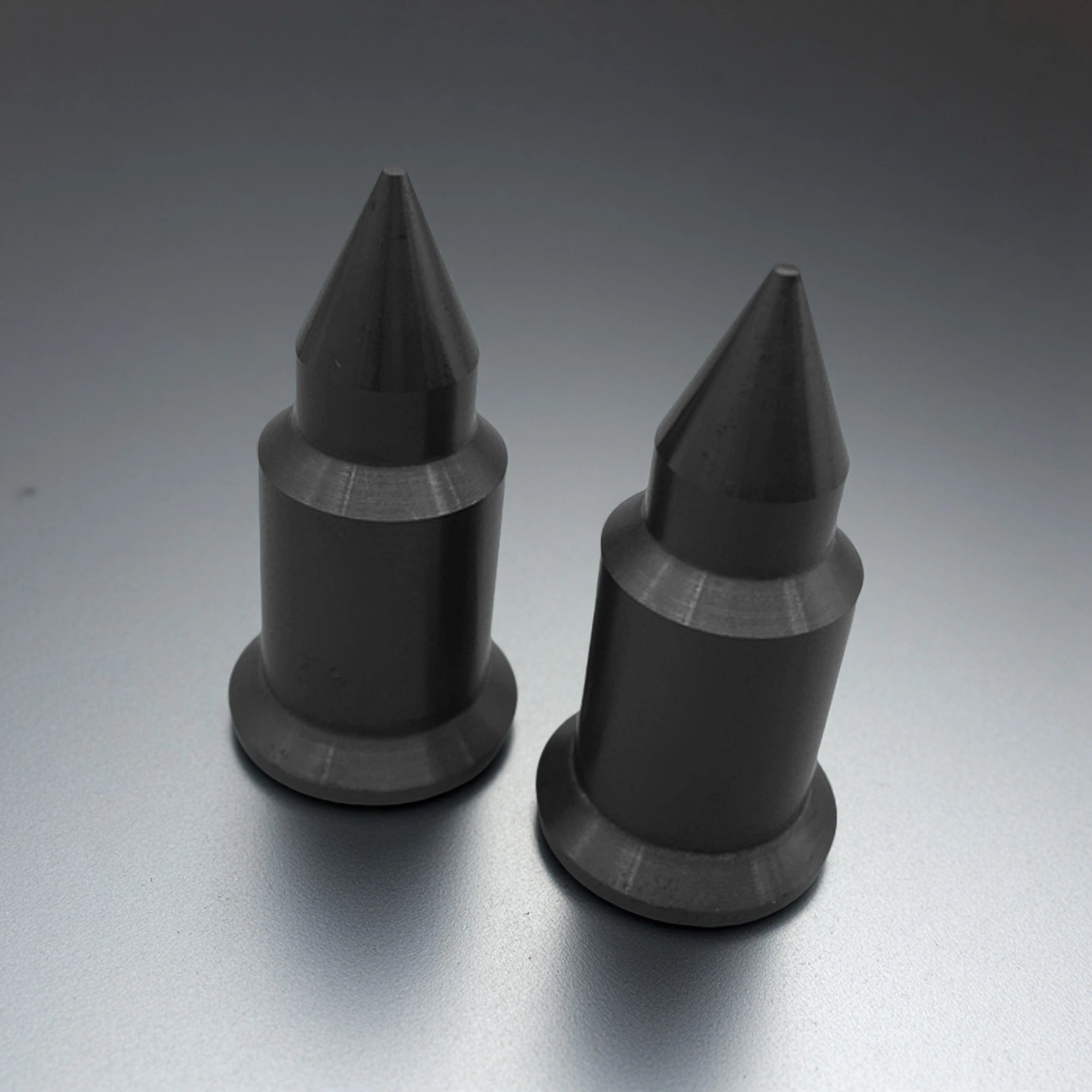
Silicon Nitride Ceramic Locating Pin/Guide for Nut Projection Welding on Sheet Metal

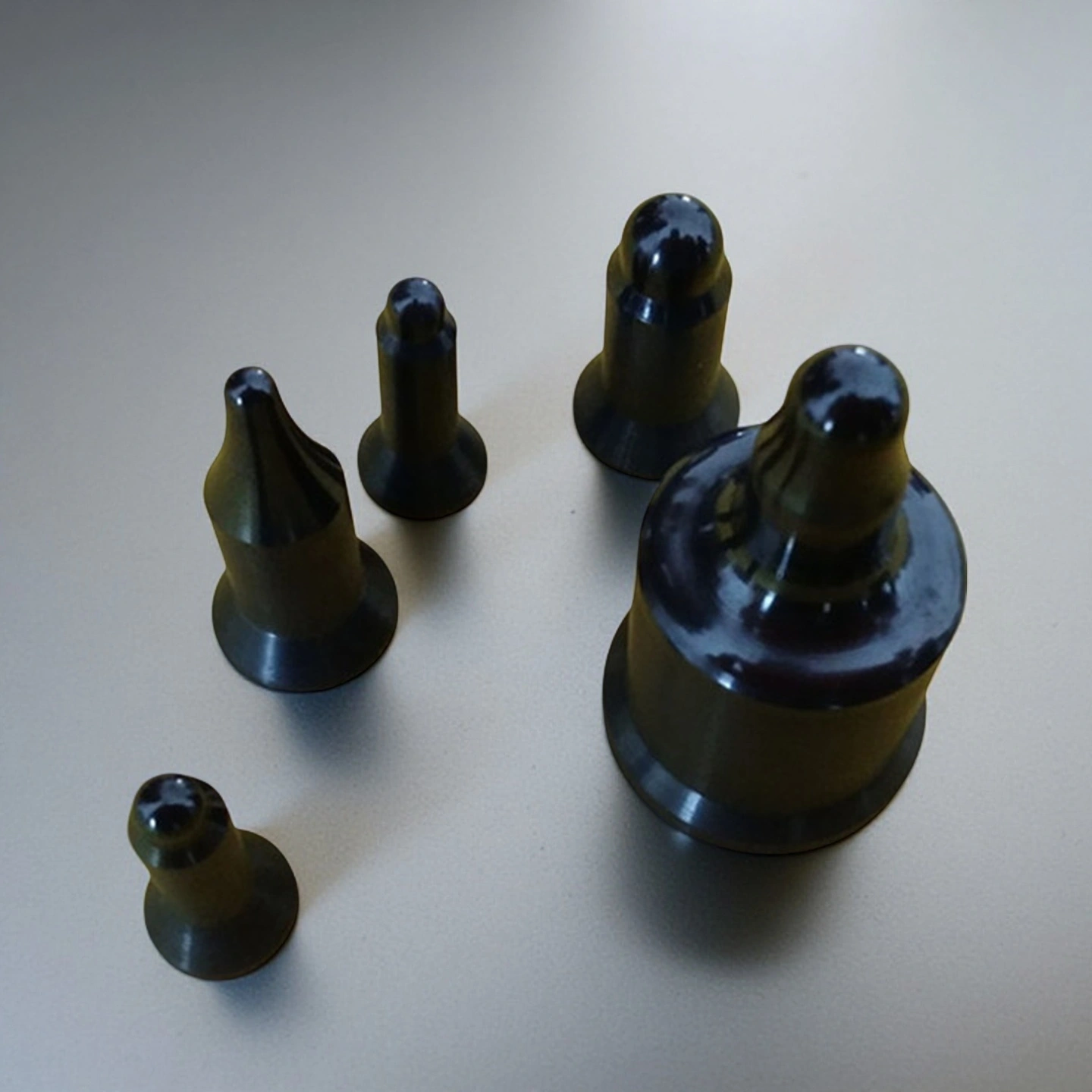
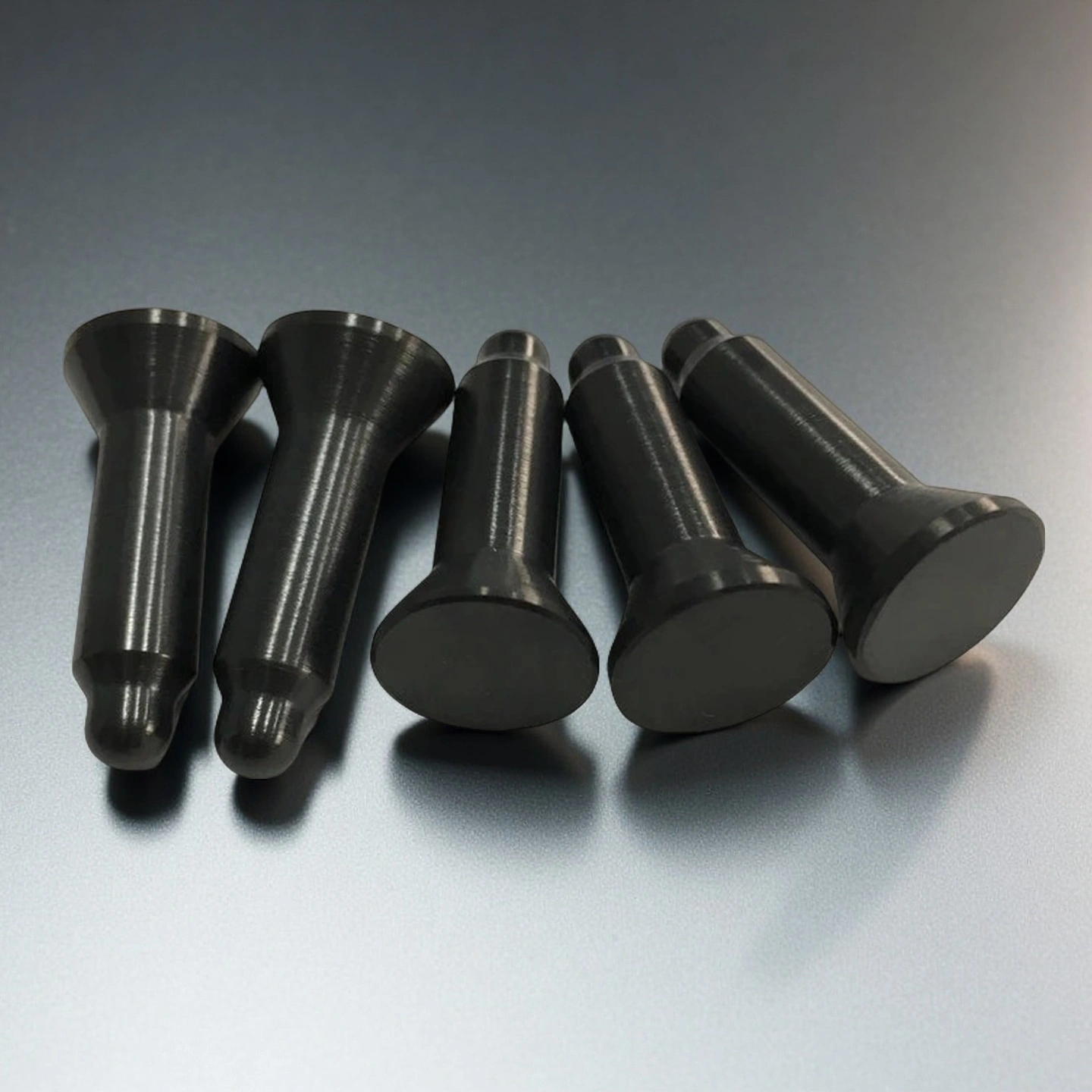
Silicon nitride ceramic locating pins are used in nut projection welding fixtures to center weld nuts, guide studs and maintain stable positioning during repeated weld cycles. Compared with steel or KCF locating pins, Si₃N₄ ceramic pins provide electrical insulation, low spatter adhesion, high hardness and better dimensional stability under heat and mechanical load.

ADCERAX supplies standard and custom Si₃N₄ guide pins for M4–M12 weld nut formats, with drawing-based control of guide diameter, shoulder geometry, nose profile, mounting length and surface finish.

Catalogue No. AT-SIN-DW1001
Material Silicon Nitride
Thermal Expansion Coefficient ≤3.2 × 10⁻⁶/K
Surface Roughness  Ra ≤ 0.2μm
Recommended service temperature 1000–1200°C
Engineering RFQ Review
Small-Batch Custom Support
Factory-Direct Manufacturing
Drawing & Process Review

What Is a Silicon Nitride Ceramic Locating Pin?

A silicon nitride ceramic locating pin is a precision Si₃N₄ guide component used to position weld nuts, studs or small metal parts inside resistance and projection welding fixtures. The pin enters the nut bore or locating hole, keeps the part concentric to the sheet metal opening, and helps maintain repeatable alignment during high-cycle welding.

Because silicon nitride is electrically insulating, hard, thermally stable and less prone to weld spatter adhesion than many metal pins, it is often selected for automated nut welding stations where steel or KCF pins wear quickly, deform, collect spatter or require frequent replacement.

Why Use Si₃N₄ Locating Pins in Nut Projection Welding?

In nut projection welding, the locating pin is exposed to repeated mechanical contact, short thermal cycles, weld spatter, nut feeding variation and fixture clamping force. If the pin wears, deforms or collects metal build-up, nut position can drift and downstream assembly quality may be affected.

Silicon nitride ceramic locating pins are designed for fixtures where stable positioning, electrical insulation and lower maintenance frequency are more important than the lowest initial pin cost.

1. Stable Nut Positioning

The hard ceramic guide surface helps maintain bore alignment and shoulder reference during repeated weld cycles.

2. Electrical Isolation

Si₃N₄ helps prevent the locating pin from becoming an unintended current path in the fixture.

3. Lower Spatter Build-Up

A smooth ceramic surface can reduce adhesion and cleaning work compared with many metal pins.

4. Better Maintenance Planning

Longer inspection intervals may be possible when pin wear, jamming and deformation are controlled.

Silicon Nitride Locating Pin Properties

Si3N4 Type Gas pressure sintering Si3N4 Hot pressing sintering Si3N4 High thermal conductivity Si3N4
Density (g/cm3) 3.2 3.3 3.25
Flexural Strength (MPa) 700 900 600~800
Young Modulus (GPa) 300 300 300~320
Poisson's ratio 0.25 0.28 0.25
Compressive strength (MPa) 2500 3000 2500
Hardness (GPa) 15 16 15
Fracture toughness (MPa*m1/2) 5~7 6~8 6~7
Maximum working temperature (℃) 1100 1300 1100
Thermal conductivity (W/m*K) 20 25 80~100
Thermal expansion coefficient (/℃) 3*10-6 3.1*10-6 3*10-6
Thermal shock resistance (ΔT ℃) 550 800 /


Si3N4 Ceramic Guide Pin Specifications

Silicon Nitride Ceramic Locating Pin
Item No. Specification Diameter (mm) Length (mm)
AT-SIN-DW1001 M5 Round Head 5.8 26.5
AT-SIN-DW1002 M6 Round Head 6.8 25.9
AT-SIN-DW1003 M8 Round Head 8.8 25.75
AT-SIN-DW1004 M10 Round Head 10.8 28.8
AT-SIN-DW1005 M12 Round Head 12.8 31.1
AT-SIN-DW1006 7/16 Round Head 12.8 30.65
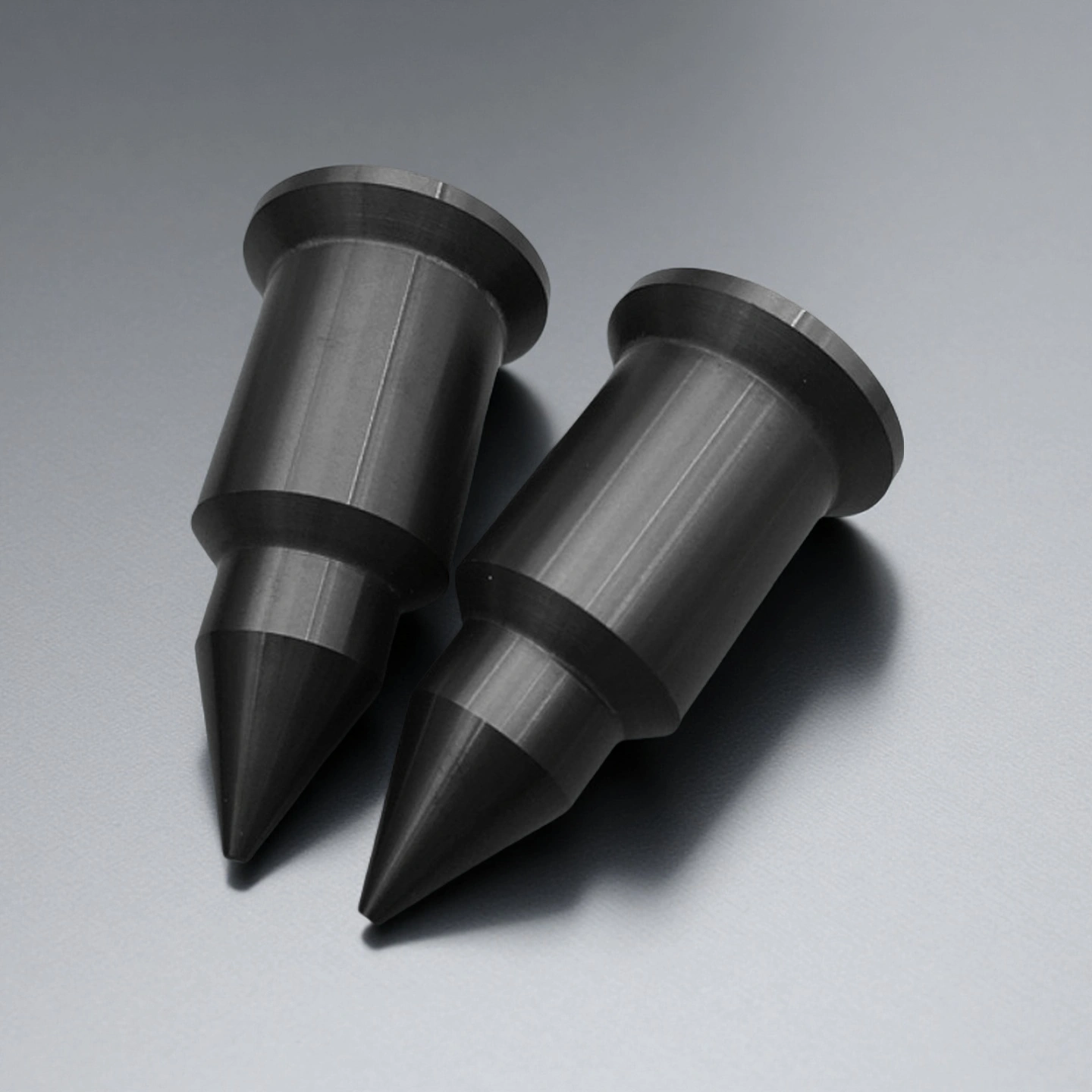
AT-SIN-DW1007 M4 Pointed Head 4.8 29
AT-SIN-DW1008 M5 Pointed Head 5.8 30
AT-SIN-DW1009 M6 Pointed Head 6.8 31.5
AT-SIN-DW1010 M8 Pointed Head 8.8 31.5
AT-SIN-DW1011 M10 Pointed Head 10.8 34.5
AT-SIN-DW1012 M12 7/16 Pointed Head 12.8 35.8


Si₃N₄ vs Steel and KCF Locating Pins

Steel and KCF locating pins are still widely used in welding fixtures because they are economical and easy to replace. However, in high-volume nut welding stations, pin wear, deformation, spatter build-up and current-related heating can increase downtime and inspection work. Silicon nitride ceramic pins are usually selected when maintenance stability and weld-position repeatability matter more than initial unit price.

Selection Factor Si₃N₄ Ceramic Locating Pin KCF Locating Pin Steel Locating Pin
Electrical Insulation Excellent Good surface insulation when coating remains intact Poor
Wear Resistance High Moderate to good Moderate
Spatter Adhesion Low on polished surface Moderate Higher
Heat Stability Good for welding fixture duty Limited by coating and base material May soften or deform depending on grade
Dimensional Stability Strong under repeated cycles Can change as coating wears Can wear or deform faster
Chipping Risk Requires careful handling Lower ceramic chipping risk Low brittleness risk
Best Use Case High-volume automated welding cells General welding fixture use Low-cost, easy replacement stations

Silicon Nitride Locating Pin Packaging

  • Each silicon nitride ceramic locating pin is individually wrapped to prevent pin-to-pin contact.
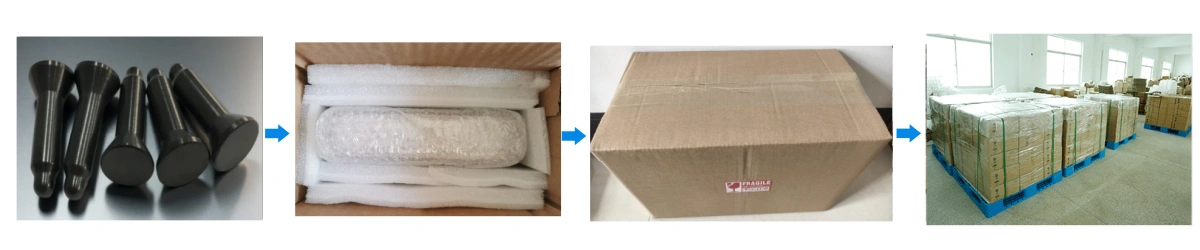
Silicon Nitride Ceramic Locating Pin

Application Scenarios for Silicon Nitride Ceramic Locating Pins

Silicon nitride locating pins are mainly used in welding fixtures where nut position, electrical isolation and pin wear control affect production stability. They are most suitable for automated or high-volume stations where frequent pin replacement causes downtime, scrap risk or fixture maintenance pressure.

Application Welding Fixture Challenge Si₃N₄ Locating Pin Advantage
Automotive BIW Nut Welding Weld nuts must stay concentric with sheet metal holes through repeated projection welding cycles. If the locating pin wears, nut position may drift and affect downstream body assembly accuracy. The hard and dimensionally stable Si₃N₄ guide surface helps maintain accurate nut positioning, while electrical insulation reduces the risk of unwanted current flow through the locating pin.
Chassis and Bracket Welding Chassis and bracket fixtures often face higher clamping force, weld spatter and mechanical impact. Steel pins may deform, wear at the guide section or collect metal build-up around the shoulder. Silicon nitride provides high hardness, good wear resistance and lower spatter adhesion, helping reduce fixture cleaning work and unplanned pin replacement in demanding welding stations.
Robotic Welding Fixtures Automated welding cells need predictable nut feeding, stable pin location and consistent fixture uptime. Small changes in pin geometry can cause nut jamming, misloading or production interruption. Custom Si₃N₄ locating pins can be machined with controlled nose profiles, chamfers, shoulders and guide diameters to improve feeding stability and support repeatable robotic welding operation.
Aluminum or Mixed-Material Welding Trials Aluminum or mixed-material welding may create different thermal behavior, spatter patterns and material interaction compared with standard steel welding. Metal pins may not provide enough insulation or surface stability. Si₃N₄ ceramic can be tested where electrical insulation, low reactivity and stable surface condition are required, making it suitable for welding trials, process validation and special fixture development.
Fixture Retrofit Projects Existing steel or KCF locating pins may fail too often, but the holder, mounting space and nut design cannot be changed easily. A replacement pin must fit the current fixture layout. ADCERAX can machine custom silicon nitride replacement pins based on drawings, samples or 3D models, helping customers keep the original holder design while improving wear and spatter resistance.

Silicon Nitride Ceramic Locating Pin Usage Instructions

  • Installation

    1. Verify that the silicon nitride ceramic locating pin dimensions and nut type match the fixture drawing before installation.
    2. Clean the pin bore and mounting surfaces to remove any remaining metal or ceramic fragments from previous pins.
    3. Insert the pin by hand, align the shoulder, and tighten clamping elements or threaded retainers with controlled torque; avoid impact tools on the ceramic body.

  • Operation

    1. Confirm that the nut feeder presents the weld nut squarely onto the guide section of the Si3N4 locating pin.
    2. Check that the welding circuit is designed so current flows through the nut and sheet, not through the locating pin.
    3. Introduce periodic visual checks of the nose and shoulder during production to detect early wear or damage.

  • Storage

    1. Store spare silicon nitride ceramic locating pins in dedicated trays or foam inserts to prevent contact between pins.
    2. Keep pins away from loose heavy tools or parts that could strike and chip the ceramic edges.
    3. Label each compartment with nut size, diameter and station ID to support quick replacement in the welding cell.

  • Cleaning and Maintenance

    1. Include a schedule for inspecting locating pins based on weld count or production hours.
    2. Remove light spatter with plastic or brass scrapers; avoid steel tools that can scratch and stress the ceramic surface.
    3. Replace the pin if chipping affects the guide nose or shoulder that controls nut position, even if the rest of the pin appears intact.

Frequently Asked Questions About Silicon Nitride Ceramic Locating Pins

  1. Q: What is a silicon nitride ceramic locating pin used for?
    A: A silicon nitride ceramic locating pin is used to center and guide weld nuts, studs or small metal parts in resistance and projection welding fixtures. It helps maintain nut position, reduces current shunting through the pin and supports stable fixture performance in repeated welding cycles.
  2. Q: Why choose Si₃N₄ ceramic instead of steel or KCF locating pins?
    A: Si₃N₄ ceramic is selected when steel or KCF pins wear quickly, deform, collect spatter or require frequent replacement. Silicon nitride provides electrical insulation, high hardness, low thermal expansion and a smooth surface that can reduce spatter adhesion and nut jamming.
  3. Q: Can ADCERAX make locating pins according to my existing fixture drawing?
    A: Yes. ADCERAX can produce custom silicon nitride guide pins from drawings, 3D models or samples. Guide diameter, shoulder height, nose profile, mounting length, transition radius and surface finish can be reviewed and machined according to the fixture requirement.
  4. Q: What information should I provide for a custom Si₃N₄ locating pin quotation?
    A: Please provide the weld nut size, existing pin drawing or sample, guide diameter, tolerance requirements, shoulder geometry, overall length, mounting style, weld station condition and expected quantity. If the part replaces a steel or KCF pin, sharing the current failure mode is also helpful.
  5. Q: Are silicon nitride locating pins suitable for high-volume automotive nut welding?
    A: Yes, they are commonly considered for high-volume BIW, chassis, bracket and automated nut welding fixtures where pin wear, spatter build-up or frequent maintenance affects production stability. Final service life depends on weld force, nut feeding quality, fixture alignment and inspection practice.
  6. Q: How should ceramic locating pins be handled during installation and maintenance?
    A: Ceramic locating pins should not be hammered, over-tightened or contacted by loose metal tools. Use controlled installation, inspect the nose and shoulder regularly, clean light spatter with non-steel tools and replace the pin if chipping affects the functional locating surface.
customize size

Custom Silicon Nitride Ceramic Locating Pins 

ADCERAX machines each silicon nitride ceramic locating pin from dense Si₃N₄ blanks to match fixture requirements and existing pin designs. Welding engineers and fixture builders can either select standard sizes for common nut dimensions or send drawings and 3D models for fully custom shapes.

1. Nut and sheet interface

  • Weld nut size and type: M4, M5, M6, M8, M10, M12 and special sizes
  • Fit to nut bore: clearance, transition or light press fit
  • Shoulder diameter and height to match nut seat and sheet thickness

2. Pin body geometry

  • Shank diameter (typical 4–20 mm), with optional steps or flats
  • Overall length from about 30–150 mm
  • Compatible with NAAMS-style locating pin dimensions where required

3. Nose and entry features

  • Cylindrical, conical, spherical or blended nose profiles
  • Chamfers and radii for quick nut pickup and smooth release
  • Relief grooves or reduced sections to limit contact surface and spatter build-up

4. Mounting and retention

  • Straight shank for collet clamping
  • Threaded shank or stepped designs for specific holders
  • Orientation flats or key forms for asymmetric parts

5. Surface condition

  • Ground functional diameters for consistent fit
  • Polished nose sections to minimise friction and sticking

Related Products

ADCERAX - Your Trusted Advanced Ceramics Manufacturing Partner

Direct factory manufacturing with comprehensive ceramic materials expertise and global supply capabilities

China-Based Manufacturer

ADCERAX supplies ceramic components for overseas OEMs, equipment builders, and labs.

Custom Drawing Support

We review drawings, dimensions, materials, and application conditions before quotation.

Ceramic Process Control

Forming, sintering, machining, grinding, and finishing are arranged by part requirements.

Pre-Shipment Inspection

Dimensional checks, visual inspection, and packaging review help reduce procurement risk.

Get in Touch with Us

Our team will be happy to respond to you in less than 24 hours.

Pingxiang Factory — Silicon carbide, silicon nitride, high-temperature ceramics

Quick Quotation

*Our team will answer your inquiries within 24 hours.

*Your information will be kept strictly confidential.

Ready to Solve Your Engineering Challenge?

Partner with ADCERAX for reliable, high-performance advanced ceramic solutions. Our engineers are ready to discuss your project.

E-mail

info@adcerax.com

Phone

+(86) 0731-74427743 | WhatsApp: +(86) 19311583352

Response Time

Within 24 hours

Quick Quote

The more details you provide, the faster we can quote.

*We respond within 24 hours. All inquiries are confidential.

Get Your Custom Solution

The more details you provide, the faster we can respond.

customize size

*We respond within 24 hours. All inquiries are confidential.

Download Catalog