
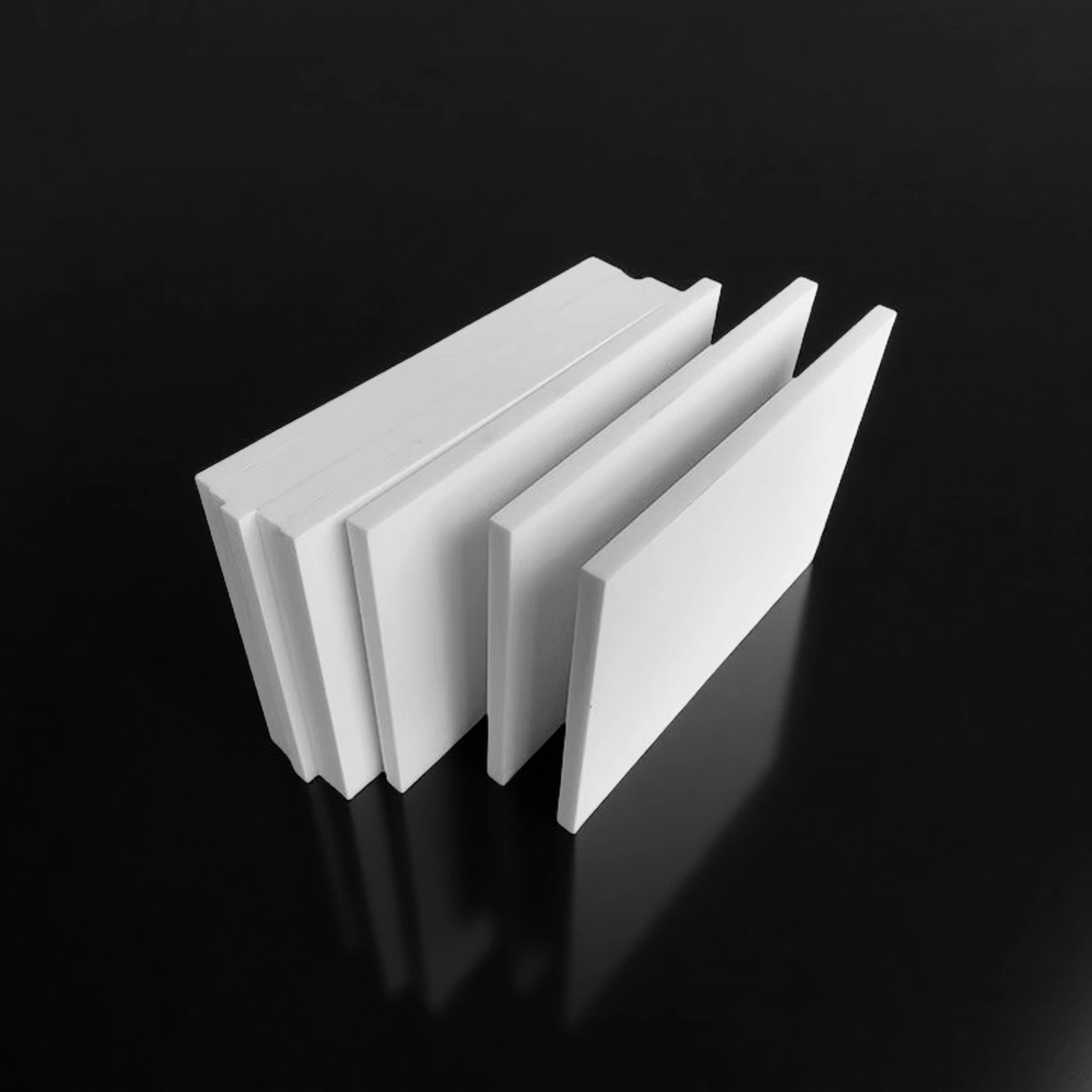
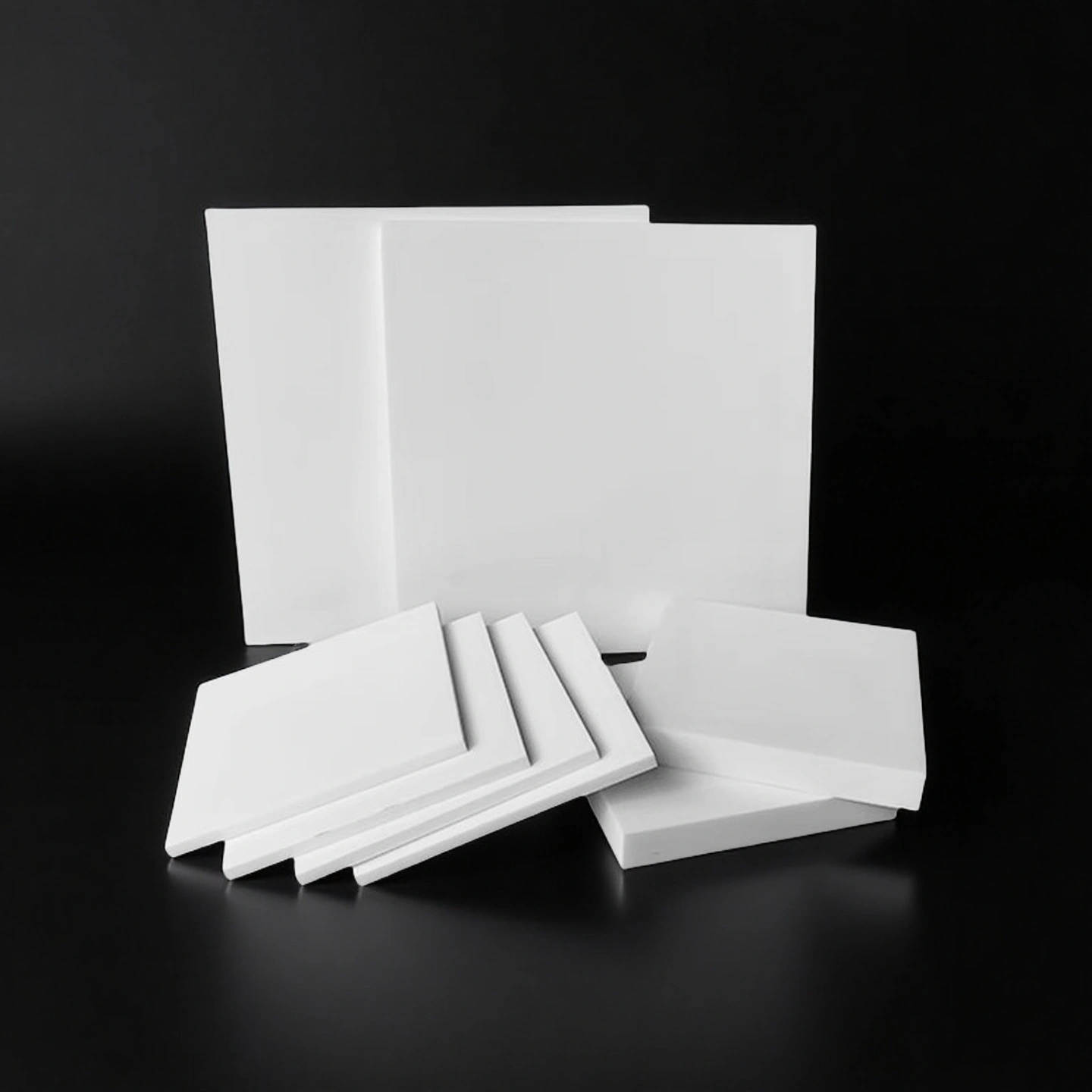
ZTA Ceramic Plates for Wear, Support and Precision Fixtures

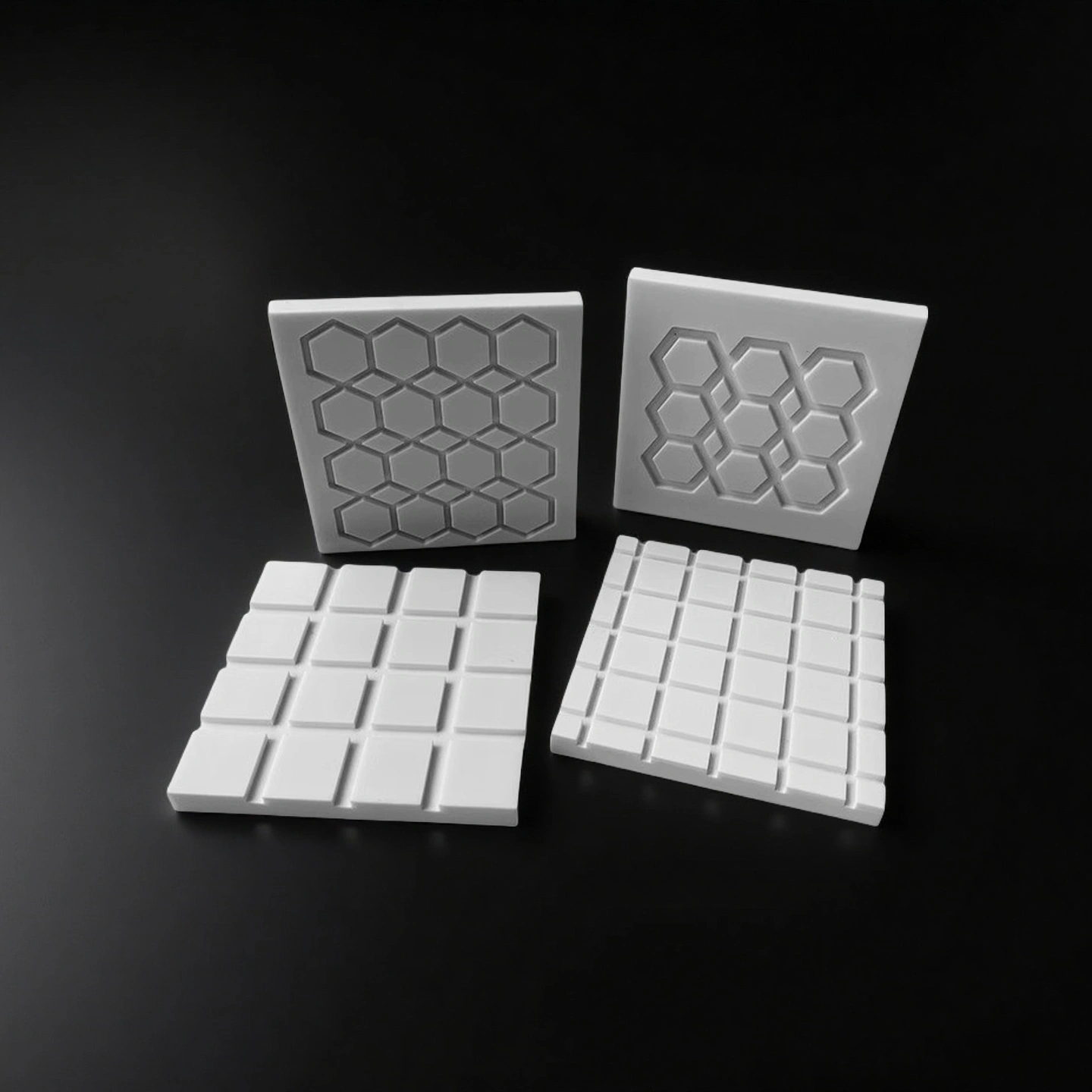
ZTA ceramic plates for wear-contact faces, kiln support and precision fixtures. Choose a catalogue size or define the plate on your drawing, with ground, polished or sandblasted working faces and holes or slots as needed.

Catalog No. AT-ZRG001
Material Al2O3 + ZrO2
Mounting details Holes, slots, edge relief and support to drawing
Working faces Ground, polished or sandblasted; one or both sides
Dimensions/Sizes Download PDF
Engineering RFQ Review
Small-Batch Custom Support
Drawing-Based Production
Drawing & Process Review

What Is a ZTA Ceramic Plate?

A zirconia toughened alumina (ZTA) plate is a flat ceramic part formed from an alumina (Al₂O₃) matrix with dispersed zirconia (ZrO₂) particles. The zirconia is added to absorb part of the stress at small cracks, which changes how the plate behaves at edges and impact zones compared with a plain alumina plate. The plate itself is a fired ceramic; the grade, forming route, working face, support and fixing are defined for each order.

ZTA Ceramic Plates Specifications

ZTA Plate
Item No. Length (mm) Width (mm) Thickness (mm)
AT-ZR-CB001 50 25 5-12
AT-ZR-CB002 50 50 5-20
AT-ZR-CB003 100 100 6-30
AT-ZR-CB004 120 80 8-30
AT-ZR-CB005 150 100 6-50
AT-ZR-CB006 100 25 5-15
AT-ZR-CB007 100 50 6-30
AT-ZR-CB008 100 75 12-50
AT-ZR-CB009 150 50 6-50
AT-ZR-CB010 70 70 10-25
AT-ZR-CB011 75 50 6-15
AT-ZR-CB012 120 100 6-25
AT-ZR-CB013 120 50 6-25
AT-ZR-CB014 100 80 6-25
AT-ZR-CB015 150 75 6-50
AT-ZR-CB016 27 27 5-18
AT-ZR-CB017 37.5 37.5 5-18
AT-ZR-CB018 39.2 39.2 6-18
AT-ZR-CB019 50 30 5-15

Download Size Guide


ZTA Ceramic Plate Material Properties

The values below are typical selection values for plate grade AD-ZTA series, a dry-pressed or CIP-formed plate. They describe the material, not a finished plate size or a design allowance for your assembly.

Property Unit and basis AD-ZTA-20-P
Bulk density g/cm³; typical 4.20
Flexural strength MPa; typical selection value 500
Compressive strength MPa; typical 2100
Young's modulus GPa; typical 310
Vickers hardness HV; typical 1650
Water absorption %; rounded nominal result 0
Surface roughness, Ra µm; specified plate surface <0.6
Color Visual White / off-white


How to Choose a ZTA Ceramic Plate

1. Define the Application

Identify whether the plate serves as a wear face, thermal or support plate, or precision fixture insert.

Provide: Equipment type, contact location and the component being protected or supported.

2. Confirm Contact and Loading

  • Wear applications: Particle size and hardness, flow speed, impact angle, and sliding or impact contact.
  • Support applications: Applied load, support points, contact area and allowable deflection.

3. Specify Operating Conditions

Include:

  • Continuous and peak temperatures
  • Operating atmosphere
  • Heating and cooling rates
  • Number of thermal cycles

For precision fixtures, define how flatness is checked after cycling.

4. Define Plate Geometry

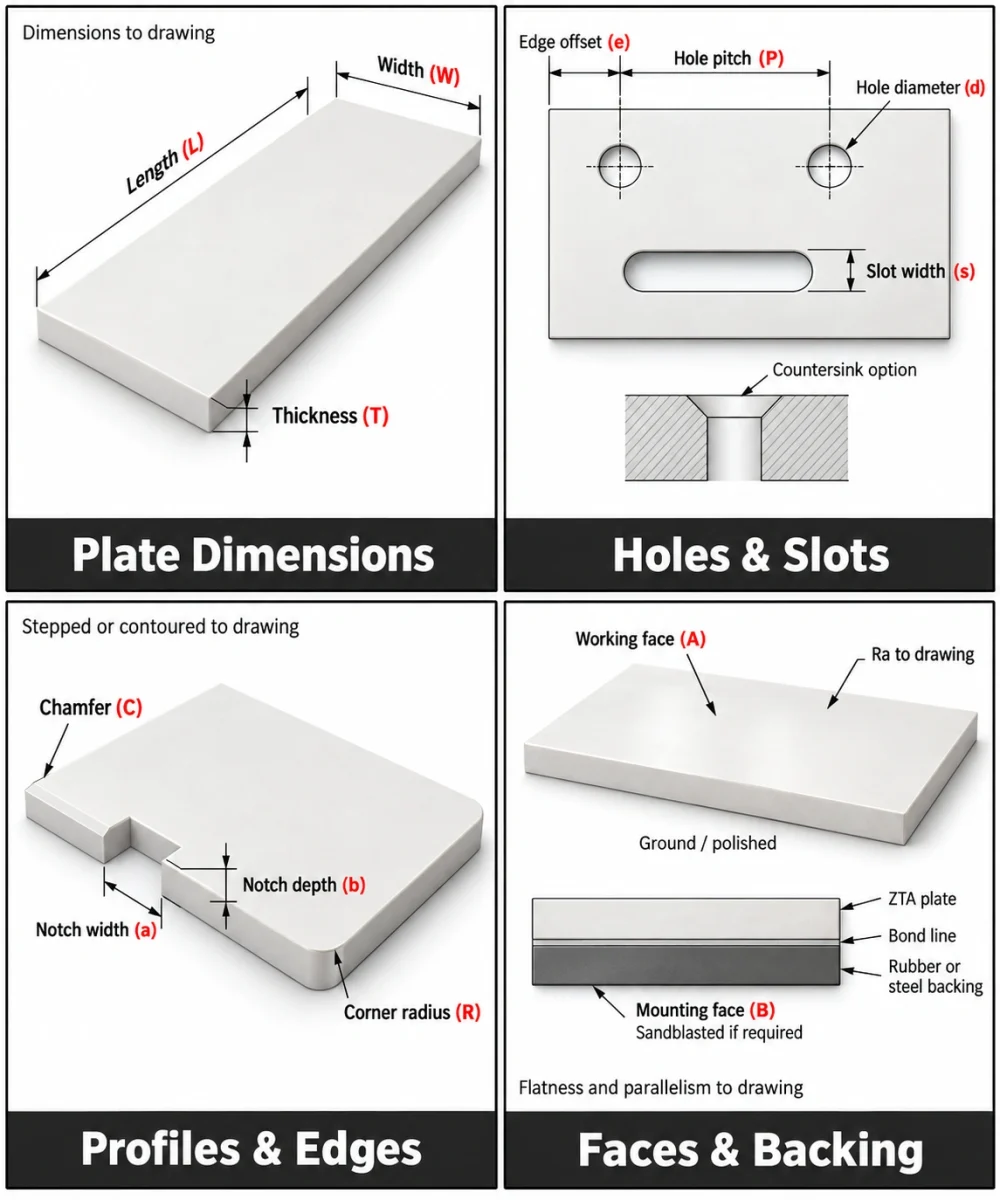
Specify length × width × thickness, overall profile, holes, slots and edge details.

Show the fixing layout, support areas and hole-to-edge spacing. Avoid unsupported spans and concentrated point contact.

Provide: A dimensioned drawing or sketch.

5. Specify Each Face

  • Working face: Define its function, finish and surface roughness.
  • Bonding or mounting face: Specify the texture and cleanliness required by the adhesive or backing arrangement.

Identify each face clearly on the drawing.

6. Agree on Acceptance

Define acceptance at material, individual-plate or assembly level.

Include:

  • Dimensional, flatness and surface requirements
  • Inspection method and reference conditions
  • Sampling plan and acceptance limits

ZTA vs Alumina, Zirconia and Silicon Carbide Plates

Select the material around the plate’s loading, wear pattern and operating environment.

ZTA — Edge Chipping and Localized Impact

Consider ZTA when an alumina plate develops chipped edges or cracks at impact points. Review performance using the same plate geometry and support arrangement.

Check: Failure location, chip size, particle characteristics and impact conditions.

Alumina — Stable, Cost-Sensitive Service

A common option for wear faces and support plates with low impact. Specify purity where the application requires it, alongside mechanical and dimensional requirements.

Check: Actual wear rate, chemical compatibility and allowable edge damage.

Zirconia — Toughness and Contact Requirements

Consider zirconia where toughness is a priority. Select the specific grade for the application, including an aging assessment where hot water or steam is present.

Check: Material grade, surface requirements, assembly weight and water or steam exposure.

Silicon Carbide — Abrasive Sliding Contact

Consider SiC for demanding sliding wear and selected high-temperature applications. Review impact, edge loading and support before selection.

Check: Abrasion conditions, impact loading, support layout and chemical environment.

Compare materials using the same plate geometry, support arrangement and operating conditions. Agree on the acceptance test before ordering.

Zirconia Toughened Alumina Plates Packaging

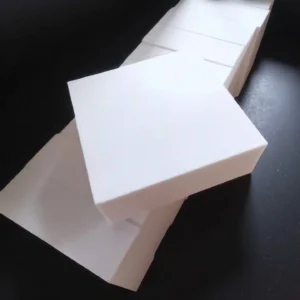
  • ZTA Plates in Carton Padded Trays – Prevent vibration
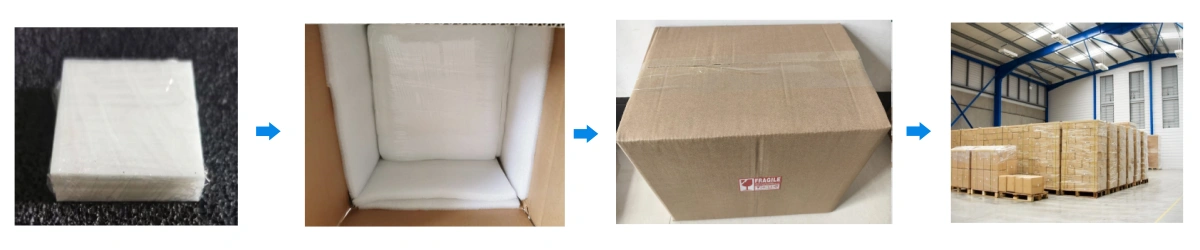
Zirconia Toughened Alumina Plates Packaging

ZTA Ceramic Plate Applications

ZTA plates are reviewed for three broad duties: wear-contact faces in bulk handling, support and setter plates in thermal processing, and precision plates in powder handling and fixtures. Each duty is assessed by the plate geometry, the working face and the interface with the surrounding equipment.

  • Bulk Handling and Wear-Contact Plates

    Flat wear faces in transfer points, hoppers and chute zones where material flows across the plate. The selection depends on particle size and hardness, flow speed, impact angle, the edge and joint layout, and whether the plate is backed with rubber or steel.

  • Thermal Processing and Setter Plates

    Setter and support plates that carry parts through furnaces or hold a load at temperature. The selection depends on support points, load, atmosphere, heating cycle, and how flatness and dimensions are checked after cycling.

  • Powder Handling and Precision Plates

    Plates in classifiers, dosing equipment and fixtures where a stable flat surface and accurate holes or slots matter. The selection depends on the mating part, the face finish, the fit and the inspection basis.

    For a lining project with rubber or steel backing, an adhesive-ready face or a pre-assembled layout, discuss the structure through the ZTA ceramic lining board enquiry.

ZTA Ceramic Plate Usage Instructions

  • Installation

    1. Check the fit: Verify hole positions, edge relief, corner clearances and even contact with the base.
    2. Confirm support: Match the support layout and loading direction to the drawing.
    3. For bonded plates: Follow the specified surface preparation, bond-line thickness and curing procedure.
    4. For bolted plates: Follow the specified tightening sequence and load. Recheck after initial operation.

  • Operation

    1. Control loading: Keep impact and sliding loads within the design conditions.
    2. Check thermal movement: Verify joint clearances as operating temperatures change.
    3. Monitor wear: Record initial wear patterns to establish inspection and replacement intervals.

  • Storage

    1. Support and separate: Store plates horizontally on soft supports, with separators protecting finished faces.
    2. Keep conditions stable: Protect against moisture, abrasion and temperature changes.
    3. Retain identification: Keep orientation labels, part identification, drawing revision, material grade and inspection records with the batch.

  • Cleaning and Re-Bonding

    1. Protect finished faces: Use non-abrasive wipes and soft tools.
    2. Choose compatible cleaners: Confirm compatibility with the ceramic, adhesive and backing materials.
    3. Check before re-bonding: Inspect the bonding face and restore the specified cleanliness and surface condition.

  • Handling Precautions

    1. Avoid impact: Do not drop, strike or pry the plate.
    2. Control fastener contact: Use the washers or load-spreading components specified in the assembly design.
    3. Stop for damage or movement: Remove chipped or cracked plates from service. Investigate abnormal noise, movement or wear before restarting.

ZTA Ceramic Plate FAQs

  1. What is a ZTA ceramic plate used for?
    ZTA plates provide wear-resistant contact surfaces, load-bearing supports and precision interfaces.
    Typical applications include:
    a. Wear liners in transfer points, hoppers and chutes
    b. Support plates
    c. Machined fixture inserts with ground faces, holes or slots
    Selection depends on the working face, loading, support and mounting arrangement.
  2. How does ZTA compare with alumina, zirconia and silicon carbide?
    a. Alumina: An economical option for stable, low-impact service.
    b. Zirconia: Consider where toughness is a priority.
    c. Silicon carbide: Consider for demanding sliding abrasion, with impact and support conditions reviewed.
    d. ZTA: Consider when wear resistance and resistance to edge chipping are both important.
    Compare materials using the same plate geometry and operating conditions.
  3. What sizes and thicknesses can I order?
    a. Catalogue range: 19 models, AT-ZR-CB001 to AT-ZR-CB019
    b. Custom planform dimensions: 100–1000 mm
    c. Common thicknesses: 6–40 mm
    d. Typical ground-thickness tolerance: ±0.2 mmOther dimensions are reviewed against your drawing. Flatness, parallelism and hole-position tolerances are agreed for the specific plate.
  4. Can ZTA plates include holes, slots and ground faces?
    Yes. Custom features include holes, countersinks, slots, recesses, steps, chamfers and rounded edges. Single-sided or double-sided grinding is available for functional faces.
    Identify the datums, critical tolerances and measurement method on the drawing. Small or deep features, closely spaced holes and short edge distances require additional design review.
  5. How should I install a ZTA plate, and how long will it last?
    Dry-fit the plate and confirm even support, hole alignment and edge clearance.
    a. Bonded plates: Follow the specified surface preparation, bond-line and curing requirements.
    b. Bolted plates: Follow the specified tightening sequence, load and washer arrangement.
    c. After startup: Recheck mounting, clearances and initial wear.
    Service life depends on the application. Use recorded wear patterns to establish inspection and replacement intervals.
  6. What information is needed for a quotation?
    Reference an AT-ZR-CB model or AT-ZRG001, and provide:
    a. Drawing, sketch, sample or scaled photographs
    b. Plate function and quantity
    c. Length, width, thickness and custom features
    d. Working and bonding faces, finishes and tolerances
    e. Support, fixing and backing requirements
    f.Particle, impact, load, temperature, atmosphere and medium details
    I. Inspection scope and acceptance requirements
    Available information supports an initial review; the final quotation is confirmed against the agreed engineering details.
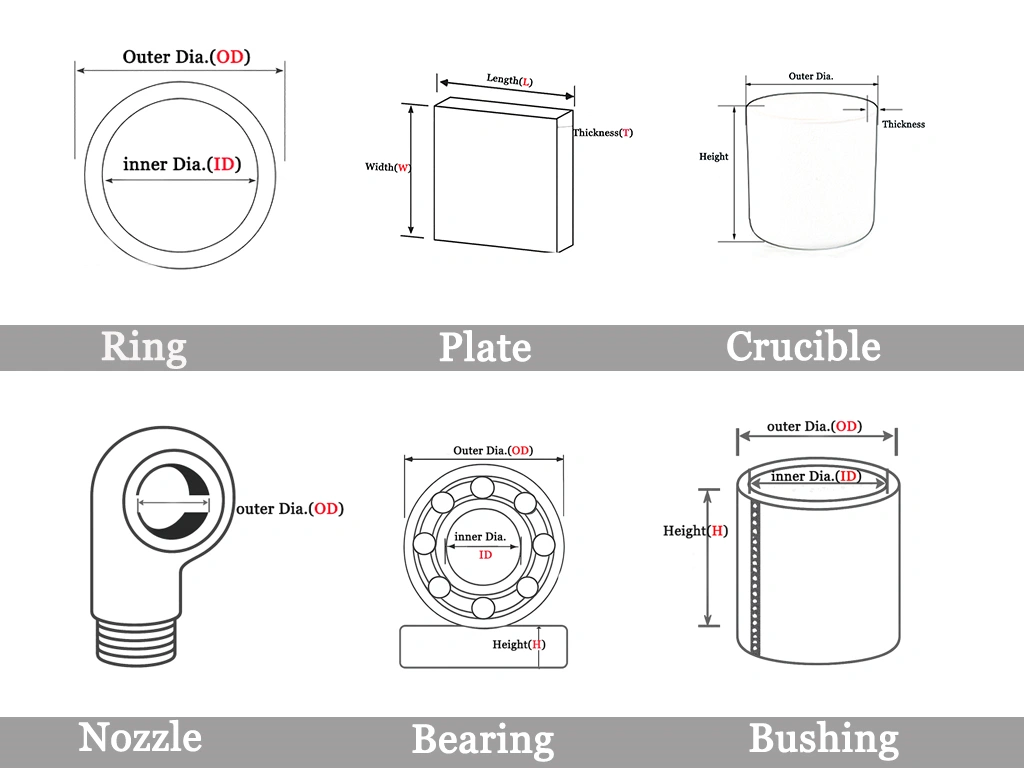
ZTA ceramic plate diagrams showing length, width, thickness, hole and slot layouts, edge profiles, surface finishes and optional backing.

Customize Zirconia Toughened Alumina Plates

Precision-engineered Zirconia Toughened Alumina plates can be produced to meet project-specific drawings and tolerances. Available customization upon drawing or sample:

1. Dimensions

  • Size range 100–1000 mm, thickness 6–40 mm (others by request).
  • CNC-cut to fit chute, tray, or kiln setups.
  • Matched or stepped assemblies are optional.

2. Thickness & Flatness

  • Tolerance is typically ±0.2 mm after grinding.
  • Flatness < 0.3 mm / 300 mm for setter plates.
  • Each batch was checked for planarity and parallelism.

3. Holes & Slots

  • Through, countersunk, slotted or recessed holes.
  • Diamond-machined for crack-free precision.
  • The layout follows customer drawings.

4. Edges

  • Chamfered, radiused, or beveled per stress zone.
  • Deburred to reduce chipping.
  • Corner reliefs on large panels.

5. Surface Finish

  • Ground, polished, or sandblasted faces.
  • Target Ra is defined by bonding or sliding use.
  • Single- or dual-sided finishing options.

6. Backing Assemblies

  • Rubber-backed, steel-backed, or adhesive-ready.
  • Improves impact absorption or installation speed.
  • Delivered pre-assembled if required.

 7. Profiles

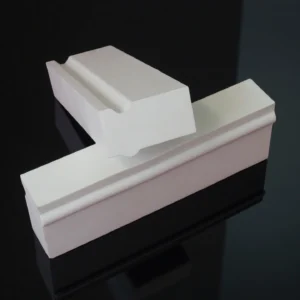
  • Straight, stepped, contoured, or nested panels.
  • Adapted for bends, elbows, cyclones.
  • CAD-to-cut workflow ensures fit accuracy.

Related Products

ADCERAX - Your Trusted Advanced Ceramics Manufacturing Partner

ADCERAX – Custom Ceramic Supply and Engineering Coordination
ADCERAX coordinates drawing review, production and inspection with manufacturing partners against agreed specifications.

China-Based Ceramic Supply Partner

ADCERAX coordinates custom ceramic supply for overseas OEMs, equipment builders, and labs.

Custom Drawing Support

We review drawings, dimensions, materials, and application conditions before quotation.

Ceramic Process Control

Forming, sintering, machining, grinding, and finishing are arranged by part requirements.

Pre-Shipment Inspection

Dimensional checks, visual inspection, and packaging review help reduce procurement risk.

Get in Touch with Us

Our team will be happy to respond to you in less than 24 hours.

Adcerax's factory

Quick Quotation

*Our team will review your inquiry and respond with the next steps.

*Your information will be kept strictly confidential.

Ready to Solve Your Engineering Challenge?

Partner with ADCERAX for reliable, high-performance advanced ceramic solutions. Our engineers are ready to discuss your project.

E-mail

info@adcerax.com

Phone

Tel: +86-0731-84428843 WhatsApp: +86 19311583352

Response Time

Within 24 hours

Quick Quote

The more details you provide, the faster we can quote.

*All inquiries are confidential.

Get Your Custom Solution

The more details you provide, the faster we can respond.

customize size

*We respond within 24 hours. All inquiries are confidential.

Download Catalog