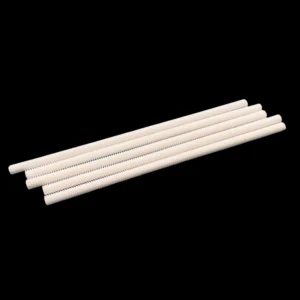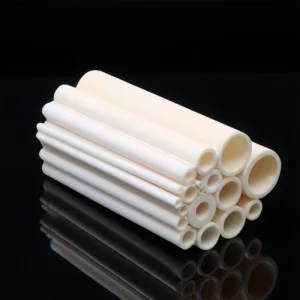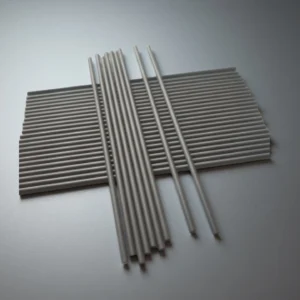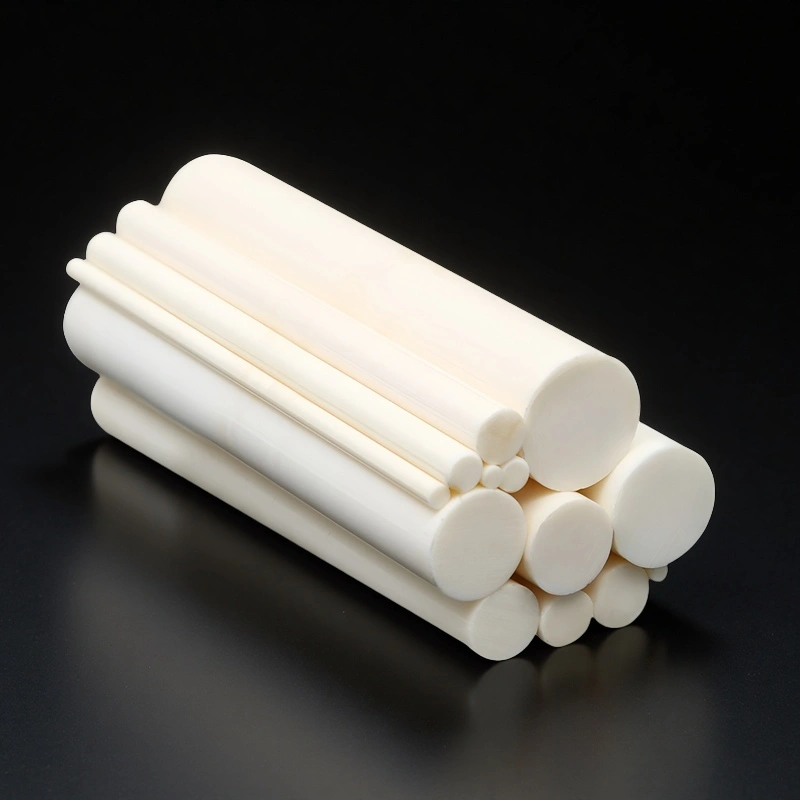
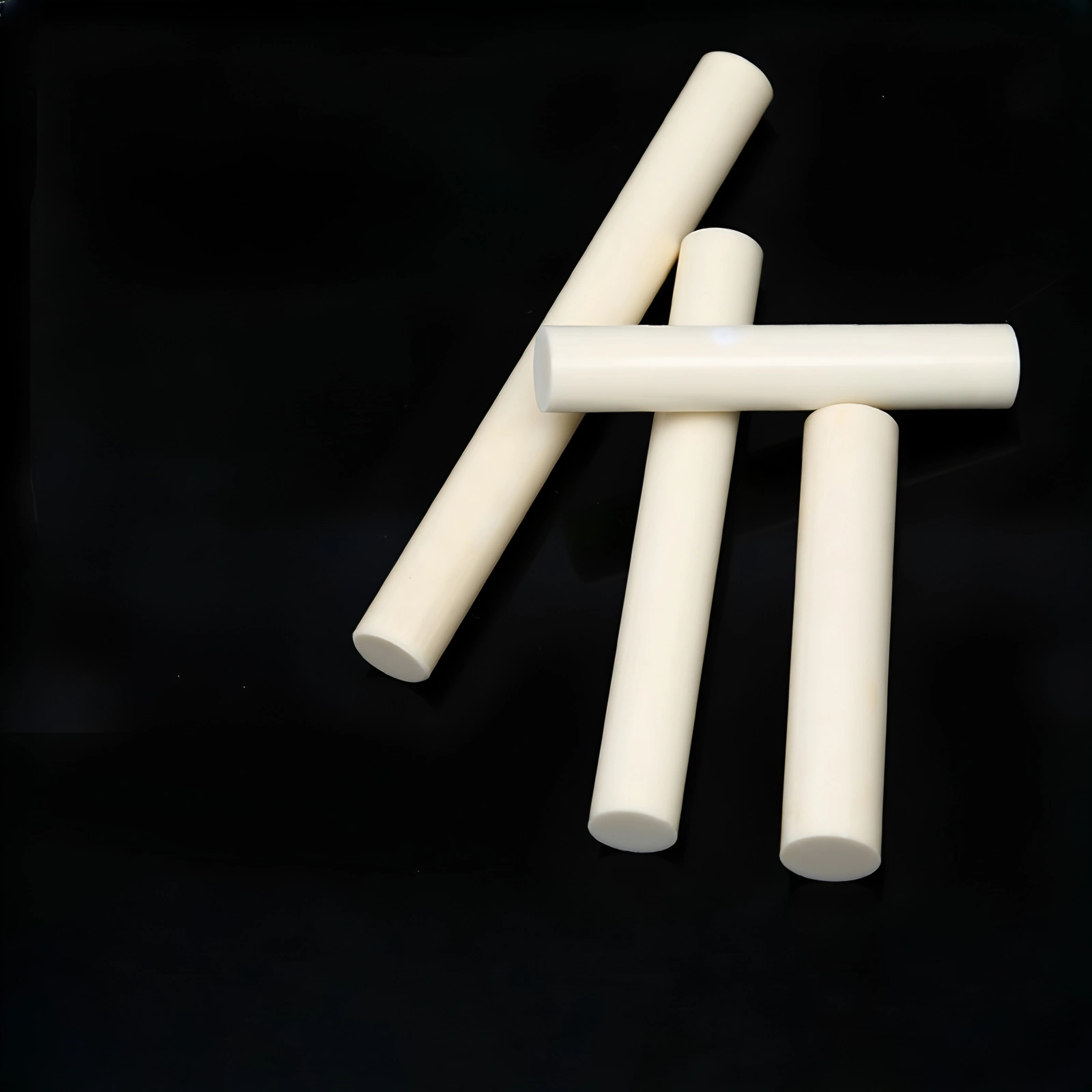
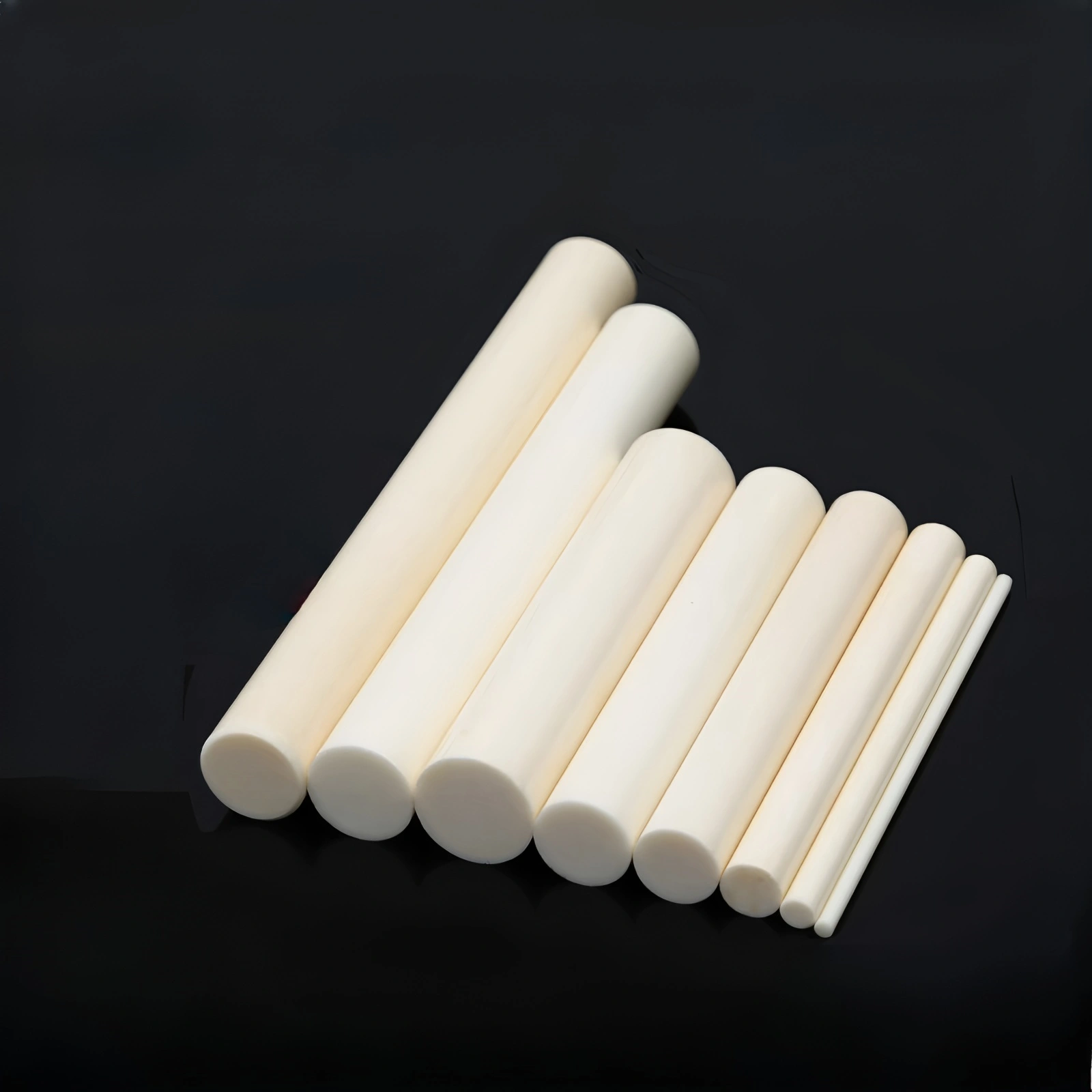
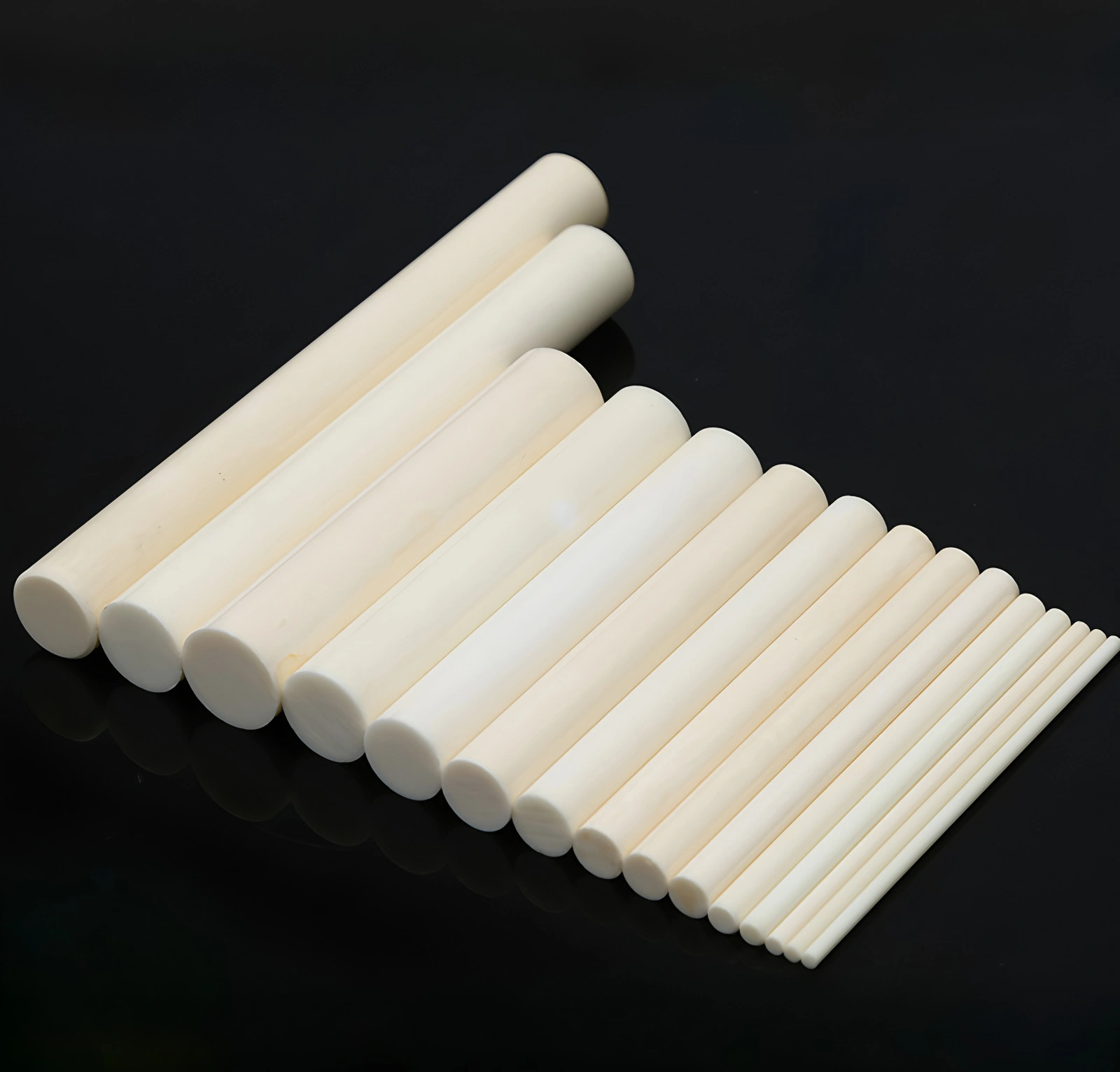
Alumina ceramic solid rods are solid Al₂O₃ bars — not hollow tubes, crucibles, ceramic balls or metal rods. They give a high-temperature, insulating, non-magnetic, wear- and corrosion-resistant, low-contamination bar for support, insulation, positioning, stirring and guiding, where metal rods conduct, oxidize or contaminate and plastics can't take the heat.
Advantages of Alumina Ceramic Solid Rods
- High temperature stability reduces warping risk during rapid thermal cycling
- Smooth surface minimizes contamination and particle release
- Precise machining allows direct replacement in mechanical systems
- Corrosion resistance supports use in acid/alkaline atmospheres
- Long service life lowers annual maintenance costs
Alumina Ceramic Solid Rods Properties
| Property | Unit | 96% Al₂O₃ | 99% Al₂O₃ | 99.5% Al₂O₃ | 99.6% Al₂O₃ | 99.7% Al₂O₃ | 99.8% Al₂O₃ | 99.9% Al₂O₃ | 99.99% Al₂O₃ |
| Alumina content | % | 96 | 99 | 99.5 | 99.6 | 99.7 | 99.8 | 99.9 | 99.99 |
| Density | g/cm³ | 3.6-3.75 | 3.83 | 3.89 | 3.91 | 3.92 | 3.93 | 3.94 | 3.98 |
| Color | – | white | Ivory | Ivory | Ivory | Ivory | Ivory | Ivory | Ivory |
| Water absorption | % | 0 | 0 | – | 0 | 0 | 0 | 0 | 0 |
| Young’s modulus (Elastic modulus) | GPa | 300 | 350 | 375 | 356 | 357 | 358 | 359 | 362 |
| Shear modulus | GPa | – | – | 152 | – | – | – | – | – |
| Bulk modulus | GPa | – | – | 228 | – | – | – | – | – |
| Poisson’s ratio | – | – | – | 0.22 | – | – | – | – | – |
| Compressive strength | MPa | 1910 | 2210 | 2500 | 2552 | 2554 | 2556 | 2558 | 2570 |
| Flexural strength | MPa | 260 | 300 | 340 | 345 | 346 | 347 | 348 | 365 |
| Fracture toughness | MPa·m¹ᐟ² | – | – | 4 | – | – | – | – | – |
| Hardness | GPa | 14.5 | 17 | 17 | 23 | 24 | 25 | 26 | 30 |
| Thermal conductivity | W/m·K | 20 | 31 | 31 | 31-33 | 31-33 | 31-33 | 31-35 | 31-35 |
| Thermal shock resistance ΔT | °C | – | – | – | 222 | 223 | 224 | 225 | 228 |
| Maximum use temperature (no load) | °C | 1450 | 1680 | ≤1750 | 1755 | 1760 | 1765 | 1770 | 1800 |
| Coefficient of thermal expansion | 10⁻⁶/°C | 7.6 | 7.6 | 7.6 | 7.6 | 7.5 | 7.5 | 7.4 | 7.4 |
| Volume resistivity | Ω·cm | >1×10¹⁴ | >1×10¹⁴ | >1×10¹⁴ | >1×10¹⁴ | >1×10¹⁴ | >1×10¹⁴ | >1×10¹⁴ | >1×10¹⁴ |
| Dielectric constant (relative permittivity) | – | 9.2 | 9.5 | 9.8 | 9.83 | 9.84 | 9.85 | 9.86 | 9.92 |
| Dielectric strength | kV/mm | 15 | 19 | 16.9 | 23.2 | 23.4 | 23.6 | 23.8 | 24 |
| Dissipation factor (loss factor @ 1 kHz) | – | – | – | 0.0002 | – | – | – | – | – |
All values are typical / reference figures for dense alumina, confirmed per order — not batch-certified data and not a part rating. Actual grade, tolerances, straightness and temperature limits are confirmed by engineering review against your drawing.
Specifications of Alumina Ceramic Solid Rods
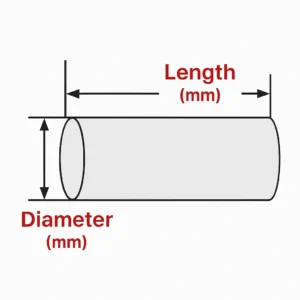
| Item No. | Diameter (mm) | Length(mm) |
| TE-AT-30001 | 0.5 | ≤3000 |
| TE-AT-30002 | 1.2 | ≤3000 |
| TE-AT-30003 | 1.3 | ≤3000 |
| TE-AT-30004 | 1.4 | ≤3000 |
| TE-AT-30005 | 1.5 | ≤3000 |
| TE-AT-30006 | 1.6 | ≤3000 |
| TE-AT-30007 | 2.2 | ≤3000 |
| TE-AT-30008 | 2.4 | ≤3000 |
| TE-AT-30009 | 3.5 | ≤3000 |
| TE-AT-30010 | 3.8 | ≤3000 |
| TE-AT-30011 | 4.5 | ≤3000 |
| TE-AT-30012 | 5.5 | ≤3000 |
| TE-AT-30013 | 6.3 | ≤3000 |
| TE-AT-30014 | 6.5 | ≤3000 |
| TE-AT-30015 | 6.8 | ≤3000 |
| TE-AT-30016 | 8.3 | ≤3000 |
| TE-AT-30017 | 8.5 | ≤3000 |
| TE-AT-30018 | 9.5 | ≤3000 |
| TE-AT-30019 | 10.5 | ≤3000 |
| TE-AT-30020 | 11 | ≤3000 |
| TE-AT-30021 | 11.5 | ≤3000 |
| TE-AT-30022 | 12.5 | ≤3000 |
| TE-AT-30023 | 13 | ≤3000 |
| TE-AT-30024 | 13.5 | ≤3000 |
| TE-AT-30025 | 14 | ≤3000 |
| TE-AT-30026 | 16 | ≤3000 |
| TE-AT-30027 | 16.5 | ≤3000 |
| TE-AT-30028 | 17 | ≤3000 |
| TE-AT-30029 | 19 | ≤3000 |
| TE-AT-30030 | 21 | ≤3000 |
| TE-AT-30031 | 22 | ≤3000 |
| TE-AT-30032 | 23 | ≤3000 |
| TE-AT-30033 | 24 | ≤3000 |
| TE-AT-30034 | 24.5 | ≤3000 |
| TE-AT-30035 | 42 | ≤3000 |
Standard diameter reference (made to order). Diameters shown are common stock references; other diameters, lengths, sections and tolerances are made to your drawing.
*Note: Standard diameter reference (made to order). Diameters shown are common stock references; other diameters, lengths, sections and tolerances are made to your drawing.

Choose the Right Rod for Your Application
| Alumina Grade | Typical Applications and Selection Guidance |
|---|---|
| 96% Al₂O₃ (C-786 type) | General furnace supports, insulation, and mechanical rods for cost-sensitive applications. |
| 99% / 99.5% Al₂O₃ (C-795/799) | Higher density and electrical insulation for sensors, high-temperature supports, and wear parts. |
| 99.7% / 99.8% Al₂O₃ (C-799 type) | High-purity, low-contamination rods for measurement, stirring, and demanding process applications. |
| How We Choose | We select the grade based on your operating temperature, atmosphere, insulation requirements, contamination sensitivity, and cost. The final selection is confirmed through an engineering review. Standard grades such as C-786, C-795, and C-799 are provided as buyer references, not as certifications. |
- Round solid rod — furnace supports, guides, wear parts (as-fired / centerless-ground / polished)
- Square/rectangular — fixtures, structural bars
- Threaded rod — standoffs and fastened assemblies (ground + thread machining)
- Insulation/standoff — electrical spacers and thermocouple insulation
- Stirring / support rod — laboratory and high-temperature process rods
All sizes, ends and finishes are confirmed by engineering review against your drawing.
Why Choose Alumina Rods Over Metal or Plastic?
- High-temperature stability — holds shape through repeated thermal cycling where metal rods soften, oxidize or distort.
- Electrical insulation — high dielectric strength and volume resistivity suit sensor, high-voltage and standoff use.
- Wear & corrosion resistance — hard, chemically inert surface resists abrasion and acid/alkaline atmospheres.
- Low contamination — dense, high-purity surface releases few particles, suited to clean and analytical work.
- Dimensional stability — low thermal expansion and high stiffness help hold position and straightness. Note: actual temperature, life and tolerances depend on grade, geometry and conditions — confirmed per drawing.
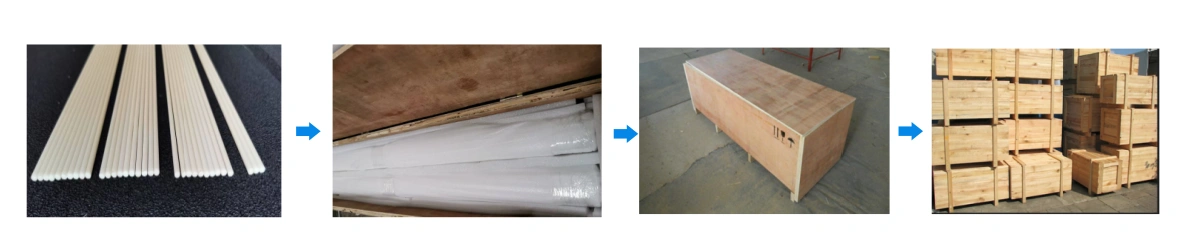
Alumina Ceramic Solid Rod Packing:
Sealed plastic bags, protective foam, export-grade cartons.