
With over 20 years of expertise in advanced ceramics manufacturing, ADCERAX supplies sintered beryllium oxide (BeO) ceramic finished parts — substrates, heat sinks, rods, crucibles and custom components — for RF and high-power electronics, semiconductor packaging and laser systems. Every part combines high thermal conductivity with full electrical insulation, made to your drawing with precise tolerances.
We supply finished, sintered parts only, with an engineering review of your material route (BeO vs AlN or alumina), grade and application before quotation. Request a quote to start the review.
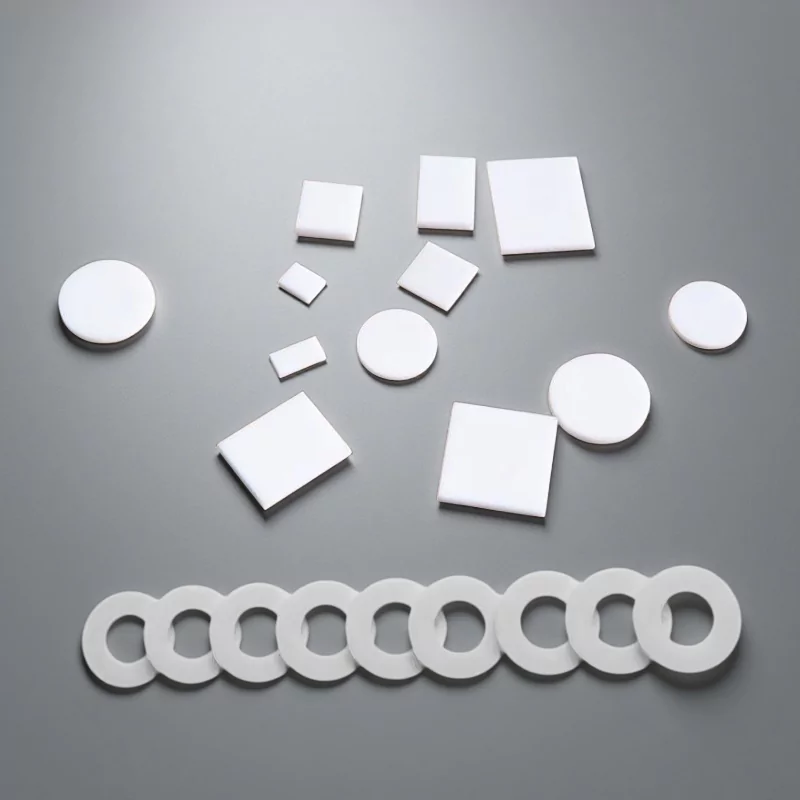
≥99.5% Purity
High-purity BeO ceramics
Heat & electrical insulation
Thermal Conductivity
Ultra-efficient heat transfer
Beryllium oxide ceramic (BeO) is a high-performance advanced ceramic valued for its extraordinary thermal conductivity, excellent electrical insulation, and high mechanical strength — a functional ceramic used where efficient heat dissipation and electrical isolation must coexist, such as in power electronics, RF systems, aerospace hardware, and medical instruments.
Made from ultra-fine BeO powders (≥99% purity) sintered into dense, homogeneous bodies at ≈1750–1850 °C. Microstructural uniformity and grain-boundary control set the thermal, dielectric, and mechanical performance; additives are rarely used to protect conductivity.
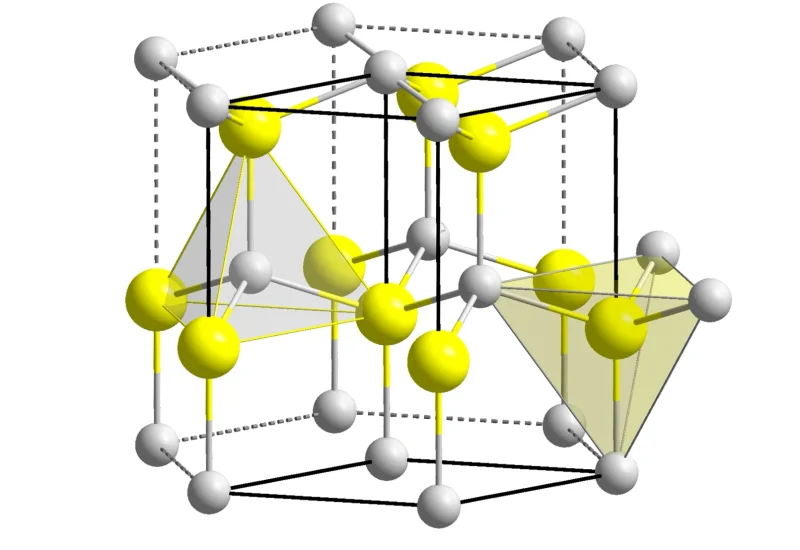
Beryllium oxide (BeO) has a hexagonal wurtzite crystal structure, which is similar to zinc oxide (ZnO).
This structure consists of each beryllium atom tetrahedrally coordinated by four oxygen atoms, and vice versa. The tight ionic–covalent bonding within this lattice gives BeO its extraordinary thermal conductivity, high melting point, and excellent dielectric strength.
Beryllium Oxide (BeO) Ceramics combine high thermal conductivity with excellent electrical insulation and mechanical reliability — ideal for power electronics, RF modules, aerospace, and high-temperature systems.
| Density | 2.85–3.02 g/cm³ |
| Purity | ≥99.5% BeO |
| Color | White to light gray |
| Surface roughness | Ra 0.4–1.0 μm |
| Crystal structure | Wurtzite (HCP) |
| Hardness (Hv) | 1100–1200 kg/mm² |
| Thermal conductivity | 240–330 W/m·K |
| Specific heat | 1.0–1.2 J/g·K |
| Thermal expansion (CTE) | 8.0–8.5 × 10⁻⁶/K |
| Thermal shock resistance | Excellent |
| Max operating temp | ~1800 °C |
| Heat dissipation | Superior |
| Electrical resistivity | >10¹³ Ω·cm |
| Dielectric constant (εr) | 6.5–7.5 |
| Dielectric strength | 9–12 kV/mm |
| Dielectric loss (tan δ) | ≤3 × 10⁻³ |
| Insulation resistance | >10¹² Ω |
| Volume resistivity (25°C) | >10¹⁴ Ω·cm |
| Chemical stability | Excellent |
| Corrosion resistance | Outstanding |
| Reactivity | Low |
| Solubility in water | Insoluble |
| Oxidation resistance | High |
| Toxicity precaution | Handle with care |
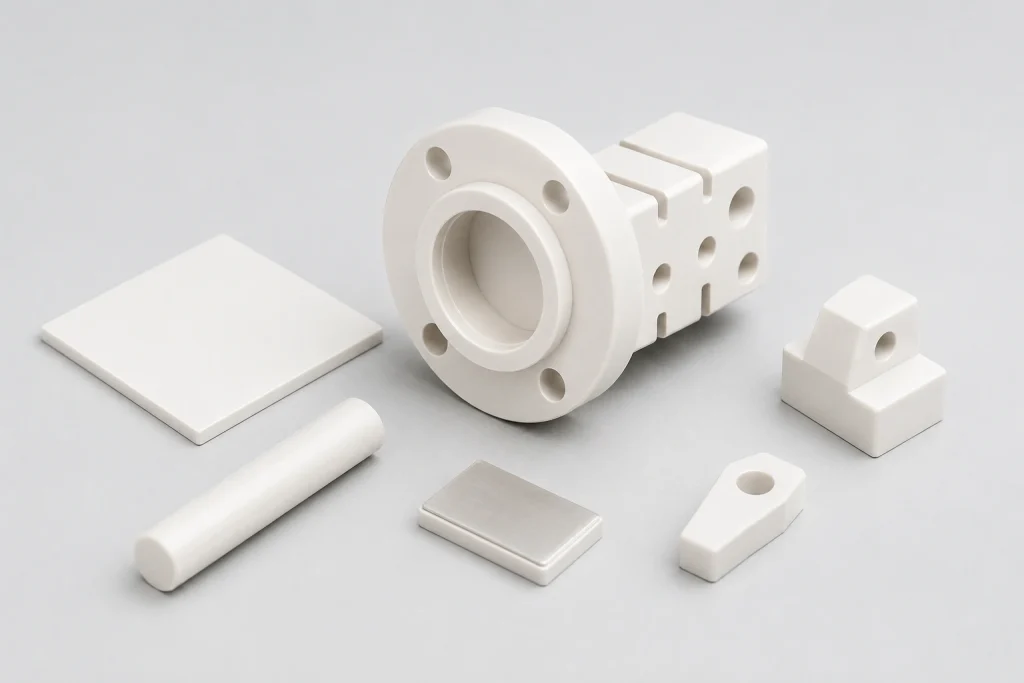
ADCERAX manufactures beryllium oxide (BeO) ceramics with high thermal conductivity, insulation, and strength. Our crucibles, rods, and substrates ensure reliable performance and durability in high-power, high-temperature systems.

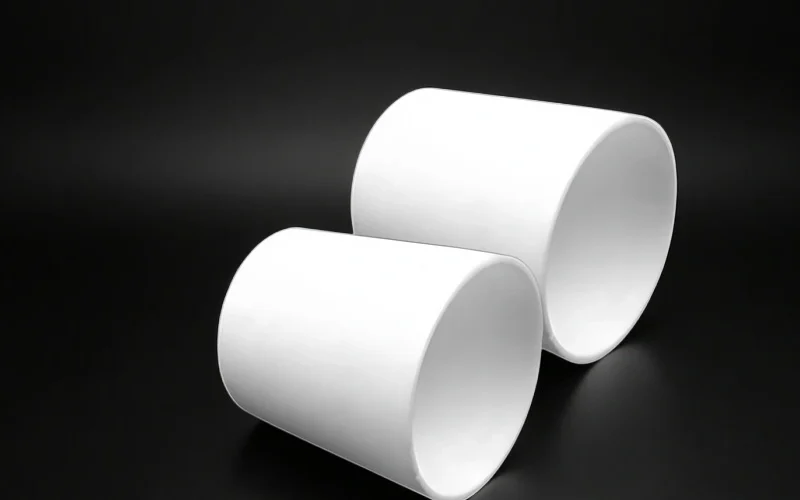
BeO crucibles offer exceptional thermal conductivity, stability, and resistance to reactive environments.
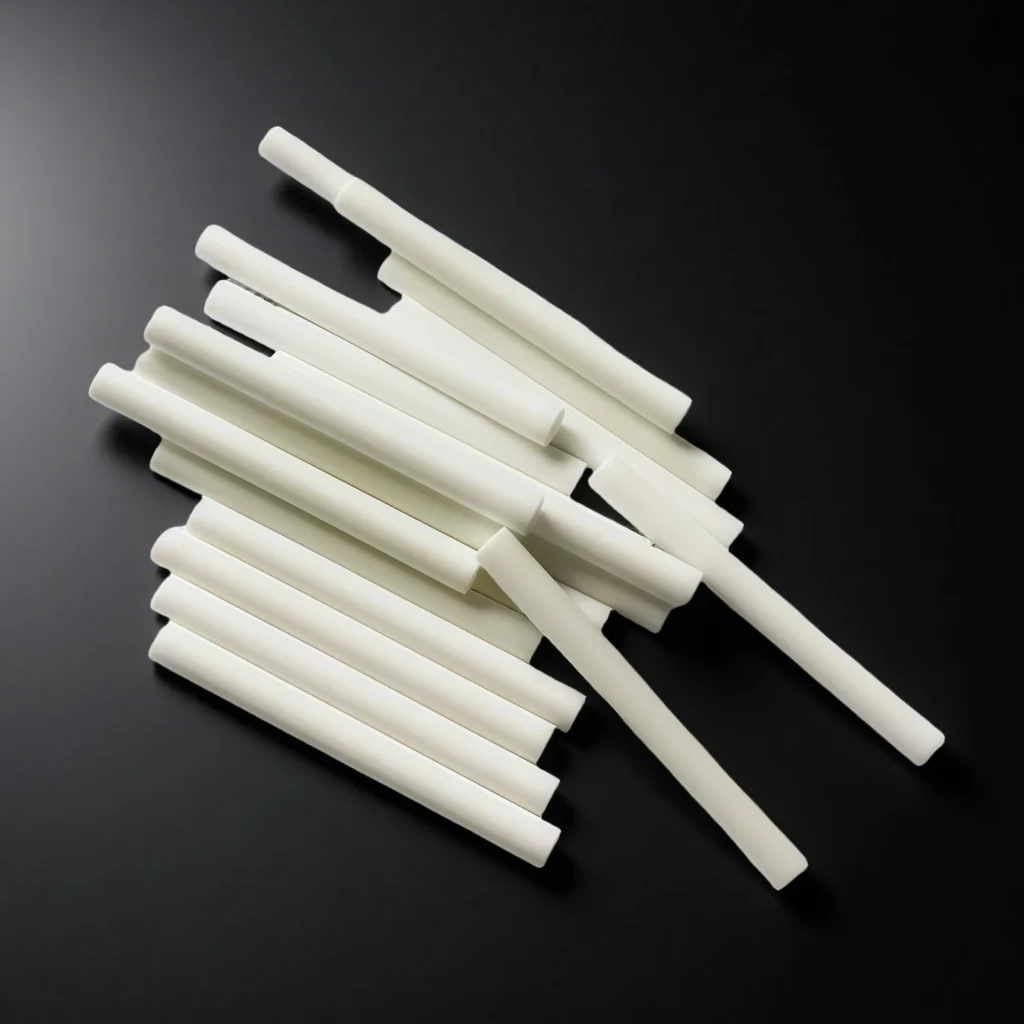
BeO rods offer high thermal conductivity, insulation, and strength for high-temperature and vacuum use.

BeO substrates deliver superior thermal conductivity, electrical insulation, and dimensional stability forelectronic systems.
BeO fits parts that must move heat and stay electrically isolated. Find your application:
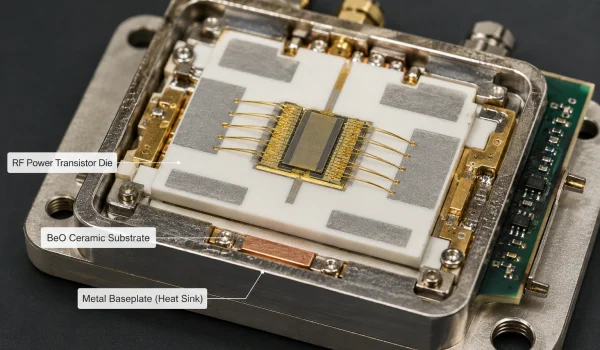
Power modules, amplifiers, RF transmitters — BeO substrates and insulators give metal-like conductivity with dielectric strength for long-life circuits.
Forms: substrates · insulators · metallized
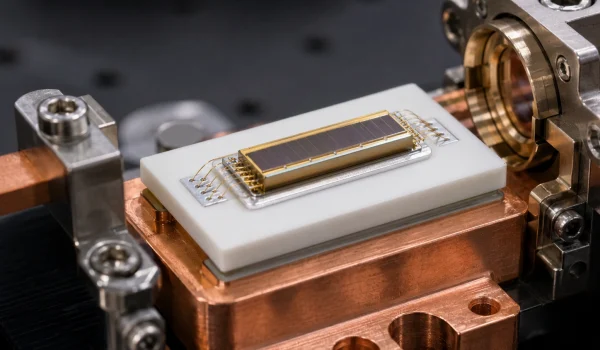
Laser reflectors, submounts, high-vacuum heat sinks for CO₂/ion lasers, semiconductor packaging and photonics — stable under pulsed energy.
Forms: heat sinks · reflectors · submounts
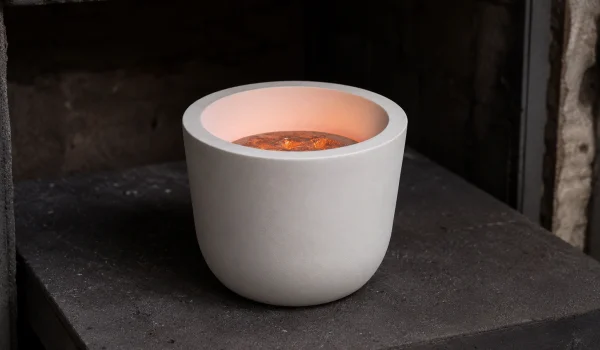
Crucibles, rods, and fixtures for metal melting up to ~1800 °C — thermal-shock and corrosion resistant.
Forms: crucibles · rods · fixtures
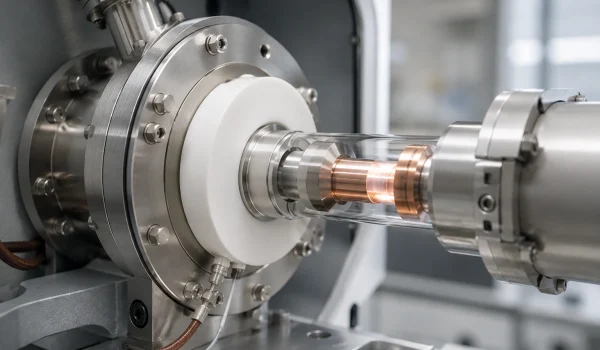
X-ray tubes, analytical devices, precision detectors — insulation, heat control, and purity; non-magnetic and vacuum-stable.
Forms: insulators · windows · precision parts
Upload a drawing or old-part photo. Our engineers confirm whether BeO fits — plus tolerance, metallization, and the material route. Free, no obligation.
Send a drawing, CAD file, or sample — we make finished, sintered BeO parts to your spec, from prototype to production.
custom Ø, length, thickness
Up to ±0.05 mm, tight concentricity
flanges, steps, threads, holes
matched to your application
polished to target Ra + metallized
Send drawing
drawing / CAD / sample + grade, size, qty
Quote in 24h
feasibility + price + lead time
Prototype
1–50 pcs for validation
Production
full QC + global shipping, 3–7 wks
A China-based beryllium oxide ceramic manufacturer supplying standard and custom BeO components — from prototype to production — for OEMs worldwide.
from raw material to delivery, competitive pricing
material selection + tolerance + design
density, purity, dimension inspected per batch
24h quote · 3–7 weeks for custom
| Material Grades | High-pure BeO ceramics (≥99%) offering outstanding thermal transfer, electrical insulation, and microstructural stability. |
| Dimension Range | Custom machined rods, crucibles, and substrates from miniature to large format, with tolerances down to ±0.05 mm. |
| Forming Methods | Isostatic pressing, precision CNC machining, and controlled atmosphere sintering for dense, defect-free microstructures. |
| Processing | Sintered under high-temperature vacuum conditions for full densification and superior heat dissipation efficiency. |
| Surface Finish | Polished BeO surfaces achieve high smoothness and cleanliness for metallization or vacuum sealing applications. |
Technical answers to help engineers specify, source, and customize beryllium oxide ceramic parts with confidence.
ADCERAX supplies sintered, finished BeO ceramic parts only, including: substrates for electronic packaging; heat sinks and heat spreaders; rods, tubes and plates; crucibles for high-temperature processing; and custom components manufactured to your drawing and finished to final dimensions in controlled ceramic production. Metallized BeO substrates are available subject to engineering review. We do not supply BeO powder or unfired material.
ADCERAX BeO parts are produced from high-purity feedstock by isostatic pressing and controlled high-temperature sintering (typically ~1750–1850 °C in clean atmospheres), then finished to final dimensions and surface requirements in controlled ceramic production. Microstructural uniformity is controlled throughout, because grain boundaries determine thermal conduction and dielectric integrity. Customers receive finished, sintered parts ready for assembly.
Beryllium oxide (BeO) is not a universally used material in all ceramic insulators. While it has excellent properties, its use is limited to specialized applications.Such as
1,High-power RF and microwave electronics: Amplifiers, circuits
2,High-voltage electronics: Insulators, power supplies
3,Laser systems: Laser tubes, heat sinks
4,Semiconductor manufacturing equipment: Critical components
BeO is chosen for its superior performance, but its use is limited due to cost and toxicity, requiring strict safety measures.
Intact, sintered BeO ceramic parts are stable in normal use. Beryllium oxide dust, however, is hazardous if inhaled, which is why ADCERAX supplies finished sintered parts only and does not provide any secondary-processing, rework or damaged-part-handling services or guidance. If your process involves such operations, they must follow your own EHS procedures and the applicable Safety Data Sheet (SDS). We confirm the finished-part supply boundary, grade and compliance questions during the engineering review.
Beryllium oxide (BeO) stands out among advanced ceramics for its exceptional thermal conductivity, electrical insulation, and mechanical stability — a rare combination not found in most oxide ceramics.
The table below compares BeO with other commonly used materials in high-performance applications:
| Property | Beryllium Oxide (BeO) | Alumina (Al₂O₃) | Aluminum Nitride (AlN) | Zirconia (ZrO₂) |
|---|---|---|---|---|
| Thermal Conductivity | ★★★★★ Extremely high — ideal for heat dissipation | ★★ Moderate | ★★★★ High but lower than BeO | ★ Low |
| Electrical Insulation | ★★★★★ Excellent | ★★★★ Good | ★★★ Good | ★★★ Good |
| Mechanical Strength | ★★★★ High with low density | ★★★ Moderate | ★★★ Moderate | ★★★★★ Very high but heavy |
| Thermal Shock Resistance | ★★★★ Excellent | ★★★ Moderate | ★★★★ Good | ★★★ Moderate |
| Maximum Service Temperature | Up to ~1800 °C | Up to ~1600 °C | Up to ~1500 °C | Up to ~1000 °C |
| Typical Applications | Power electronics, RF modules, aerospace, nuclear systems | Insulators, substrates, crucibles | LED packages, semiconductor devices | Mechanical wear parts, bearings |
BeO ceramics uniquely deliver metal-like thermal performance with full electrical insulation, making them indispensable in high-power, high-frequency, and heat-intensive applications that other ceramics cannot match.
Beryllium oxide maintains stable performance above 1000 °C, providing efficient heat dissipation and dimensional integrity in continuous thermal cycling.
Yes. ADCERAX supports custom geometries, surface finishes, metallization, and tolerance designs, from prototype development to volume production.
Yes. Beryllium oxide (BeO) ceramics can be metallized and hermetically joined to various metals using specialized coating and brazing processes.
Because of its high thermal conductivity and strong dielectric insulation, BeO serves as an excellent base for power electronic packages, RF modules, and vacuum components where both electrical isolation and heat transfer are required.
Please send your drawing or old-part photos with dimensions and tolerances; the material grade if known (BeO 97–99.7%); your thermal target (device power or allowed temperature rise); electrical or dielectric requirements (voltage, frequency); metallization needs if any; operating temperature and environment; quantity; and any EHS or compliance requirements for finished-part supply. Our engineers review the material route and manufacturability before quoting.
It depends on your frequency, power density, cost target and existing design. Aluminum nitride (AlN, typically ~170–200 W/m·K) is a proven, lower-EHS-burden route that fits many power-electronics packages, and in many designs it is the appropriate choice. BeO (typically 250–300 W/m·K with low dielectric loss) retains advantages in specific high-power RF positions and in legacy designs already validated around BeO. ADCERAX reviews both routes against your drawing and application before quoting — we do not push BeO where AlN or alumina serves better.
What to include in your BeO RFQ
Send whatever you have — our engineers review the material route and manufacturability before quoting. We supply finished sintered parts only.
*Our team will answer your inquiries within 24 hours.
*Your information will be kept strictly confidential.
info@adcerax.com
Tel.:+86-0731-84428843
WhatsApp:+86 19311583352
Within 24 hours
WhatsApp us
The more details you provide, the faster we can respond.

*We respond within 24 hours. All inquiries are confidential.
The more details you provide, the faster we can quote.
*We respond within 24 hours. All inquiries are confidential.