Alumina Beads for Drying, Grinding, Support, Insulation and Multi-Bore Uses

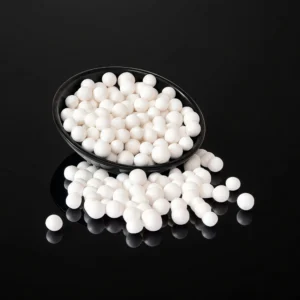
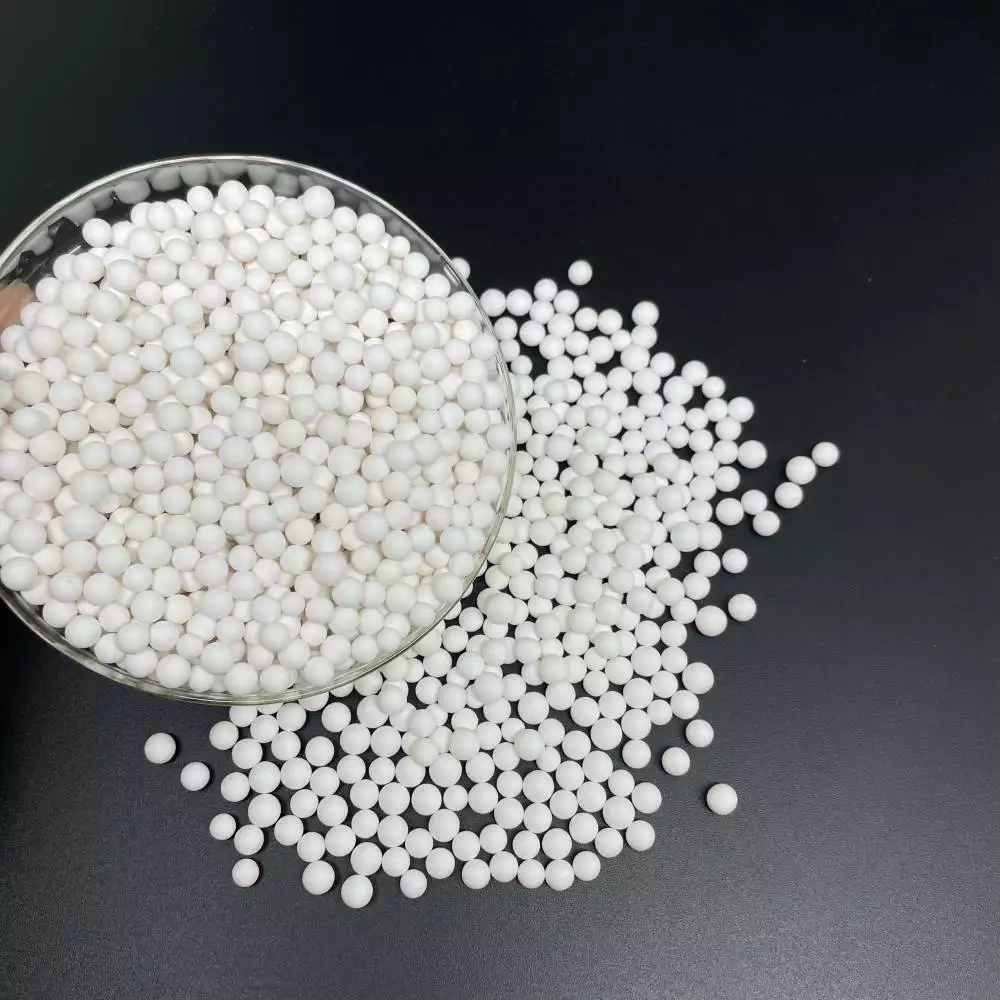
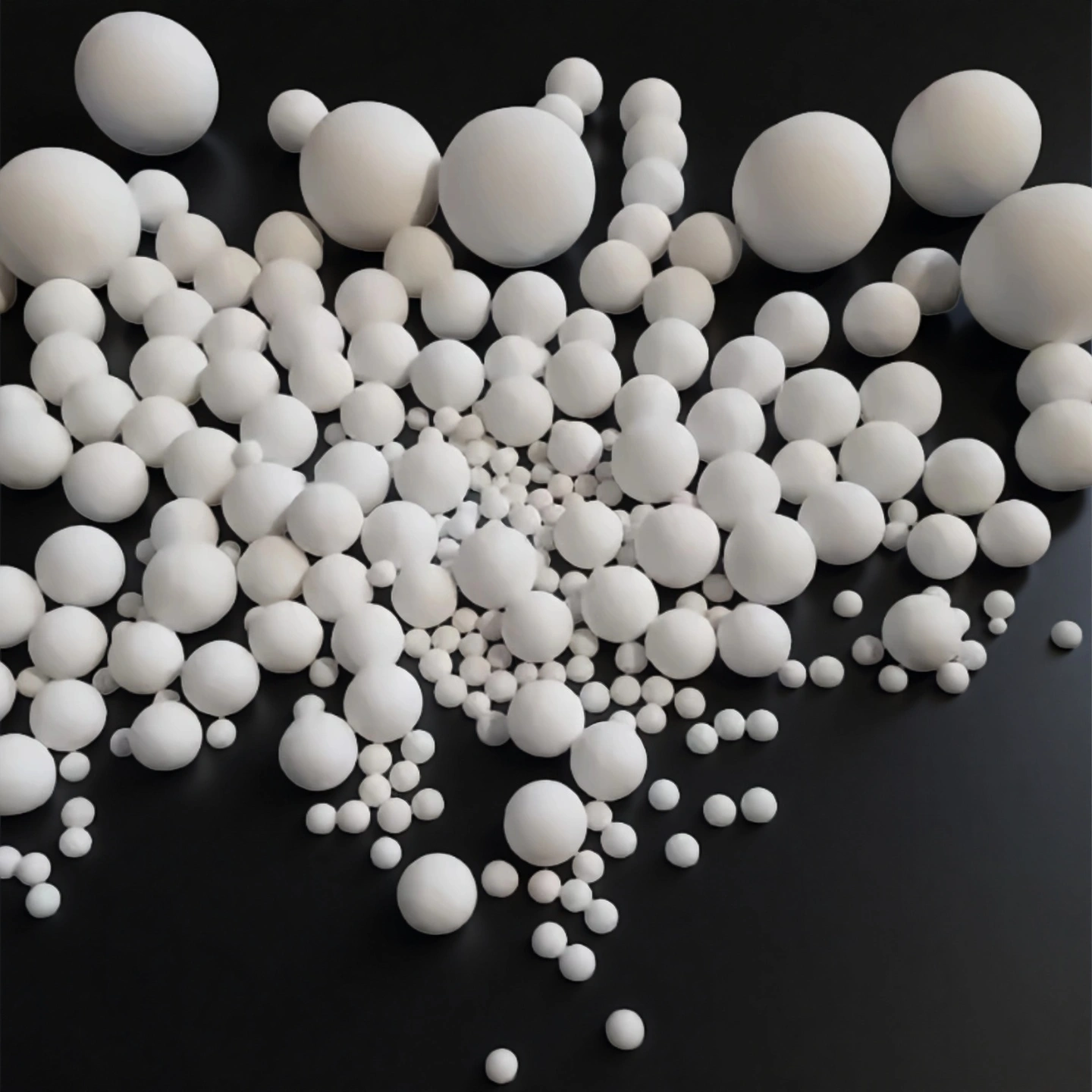
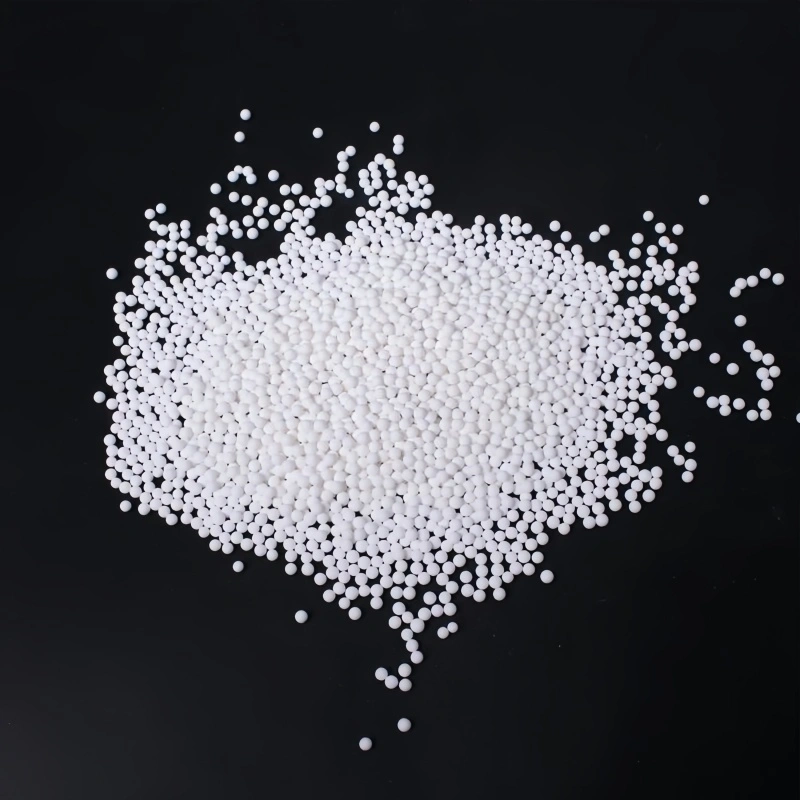
Alumina beads are engineered ceramic spheres designed for adsorption, drying, support, and grinding applications, combining high mechanical strength with chemical durability for long-term industrial performance. Adcerax supplies them in standard sizes as well as fully customized options to fit different industrial requirements.

Catalog No. AT-YM-JY1009
Material 92–99.7% Al₂O₃
Crush strength ≥120 N/particle (size-dependent)
Bulk density 0.75–1.2 g/cm³
Dimensions/sizes Download PDF
Engineering RFQ Review
Small-Batch Custom Support
Factory-Direct Manufacturing
Drawing & Process Review

Alumina beads are small, precision-formed ceramic spheres made primarily from aluminum oxide (Al₂O₃). They are engineered for industrial duties where mechanical strength, thermal stability, and chemical resistance are essential—most commonly as adsorbents/dryers, catalyst carriers/support media, and grinding/polishing media.

Alumina Ceramic Beads Advantages

  • Optimized Sphericity & Uniform Size – Precisely controlled bead geometry ensures consistent packing density and predictable pressure drop in adsorption and catalytic reactors.
  • Low Attrition Rate – Engineered manufacturing minimizes dust generation, which reduces contamination in reactors and extends catalyst bed operating cycles.
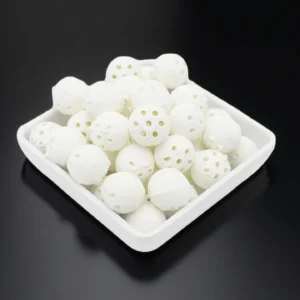
  • Versatile Form Options – Available in multi-bore, inert, or activated designs, allowing engineers to match bead structures with specific gas/liquid flow requirements.
  • Enhanced Regeneration Performance – Activated alumina beads maintain adsorption capacity over multiple thermal regeneration cycles, reducing replacement frequency and operating costs.
  • Customizable Distribution & Bed Support – Beads can be supplied in graded size layers (small-to-large stacking) to improve flow uniformity and protect fragile catalysts from pressure surges.

Al₂O₃ Ceramic Beads Properties

Property Unit 96% Al₂O₃ 99% Al₂O₃ 99.5% Al₂O₃ 99.6% Al₂O₃ 99.7% Al₂O₃ 99.8% Al₂O₃ 99.9% Al₂O₃ 99.99% Al₂O₃
Alumina content % 96 99 99.5 99.6 99.7 99.8 99.9 99.99
Density g/cm³ 3.6-3.75 3.83 3.89 3.91 3.92 3.93 3.94 3.98
Color – white Ivory Ivory Ivory Ivory Ivory Ivory Ivory
Water absorption % 0 0 – 0 0 0 0 0
Young’s modulus (Elastic modulus) GPa 300 350 375 356 357 358 359 362
Shear modulus GPa – – 152 – – – – –
Bulk modulus GPa – – 228 – – – – –
Poisson’s ratio – – – 0.22 – – – – –
Compressive strength MPa 1910 2210 2500 2552 2554 2556 2558 2570
Flexural strength MPa 260 300 340 345 346 347 348 365
Fracture toughness MPa·m¹ᐟ² – – 4 – – – – –
Hardness GPa 14.5 17 17 23 24 25 26 30
Thermal conductivity W/m·K 20 31 31 31-33 31-33 31-33 31-35 31-35
Thermal shock resistance ΔT °C – – – 222 223 224 225 228
Maximum use temperature (no load) °C 1450 1680 ≤1750 1755 1760 1765 1770 1800
Coefficient of thermal expansion 10⁻⁶/°C 7.6 7.6 7.6 7.6 7.5 7.5 7.4 7.4
Volume resistivity Ω·cm >1×10¹⁴ >1×10¹⁴ >1×10¹⁴ >1×10¹⁴ >1×10¹⁴ >1×10¹⁴ >1×10¹⁴ >1×10¹⁴
Dielectric constant (relative permittivity) – 9.2 9.5 9.8 9.83 9.84 9.85 9.86 9.92
Dielectric strength kV/mm 15 19 16.9 23.2 23.4 23.6 23.8 24
Dissipation factor (loss factor @ 1 kHz) – – – 0.0002 – – – – –

Alumina Beads Specifications

ADCERAX supplies the full family of alumina balls and beads—activated desiccant spheres, inert support balls, dense grinding media, multi-bore beads, and insulator beads—each covered in its own section below.
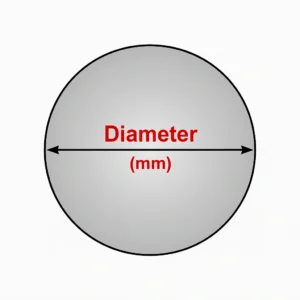
Size options for alumina beads

Type 1: Activated Alumina Beads

Activated alumina beads for gas drying

View more sizes and specifications for activated alumina beads .

Type 2: Inert Alumina Support Beads
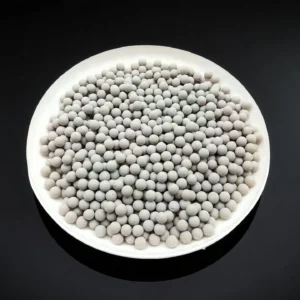
Inert alumina support beads in bulk

View more sizes and specifications for inert alumina support beads .

Type 3: Wear-Resistant Alumina Grinding Beads
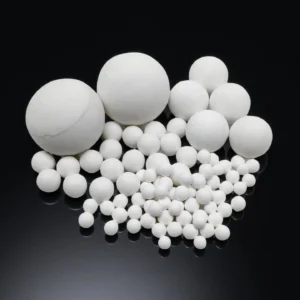
Alumina grinding beads used in pigment milling

View more sizes and specifications for wear-resistant alumina grinding beads .

Type 4: Multi-Bore Alumina Ceramic Beads
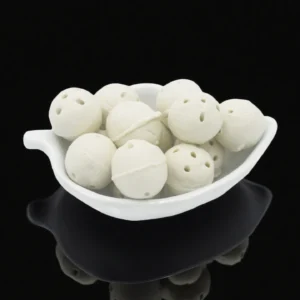
Five-hole multi-bore alumina ceramic bead

View more sizes and specifications for multi-bore alumina ceramic beads .

Type 5: Alumina Insulator Beads
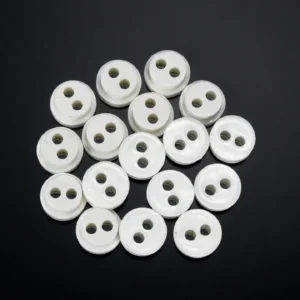
Two-hole alumina insulator bead for wire routing

View more sizes and specifications for alumina insulator beads .

Alumina Ceramic Bead Packaging

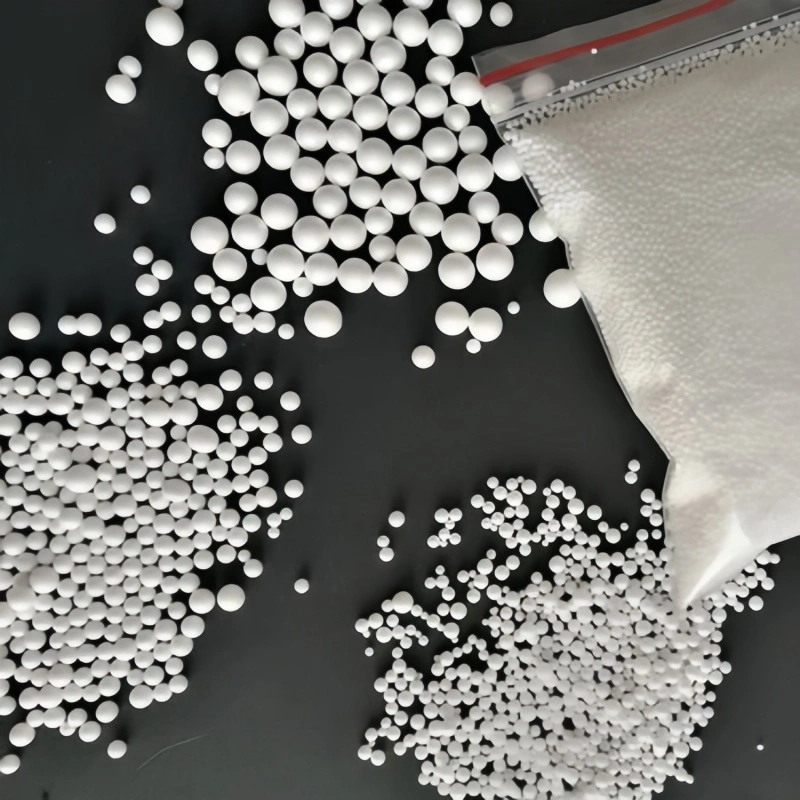
  • High alumina beads are packaged in 25 kg heavy-duty plastic bags, which are then placed inside 1-ton jumbo bags with inner waterproof liners. The jumbo bags are palletized and shrink-wrapped for secure, moisture-free international transport.
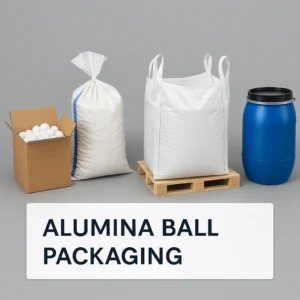

High alumina ball packaging

Industrial Applications of Alumina Beads

Alumina beads are used in industrial systems that require adsorption, bed support, grinding performance, or electrical insulation. The appropriate bead structure depends on the application: porous activated alumina is used for drying, while dense alumina balls and beads are used for mechanical support, grinding, and insulation.

  • Drying and Dehydration

    Product form: Activated alumina beads

    Activated alumina beads are used as porous desiccant media in compressed-air dryers, gas-drying units, dehydration towers, and other moisture-removal systems. Their porous structure provides the surface area required for water adsorption, while the spherical form supports uniform bed packing and gas flow.

    Typical applications include:

    1. Compressed-air drying
    2. Natural-gas and hydrocarbon-stream dehydration
    3. Instrument-air systems
    4. Industrial gas purification
    5. Moisture removal before downstream processing

  • PSA and TSA Gas Treatment

    Product form: Activated alumina beads

    Activated alumina beads are commonly used in pressure swing adsorption and temperature swing adsorption systems as a moisture-removal or pretreatment layer. Removing water before the main adsorbent bed helps protect molecular sieves and other separation media from moisture exposure.

    Typical applications include:

    1. Nitrogen and oxygen generation systems
    2. Hydrogen purification
    3. Carbon dioxide treatment
    4. Natural-gas processing
    5. Protective pretreatment layers for molecular-sieve beds

  • Catalyst-Bed Support

    Product form: Inert alumina support balls

    Dense inert alumina balls are used above, below, or between catalyst layers in fixed-bed reactors. Their role is to support the catalyst, distribute process flow, retain the catalyst bed, and withstand the mechanical and thermal conditions within the reactor.

    Typical applications include:

    1. Petrochemical fixed-bed reactors
    2. Hydrogenation and desulfurization units
    3. Ammonia and fertilizer processing
    4. Chemical processing towers
    5. Catalyst support and covering layers

  • Grinding and Polishing

    Product form: Dense alumina grinding beads

    Dense alumina beads are used as grinding media in ball mills, stirred mills, attritors, and other particle-size-reduction equipment. Their hardness, density, and wear resistance make them suitable for processes where milling efficiency and contamination control are important.

    Typical applications include:

    1. Ceramic powders
    2. Pigments and coatings
    3. Minerals and industrial fillers
    4. Chemical materials
    5. Electronic and advanced-material powders

  • Electrical and High-Temperature Insulation

    Product form: Alumina insulator beads and multi-bore beads

    Alumina insulator beads are used to separate, protect, and guide wires or conductors in equipment exposed to elevated temperatures or electrically demanding environments. Multi-bore and fish-spine structures support different wire arrangements and flexible routing requirements.

    Typical applications include:

    1. Electric heating elements
    2. Industrial furnaces
    3. Thermocouple and sensor wiring
    4. Vacuum equipment
    5. High-temperature electrical assemblies

Alumina Beads Usage Instructions

  • Installation

    1. Load beads slowly into the column to reduce mechanical impact, dust generation, and breakage.
    2. Use graded layers only where required by the approved bed or vessel design to maintain proper flow distribution.
    3. Check for loose dust before installation and remove it using a dry cleaning method compatible with the bead type and process.

  • Operation

    1. Keep the system within the approved temperature, pressure, flow, and chemical limits for the selected alumina bead grade.
    2. Avoid sudden pressure, flow, or temperature changes that could damage the beads or disturb the packed bed.
    3. For adsorption processes, monitor outlet moisture, pressure drop, and breakthrough behavior to determine the appropriate regeneration or replacement interval.

  • Storage

    1. Store alumina beads in a clean, dry, and ventilated warehouse, protected from moisture and contamination.
    2. Keep activated alumina beads in sealed packaging until use to prevent premature moisture adsorption.
    3. Avoid excessive stacking or handling conditions that could damage the packaging or crush the beads.

  • Cleaning & Regeneration

    1. Regeneration applies only to activated alumina grades designed for adsorption service. Follow the approved temperature, heating, and cooling requirements for the selected grade and process.
    2. Ensure that the regeneration gas is clean, dry, and compatible with the adsorbent and process system.
    3. Monitor adsorption performance after regeneration instead of relying on a fixed number of regeneration cycles.

  • Common Misuse & Remedies

    1. Rapid heating or cooling – May cause thermal stress and reduce bead strength. Remedy: Apply controlled heating and cooling according to the approved operating procedure.
    2. Operating outside the rated pressure or temperature range – May result in bead damage or unstable bed performance. Remedy: Keep the system within its approved operating limits.
    3. Mixing different bead sizes or grades without an approved loading plan – May cause uneven flow and inconsistent performance. Remedy: Follow the specified bed arrangement.
    4. Prolonged exposure to moisture during storage – Can prematurely saturate activated alumina. Remedy: Keep unopened material sealed and stored in dry conditions.

Alumina (Al₂O₃) Ceramic Beads FAQ

  1. Q: Can alumina beads be reused?
    A: Reuse depends on the alumina bead type and operating condition. Activated alumina beads may be regenerated when the selected grade and process permit it. Follow the approved regeneration temperature, heating and cooling rates, and regeneration-gas requirements for the applicable product. Determine continued use from actual adsorption performance, pressure drop, breakthrough behaviour, and physical condition rather than relying on a fixed number of regeneration cycles. Inert support beads and grinding beads may be reused only when inspection confirms that breakage, wear, and surface contamination remain within the applicable operating requirements.
  2. Q: How are alumina beads processed?
    A: The manufacturing process depends on the alumina bead type. Dense support balls and grinding beads are formed from controlled alumina powders and thermally processed to achieve the required density and mechanical properties. Activated alumina beads use a different processing route designed to retain a porous structure and adsorption surface area. Multi-bore and insulator beads require forming and firing methods suited to their geometry. The final process and inspection controls depend on the product grade, structure, and intended application.
  3. Q: What alumina purity grades are available?
    A: Standard options include 92%, 95%, and 99% Al₂O₃. The available purity grade depends on the bead type and intended application. Higher-purity grades may be considered for processes with stricter contamination, chemical compatibility, or electrical-performance requirements.
  4. Q: What sizes of alumina ceramic beads does ADCERAX supply?
    A: ADCERAX supplies alumina ceramic beads in standard diameters ranging from 1 to 50 mm. Common standard sizes include 3, 6, 10, 13, 19, and 25 mm. Application-specific sizes are also available, with dimensional tolerances controlled to ±0.2 mm where applicable, depending on the bead type and size.
  5. Q: Will alumina beads contaminate my product during milling?
    A: Dense alumina grinding media generally introduce less metal contamination than steel media. Actual wear and contamination depend on the alumina grade, bead size, mill type, operating speed, slurry chemistry, and milling time. Higher-purity grades may be considered for contamination-sensitive processes, but no single wear or contamination rate applies to every milling condition.
  6. Q: How do I know which alumina beads I need?
    A: Start with the intended duty. Use porous activated alumina beads for drying and adsorption, inert alumina balls for catalyst-bed support, and dense alumina grinding media for milling. Insulator or fish-spine beads are used for segmented wire insulation, while multi-bore beads are used when multiple passages or separation features are required within a ceramic component.
customize size

Customized Alumina Ceramic Beads

Adcerax supplies China alumina ceramic beads in both standard sizes and custom-made options, which you can specify:

  • Diameter range: 1–50 mm, with tolerance up to ±0.2 mm. Small beads are often chosen for high surface area in adsorption systems, while larger beads provide structural support in catalyst beds or reactor layers.
  • Purity grade: Available in 92%, 95%, and 99% Al₂O₃. Lower grades are cost-effective for bulk support use, while high-purity grades are suitable for sensitive chemical or electronic applications.
  • Surface finish: Raw, polished, or sandblasted. A polished surface reduces dust generation for grinding and polishing applications, while a raw finish is preferred for adsorption efficiency.
  • Shape options: Standard spheres, multi-bore beads, or tailored geometries. Multi-bore structures improve flow distribution, while customized shapes can match unique reactor or equipment designs.

Related Products

ADCERAX - Your Trusted Advanced Ceramics Manufacturing Partner

Direct factory manufacturing with comprehensive ceramic materials expertise and global supply capabilities

China-Based Manufacturer

ADCERAX supplies ceramic components for overseas OEMs, equipment builders, and labs.

Custom Drawing Support

We review drawings, dimensions, materials, and application conditions before quotation.

Ceramic Process Control

Forming, sintering, machining, grinding, and finishing are arranged by part requirements.

Pre-Shipment Inspection

Dimensional checks, visual inspection, and packaging review help reduce procurement risk.

Get in Touch with Us

Our team will be happy to respond to you in less than 24 hours.

Pingxiang Factory — Silicon carbide, silicon nitride, high-temperature ceramics

Quick Quotation

*Our team will answer your inquiries within 24 hours.

*Your information will be kept strictly confidential.

Ready to Solve Your Engineering Challenge?

Partner with ADCERAX for reliable, high-performance advanced ceramic solutions. Our engineers are ready to discuss your project.

E-mail

info@adcerax.com

Phone

Tel: +86-0731-84428843 WhatsApp: +86 19311583352

Response Time

Within 24 hours

Alumina beads are small, precision-formed ceramic spheres made primarily from aluminum oxide (Al₂O₃). They are engineered for industrial duties where mechanical strength, thermal stability, and chemical resistance are essential—most commonly as adsorbents/dryers, catalyst carriers/support media, and grinding/polishing media.

Alumina Ceramic Beads Advantages

  • Optimized Sphericity & Uniform Size – Precisely controlled bead geometry ensures consistent packing density and predictable pressure drop in adsorption and catalytic reactors.
  • Low Attrition Rate – Engineered manufacturing minimizes dust generation, which reduces contamination in reactors and extends catalyst bed operating cycles.
  • Versatile Form Options – Available in multi-bore, inert, or activated designs, allowing engineers to match bead structures with specific gas/liquid flow requirements.
  • Enhanced Regeneration Performance – Activated alumina beads maintain adsorption capacity over multiple thermal regeneration cycles, reducing replacement frequency and operating costs.
  • Customizable Distribution & Bed Support – Beads can be supplied in graded size layers (small-to-large stacking) to improve flow uniformity and protect fragile catalysts from pressure surges.

Al₂O₃ Ceramic Beads Properties

Property Unit 96% Al₂O₃ 99% Al₂O₃ 99.5% Al₂O₃ 99.6% Al₂O₃ 99.7% Al₂O₃ 99.8% Al₂O₃ 99.9% Al₂O₃ 99.99% Al₂O₃
Alumina content % 96 99 99.5 99.6 99.7 99.8 99.9 99.99
Density g/cm³ 3.6-3.75 3.83 3.89 3.91 3.92 3.93 3.94 3.98
Color – white Ivory Ivory Ivory Ivory Ivory Ivory Ivory
Water absorption % 0 0 – 0 0 0 0 0
Young’s modulus (Elastic modulus) GPa 300 350 375 356 357 358 359 362
Shear modulus GPa – – 152 – – – – –
Bulk modulus GPa – – 228 – – – – –
Poisson’s ratio – – – 0.22 – – – – –
Compressive strength MPa 1910 2210 2500 2552 2554 2556 2558 2570
Flexural strength MPa 260 300 340 345 346 347 348 365
Fracture toughness MPa·m¹ᐟ² – – 4 – – – – –
Hardness GPa 14.5 17 17 23 24 25 26 30
Thermal conductivity W/m·K 20 31 31 31-33 31-33 31-33 31-35 31-35
Thermal shock resistance ΔT °C – – – 222 223 224 225 228
Maximum use temperature (no load) °C 1450 1680 ≤1750 1755 1760 1765 1770 1800
Coefficient of thermal expansion 10⁻⁶/°C 7.6 7.6 7.6 7.6 7.5 7.5 7.4 7.4
Volume resistivity Ω·cm >1×10¹⁴ >1×10¹⁴ >1×10¹⁴ >1×10¹⁴ >1×10¹⁴ >1×10¹⁴ >1×10¹⁴ >1×10¹⁴
Dielectric constant (relative permittivity) – 9.2 9.5 9.8 9.83 9.84 9.85 9.86 9.92
Dielectric strength kV/mm 15 19 16.9 23.2 23.4 23.6 23.8 24
Dissipation factor (loss factor @ 1 kHz) – – – 0.0002 – – – – –

Alumina Beads Specifications

ADCERAX supplies the full family of alumina balls and beads—activated desiccant spheres, inert support balls, dense grinding media, multi-bore beads, and insulator beads—each covered in its own section below.

Size options for alumina beads

Type 1: Activated Alumina Beads

Activated alumina beads for gas drying

View more sizes and specifications for activated alumina beads .

Type 2: Inert Alumina Support Beads

Inert alumina support beads in bulk

View more sizes and specifications for inert alumina support beads .

Type 3: Wear-Resistant Alumina Grinding Beads

Alumina grinding beads used in pigment milling

View more sizes and specifications for wear-resistant alumina grinding beads .

Type 4: Multi-Bore Alumina Ceramic Beads

Five-hole multi-bore alumina ceramic bead

View more sizes and specifications for multi-bore alumina ceramic beads .

Type 5: Alumina Insulator Beads

Two-hole alumina insulator bead for wire routing

View more sizes and specifications for alumina insulator beads .

Alumina Ceramic Bead Packaging

  • High alumina beads are packaged in 25 kg heavy-duty plastic bags, which are then placed inside 1-ton jumbo bags with inner waterproof liners. The jumbo bags are palletized and shrink-wrapped for secure, moisture-free international transport.
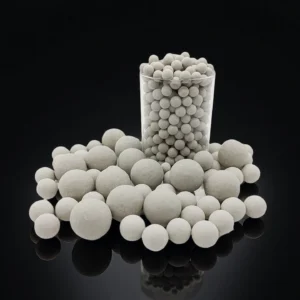
High alumina ball packaging

Quick Quote

The more details you provide, the faster we can quote.

*All inquiries are confidential.

Get Your Custom Solution

The more details you provide, the faster we can respond.

customize size

*We respond within 24 hours. All inquiries are confidential.

Download Catalog