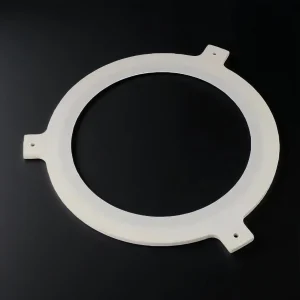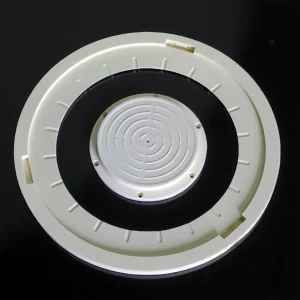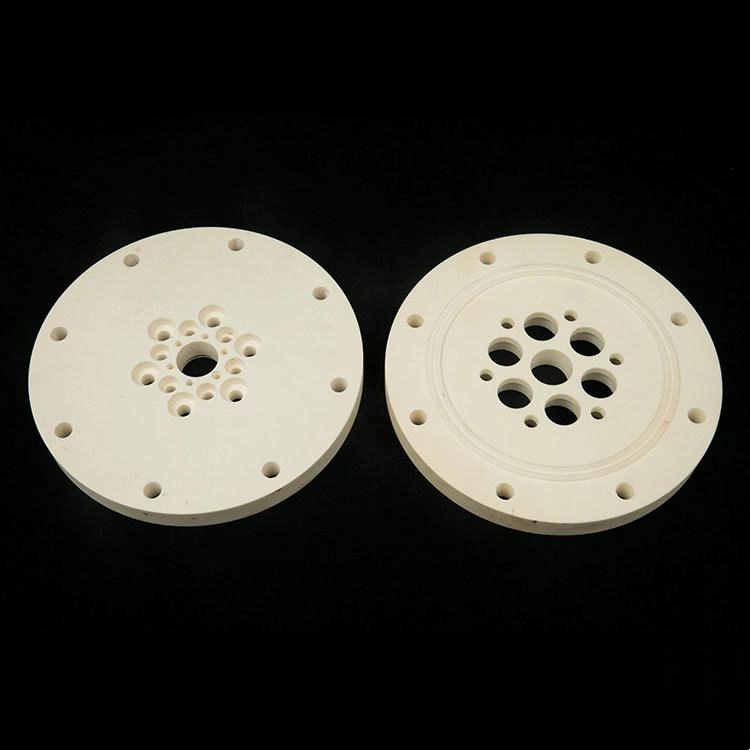
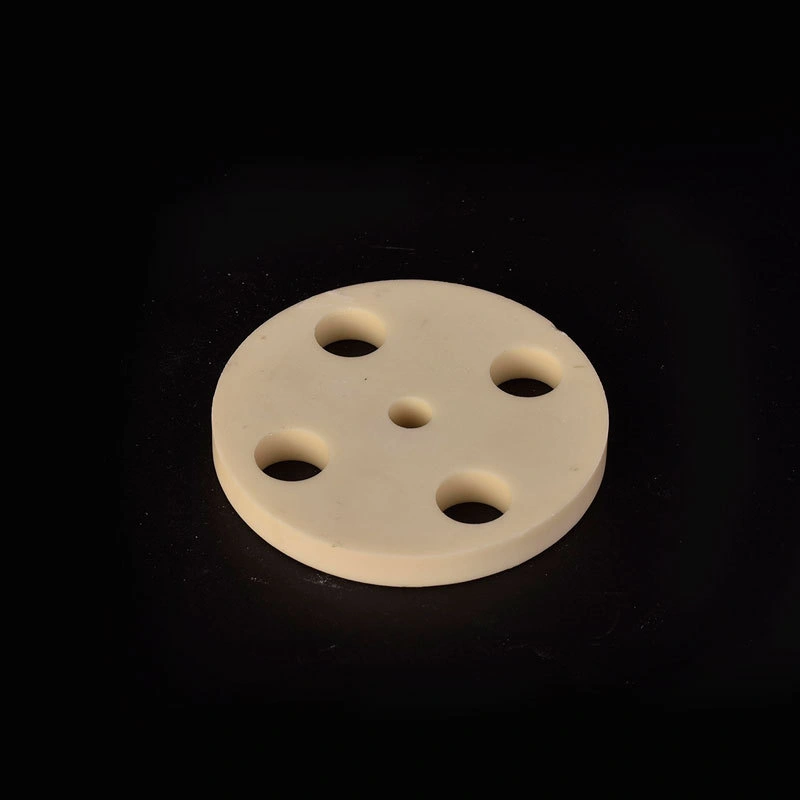
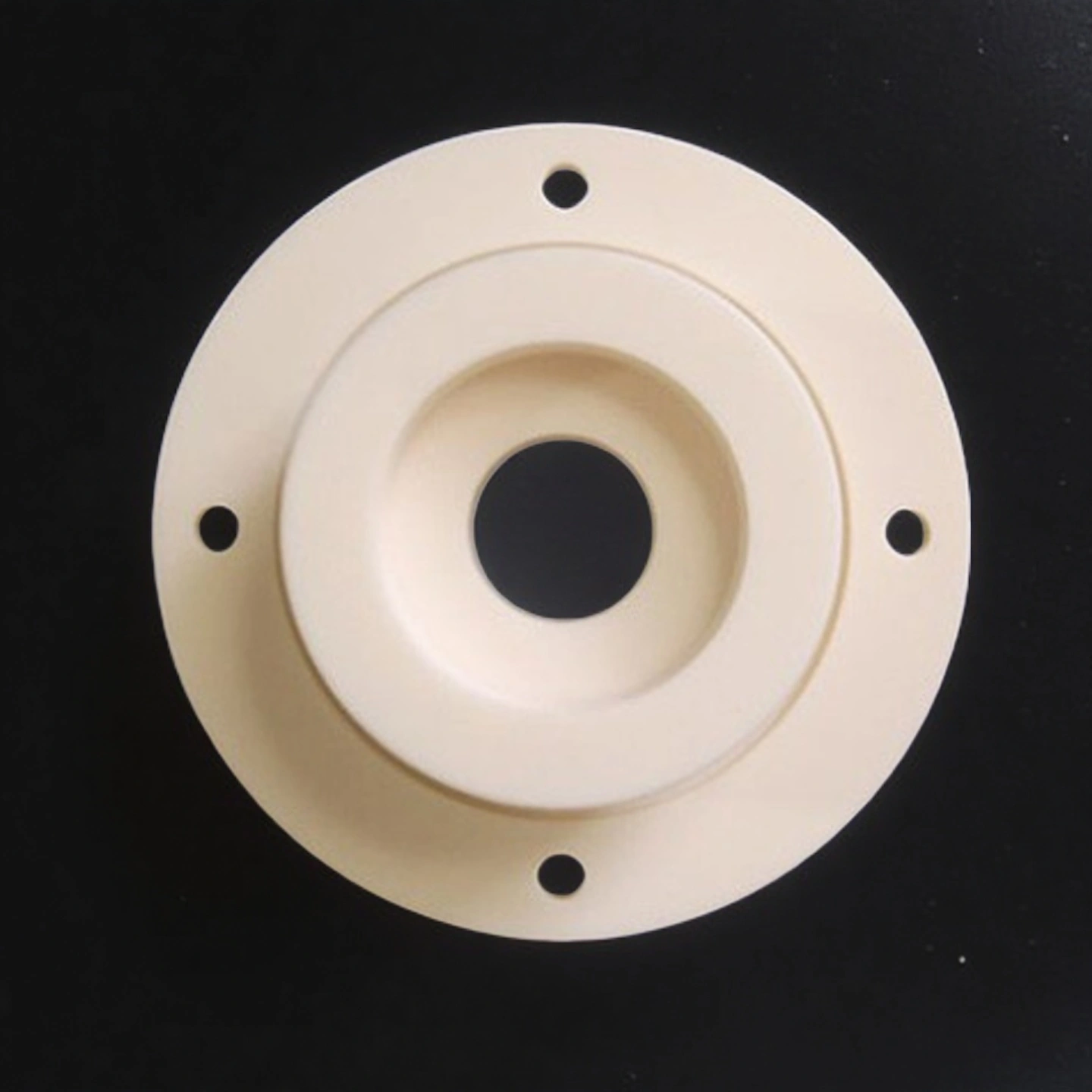
Custom Alumina Ceramic Flange for Furnace and Vacuum Interfaces

ADCERAX supplies custom alumina ceramic flanges for furnace tubes, vacuum interfaces, heater assemblies and insulated mounting structures where metal flanges may deform, oxidize or conduct current.

Dense Al₂O₃ ceramic provides heat resistance, electrical insulation and corrosion resistance. Each flange can be reviewed by OD, ID, thickness, bolt pattern, sealing face, gasket design, alumina grade, working temperature and mating structure before quotation.

Catalog No. AT-YHL-FL01
Material ≥ 95% Al2O3
Dimensional Tolerance ±0.05 mm (standard)
Max Operating Temperature Up to 1600°C
Coefficient of Thermal Expansion ~7–8.5 ×10⁻⁶ /°C (25–1000°C)
Engineering RFQ Review
Small-Batch Custom Support
Factory-Direct Manufacturing
Drawing & Process Review

What Is an Alumina Ceramic Flange?

An alumina ceramic flange is a precision ceramic connection part used to support, locate, seal or electrically isolate tubes, heaters, chambers and mounting structures in high-temperature equipment. It is selected when metal flanges may deform, oxidize, conduct current or create contamination risk under heat, corrosion or electrical load.

Why Alumina Works for High-Temperature Flange Interfaces

Alumina ceramic is suitable for high-temperature flange interfaces because it combines heat resistance, electrical insulation, chemical stability and mechanical hardness in one material. This makes it useful for equipment connections where a metal flange may lose shape, oxidize, conduct current or affect process cleanliness.

Dense Al₂O₃ ceramic can help maintain stable support around furnace tube ends, heater interfaces and insulated mounting positions. It also provides electrical isolation between conductive hardware, which is important for heater assemblies, electrode supports and high-temperature electrical structures.

Alumina also resists many oxidizing and chemically aggressive conditions better than common metals. For demanding applications, the final alumina grade should be selected according to working temperature, atmosphere, chemical exposure, insulation requirement and machining complexity.

Properties of Alumina Ceramic Flange

Property Unit 96% Al₂O₃ 99% Al₂O₃ 99.5% Al₂O₃ 99.6% Al₂O₃ 99.7% Al₂O₃ 99.8% Al₂O₃ 99.9% Al₂O₃ 99.99% Al₂O₃
Alumina content % 96 99 99.5 99.6 99.7 99.8 99.9 99.99
Density g/cm³ 3.6-3.75 3.83 3.89 3.91 3.92 3.93 3.94 3.98
Color white Ivory Ivory Ivory Ivory Ivory Ivory Ivory
Water absorption % 0 0 0 0 0 0 0
Young’s modulus (Elastic modulus) GPa 300 350 375 356 357 358 359 362
Shear modulus GPa 152
Bulk modulus GPa 228
Poisson’s ratio 0.22
Compressive strength MPa 1910 2210 2600 2552 2554 2556 2558 2570
Flexural strength MPa 260 300 379 312 313 314 315 320
Fracture toughness MPa·m¹ᐟ² 4
Hardness GPa 14.5 17 17 23 24 25 26 30
Thermal conductivity W/m·K 22 24 35 32–37 33–38 34–39 35–40 36–42
Thermal shock resistance ΔT °C 222 223 224 225 228
Maximum use temperature (no load) °C 1450 1680 ≤1750 1755 1760 1765 1770 1800
Coefficient of thermal expansion 10⁻⁶/°C 7.6 7.6 8.4
Volume resistivity Ω·cm >1×10¹⁴ >1×10¹⁴ >1×10¹⁴ >1×10¹⁴ >1×10¹⁴ >1×10¹⁴ >1×10¹⁴ >1×10¹⁴
Dielectric constant (relative permittivity) 9.2 9.5 9.8 9.83 9.84 9.85 9.86 9.92
Dielectric strength kV/mm 15 19 16.9 23.2 23.4 23.6 23.8 24
Dissipation factor (loss factor @ 1 kHz) 0.0002


Alumina Ceramic Flange Specifications

Alumina Ceramic Flange
Item No. Diameter (mm) Thickness (mm)
AT-YHL-FL01 Customize


Material Grade and Property Reference

Alumina ceramic flanges are commonly produced from 95%, 96%, 99% or 99.5% Al₂O₃ depending on temperature, insulation requirement, chemical exposure, cleanliness requirement and budget.

  • 95% alumina is often selected for cost-effective industrial flange parts, furnace fixtures and general insulating supports. It is suitable when the application requires good heat resistance and insulation but does not require high-purity ceramic performance.
  • 96% alumina provides a balanced choice for many heater assemblies, tube interfaces and electrical insulation structures. It is often used when the flange needs stable ceramic performance with practical machining and cost control.
  • 99% alumina is suitable for higher-temperature, cleaner or more demanding insulation and sealing applications. It can be considered when the working environment requires improved purity, lower contamination risk or better long-term stability.
  • 99.5% alumina is used when the flange requires higher purity, cleaner ceramic contact or more demanding technical performance. The final grade should be confirmed together with geometry, sealing method, working atmosphere and cost target. A higher alumina purity is not always necessary if the main requirement is mechanical fit or industrial insulation.

Alumina Ceramic Flange Packaging

  • Alumina ceramic flanges are inspected for critical dimensions, sealing faces, bolt holes and edge quality before shipment, then packed with protective separation to reduce impact, vibration and ceramic-to-ceramic contact during export transportation.
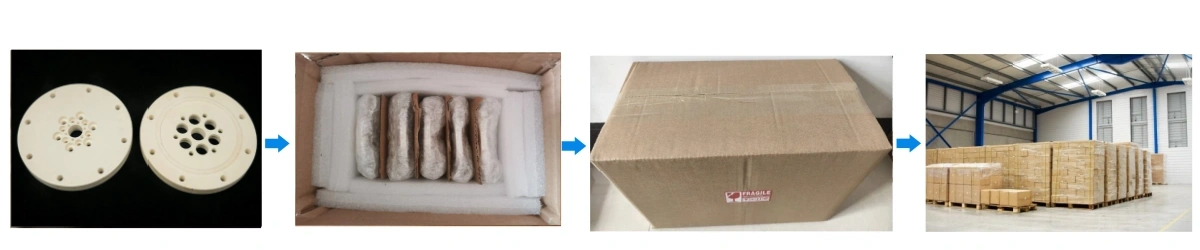
Alumina Ceramic Flange Packaging

Alumina Ceramic Flange Applications

Alumina ceramic flanges are used in furnace, vacuum, heater and chemical process interfaces where heat resistance, electrical insulation, corrosion resistance and stable alignment are required.

  • Industrial Furnaces and Heat Treatment Lines

    In furnace tube ends and heat treatment equipment, alumina ceramic flanges help provide a stable ceramic connection between the hot zone and external fixture area. They are useful when metal flanges may deform, oxidize or conduct heat and current under repeated heating cycles.

  • Vacuum Coating and Thermal Processing Systems

    In vacuum and controlled-atmosphere systems, alumina ceramic flanges can support heaters, electrodes, sensors and tube passages while reducing unwanted conductive paths. Ground or polished sealing faces can be reviewed for gasket contact and cleaner chamber interfaces.

  • Chemical Process and Fluid Control Systems

    In selected chemical and fluid control systems, alumina ceramic flanges can be used where corrosion resistance, heat stability and electrical isolation are more important than metal ductility. Medium compatibility, gasket design and bolt load should be reviewed before production.

  • Typical Problems Alumina Ceramic Flanges Help Solve

    Alumina ceramic flanges are often selected to reduce metal deformation, oxidation, electrical conduction, corrosion and contamination near demanding equipment interfaces. The final design should match the tube, gasket, bolt pattern, temperature and installation method.

Alumina Ceramic Flange Usage Instructions

Proper installation and handling help alumina ceramic flanges maintain stable sealing, alignment and insulation performance in furnace, vacuum and high-temperature equipment. Because alumina ceramic is hard but not ductile like metal, the flange should be assembled with correct alignment, even loading and suitable gasket support.

  • Installation

    Check OD, ID, thickness, bolt circle, hole diameter and sealing face before assembly. Handle the flange carefully to avoid chipping around bolt holes, bore edges and sealing surfaces.

    Align the ceramic flange with the mating tube or chamber before tightening. Bolts should be tightened gradually in a cross pattern to distribute load evenly. Use gasket materials suitable for the working temperature, atmosphere and chemical environment.

  • Operation

    Heat the system at a controlled rate to reduce thermal shock risk. Avoid sudden flame contact, cold air impact or liquid contact on hot ceramic surfaces.

    Keep mechanical load within the design range. If leakage or displacement appears during trial operation, cool the joint before checking bolt torque or gasket condition.

  • Cleaning and Storage

    Clean the flange with a soft cloth, soft brush, compatible solvent or deionized water. Avoid aggressive scrubbing on sealing faces.

    Store alumina ceramic flanges in clean, dry packaging with foam, paper or soft dividers between parts. Do not stack heavy parts directly on ceramic flanges.

  • Common Misuse Points to Avoid

    Avoid over-tightening bolts, forced alignment, rapid heating or cooling, hard gasket contact and direct impact during maintenance. These issues may cause cracks, edge chipping or sealing failure.

Alumina Ceramic Flange FAQ

  1. What is an alumina ceramic flange used for?
    An alumina ceramic flange is used as a high-temperature, electrically insulating and corrosion-resistant interface for furnace tubes, vacuum chambers, heater assemblies, sensor mounts and selected process equipment.
  2. Can an alumina ceramic flange replace a metal flange?
    It can replace a metal flange in selected applications where insulation, heat resistance or corrosion resistance is more important than metal ductility. The design should be reviewed for bolt load, sealing method, thermal expansion and mechanical stress before replacement.
  3. Which alumina grade should I choose for a ceramic flange?
    95% or 96% alumina may be suitable for many industrial insulation and furnace fixtures, while 99% or 99.5% alumina is often preferred for higher temperature, cleaner vacuum or more demanding electrical insulation conditions.
  4. How is an alumina ceramic flange sealed?
    Alumina ceramic flanges can be sealed with graphite gaskets, high-temperature fiber gaskets or other compatible sealing designs. The correct choice depends on temperature, atmosphere, vacuum level, chemical medium and allowable bolt load.
  5. What dimensions are needed for a custom alumina ceramic flange?
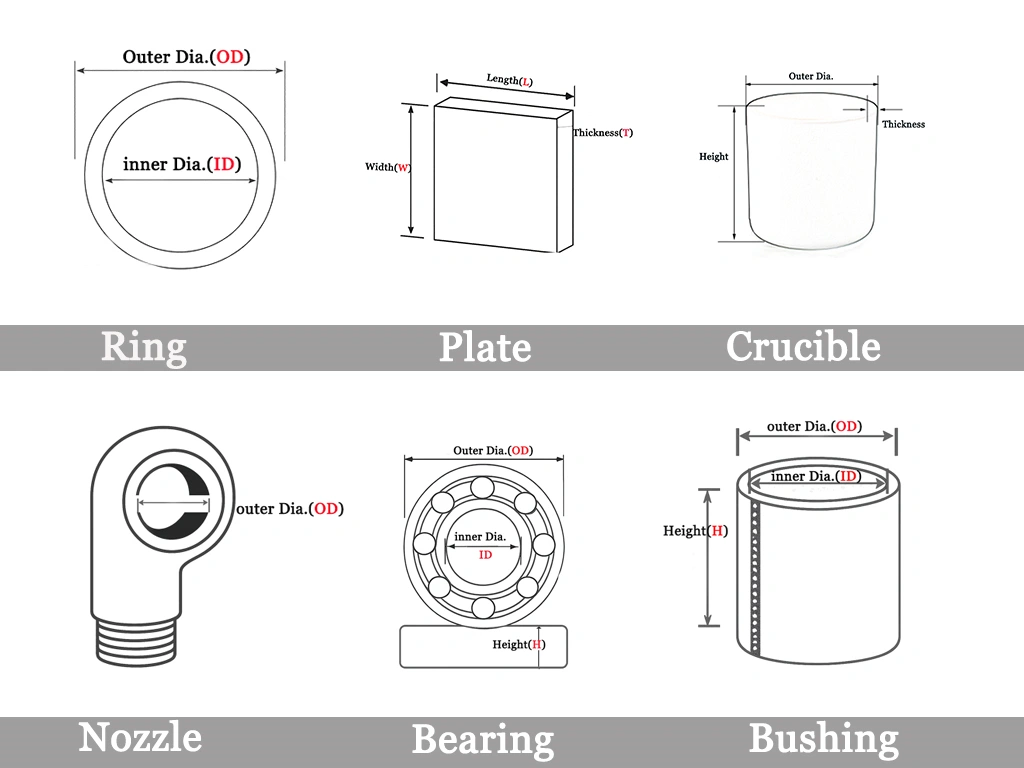
    The main dimensions include OD, ID, thickness, bolt circle diameter, hole diameter, hole quantity, step height, groove structure, sealing face requirement and edge chamfer. A 2D drawing or 3D model is preferred.
  6. Can alumina ceramic flanges be used with quartz or alumina tubes?
    Yes, alumina ceramic flanges can be designed to support quartz tubes, alumina tubes or selected metal tubes. The bore, shoulder, clearance and thermal expansion difference should be reviewed before production.
customize size

Custom Alumina Ceramic Flange

ADCERAX supplies alumina ceramic flange components as both standard rings and fully custom machined parts, so the alumina ceramic flange can match existing tube sizes, bolt patterns and sealing geometries in your equipment.

1. Outer and Inner Diameters

OD and ID can be machined with typical dimensional tolerance down to ±0.05 mm on critical fits, with wider tolerance options available for non-critical surfaces.

2. Flange Thickness and Sealing Face Design

Overall thickness, step heights and recesses can be designed for gaskets, O-rings or other sealing structures.

3. Bolt Circle Geometry

Hole quantity, bolt circle diameter, hole diameter and positional tolerance can be reviewed for through-holes or threaded insert structures. Threaded features can be supported with metal inserts or secondary parts when required.

4. Tube Interface

Straight bore, taper bore or shoulder bore designs can be used to locate alumina tubes, quartz tubes or selected metal tubes.

5. External Shape

Round, square or rectangular alumina ceramic flange bodies can be supplied, with optional flats or key features to help prevent rotation.

6. Surface Finish on Critical Faces

As-fired, ground or polished sealing faces can be selected according to gasket contact, sealing requirement and mating surface design.

7. Material Grade

95%, 96%, 99% or 99.5% alumina ceramic can be selected according to working temperature, insulation requirement and chemical environment.

Related Products

ADCERAX - Your Trusted Advanced Ceramics Manufacturing Partner

Direct factory manufacturing with comprehensive ceramic materials expertise and global supply capabilities

China-Based Manufacturer

ADCERAX supplies ceramic components for overseas OEMs, equipment builders, and labs.

Custom Drawing Support

We review drawings, dimensions, materials, and application conditions before quotation.

Ceramic Process Control

Forming, sintering, machining, grinding, and finishing are arranged by part requirements.

Pre-Shipment Inspection

Dimensional checks, visual inspection, and packaging review help reduce procurement risk.

Get in Touch with Us

Our team will be happy to respond to you in less than 24 hours.

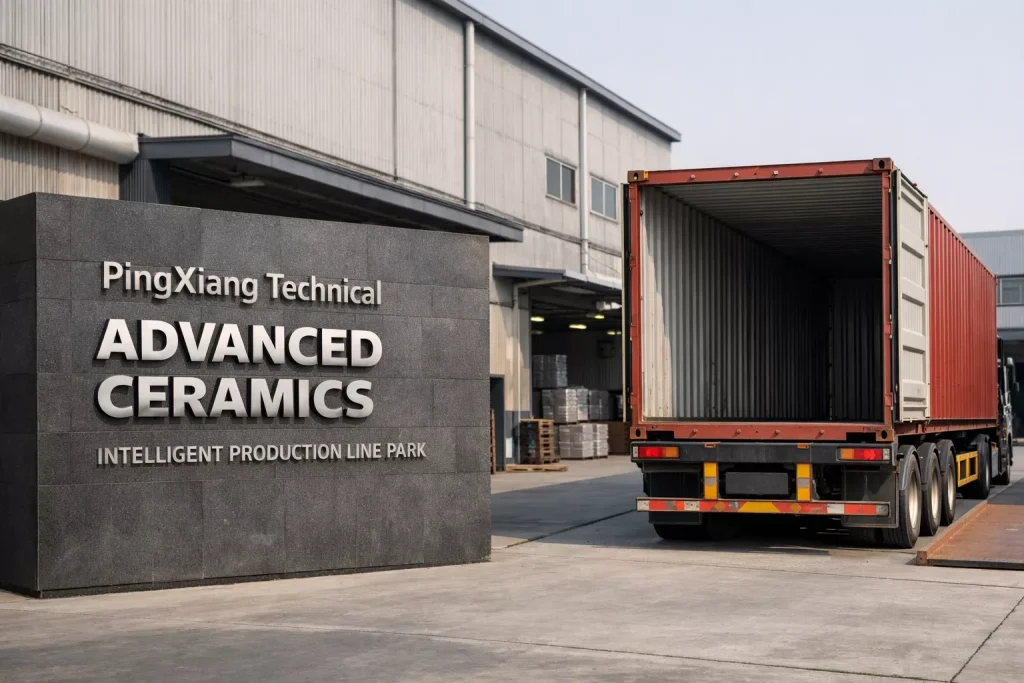
Pingxiang Factory — Silicon carbide, silicon nitride, high-temperature ceramics

Quick Quotation

*Our team will answer your inquiries within 24 hours.

*Your information will be kept strictly confidential.

Ready to Solve Your Engineering Challenge?

Partner with ADCERAX for reliable, high-performance advanced ceramic solutions. Our engineers are ready to discuss your project.

E-mail

info@adcerax.com

Phone

+(86) 0731-74427743 | WhatsApp: +(86) 19311583352

Response Time

Within 24 hours

Quick Quote

The more details you provide, the faster we can quote.

*We respond within 24 hours. All inquiries are confidential.

Get Your Custom Solution

The more details you provide, the faster we can respond.

customize size

*We respond within 24 hours. All inquiries are confidential.

Download Catalog