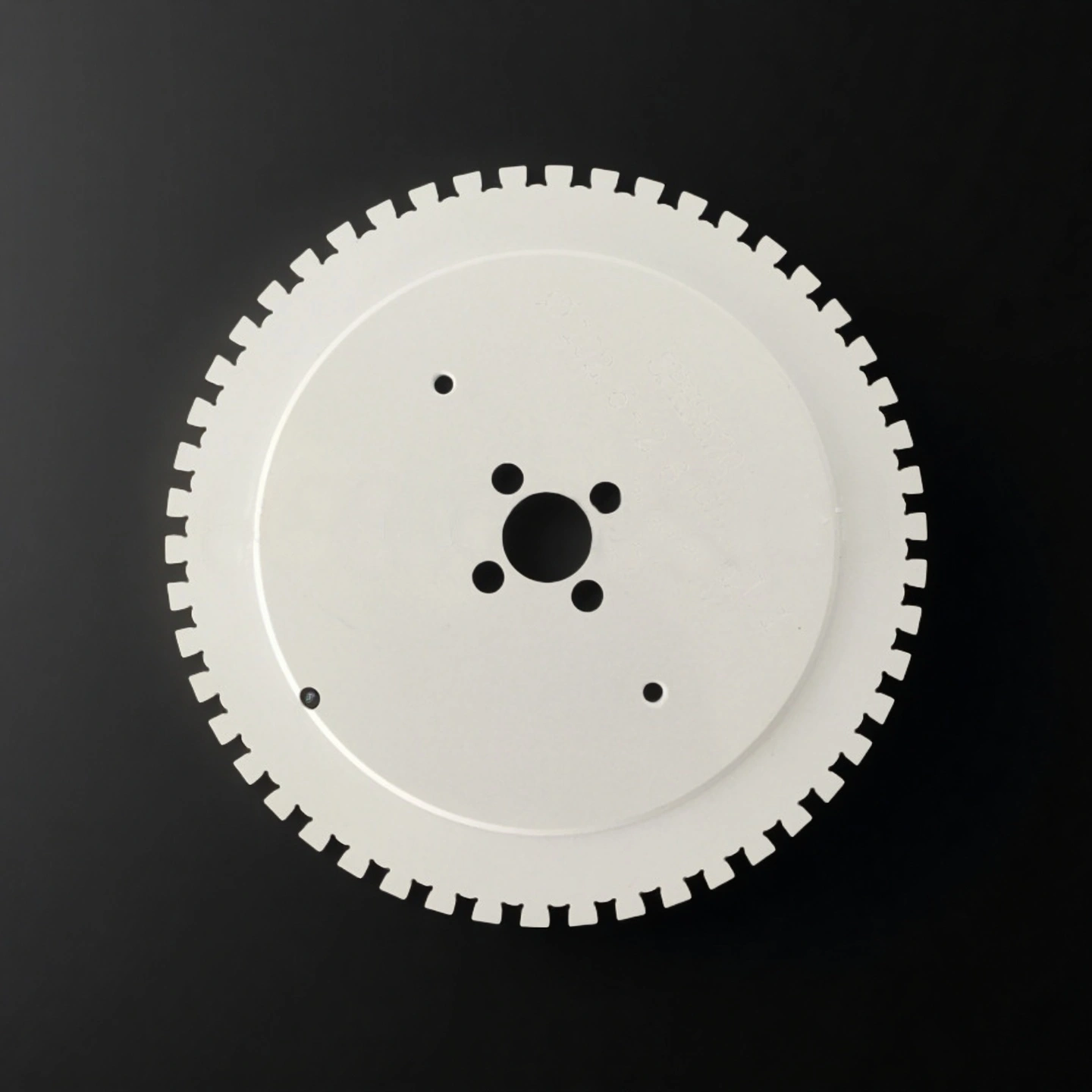
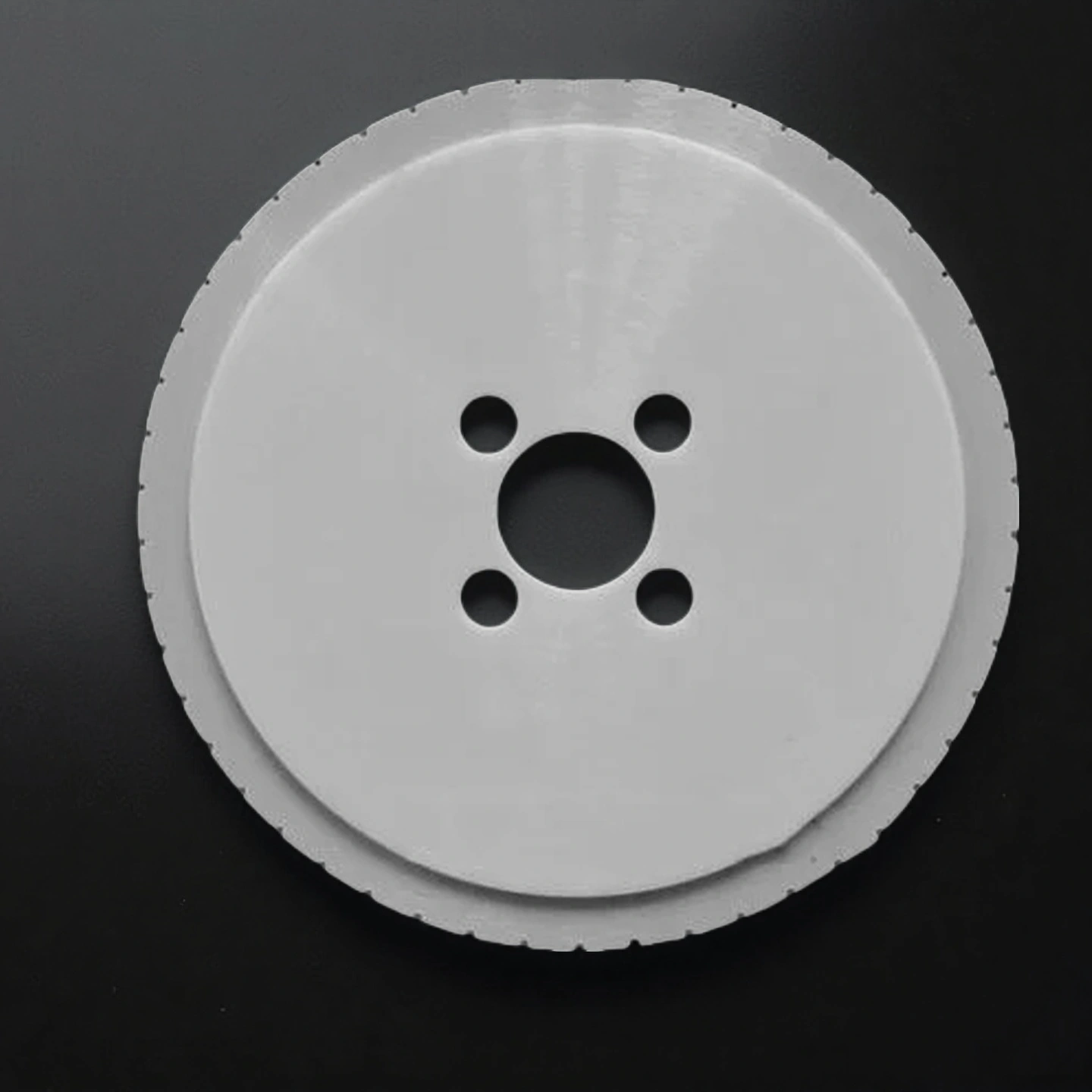
Alumina Ceramic Rotary Indexing Table Plate & Dial Plate for Automation Systems

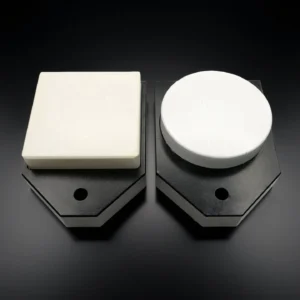
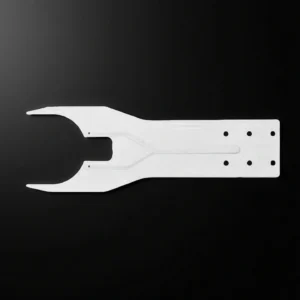
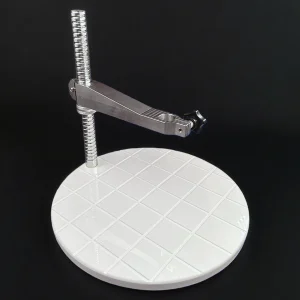
ADCERAX supplies alumina ceramic rotary indexing table plates in standard diameters and customer-specified layouts, covering small to large table sizes with customized hole patterns, slot features, and thickness to match different rotary indexers and automation platforms.

Catalog No. AT-YHL-IW01
Material ≥ 96% Al₂O₃
Density 3.8–3.9 g/cm³
Maximum Operating Temperature ≥ 1450°C
Table Face Flatness/Runout Target ≤ 0.02–0.05 mm on working diameter (design-dependent)
Engineering RFQ Review
Small-Batch Custom Support
Factory-Direct Manufacturing
Drawing & Process Review

Alumina ceramic rotary indexing tables are designed for precise rotational positioning in high-precision equipment, including laser marking stations, CNC systems, and automated inspection platforms. Made from ≥95% alumina, the material offers exceptional hardness, dielectric strength, and thermal resistance, making it ideal for harsh industrial conditions or cleanroom environments.

Why Engineers Choose Alumina Ceramic Dial Plates Over Metal

  • Electrical insulation — high dielectric strength and volume resistivity isolate test probes and fixtures from the drive and frame at in-line electrical stations.
  • Non-magnetic & clean — alumina does not rust or magnetise and sheds few particles, which suits clean and inspection stations.
  • Wear resistance — the hard ceramic surface resists indentation and groove wear from repeated clamping over high cycle counts.
  • Dimensional stability — high stiffness and low thermal expansion help hold flatness and position through local heating steps.
  • Heat & chemical resistance — the surface withstands repeated heating and many process chemicals in laser, curing and heating stations.


Alumina Rotary Indexing Table Properties

Property 96% Al₂O₃ 99% Al₂O₃ 99.5% Al₂O₃ 99.7% Al₂O₃ Note
Alumina Content (%) 96 99 99.5 99.7 Final grade confirmed per order
Density (g/cm³) 3.60–3.75 ≈3.83 ≈3.89 ≈3.92 Higher-purity grades generally have greater density
Flexural Strength (MPa) 260–320 300–350 350–380 360–400 Dependent on test method, geometry, and size
Elastic Modulus (GPa) 300–340 350–360 ≈370 370–380 High stiffness supports dimensional stability
Hardness (GPa) ≈14–15 ≈15–17 ≈15–18 ≈15–18 Supports resistance to surface wear
Thermal Expansion (10⁻⁶/K) 7.5–8.0 7.6–8.2 8.0–8.4 8.0–8.5 Low thermal expansion supports repeatability
Volume Resistivity (Ω·cm) >1 × 10¹⁴ >1 × 10¹⁴ >1 × 10¹⁴ >1 × 10¹⁴ Electrically insulating and non-magnetic
Typical Application Positioning General-purpose Precision automation High-cleanliness applications Semiconductor-adjacent equipment Structural and handling components only


Alumina Grade Selection Guide

Alumina Grade Typical Selection Considerations
96% Al₂O₃ General-purpose electrical insulation and wear resistance for standard automation stations.
99% Al₂O₃ Higher density and stability for precision automation and electronics assembly equipment.
99.5% Al₂O₃ Higher cleanliness and stability for more demanding automation and inspection stations.
99.7% Al₂O₃ Suitable for structural and handling components in semiconductor-adjacent equipment. This does not indicate wafer-contact or semiconductor-process qualification.
How We Select the Grade Material purity is selected according to operating temperature, electrical or magnetic environment, cleanliness, load, geometry, and precision requirements. Final selection is confirmed through engineering review.


Alumina Rotary Indexing Table Specifications

Alumina Rotary Indexing Table
Item No. Diameter (mm) Thickness (mm)
AT-YHL-IW01 Customize


Alumina Rotary Indexing Table Packaging

  • Each alumina ceramic rotary indexing table plate is individually wrapped in soft protective film to prevent surface scratches.
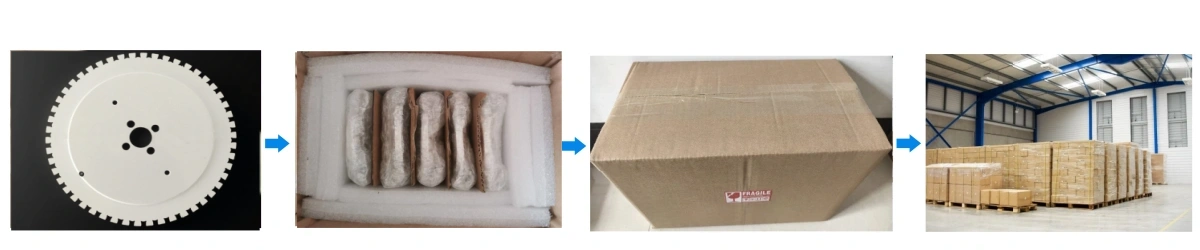

Alumina Rotary Indexing Table Packaging

Alumina Ceramic Rotary Indexing Table Applications

  • Automotive and Electrical Assembly Lines

    Key advantages: stable indexing under local heating; insulated test stations (interrupts stray currents / leakage paths); lower wear at high cycle counts.

    How it helps: replacing a worn metal indexing plate with an alumina ceramic plate reduces surface wear and heat-related distortion, which helps hold assembly tolerance and reduce misindexing over long runs. Actual results depend on line design, load and fixturing.

  • Laser Marking and Laser Processing Cells

    Key advantages: reduced thermal drift under laser heating; clean, non-contaminating surface; integrates with mechanical or servo rotary cells.

    How it helps: controlled flatness and low thermal expansion reduce stack-up of height and position variation, which helps keep mark quality consistent across many indexes. Results depend on the cell design and marking process.

  • Precision Testing, Inspection and Metrology

    Key advantages: controlled flatness for measurement paths; electrically inert platform for sensitive probing; dimensional stability across temperature.
    How it helps: a ceramic plate with tight flatness/runout maintains a more consistent reference geometry, which helps reduce false rejects and re-qualification frequency. Actual accuracy depends on the metrology system and drawing tolerances.

Alumina Ceramic Dial Plate Usage Instructions

  • Installation

    1. Clean the mounting surface and confirm that it is flat and free from burrs.
    2. Align the mounting holes and locating features according to the drawing.
    3. Tighten the fasteners evenly to avoid concentrated stress on the ceramic plate.

  • Handling

    1. Support the plate evenly and avoid point loading or edge impact.
    2. Use two people or suitable lifting equipment when handling large plates.
    3. Do not install a plate with visible chips or structural cracks.

  • Cleaning

    Clean the surface with a lint-free cloth and neutral detergent. Avoid metal scrapers or tools that may scratch the surface or chip the edges.

  • Storage

    Store the plate horizontally on a flat, padded surface in a clean, dry environment. Keep the edges protected from impact.

FAQ – Alumina Ceramic Rotary Indexing Table

  1. Q: What is an alumina ceramic rotary indexing table plate used for?
    A: It is the ceramic table face/dial plate that mounts on a rotary indexer to move parts between stations, giving an insulated, non-magnetic and dimensionally stable working surface. We supply the ceramic plate, not the indexing machine.
  2. Q: How is it different from a metal indexing plate?
    A: Alumina offers higher electrical insulation, non-magnetic behaviour, better chemical and wear resistance and dimensional stability, which helps hold indexing accuracy where a metal plate wears, distorts or conducts.
  3. Q: What temperature can it handle?
    A: Dense alumina plates are typically used to about 1,450°C for 96% and higher for purer grades; the allowable temperature is grade- and system-dependent and is confirmed per application—it is not a whole-machine rating.
  4. Q: Is it compatible with cam indexers and servo rotary tables?
    A: Yes—the plate is machined with the central bore, bolt pattern and keyways to match your cam indexer or servo rotary table. We build to your interface drawing.
  5. Q: Can it support heavy fixtures and parts?
    A: Alumina has high hardness and stiffness, but the allowable payload per station must be calculated from the plate dimensions, support conditions and your indexer’s load rating.
  6. Q: Is it suitable for cleanroom or medical environments?
    A: The surface is non-rusting and easy to clean, which suits clean processes; cleanroom or medical use also depends on system-level design and regulatory requirements outside the plate.
  7. Q: Can it be used with vacuum fixtures or suction cups?
    A: Yes—the plate can be machined with vacuum channels and ports; low porosity supports vacuum clamping where the design includes suitable seals and grooves.
  8. Q: Is this a complete rotary indexing table?
    A: No. We supply the alumina ceramic table face/dial plate that mounts on your indexer. We do not sell the indexer drive or quote indexing accuracy, torque or whole-machine performance.
  9. Q: What is the difference between a rotary table and indexing?
    A: A rotary table provides continuous or positioned rotation; indexing means moving in fixed angular steps between stations. Our ceramic plate is the tooling face for either—the motion is provided by your machine.
  10. Q: Which alumina grade should I choose—96%, 99%, 99.5% or 99.7%?
    A: 96% suits general insulating and wear stations; 99–99.5% suits precision and high-cleanliness work; 99.7% suits semiconductor-adjacent structural parts. We select the grade from your temperature, environment, cleanliness, load and precision requirements.
  11. Q: Can you guarantee flatness and runout?
    A: We work to the flatness, parallelism and runout tolerances on your drawing and confirm feasibility through engineering review. We do not publish a fixed guaranteed value without your drawing and acceptance method.

What to send for a fast quote

For the fastest, most accurate quote, send:

  • A drawing or a photo of your old plate — plus OD / ID/thickness
  • Bolt circle, centre bore, dowel/locating holes, keyway
  • Vacuum channels/ports, slots, nesting pockets, vision openings
  • Flatness/parallelism/runout / surface-finish tolerances
  • Number of index stations and angular divisions
  • Load per station, temperature, and electrical/magnetic / cleanroom environment
  • Quantity, and whether this replaces a metal or OEM plate

The more you share, the faster our engineers can confirm what we can make.

customize size

Custom Alumina Ceramic Rotary Indexing Table

You can configure the alumina ceramic rotary indexing table plate to fit servo rotary tables, cam indexers, and custom automation dials for both new machines and retrofit projects.

  • Table size: Outer diameter, inner bore, and thickness based on your mechanical envelope
  • Mounting interface: Centre bore, bolt circle, keyways, torque-motor or reducer interface pattern
  • Indexing configuration: Number of stations and angular divisions (6, 8, 10, 12, 16, 24 positions)
  • Working station layout: PCD, hole size, threaded holes, counterbores, and dowel pin locations for fixtures
  • Functional structures: Radial slots, nesting pockets, locating steps, vacuum channels, vision openings
  • Precision requirements: Surface flatness, runout, parallelism, concentity for rotary positioning accuracy
  • Edge and safety design: Chamfered or radiused edges to reduce chipping and handling risk
  • Material grade selection: Alumina purity options (95%, 99%, 99.5%, 99.7%) based on thermal, wear, and insulation needs

Related Products

ADCERAX - Your Trusted Advanced Ceramics Manufacturing Partner

Direct factory manufacturing with comprehensive ceramic materials expertise and global supply capabilities

China-Based Manufacturer

ADCERAX supplies ceramic components for overseas OEMs, equipment builders, and labs.

Custom Drawing Support

We review drawings, dimensions, materials, and application conditions before quotation.

Ceramic Process Control

Forming, sintering, machining, grinding, and finishing are arranged by part requirements.

Pre-Shipment Inspection

Dimensional checks, visual inspection, and packaging review help reduce procurement risk.

Get in Touch with Us

Our team will be happy to respond to you in less than 24 hours.

Pingxiang Factory — Silicon carbide, silicon nitride, high-temperature ceramics

Quick Quotation

*Our team will answer your inquiries within 24 hours.

*Your information will be kept strictly confidential.

Ready to Solve Your Engineering Challenge?

Partner with ADCERAX for reliable, high-performance advanced ceramic solutions. Our engineers are ready to discuss your project.

E-mail

info@adcerax.com

Phone

Tel: +86-0731-84428843 WhatsApp: +86 19311583352

Response Time

Within 24 hours

Alumina ceramic rotary indexing tables are designed for precise rotational positioning in high-precision equipment, including laser marking stations, CNC systems, and automated inspection platforms. Made from ≥95% alumina, the material offers exceptional hardness, dielectric strength, and thermal resistance, making it ideal for harsh industrial conditions or cleanroom environments.

Why Engineers Choose Alumina Ceramic Dial Plates Over Metal

  • Electrical insulation — high dielectric strength and volume resistivity isolate test probes and fixtures from the drive and frame at in-line electrical stations.
  • Non-magnetic & clean — alumina does not rust or magnetise and sheds few particles, which suits clean and inspection stations.
  • Wear resistance — the hard ceramic surface resists indentation and groove wear from repeated clamping over high cycle counts.
  • Dimensional stability — high stiffness and low thermal expansion help hold flatness and position through local heating steps.
  • Heat & chemical resistance — the surface withstands repeated heating and many process chemicals in laser, curing and heating stations.


Alumina Rotary Indexing Table Properties

Property 96% Al₂O₃ 99% Al₂O₃ 99.5% Al₂O₃ 99.7% Al₂O₃ Note
Alumina Content (%) 96 99 99.5 99.7 Final grade confirmed per order
Density (g/cm³) 3.60–3.75 ≈3.83 ≈3.89 ≈3.92 Higher-purity grades generally have greater density
Flexural Strength (MPa) 260–320 300–350 350–380 360–400 Dependent on test method, geometry, and size
Elastic Modulus (GPa) 300–340 350–360 ≈370 370–380 High stiffness supports dimensional stability
Hardness (GPa) ≈14–15 ≈15–17 ≈15–18 ≈15–18 Supports resistance to surface wear
Thermal Expansion (10⁻⁶/K) 7.5–8.0 7.6–8.2 8.0–8.4 8.0–8.5 Low thermal expansion supports repeatability
Volume Resistivity (Ω·cm) >1 × 10¹⁴ >1 × 10¹⁴ >1 × 10¹⁴ >1 × 10¹⁴ Electrically insulating and non-magnetic
Typical Application Positioning General-purpose Precision automation High-cleanliness applications Semiconductor-adjacent equipment Structural and handling components only


Alumina Grade Selection Guide

Alumina Grade Typical Selection Considerations
96% Al₂O₃ General-purpose electrical insulation and wear resistance for standard automation stations.
99% Al₂O₃ Higher density and stability for precision automation and electronics assembly equipment.
99.5% Al₂O₃ Higher cleanliness and stability for more demanding automation and inspection stations.
99.7% Al₂O₃ Suitable for structural and handling components in semiconductor-adjacent equipment. This does not indicate wafer-contact or semiconductor-process qualification.
How We Select the Grade Material purity is selected according to operating temperature, electrical or magnetic environment, cleanliness, load, geometry, and precision requirements. Final selection is confirmed through engineering review.


Alumina Rotary Indexing Table Specifications

Alumina Rotary Indexing Table
Item No. Diameter (mm) Thickness (mm)
AT-YHL-IW01 Customize


Alumina Rotary Indexing Table Packaging

  • Each alumina ceramic rotary indexing table plate is individually wrapped in soft protective film to prevent surface scratches.
Alumina Rotary Indexing Table Packaging

Quick Quote

The more details you provide, the faster we can quote.

*All inquiries are confidential.

Get Your Custom Solution

The more details you provide, the faster we can respond.

customize size

*We respond within 24 hours. All inquiries are confidential.

Download Catalog