Alumina Ceramic Fiber for 1600°C-Class Furnace Insulation

ADCERAX supplies alumina ceramic fiber boards, blankets, plugs, vacuum-formed shapes and pre-compressed modules for furnace insulation, burner sealing and thermal lining repair. This material is suitable when standard aluminum silicate fiber may shrink, dust or lose dimensional stability in demanding high-temperature zones.

Available forms can be reviewed by temperature grade, density, thickness, shrinkage requirement, lining structure, atmosphere, hot-face exposure and installation method.

Catalogue No. AT-AO-XW1001
Material Al2O3
Linear Shrinkage @1500 °C×6 h ≤ 1–3 % (grade-dependent)
Classification Temperature 1600 °C
Dimensions/Sizes Custom sizes by drawing and installation design
Engineering RFQ Review
Small-Batch Custom Support
Factory-Direct Manufacturing
Drawing & Process Review

What Is Alumina Ceramic Fiber?

Alumina ceramic fiber is a high-temperature insulation material made from alumina-rich ceramic fibers. It is used in furnace linings, burner seals, thermal insulation boards, plugs, modules and vacuum-formed shapes where low thermal conductivity, low heat storage and dimensional stability are required.

Compared with standard aluminum silicate fiber, alumina ceramic fiber is often selected for higher-temperature zones, cleaner hot-face insulation and applications where shrinkage, dusting or lining deformation must be reduced. The suitable grade should be confirmed according to working temperature, furnace atmosphere, density, thickness and installation structure.

Why Choose Alumina Ceramic Fiber?

Alumina ceramic fiber is selected for furnace zones where standard insulation may shrink, dust, crack at the edge or lose sealing stability after repeated heating cycles. Its main value is not only high-temperature resistance, but also more stable lining performance during installation, operation and maintenance.

  • Lower Shrinkage at High Temperature: Alumina-rich fiber helps maintain lining shape and joint tightness in demanding furnace zones, reducing the risk of heat leakage caused by open seams or dimensional loss.
  • Low Heat Storage: The fiber structure helps reduce heat absorption during heating and cooling cycles, making it suitable for furnaces that require faster thermal response and lower energy loss.
  • Cleaner Hot-Face Insulation: Compared with lower-grade fiber insulation, alumina ceramic fiber can help reduce dusting and surface degradation in selected high-temperature areas where cleaner insulation performance is required.
  • Stable Board and Formed-Part Edges: Boards, plugs and vacuum-formed shapes can be supplied with controlled edges, holes, slots or profiles, helping installers reduce field trimming and improve fitting accuracy.
  • Suitable for Repair and Retrofit Work: Pre-cut boards, plugs and pre-compressed modules can be reviewed according to old lining dimensions, burner openings, inspection ports, anchor layout and furnace repair plans.

Alumina Oxide Ceramic Fiber Properties

Property Unit 96% Al₂O₃ 99% Al₂O₃ 99.5% Al₂O₃ 99.6% Al₂O₃ 99.7% Al₂O₃ 99.8% Al₂O₃ 99.9% Al₂O₃ 99.99% Al₂O₃
Alumina content % 96 99 99.5 99.6 99.7 99.8 99.9 99.99
Density g/cm³ 3.6-3.75 3.83 3.89 3.91 3.92 3.93 3.94 3.98
Color white Ivory Ivory Ivory Ivory Ivory Ivory Ivory
Water absorption % 0 0 0 0 0 0 0
Young’s modulus (Elastic modulus) GPa 300 350 375 356 357 358 359 362
Shear modulus GPa 152
Bulk modulus GPa 228
Poisson’s ratio 0.22
Compressive strength MPa 1910 2210 2500 2552 2554 2556 2558 2570
Flexural strength MPa 260 300 340 345 346 347 348 365
Fracture toughness MPa·m¹ᐟ² 4
Hardness GPa 14.5 17 17 23 24 25 26 30
Thermal conductivity W/m·K 20 31 31 31-33 31-33 31-33 31-35 31-35
Thermal shock resistance ΔT °C 222 223 224 225 228
Maximum use temperature (no load) °C 1450 1680 ≤1750 1755 1760 1765 1770 1800
Coefficient of thermal expansion 10⁻⁶/°C 7.6 7.6 7.6 7.6 7.5 7.5 7.4 7.4
Volume resistivity Ω·cm >1×10¹⁴ >1×10¹⁴ >1×10¹⁴ >1×10¹⁴ >1×10¹⁴ >1×10¹⁴ >1×10¹⁴ >1×10¹⁴
Dielectric constant (relative permittivity) 9.2 9.5 9.8 9.83 9.84 9.85 9.86 9.92
Dielectric strength kV/mm 15 19 16.9 23.2 23.4 23.6 23.8 24
Dissipation factor (loss factor @ 1 kHz) 0.0002


Alumina Ceramic Fiber Specifications

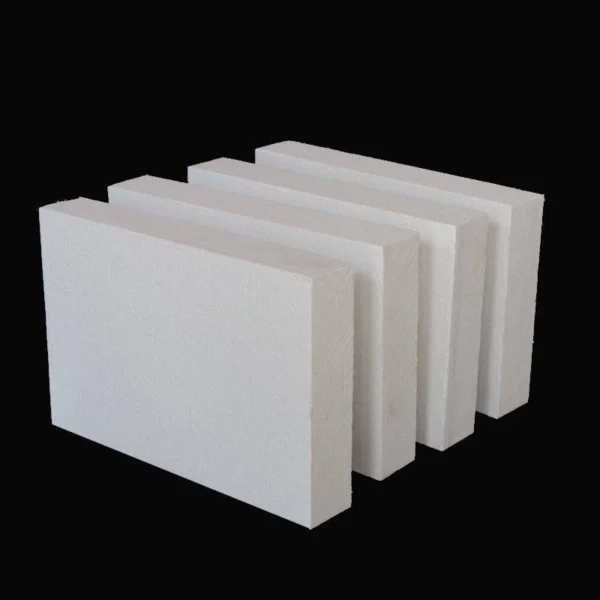
Type 1: Alumina Ceramic Fiber Board
Alumina Ceramic Fiber Board 1350°C Rated

Alumina Ceramic Fiber Board
Item No. Length(mm) Width (mm) Thickness (mm) Temperature℃ SiO2+Al2O3(%)
AT-AO-XW1001 600 400 20-150 1000℃-1800℃ 96%-99.8%
AT-AO-XW1002 900 600 20—150
AT-AO-XW1003 1000 500 20-150
AT-AO-XW1004 1000 600 20-150
AT-AO-XW1005 1100 700 10-150
AT-AO-XW1006 1200 1000 10—150


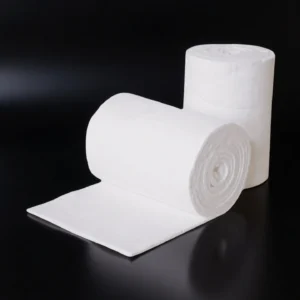
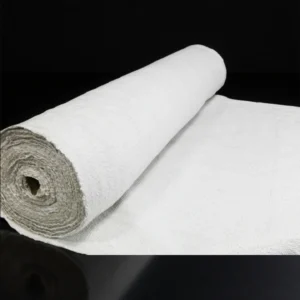
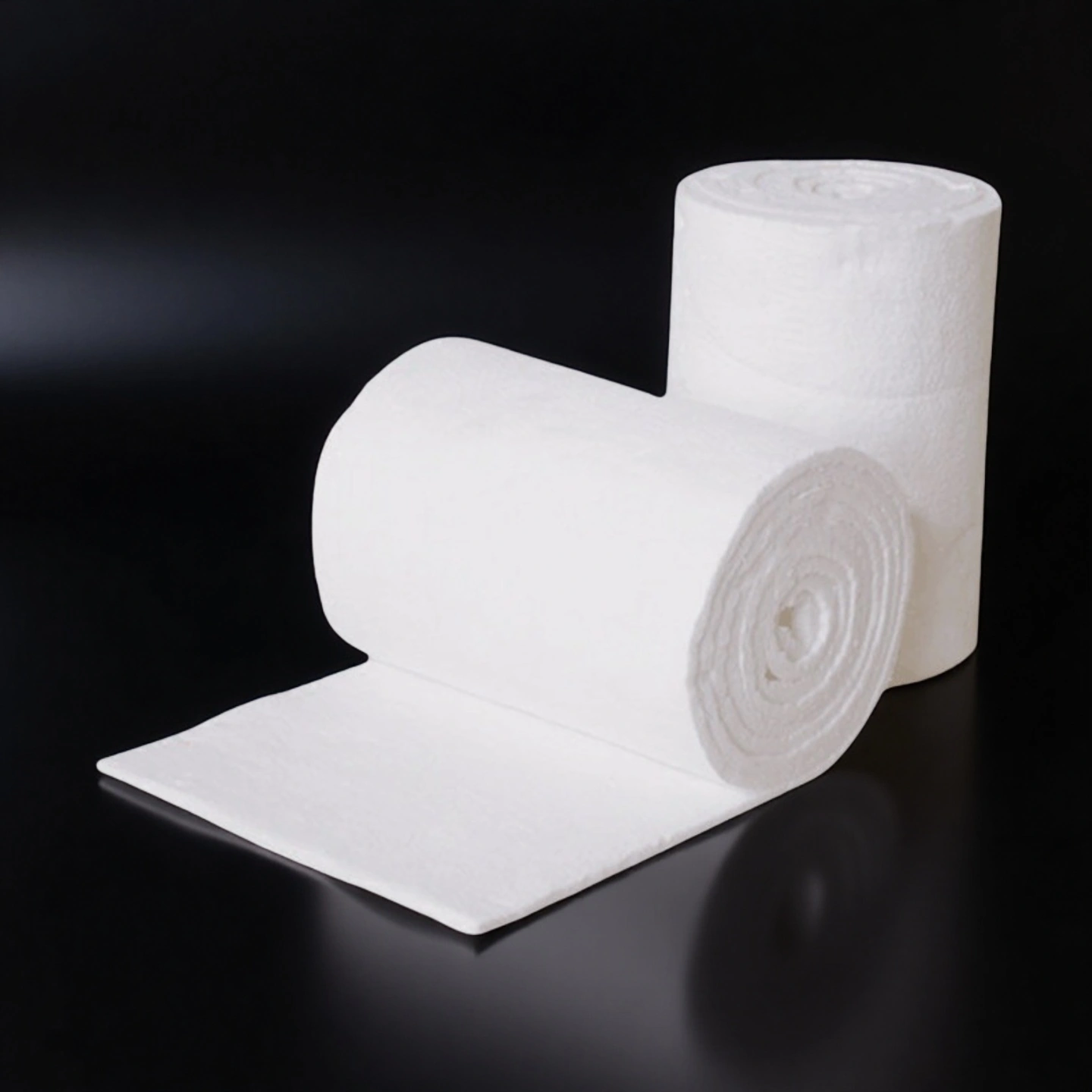
Type 2: Alumina Fiber Blanket

alumina fiber blanket roll for furnace insulation

Alumina Fiber Blanket
Item no. Working Temp.(℃) Density(kg/m3) Length(mm) Width(mm) Thickness(mm)
AT-GSL-T1001 1260 96  128  160  7200 610 6
AT-GSL-T1002 96  128  160  15000 610 10
AT-GSL-T1003 96  128  160  7200 610 20
AT-GSL-T1004 96  128  160  7200 610 25
AT-GSL-T1005 96  128  160  5000 610 30
AT-GSL-T1006 96  128  160  3600 610 50
AT-GSL-T1007 1400 96  128  160  7200 610 6
AT-GSL-T1008 96  128  160  15000 610 10
AT-GSL-T1009 96  128  160  7200 610 20
AT-GSL-T1010 96  128  160  7200 610 25
AT-GSL-T1011 96  128  160  5000 610 30
AT-GSL-T1012 96  128  160  3600 610 50


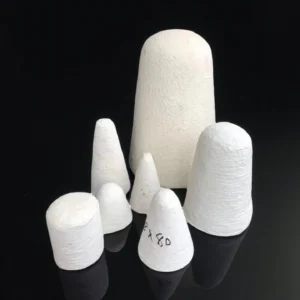
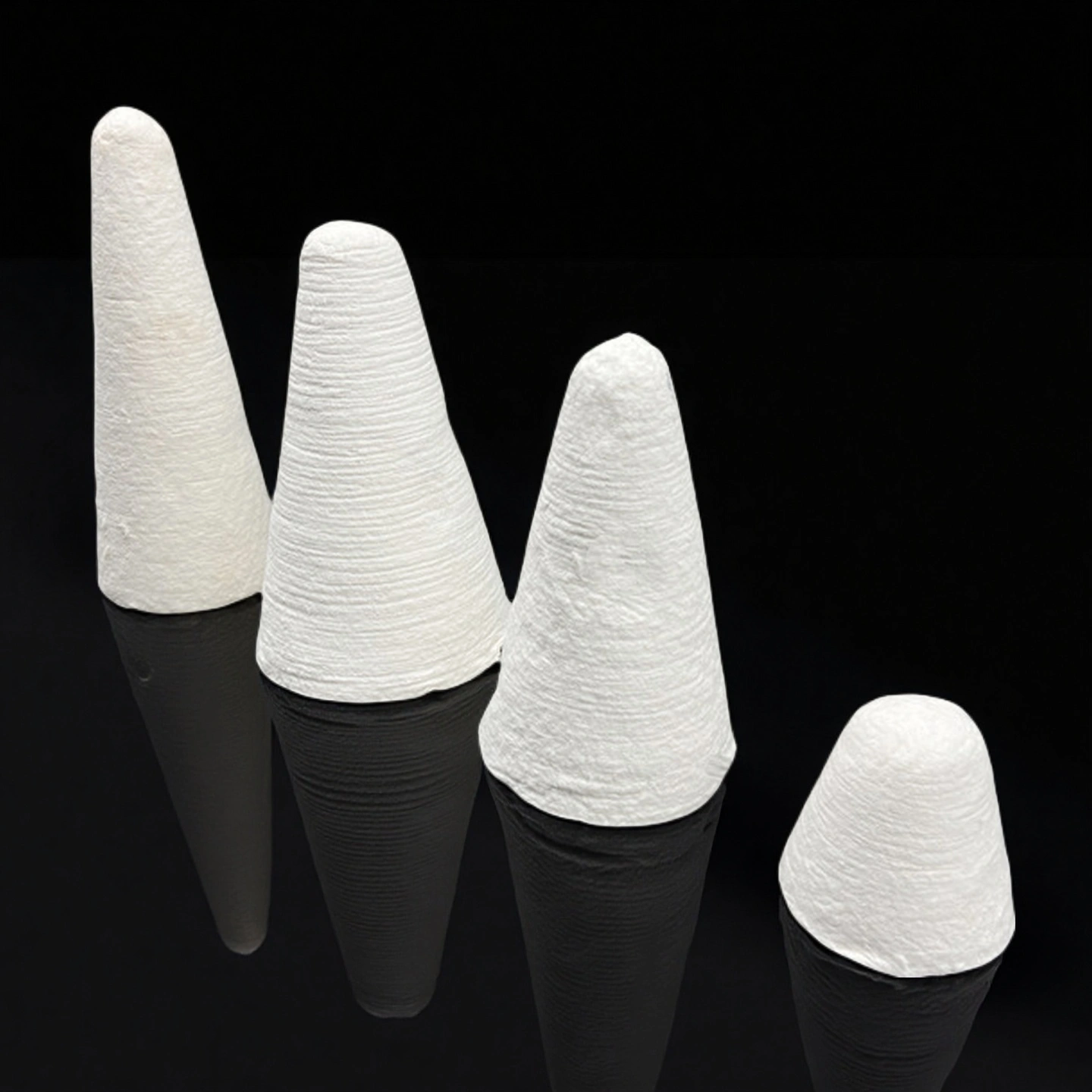
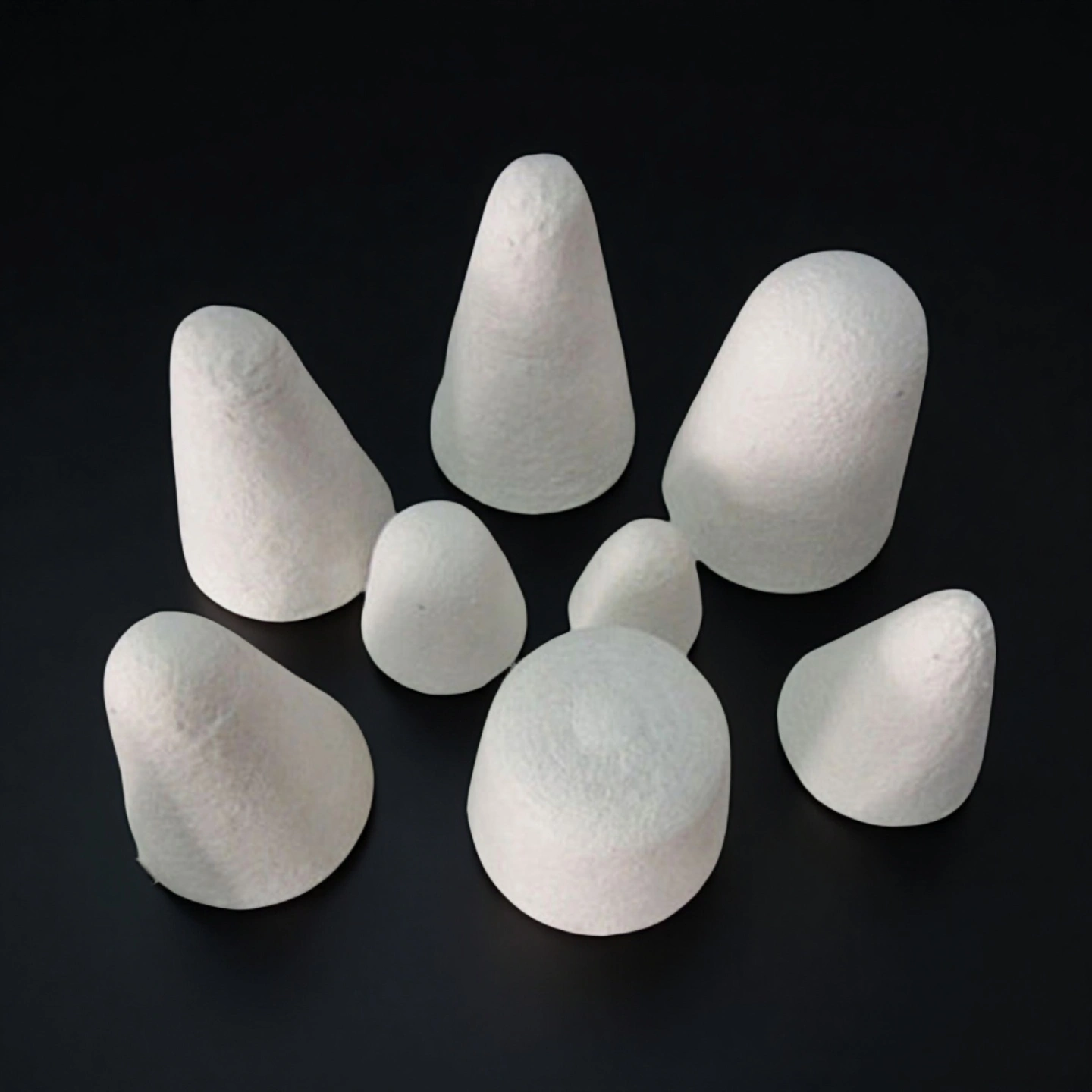
Type 3: Alumina Fiber Plug

Cross-sectional view of alumina fiber plug for furnace sealing

Alumina Fiber Plug
Item No. Bottom Diameter(mm) Height (mm)
AT-AO-DT001 50 70
AT-AO-DT002 57 100
AT-AO-DT003 65 65
AT-AO-DT004 65 110
AT-AO-DT005 70 70
AT-AO-DT006 70 110
AT-AO-DT007 70 90
AT-AO-DT008 75 120
AT-AO-DT009 80 100
AT-AO-DT010 80 125
AT-AO-DT011 85 135
AT-AO-DT012 90 140
AT-AO-DT013 90 200
AT-AO-DT014 90 270
AT-AO-DT015 95 130
AT-AO-DT016 100 150
AT-AO-DT017 105 180
AT-AO-DT018 110 140
AT-AO-DT019 120 160
AT-AO-DT020 170 110


Alumina Ceramic Fiber Packaging

  • Alumina ceramic fiber products are packed by form and edge sensitivity. Blankets are wrapped for moisture protection, while boards, plugs and formed shapes are separated to reduce corner and surface damage during transport.
  • Pre-cut lining sets can be labeled by drawing number, position or installation sequence to support faster furnace repair and reduce installation errors.
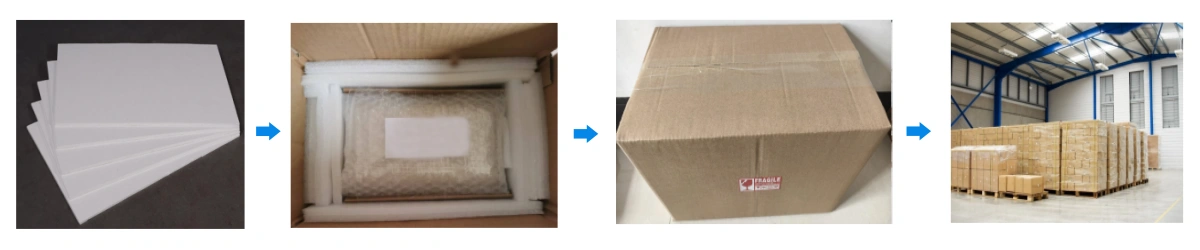

Alumina Fibre Board Packaging

Applications of Alumina Ceramic Fiber Insulation

  • Industrial Furnace Hot-Face Lining

    Alumina ceramic fiber is used in furnace hot-face zones where standard ceramic fiber may shrink, open joints or lose insulation stability after repeated high-temperature cycles. Boards and modules are often selected for heat-treatment furnaces, forging furnaces, annealing lines and high-temperature repair projects.

    For this application, engineers usually confirm working temperature, thermal cycle frequency, anchor layout, hot-face erosion risk, backup insulation and target cold-face temperature before selecting the fiber grade.

  • Burner Blocks, Inspection Ports and Furnace Openings

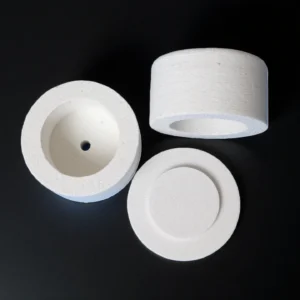
    Vacuum-formed alumina fiber shapes can be used around burner ports, peep holes, flanges and irregular openings where field-cut blanket may leave gaps or weak edges. Formed parts help improve fit, reduce installation rework and limit hot-gas leakage around complex geometries.

    For this application, ADCERAX should request drawings, opening size, burner geometry, airflow direction, fixing method and allowable installation clearance before quotation.

  • Laboratory and Testing Furnaces

    Alumina ceramic fiber boards and plugs are used in lab furnaces, tube furnaces and test chambers where clean insulation, low thermal mass and stable internal geometry are important. They help reduce heat-up time and protect test consistency when chamber dimensions and sample cleanliness matter.

    For this application, buyers should confirm chamber size, maximum test temperature, sample sensitivity, atmosphere and whether the insulation is directly exposed to samples or heating elements.

  • Furnace Repair and Lining Retrofit

    Alumina ceramic fiber modules, boards and pre-cut shapes are suitable for lining repair when the existing furnace shell, studs or anchors must be reused. Pre-cut or pre-compressed parts can reduce on-site cutting and help maintenance teams complete shutdown work with fewer fitting errors.

    For retrofit projects, ADCERAX should review old lining thickness, remaining backup material, anchor positions, damaged zones and target maintenance window.

Alumina Ceramic Fiber Usage Instructions

Proper installation, handling and maintenance help alumina ceramic fiber insulation maintain stable lining performance, reduce heat leakage and extend service life in high-temperature furnace applications.

  • Installation

    Before installation, make sure the metal shell, refractory backup or mounting surface is clean, dry and free from loose scale, oil or old insulation debris. Any uneven surface may affect fitting accuracy and thermal performance.

    Boards, blankets, plugs and modules should be installed according to the lining layout, anchor design and joint structure. Stagger joints where possible, keep seams tight and avoid leaving open gaps around burner ports, inspection holes or panel edges.

    For modules or anchored linings, use the specified anchor type, washer and spacing according to the furnace design. Excessive anchoring may create thermal bridges, while insufficient anchoring may cause sagging, movement or joint opening during thermal cycling.

  • Operation

    During first heat-up, increase temperature gradually according to the furnace design and lining material recommendation. Avoid direct flame impingement, sudden overheating or strong gas flow on newly installed fiber surfaces before the lining becomes stable.

    After the first firing cycle, inspect visible joints, corners, openings and module faces for shrinkage, open seams or local movement. Minor gaps can be repaired with compatible fiber filler, pre-cut shims or suitable high-temperature sealant.

  • Storage

    Store alumina ceramic fiber products in a dry, ventilated area and keep them away from moisture, oil, alkaline vapor and mechanical compression. Boards and formed shapes should be placed flat or properly supported to prevent edge damage or deformation.

    Opened cartons or crates should be resealed after partial use. For pre-cut lining sets, keep labels, drawings and installation sequence information with the corresponding parts to avoid mixing during field installation.

  • Cleaning and Maintenance

    Use a soft brush or industrial vacuum to remove loose surface dust when maintenance is required. Avoid strong compressed air, aggressive scraping or heavy mechanical impact, as these may damage fiber surfaces, edges or bonded areas.

    If local powdering, cracks or edge damage appear after long service, repair the affected area with compatible fiber material or sealant. Do not replace only the visible surface layer if the backup lining, anchor system or surrounding insulation has already deteriorated.

  • Common Issues to Avoid

    Avoid over-compressing boards or modules, cutting parts on site without a trimming plan, applying sealant across the full hot face, or using the wrong fiber grade in a higher-temperature furnace zone. These problems may cause cracking, dust release, poor joint alignment or early insulation failure.

    For retrofit projects, review old lining thickness, damaged zones, anchor layout and furnace operating conditions before replacing the material. This helps confirm whether blanket, board, plug, module or vacuum-formed shape is the practical repair option.

Alumina Ceramic Fiber FAQ

  1. What is alumina ceramic fiber used for?
    Alumina ceramic fiber is used for high-temperature furnace insulation, hot-face lining, burner sealing, lab furnace insulation, thermal repair and vacuum-formed insulation parts. It is selected when the application requires lower shrinkage, cleaner hot-face stability or better temperature resistance than standard ceramic fiber insulation.
  2. What temperature can alumina ceramic fiber withstand?
    Alumina ceramic fiber can be supplied in different temperature grades, including 1600°C-class materials depending on the product form and composition. The actual working temperature should be confirmed according to furnace atmosphere, load, thermal cycling and whether the fiber is used as hot-face or backup insulation.
  3. What is the difference between alumina ceramic fiber and aluminum silicate fiber?
    Alumina ceramic fiber is usually selected for higher-temperature or lower-shrinkage zones, while aluminum silicate fiber is often used for cost-effective general furnace insulation. Alumina ceramic fiber is more suitable when thermal stability, reduced dusting or cleaner hot-face performance is more important than lowest material cost.
  4. Should I choose alumina fiber blanket, board, plug or module?
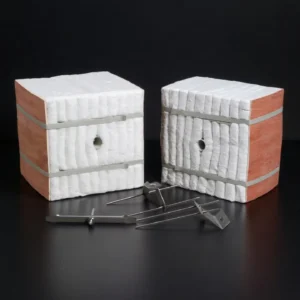
    Blanket is suitable for flexible lining and backup insulation. Board is better for flat, rigid or cut-to-size insulation. Plugs are used for openings and sealing points. Pre-compressed modules are selected for large hot-face lining areas where joint tightness, fast installation and reduced heat leakage are important.
  5. Can alumina ceramic fiber be used directly as a hot-face lining?
    Alumina ceramic fiber may be used as hot-face insulation in suitable furnace zones, but grade, density, shrinkage, erosion risk, flame direction and atmosphere must be reviewed first. For severe gas velocity, metal splash or chemical vapor exposure, a protective coating, facing layer or formed board may be needed.
  6. What information is needed to quote alumina ceramic fiber parts?
    Please provide the required form, size, thickness, temperature, furnace atmosphere, installation method, drawing if available, quantity and packaging requirement. For replacement projects, photos of the old lining, anchor layout or damaged area can help confirm the correct material and shape.

What to Confirm Before Quotation

A clear RFQ helps ADCERAX match the correct alumina ceramic fiber form, temperature grade and packaging method.

RFQ Item What to Provide
Furnace or equipment type Heat-treatment furnace, lab furnace, burner zone, heater, kiln, sealing area or repair project.
Working temperature Continuous temperature, peak temperature and heating cycle.
Product form Blanket, board, module, plug or vacuum-formed shape.
Size requirement Length, width, thickness, OD, ID, cut-outs, holes, slots or drawing geometry.
Atmosphere Air, inert gas, reducing atmosphere, chemical vapor or metal splash exposure.
Installation method Anchor type, adhesive, mechanical fixing, compression requirement or existing lining structure.
Quantity and packaging Standard quantity, project batch, labeled repair kit or zone-based packing.
customize size

Custom Alumina Ceramic Fiber Options

ADCERAX can review alumina ceramic fiber form, size and installation geometry according to your furnace lining design. Proper customization helps reduce field cutting, improve fitting accuracy and limit thermal loss at joints, openings and panel interfaces.

  • Dimensions: Boards and blankets can be reviewed by thickness, length and width. Plugs and vacuum-formed shapes can be reviewed by OD, ID, window cut-outs, holes and drawing geometry.
  • Tolerances: Boards and formed shapes can be supplied with practical dimensional control according to density, thickness, cutting method and installation requirement. Machined or trimmed edges can be reviewed when tighter fitting is required.
  • Lengths and Panel Layout: Blanket rolls, board sizes and module panels can be arranged according to lining layout, furnace zone and installation sequence.
  • Form Factor: Available forms include blanket, rigid board, plug, vacuum-formed shape and pre-compressed module.
  • Edge and End Details: Square edges, bevels, step-lap joints, tongue-and-groove structures, burner openings and peep-hole cut-outs can be reviewed according to the drawing.
  • Surface Condition: Raw, trimmed or sealed-face options can be discussed where the application requires cleaner handling, improved edge stability or reduced surface dusting.
  • Anchoring Design: Y-anchors, V-anchors, threaded studs, washers and anchor spacing can be reviewed according to the lining structure and furnace maintenance plan.

Related Products

ADCERAX - Your Trusted Advanced Ceramics Manufacturing Partner

Direct factory manufacturing with comprehensive ceramic materials expertise and global supply capabilities

China-Based Manufacturer

ADCERAX supplies ceramic components for overseas OEMs, equipment builders, and labs.

Custom Drawing Support

We review drawings, dimensions, materials, and application conditions before quotation.

Ceramic Process Control

Forming, sintering, machining, grinding, and finishing are arranged by part requirements.

Pre-Shipment Inspection

Dimensional checks, visual inspection, and packaging review help reduce procurement risk.

Get in Touch with Us

Our team will be happy to respond to you in less than 24 hours.

Pingxiang Factory — Silicon carbide, silicon nitride, high-temperature ceramics

Quick Quotation

*Our team will answer your inquiries within 24 hours.

*Your information will be kept strictly confidential.

Ready to Solve Your Engineering Challenge?

Partner with ADCERAX for reliable, high-performance advanced ceramic solutions. Our engineers are ready to discuss your project.

E-mail

info@adcerax.com

Phone

+(86) 0731-74427743 | WhatsApp: +(86) 19311583352

Response Time

Within 24 hours

Quick Quote

The more details you provide, the faster we can quote.

*We respond within 24 hours. All inquiries are confidential.

Get Your Custom Solution

The more details you provide, the faster we can respond.

customize size

*We respond within 24 hours. All inquiries are confidential.

Download Catalog