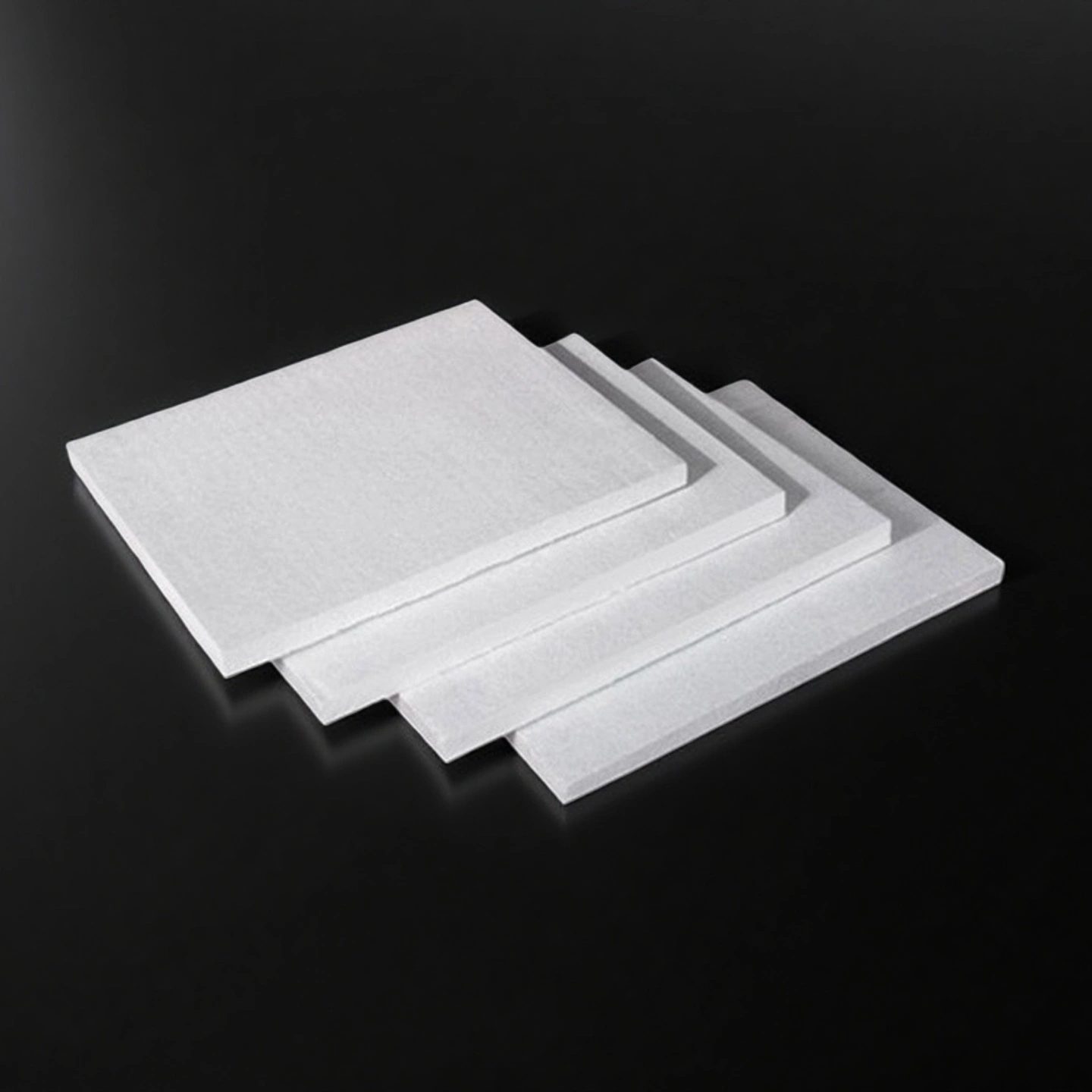
Aluminum Silicate Fiber Board 1260°C – Rigid Ceramic Fiber Insulation for Industrial Furnaces

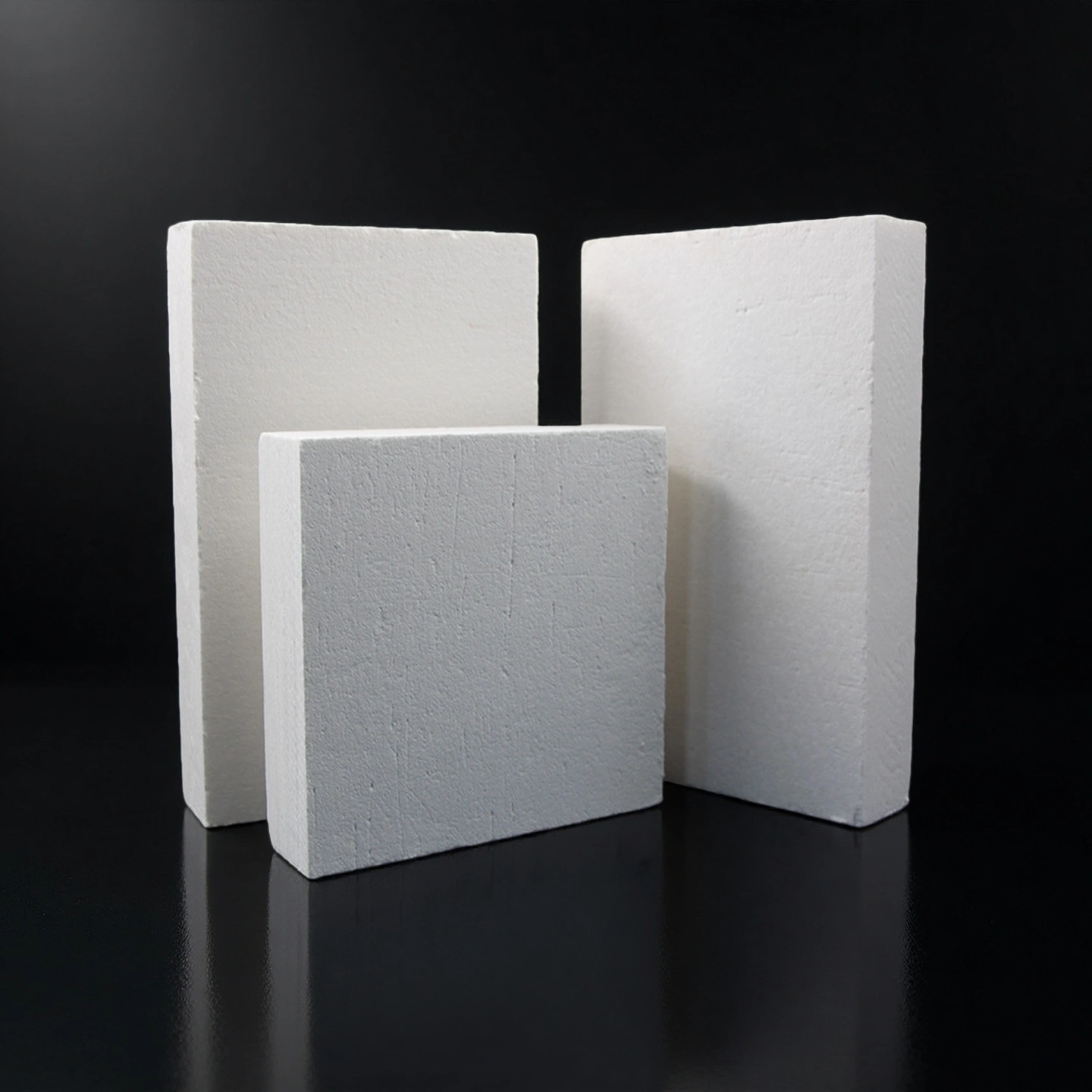
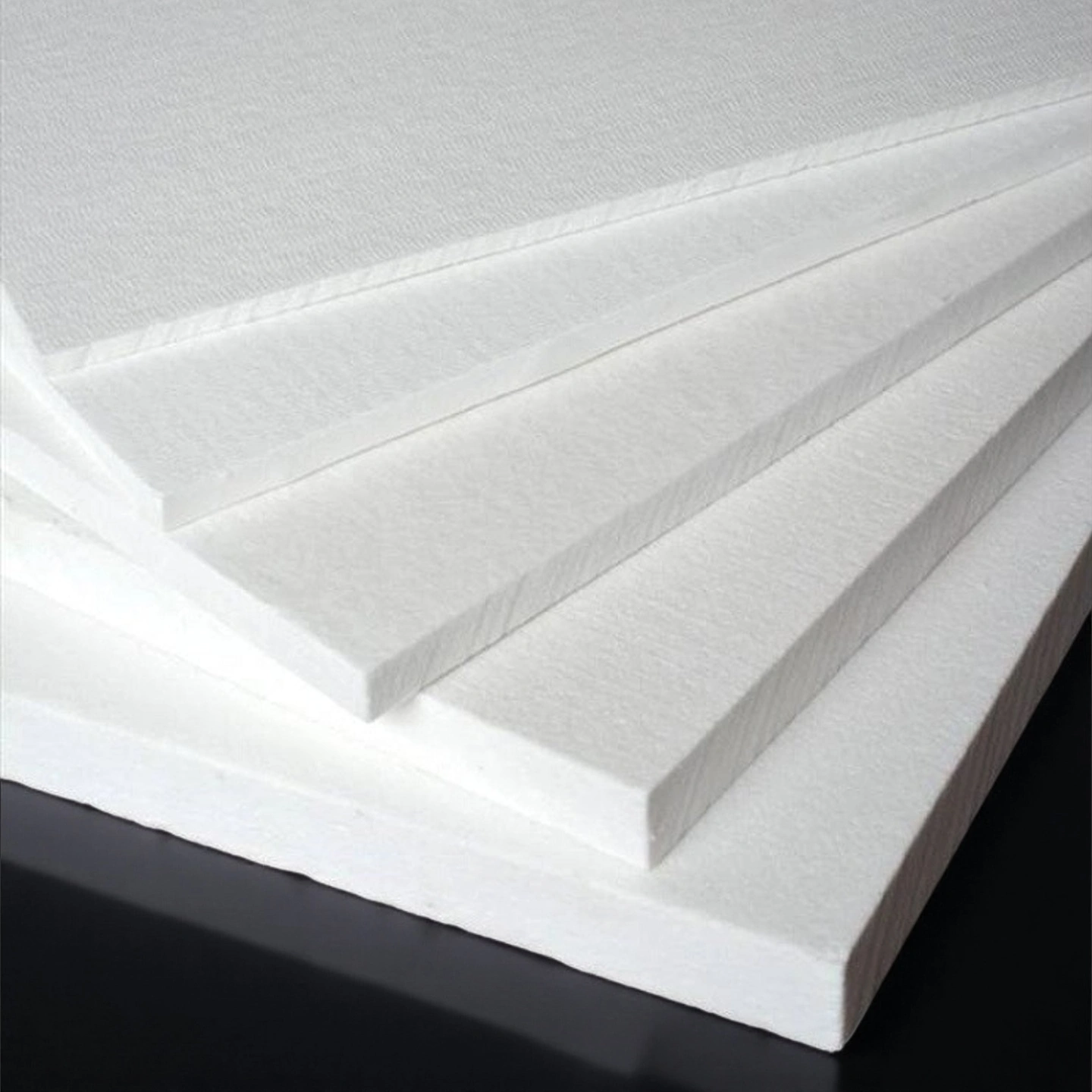
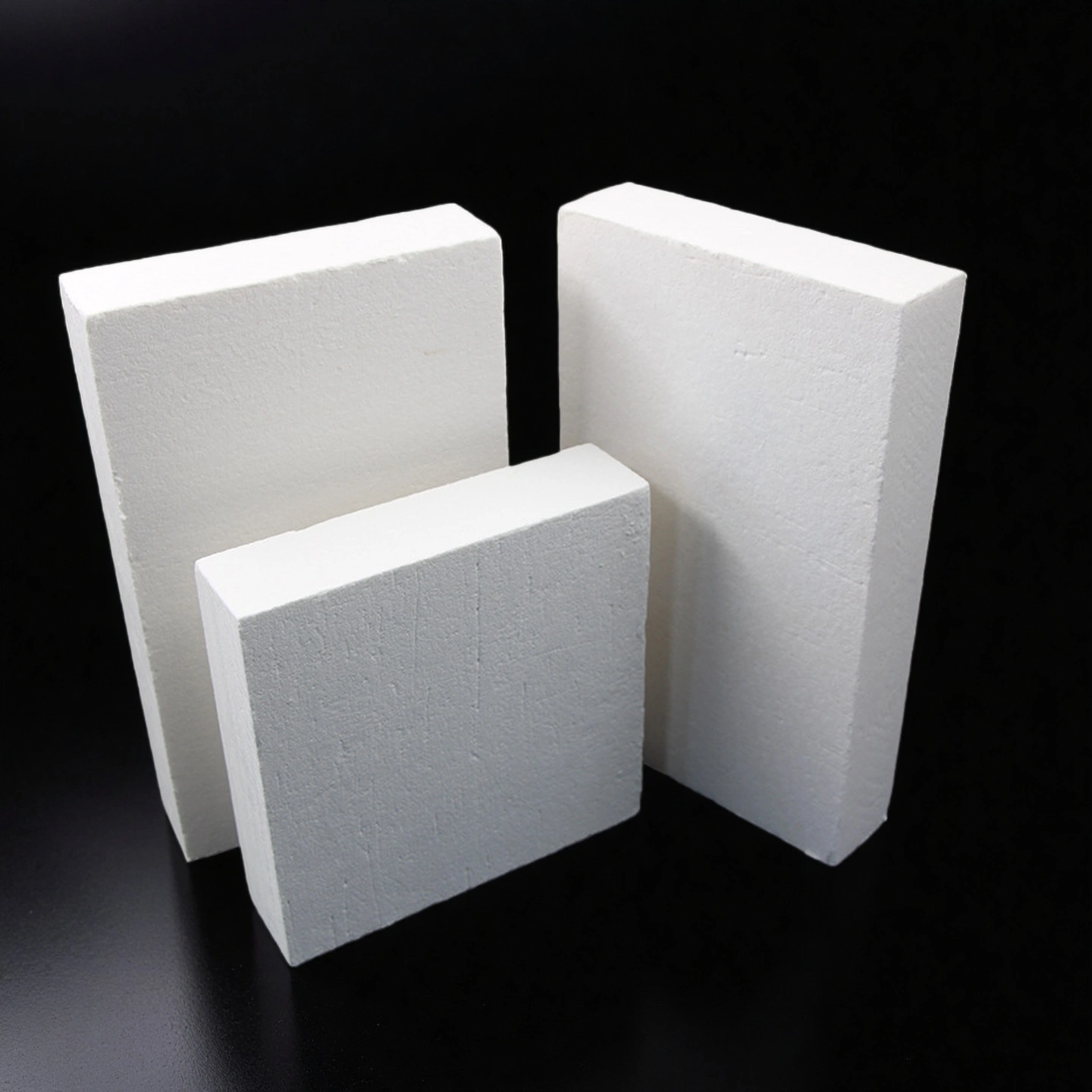
Aluminum silicate fiber board is a rigid alumino-silicate ceramic fiber insulation panel supplied in standard sizes such as 900 × 600 mm and 1000 × 500 mm, with thickness options from 20 mm to 50 mm and custom cut-to-size panels available on request.

Catalogue No. AT-GSL-B1001
Material Al2O3+SiO₂
Classification Temperature 1050°C / 1260°C / 1350–1430°C
Bulk Density 220–320 kg/m³
Thermal Conductivity @ 600°C Approx. 0.12–0.17 W/m·K
Engineering RFQ Review
Small-Batch Custom Support
Factory-Direct Manufacturing
Drawing & Process Review

Aluminum silicate fiber board is a rigid, lightweight refractory ceramic fiber (RCF) insulation board for the doors, walls, roofs and back-up layers of industrial furnaces, kilns, boilers and incinerators. It is an insulation material — not a dense ceramic plate, not a building/gypsum board, and not rock or glass wool. Choosing between forms:

  • Fiber board (this product): rigid, flat, cut-to-size — for furnace doors, flat linings, back-up layers and defined-thickness panels.
  • Fiber blanket/module: flexible — for wrapping, veneering and irregular shapes.
  • Calcium silicate board / insulating firebrick (IFB): higher mechanical strength or load-bearing hot faces.

We route you to the right form from your furnace duty rather than pushing board where blanket, IFB or calcium silicate fits better.


Advantages of Aluminum Silicate Fiber Board

  • Rigid yet lightweight panel structure
    The aluminum silicate fiber board combines low bulk density with sufficient mechanical strength to be self-supporting on furnace walls and doors without adding excessive load to the steel shell.
  • Consistent thermal insulation performance
    The alumino-silicate composition provides low thermal conductivity across 200–800°C, helping to reduce shell temperature and improve overall fuel efficiency in continuous and batch furnaces.
  • Low shrinkage at operating temperature
    Controlled fiber formulation and firing result in limited linear shrinkage within the specified classification temperature, helping to maintain lining thickness and minimize gaps during long-term service.
  • Machinable and easy to shape
    Boards can be cut, grooved, drilled and chamfered to create customized furnace door panels, burner blocks, inspection covers and baffles with accurate fit and reduced on-site cutting time.
  • Chemical stability in typical furnace atmospheres
    Aluminum silicate fiber boards show good resistance to oxidation and most combustion gases in heat treatment, metal reheating and incineration processes when used within the recommended temperature range.


Aluminum Silicate Ceramic Fiber Board Properties

Item General Grade Standard Grade High Purity Grade High Alumina Grade Zirconia-Containing Grade
Classification Temperature (°C) 1100 1260 1260 1360 1430
Service Temperature (°C) <1000 1050 1100 1200 1350
Color White Off-white Off-white Off-white Off-white
Bulk Density (kg/m³) 260–320 260–320 260–320 260–320 260–320
Permanent Linear Shrinkage (%) (24 h holding; based on 128 kg/m³) <2.5 (1000°C) <2.5 (1050°C) <2.5 (1100°C) <2.5 (1100°C) <2.5 (1350°C)
Thermal Conductivity (W/m·K) (bulk density 128 kg/m³) 0.085 (400°C) 0.085 (400°C) 0.085 (400°C) 0.085 (400°C) 0.085 (400°C)
0.132 ( 800°C) 0.132 ( 800°C) 0.132 ( 800°C) 0.132 ( 800°C) 0.132 ( 800°C)
0.180 (1000°C) 0.180 (1000°C) 0.180 (1000°C) 0.180 (1000°C)
Tensile Strength (MPa) (bulk density 128 kg/m³) 0.5 0.5 0.5 0.5 0.5
Chemical Composition (wt%)
Al₂O₃ 44 46 47–49 52–55 39–40
Al₂O₃ + SiO₂ 96 97 99 99
Al₂O₃ + SiO₂ + ZrO₂ 99
ZrO₂ 15–17
Fe₂O₃ <1.2 <1.0 0.2 0.2 0.2
Na₂O + K₂O ≤0.5 ≤0.5 0.2 0.2 0.2


Board, blanket, calcium silicate—or refractory brick?

Choose the lining form from the mechanical duty, geometry, operating temperature, atmosphere and EHS requirement—not from temperature alone.

Ceramic fiber board

Choose for: Rigid, lightweight panels; doors; baffles; flat linings; cut replacement parts.
Strength: Defined thickness, low heat storage and straightforward cutting.
Watch for: Dust controls, gas erosion, direct flame and mechanical damage.

Ceramic fiber blanket/module

Choose for: Flexible wrapping, irregular shapes, layered linings or anchored module systems.
Strength: Conforms to curves and complex steelwork.
Watch for: Compression, joint design, anchoring and surface exposure.

Calcium silicate / IFB / refractory

Choose for: Calcium silicate for suitable backup duties; IFB or dense refractory where mechanical hot-face strength is more important.
Strength: Different combinations of rigidity, compressive strength and erosion resistance.
Watch for: Added weight, heat storage, installation time and actual temperature limit.

Aluminum Silicate Fiber Board Specification
Industrial heat treatment furnace wall lined with aluminum silicate fiber board panels as rigid insulation

Item Classification Temperature (°C) Type Length*Width(mm) Thickness(mm)
AT-GSL-B1001 1260 Standard Grade 900*600 10
AT-GSL-B1002 1260 Standard Grade 900*600 20
AT-GSL-B1003 1260 Standard Grade 900*600 25
AT-GSL-B1004 1260 Standard Grade 900*600 30
AT-GSL-B1005 1260 Standard Grade 900*600 40
AT-GSL-B1006 1260 Standard Grade 900*600 50
AT-GSL-B1007 1260 Standard Grade 1200*600 50
AT-GSL-B1008 1360 High Alumina Grade 900*600 20
AT-GSL-B1009 1360 High Alumina Grade 900*600 30
AT-GSL-B1010 1360 High Alumina Grade 900*600 40
AT-GSL-B1011 1360 High Alumina Grade 900*600 50
AT-GSL-B1012 1430 Zirconia-Containing Grade 900*600 20
AT-GSL-B1013 1430 Zirconia-Containing Grade 900*600 30
AT-GSL-B1014 1430 Zirconia-Containing Grade 900*600 40
AT-GSL-B1015 1430 Zirconia-Containing Grade 900*600 50
AT-GSL-B1016 1260 Standard Grade 1200*1000 10
AT-GSL-B1017 1260 Standard Grade 1200*1000 20
AT-GSL-B1018 1260 Standard Grade 1200*1000 25
AT-GSL-B1019 1260 Standard Grade 1200*1000 30
AT-GSL-B1020 1260 Standard Grade 1200*1000 40
AT-GSL-B1021 1260 Standard Grade 1200*1000 50


Aluminum Silicate Ceramic Fiber Board Packaging

  • Each aluminum silicate fiber board stack is wrapped in plastic film to limit dust release and protect against moisture during transport.
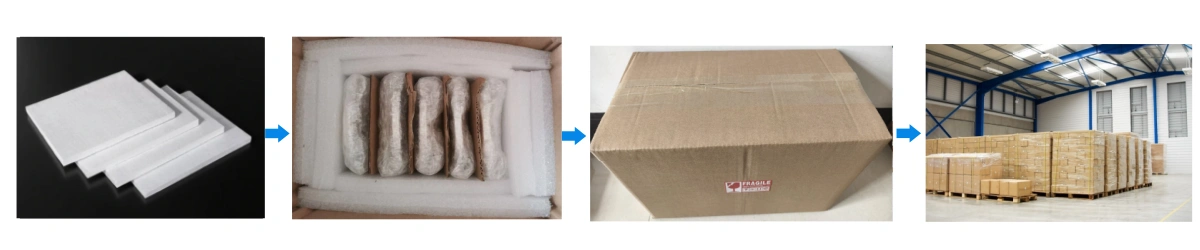

Aluminum Silicate Ceramic Fiber Board Packaging

Where Aluminum Silicate Fiber Board Fits

Aluminum silicate fiber board is best suited to applications requiring a rigid, lightweight and machinable insulation layer. Selection should be based on the actual service temperature, lining position, furnace atmosphere, mechanical exposure and thermal cycling—not classification temperature alone.

  • Furnace Doors & Access Panels

    Hot spots, damaged door linings and poorly fitted openings can increase heat loss and maintenance frequency. Rigid ceramic fiber board maintains a defined insulation thickness and can be supplied with cutouts for burners, peepholes, flanges, thermocouples and fixing systems. Send your door drawing, operating temperature and required thickness for a grade and geometry review.

  • Industrial Furnace & Kiln Linings

    For new furnace construction, relining and energy-improvement projects, ceramic fiber board provides a lightweight, low-heat-storage layer for heat-treatment furnaces, sintering furnaces, reheating furnaces and industrial kilns. Available classification grades can be reviewed for hot-face or backup use according to the actual temperature, atmosphere and thermal cycles. Tell us the furnace type and lining position to identify a suitable starting specification.

  • Backup Insulation for High-Temperature Equipment

    When casing temperature, lining weight or available installation space matters, aluminum silicate fiber board can be installed behind refractory brick, castable or another protective hot-face material. It is suitable for holding furnaces, launders, boilers, incinerators and combustion chambers where the hot-face layer handles direct process exposure. Share the existing lining structure, available thickness and target shell condition for a material review.

  • Shutdown Maintenance & Replacement

    Shrunken, eroded or mechanically damaged boards do not always require a complete lining rebuild. ADCERAX can review pre-cut replacement panels from drawings, dimensions or photographs of the old board, helping reduce on-site cutting and limit demolition to the damaged area. Send the old-board photo, size, working temperature and required quantity to prepare a replacement-board recommendation.

Aluminum Silicate Ceramic Fiber Board Usage Guide

  • Installation

    1. Confirm that the supporting steel or refractory surface is clean, dry and free of loose debris before installing aluminum silicate fiber board.
    2. Plan the panel layout so that joints are staggered, and cut boards accurately to achieve tight-fitting joints with minimal gaps.
    3. Fix boards using suitable anchors, screws or adhesives designed for ceramic fiber products, avoiding excessive mechanical stress on individual panels.
    4. Where tongue-and-groove or chamfered edges are used, orient the panels consistently to minimize heat leakage lines.

  • Operation and Use

    1. Use aluminum silicate fiber board within the recommended continuous service temperature for the selected grade, allowing a margin below its classification temperature.
    2. During initial heating, follow a controlled heating schedule if specified, so that binders can burn out gradually and steam can escape without causing cracking.
    3. Avoid direct flame impingement on the board surface unless the design and grade have been selected for that specific duty.

  • Storage

    1. Store aluminum silicate fiber board indoors or under cover to protect it from rain and standing water.
    2. Keep panels on flat pallets or shelves to prevent bending and warping during long-term storage.
    3. Maintain original wrapping as long as possible to limit dust and contamination until installation.

  • Cleaning and Maintenance

    1. Remove loose dust with a soft brush or low-pressure vacuum fitted with appropriate filtration to prevent fiber release into the workplace.
    2. Inspect panel joints and anchor locations during scheduled shutdowns, and replace damaged or eroded sections before they affect the main lining.
    3. When cutting or trimming in the workshop, use appropriate dust extraction and personal protective equipment according to local guidelines for handling ceramic fibers.

  • Common Misuse and Correction

    1. Using the board above its classification temperature
    Misuse: Selecting a 1050°C or 1260°C aluminum silicate fiber board for continuous service close to or above its classification temperature.
    Correction: Choose a grade with a higher classification temperature and adjust lining design to keep the board within a suitable operating range.

    2. Over-tightening mechanical fixings
    Misuse: Applying anchors, screws or clamps with excessive force, leading to localized compression and cracking.
    Correction: Follow recommended fixing spacing and torque, and consider using washers or clips that distribute load across the board surface.

    3. Outdoor storage without protection
    Misuse: Leaving pallets of aluminum silicate fiber board exposed to rain, which can introduce moisture and weaken the binder near the surface.
    Correction: Store under a roof or waterproof cover, and if panels are exposed, allow sufficient drying during preheating or replace visibly damaged boards.

FAQ – Aluminum Silicate Ceramic Fiber Board

  1. Q: What is aluminum silicate fiber board used for in industrial furnaces?
    A: Aluminium silicate fiber board is used as a rigid high temperature insulation layer in the walls, doors and roofs of industrial furnaces, kilns, boilers and incinerators to reduce heat loss and lower shell temperature.
  2. Q: What temperature can aluminum silicate fiber board withstand?
    A: The classification temperature of aluminum silicate fiber board is typically 1050°C, 1260°C or up to around 1350–1430°C depending on grade, with recommended continuous service kept below these values for long-term stability.
  3. Q: How does aluminum silicate fiber board differ from ceramic fiber blanket?
    A: Aluminum silicate fiber board is a rigid, pre-formed panel with higher compressive strength and dimensional stability, while ceramic fiber blanket is flexible; the board is preferred where flat surfaces, mechanical fixing and defined thickness are needed.
  4. Q: Is aluminum silicate ceramic fiber board suitable for boiler insulation?
    A: Yes, aluminum silicate ceramic fiber board is commonly used as a back-up insulation layer in industrial boilers and combustion chambers, behind hot face refractory materials or metal liners.
  5. Q: How do I select the thickness of aluminum silicate fiber board for my furnace?
    A: Thickness selection depends on target shell temperature, operating temperature and available space; many industrial furnaces use 25–50 mm of aluminium silicate fiber board as part of a multi-layer lining design.
  6. Q: Can aluminum silicate fiber board be machined or cut to complex shapes?
    A: Aluminium silicate fibre board can be cut with hand tools or machine tools to create openings, chamfers and stepped profiles, and can be supplied as custom-shaped parts based on customer drawings.
  7. Q: What's the difference between aluminum silicate fiber board and calcium silicate board?
    A: Ceramic fiber board is a lightweight, low-conductivity insulation for hot-face and back-up furnace linings, cut easily to size. Calcium silicate board has higher mechanical strength and load-bearing ability but higher conductivity and weight, and is chosen where structural support or moisture resistance matters more than lightweight insulation. We match the board to your position and duty.
  8. Q: Is aluminum silicate fiber board safe, and do you offer AES / bio-soluble alternatives?
    A: Aluminum silicate (RCF) fiber can release airborne fibers when cut or handled, so ventilation, dust extraction and PPE should be used per local regulations — we don't claim it is dust-free. For the EU or sites with strict fiber rules, we can advise on AES / bio-soluble (low bio-persistence) board options; tell us your region and EHS requirements.
  9. Q: Does the 1260°C rating mean I can run the furnace continuously at 1260°C?
    A: No. 1260°C is the classification temperature (a material rating), not the continuous service temperature. A 1260-grade board is typically used continuously around 1000–1100°C, and you should select a grade above your hot-face temperature with a safety margin.
customize size

Custom Aluminum Silicate Fiber Board

Aluminum silicate fiber board from ADCERAX can be supplied as standard panels or fully customized parts to match industrial furnace, kiln and boiler designs. Custom processing is available for both hot-face and backup insulation layers.

1. Overall Dimensions

  • Panel sizes up to approximately 1200 × 1000 mm, subject to furnace design and packaging constraints
  • Thicknesses from 10 to 75 mm, with 20–50 mm being the typical range

2. Dimensional Tolerances

  • Thickness tolerance down to ±1.0 mm for standard panels
  • Length and width tolerances suitable for close-fitting furnace doors and frame designs

3. Density and Grade Selection

  • Standard densities of approximately 220–260 kg/m³ for backup insulation
  • Higher densities of up to 300–320 kg/m³ for applications requiring greater strength and erosion resistance

4. Classification Temperature and Fiber System

  • 1050°C and 1260°C classification grades for common heat-treatment and boiler-lining applications
  • Higher classification grades of 1350–1430°C for more demanding temperature conditions

5. Edge and Surface Details

  • Square or chamfered edges
  • Tongue-and-groove joints designed to reduce heat loss at panel joints
  • Pre-cut slots and recesses for steel structures and anchor systems

6. Openings and Special Shapes

  • Cutouts for burners, peepholes, flanges and thermocouples
  • Curved or stepped profiles for kiln cars, combustion chambers and baffles

Related Products

ADCERAX - Your Trusted Advanced Ceramics Manufacturing Partner

Direct factory manufacturing with comprehensive ceramic materials expertise and global supply capabilities

China-Based Manufacturer

ADCERAX supplies ceramic components for overseas OEMs, equipment builders, and labs.

Custom Drawing Support

We review drawings, dimensions, materials, and application conditions before quotation.

Ceramic Process Control

Forming, sintering, machining, grinding, and finishing are arranged by part requirements.

Pre-Shipment Inspection

Dimensional checks, visual inspection, and packaging review help reduce procurement risk.

Get in Touch with Us

Our team will be happy to respond to you in less than 24 hours.

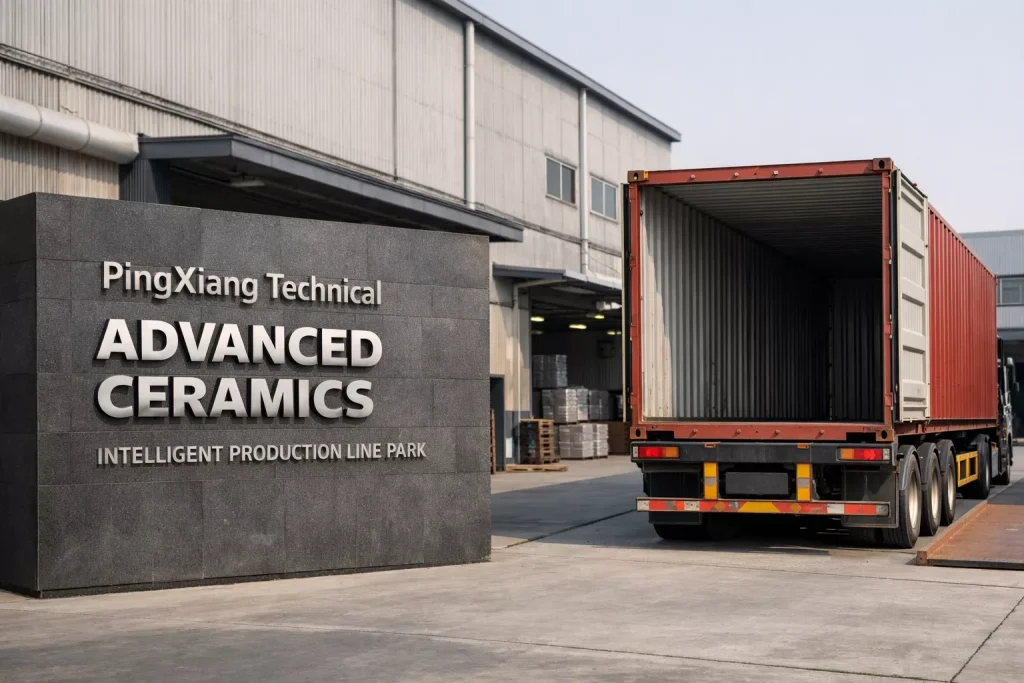
Pingxiang Factory — Silicon carbide, silicon nitride, high-temperature ceramics

Quick Quotation

*Our team will answer your inquiries within 24 hours.

*Your information will be kept strictly confidential.

Ready to Solve Your Engineering Challenge?

Partner with ADCERAX for reliable, high-performance advanced ceramic solutions. Our engineers are ready to discuss your project.

E-mail

info@adcerax.com

Phone

Tel: +86-0731-84428843 WhatsApp: +86 19311583352

Response Time

Within 24 hours

Quick Quote

The more details you provide, the faster we can quote.

*We respond within 24 hours. All inquiries are confidential.

Get Your Custom Solution

The more details you provide, the faster we can respond.

customize size

*We respond within 24 hours. All inquiries are confidential.

Download Catalog