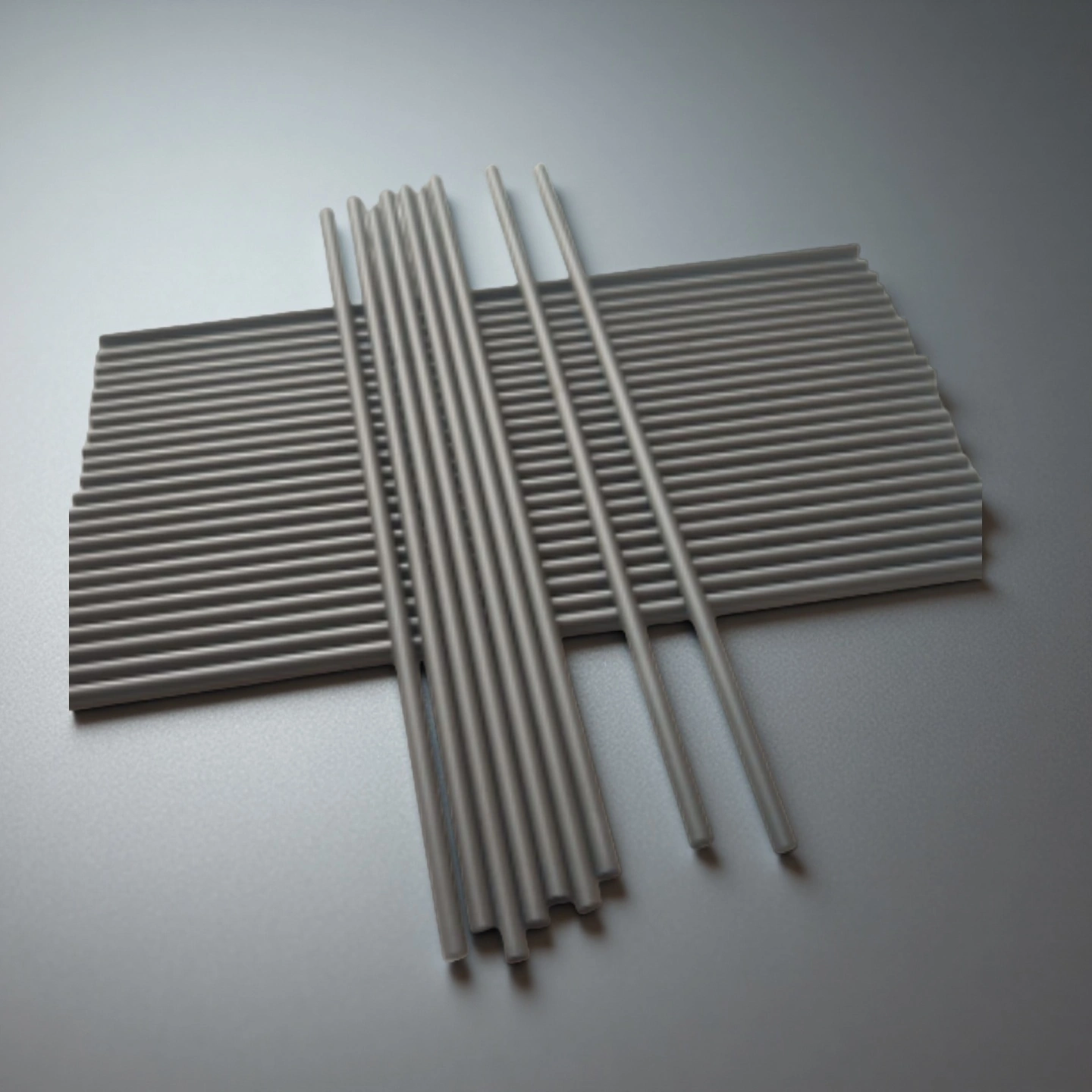
Black Alumina Ceramic Rod for Insulating Guides and Supports

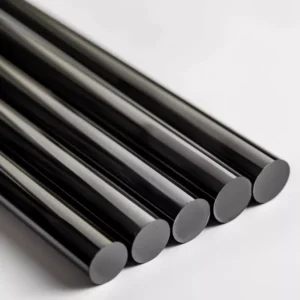
Black alumina ceramic rods are dense Al₂O₃ ceramic components used as insulating guide rods, support pins, alignment shafts and low-reflective ceramic parts in machinery, textile equipment, electrical assemblies and sensor housings. Compared with metal or polymer rods, black alumina provides higher hardness, better heat resistance, electrical insulation and a dark opaque body for light-shielding or visual-contrast applications. ADCERAX supplies standard and drawing-based black alumina rods with controlled diameter, length, straightness, end finish and surface condition according to project requirements.

Catalog No. AT-BAR-1001
Material ≥ 92% Al2O3
Dimensional Tolerance ±0.02mm
Flexural strength (RT) 300–400 MPa
Max recommended use temp. 1550–1650 °C
Engineering RFQ Review
Small-Batch Custom Support
Factory-Direct Manufacturing
Drawing & Process Review

What Is a Black Alumina Ceramic Rod?

A black alumina ceramic rod is a dense aluminum oxide ceramic bar made for applications that need mechanical strength, electrical insulation, heat resistance and a dark opaque surface. It is commonly selected when a white ceramic rod is not ideal because the assembly also requires light blocking, visual contrast or reduced reflection around sensors, optical parts or inspection equipment.

In industrial equipment, black alumina rods can work as guide shafts, locating pins, support rods, textile guides, insulating standoffs or custom ceramic inserts. The final design should be reviewed according to diameter, unsupported length, mounting method, surface finish, load direction, operating temperature and mating material.

Black Alumina Ceramic Rod Benefits

1. Electrical insulation in compact assemblies

Black alumina ceramic rods provide high electrical resistance and can be used as insulating supports near heaters, electrodes, sensors or high-voltage components. This helps reduce the need for separate metal supports and insulation sleeves in compact designs.

2. Hard surface for sliding and guiding contact

The alumina ceramic body offers high hardness and wear resistance, making it suitable for guide rods, textile contact parts, wire guides and repeated positioning surfaces. Ground surfaces can help maintain stable contact geometry over long production cycles.

3. Heat resistance for hot equipment zones

Compared with polymers and many metal parts, alumina keeps its structure and insulation behavior at elevated temperatures. Black alumina rods can be used near furnaces, heaters, drying systems and thermal process equipment when the full load and thermal cycle are reviewed.

4. Dark opaque body for optical and sensor use

The black ceramic body can reduce unwanted reflection or provide visual contrast inside sensor housings, optical fixtures, inspection tools and alignment assemblies. This makes it useful where white ceramic surfaces may reflect light or interfere with signal stability.

5. Drawing-based machining support

ADCERAX® can review black alumina ceramic rods by diameter, length, tolerance, end shape, chamfer, surface finish and functional machining features. This is useful for replacement projects and equipment builders that need ceramic rods to fit existing mechanical designs.

Typical Properties of Black Alumina Ceramic Rod

The values below are typical references for dense black alumina ceramic rods. Final values may vary with alumina content, forming process, sintering condition, rod size and surface finish.

Property Typical Reference Value Why It Matters
Main Material Black alumina ceramic, commonly 92–96% Al₂O₃ Matches standard black rod applications while keeping cost practical.
Density About 3.6–3.75 g/cm³ Supports compact, rigid and wear-resistant rod designs.
Flexural Strength About 260–400 MPa Important for guide rods, support pins and slender shafts.
Hardness About 14–18 GPa Helps reduce wear in sliding, textile and wire-guiding contact.
Maximum Use Temperature About 1450–1650°C, depending on grade and load Useful for heater, furnace and thermal equipment zones.
Volume Resistivity Usually above 10¹⁴ Ω·cm Supports use as an insulating ceramic rod.
Thermal Conductivity About 20–25 W/m·K for common alumina grades Helps maintain dimensional stability in heated assemblies.
Surface Finish As-sintered, ground or locally polished Affects friction, fit, sliding contact and inspection stability.


Black Alumina Ceramic Rod Size Options

ADCERAX supplies black alumina ceramic rods in standard and drawing-based dimensions. Standard rods are suitable for replacement, fixture support and guide applications, while custom rods can be reviewed for equipment-specific tolerances, end details and surface finish requirements.

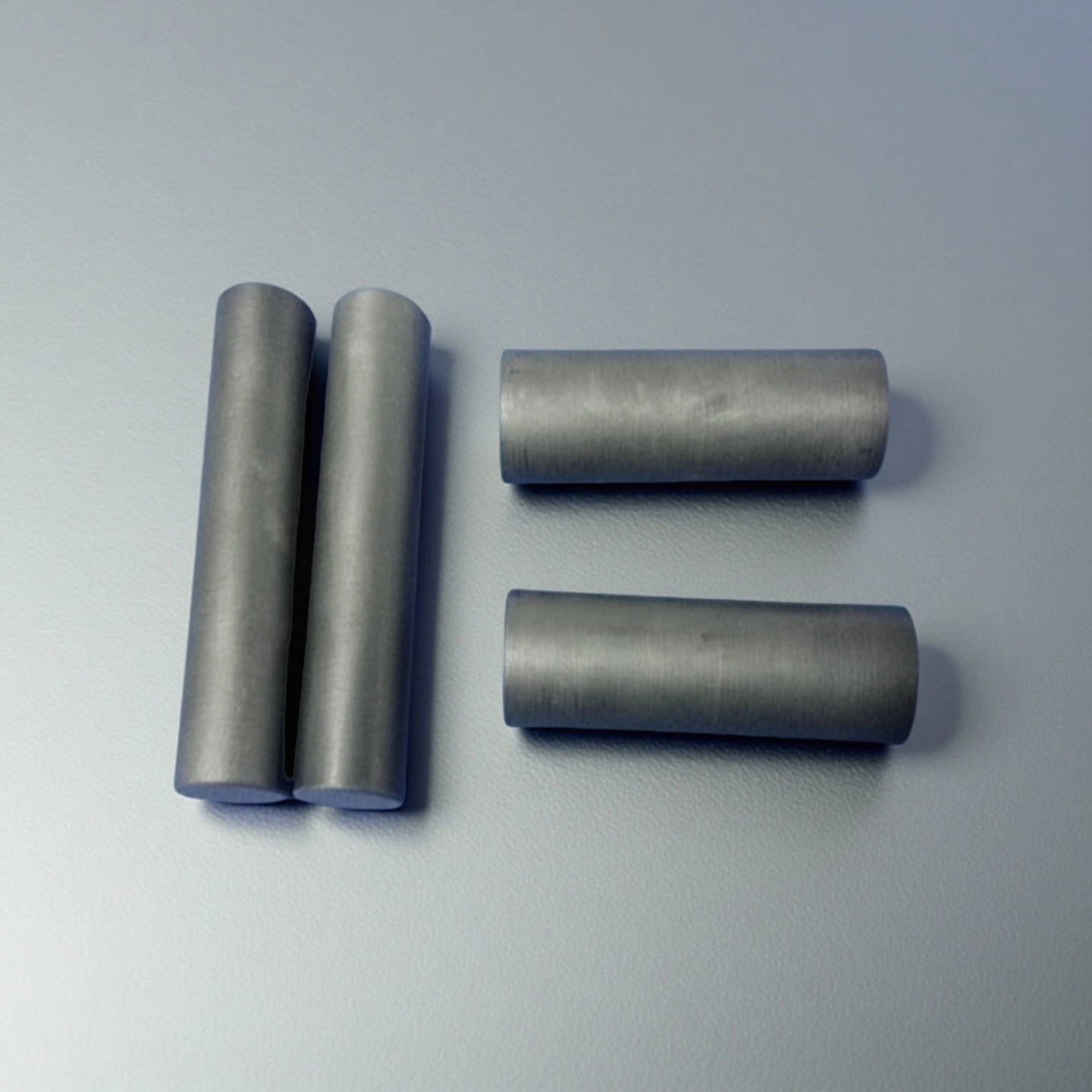
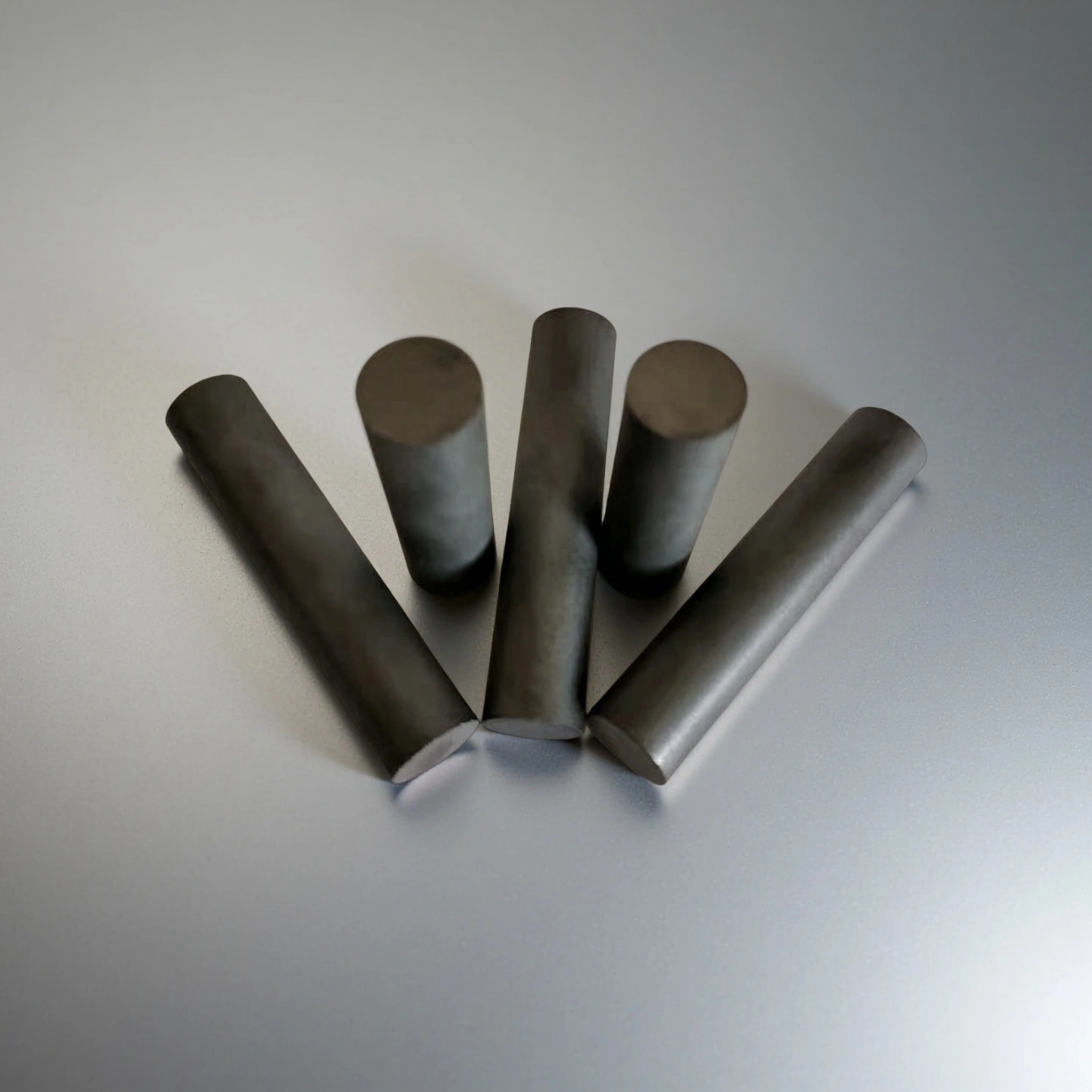
Type 1: Round Black Alumina Ceramic Rod
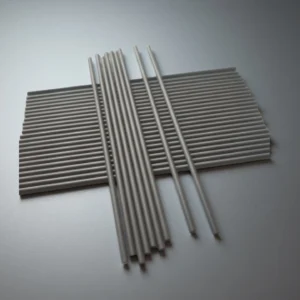
Black Alumina Ceramic Rods 92% Purity Standard Type

Round Black Alumina Ceramic Rod
Item No. Diameter (mm) Length (mm) Purity (%)
AT-BAR-1001 5 10-500 92-96
AT-BAR-1002 8 10-500 92-96
AT-BAR-1003 10 10-500 92-96
AT-BAR-1004 12 10-500 92-96
AT-BAR-1005 20 10-500 92-96
AT-BAR-1006 25 300 92-96
AT-BAR-1007 30 10-500 92-96
AT-BAR-1008 40 10-500 92-96


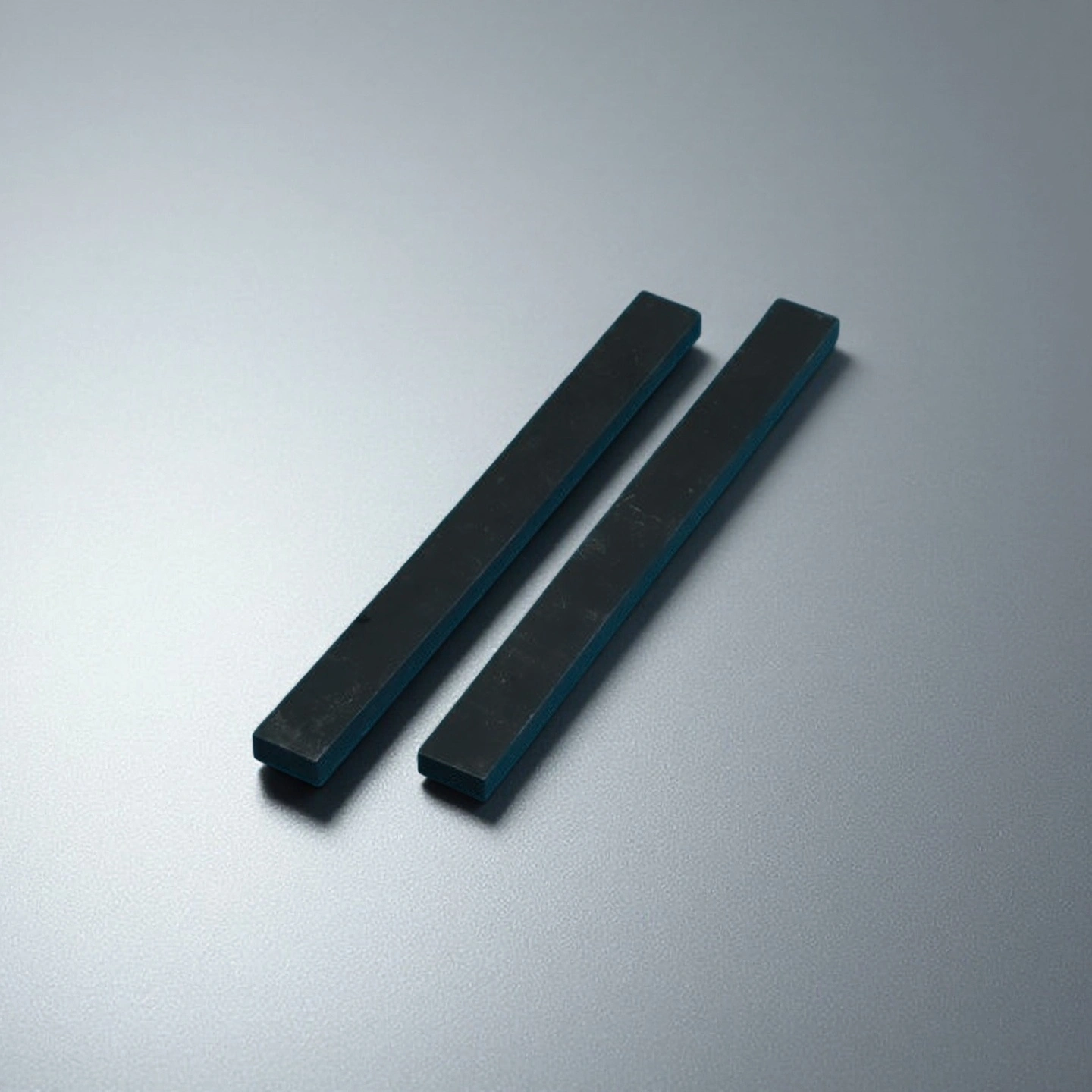
Type 2: Square Black Alumina Ceramic Rod
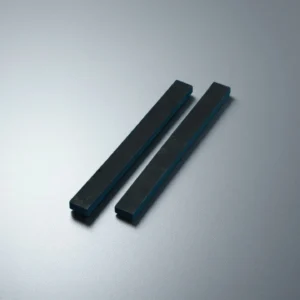
Custom Black Alumina Rods with Closed Ends

Square Black Alumina Ceramic Rod
Item No. Cross-Section Width (mm) Cross-Section Height (mm) Length (mm) Purity (%)
AT-BAR-2001 3 3 10-500 92-96
AT-BAR-2002 5 3 10-500 92-96
AT-BAR-2003 7 7 10-500 92-96
AT-BAR-2004 9 5 10-500 92-96
AT-BAR-2005 10 10 10-500 92-96
AT-BAR-2006 15 8 10-500 92-96
AT-BAR-2007 20 15 10-500 92-96

How to Select a Black Alumina Ceramic Rod

1. Confirm the main function

Choose black alumina when the rod must provide insulation, wear resistance, heat stability and a dark opaque surface. If the application only requires toughness and impact resistance, zirconia may need to be compared.

2. Check load direction and support length

Slender ceramic rods should not be designed like metal shafts. The drawing should avoid bending, impact and over-tight clamping. Long rods need proper support spacing and controlled straightness.

3. Define the required surface finish

As-sintered surfaces may be enough for support positions. Ground or polished surfaces are better for sliding contact, yarn guiding, sensor alignment or close-tolerance assemblies.

4. Review the fit and mounting method

Avoid excessive press-fit or rigid clamping. A slip fit, soft support, shoulder positioning or controlled clearance is usually safer for ceramic rods.

5. Provide operating conditions before quotation

ADCERAX can review the drawing more accurately when the RFQ includes working temperature, atmosphere, load type, contact material, quantity and whether the rod is used for insulation, guiding or light shielding.

Black Alumina Ceramic Rod Packaging and Inspection

  • Black alumina ceramic rods are packed separately to reduce collision, edge chipping and surface scratches. Ground rods can be protected with foam slots or sleeves according to size and length.

  • Before shipment, ADCERAX can check surface condition, quantity, key dimensions and packaging stability. Long or thin rods may receive extra support for safer transport.
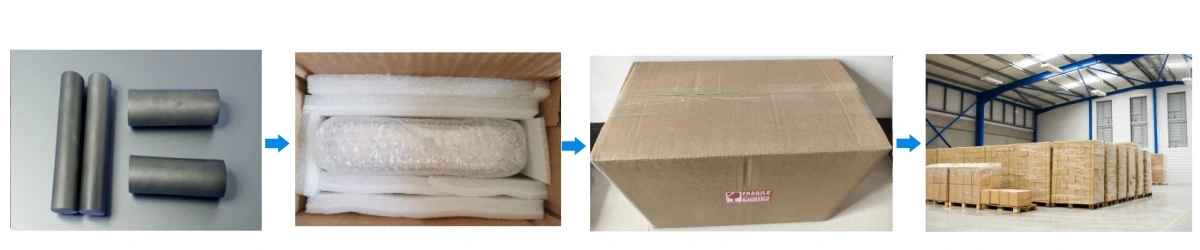

Black Al₂O₃ Ceramic Rod Packaging

Black Alumina Ceramic Rod Applications

  • Industrial Machinery and Automation

    Black alumina ceramic rods are used as guide rods, support pins, alignment shafts and insulating mechanical parts in automated equipment. They are useful when metal rods may conduct electricity, oxidize near heat, wear against sliding contact, or create reflection problems around inspection sensors.

    Typical uses include:
    1. Guide shafts in compact automation modules.
    2. Insulating support rods near heaters or electrodes.
    3. Alignment pins for fixture and positioning structures.
    4. Ceramic inserts where metal contamination or wear is a concern.

    Engineering Review Point:
    Before selecting black alumina, confirm the unsupported length, radial load, mounting method, vibration condition and whether the rod will carry impact or steady load.

  • Textile Machinery and Wire Handling Equipment

    Black alumina ceramic rods can be used in textile, fiber and wire-guiding systems where the contact surface must remain hard, smooth and dimensionally stable. The dark surface also provides visual contrast against light-colored yarn, fiber or wire, which can help operators identify path deviation during production.

    Typical uses include:
    1. Yarn guide rods.
    2. Wire and fiber contact rods.
    3. Textile machine support pins.
    4. Wear-resistant guide components in wet or chemical processing areas.

    Engineering Review Point:
    For sliding or continuous contact, the surface finish, edge radius and mating material should be reviewed carefully to reduce abrasion, fiber damage or localized groove wear.

  • Electrical and Sensor Assemblies

    In electrical and sensor assemblies, black alumina ceramic rods can combine mechanical support, electrical insulation and light shielding in one component. They are especially useful in compact designs where plastic may deform near heat and metal may conduct electricity or affect optical signals.

    Typical uses include:
    1. Insulating standoffs.
    2. Sensor support rods.
    3. Low-reflective ceramic parts inside housings.
    4. Support pins near heaters or electrical terminals.

    Engineering Review Point:
    For sensor or optical use, confirm whether the black surface is required for light blocking, contrast, anti-reflection behavior or visual identification. This affects surface finish and inspection requirements.

  • High-Temperature Fixtures and Furnace Support

    Black alumina ceramic rods can be used as supports, spacers or fixture rods in heated environments where polymers cannot survive and metal rods may oxidize or distort. They should be selected according to the thermal cycle, load, atmosphere and contact design.

    Typical uses include:
    1. Furnace support rods.
    2. Heater-zone ceramic supports.
    3. Thermal test fixture rods.
    4. Insulating rods for hot processing equipment.

    Engineering Review Point:
    Avoid rapid local heating, direct impact and tight mechanical constraint during thermal cycling, because ceramic rods need proper clearance and gradual heat-up conditions.

Black Alumina Ceramic Rod Usage Instructions

  • Installation

    1. Check each black alumina ceramic rod for chips or cracks before installation; do not use rods with visible damage.
    2. Align rod axes carefully with mating bores or supports to avoid bending loads during press-fit or clamping.
    3. Use fixtures with generous lead-in chamfers or bushings to guide rods into position and reduce edge contact.

  • Operation

    1. Keep rods within the specified mechanical load and temperature limits of the selected alumina grade.
    2. Avoid sudden mechanical shocks, such as hammering or impact adjustments, directly on the ceramic rod.
    3. When rods operate as sliding guides, pair them with compatible counter materials and adequate lubrication or controlled contact pressure.

  • Storage

    1. Store black alumina rods in original trays or racks so they are supported along their length and cannot roll or collide.
    2. Separate different diameters and lengths with labeled compartments to simplify picking and reduce mishandling.
    3. Keep packaging in clean, dry conditions to prevent contamination on contact surfaces.

  • Cleaning and Maintenance

    1. Clean rods with soft cloths and neutral detergents or suitable solvents for the local process chemicals; avoid abrasive pads.
    2. For optical or sensor-related applications, ensure residue or dust is removed to maintain light-shielding and alignment accuracy.
    3. Periodically inspect high-load or high-temperature positions and replace rods showing visible surface damage or dimensional change.

  • Typical Misuse Points and Remedies

    1. Over-tight press fits

    Issue: Excessive interference fit or misaligned bores may create tensile stress and crack the black alumina ceramic rod.
    Remedy: Adjust tolerance to a slip fit or light interference, and use shoulders or collars for axial positioning instead of heavy radial compression.

    2. Impact loading during maintenance

    Issue: Striking rods with metal tools to realign components can produce microcracks.
    Remedy: Use soft-faced tools, remove the rod before adjustments, or design fixtures with adjustable metal interfaces while the rod only carries steady loads.

    3. Uncontrolled thermal gradients

    Issue: Rapid local heating or cooling can exceed the thermal shock resistance of alumina.
    Remedy: Follow gradual heat-up and cool-down procedures in furnaces, and avoid direct flame or localized cooling jets on the ceramic rod.

FAQ – Black Alumina Ceramic Rod

  1. What is a black alumina ceramic rod used for?
    A black alumina ceramic rod is used as an insulating guide rod, support pin, alignment shaft, textile guide, sensor support or low-reflective ceramic component. It is selected when the part needs heat resistance, electrical insulation, wear resistance and a dark opaque surface.
  2. How is a black alumina ceramic rod different from a white alumina rod?
    Both materials are alumina-based ceramics, but a black alumina rod provides a dark opaque body that can help with light blocking, visual contrast or reduced reflection. White alumina rods are more common for general high-temperature and insulation use, while black alumina is preferred when optical contrast or appearance matters.
  3. Can black alumina ceramic rods be customized?
    Yes. Black alumina ceramic rods can be customized by diameter, length, tolerance, straightness, end chamfer, step design, surface finish and simple machining features. A drawing or sketch is recommended so the manufacturing route and inspection points can be reviewed before quotation.
  4. Are black alumina ceramic rods electrically insulating?
    Yes. Alumina ceramic is an electrical insulating material with high volume resistivity and dielectric strength. Black alumina rods are often used as insulating supports, standoffs or guide components near electrical terminals, heaters, sensors and high-voltage assemblies.
  5. What temperature can a black alumina ceramic rod withstand?
    Common black alumina ceramic rods can work in high-temperature environments, but the practical limit depends on alumina content, rod size, load, atmosphere and thermal cycle. For furnace or heater-zone use, the full design condition should be reviewed instead of selecting only by a maximum temperature number.
  6. Is black alumina better than zirconia for ceramic rods?
    Black alumina is usually chosen for insulation, high hardness, heat resistance, cost efficiency and low-reflective appearance. Zirconia is usually stronger in fracture toughness and impact resistance. If the rod may experience shock, bending or heavy side load, zirconia should be compared with alumina before final selection.

Recommended RFQ information

RFQ Detail Why It Matters
Drawing or sketch Confirms diameter, length, end design and tolerance.
Quantity Affects forming, machining and inspection plan.
Working temperature Helps select grade and safety margin.
Load and mounting method Helps avoid bending or clamping failure.
Surface contact condition Determines whether grinding or polishing is needed.
Application environment Helps check chemical, thermal or electrical suitability.
customize size

Custom Black Alumina Ceramic Rod

ADCERAX supports drawing-based black alumina ceramic rods for equipment builders, fixture designers and industrial replacement projects. Each rod can be reviewed according to size, tolerance, surface finish and operating condition before quotation.

  • Outer diameter and tolerance – For example 2–30 mm OD, with defined tolerances (down to about ±0.02 mm depending on diameter and length).

  • Rod length and straightness – From short pins around 10–30 mm up to long shafts such as 300–600 mm; you can set straightness limits as maximum bow per 100 mm or over full length.

  • End details – Square or chamfered ends, radiused edges, small shoulders, reduced tips, or simple step forms to match your fixture or bearing seats.

  • Cross-section options – Round black alumina ceramic rod as standard, with possibilities for D-shaped sections, flats, shallow grooves or keyways created by post-grinding.

  • Surface finish level – As-sintered surfaces for non-contact areas, centerless ground rods for accurate fits, and locally polished zones where smooth sliding or sealing contact is needed.

  • Material grade window – Black alumina matched to a target Al₂O₃ content (for example 95–99%) so you can balance strength, temperature capability and budget for each project.

  • Mechanical and thermal targets – Minimum flexural strength class, working temperature range and safety factors can be agreed so the black alumina ceramic rod aligns with your design calculations.

  • Functional machining features – Simple cross-holes, slots, alignment flats or shallow recesses where the material thickness and strength allow, to simplify clamping and positioning.

Related Products

ADCERAX - Your Trusted Advanced Ceramics Manufacturing Partner

Direct factory manufacturing with comprehensive ceramic materials expertise and global supply capabilities

China-Based Manufacturer

ADCERAX supplies ceramic components for overseas OEMs, equipment builders, and labs.

Custom Drawing Support

We review drawings, dimensions, materials, and application conditions before quotation.

Ceramic Process Control

Forming, sintering, machining, grinding, and finishing are arranged by part requirements.

Pre-Shipment Inspection

Dimensional checks, visual inspection, and packaging review help reduce procurement risk.

Get in Touch with Us

Our team will be happy to respond to you in less than 24 hours.

Pingxiang Factory — Silicon carbide, silicon nitride, high-temperature ceramics

Quick Quotation

*Our team will answer your inquiries within 24 hours.

*Your information will be kept strictly confidential.

Ready to Solve Your Engineering Challenge?

Partner with ADCERAX for reliable, high-performance advanced ceramic solutions. Our engineers are ready to discuss your project.

E-mail

info@adcerax.com

Phone

+(86) 0731-74427743 | WhatsApp: +(86) 19311583352

Response Time

Within 24 hours

Quick Quote

The more details you provide, the faster we can quote.

*We respond within 24 hours. All inquiries are confidential.

Get Your Custom Solution

The more details you provide, the faster we can respond.

customize size

*We respond within 24 hours. All inquiries are confidential.

Download Catalog